How Much Does it Cost to Build an Extension in 2026? Your Complete Guide
How much should you budget for an extension project in the UK? In this home extension cost guide, we break down all the essential elements that you need to factor into a budget – from structural systems to foundations and the internal fit-out
Kate Sandhu & Chris Batesmith
Adding a single-storey house extension can transform your property – greatly enhancing living space, improving functionality and adding value. Prices vary depending on location, layout, complexity and specification – but if you’re satisfied an extension is the best way forward, go for it. Once you’re sitting in your beautiful new space, the hard work and spreadsheets will feel totally worth it.
So, how much does it cost to build an extension in 2026? In much of the UK, costs for a fully-finished single-storey rear extension will typically sit between £1,800 and £3,000 per m². This could rise to around £2,500-£4,000 per m² in areas like London. These house extension ballpark figures are based on creating a usable living space, but exclude the final decoration, fees, surveys and VAT. Smart planning and realistic expectations are essential for a value-for-money project. Here we look at what to factor into your extension budget and how much the key elements are likely to cost.
Here’s a typical cost breakdown for a mid-range, 30m² extension outside of London, assuming a total build cost of around £60,000.
Element
% of Cost
Typical £/m²
Foundations & drainage
12%
£200-£350
Shell / superstructure
50%
£1,800-£2,200
Glazing & external doors
15%
£300-£500
Rooflights / lanterns
5%
£50-£100
Electrics & lighting
8%
£150-£300
Plumbing & heating
7%
£130-£250
Flooring
3%
£50-£80
Bathroom or WC
2%
£40-£60
Plastering & finishes
10%
£200-£350
Design, surveys & professional fees for home extensions
The initial extension design phase usually includes a set of drawings, which are to-scale plans and elevations showing the proposed layout, structure and appearance of your extension. These are essential for securing planning permission (if required), obtaining accurate quotes from builders and guiding the work itself.
You may need to pay for a measured survey (£500+) to produce an accurate schematic of the existing building. If the proposed extension affects or connects to existing drainage, you may also need a drainage survey, while a topographical survey might be advisable on complex plots. If you’re told you need these, do query why, just to make sure they’re a necessary investment
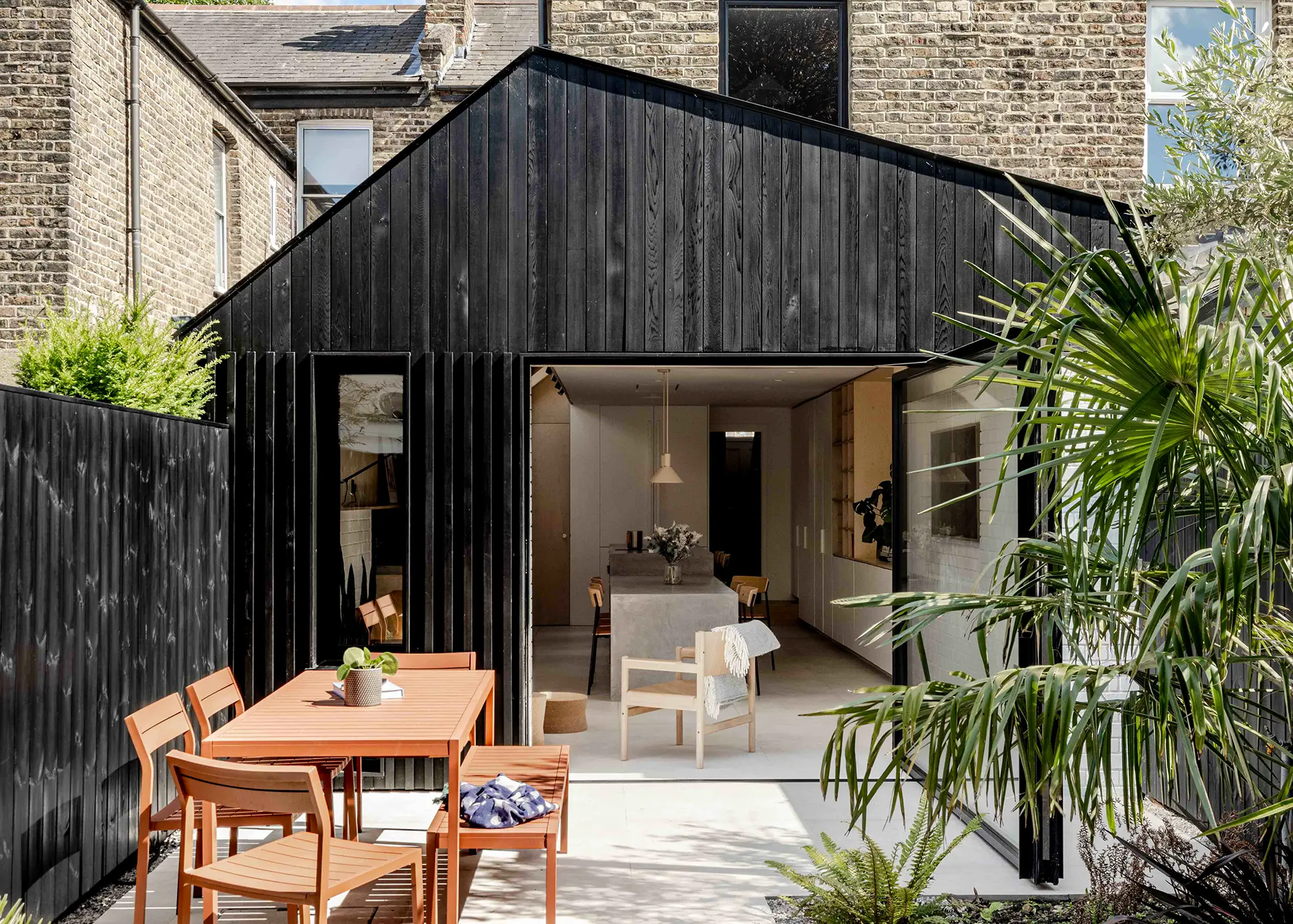
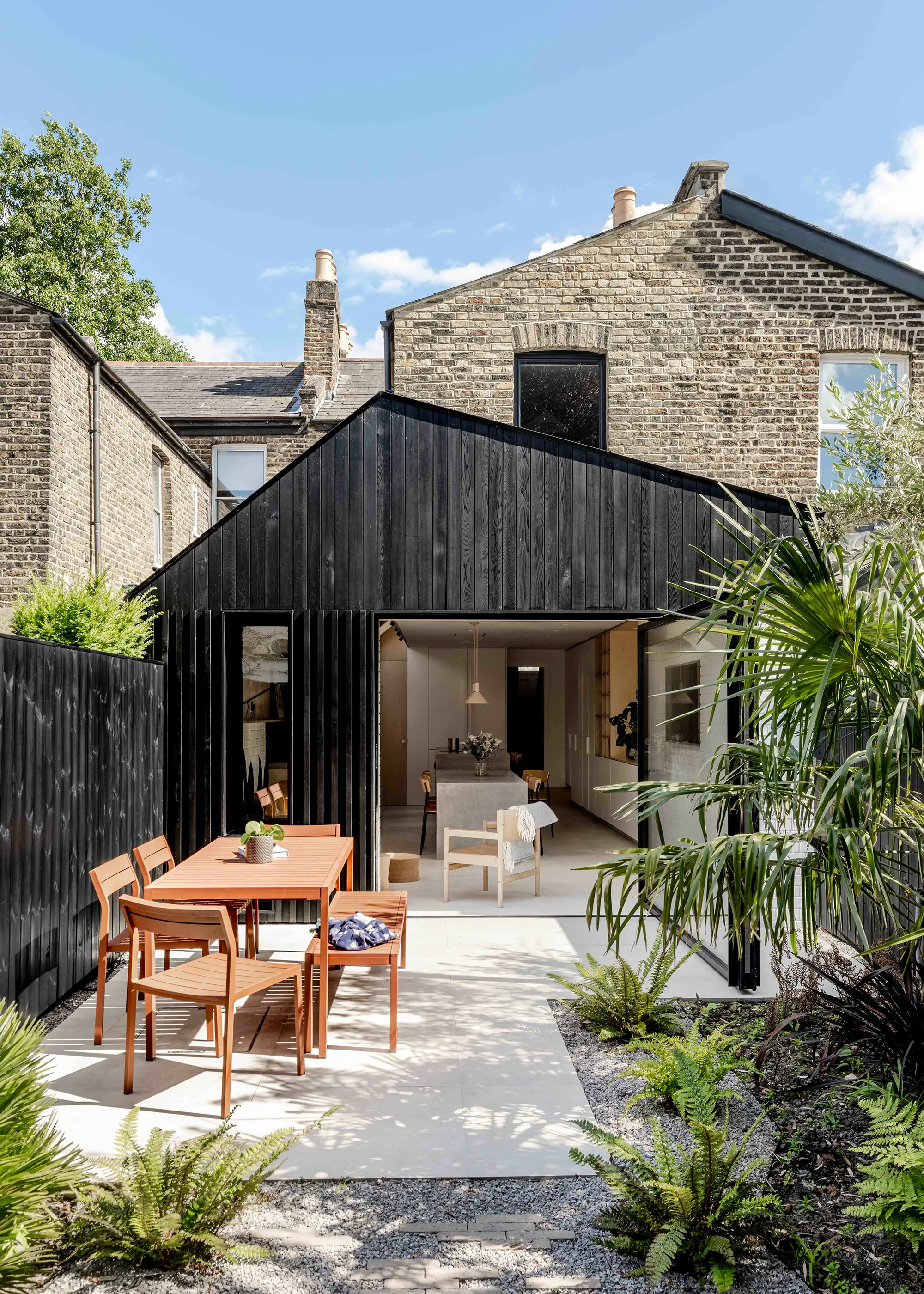
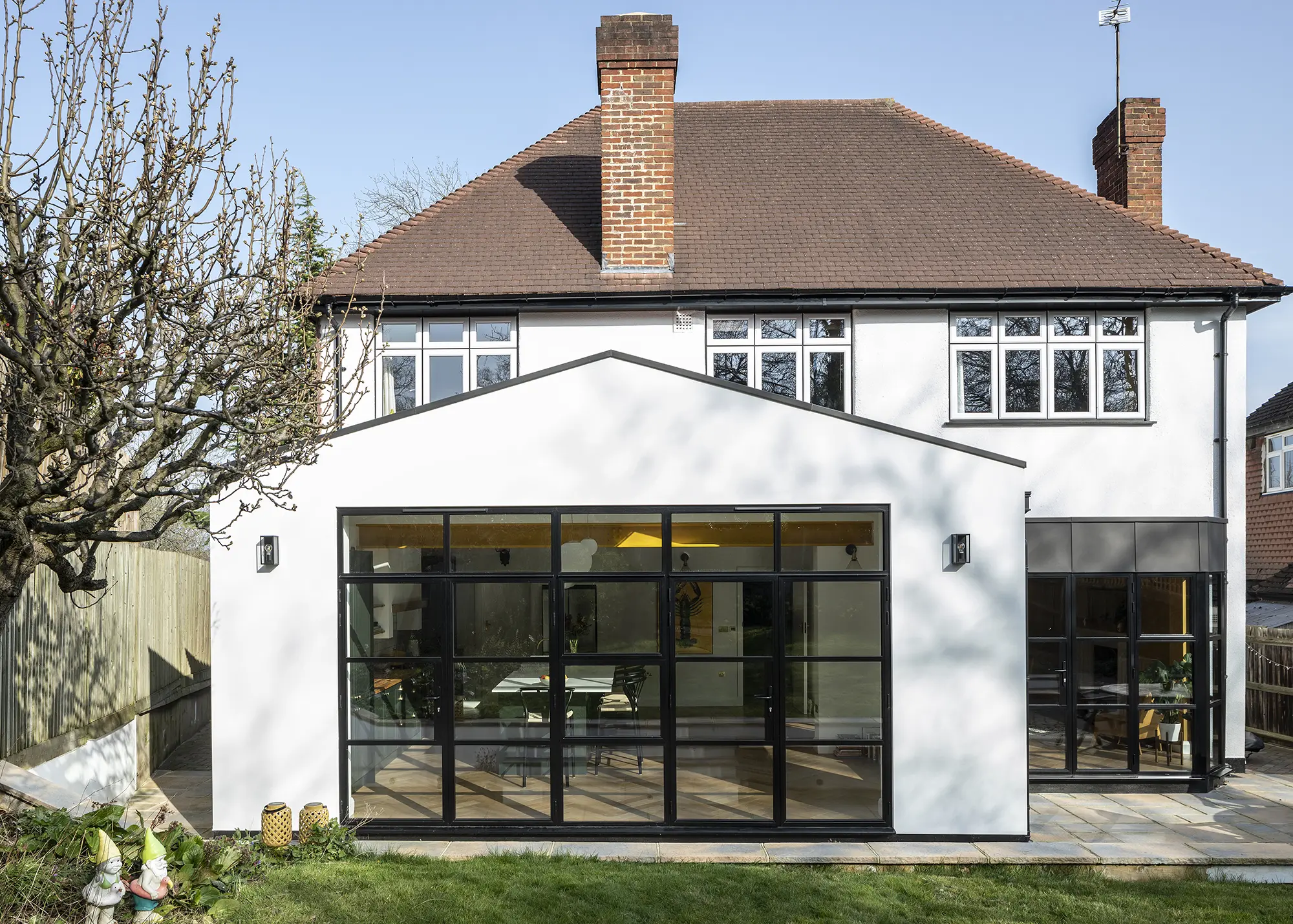
This three-bedroom terrace house in Teddington has been upgraded with an asymmetric cedar-clad extension, designed by Forgeworks. The extension project added approx 20m² to the original home, and cost £2,250 per m² + VAT. Photo: French + Tye
As you move into the technical design stage, a structural engineer will be essential if you’re altering loadbearing walls or adding steels, and to calculate the structural performance of proposed foundations and roof systems. You may also need a party wall surveyor if you’re building on or near a shared boundary setting.
Allow around 10-12% of your build costs for the planning and technical design phase. On a modest extension, that could be just £3,000-£5,000.
Prices for a good-quality 30m² extension might command more like £6,000-£7,500.
For simple extension designs, a draughtsperson or technician may suffice, potentially slashing design fees to £1,500-£2,500 (plus surveys and structural input).
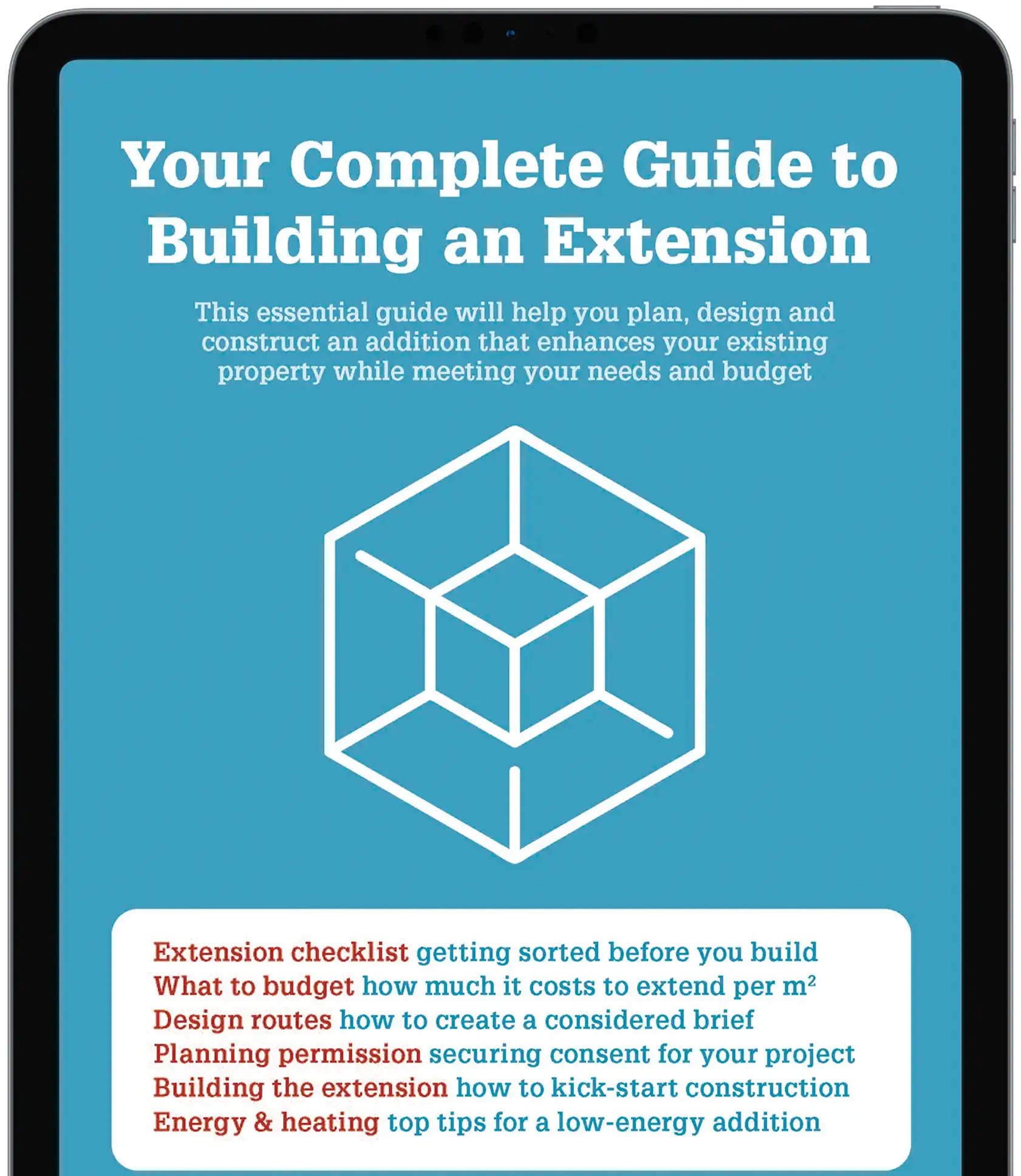
Build It’s house extension downloadable e-guide will help you plan, design and construct an addition that enhances your existing property while meeting your needs and budget.
The cost of a house extension insurance policy varies depending on several factors, including the size of the project, location (ie mining area, flood zones), whether your existing building is listed or in a conservation area and if you need party wall agreements.
“A typical 12-month policy might cost between £750 and £2,000,” says Harry from BuildStore. For smaller projects, six months of coverage may be more suitable. “On a £200,000 house with an extension budget of £100,000, you might pay around £480 for six months of cover,” says Simon Middleton, managing director at Protek. You should consider this cost as part of your overall project budget.
Planning applications & Building Regs
Some extensions fall under permitted development (PD) rights, meaning that you don’t need to seek formal planning permission. As stated by the Planning Portal, this is what you can do under permitted development:
You can build up to 8m out from the rear of a detached house in England, or 4m in Scotland and Wales.
Only half the area of land around the existing house can be covered by an extension.
Extensions cannot be higher than the highest part of the home’s existing roofline.
Where the extension is within two metres of the plot’s boundary, the height at the eaves cannot exceed 3 metres.
Extensions cannot be built forward of the home’s main elevation or where it fronts a highway.
If you are building under PD, applying to the council for a Lawful Development Certificate (£264 – 50% of the planning application fee) can be a good move, as it confirms in writing that your proposal meets the rules. If planning permission is required for your extension, expect to pay £528 for a full householder application plus £70.83 + VAT for the Planning Portal’s service fee. For more ambitious designs, it can be worth seeking pre-application advice, to get early feedback and minimise the risk of having to re-apply (with a new fee).
Krystelle and Ed Floyd-Wass have sympathetically renovated and extended their 1930s detached house, located in south east London breathing life back into it with bold colour and texture. The renovation and single-storey rear extension cost the couple £260,000 (£1,444 per m²). Photo: Adelina Iliev
Regardless of planning status, you must comply with Building Regulations. Either the local authority or an approved inspector will check your plans and inspect the work to confirm it’s sound. Fees vary according to the design and local pricing. This is a legal requirement for almost all extensions – even if planning isn’t. Top tip: take your own photos throughout construction. This can prove invaluable if issues arise further down the line.
The building and project management route you choose for your extension project will impact costs. A basic 30m² single-storey rear extension (outside of London) could cost around £2,000 per m² built using a main contractor. The different options could help you save on this overall cost.
Main contractor – standard option
The figures above in our extension costs section are based on a main contractor route, where a general building firm manages the project to completion on your behalf, using a standard contract. You can bring prices down by taking on more of the responsibility yourself. Below you can see typical indicative savings for other popular build routes.
Builder plus subcontractors – potential saving 10%
You could potentially reduce build costs by circa 10% by hiring a main contractor to complete the structure to watertight stage. At this point you take over from the main contractor as a project manager and the remaining work is undertaken by subcontractors (individual trades), whom you manage through to project completion.
Self project managed – potential saving 20%
By project managing the entire extension yourself, including the main structural phase, you could knock up to 20% off total build costs. This route doesn’t involve undertaking any construction works yourself, but rather fully managing the subcontractors on a DIY basis. So you are both client and building contractor, hiring trades and supplying plant, machinery, tools and most of the materials.
DIY extension – potential saving 25%
Many will ask themselves ‘can I build my own extension?’ and the answer is yes. Undertaking a large proportion of the build on a DIY basis could enable you to reduce project costs by as much as 25%. This route assumes you’ll use trades for the key structural and infrastructure works, but will carry out much of the second fix tasks, landscaping, general labouring, decorating, tiling etc yourself. You will also be project manager, buying most of the materials and supplying all tools, plant, scaffold etc.
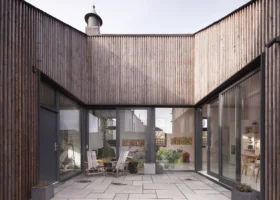
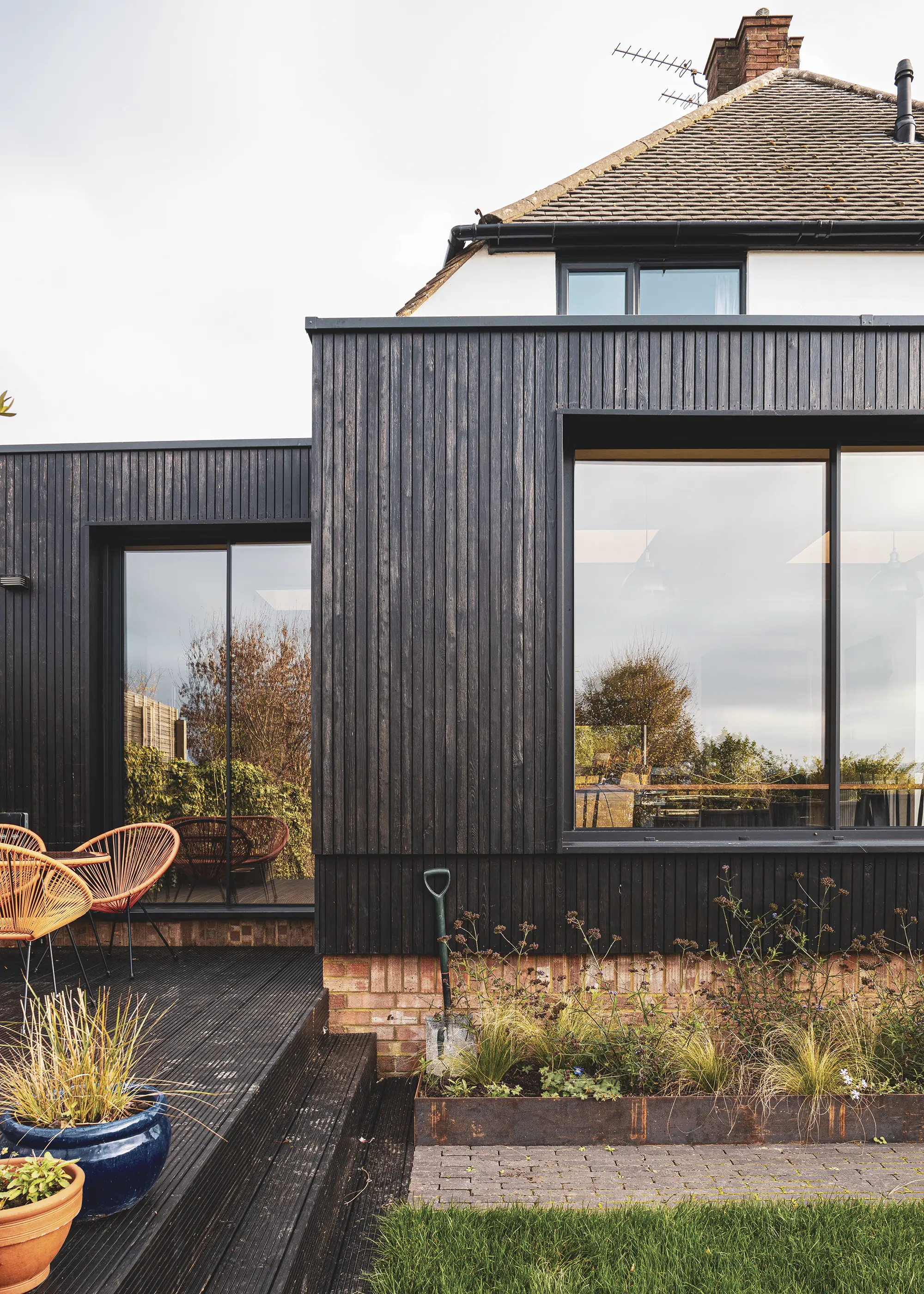
Claire and Chris Lunt gave their 1950s home an award-winning sustainable renovation and extension on a budget. The addition was built using sustainably-sourced timber framing and clad in stained larch. It features a sedum roof, alongside aluminium-framed double glazing. The project cost a total of £180,000, and took just five months to complete. Photo: Simon Burt
Foundations & drainage for extensions
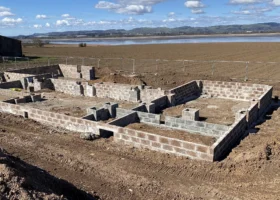
Foundation costs for an extension depend on access, soil type and site complexity. The most common foundations for extensions are trench fill and strip foundations.
Trench fill foundations
These are the easiest and the preferred foundation method for most extension projects. The concrete is usually taken all the way up to 75mm below the top of the excavated trench walls, and then a course of blockwork is installed up to damp proof course (DPC) level. This gives you a standard minimum clearance of 150mm above external ground level for the superstructure above. This foundation method might be more tricky if your home’s on unstable ground.
Strip foundations
These work according to the same principles, but the depth of concrete is restricted to the bottom of the trench only, laid up to a thickness of around 200-400mm (usually with a couple of reinforcement bars). The rest of the foundation wall is constructed in dense concrete blockwork, directly under the above-ground external walls, with a DPC separation at floor level.
Concrete costs mean trench fill is a bit more expensive, but most people go for it as it’s so quick and easy to install. Widths are usually 450mm or 600mm to match excavator bucket sizes. The external wall system, which is typically around 300mm thick, then sits directly in the middle of the foundation. The trench sides should be vertical, so you can be sure the concrete is substantial all the way to the base.
If ground conditions are straightforward, budget around £200-£350 per m².
This can rise to £450 per m² or more on tricky plots or heavy clay soils. If access is limited – common in terraced homes – manual digging adds time and money.
Drainage work is important if you’re adding a kitchen or bathroom, especially if manholes must be moved or new pipework installed. Some projects might require inspection chambers, soakaways or pumped drainage. Groundworks and drainage usually take one to two weeks for an average-size extension. However, this is the stage where hidden costs are most likely to crop up, so earmarking a healthy contingency is wise.
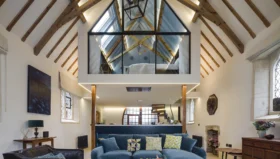
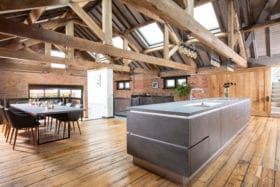
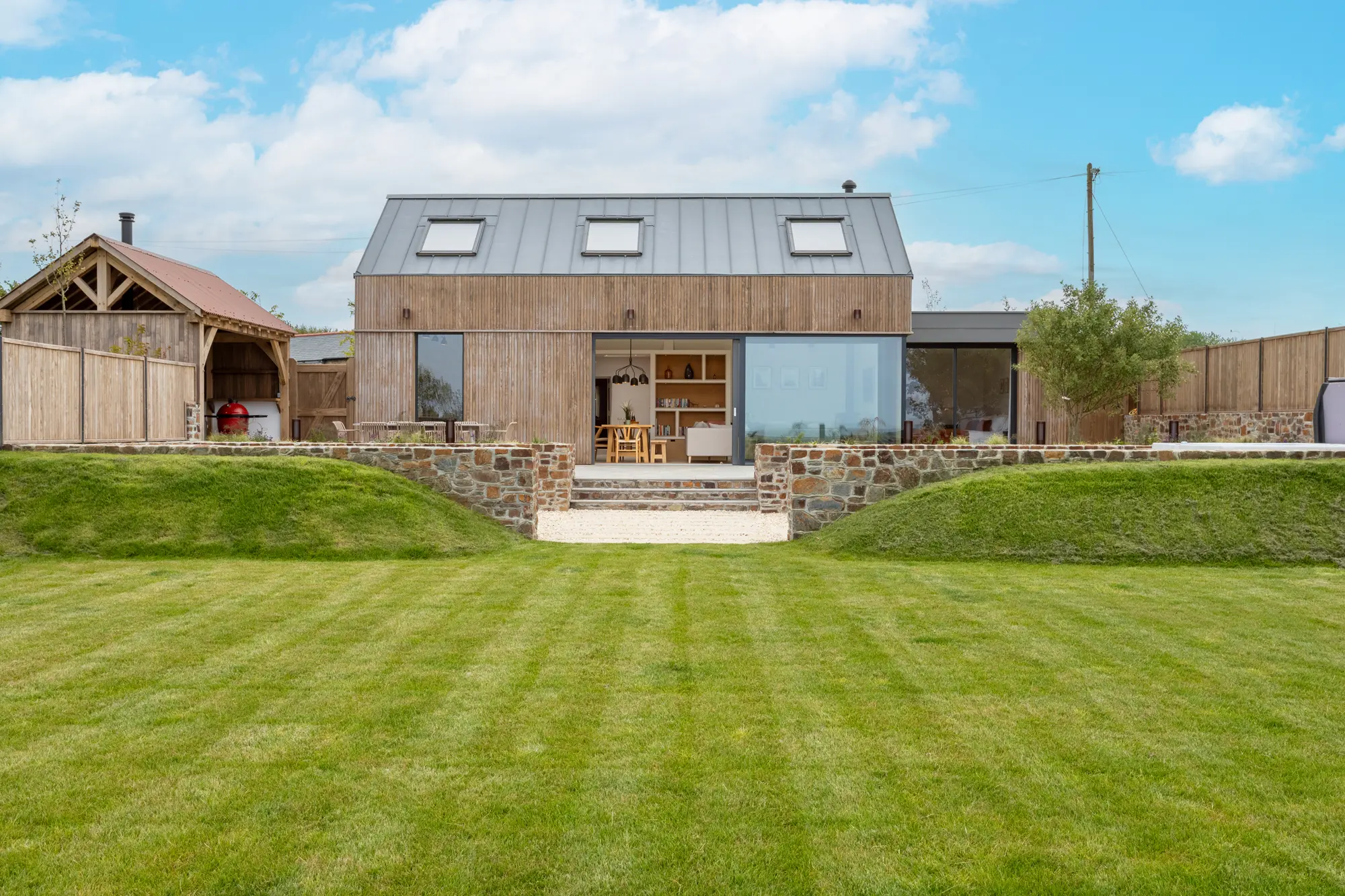
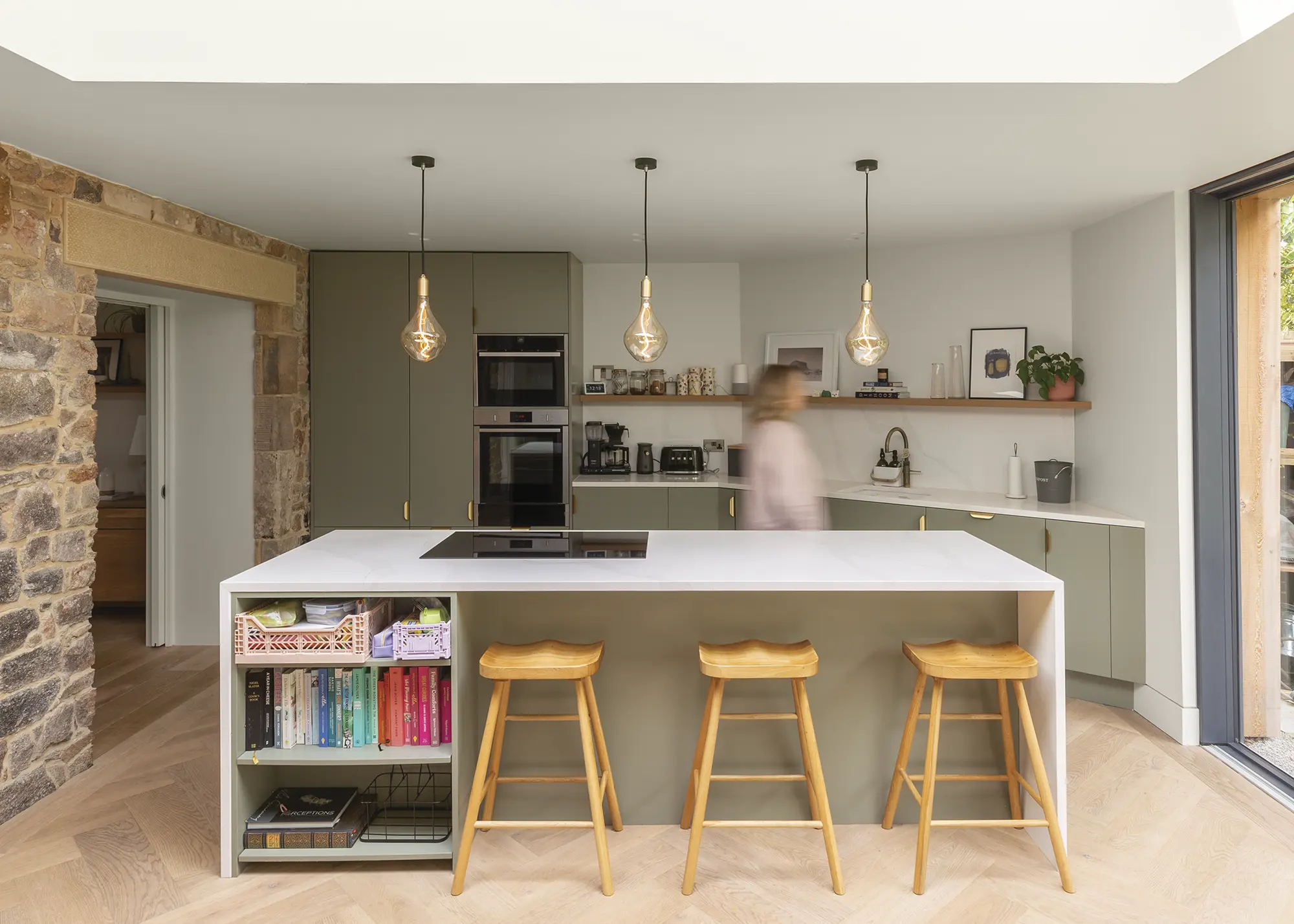
John and Francesca Cowx have restored a traditional Devon cob cottage with a full renovation and timber frame extension. The timber-clad addition features a cantilevered corner structure and large rooflights which drop in light from above. It cost a total of £279,000, with the timber structure and cladding coming in at £108,000, and the foundations £55,000. Photo: Matthew Evans/360 Virtual Tours
Knocking through walls
You might be knocking through walls to create an open-plan space as part of your extension. Even lightweight partitions may have developed a structural function over time, however, so it’s essential to get expert advice before making any changes. If your wall is structural, the process of removal involves:
Temporary support Before demolition, acrow props and strongboys (or a temporary stud wall) must be installed to support the weight above.
Demolition The wall is carefully knocked through in manageable, marked sections.
New permanent support A steel beam (RSJ) or lintel is installed to replace the structural function of the wall that’s been removed.
In most cases, you’ll need to hire a structural engineer to calculate the size of the beam, and a builder to carry out the work. Plus, it’s likely you’ll also require building control approval. The cost of knocking through a wall varies depending on factors like whether it’s load-bearing, the size of the opening, and whether additional works (such as rerouting electrics or plumbing) are required. As a rough guide:
Removing a non-loadbearing wall will cost from £800-£1,500, subject to design complexity.
For removal of a loadbearing wall (with an RSJ installed) look to budget £2,000-£5,000.
Full project costs, including finishing and redecorating will start at £3,000-£10,000+, depending on the completed look you want to achieve.
Structural systems for extensions
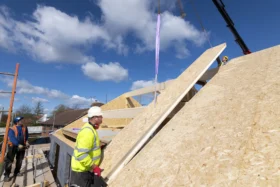
The structural shell of your new addition is essentially the above-ground structure: the walls, insulation, roof and weatherproofing. It generally takes around three to four weeks, assuming decent weather and access.
A watertight cavity wall blockwork shell – including insulation, damp proofing and roof structure – typically costs around £1,800-£2,200 per m² (budget at least £2,500 per m² in London). A site-built timber frame extension is a popular alternative that can be competitive with blockwork and may offer a quicker build in a thinner wall profile. Prefabricated timber frame solutions might become an option on larger projects. Budget £1,500-£2,500 per m² for a prefab extension structure.
Flat roofs are a cost-effective and contemporary design choice for extensions, offering a streamlined look. They’re generally quicker and easier to construct than pitched alternatives and provide the perfect opportunity to incorporate roof lanterns or flat rooflights, ensuring natural light reaches deeper into your home. Proper drainage is essential to prevent water pooling. A slight gradient is always required to allow rainwater to run off efficiently, and high-quality waterproofing materials should be used to enhance durability.
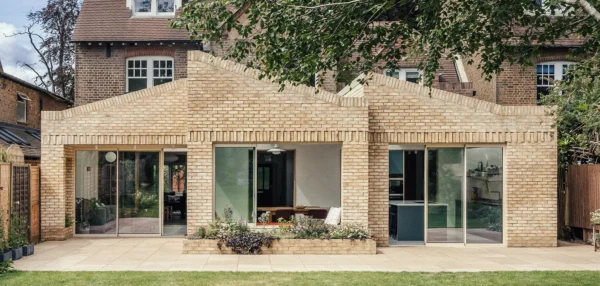
The pitched form of the clerestory roof on this extension by ABHR_A is inspired by the roof angles of the Edwardian terrace. The design intent was to elevate the rear elevation to the same status as the front facade, so it is finished in traditional clay tiles which reflect the cladding of the original building in an innovative and modern way. The project cost £250,000. Photo: Chun Yue Chiu Photography
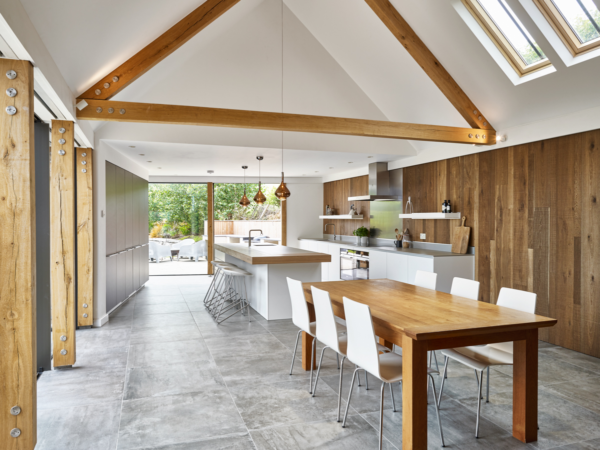
Pitched roofs provide a timeless aesthetic, often blending more seamlessly with the existing property. They offer increased height, allowing for features like vaulted ceilings or exposed beams, adding character to the space. Their natural slope improves water runoff, reducing the risk of leaks and increasing longevity. However, they’re typically more expensive and require a longer build time compared to flat roofs. While they lend themselves well to period homes, a flat roof extension can be the preferred option for achieving a minimalist, contemporary look.
Flat roofs are generally the cheapest option, costing around £5,000-£8,000 total for a mid-size space. Opting for a pitched tiled roof adds around £100-£150 per m² on top of that baseline.
Glazing can be a game-changer in terms of the look, feel and quality of your finished extension. Standard double-glazed PVCu windows are budget-friendly but tend to have chunkier framework. Aluminium, steel and composite-framed options are more expensive, but quality systems offer sleek sightlines and excellent durability. Plus, they’re the best option for wide spans of glazing where stability is critical.
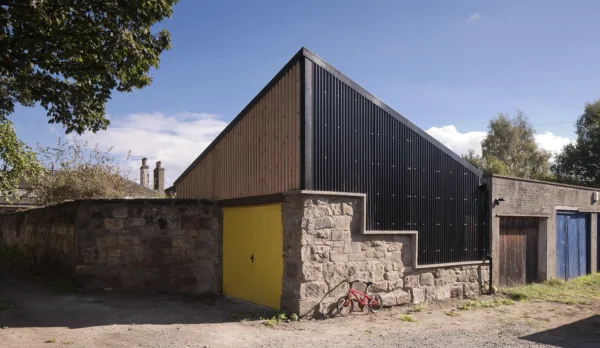
When a storm left their home flooded, Susan and Rob Caslake took the opportunity to turn a negative into a positive by taking on a major home improvement project. They added a new striking metal-clad extension, housing the dining area. The form of this new timber frame structure (with steel support) reflects the line and apex of the original mill building gable that it sits alongside. The project cost a total of £250,000. Photo: David Gordon
You can expect to pay around £1,200-£2,000 per m² for glazing, with high-end systems and upgrades (such as solar control coatings or triple glazing) pushing up costs. Wider openings may also need structural steel supports, which might cost around £2,000-£4,000 per beam, depending on load and span.
Rooflights & lanterns
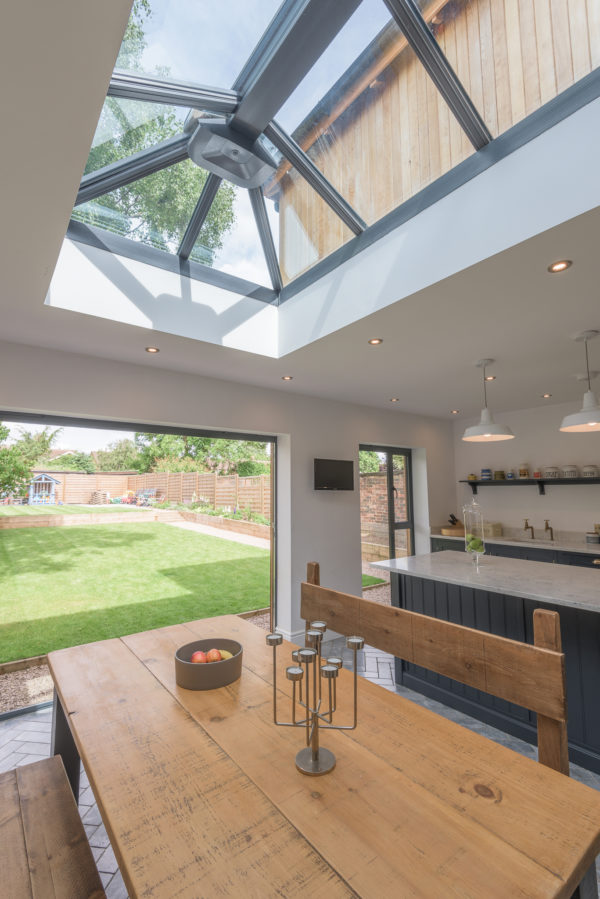
Installing overhead glazing is a smart way to bring in light; especially valuable in deep-plan, single-storey extensions, where side-facing windows may be limited. Standard roof windows cost around £900-£1,500 each, depending on spec, and are easy to fit between rafters. For flat-roofed structures, roof lanterns provide a dramatic look at a cost of around £2,000-£4,000, with custom or frameless designs sitting at the higher end.
Large rooflights or lanterns will need more structural support, adding to the cost. Multiple smaller areas of overhead glazing can often achieve the look and daylighting levels required at a more affordable price.
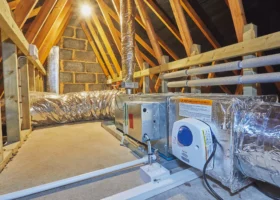
Electrical work usually starts at around £300-£500 per m², covering essentials such as wiring, sockets, switches and standard pendants or downlights. If your consumer unit (fuse box) needs updating, add £400-£800. Smart lighting or AV systems add another £500-£1,500+ depending on complexity.
Always plan ahead so all services can be routed during first fix. This avoids the time, money and mess involved in chasing finished walls or ceilings. Top tip: always fit more sockets than you think you’ll need, you won’t regret it.
Plumbing & heating
Prices will depend on whether your new space includes wet zones – such as kitchens, bathrooms or a utility – and your heating requirements.
Boilers If you’re extending significantly, check your boiler can cope with the extra space and hot water demand. If it needs replacing, this could add £2,500-£5,000 to your budget.
Radiators A standard radiator installation with new pipework, running to an existing boiler system, might cost around £300-£600.
Underfloor heating (UFH) is a popular upgrade, costing £2,500-£4,000 for a 20-30m² area. Underfloor heating is easy to install into an extension but needs to be properly planned to avoid challenges with floor build-ups between new and existing rooms.
Ambient Studio is behind this ground floor extension and loft conversion for a Victorian mid-terrace home in Stoke Newington. The rear and loft extensions added a whole additional storey, another bedroom and another two bathrooms, and cost a total of £800,000, creating 55m² of new floorspace. Photo: Lorenzo Zandri
Often a focal point for an extension, kitchens can make or break a budget. A mid-range model costs £8,000-£15,000 including units, appliances and installation. Bespoke, hand-built or designer kitchens will cost significantly more. Layout changes that involve moving plumbing or electrics will add expense.
Kitchen cabinets
Middle-range kitchens from suppliers like Howdens are achievable for between £5,000 and £15,000, depending on the size and the spec you go for. High-end solutions from suppliers such as Devol or anything bespoke are likely to cost £30,000+.
You can save by choosing standard kitchen unit sizes, bundling appliance and cabinetry deals, and thinking carefully about your wish list (do you really need that built-in coffee machine or composite stone worktop?). Don’t forget to tell your builder if you’re adding things like a boiling water tap, as they’ll need to route both electrics and plumbing to the location.
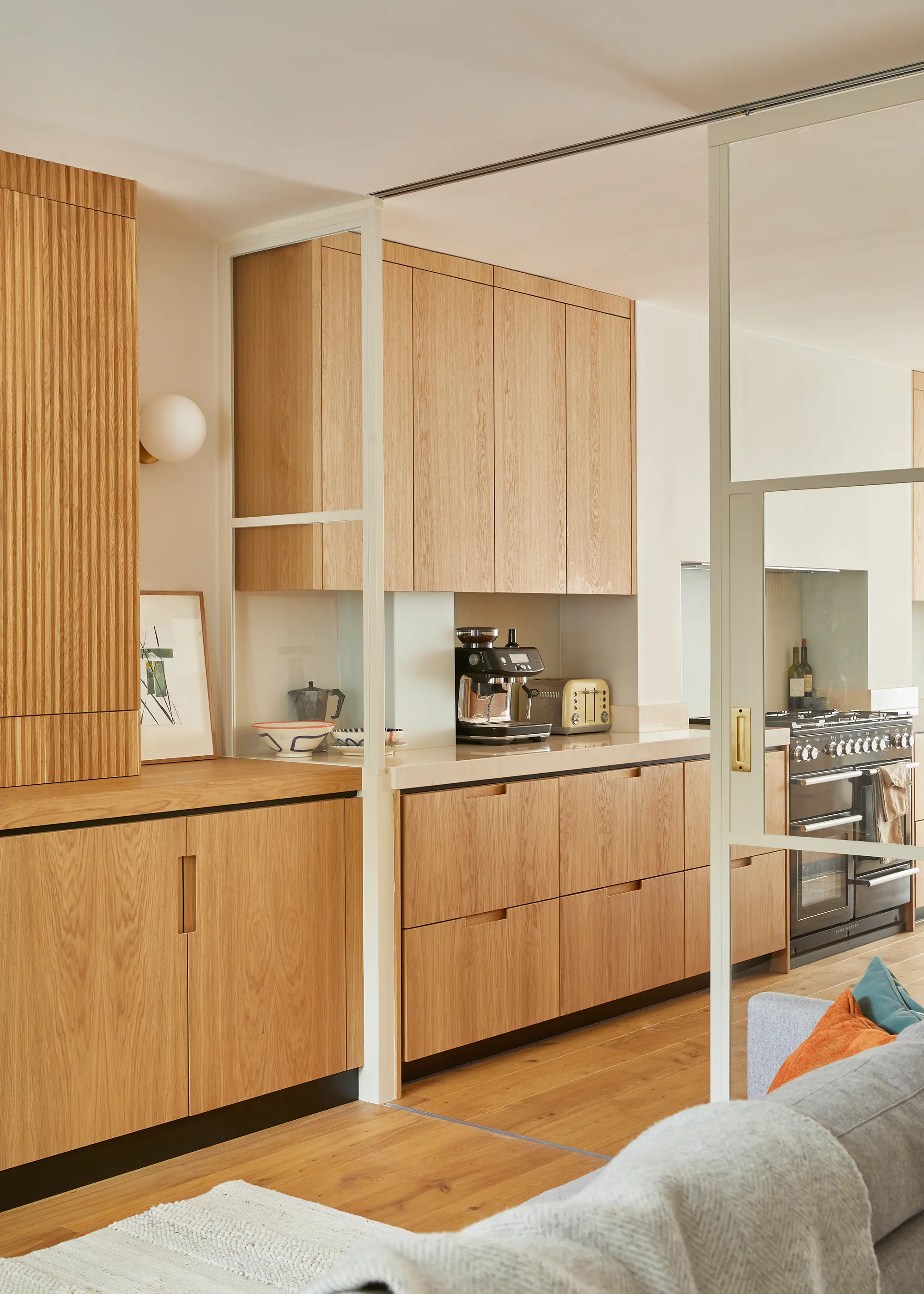
Paul Archer Design completed a knock-down and rebuild extension project to provide this urban home in Hampstead with a new light-filled kitchen. Timber sits at the heart of this project, with wood kitchen cabinets and flooring. Photo: Helen Cathcart
Kitchen worktops
For kitchen worktops, the most stylish solutions also tend to be the most expensive. Expect to pay around £100 per m² for laminate worktops that are made to fit, though cheaper solutions are available if you can use a standard size. Depending on the species you choose, timber worktops are available for between £150 and £350 per m². Granite or quartz can easily climb above £300 per m², as the material is cut specifically to your dimensions.
Flooring options for an extension
Your flooring choices affect both appearance and day-to-day functionality, with material, substrate and insulation all playing a role in the total spend. Here are the main options:
Timber
Few materials can match the warmth and timeless appeal of wood flooring, whether you’re in the market for a rustic look or a geometric chevron design. Engineered products are typically the go-to option for extensions as they offer better dimensional stability when paired with underfloor heating (UFH). Budget £50 per m² to £250 per m².
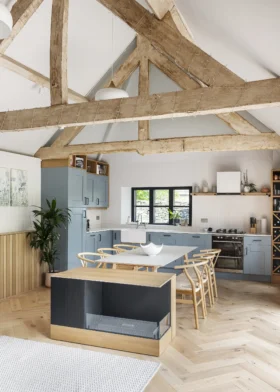
A sleek, light-filled extension has transformed Julia and Rowan Walker’s traditional 19th-century cottage in East Lothian into a bright, open home perfectly suited to modern living. The east-facing addition was built using timber frame construction and finished with larch cladding. The project cost a total of £252,500 and took 54 weeks to complete. Photo: Fredrik Frendin
Laminate
Laminate flooring is a cost-effective and versatile solution that can mimic the appearance of wood, stone or tiles. It’s a popular material for spaces like living areas, thanks to its low-maintenance nature and its ability to help dampen noise and prevent draughts. Budget from £60 per m².
Vinyl
This option is water-resistant, making it ideal for kitchens. You can purchase it in tiles (known as LVTs) or sheet form. Luxury vinyl tiles (LVT) tend to be more hardwearing than vinyl that comes in sheet form, which isn’t as well-suited to busy areas of the home that’ll receive heavy footfall. Budget £10 per m² to £40 per m².
Stone
Radiating natural elegance and classic appeal, traditional stone flooring is well-suited to kitchen extensions. It’s very hard-wearing but, depending on the type of stone you specify, may require routine sealing to protect against stains and moisture ingress – especially in busy spaces. Marble, limestone and slate tiles are among the most popular options. Budget £100+ per m².
Porcelain
Porcelain is available in a wide range of styles, colours and finishes – many of which seek to replicate natural materials like wood and stone. Porcelain tiles are waterproof, slip-resistant and are a fantastic partner for UFH due to their density. Budget £25+ per m².
Concrete
Polished concrete is incredibly hardwearing and water resistant, making it an ideal solution for kitchen-diners. It works beautifully in open-plan areas, too, thanks to its ability to create a clean transition between the different zones. Budget £130 per m² to £160 per m².
Fitting a new bathroom or WC into your extension can cost anywhere from £3,000 to £6,000, depending on layout and finish. Basic suites with standard tiling are very affordable, while designer fittings and features will raise the needle. Wet room-style zones will require specialist tanking and drainage solutions. Labour for tiling and plumbing usually adds around £300-£600 per m² of room being treated; with high-spec finishes or awkward layouts pushing this higher.
Plastering, joinery & internal finishes
the final fit-out costs can catch people out, but you’ll need to set aside some budget for key elements such as doors, wall coverings etc.
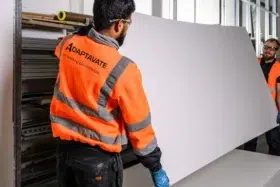
Plastering Standard plastering comes in at £15-£25 per m² including labour, while heritage options (lime or clay) may cost double.
Internal doors Expect to spend around £150-£300 (installed) for new internal doors (including linings, architrave and the panel itself).
Skirting, window boards and storage will all add up, too. Add
Decoration (painting walls, ceilings and woodwork) usually falls in the range of £10-£20 per m².
Altogether, allow for £200-£350 per m² for a complete internal fit-out with decent quality materials and labour. If you’re adding bespoke carpentry or integrated furniture, expect to pay more.
Is it more expensive to extend a listed building compared to other homes?
Extending a listed building is generally more costly due to the need to ensure you are preserving its historical character. This usually requires specialist materials and construction techniques that match the original structure, which often come at a much higher price.
Obtaining planning for listed buildings can also be more complex and time-consuming; it often is essential to have detailed designs and in-depth consultations with conservation officers or heritage bodies. Additionally, the involvement of qualified and skilled craftspeople who are experienced in historical restoration will further increase costs when it is compared to works on non-listed properties.
Answered by Nicole Guler
Nicole Guler is director and chartered town planner at Urbanist Architecture, a London-based architecture and planning firm specialising in bespoke residential extensions, renovations and new build projects.
Is it more complicated to obtain planning approval for changes to a listed building?
Yes, getting planning approval for a listed building is typically more challenging than for a standard property. Listed buildings are protected due to their historical or architectural significance, so any changes, including extensions or alterations, must preserve their character.
This means that, in addition to planning permission, you’ll need listed building consent, which involves stricter scrutiny by local authorities and possibly heritage organisations. The process can be more time-consuming, with a higher likelihood of additional requirements or restrictions.
Answered by Nicole Guler
Nicole Guler is director and chartered town planner at Urbanist Architecture, a London-based architecture and planning firm specialising in bespoke residential extensions, renovations and new build projects.
Do I need to pay a Community Infrastructure Levy (CIL) on a house extension?
You don’t have to pay CIL unless you are building a very large extension of over 100m². If you are rebuilding a house, then the rules are different, and you may have to pay CIL if the floor area is increased or if there is any change of use in a conversion. There are exemptions for self builders, though. The Planning Portal gives more information on CIL and when it might be applicable.
Answered by Simon Graham
Simon Graham is director at Yard Architects. Simon founded Yard Architects in 2014, having gained extensive experience leading award-winning residential developments at previous practices across London.
What hidden costs should I be aware of when undertaking a home extension?
Discovering structural defects you weren’t aware of can impact costs. Existing shallow foundations which need underpinning, asbestos, and dry rot etc can have a big impact on your budget. Try and investigate the existing building as best you can before you start the house extension – dig trial pits and have an asbestos survey done. The more you know at the outset, the less likely you are to encounter additional works that could impact your overall extension costs.
Answered by Simon Graham
Simon Graham is director at Yard Architects. Simon founded Yard Architects in 2014, having gained extensive experience leading award-winning residential developments at previous practices across London.
Can my neighbours dispute my extension’s planning application?
Only the planning officer can fully reject your planning application, but your neighbours can object if they think they are going to lose daylight or privacy, or they don’t like the new addition’s design, for example. It’s wise to speak to your next door neighbours before you make a planning application for an extension or conservatory. Show them your plans, ideas, listen to any concerns they may have and try and address these before you make a submission.
Opening a clear line of communication early on will usually prevent neighbours making objections when you make your submission, meaning you are more likely to gain approval smoothly. Objections are weighed up by the planning officer and an objection doesn’t automatically lead to refusal, if the officer doesn’t think the objection is valid.
Answered by Simon Graham
Simon Graham is director at Yard Architects. Simon founded Yard Architects in 2014, having gained extensive experience leading award-winning residential developments at previous practices across London.
Kate Sandhu
Kate Sandhu is a renovation pro, helping others to understand the process and save as much money as possible via her home renovation course. She shares a wealth of knowledge, as well as DIY tips via her blog renovatelikekate and Instagram account.
Chris Batesmith is Castle Media's Content Director. A former Editor of Build It magazine, he's a trained carpenter and experienced renovator and self builder. He has turned his hand to everything from plastering and tiling to plumbing and electrics, and recently project managed the completion of Build It's very own Self Build Education House. Chris has dedicated the last 14 years to championing self build. He is an expert and speaker at the Build It Live shows, and chairpairson of the Build It Awards.
We are having some major rework of our home..which requires a new first floor to accommodate new room configuration ..Is there a cost guide for such work? thanks in advance KEVIN
Dear Build It team, thanks for the helpful article.
I have some questions about the benchmark single story extension. You write that the design includes bifold doors (windows are also illustrated) and that the costs include labour and materials.
As I don’t see doors and windows itemised separately, I assume they are included within “Second fix joinery, electrics & plumbing” is that correct? If yes, is it also correct that your benchmark cost of £175/m2 includes the supply and fitting of the bifold doors? It would be great to see more details of your benchmark… uPVC or timber… how many meters assumed etc.?































 Login/register to save Article for later











very helpful, thanks! Can you tell me where the assumed glazing is included in this?
We are having some major rework of our home..which requires a new first floor to accommodate new room configuration ..Is there a cost guide for such work? thanks in advance KEVIN
Dear Build It team, thanks for the helpful article.
I have some questions about the benchmark single story extension. You write that the design includes bifold doors (windows are also illustrated) and that the costs include labour and materials.
As I don’t see doors and windows itemised separately, I assume they are included within “Second fix joinery, electrics & plumbing” is that correct? If yes, is it also correct that your benchmark cost of £175/m2 includes the supply and fitting of the bifold doors? It would be great to see more details of your benchmark… uPVC or timber… how many meters assumed etc.?
Best regards
Kevin