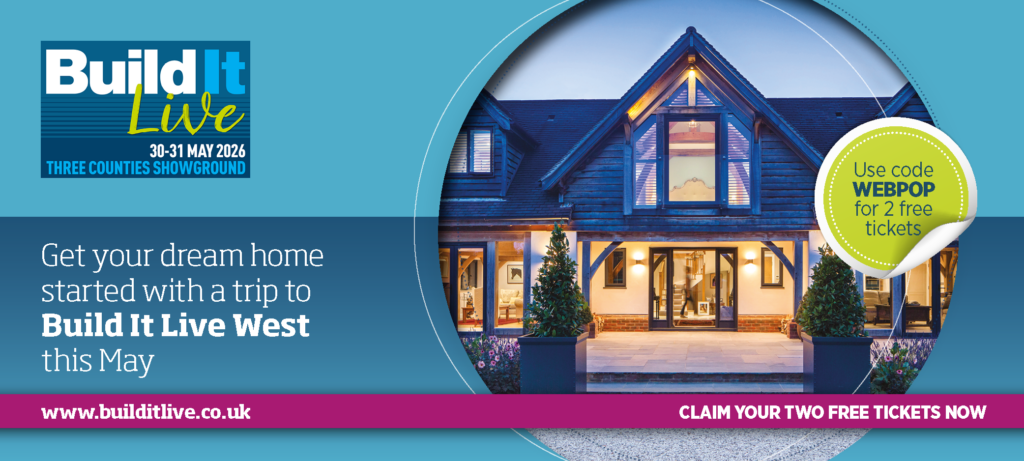
Just over two weeks to go until our brand new show!
Build your dream home with confidence
BOOK YOUR TWO FREE TICKETS HEREBuild your dream home with confidence
BOOK YOUR TWO FREE TICKETS HEREEstimate your project costs instantly with Build It's interactive self-build cost calculator
Calculate NowGet an accurate, detailed cost breakdown of your project
Submit plansI’m looking in to the possibility of self building, and am attracted by the idea of a timber frame home. However, I’m concerned that I may not be able to secure finance on the same scale as I might expect for a brick-and-block build. Can you tell me whether the mortgages for timber construction differ in any way, and if so what affect it might have on how much I can borrow?
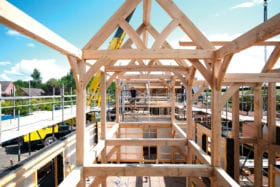
If you’re building a timber frame home with a brick or blockwork superstructure, this will be treated as a standard construction type, so there will be no difference in terms of the mortgages available to you. However, for other timber frame construction scenarios, the mortgage situation can vary.
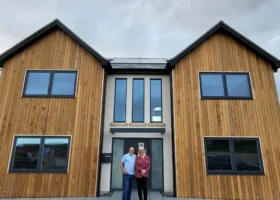
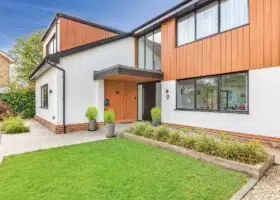
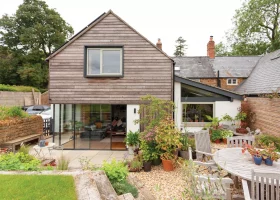
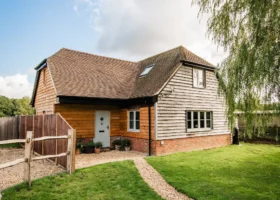
The material you’ll be using to clad your home is a key consideration when it comes to mortgages. While brick and block is thought of as ‘standard’, if you’re looking to use timber cladding your choice of lenders will narrow slightly. In fact, all lenders generally accept decorative cladding over blockwork, but if there’s no blockwork under the cladding, many will not lend. This is principally because of the need for regular maintenance of timber cladding – lenders are concerned that, if they did have to repossess a timber-clad house, it could be in poor condition if it has been neglected.
The proportion of a house that’s timber-clad may also determine exactly which lenders will be prepared to provide you with finance. Some will lend on timber cladding if it covers the entirety of the house, while others will only lend if the ground floor is brick and block, and the timber cladding is restricted to the first floor.
Another important factor to consider is cashflow during your project. Over the course of a brick and block build, costs emerge reasonably steadily throughout. However, with a timber-frame build, a greater proportion of the cost is incurred early in the project. This is because the cost of the timber frame kit will usually have to be paid before your foundations have been completed.
So if you’re building with timber frame, opt for a mortgage provider that will take the schedule into account. BuildStore offers an advance stage payment mortgage specifically for timber frame construction. The scheme enables you to spread some of the costs that are due during the foundation stage into the following stage. This reduces the borrowing requirements early on and improves your cashflow for the rest of the project. In addition, because you are getting your money up front, you can remain in a ‘cash positive’ position throughout.
David Murphy, BuildStore Financial Services, www.buildstore.co.uk