Early bird tickets now available
21st-22nd February 2026 - time to get your dream home started!
BOOK HERE21st-22nd February 2026 - time to get your dream home started!
BOOK HEREEstimate your project costs instantly with Build It's interactive self-build cost calculator
Calculate NowGet an accurate, detailed cost breakdown of your project
Submit plans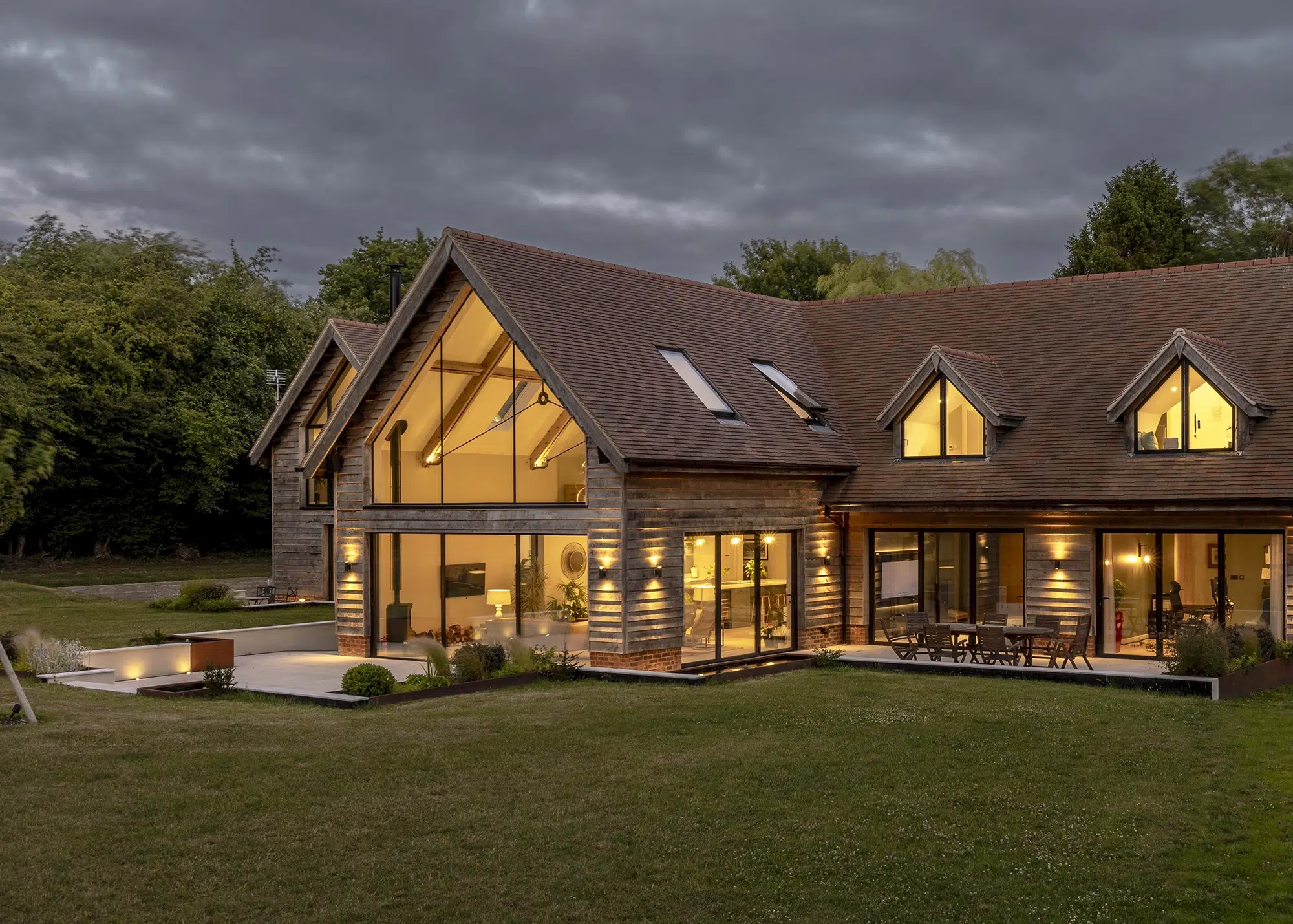

Many modern houses feature high ceilings which are in the shape of an inverted V and provide very dramatic, voluminous and photogenic spaces in which to live. When the walls in these spaces are glazed, they enable greater levels of natural daylight to enter a home, leading to better and healthier environments.
Modern structural systems and more efficient heating systems have led to this design becoming increasingly popular in self build projects – many of which you can regularly see featured in Build It’s collection of real-life case studies. Here, I am going to be exploring what you need to consider when designing a vaulted space.
When creating stunning vaulted areas, there are two main approaches to consider. Some prefer a sleek, minimalist appearance, opting to hide all structural components behind a plaster finish. This allows the ceiling to meet at a sharp point on the inverted V, creating a clean and uninterrupted space.
On the other hand, some self builders enjoy exposing the architectural trusses, often made from timber or steel, to add character and depth to the space. Exposed bolts, steel details and large oak or laminated timber sections can create impressive, vaulted ceilings that are sure to make a lasting impression. However, too many exposed trusses can overwhelm the area, so it’s best to try and balance the look by combining heavy timber at higher levels with stainless steel ties at lower points to help maintain visual harmony internally.

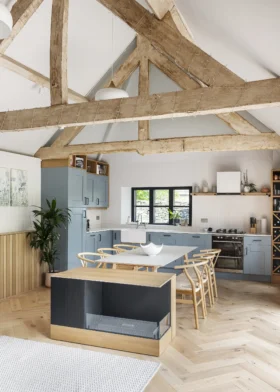
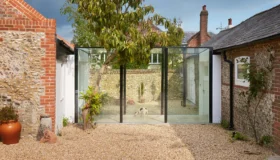
This charming extension to a listed farmhouse was created by Charlie Luxton Design. The new addition strengthens the home’s connection to its surroundings, with expansive glazing and a ceiling clad in natural oak. Photo: Mark Bolton Photography
With modern methods of construction, particularly the use of steel in design, it is possible to be innovative and dramatic with the shape of the inverted V, such as by incorporating curves. It all comes down to where your imagination takes you. It is your architect or designer’s job to make your ideas fly and ultimately to take the design to reality.
Whichever route you choose, it’s essential to discuss how you want your interior spaces to look right at the start of the design process. A thorough initial briefing is key to a successful self build. The style you want will affect the thickness of walls, the roof and the apex window, which will also impact the building’s exterior. Some structural elements for vaulted spaces can be bulky, so your design must balance aesthetics with practical use of space. Remember, making changes later, especially after planning permission, can be costly.
When you choose to design a vaulted space, you’re not selecting the cheapest construction solution. Nevertheless, creating vaulted ceilings will lift your line of sight and your spirits for as long as you live there.
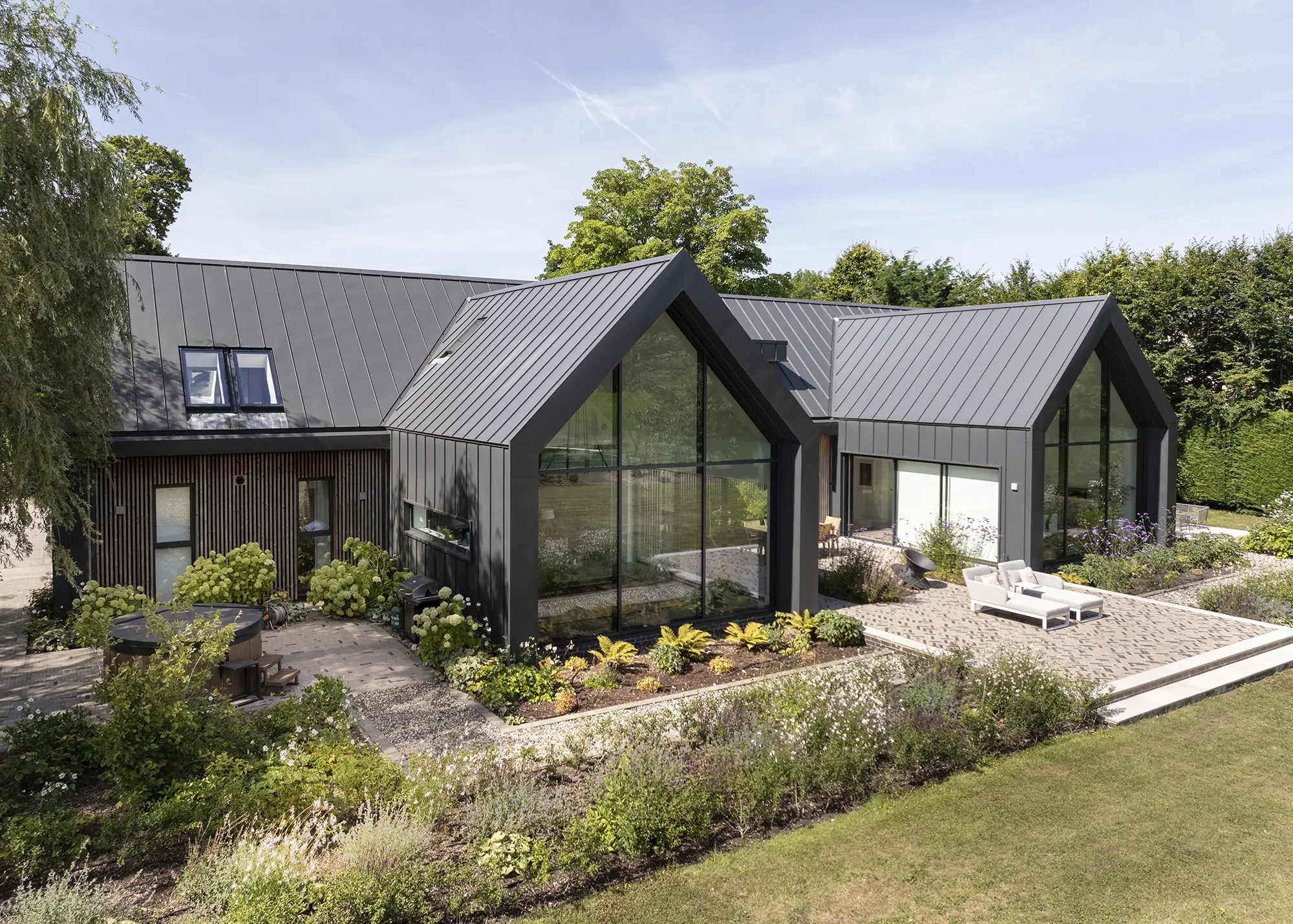
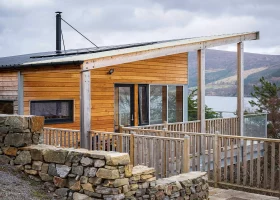
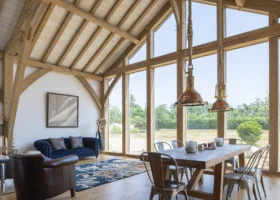
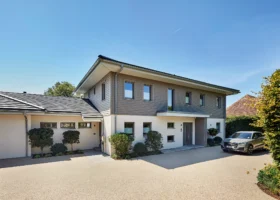
Build It readers Jonathan Boyne and Karen Anders designed this striking contemporary home with two projecting, double-height volumes. Inside, a vaulted space forms a bright seating area off the kitchen-diner, with large windows offering scenic views. Photo: Mike Couch & Paul Craig
It might be a more expensive architectural feature to go for, but the benefits to your day-to-day living and wellbeing are likely to return value to you. In theory, installing a flat roof will be cheaper to heat as there is less volume in the building. It’s common for people in older properties to install flat ceilings to try and reduce heating costs. However, remember that the real cause of high energy bills is poor thermal performance, often due to insufficient insulation, which can be an issue in any type of house.
Your space may feature a partially flat ceiling, or only certain elements of the vaulted structure might be exposed. A partially flat ceiling can create a strong sense of space and height while offering a smart way to hide services like ductwork. This is especially useful in modern, airtight homes that require mechanical ventilation and heat recovery (MVHR) systems. By running ducts through the flat ceiling zone, you can simplify construction without hindering your design.

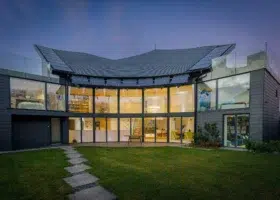
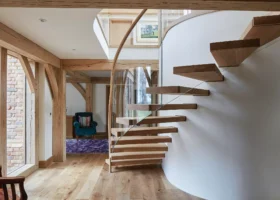
A vaulted ceiling doesn’t have to be a conventional peak shape. This design by 2020 Architects, has a curved form with exposed bespoke trusses to create a dynamic space
Vaulted spaces also enhance the building’s external appearance. Long, low-pitched roofs can often look awkward – especially when covered with heavy concrete tiles needed for weatherproofing. I often recommend redesigning such roofs with a steeper pitch, allowing for smaller, more elegant tiles. If changing the pitch isn’t possible, features like dormers or bay windows with steeper roofs can improve the visual balance.
When planning restrictions limit building height, incorporating vaulted areas across the ground and first floors can be a very effective way to create impressive, light-filled homes within these tight constraints.
All pitched roofs must be insulated to meet Building Regulations. Placing insulation above a flat ceiling creates a cold loft, while insulating at rafter level allows for usable living space or striking vaulted ceilings. Most modern homes and extensions now maximise this roof space for accommodation rather than leaving it to become inconvenient, inaccessible storage.
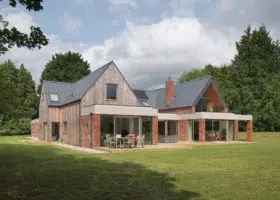
Connected Architecture designed this low-slung, light-filled and efficient contemporary farmhouse build. The kitchen-diner-living area features a spectacular vaulted ceiling, which is flooded with light via a full-height glazed gable
If you’re upgrading an existing roof, modern insulation can be retrofitted between and beneath the rafters. For those wanting fully exposed rafters, insulation can be added above them – but bear in mind that this will raise the roof height, so it’s vital to review the implications with your designer or builder at the start of your project.
Every vaulted or high-level space should ideally include an electric rooflight. Opening this along with a ground-level window creates a passive cooling effect, drawing cooler air in and pushing hot air out – something that is especially effective during the summer months. If space allows, positioning a ground-floor opening near a pond or water feature can further boost this natural ventilation without resorting to air conditioning.

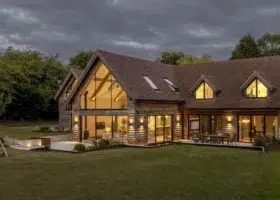
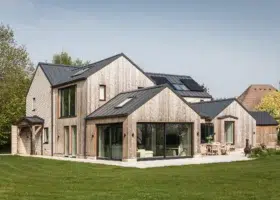
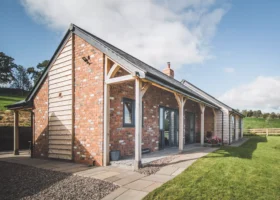
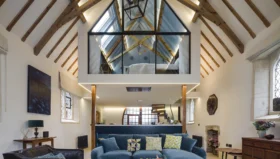
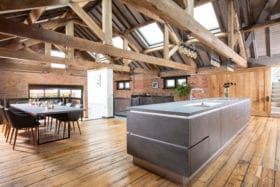
Oak frames lend themselves to cathedral ceilings. In this project by Oakwrights, the structural skeleton has been enclosed with its WrightWall and WrightRoof panel system for maximum airtightness and thermal performance
Light and sound should also be a top consideration for vaulted areas. Use shading devices to help manage natural light levels and any potential glare, and try adding soft furnishings, decorative rugs, chic wall hangings or specialist acoustic panels to dampen any sound reverberation coming from large, hard-surfaced spaces.
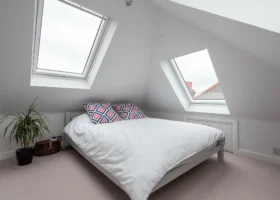
A loft’s pitched roof is, of course, a vaulted area – and useful for increasing living space, particularly where the height of your current building is limited by planning restrictions. In any design, rather than leave an entire roof space empty, I look at how the client can achieve an additional floor of accommodation within the roof via a loft conversion.
First, I identify whether there is sufficient height in the existing roof pitch as at least 2.1m of height is required. To create more useable floorspace in the roof, the easiest, although not necessarily the most elegant solution, is to add a flat roof dormer to the existing loft space. This will usually be situated to the rear of your property and, depending upon the size and location of your existing house, can be carried out under permitted development (PD) rules.
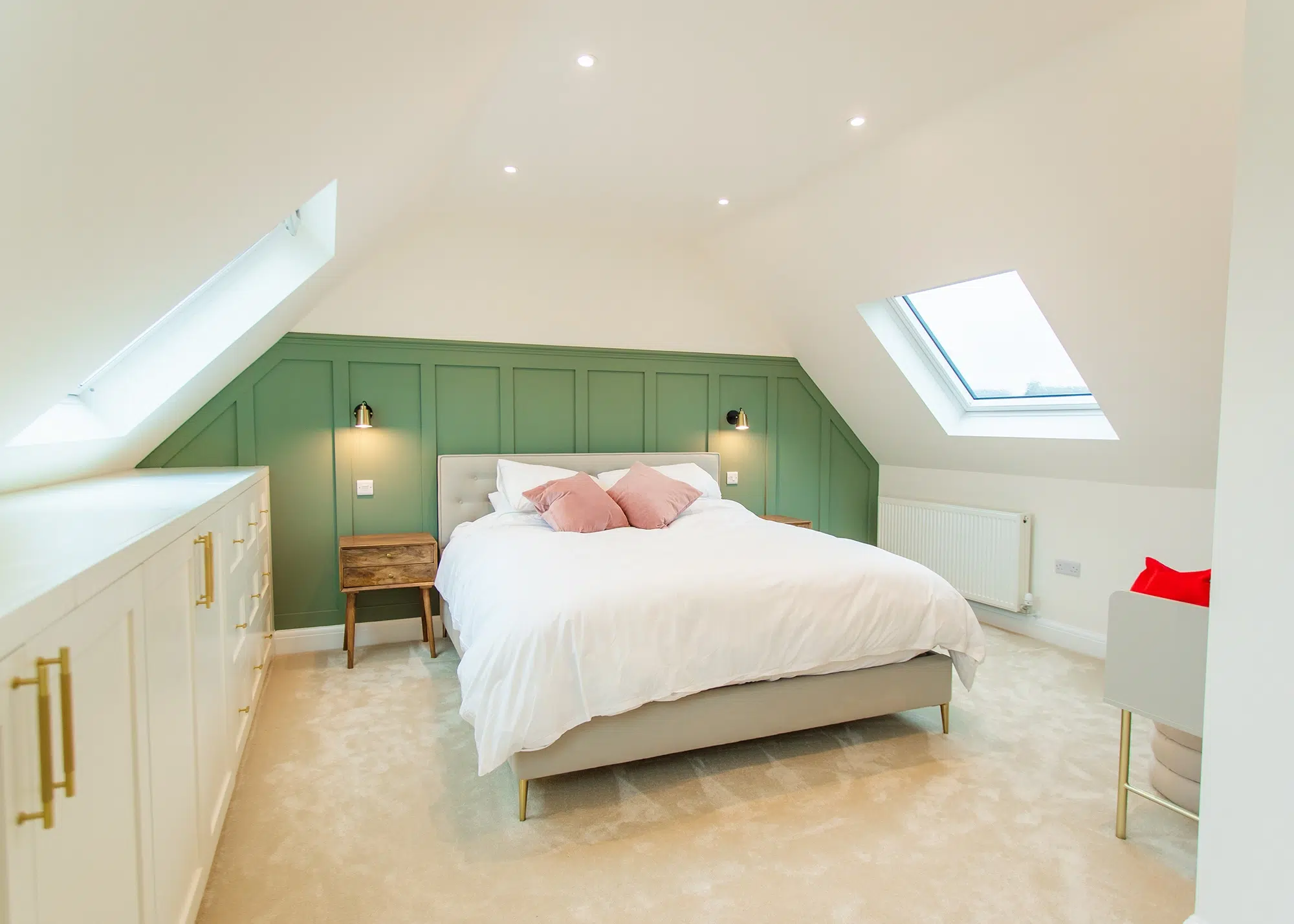
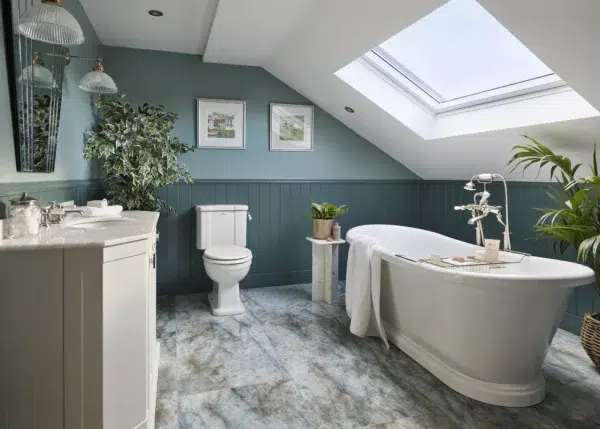
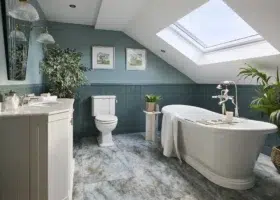
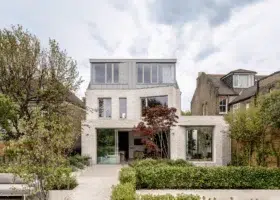
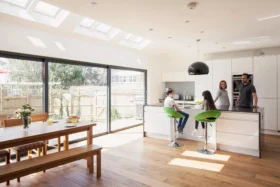
The owners of this Victorian semi-detached home in Bedford transformed their roof space with a rooflight loft conversion. To maximise space, DJA Moore Lofts designed a compact staircase with a slightly lower head height, freeing up more room for the bedroom and bathroom
To check what you can achieve in your roof, draw out the plan of the roof space available. Measure from the floor upwards and mark the sloping side of the roof (the ceiling) at the 1.8m point – this is roughly head height. This gives you an idea of how much useable floor space you will likely have in that loft area for a potential bedroom or ensuite bathroom.
Another approach to increasing the usable space in a loft is to raise the ridge line of your roof. Where nearby buildings are higher than yours or there is a mix of building heights in the vicinity this may be more permissible in planning terms. However, if all ridge heights are the same, then this is unlikely to be accepted by the planners, in which case you are dependent upon what you can do under PD rights.
Premium Content
Build It's loft conversion downloadable e-guide takes you through the essential considerations, from costs to an estimated project timeline. Click below to find out more.
find out more
There are a number of practicalities to consider in the design of your vaulted ceiling space. These can include how to establish access to redecorate the ceiling, how to clear cobwebs and how to change a light bulb, as you could be trying to reach heights in excess of 4m.
One of the homes we designed had a vaulted space with an internal height approaching 9m. Instead of positioning light fittings at high levels to illuminate the space, uplighters were set at lower, more accessible heights, which made changing the lightbulbs considerably easier for the homeowners.
As your design develops, do keep in mind how you will maintain the property and make sure that you can get appropriate access for redecoration. However, with regard to spiders, I have to admit I’ve yet to find a solution for easily and regularly removing all cobwebs.
























 Login/register to save Article for later