Step-by-Step Retrofit Guide – How to Improve Your Home’s Energy Efficiency
Looking to make your home more efficient, comfortable and ready for the future? Build It’s content director, Chris Batesmith, sets out the fundamentals – from upgrading your house’s insulation, through to ventilation, retrofitting heat pumps and accessing funding
Big changes like these bring disruption, but also opportunity. By upgrading the building’s performance at the same time, we can make our property warmer and more efficient – all while keeping its character intact. That means tackling draughts, adding insulation, replacing substandard 1990s windows and laying the groundwork for a future switch to low-carbon heating.
You might call this a people-first approach to retrofit: making the house work better for daily life, while improving its performance and protecting its value for the future. But how far should you go? Here’s an overview of why retrofit matters, what’s involved, and the measures you might introduce to improve your home’s energy efficiency.
According to the Office for National Statistics, over 50% of UK homes have an EPC (Energy Performance Certificate) rating of D or below. In other words, they’re leaky, inefficient and more expensive to heat than they need to be. Yet most were built with good-quality materials and, with the right guidance and upgrades, have the potential to meet modern expectations – both now and in the future.
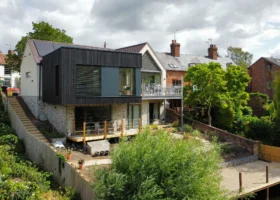
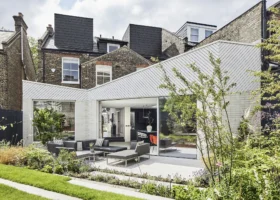
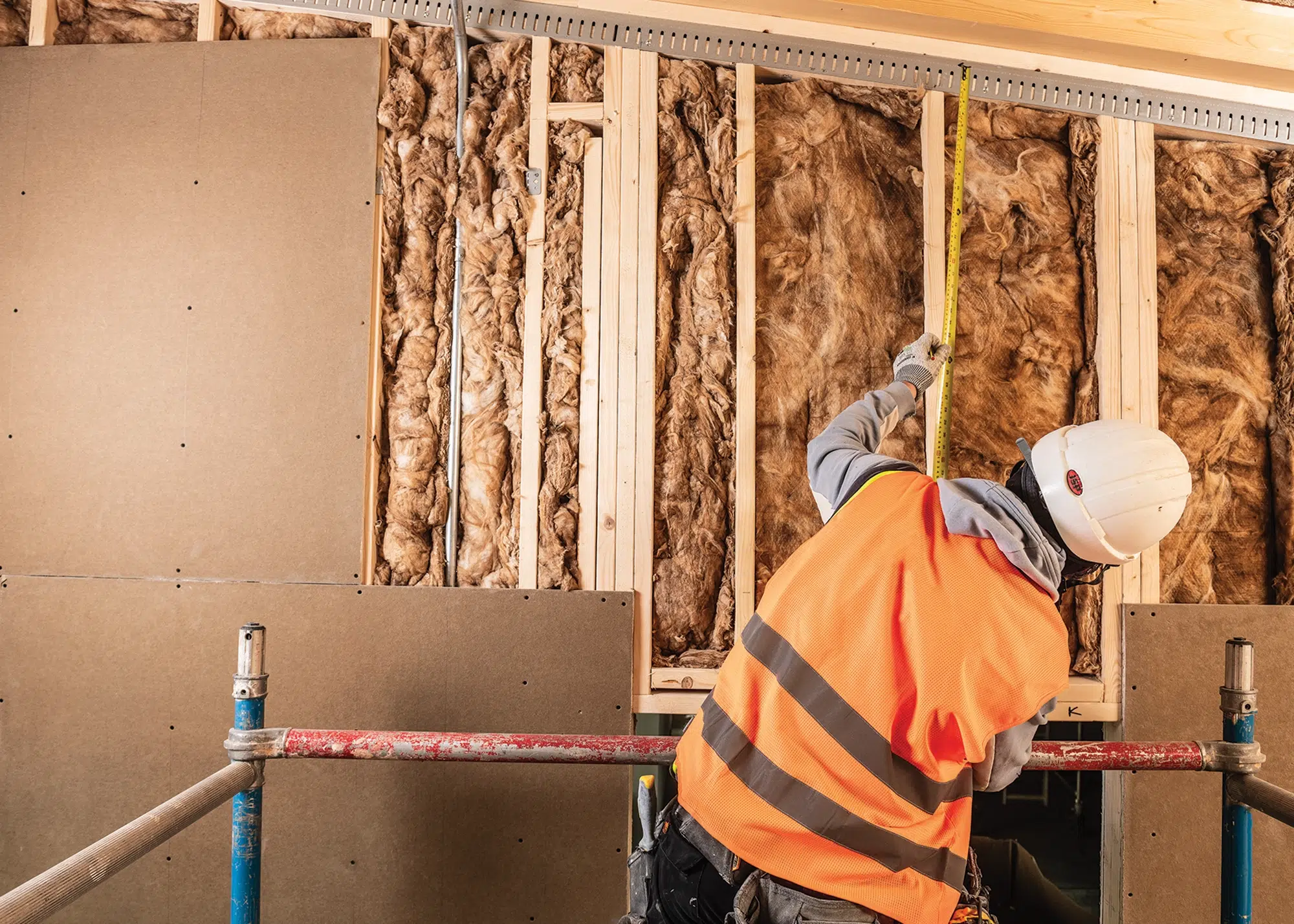
Even the best self builds need modernising at some point – including this 1980s gem by legendary self build architect Walter Segal. MAP Architecture consulted with Jon Broome – one of the build’s original experts – on its extension and refurbishment. Non-toxic materials, such as wood fibre insulation, help ensure good air quality inside the building. Photo: Taran Wilkhu
Our own home came with an EPC score of 59 (a middling D), which is typical of many Victorian properties. It’s pretty comfortable to live in day-to-day, but we’re paying more than we’d like for gas, and our ground floor bathroom sits outside the main central heating system (less than ideal with a young family). Like many renovators, our first priorities are to enhance the living spaces, boost comfort and reduce running costs. In doing so, we can hopefully improve the EPC rating – conserving our home’s value in the context of tightening energy efficiency rules.
A well-planned retrofit can achieve all this, while preserving what makes the house special. By upgrading the fabric and services, while being sensitive to its quirks and charm, you can make your home cosier, healthier, lower-carbon and more economical to run.
What does a retrofit project involve & where should you start?
A high-quality, people-first retrofit starts with a detailed assessment of your needs, along with the building’s performance. You might engage an architect, surveyor or specialist retrofit assessor to better understand your lifestyle and property and help plan the best route forward. From a technical perspective, the golden rule is to take a fabric-first approach. Prevent heat loss, ensure adequate ventilation and only then move on to heat and power.
Premium Content
Downloadable E-Guide
Looking to make your home more efficient, comfortable and ready for the future? We set out the fundamentals – from upgrading your house’s insulation, through to ventilation, retrofitting heat pumps and accessing funding for a project
An uninsulated semi-detached house can lose up to a quarter of its heat through the roof alone, according to the Energy Saving Trust. Topping up loft insulation is one of the simplest and most cost-effective upgrades to make.
What do I need to consider before retrofitting insulation?
Insulating walls, floors and roofs can’t be done in isolation. These elements meet at junctions, and by improving one area you may make another relatively colder. This can trigger condensation and mould where none existed before.
You need to consider ventilation. As the lead author of PAS 2035 likes to put it: “no insulation without ventilation.” The process of improving a house’s thermal performance reduces natural air leakage, but many homes depend on this for fresh air. Investigate how ventilation will be maintained.
Your heating system. You’ll only realise the full benefits of insulation upgrades if the heating system performs appropriately.
What kind of insulation materials are best for renovations?
Mineral wool insulation remains a strong mainstream choice for many retrofits, as it’s inert, affordable and made from eco-friendly, sustainable resources. It’s even available in blown form to inject into cavity walls.
Natural insulation materials, such as sheep’s wool, wood wool, hemp, cork or cellulose often perform better in solid-walled buildings. This is because they manage moisture better than other synthetic products on the market.
Rigid board insulation materials, such as polyisocyanurate and polystyrene, are good, high-performance options. There are circumstances where boards are essential to minimise thermal bridges (such as in lofts or door/window reveals). High-performance, slim boards such as aerogel mixes can be the best solution to reduce heat loss in such situations. They’re not suitable for all buildings, however, as they don’t offer great breathability. Rigid boards tend to work best in modern retrofits.
A growing number of healthy alternatives to plasterboard are becoming available to homeowners, including solutions like Adaptavate’s Breathaboard, which is currently being piloted to prove its readiness for use in residential schemes. This solution passively regulates moisture within internal space, reducing the likelihood of condensation and mould. Photo: Rafael Bastos
How much insulation should you use when upgrading?
When deciding how much insulation to use, many will default to the minimum U-values (a measurement of heat loss through a building element) standard set out in Building Regulations Part L1B. This may not yield the best results, however.
Take external wall insulation (EWI), for example: the bulk of project costs for installing this lie in access (scaffold), finishes and moving services. Opting for a slightly thicker insulation will therefore be a relatively inexpensive upgrade and should prove a good use of your build budget.
Lofts are different. Current guidance is around 300mm of mineral wool, but if you already have 150mm, the extra investment may bring only marginal savings – especially once embodied energy is factored in. It comes back to the law of diminishing returns: a little insulation can make a big difference, but doubling up doesn’t always halve your bills.
Some homeowners pursue advanced retrofit standards such as EnerPHit (keep reading for more on retrofit standards). These can be very demanding, requiring exceptional airtightness and insulation levels. While they offer outstanding comfort and energy performance, they’re not the only path. You may be able to deliver the quality and comfort you desire with less intensive upgrades.
Making your home more airtight will keep heat in and bills down – but fresh air is vital to prevent moisture build-up and maintain healthy, enjoyable living spaces. “Wellbeing, not just energy, should be the overriding concern in any home upgrade project,” says Build It magazine’s eco expert, Nigel Griffiths.
The key areas to draughtproof when renovating:
Windows & doors Seal gaps around frames, letterboxes and keyholes.
Floors Draughtproof suspended timber floors while upgrading floor insulation. Use a breathable membrane to seal any overlaps or joints.
Lofts & roofs Upgrading insulation will help reduce draughts. Just avoid blocking airflow at the eaves – these must be kept clear to prevent condensation.
Fireplaces Leaving old chimneys open can be a big source of heat loss. Install permanent draught excluders if it’s not in use and cap the chimney.
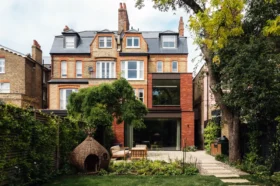
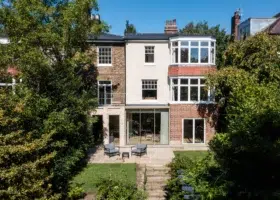
Bradley Van Der Straeten Architects and Optimal Build worked together to retrofit this Victorian house in London. The walls have been lined with cork insulation and finished with a lime render to ensure the masonry structure can breathe, mitigating any damp-related issues. An air source heat pump and solar PV array generates domestic heating and hot water. Photo: French + Tye
Retrofit ventilation strategies to consider:
Natural ventilation Trickle vents, airbricks and openable windows. Install extract fans in wet zones.
Mechanical extract ventilation (MEV) extracts damp air from kitchens and bathrooms, while drawing in fresh air via background ventilators. Centralised MEV typically costs £2,000-£5,000 depending on system complexity.
Positive input ventilation (PIV) introduces slightly warmed air into a property, creating a small pressure that pushes stale, damp air out through gaps in the building fabric, reducing condensation and helping prevent mould.
Mechanical ventilation and heat recovery (MVHR) & Centralised MVHR supplies fresh air and extracts stale air while recovering around 95% of outgoing heat.
HVAC All-in-one heating ventilation & cooling Technologies like The Unico System are designed to work in tandem with other tech to deliver a comfortable, even climate, combining an air handling unit with a heat pump.
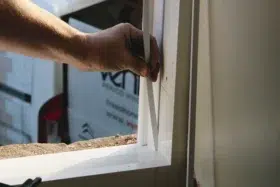
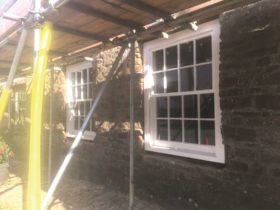
Older glazing systems can be a weak point in terms of thermal performance, yet they may be integral to a property’s aesthetic appeal and value. Your options range from repairing and draughtproofing existing windows through to replacement with new, more efficient units.
What are the key indicators that you need to replace your windows?
“The most obvious signs that you may need to start thinking about replacement windows are if you experience draughts, condensation between panes, difficulty opening or closing, or can see visible damage,” says Lucy Wheeler, marketing manager at Ecohaus Windows & Doors. These issues can lead to significant heat loss, safety concerns and a drop in the overall performance of your home.
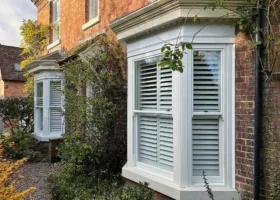
These windows from The Residence Collection are a stylish, easy to maintain timber alternative window that authentically replicates heritage designs using modern composite materials. You can choose to include deep nose cills, Georigian bars and traditional hardware
Beyond visible wear and tear, “rising energy bills, cold spots in your home, or lack of acoustic insulation can also indicate that your windows and doors are no longer performing as they should be,” says Lucy. Taking steps to replace or upgrade them can help reduce heating costs and enhance your home’s appearance.
Head to Build It Live and visit the Sustainable Building Products Pavilion (in association with the Alliance for Sustainable Building Solutions) for some expert advice and to source some of the best eco products on the market.
Build It Live takes place three times a year in Kent, Malvern and Exeter. The next show will be on 26th and 27th February 2027 in Maidstone, Kent. Claim a pair of free tickets today and start planning your visit.
Upgrading your home’s heating supply & distribution
Once you’ve reduced the building’s energy demand, you can look at upgrades such as better heating controls, low-carbon heat pumps, solar panels and LED lighting.
Heating supply
Gas boilers If your boiler is relatively new (under 10 years old) it could still meet your needs, especially if you’re reducing heating demand and draughtproofing. If it’s older, consider a replacement (typically around £2,500).
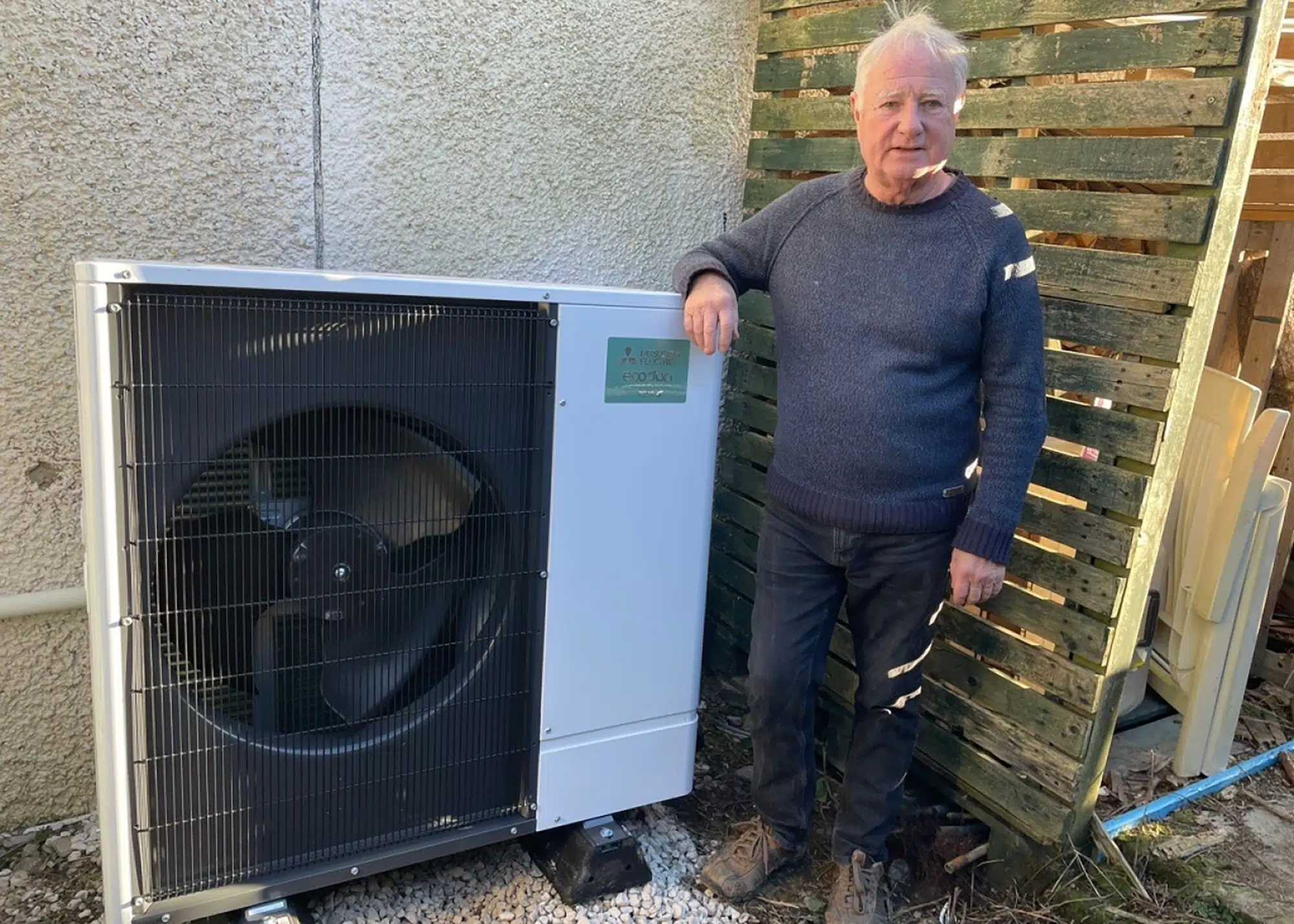
Heat pumps They extract heat from the air or ground and concentrate it. They operate at around 250%-350% efficiency, meaning they generate more heat energy than they consume. You can access a £7,500 grant via the Boiler Upgrade Scheme (BUS). Homes running off oil heating can access an enhanced grant of £9,000 to help them make the switch to low-carbon heating.
Biomass boilers These low-carbon systems are a good option for larger homes, though they come at a premium and require space for fuel storage.
All-in-one heating & ventilation Solutions such as MVHR will reduce the load on your primary heating system. Consider HVAC if you’re looking for a heating, cooling and ventilation system in one single integrated solution.
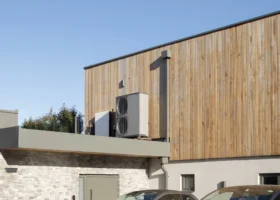
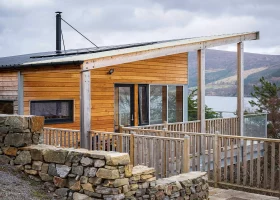
Overlooking Lake Windermere, Neil and Anne Clarke replaced the oil boiler in their annexe with a Mitsubishi Electric Ecodan R290 heat pump, delivering up to 75°C flow temperatures without radiator upgrades. At just 40dB(A), the system delivers efficient, quiet heating in a rural setting
Heating distribution
Radiators Most central heating systems were designed for high flow temperatures from a boiler, with a 20°C difference across radiators. Heat pumps, by contrast, operate at lower flow temps and only tolerate a 5°C difference, so the system must be sized accordingly.
Underfloor heating UFH can cover a large surface area, and so can run at consistently low flow temperatures, ideal for heat pumps. This can also reduce wear on a boiler. Many UFH systems are designed for retrofit, with minimal build-up in both solid and suspended timber floors.
Woodburning stoves An enclosed fire also provides a lovely focal point and the appeal of radiant heat (rather than just air heating). If you are in a smokeless zone then you will need to use a woodburner specifically designed for these areas.
CASE STUDY A terrace home in Glasgow upgraded with a full retrofit and rear extension
James Morton and Fenella Barlow Pay worked with Loader Monteith architects to transform their red sandstone terrace house in Glasgow into a sustainable, eco-friendly home perfectly tailored to modern family living.
Photo: Jim Stephenson
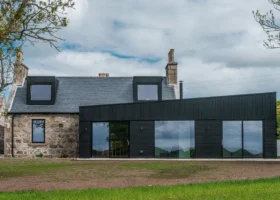
From the outset, the brief to involved making better use of the ground floor, taking the house off gas, emphasising a better relationship to the garden, and adopting the use of natural materials. The project involved replacing a drab 1970s extension to the rear with a larch and Corten steel extension, opening up the ground floor to the garden.
Photo: Jim Stephenson
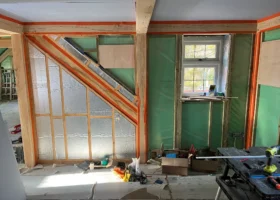
The couple specified materials such as breathable wood fibre insulation, natural lime plaster and non-toxic internal finishes. James installed thick insulation across floors, walls and roof, too, significantly reducing heat loss and improving moisture regulation, using an infrared camera to map and identify areas of heat loss and test the home’s performance.
An efficient air source heat pump (ASHP) warms the new cast iron radiators and runs just three to six hours per day. With smart energy tariffs, the system operates mainly during off-peak hours, dropping the family’s energy bills to less than a third of what they once were.
Location
Glasgow
Start on site
September 2023
Completed
June 2025
Gross internal floor area
179m²
Extension cost per m²
£1,250 per m²
Choosing the right materials for a retrofit
Owners of period homes will know the importance of specifying materials such as lime or clay plaster to maintain the building’s breathability and support a pleasant internal environment. Sustainable, natural materials and finishes are worth considering for more modern retrofits, too. Renovation expert Kate Sandhu delves into what you need to know about sourcing second-hand and recycled materials.
Kate Sandhu
Kate Sandhu is a renovation pro, helping others to understand the process and save as much money as possible via her home renovation course. She shares a wealth of knowledge, as well as DIY tips via her blog renovatelikekate and Instagram account.
Where can I find recycled materials?
Across the UK, there’s a thriving market for reclaimed and surplus building supplies. Salvage yards are a great place to start – look for places like SalvoWEB or Enviromate, where you’ll be able to find everything from reclaimed bricks and tiles to old floorboards and cast-iron radiators. These items often come with real history and charm.
Online platforms such as Gumtree, Freecycle, eBay and Facebook Marketplace also offer a great array of leftover materials from local renovations. If you’re after something a little more specific, suppliers like Seconds & Co specialise in surplus insulation – brand new products at heavily discounted rates due to overstock or slight defects. Community wood recycling projects, such as those in Brighton, Bristol or London, are also fantastic for affordable reclaimed timber and helpful advice.
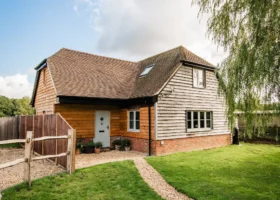
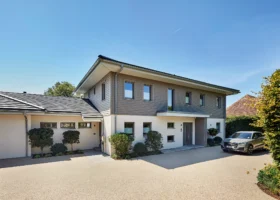
Nina + Co collaborated with ROAR to turn this chilly 1970s house into an energy-efficient home. The porch and garage were taken into the building’s thermal envelope so the exterior could be wrapped in expanded cork insulation. The finish will last 15-25 years, after which lime render can be applied on top to reseal the cork layer and extend its life. Photo: French + Tye
Which materials can be salvaged?
Bricks and tiles laid with lime mortar can often be cleaned and reused, while structural timbers like beams or joists may well be perfectly sound for reinstallation. Old doors, wooden floorboards, fireplaces and kitchen units can be given a new lease of life with a little extra care. Even rubble from the demolition phase of your project can be crushed and reused as hardcore. Some specific insulation products, such as rigid foam boards, might also be reusable if they’re dry and intact – but always check with your builder before reinstalling anything that affects performance or safety.
How can you identify quality materials?
If you’re buying from a salvage yard or second-hand supplier, ask where the materials have come from – many reputable businesses will be happy to provide these details. For brand new products that claim to include recycled content (such as insulation or boards) bear in mind that not all claims are equal.
It is best to look for labels like FSC (for wood) or Environmental Product Declarations (EPDs), which verify materials and their sustainability credentials. If in doubt, ask questions. A genuine supplier should be transparent and informative. With a bit of research, you can make product choices that are not only good for your build, but are also better for the environment.
The retrofit strategies I’ve set out in this article aren’t generic, one-size-fits-all solutions. Some households will start small – with low-cost, high-impact steps such as draughtproofing, loft insulation or secondary glazing – and then build from there. “Retrofit measures that are simple and low cost will tend to have lower environmental impact and thus be more likely to have a net benefit over the lifetime of the measure,” says Nigel.
Others go straight to a deep retrofit, addressing the whole building fabric and its systems. Even then, the work doesn’t have to happen all in one go. Phasing the project can make sense financially – but it’s wise to map out the entire journey in advance to avoid repeating works. For instance, if you replace your boiler before you’ve insulated, you could end up with an overpowered system that needs downsizing further down the line.
High-quality design and expert installation are critical to a successful retrofit. Getting this right will help ensure your investment pays back in lower bills, healthier living spaces and greater flexibility for the future – whether for your own family or the next buyer.
“The best projects set a range of aims and objectives at the start – from occupant wellbeing and energy use, through to water efficiency, sustainable drainage and heritage protection,” says Nigel. In other words, done well, retrofit isn’t just about bagging energy savings – it’s about creating a home that’s healthier, more comfortable and more enjoyable to live in.
Several standards have emerged in recent years that offer a framework for projects. You don’t necessarily have to adopt one of them wholesale, but it’s worth dipping into the pathways they recommend:
PAS 2035 The UK’s official, government-backed framework. Free to download, it avoids prescribing fixed performance targets, instead promoting a principle-led approach balancing efficiency, safety and cost.
EnerPHit The renovation version of the new-build Passivhaus standard. Core measures include triple glazing, excellent insulation and MVHR (mechanical ventilation and heat recovery). Accepts a staged approach.
AECB CarbonLite Focuses on carbon emissions, plus consider moisture build-up and heritage risk. Uses the Passivhaus modelling programme, but provides a middle ground between EnerPHit and a lighter retrofit strategy.
Living Building Challenge A holistic standard that goes beyond energy, accounting for place, water, health, happiness, materials, equity and beauty. Subjectivity and flexibility are built in, which can enable innovative solutions.
RICS residential retrofit standard Intended as professional guidance for certified surveyors, but well worth a read for homeowners. Particularly valuable for identifying pre-retrofit defects and solutions in older houses.
CASE STUDY EnerPHit bungalow renovation
This 1970s bungalow has undergone a comprehensive EnerPHit retrofit and refurbishment project, transforming it into a Georgian-style, energy-efficient family home. Despite a modest increase in footprint, the internal treated floor area has more than doubled, from 194m² to 411m², but the heating demand has nevertheless been drastically reduced from 90kWh/m² to just 14kWh/m².
Before & after the retrofit
The project takes a fabric-first approach using the TCosy system from Beattie, which is designed to wrap existing structures in a high-performance thermal envelope. The scheme includes advanced building services, such as a Brink Flair 600 mechanical ventilation with heat recovery (MVHR) system, plus a 50m REHAU ground tube that passively pre-conditions incoming air to boost heating and cooling efficiency.
How much does it cost to retrofit a house?
Heat pumps According to the Microgeneration Certification Scheme (MCS), it costs £13,223 (on average) to retrofit an air source heat pump. This is based on data from over 34,000 installs by MCS-certified members. Currently, the Boiler Upgrade Scheme (BUS) offers a £7,500 rebate on heat pump installs. So, the average ASHP install probably costs more like £5,700 once the grant is applied.
Solar panels According to the Energy Saving Trust, a typical 3.5kWp system costs around £6,100. The Trust suggests bill savings of anything from £340 to £650 per annum from an average solar PV install.
Battery storage Adding battery storage is likely to cost the same as the panels themselves, and any unused electricity can be sold back to the grid via your energy provider’s Smart Export Guarantee.
Underfloor heating (UFH) will be influenced by the chosen system, among other variables, but you can expect to pay anywhere from £36-£120 per m², excluding VAT. “Additional installation costs can range between £224 and £720 for most projects, and up to £1,000 in London,” says Tom Edmunds, general manager at Wunda Group PLC.
Window replacement costs depend on how many units you’re replacing and the type of window. To give you a ballpark for how much to budget, the average costs for double glazed windows and installation in the UK for a three bedroom semi-detached house with around 10 casement windows range from £6,000-£8,000 for PVCu units to £14,000-£18,000 for timber.
Can I access any funding to make energy efficiency improvements to my home?
Build It’s project management expert, Mark Stevenson, sets out what you need to know about green mortgages for renovations, and how to access the right funding for a retrofit.
Mark Stevenson
Mark Stevenson has worked as a construction professional for over 35 years and is a serial self builder. He runs project management consultancy Elsworth Projects and, as chair of NaCSBA, advocates for the interests of self builders and contributes to the success of the emerging custom build industry.
What funding options are available?
Green mortgages are home loans that reward borrowers for investing in energy-saving measures by providing lower interest rates, cashback offers or more generous borrowing terms.
How can you tell if you’re eligible for a green mortgage?
Green mortgages are usually linked to the property’s Energy Performance Certificate (EPC) rating. If your home is rated A or B – or you’re to bring it up to that level – you may be eligible. Qualifying improvements might include insulation upgrades, heating improvements, installing photovoltaic and solar panels, fitting triple glazed windows, or a range of other renewable energy technologies.
Who offers green mortgages?
Most high street lenders offer green mortgages and more providers are now supporting eco renovations with flexible finance arrangements. Your lender will usually want to see either a retrofit plan or energy assessment, along with quotes and timeline for the upgrades. Some release funds in stages as the work is completed, just like with a renovation mortgage, making cashflow easy to manage.
Green mortgages support an approach that focuses on longer-term benefits of living in a more energy-efficient home that costs less to run. They also offer reduced mortgage rates or cashback deals that will save money, depending on the extent of improvement to your homes EPC rating.
How much can I borrow?
Aside from the perk that an eco build is often more comfortable to live in, a major advantage of a green mortgage is that lenders will often lend more money. By considering the reduced running costs and a potential improvement to the home’s value, lenders are able offer larger loans, provided you pass the affordability test.
What hidden costs do I need to be aware of when retrofitting an air source heat pump?
There’s no getting away from the fact disruptive works always need to be put right. Bear in mind heating installers are specialists in their field, but they’re not decorators and may not be skilled enough to achieve a brilliant finish when replastering walls or replacing floors. It’s often better to line up follow-on trades to chase walls, lift floors and make good afterwards, as they’re more experienced in that aspect of the work.
Experienced plumbers command a fairly steep hourly rate – potentially more than a plasterer or carpenter. So, if you use them to sort out the finishes, you could end up paying over the odds for someone whose skills aren’t ideally suited to the task. Note that some floors can’t be relayed once lifted, so replacements may need to be factored into your budget.
The old boiler needs to be removed, too, and depending on the type, this may trigger additional costs for a qualified oil or gas engineer. The area the boiler was in will also need finishing. For instance, making good where the flue passes through the wall or roof. If this is located high up, you may need to pay for scaffolding to provide safe access.
David Hilton is a renewables and ventilation installer, with over 35 years’ experience. He runs Heat & Energy, has a Masters in Sustainable Architecture and is an authority on eco building and energy efficiency. He leads Build It’s Virtual Training on heat pumps and off-grid solutions.
Do healthy building materials always cost more?
In most cases, you can expect to pay a premium for natural, non-toxic solutions. “Unfortunately, as natural, healthy materials are still not as commonly used, there’s usually a cost uplift against a more mainstream option,” says Will Dewar Will Dewar, director at Sketch Architects. “However, this varies greatly and is not usually as much as some contractors will make out.” Plus, as these kinds of alternative products move out of the niche category and gain more market traction, it’ll drive prices down and make them more accessible for everyone.
It’s also worth remembering the finishing materials are what you’ll interact with throughout your home on a day-to-day basis. “Prioritising the largest surfaces that are going to have the biggest impact on the end user’s health is a cost-effective strategy,” says Daniel Masterman, director at Helyer Davies Architects. What’s more, the right finishes can also support the longevity of the building structure by minimising the risk of condensation and mould – adding real value to your investment.
What are some easy ways to improve air quality inside my house?
Clean your carpets. Carpet can hold onto allergens, so it’s important to regularly vacuum to get rid of any irritants buried within the fibres. If you have pets at home, old hair they’ve shed and dander can be carried indoors, too, so hoovering regularly will help you stay on top of things.
Avoid drying clothes inside. Drying wet clothes inside increases the risk of damp and mould, so where possible, it’s best to hang them outside. If you need to dry your washing inside, be sure to open a window or consider using a dehumidifier to suck up the moisture from the air.
Ventilate cooking zones. Cooking produces grease, smoke and various smells, as well as moisture. A good quality cooker hood and extractor can help clear the air of particles that evaporate as you cook and prepare meals. If you have an MVHR system, you’ll need to specify a recirculating downdraft extractor.
Don’t rely on plants. While some have air purifying properties, the amount you’d need to make any real difference to internal air quality is substantial, and they’d need to be kept in optimal condition, too. If you’re after a portable solution, a compact air purifier might go some of the way in helping to filter out harmful contaminants instead – and will probably have a bigger impact than a peace lily. But centralised ventilation is the ultimate in air quality.
Rebecca is a former Features Editor of Build It magazine. She loves architecture and design and scours the UK for the latest projects to inspire both self-builders and renovators.
Are battery storage systems bad for the environment?
Battery storage might save money and help to reduce the carbon intensity of the electricity supply overall, but they do have significant environmental impact. The main culprit here comes from the extraction of lithium used in most modern battery systems.
Depending on system setup, it generally takes a few years for the embodied CO2 in domestic battery storage systems to be repaid. Bearing in mind the batteries are not expected to last more than 15 years on average, this becomes significant. Some companies use sustainable sourcing policies, such as repurposing used vehicle batteries and giving them a second life as home energy storage systems.
Nigel Griffiths is Build It’s eco expert, specialising in sustainable construction and retrofits. He is the author of the Haynes Eco House Manual and advises public bodies and individual developers on their building projects. You can meet Nigel at Build It Live and speak to him about your own eco project.
Do I need insurance for a home renovation?
This comes down to the scope of works. Talk to your home insurance provider about the renovation works you are undertaking, as they will want to know what these consist of, the estimated start and finish dates, the costs and the form of contract or agreement you have with the builder. If the project’s above their threshold for complexity or cost, you’ll need to take out specialist renovation cover and should talk to a broker to obtain quotes.
You need to ensure that your home is protected and that both you and your builder have appropriate cover in place for the works, their employees and the public.
Answered by Emma Perkin
Emma Perkin is director at Emil Eve Architects, an award-winning studio based in East London. Established in 2009, Emil Eve creates imaginative and inspiring buildings and spaces.
Chris Batesmith
Chris Batesmith is Castle Media's Content Director and Editor of Build It magazine. He's a trained carpenter and experienced renovator and self builder, turning his hand to everything from plastering and tiling to plumbing and electrics.
In 2019, Chris project managed the completion of Build It's very own Self Build Education House. He is currently renovating a Victorian fixer-upper in Kent.
Chris has worked in homes and construction media for over 20 years, focusing on self build, renovation and retrofit since 2009. He is an expert and speaker at the Build It Live shows, and chairperson of the Build It Awards.




























 Login/register to save Article for later