

- Plan ItBack
- Design ItBack
- Build ItBack
- Homes
- ProductsBack
- CostsBack
- Self Build Cost Calculator
Estimate your project costs instantly with Build It's interactive self-build cost calculator
Calculate Now - Costs & Finance
- Contracts & Warranties
- Build It Estimating Service
Get an accurate, detailed cost breakdown of your project
Submit plans
- EventsBack






















































 Login/register to save Article for later
How to Retrofit an Air Source Heat Pump – Your Guide to Installing an ASHP in an Existing Home

Are you considering replacing your boiler with an air source heat pump (ASHP) to help lower your bills and create a more efficient home? Well, it’s not uncommon, and any UK homeowner looking at making energy efficiency improvements will be researching the ins and outs of installing an ASHP. Two of the most common questions about this tech are “how much does it cost to install an air source heat pump?” and “how much can I save on my bills with an air source heat pump?” These queries may seem simple, but in fact they’re complex to navigate.
If you’re self building a house, everything will be brand new. So, with careful planning, there shouldn’t be any unexpected surprises. “In an existing home it’s not that simple, as there can be hidden issues,” says Dave Hilton, a renewables expert with 35 years’ experience and course leader for Build It’s Virtual Training sessions on heat pumps. The decision on whether to retrofit an air source heat pump revolves around costs, bill savings and carbon savings – but there’s a lot that goes into this, so you’ll want to fully understand the implications.
In this air source heat pump retrofit guide we’ll be looking at:
- How much it costs to retrofit an ASHP & how much they cost to run
- Whether your home is actually suitable
- Where an air source heat pump should be installed
- How an ASHP installation will impact your existing central heating setup
- Retrofitting a heat pump FAQs
How much does it cost to install an air source heat pump as part of a retrofit project?
According to the Microgeneration Certification Scheme (MCS), which sets quality standards for low-carbon technologies, it costs £13,223 (on average) to install an air source heat pump. This is based on data from over 34,000 installs by MCS-certified members.
In the context of a replacement boiler install (typically around £2,500), that looks pretty steep. But in recent years, renewable technologies – including ASHPs – have benefitted from a range of financial grants and incentives. Currently, the Boiler Upgrade Scheme (BUS) offers a £7,500 rebate on heat pump installs (including air source heat pumps, ground source heat pumps and water source heat pumps).
Homes running off oil heating can access an enhanced grant of £9,000 to help them make the switch to low-carbon heating.
The Boiler Upgrade Scheme is accessible to both self builders and existing homeowners retrofitting an air source heat pump. “Most installers will deduct this figure from their invoice to you, so you pay what’s left after the BUS discount,” says Dave. So, the average ASHP install probably costs more like £5,700 once the grant is applied.
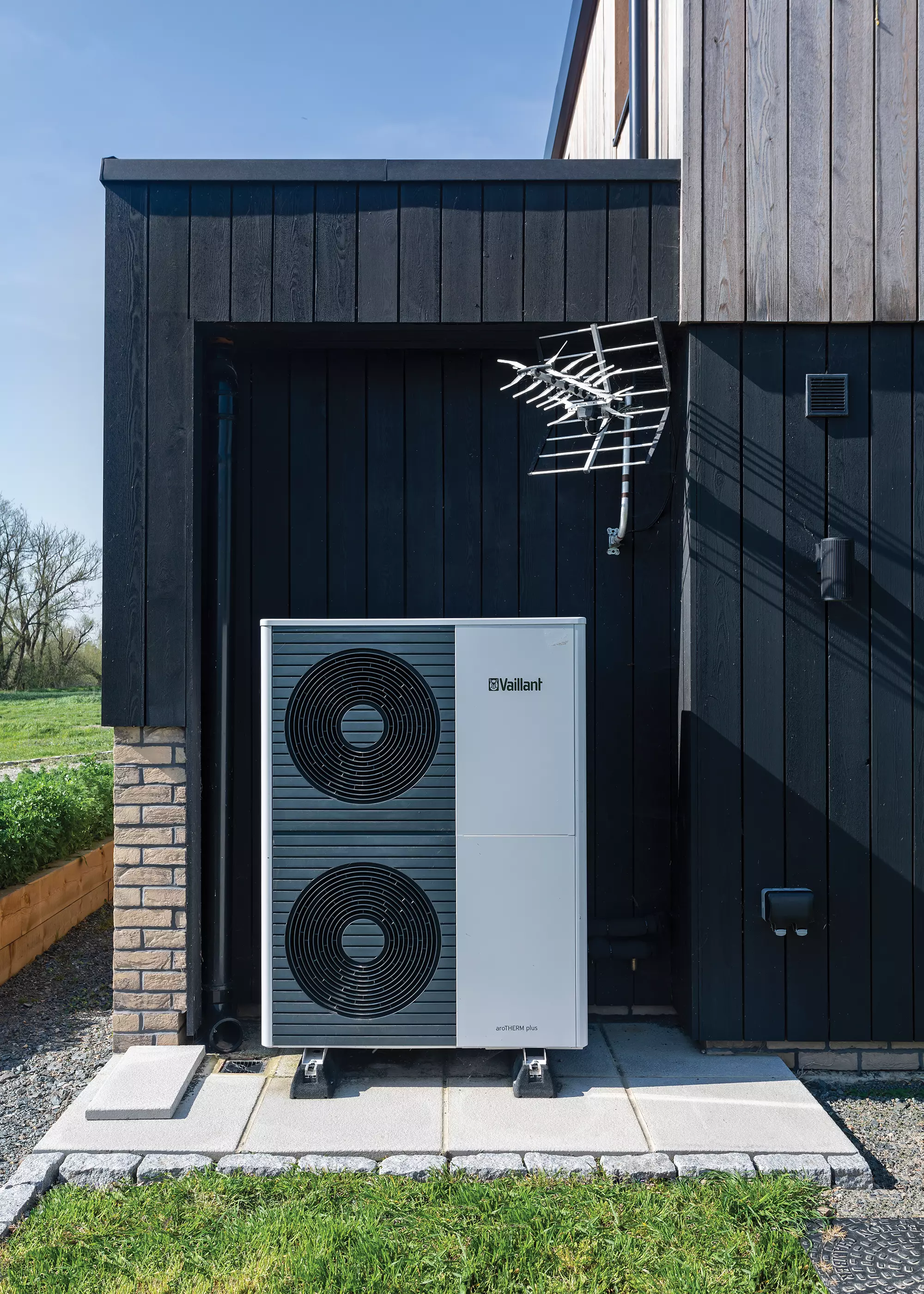
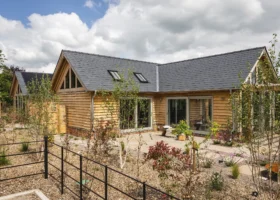
Freddie and Katie Pack specified a Vaillant air source heat pump via Solaris Energy, which allows the couple to run a low energy property with minimal long-term costs. Photo: Richard Gadsby
You may have seen adverts from some of the big energy suppliers promising heat pump installs at very low cost, from as little as £500. In reality, most customers will pay more – not least because in existing homes, it’s the rest of a heat pump system (infrastructure, home insulation upgrades etc) where costs start to add up.
“The larger companies work to a particular formula, and they’re very good at that. So, if your property fits the formula, then it can make a lot of sense to go with them,” says Dave. “But if you have bespoke needs or you’re looking at a complicated or drawn-out air source heat pump installation, then an independent heat pump specialist may be better.”
Is my home suitable for an air source heat pump installation?
Air source heat pumps work best in well-insulated and airtight properties that retain warmth effectively. This enables them to run steadily at a low level, ideally in partnership with underfloor heating or low-temperature, oversized radiators. Achieving this is straightforward in a self build, but may be more complex with an existing home.
“Topping up loft insulation, draught proofing and similar cost-effective measures might be sufficient to make the building heat pump ready; in other words it will cost no more to reach desired comfort levels with a heat pump than it would have done with a boiler, pre-retrofit,” says Build It’s sustainability expert, Nigel Griffiths. There is, of course, a major cost implication to taking on this kind of work.
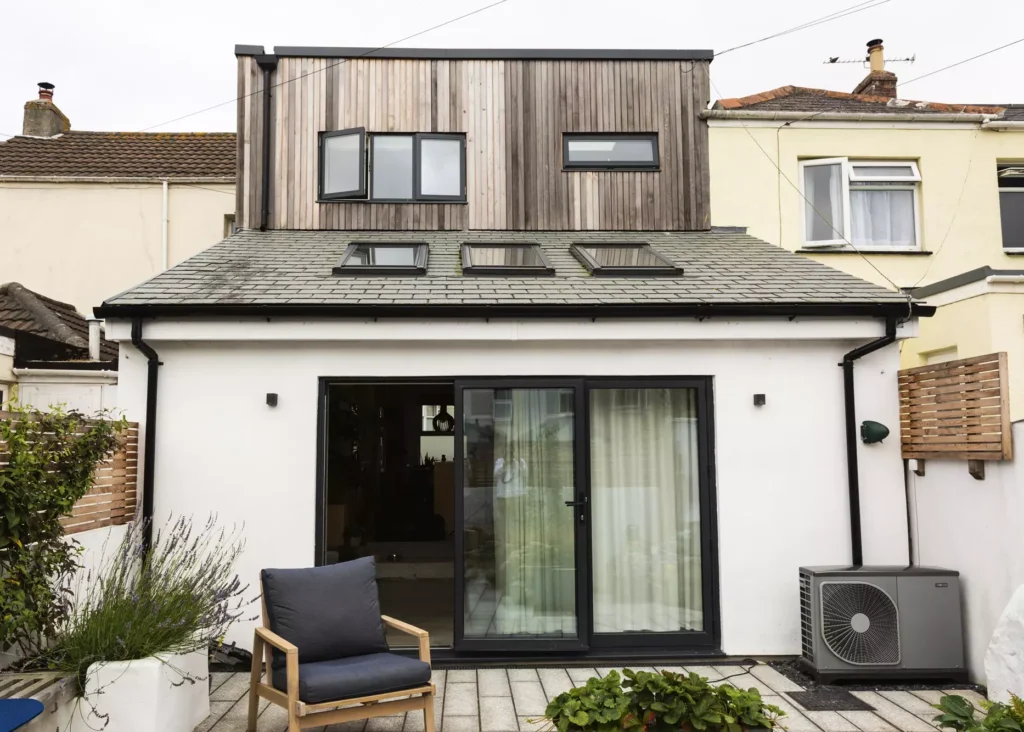
NIBE’s F2040-6 air source heat pump was selected as part of a low-carbon overhaul of this Victorian terraced house, which was also upgraded with insulation and other energy efficiency measures. The setup powers underfloor heating downstairs and radiators upstairs. “The house is always at a stable temperature, and my bills are lower than with the gas heating that existed before,” says owner Richard Lowes
Note that, since May this year, it’s become easier to get permitted development to retrofit a heat pump – including high flow temperature ASHPs. When you run a system at higher outputs, efficiency will drop a bit, but it could open the door to a less disruptive, cheaper install. “Imagine you need to change 12 radiators and some of the pipework in your central heating system, at a cost of around £4,000,” says Dave.
“If I could fit an air source heat pump that costs maybe £200 more per year to run, but avoids that disruption, it would be 20 years before the lower-temp setup pays back. These are generic figures, but you get the idea. And you could still upgrade the radiators slowly over the years, as part of normal decoration and maintenance.”
Where should you install an air source heat pump?
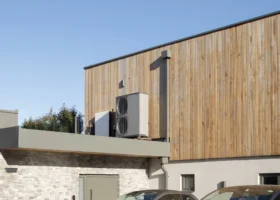
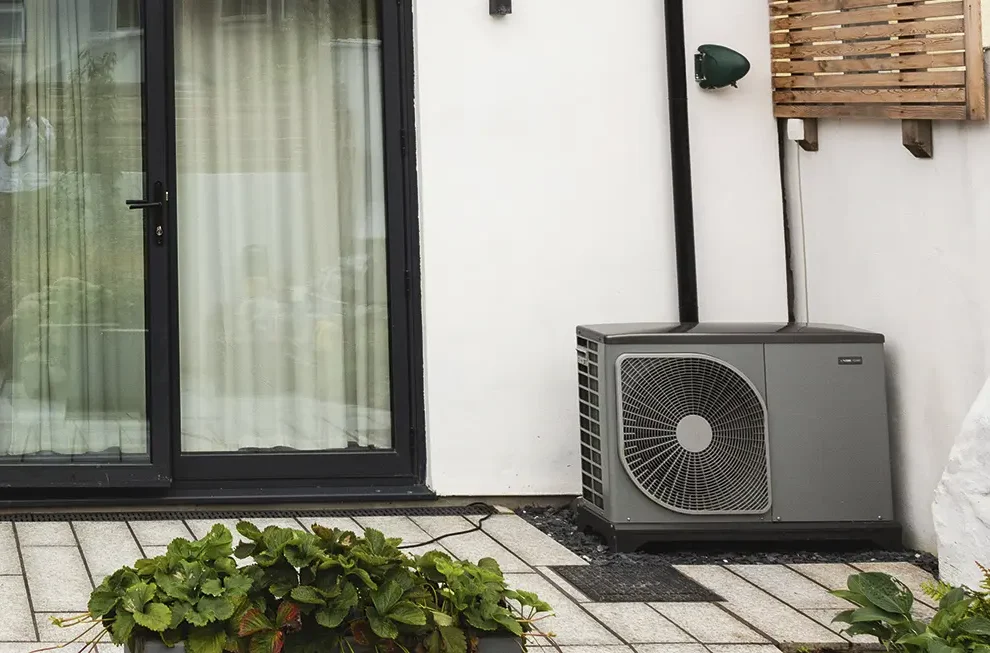
An ASHP sits outside the home, typically adjoining an external wall. This makes it far less disruptive and expensive to install than, say, a ground source heat pump (GSHP) – which requires significant excavation for the collector loop.
When replacing an old heating system, most of the existing pipework will be located around the boiler. “Ideally, you’d fit the heat pump’s hot water cylinder (a special type with a bigger heat exchanger) in the same spot as the old one,” says Dave. “That’s assuming there is a cylinder; there won’t be if you have a combi boiler. Pipework and electrics can then run from the old boiler position to the heat pump.”
If the ASHP is on the outside of a room that houses the boiler and cylinder, this will be a simple straight-through installation. So, the fitting costs will be lower than if the pipework and electrics need to be rerouted through the home (which would mean the installers need to chase walls, lift floors and dig trenches in the garden).
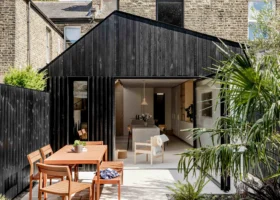
CASE STUDY Air source heat pump retrofitArchitects Atelier Baulier designed this deep retrofit and extension of a previously underperforming Edwardian house in London, which is now a joyful, light-filled and energy efficient family home.
Clients Phoebe and Paul Sprinz wanted to create their forever home, prioritising a low-impact, forward-thinking approach while creating a space full of personality. “We were looking for a way to make the house more efficient, comfortable and better suited to family life and hosting,” say the couple.
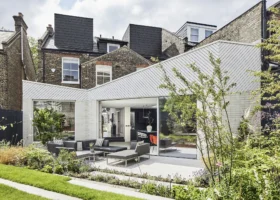
The architecture is defined by a distinctive sawtooth roof extension at the rear, constructed in timber frame atop low-concrete screw piles and insulated with breathable wood fibre. The original walls were insulated externally, too, while the roof was treated at rafter level. Double-glazed windows and an air source heat pump were among the other upgrades – and the house has been pre-wired to enable easy installation of solar PV panels in the future. Photo: Jim Stephenson |


How will a heat pump impact my existing central heating setup?
Your home’s current central heating system will almost certainly have been designed for high flow temperatures from a boiler, and a temperature difference across the radiators of 20°C (so the water returns to the boiler 20°C cooler than it was supplied). A heat pump, by contrast, runs at a low flow temp and can accommodate only a 5°C difference, so the system needs to be sized to suit.
“Good flow is vitally important for a heat pump to work effectively, so the existing radiator system will need to be properly flushed,” says Dave. “Some emitters may need to be changed due to age or corrosion, or simply because they are too small to warm rooms efficiently at a lower temperature.” Ask your installer whether moving some radiators to different rooms could save on costs.

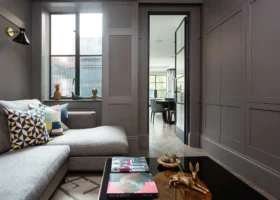
Inspired by the homeowners’ love of art, design and architecture, this Victorian house renovation by Bradley Van Der Straeten Architects embraces eye-catching medley of textures, colours and patterns. Elsewhere, an air source heat pump – powered by a brand-new solar PV array – generates heating and hot water. Photo: French + Tye
The pipework may also not be ideal. Old single-pipe configurations (with radiators on a single circuit, which acts as both flow and return) are not suitable for heat pumps, so would need upgrading. Some microbore pipe system may need replacing, too. “Complex older microbore buried in solid plaster and serving multiple radiators will bring significant challenges,” says Dave. “Newer microbore systems, however, are actually very good, as they have a large 22m header pipe with each microbore branch serving a single radiator, which makes it easier to balance.”
How much does an air source heat pump cost to run? Are they cheaper than a gas boiler?
As of September 2025, the per unit cost for electricity is 25.73 pence per kWh (p/kWh), while for gas it’s 6.33 p/kWh. That’s a ratio of just over 4:1, which means a heat pump system needs to be at least 400% efficient to break even versus gas. See the Ofgem website for more information on electricity and gas uni prices.
You’re unlikely to get that level of performance. Data from 2022 suggests the average ASHP installed in 2022 achieved an in-situ Seasonal Performance Factor (SPF) of 2.74 – though some did deliver over 3.5. The SPF reflects a heat pump’s year-round performance (rather than being a snapshot under factory conditions). That may lead you to ask: “why would I want to install an air source heat pump instead of a boiler?”
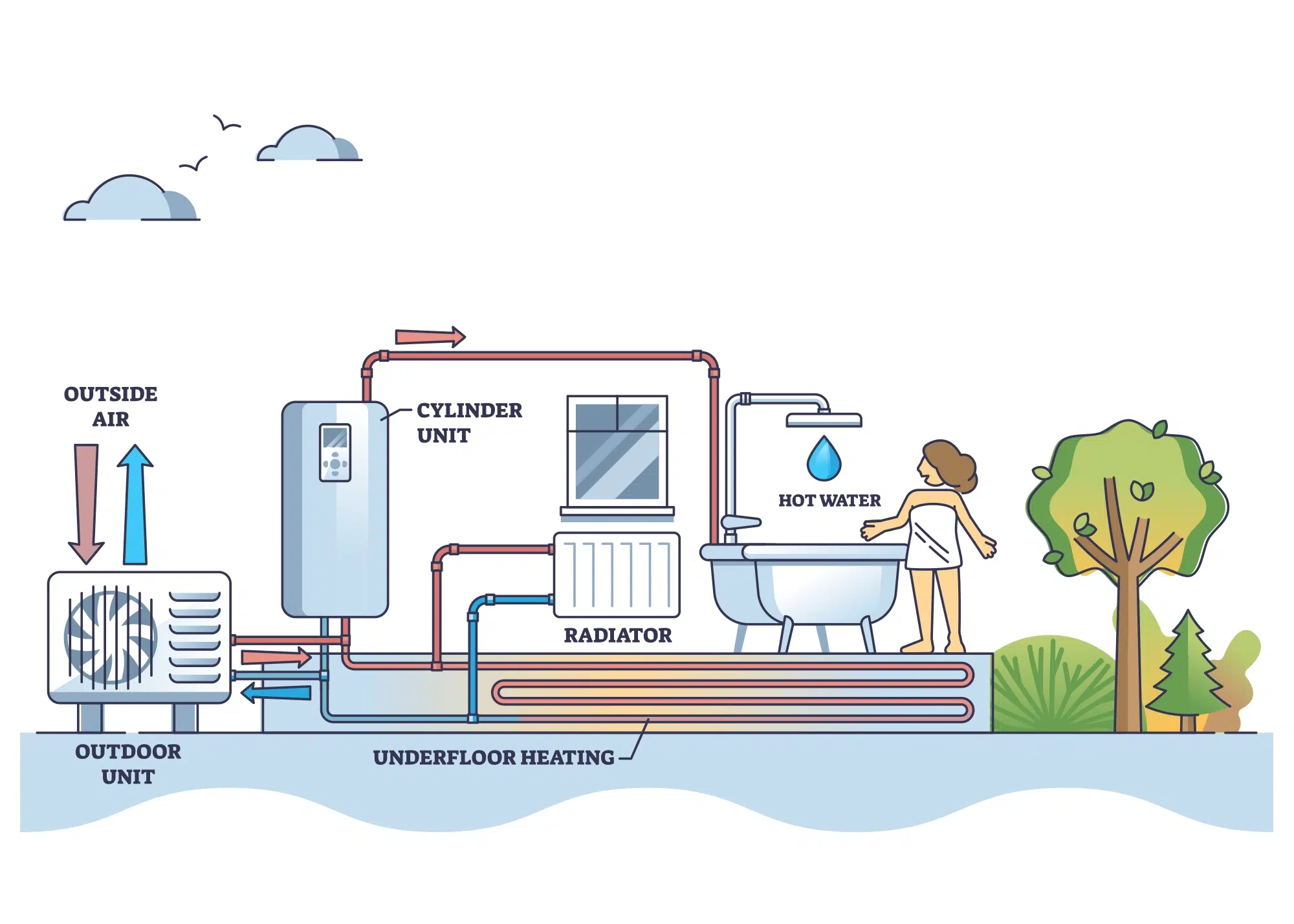
An illustration showing how an air source heat pump might generally be integrated into your home’s space heating and hot water system
For one, gas reserves are getting harder to find and more expensive to tap into. “Heat pump installation is now better understood in the UK, too, and manufacturers continue to enhance their systems – so efficiency is on an upward curve,” says Dave. Plus, running costs may not be your only motivation for switching. Even if you end up paying around the same to comfortably heat your home as you would have with gas heating, the UK’s electricity grid has significantly decarbonised. That means you’ll make significant CO2 savings compared to a boiler system.
Upcoming Future Home Standards will also effectively mandate heat pumps in all new build homes. As uptake grows and the technology becomes the norm over the next five to 10 years, buyers may come to expect to see low-carbon heating systems in existing houses, too.
“Ultimately, heat pumps will make more and more sense as the efficiency ratio narrows and the need for energy independence increases,” says Dave. “In that context, the £7,500 BUS grant helps make early adoption appealing, as incentives like this won’t be available when heat pump costs drop and gas prices rise.”
FAQs
Do I need planning permission to retrofit an air source heat pump?
ASHP installations fall under permitted development (PD), meaning you don’t need planning permission, as long as the project complies with the following:
- As per the Microgeneration Certification Scheme Planning Standards, your ASHP installation must be carried out by an MSC-certified installer, using an MSC-certified heat pump product.
- The ASHP’s outdoor compressor unit must not exceed 1.5m³.
- You’ll need planning permission if you’re installing the heat pump within the curtilage of a listed building. And, if your home is located within a conservation area, the ASHP must not be installed on a road-facing elevation.
What maintenance does an air source heat pump require?
Air source heat pumps are generally low-maintenance, but they need to be kept clean and free of dust to ensure optimal performance throughout their lifetime. Your ASHP should be serviced at least once a year – this will involve inspecting heat pump’s evaporator to ensure it’s free from debris, ensuring good airflow and efficiency. The fan blade should also be cleaned and checked to make sure it’s free from obstruction and performing at maximum capacity. Your ASHP service should be carried out by an MSC-certified engineer.
Can I cover my ASHP with anything to protect it or conceal it?
Yes, you can cover or hide your heat pump, but you need to ensure that it doesn’t become obstructed as an ASHP requires unrestricted airflow to function properly. Many choose to hide their unit inside custom-built enclosers, such as a wooden or composite bin store-like structure. The enclosure should have a slatted facade to ensure constant airflow. You could consider a privacy screen, too. These can be designed to blend in seamlessly with your fencing scheme.
Who should I get to do post installation remedial works?
It’s essential to line up the right trades to finish the job. “Heating installers are specialists in their field, but may not be multiskilled enough to achieve a brilliant finish when replastering walls or replacing floors,” says Dave Hilton. “It’s often better to line up specific follow-on trades to finish walls, lift floors and make good, as they will be more experienced in this aspect of the work.” An experienced plumber commands a fairly high hourly rate – potentially more than a plasterer or carpenter. So, if you use them to sort out the finishes, you could end up paying over the odds for someone whose skills aren’t ideally suited to the task.
What hidden costs should I be wary of when retrofitting an ASHP?
The old boiler must be removed, which may trigger additional costs for a qualified oil or gas engineer. The area the boiler was in will also need finishing, eg making good where the flue passes through the wall or roof. If this is located high up, you may need to pay for scaffolding to provide safe access, which could be expensive.
Chris Batesmith

You may be interested in