









 Login/register to save Article for later
Rob Wood is managing director at Simply Loft. He has over 17 years’ experience in creating bespoke residential projects, having set up The Simply Construction Group in 2008.
- Plan ItBack
- Design ItBack
- Build ItBack
- Homes
- ProductsBack
- CostsBack
- Self Build Cost Calculator
Estimate your project costs instantly with Build It's interactive self-build cost calculator
Calculate Now - Costs & Finance
- Contracts & Warranties
- Build It Estimating Service
Get an accurate, detailed cost breakdown of your project
Submit plans
- EventsBack
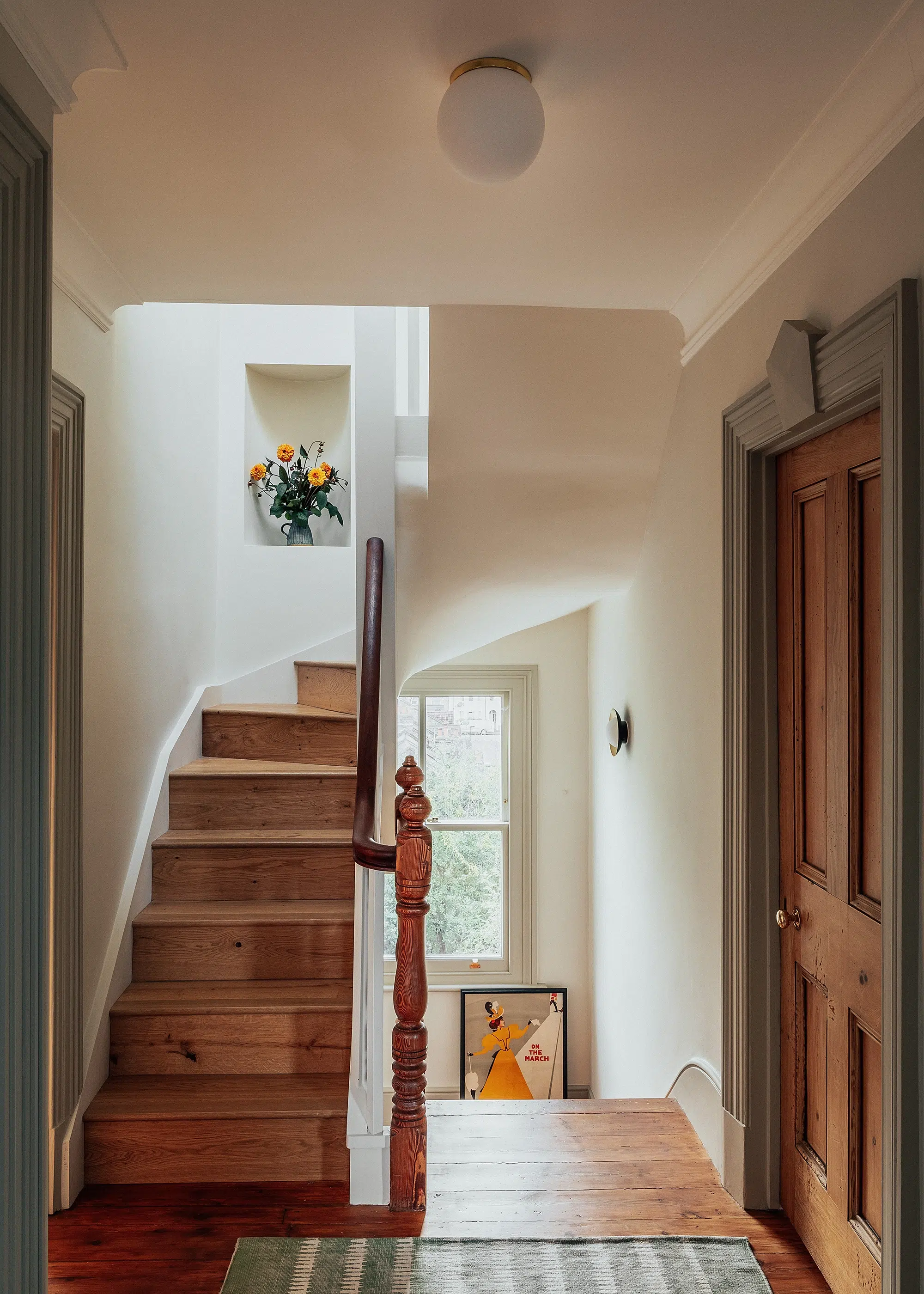
Loft Conversion Stairs – What You Need to Know About Building Regs & More
From Building Regs through to design options and costs, Scarlett Deamer speaks to the experts about what to consider when specifying the staircase for your loft conversion

Whether you’re converting your loft into a bedroom, office or entertainment area, the right staircase will ensure accessibility, safety and a seamless connection between stories. However, there are several key factors to consider when it comes to getting your loft conversion stairs right. From Building Regulations to staircase design options and costs, understanding these elements is essential for a successful flight.
Here, I’m speaking to the experts about the key decisions you’ll need to make to ensure a well-designed staircase that enhances your loft conversion’s aesthetics and functionality.
Jump to
- Building Regulations
- Types of staircase
- Loft staircase costs
- Planning permission
- Staircase location
- Loft stairs FAQs
Do I need Building Regulations approval for a loft conversion staircase?
When converting a loft, you’ll need to pay close attention to the necessary Building Regulations, which require stairs to be safe, accessible and compliant with fire safety standards. Here are the main points to consider:
Staircase design
- The staircase pitch must not exceed 42 degrees.
- Treads and risers must be of uniform height and depth for safety.
- The staircase must provide a clear and safe escape route to an exit at ground level.
Refer to Approved Document K of the Building Regulations for advice on staircase safety.
Headroom requirements
- The standard minimum headroom over stairs is 2 metres, measured vertically from the pitch line.
- In loft conversions, where stairs often run beneath sloping roofs:
- A reduced headroom of 1.9 metres is permitted at the centre of the staircase.
- A further reduction to 1.8 metres is allowed at the outer edge of the stairs.

Bradley Van Der Straeten overcame the challenge of a low ceiling height by incorporating sleek plywood stairs, transforming a cramped London home into a spacious, light-filled haven that maximises every inch of space. Photo: French + Tye
Fire safety measures
- All habitable rooms that open onto the stairwell must have fire-rated doors to slow the spread of fire and protect the escape route.
- Compartmentalisation of the stairwell is essential to maintain a protected path from the loft to the exit.
- In buildings with multiple floors (typically three storeys or more), additional fire protection measures such as sprinkler systems may be required.
- Fire-rated glass can be used in doors or partitions to maintain natural light while still meeting fire resistance standards.
- Many local authorities now require a fire strategy statement as part of the planning application to demonstrate how safe evacuation will be achieved.
Refer to Approved Document B of the Building Regulations for advice on fire safety.
Premium Content
Downloadable E-Guide
Build It's loft conversion downloadable e-guide takes you through the essential considerations, from costs to an estimated project timeline. Click below to find out more.
find out more
Which type of staircase is best for a for loft conversion project?
The type of staircase you choose for your loft conversion will largely be determined by the available floorspace on the storey below. Space efficiency is key, and designers often turn to winding staircases for a smart, effective solution.
“A winding staircase (L-shape or U-shape) allows the staircase to turn corners without a flat landing, reducing the overall area on the lower floor,” says Mike Walker, managing director at Stairbox. This type of staircase maximises space while providing a smooth transition between levels, making it a popular choice for smaller loft conversions.

Bisca created this winding cantilevered staircase for a bungalow renovation. The design of the stairs allows light to permeate into the new first floor landing. Photo: Bisca
In tighter properties, alternative stair designs can further optimise floor area. “You can incorporate paddle staircases, which can save up to 50% of floor space, but these are only permitted where there is insufficient space for a conventional stair and typically can only serve a single habitable loft room,” says Mike. These staircases are especially useful in compact loft conversions where every square foot matters. However, it’s important to ensure that the design adheres to Building Regulations before moving forward.
Design details, such as glass balustrades and cantilevered stairs, can also help to create to a sense of openness and light. “Placing fire doors at the bottom of the stairs rather than the top can make the loft space feel larger, too,” says Richard Gill, director at Paul Archer Design.
Avoid over-complicating your staircase design – practicality is the most important element to consider here. An overly intricate flight could be build or install, which will increase costs and time.
How much does a staircase cost for a loft conversion?
The price of a loft staircase can vary greatly depending on the design, materials and complexity of the layout. “A basic staircase design with no balustrade (to go between two walls) can be around £350 + VAT,” says Mike. For more intricate, bespoke designs, the price can rise substantially.

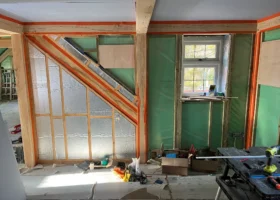
The goal for this loft conversion, by Simply Loft, was to create one bedroom and one bathroom/ensuite. The stair position was chosen to allow for a large timber sash window and roof lantern to prevent reliance on artificial lighting and prevent the landing from becoming gloomy
“Typically, a new staircase will start from £10,000, especially if you are choosing a bespoke design which incorporates unique materials and is handcrafted and professionally installed,” says Richard McLane, founder and design director at Bisca. While higher in cost, a bespoke staircase offers a complete, high-quality solution where you have peace of mind that the finished product will be structurally.
CASE STUDY Sculptural staircase for an urban loft conversion project
Designed by OEB Architects for a South London Victorian property, this loft conversion’s staircase plays a central role in the interior architecture, marrying bold, modern aesthetics with the home’s historic context.

Photo: Taran Wilkhu
The new roof level was constructed as a contemporary palazzo with the staircase acting as a sculptural bridge between the original structure and the newly created spaces.

Photo: Taran Wilkhu
Crafted from recyclable zinc, the loft conversion staircase curves gracefully between the two symmetrical, colonnaded bay windows, leading to a luxurious master suite. The clients, inspired by their memories of Italy, sought to create a home that blends classical beauty with modern functionality.
Do I need planning permission to install a loft staircase?
You don’t usually need planning permission to add a staircase as part of a loft conversion as most projects are covered under permitted development rights (PD). However, there are exceptions. “Generally, installing a staircase into a loft doesn’t require planning, unless it involves altering the roof shape or you are looking to alter a listed building or property in a conservation area,” says Richard Gill.

In this project by Paul Archer Architects, a large rooflight has been added above the new loft stairway to pull light down and open up the space. Photo: Andy Stagg
Even if planning permission isn’t needed, you’ll still need to adhere to the rules set out by Building Regs. “You will always need building control approval for a habitable loft conversion and its staircase,” says Mike. This sign off ensures that the loft structure and staircase is accessible and safe for use.
Where is the best location for a flight?
When deciding on the right location for your staircase, a common approach is to place it directly above the existing stairs. “Placing the new flight above the old one allows you to minimise the loss of usable space on the first-floor landing or bedroom,” says Mike. This setup reduces disruption to the layout below, keeping valuable floor area intact.
“Loft stairs can also become an extension of a lower flight, taking away the need for further structural changes or using up any additional footprint as the loft flight will sit in the same stairwell,” says Richard McLane.

After purchasing a charming terrace home, the owners discovered that they needed an extra bedroom and bathroom that were easy to access. To help blend old and new, the original Victorian stair beautifully merges into the contemporary steel cantilevered staircase crafted by Splash of Milk, which leads you to the additional floor. Photo: Brotherton Lock Photography
To further enhance the design, introducing new windows or rooflights, or orientating stairs to be near existing light sources, can bring sunlight into the hallways and landings, brightening up the space and improving the overall feel.
However, one of the main challenges in stair placement is ensuring compliance with the legal minimum headroom requirements. A well-planned position can help meet this regulation while maintaining the functionality of the space.
Loft conversion stairs FAQS

How can I make the stair balustrade look attractive without being bulky?
A well-designed balustrade should complement your loft staircase, not overpower it. Slimline metal spindles, glass panels, or minimalist timber designs are all excellent choices for achieving a light, open look. Glass balustrades in particular help to maximise the sense of space and allow natural light to flow through, which is especially valuable in small loft conversion projects.
What’s the right order of work when fitting stairs during a loft conversion?
The staircase is typically fitted once the loft’s structural elements (steel beams and floor joists) are in place and the new floor level has been established. Your staircase will be installed after the key structural works, but before finishing stages such as plastering and decorating. This timing allows accurate measurements for a perfect fit while still ensuring safe and easy access for trades working on the upper floor.
Can the stairs be built or finished offsite to save time & disruption on site?
Absolutely. Many staircases are prefabricated offsite based on precise measurements taken once the loft structure is complete. This offsite preparation means the staircase can be installed quickly and cleanly, minimising disruption and keeping your home as functional as possible throughout the build.
Will new stairs increase noise levels between floors?
I recommend adding sound insulation between the new and existing floors, as well as using high-quality underlay or carpeting on the stairs themselves. Thoughtful construction and finishing details, such as sealing gaps and using solid materials will also help to reduce noise transfer significantly.
Is it better to put the loft stairs in the existing hallway or inside a room?
Where possible, placing the staircase in the existing hallway is ideal as it provides natural flow and access without reducing bedroom space. However, in some homes, locating the stairs in a large bedroom or secondary space works better for layout or headroom reasons.
Scarlett Deamer

You may be interested in
Our sponsors