















 Login/register to save Article for later
Dan Todd is sales director at Kloeber, one of the UK’s leading manufacturers of bespoke glazing solutions, specialising in timber, aluminium and composite windows and doors.
- Plan ItBack
- Design ItBack
- Build ItBack
- Homes
- ProductsBack
- CostsBack
- Self Build Cost Calculator
Estimate your project costs instantly with Build It's interactive self-build cost calculator
Calculate Now - Costs & Finance
- Contracts & Warranties
- Build It Estimating Service
Get an accurate, detailed cost breakdown of your project
Submit plans
- EventsBack
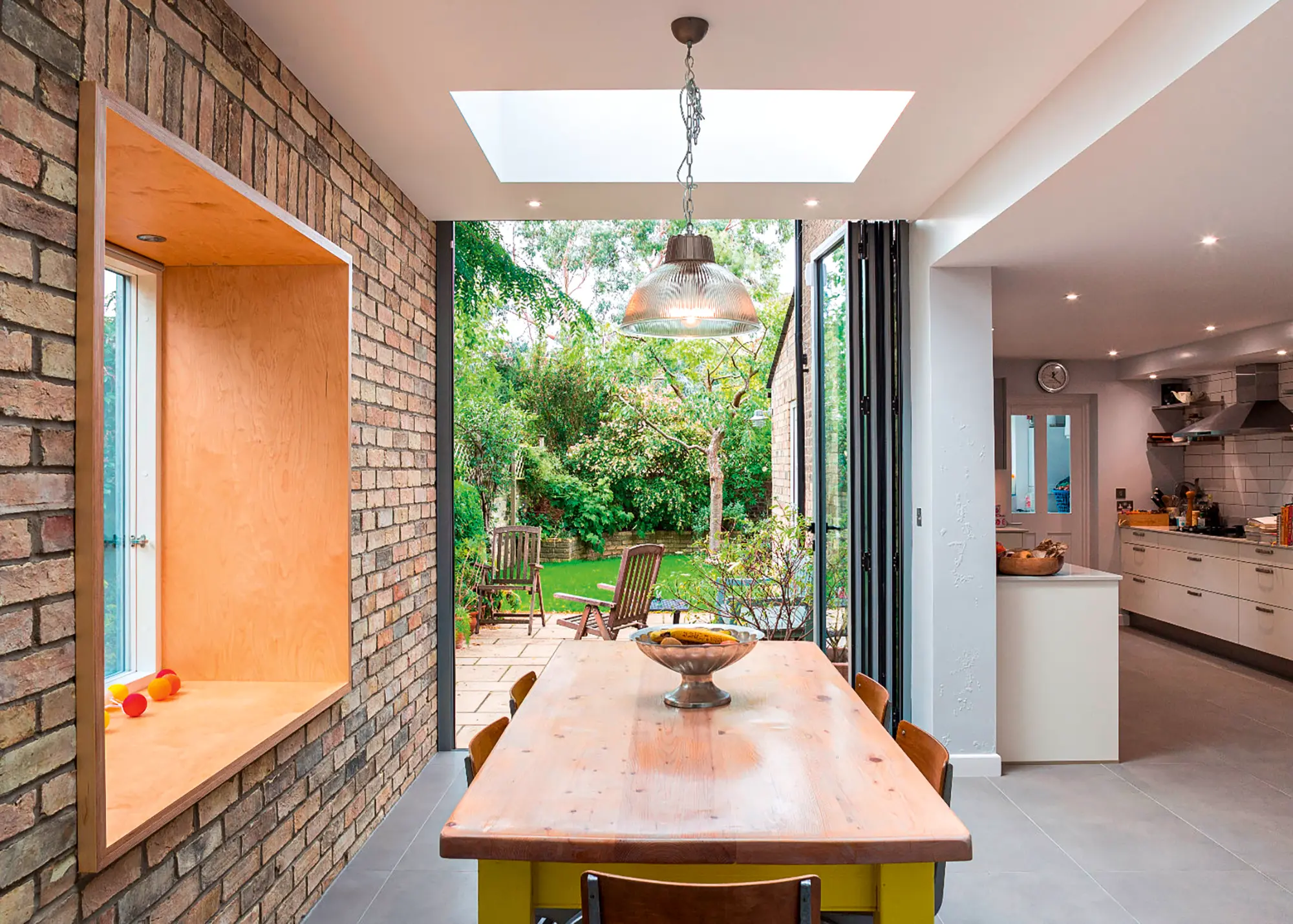
Glazed Bifold Door Ideas for Your Self Build or Home Extension
Having your glazed doors concertina back to fully open apertures is the perfect solution for connecting inside and out. Here are some ideas for making the most of your bifold setup

Wondering how bifold doors can be used to create a striking architectural feature that elevates your home’s design? From flooding interiors with daylight through to framing countryside or garden views, the right system and design can transform the way a home looks and feels, and its connection with the outdoors.
Bifold doors remain a popular choice for many self builders and home renovators due to their sleek appearance, practicality and the fact that they can offer fantastic openings of around 90%. The panels fold and stack against each other, offering easy access to the garden and extending your living space to your patio.
From ultra-modern self builds with full-width glazed elevations through to compact kitchen-diners that open directly onto a patio, there are plenty of great ways to incorporate glazed bifold doors into your project, each offering their own benefits. Here, I’ve gathered a collection of inspiring bifold door ideas to set you off on the right foot.
Jump to bifold door FAQs answered
Create a curved opening with bifold doors
The SUNFLEX SF75eco is unique amongst aluminium bifold doors in that it can be configured with either concave or convex curves with sets up to 20m wide and 3m high. This six-panel set of curved doors is finished in anthracite grey.
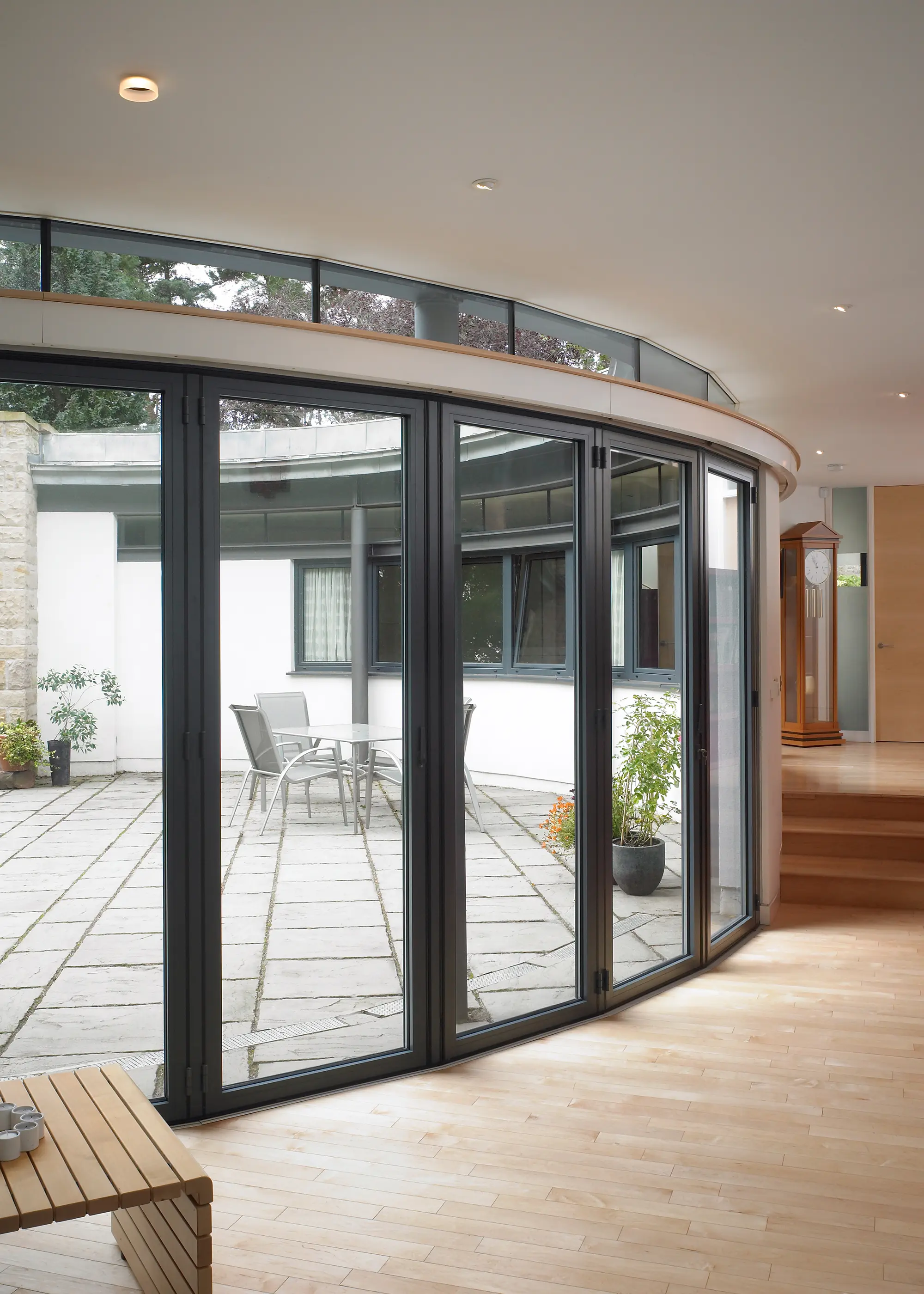
Photo: Richard Murphy Architects / Andrew Lee Photography
Use glazed doors to create a fully open corner
Two sets of bifold doors concertina back to reveal a fully open corner in this stunning kitchen-diner extension. The look has been created with load-bearing masonry around a steel frame, with Kloeber’s aluminium KustomFold doors offering the wow-factor glazed open corner.
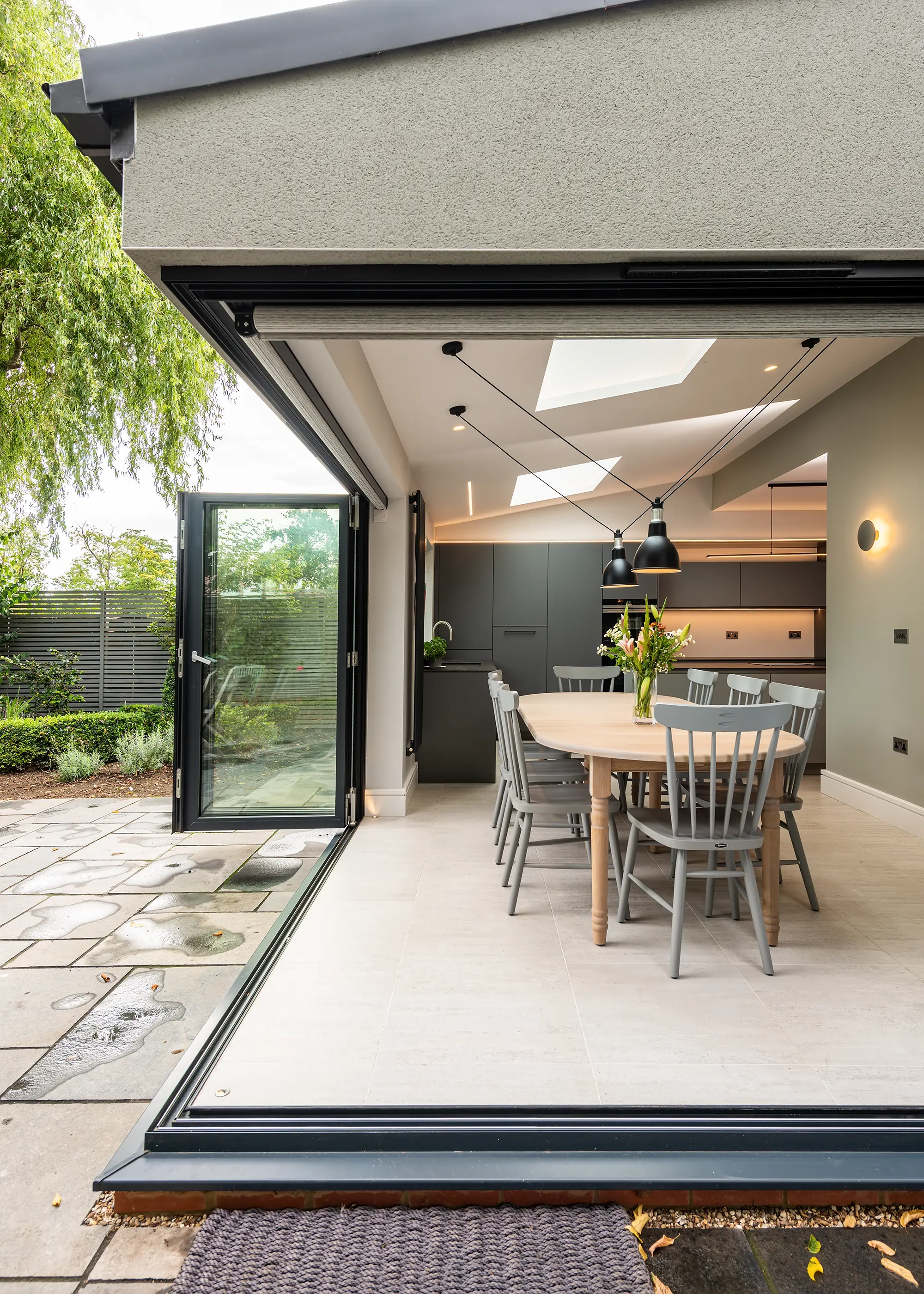
Photo: Kloeber
Premium Content
Downloadable E-Guide
Build It’s downloadable e-guide to choosing windows & doors offers ideas and advice on every aspect of planning your home’s glazing and entrances, including expert tips on the key specification decisions you’ll face. Click below to find out more.
find out more
Frame a spectacular surrounding with a whole wall of bifold doors
Glazed doors are the perfect way to connect inside and outside, but bifolds take this one step further by opening whole walls out to the surrounding views. Two sets of thermally-modified timber Lacuna Primetime bifolds allow for panoramic vistas of this stunning coastal location.
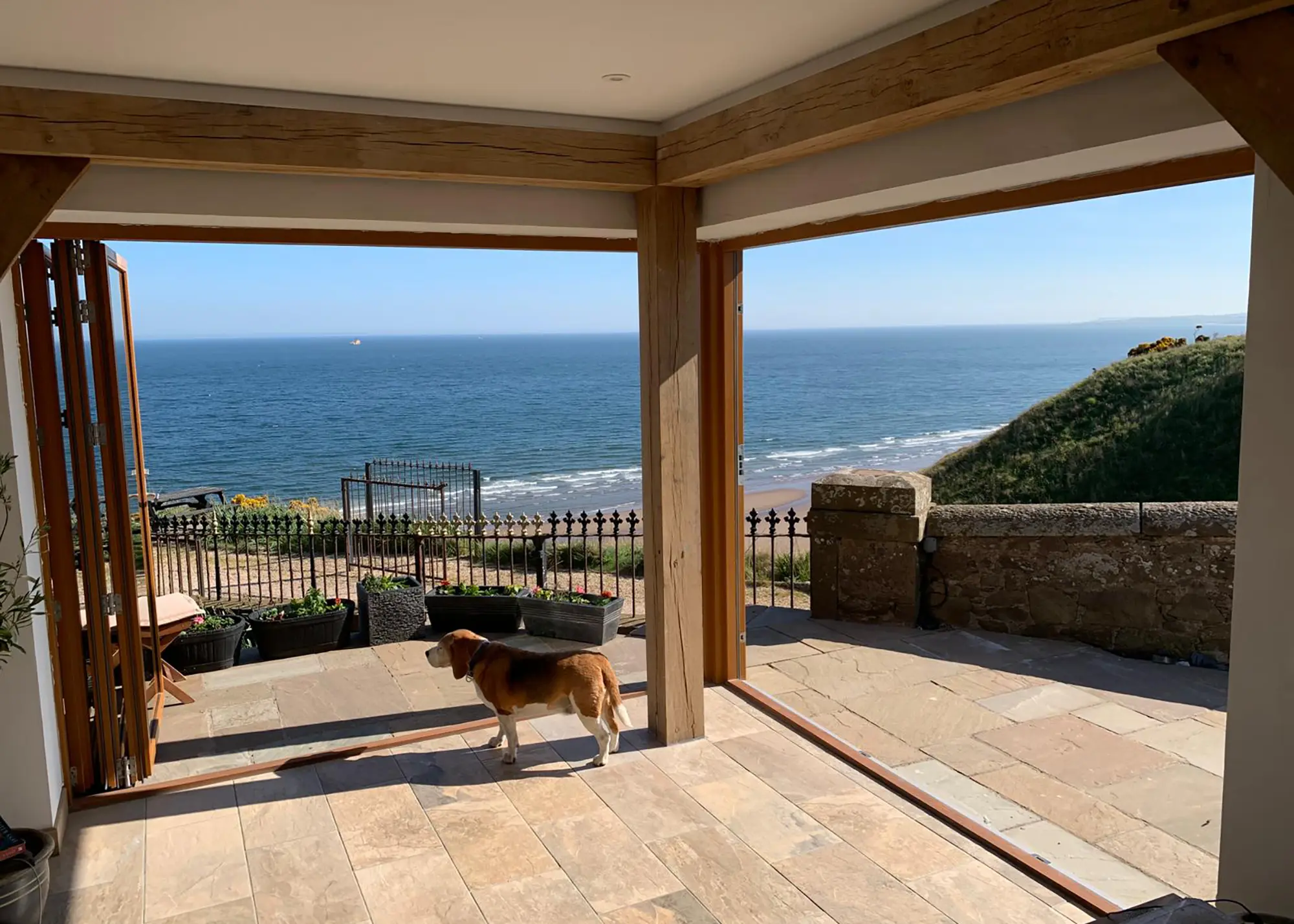
Photo: Lacuna
Match the frame colour of your glazed doors to your interior scheme
The trend for aluminium and Crittall-style bifolds means frames are often dark hues, but this project showcases this doesn’t have to be the case. The khaki grey used on the long run of doors on two sides of this open-plan space complements the interior. Origin’s Soho collection is available in various shades to suit your home.
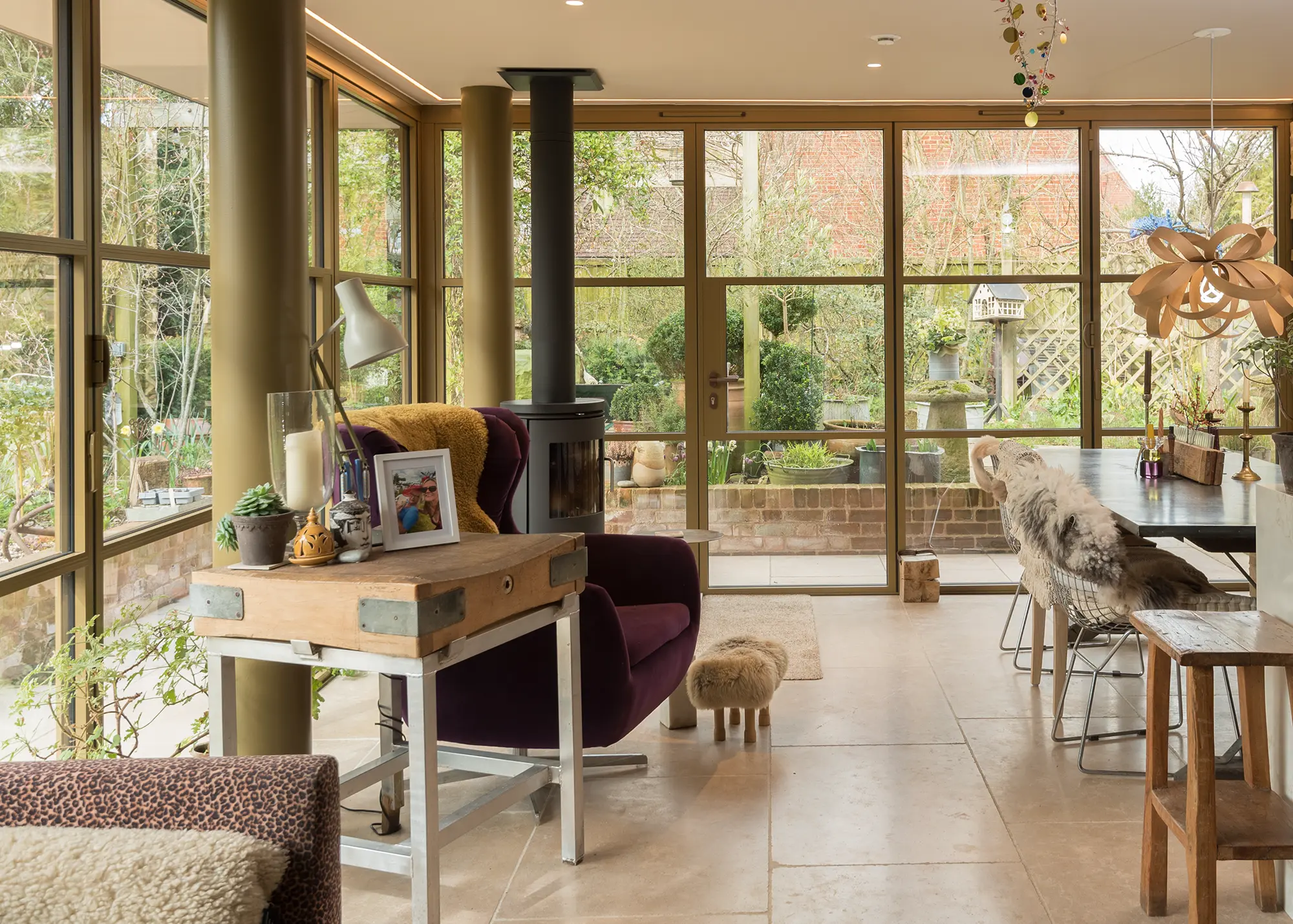
Photo: Origin
Use bifold doors to create a striking architectural feature
Pairing your bifolds with other glass elements creates stunning architectural features, such as in this barn conversion. The large double-height glazing includes six- and four-section bifolds meeting in the corner, the mullions perfectly aligned with the screen above. The doors are from 21 Degrees’ Lacuna range which uses a specialist heat-treated timber and triple glazing.
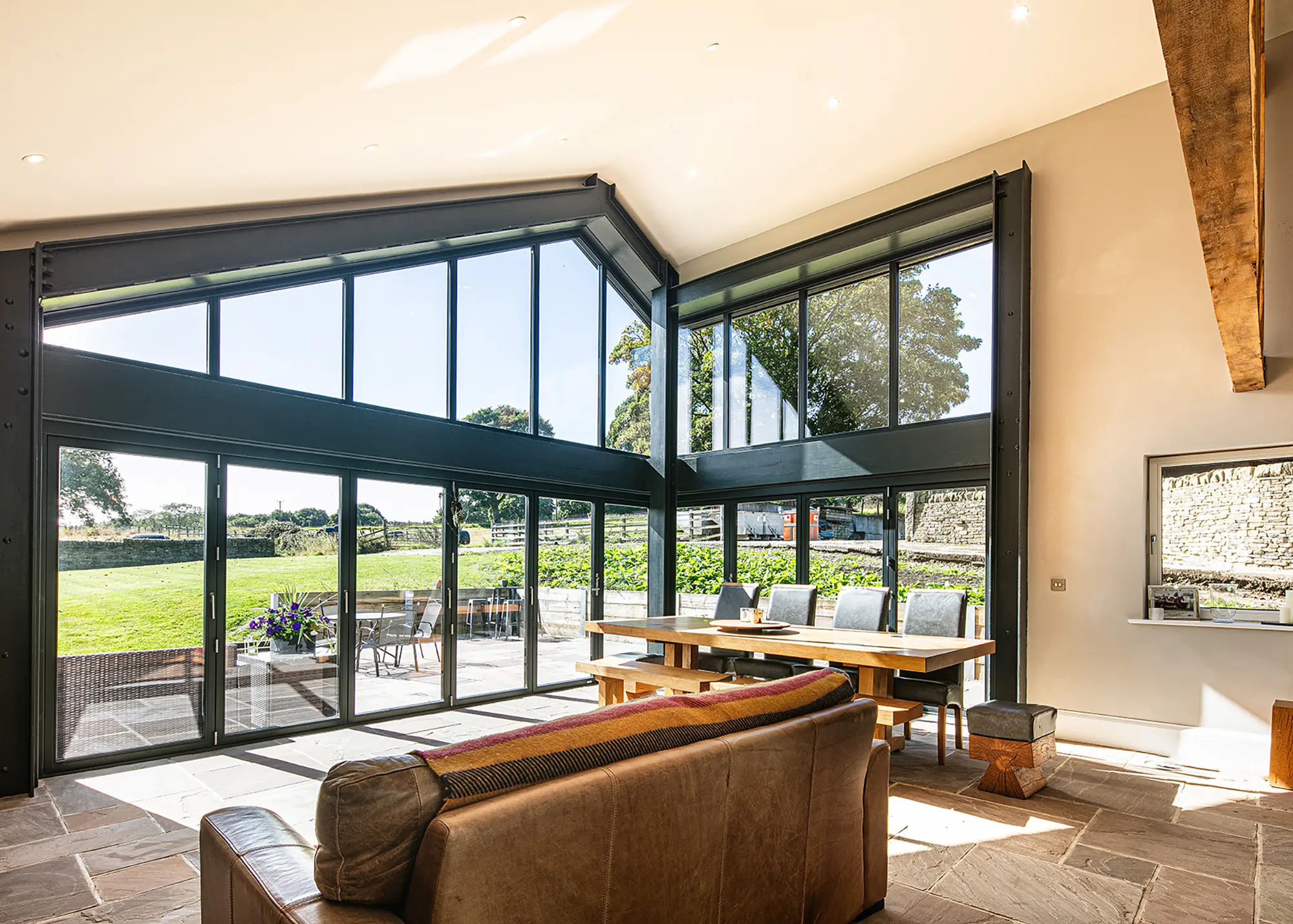
Photo: 21 Degrees
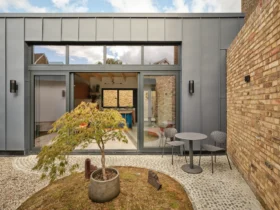
Connect a small opening to the outside with bifold doors
Bifold doors aren’t just for wide glazed spans and can work wonderfully in more restricted openings, too. The benefit of the concertina format is that they can open up the full gap, making them great for connecting house and garden through smaller doorways. Have them stacking outwards, like this setup by Kloeber, to maximise inside space.
Photo: Kloeber
Bifold door FAQs

Why are aluminium frames a popular option for bifolds?
Aluminium has become a go-to choice because it allows for slim frames and larger panes of glass, which helps maximise light and views. From a design perspective, it suits contemporary extensions particularly well, with clean lines and a wide choice of colours. It’s a reliable, low-maintenance option that works in a wide range of settings.
What should you consider if specifying timber bifolds?
Timber brings a natural warmth that’s hard to replicate, but it requires careful specification. The quality of the timber, how it’s engineered and how it’s finished all play a role in long-term performance. Modern factory finishes have come a long way, offering durability, but it’s still worth considering ongoing care, especially on exposed elevations. Designed well, timber bifolds can feel softer and more characterful, particularly in period or rural homes.
How does the frame impact bifold door costs?
Material has a direct impact on cost, but it’s also tied to performance, longevity and design. uPVC products tend to sit at the lower end, while aluminium and timber are typically mid- to premium-priced, depending on the specification. Most homeowners find it’s about balancing upfront cost with how the doors will look, feel and perform over time.
What’s the best material option for super-slim frames?
Aluminium is generally the go-to when the goal is very slim sightlines. Its strength allows for narrower frames while still supporting large areas of glass, which is why it’s widely used in contemporary glazing systems. This makes it ideal for creating clean, minimal openings that feel almost frameless. Where design is focused on daylight and reducing visual interruption, aluminium tends to be the natural choice.
Is uPVC still an attractive option for bifold doors?
uPVC can be a cost-effective option, but it does come with limitations, particularly around performance and longevity. Because the material isn’t as strong, the frames tend to be chunkier, which can reduce the amount of visible glass. It’s often better suited to smaller openings rather than large, architectural spans. For projects focused on maximising light and achieving a more refined look, other materials tend to offer greater flexibility.
Emily Batesmith
Previous Article

Great Patio Ideas for the Perfect Outdoor Living Area
You may be interested in

Our sponsors