

- Plan ItBack
- Design ItBack
- Build ItBack
- Homes
- ProductsBack
- CostsBack
- Self Build Cost Calculator
Estimate your project costs instantly with Build It's interactive self-build cost calculator
Calculate Now - Costs & Finance
- Contracts & Warranties
- Build It Estimating Service
Get an accurate, detailed cost breakdown of your project
Submit plans
- EventsBack






















 Login/register to save Article for later
1930s Bungalow in Glasgow Renovated & Upgraded with a Timber Frame Extension

When Alastair and Catherine Irvine were looking for a new house in one of Glasgow’s most verdant and sought-after suburbs, a 1930s bungalow caught their eye. Not simply for its charm, but mainly for the potential to completely transform the house into the modern, capacious family home and garden that they were seeking for themselves and their school-aged children.
When the couple bought the property in October 2023, they were living nearby. “We wanted to stay in the local area for schools, however we needed more space. After considering extending our existing property, a much larger one came on the market, so we purchased it with a view to spending a year or so renovating and extending before moving in,” says Alastair. “We wanted larger bedrooms and open-plan space for entertaining, however we were constricted by our existing home’s plot and footprint. The 1930s bungalow had a larger plot and gave us the chance to create the space we really wanted rather than compromising.”
Developing the bungalow renovation’s design
Following some online research and professional advice from the RIAS (Royal Incorporation of Architects in Scotland), the couple appointed local Glasgow-based George Buchanan Architects. “We wanted an open-plan kitchen-dining-living with room for entertaining a large group, as we have a big family. We requested underfloor heating throughout the main living spaces and bathrooms, plus a dedicated boot room and laundry space.
We wanted a master bedroom suite to the front of the house (there had previously been a kitchen at the front) and this should include a dressing room and ensuite bathroom. Upstairs we wanted the layout changed to achieve two similar sized large bedrooms for our daughters,” says Catherine.
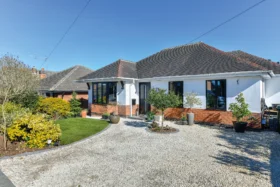
The original 1930s house had pebbledash render, red facing brick and a large hipped roof. Renovating was the best way to stay in the school catchment area
The couple also requested for light throughout the previously dark house to be maximised and for the property’s appearance to be modernised while continuing to tie in with the 1930s street. They also wanted the garden to be opened up to more sunlight by replacing the existing garage with a lighter, more sympathetic structure.
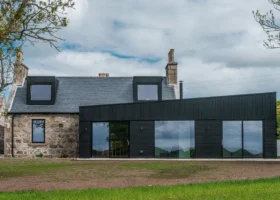
Architect George Buchanan explains how the final design evolved: “We worked on a strong single concept with options for different materials. The main idea was for a large, open-plan kitchen-dining-living space with a snug at the western end of this area. A new extension and replacement garage were designed as a series of simple, elegant boxes, clad in timber and zinc. Reconfiguring the dormers would provide a consistent design all clad in zinc. A sedum roof over the extension, would also enliven the view from the upper floor.”
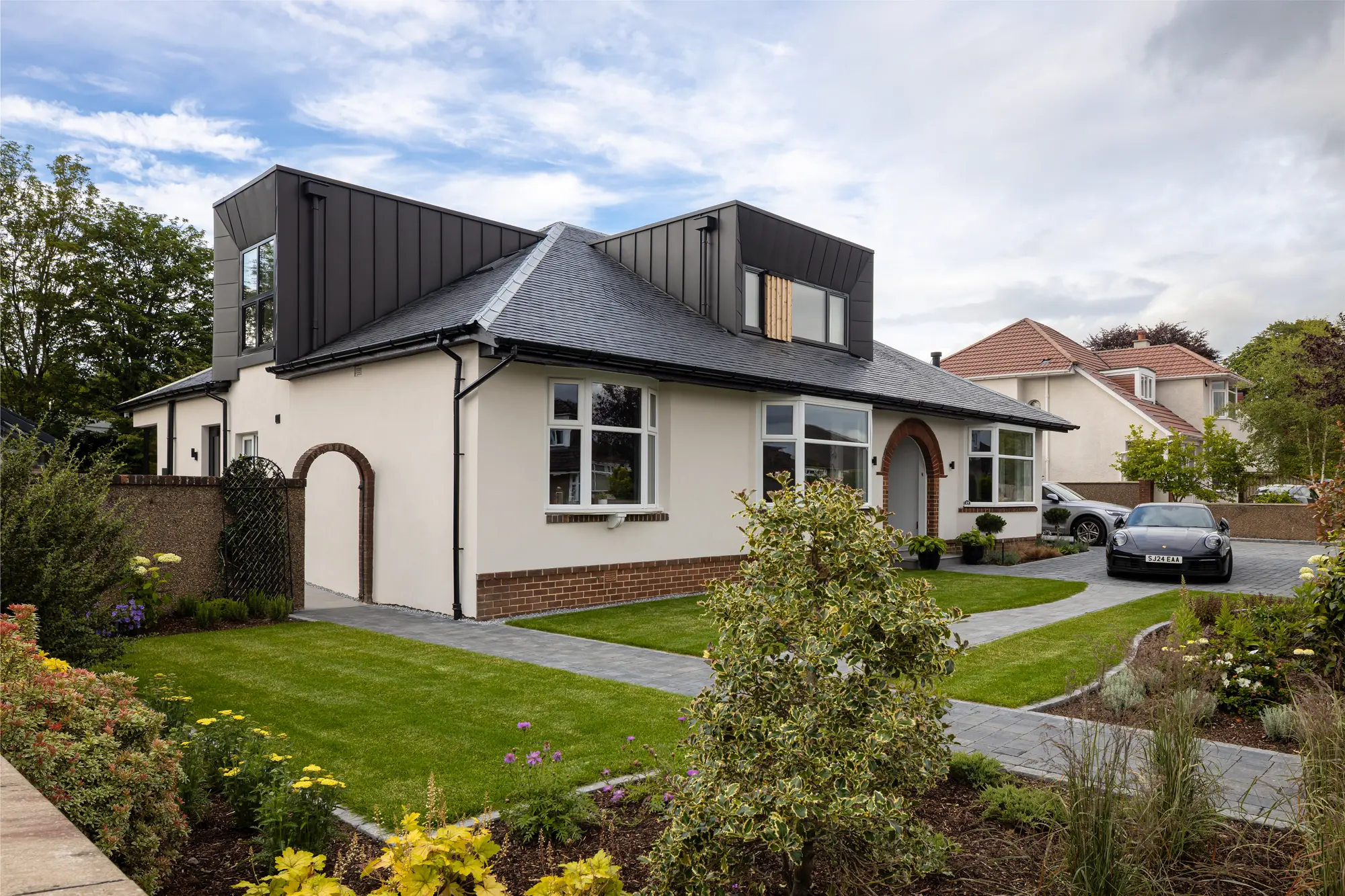
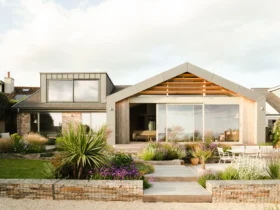
The renovation works have brought a contemporary touch to the existing 1930s bungalow
George knew the local planning authority would want to see justification for such a contemporary extension design to a traditional property. So, he prepared a robust design statement that was submitted with the planning application. “If the proposals are different from the existing property or surrounding architecture, ensure your architect goes through this step for the best chance of success,” he says. Getting planning consent took approximately two months and was obtained in March 2024. The build went ahead quickly thereafter, in June.
- NAMESAlastair & Catherine Irvine
- OCCUPATIONSFinancial expert & full-time mum
- LOCATIONDunbartonshire
- TYPE OF PROJECTRenovation & extension
- CONSTRUCTION METHODTimber frame extension
- PROJECT ROUTE Architect design & contractor
- PROPERTY COST£927,500
- BOUGHT2023
- HOUSE SIZE370m2
- PROJECT COST£1,145,500
- PROJECT COST PER M2£3,096
- TOTAL COST£2,073,000
- BUILDING WORK COMMENCED June 2024
- BUILDING WORK TOOKOne year
Pushing on with the building works
Alastair and Catherine lived in their previous home nearby during the build. They chose main contractor, Marc Allan Builder, as well as garden designer Andreea Scurtu from Gardens & Projects. She helped develop a design that tied into the house plans, with local landscaping firm MacColl & Stokes taking care of the works and planting.
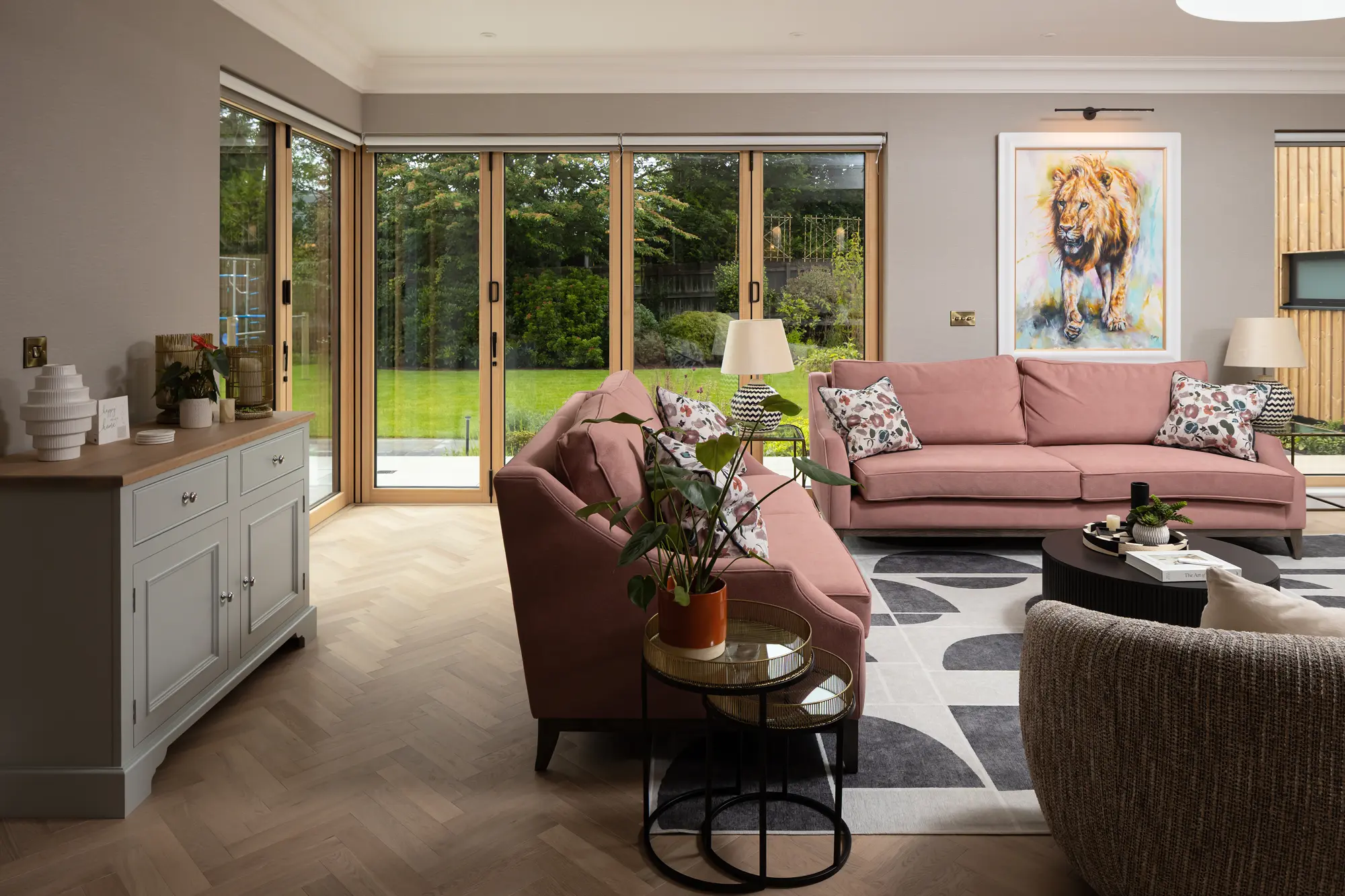
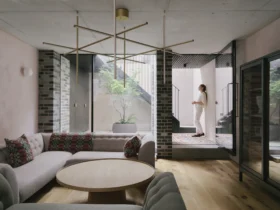
The house now has three lounge areas. This snug sitting room living connects with the open-plan kitchen-dining area
The couple were keen for this aspect to go smoothly. “We ensured the landscapers worked in tandem with the main contractor, so everything was completed at the same time and ran smoothly,” says Alastair. “We had a schedule from the builders showing what was happening and when. This was a dynamic document that was updated regularly, as inevitably plans changed and scope was added as we went along.”
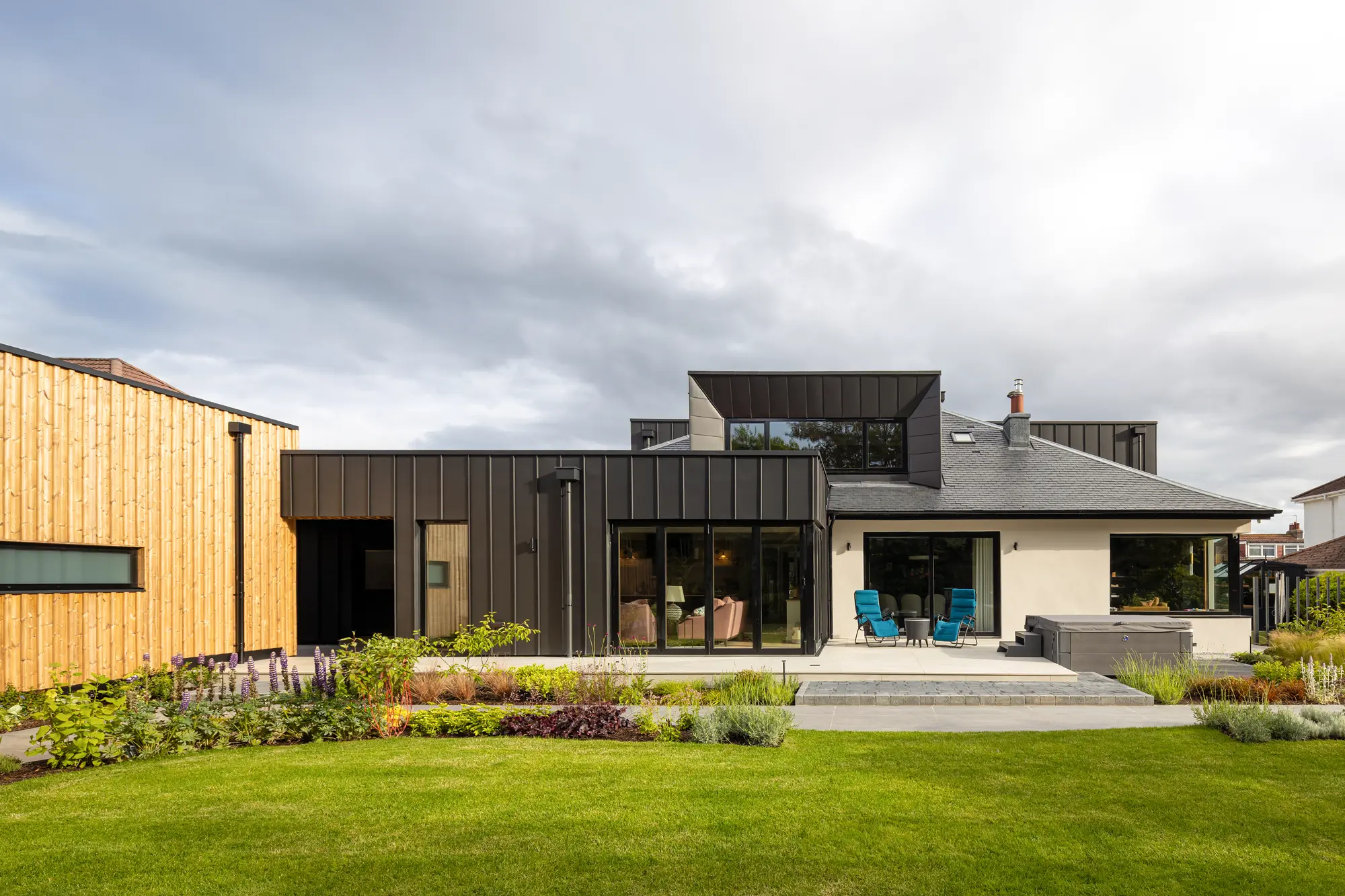
The 12-month construction phase involved preparing the rear and side elevations for the new extension. Steelwork was erected to the back of the house and the new timber frame was constructed, along with the dormer windows to all four elevations. The additions are clad in a vertical zinc seam finish with a slate roof, creating a continuity while adding a contemporary look to the new elements of the house.
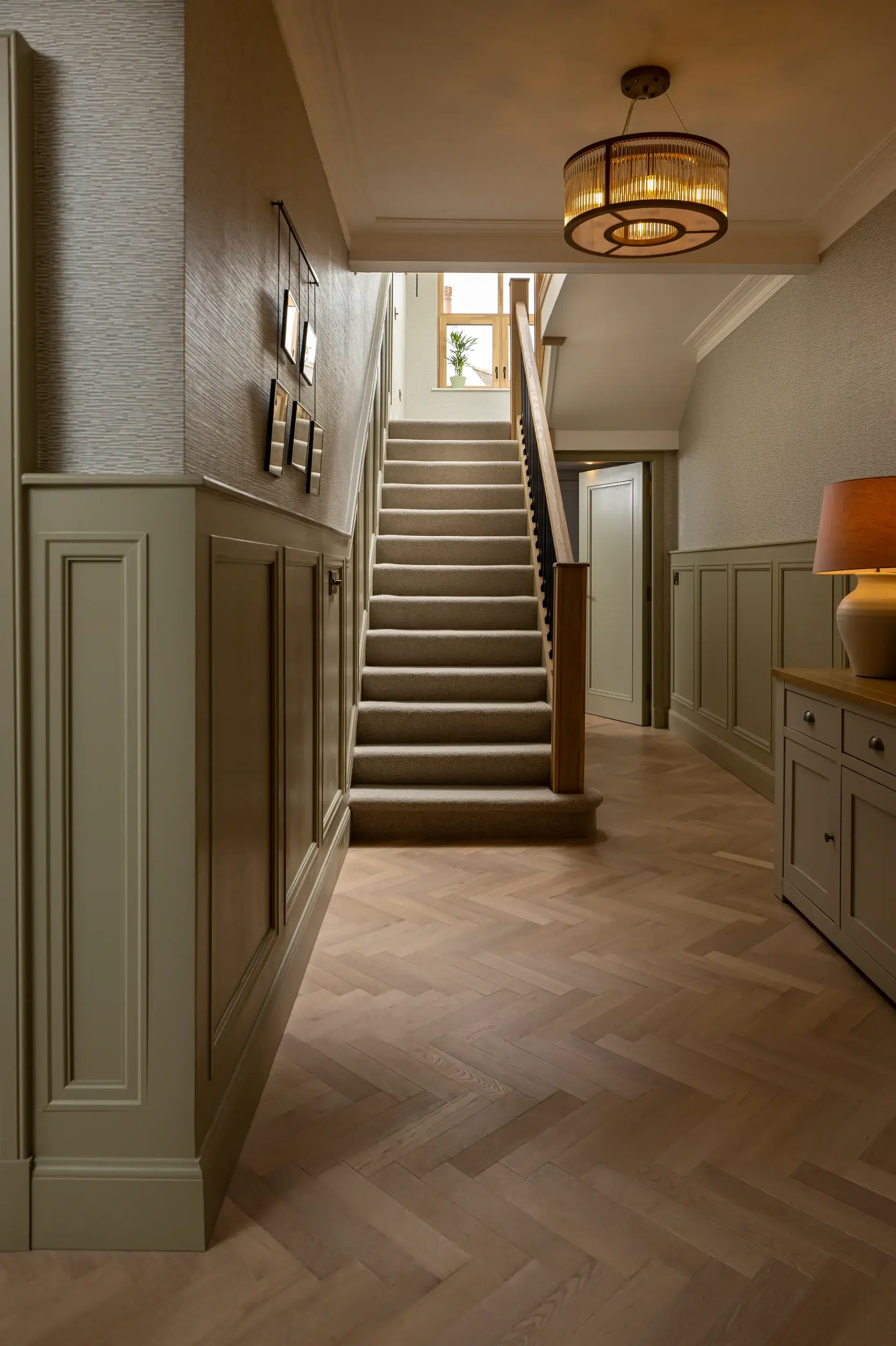
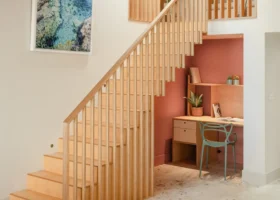
The original staircase has been refurbished. The wood paneling has been replaced with new panels that echoes the 1930s style of the house. Underfloor heating features throughout the ground floor below the oak herringbone floors. New larger windows have been installed at the top of the staircase to bring more light into the hallway
Having unity between the extension and dormers was important to the success of the project. “The various shapes of the existing dormers, along with the many different window configurations, meant that the existing property was cluttered and disjointed. By reconfiguring all dormers and the extension to be clad in zinc, the new areas married well with the original house,” says George.
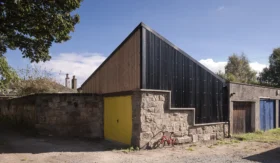
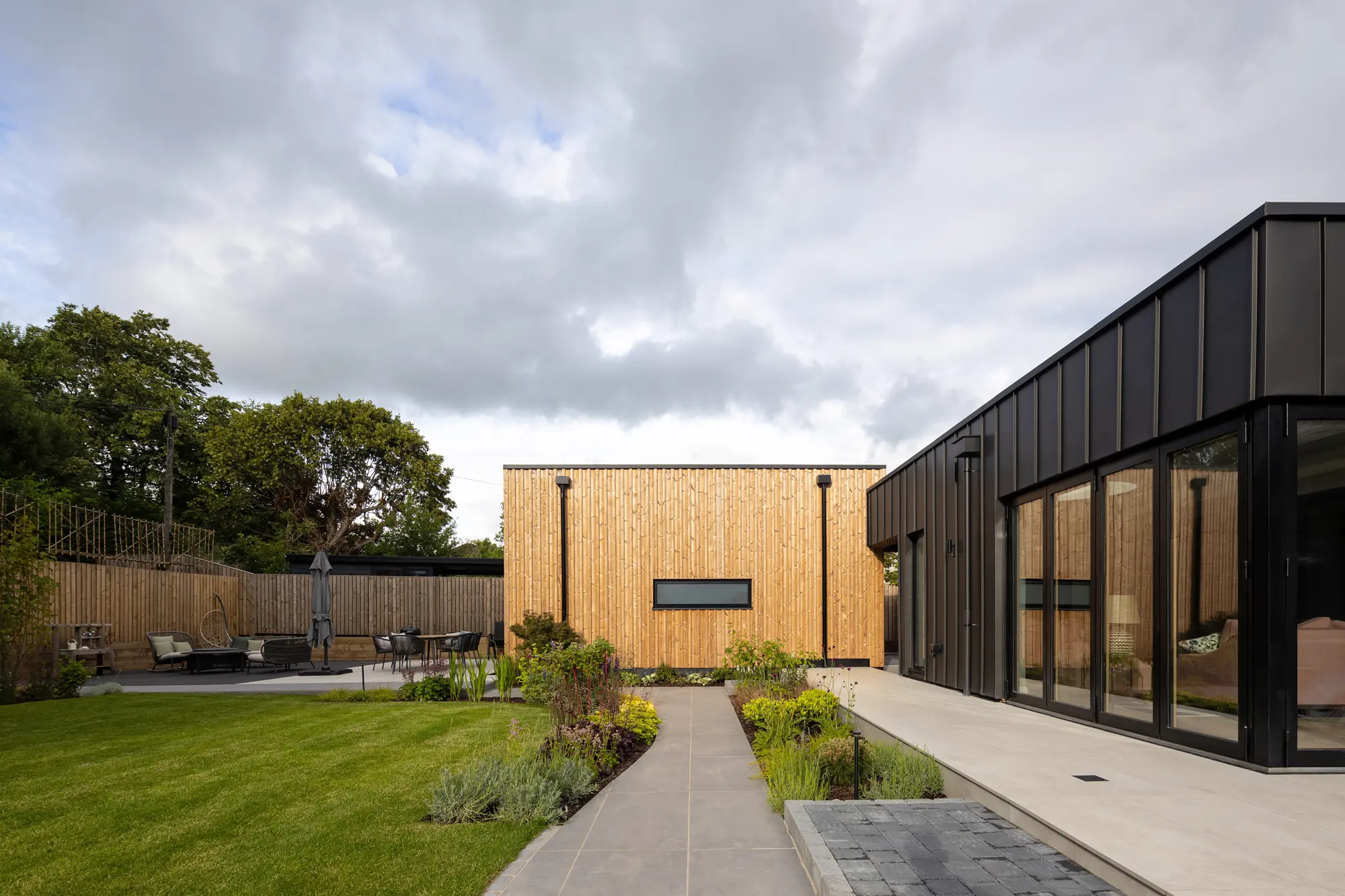
The garage was also rebuilt. The 46m² masonry construction is clad in thermally treated pine wood, laid vertically to echo the zinc cladding arrangement used elsewhere. The design sits sympathetically to the house, new extension and garden.
Closer look The house’s green roof
The property’s new extension features a sedum roof, which supports biodiversity, improving the area of a natural ecosystem. Living roofs also contribute to mental wellbeing – even the simple act of looking out at greenery from a window or rooftop has been shown to reduce stress levels and improve focus.
The sedum roof used at the Irvines’ house is lightweight and doesn’t add extra load, so there is no additional supporting structure required. On a practical level sedum roofs act as natural insulation, helping to cut down on energy use by keeping buildings warmer in winter and cooler in summer. They also retain and slowly release rainwater, which helps to reduce the amount of the discharge to already overloaded drainage systems.

Another advantage of sedum roofs is the way that these designs promote the reduction of urban heat. Typical roofs with dark surfaces (tiles, slates, etc.) absorb lots of heat during the day which is then released at night. This process is thought to contribute to an urban heat island effect, where the air temperature in cities is higher. Green roof coverings also lead to the improvement of acoustic insulation and indoor comfort levels in buildings, as the sedum roof absorbs noise. This is a big benefit for this property, which lies beneath a flight path.
The finished bungalow renovation & extension
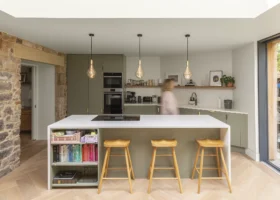
The revamped ground floor delivers the open-plan living-kitchen-dining zone the couple were after. The former sitting room has been converted into a snug and a former bedroom is now a sitting room. What was the kitchen is now the master bedroom with ensuite and an additional WC/cloakroom has been created with alterations to the existing utility, boiler and store area to form a larger utility/boot room.
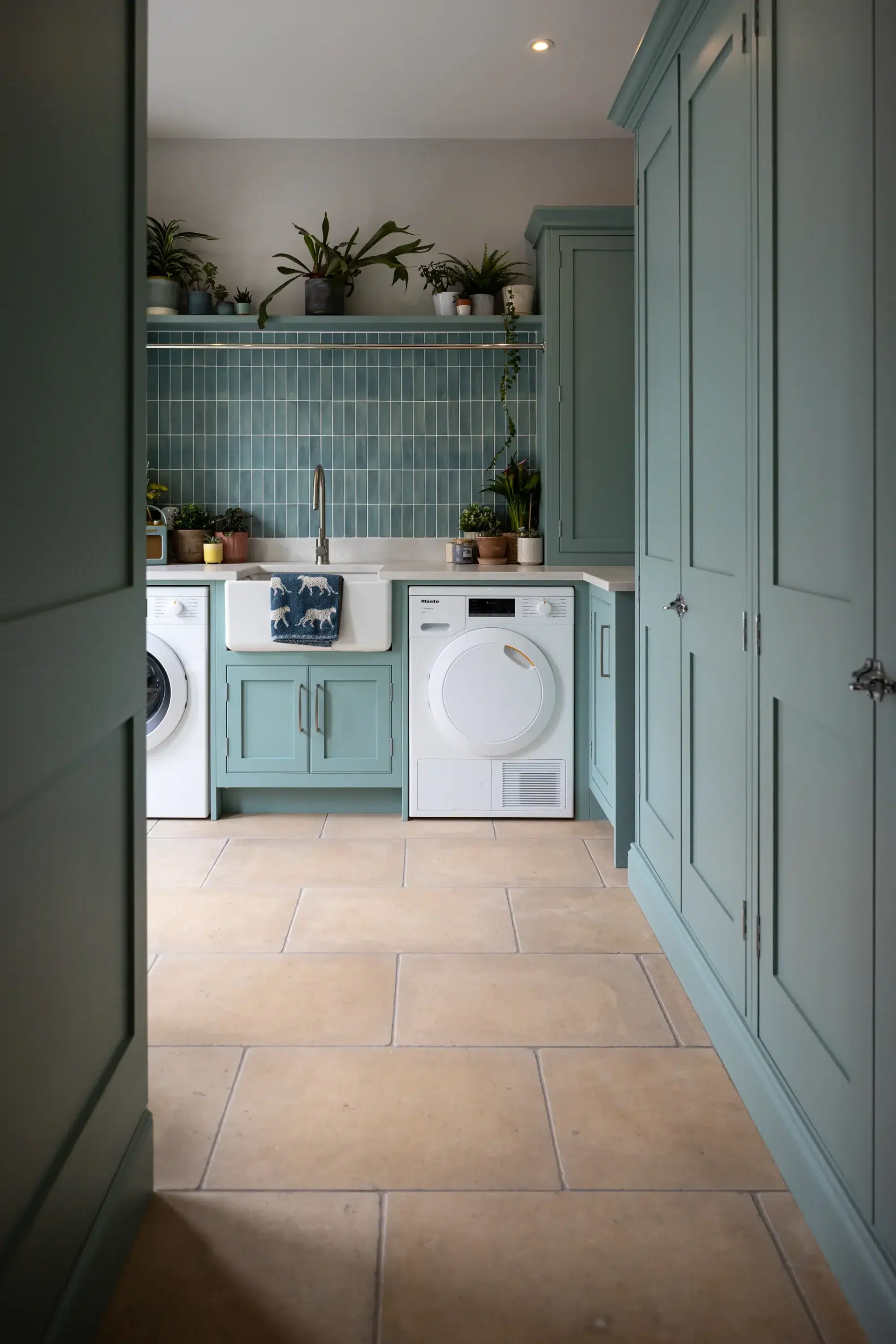
Having a separate boot room and laundry room has been a real luxury, with space for the whole family (and dog) to store outdoor gear, while the laundry remains clean and easy to access
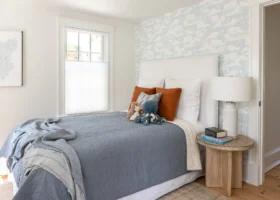
Upstairs, the layout has been reconfigured for two bedrooms of a similar size, one bathroom (incorporating a shower and a bath) and a dressing area, which can also be used as an additional bedroom or office. Alastair and Catherine had a clear idea about the internal finishes. “We had help from an interior designer, Neuk Interiors, who created a cohesive colour palette and theme throughout the house. They designed and had installed bespoke joinery, as well as sourcing furniture, lighting, bathrooms and soft furnishings,” says Catherine. “We held monthly progress meetings with the architect and main contractor and later the interior designers joined to ensure alignment.”
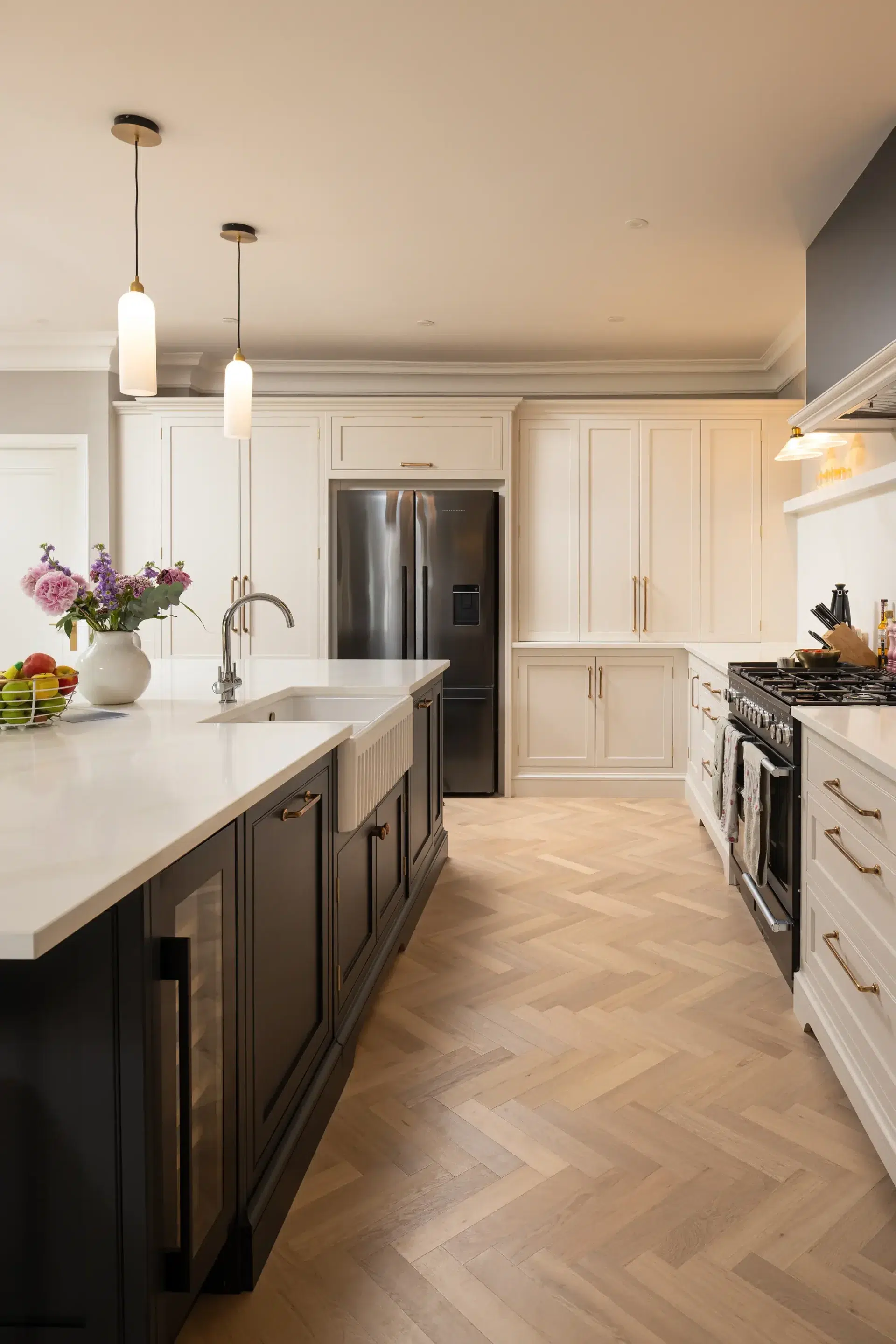
The house’s layout has been reconfigured, with the kitchen now where the lounge used to be
The energy efficiency and performance of the building has been vastly improved. A new gas boiler and hot water cylinder have been installed. There is underfloor heating on the ground floor, currently powered by the boiler but futureproofed to allow for an air source heat pump in the future. The windows are triple glazed and there are high levels of insulation throughout.
Creating a perfect home
The family moved back into their home in May 2025 and are thrilled with the result. “The final design has a great flow between the house and the garden, with large bifolds and sliding doors from the main living space which open onto a patio and from there into the garden,” says Alastair. “You also can see from the front door all the way through to the garden, which we really like.”
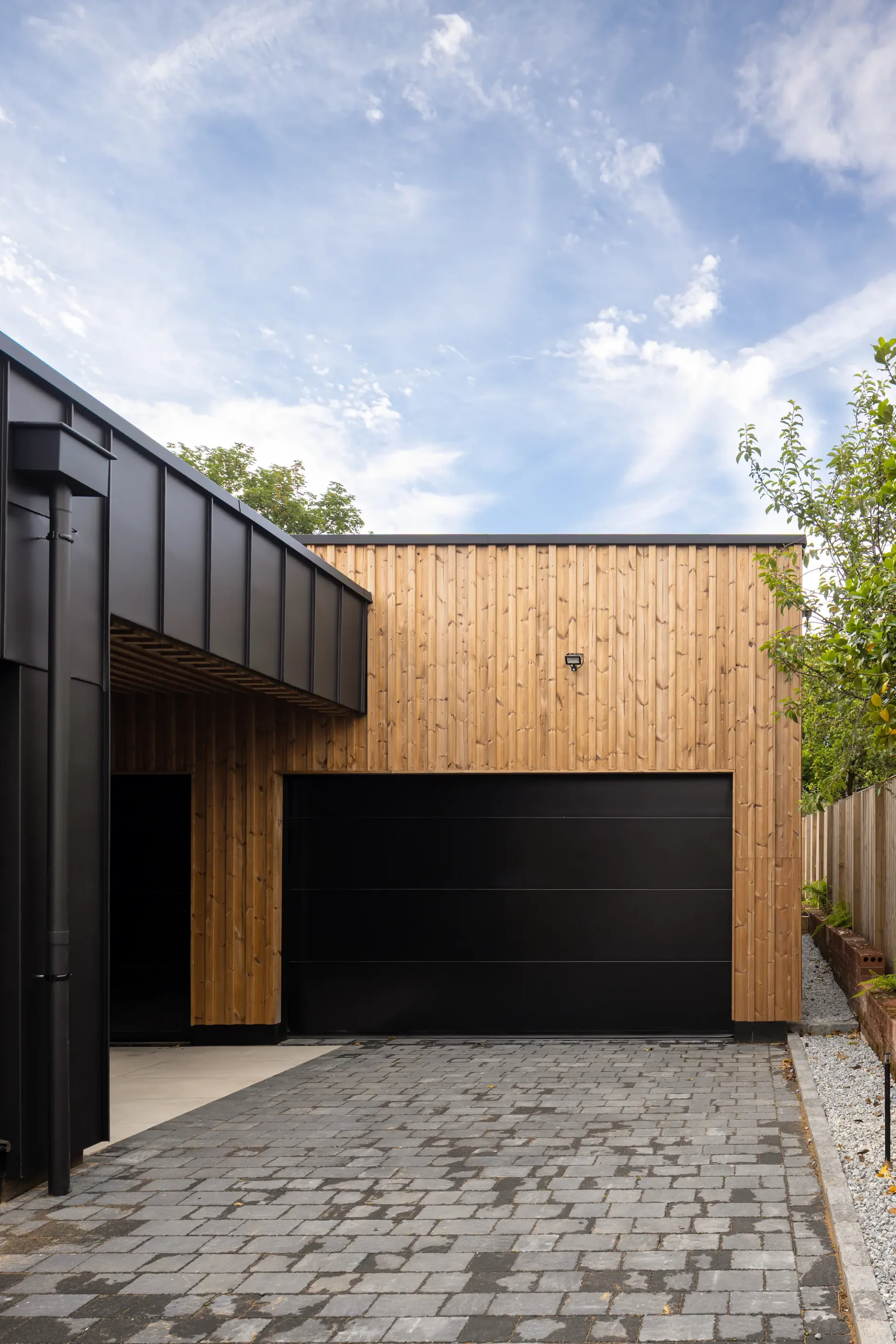
The garage blends in with the existing house’s architecture
The couple particularly enjoy the use of the eaves in creating larger rooms on the first floor. “We managed to extend the space upstairs significantly. This included removing a redundant chimney that enabled us to turn a very small study area into a home office or decent sized double bedroom,” says Alastair.
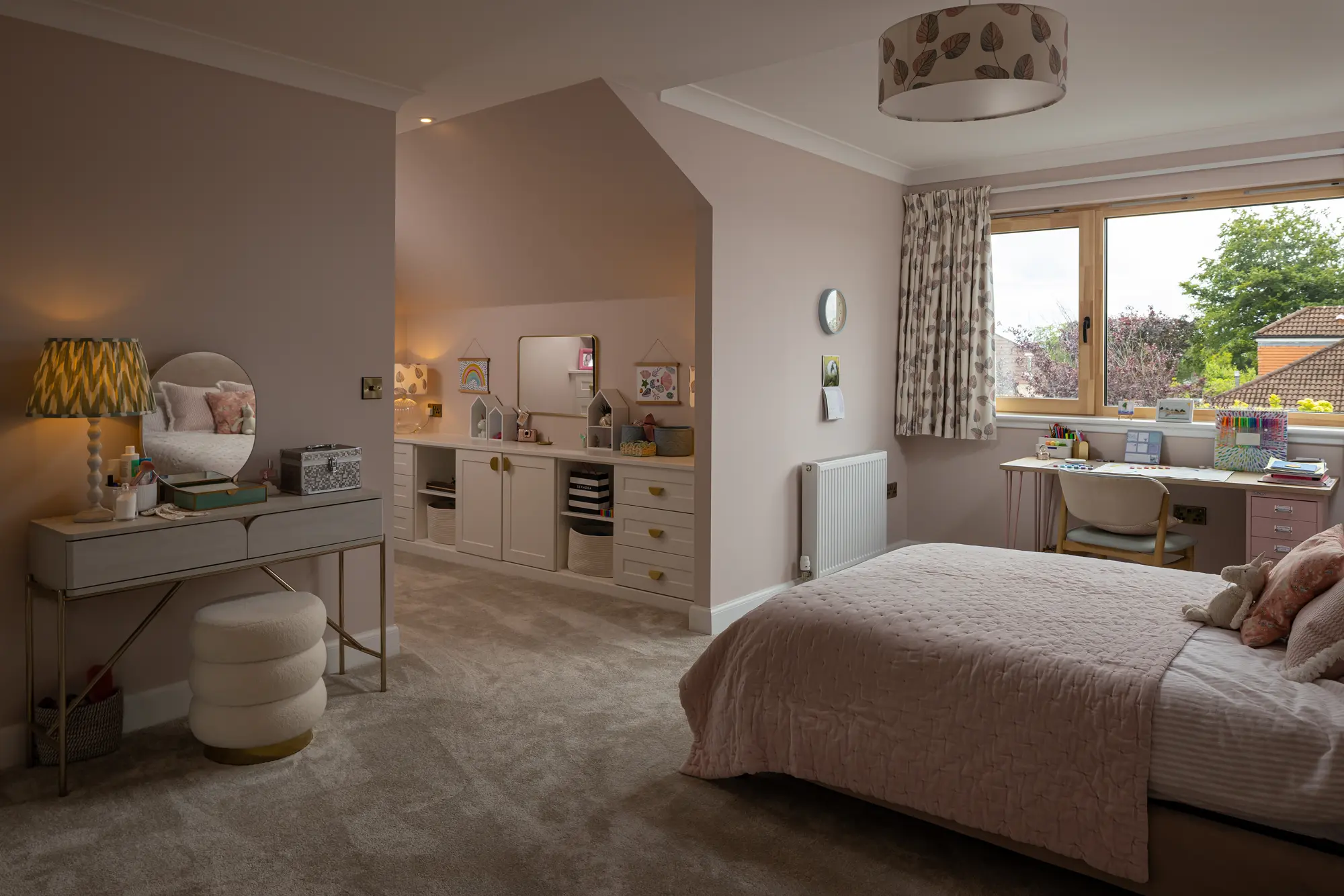
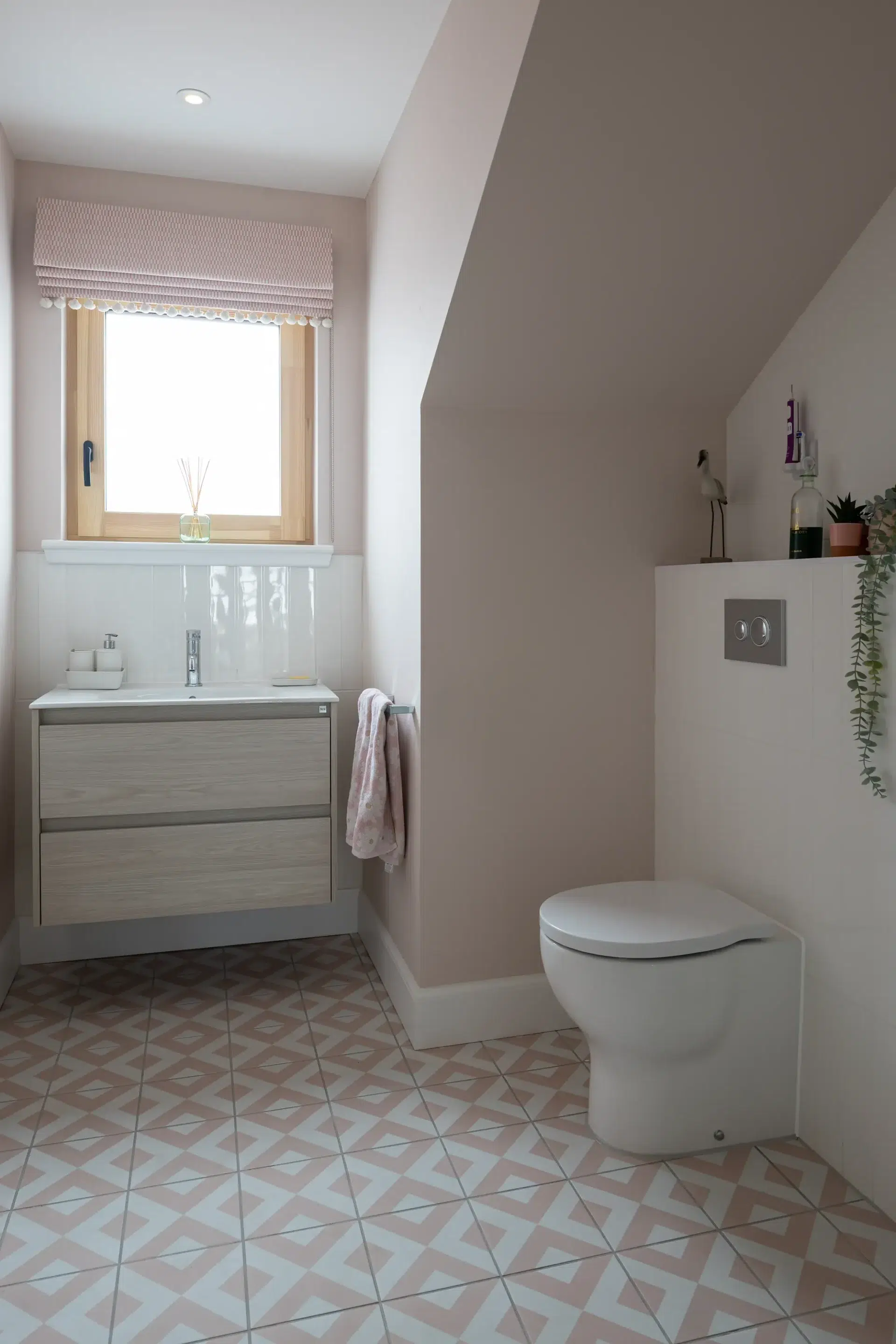
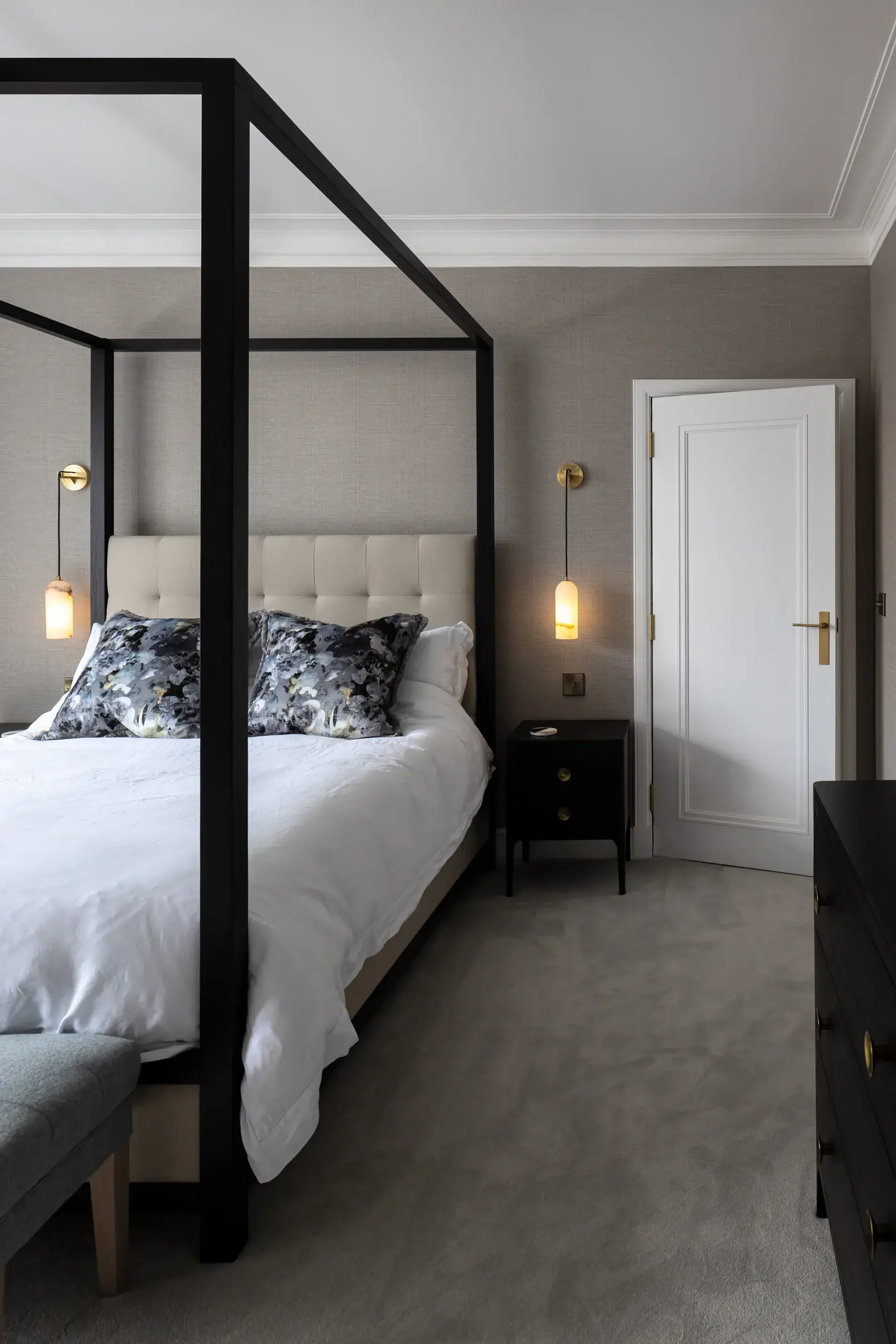
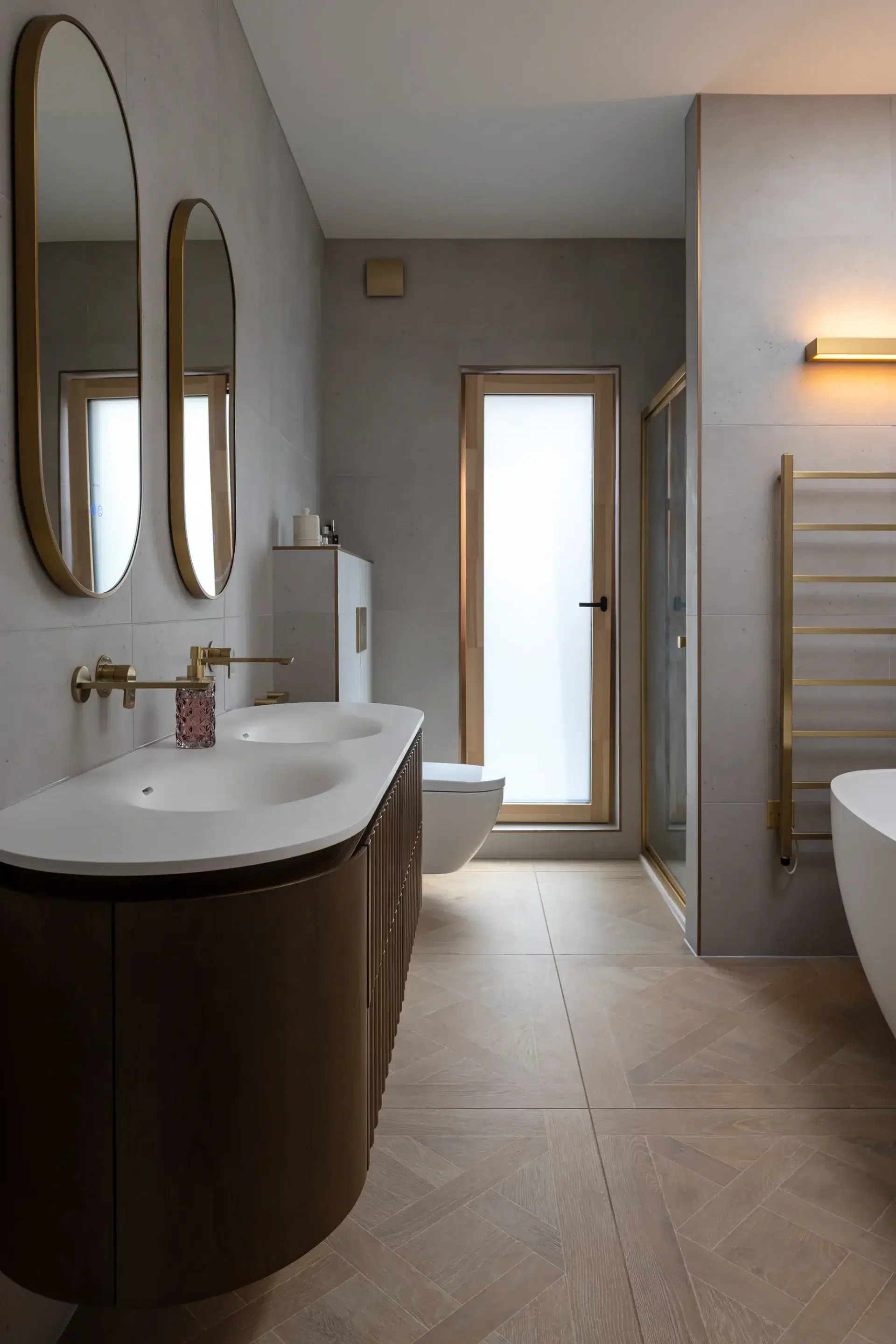
“It was challenging handing over a house that we had just bought to someone else and trusting them to deliver it back to us a year later! But seeing it go through the stage of being a building site and then all come together at the end was amazing, especially seeing it turn into a finished home in the final few weeks. We’ve created the bespoke home that was exactly as we envisaged and that is unique in the area.”
We learned
- Involving our interior designers earlier could have avoided some rework, such as repositioning the sockets and switches. We may have adjusted the bathrooms to better accommodate the suites.
- Delays with glazing due to supplier issues had a knock-on effect on the schedule. However, once they were installed the team worked hard to get back on track and get us into the house on target date. This included early starts and weekend working for the joiners and decorator and we were impressed with their dedication in doing this.
- The project was time consuming even though we hired and relied on professionals. The number of decisions that need to be made can be overwhelming at times, especially when it’s on the spot to allow work to continue to schedule. We had not fully anticipated this and if we did it again we would not underestimate the amount of time and commitment required.
- We tried to insure the property ourselves during the build until it was habitable through a number of brokers, but the premiums were not attractive versus the risk. So, we relied on our main contractor’s insurances to cover the building work.
Caroline Ednie
You may be interested in