


























Herringbone vs Chevron Wooden Floors – What’s the Difference Between the Two?

From installation to design, Amandine Lefevre speaks to experts about the main differences between herringbone and chevron timber floors, and what you need to consider before specifying patterned wooden flooring
Amandine Lefevre

The timeless appeal of patterned timber flooring offers homeowners the opportunity to create striking architectural statements within their interior schemes. Taking their cue from classic European floor designs, the two most popular options, herringbone and chevron, both add structure and rhythm with their repeating patterns, transforming wood flooring into a focal point. However, while their visual appeal is undeniable, specifying the right option out of the two requires careful consideration.

Installation methods, material choices, room proportions and overall costs can all influence the final result. Before committing to either style, it’s important to understand the key differences and practical factors involved.

Here’s what you need to know when choosing between patterned herringbone or chevron flooring for your self build or renovation project.


Jump to wooden flooring FAQs answered

What’s the difference between herringbone and chevron flooring?

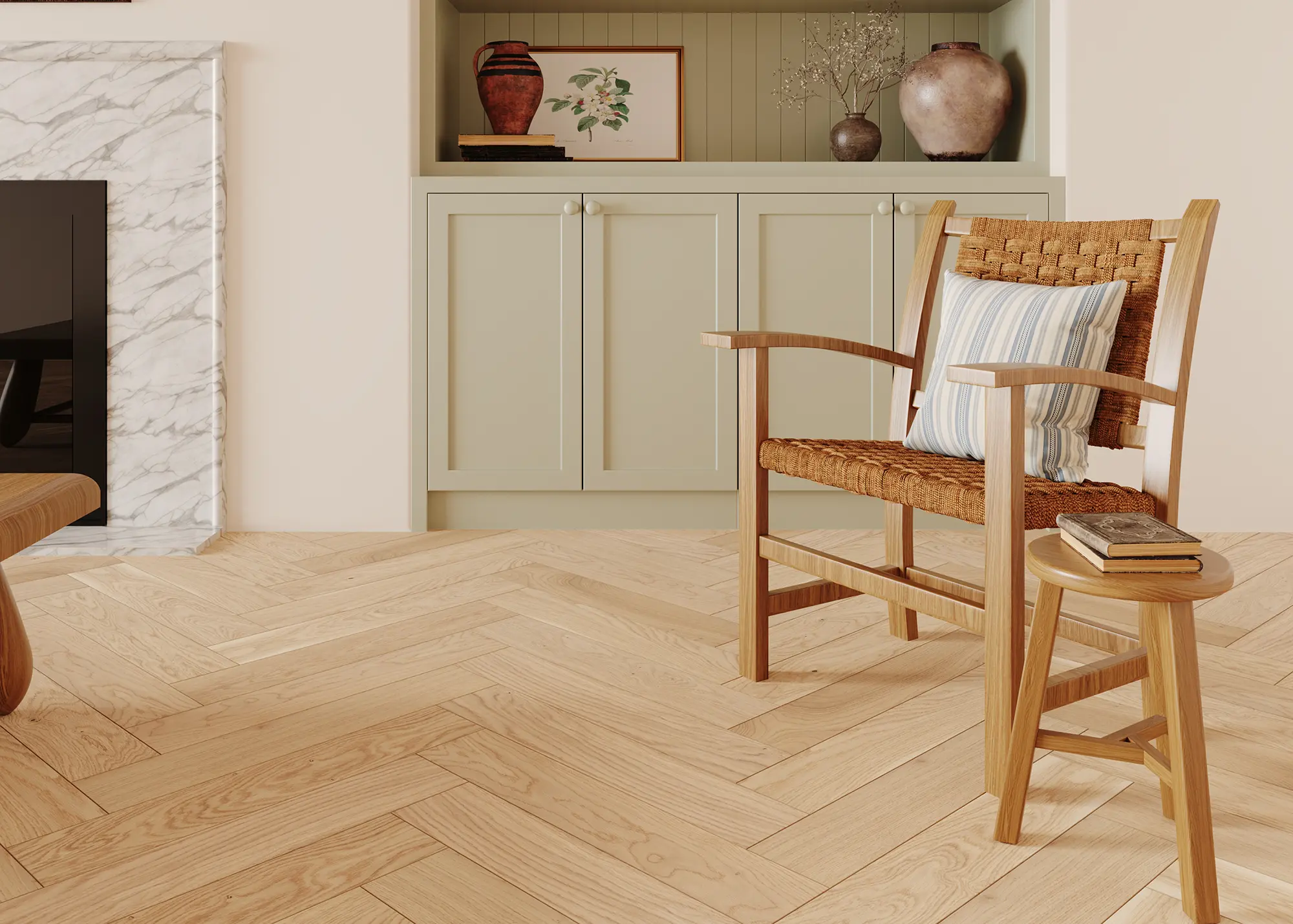
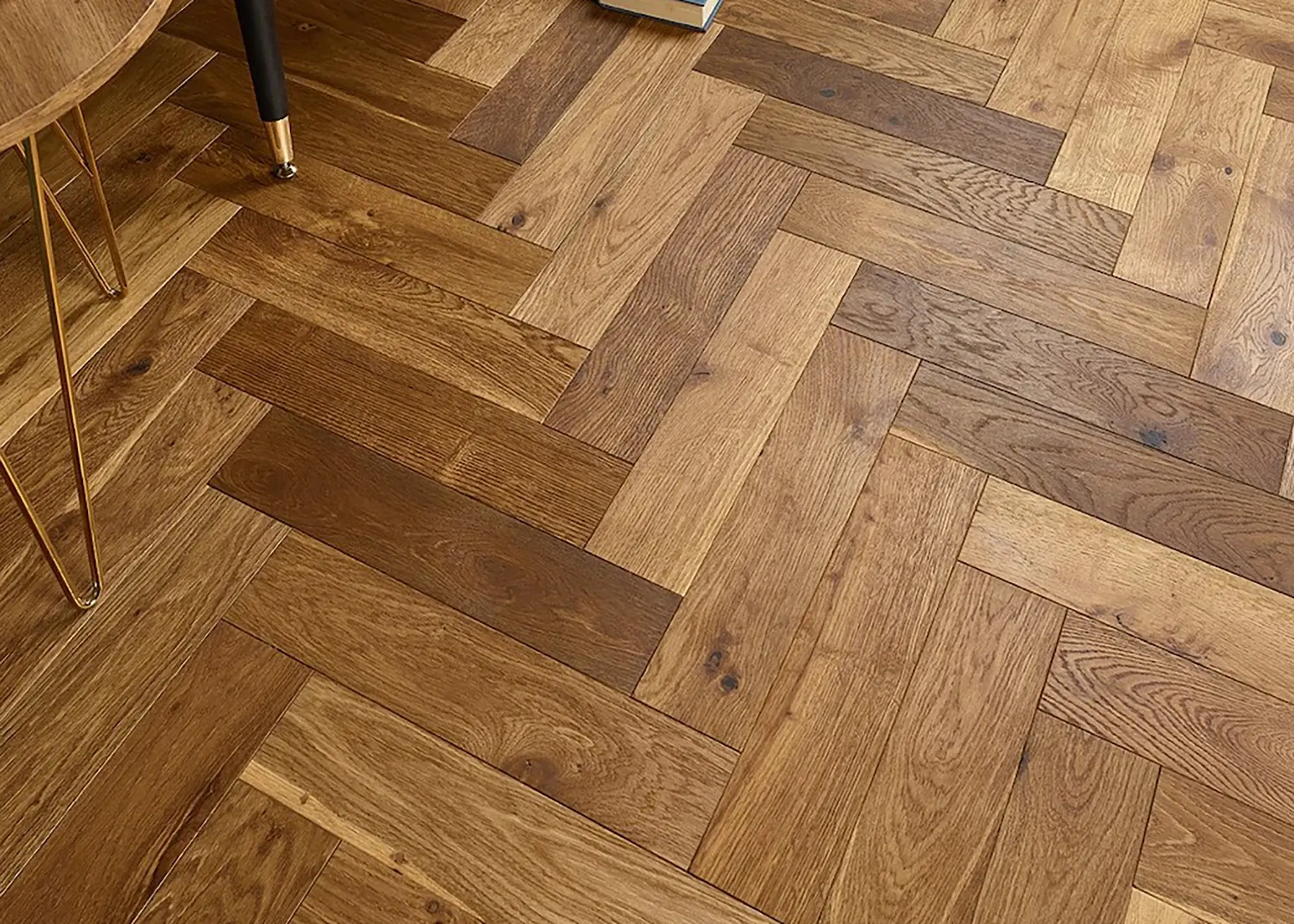
Often misconceived as interchangeable, herringbone and chevron are frequently grouped together – though their individual visual and structural characteristics are very distinct. Herringbone is created by arranging rectangular boards at right angles in a staggered layout, creating texture even in smaller rooms without overpowering the space. With an offset design, the pattern is slightly broken up, softening the impact, making it adaptable to both contemporary and traditional interior schemes.

Herringbone vs Chevron Wooden Floors – What's the Difference Between the Two?

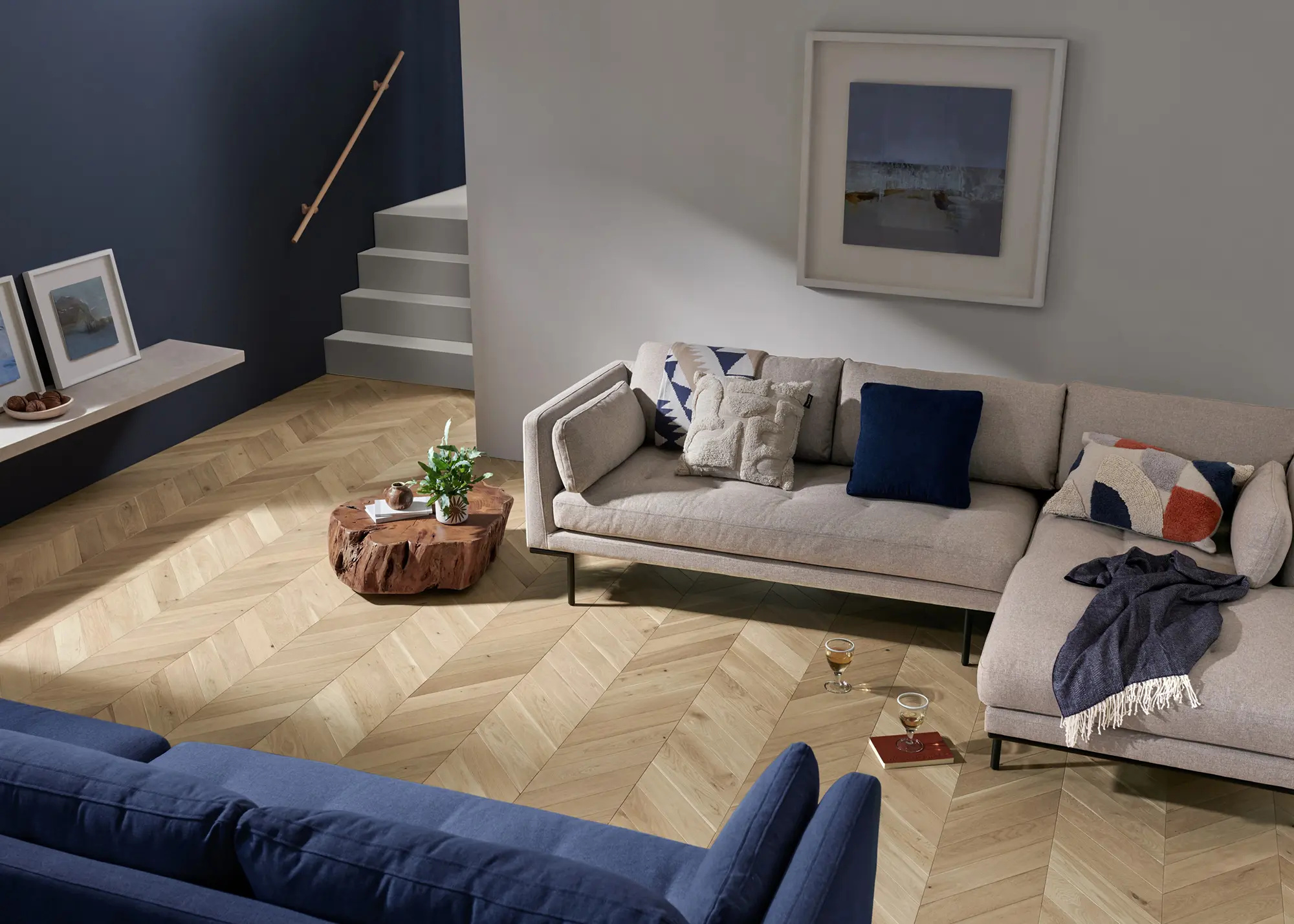
Featuring minimal knots and sapwood, this clean grade herringbone pattern from Knot & Grain is perfect for crafting a contemporary, uncluttered environment

Chevron boards, meanwhile, are pre-cut at an angle so that they can meet in a continuous point, forming a clean zigzag. Drawing the eye in the direction of the planks, this style tends to feel more formal and creates an emphasis on symmetry and flow, which can serve as a bold architectural feature in itself.

Board size and layout also play a crucial role when it comes to selecting your flooring. Smaller blocks create a more classic, intricate appearance, whereas larger planks typically offer a more contemporary feel. “The angle and alignment in chevron must be precise to achieve that clean point, whereas herringbone allows for slightly more tolerance without affecting the overall look,” says Yarl Christie, founder of independent flooring retailer, Stories Flooring.

How does installation differ between herringbone and chevron floors?

Before approaching the installation, there are a few elements to take into consideration. With chevron, the boards are pre-cut at a consistent angle – which might be anything from 30º to 60º – so that they meet in perfect V-shapes. “This means the layout must be accurate from the start, usually set out from a straight centre line,” says Natalie Mudd, creative director and co-founder of Knot & Grain. Even a small error can impact the entire floor and won’t go unnoticed. Chevron also tends to produce more offcuts due to the angles and precision involved, so working with an experienced installer is recommended to help minimise material loss.

Herringbone vs Chevron Wooden Floors – What's the Difference Between the Two?

This striking engineered chevron floor from Woodpecker Flooring balances pale, pared-back tones with rustic detailing, allowing the wood’s natural character to take centre stage in a fresh, forest-inspired finish.

Herringbone, while it still requires skill, is generally more forgiving than chevron due its staggered layout, allowing for small adjustments as you go. The boards themselves are standard rectangular planks, which are laid at 90º angles, and the pattern is built outward from the centre. Installation typically begins by measuring the longest wall and dividing it in half to find and mark the room’s centre line.

From there, two planks can be connected and positioned along the line to form the starting point of the pattern. “It’s good practice to add extra guidelines – such as a perpendicular line to maintain a perfect 90º angle and parallel rows to define the edges,” says Natalie. “Precision at this stage is key to keeping the pattern consistent across the floor.” Professional installation is recommended, but if you do decide to go DIY with your herringbone floor, watch out for common mistakes – such as losing the centre line early on, and inconsistent spacing at the edges – especially around walls that aren’t perfectly square.

Both patterns benefit from careful subfloor preparation as a level, stable base is essential to avoid movement and gaps over time. A damp-proof membrane is also essential on concrete sub-floors to protect wood from moisture. “Dips should be filled and high spots ground down before proceeding,” says Natalie. Using a glue-down method provides a solid feel underfoot when laying timber floors; which is highly recommended for chevron and herringbone designs as they require greater stability.

Herringbone vs Chevron Wooden Floors – What's the Difference Between the Two?

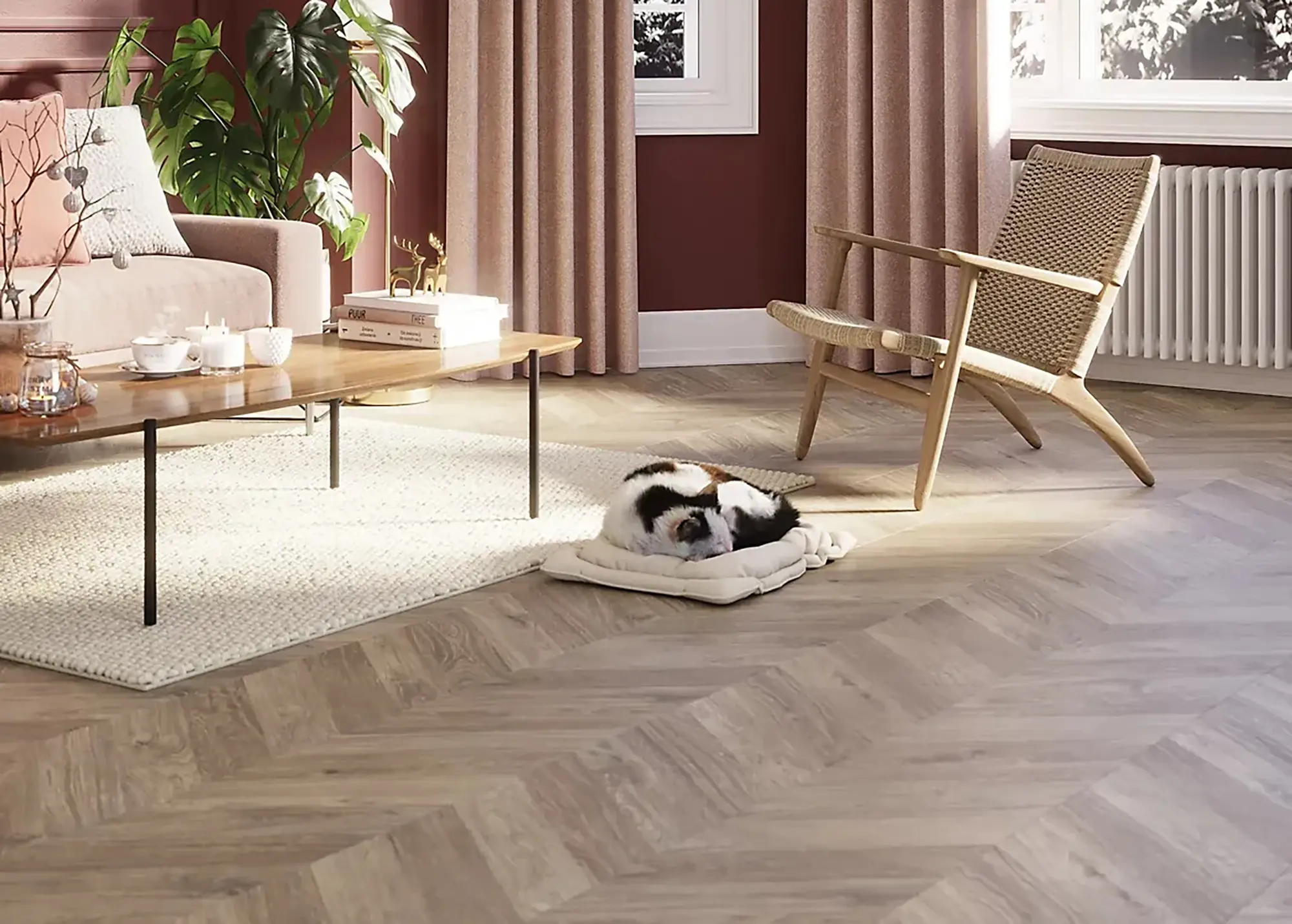
This wood effect laminate flooring from GoodHome offers a striking look with its timeless chevron pattern

“Don’t forget to allow your wood flooring to acclimatise to its new environment,” says Natalie. Once the planks are unboxed, the should be allowed to rest in the room where they will be installed for at least 48-72 hours. This will allow the timber to adjust to the room’s temperature and humidity, preventing expansion or contraction in future. “Engineered wood is typically preferred for its stability, particularly when used with underfloor heating,” says Yarl. It also handles environmental changes, such as humidity, better than solid timber.

What is engineered timber flooring?

The phrase “buy cheap, buy twice” applies just as much to flooring as it does to furniture or appliances. While budget-friendly options such as laminate can appear attractive initially, lower-quality materials often show signs of wear far sooner, leading to costly replacements down the line. For those planning to sell their homes in the future, flooring is an especially important consideration, as poor-quality finishes can negatively impact a buyer’s perception of a property.

Engineered wood flooring offers a more durable, long-term solution. Designed to cope with the demands of busy family life, it combines practicality with a premium aesthetic that can help futureproof a home. Beyond durability, the style of flooring also plays a major role in the overall look and impact of a space. “Choosing a classic or decorative plank, such as herringbone or chevron, can help to add value when selling your home,” says Natalie, creative director and co-founder of Knot & Grain.

Engineered wood is also particularly well suited to homes with underfloor heating. Unlike solid wood, which naturally expands and contracts in response to changes in temperature and humidity, engineered planks are constructed using multiple layers arranged in a cross-grain formation. This layered structure creates stability, helping to prevent issues such as warping, bowing or gapping when exposed to heat.

With the right care, engineered flooring can last for decades. Regular cleaning, occasional resealing, and professional maintenance help preserve its finish, while the ability to sand and

What should you budget for herringbone and chevron floors?

Chevron is typically more expensive than herringbone, with options commonly ranging from £60-£120 per m². This comes down to both manufacturing and installation, as the boards require precise cutting and take longer to fit due to the need for accuracy.

Herringbone, on the other hand, generally starts from around £30-£80 per m², depending on wood species, plank size and finish. Installation costs are also typically high because of the intricate laying pattern, with fitting often ranging between £30-£50 per m². “Those looking to save on costs while still achieving an aesthetically pleasing floor should consider long planks, as they are quicker to install, require less cutting and therefore produce less wastage,” says Natalie.

Herringbone vs Chevron Wooden Floors – What's the Difference Between the Two?

This premium engineered wood from Lusso Flooring combines a smoked oak finish with the classic herringbone pattern, creating a floor that adds depth and character to a home

It’s worth investing in good installation and subfloor preparation as this is where long-term performance is determined. Savings can often be made on board size and finish without compromising the overall impact. In terms of maintenance, both patterns perform similarly when correctly installed and finished, and regular cleaning and occasional refinishing will keep them looking their best. “Repairs can be more involved than with straight planks, particularly with chevron where matching the pattern is critical,” says Yarl.

Flooring FAQs

How can I stop my timber floors from getting scratched and scuffed over time?

Whether you choose solid or engineered wood flooring, each floor is totally unique and will require individual care. No matter your choice, as a natural material, timber needs regular cleaning and maintenance to prolong the life and beautiful finish of the wood.

To preserve the longevity of timber flooring, we recommend sweeping, vacuuming or dry mopping at least once a week alongside using an appropriate cleaning solution. It’s important to choose a cleaning product that is compatible with the floor’s specific factory finish as this adds a further protective layer as well as removing scuffs and superficial blemishes. Although engineered wood flooring is a durable and long-lasting surface, regular care will help remove dust or grit that could scratch or scuff the floor underfoot or when furniture is moved during everyday use.

Answered by Anthony Scott

Anthony Scott is global product & innovation director at Havwoods, a market-leading supplier of high-quality wood flooring and joinery solutions.

How does flooring adhesive differ with solid and engineered timber?

When you’re laying a solid or engineered wood floor, there is no best adhesive, only the correct one for the specific job. Factors such as the subfloor composition, environment, type of floor (solid or engineered) and size of plank all need to be assessed to ensure you are using the right adhesive.

In some cases, installation will influence the type of adhesive. For instance, extra-wide boards may require one with higher strength, while intricate patterns may need an adhesive with good initial grab. MS-Polymer (or hybrid) adhesives are often recommended due to their versatility, high-strength and flexibility. They are also well-suited for use with underfloor heating and have a very low VOC content. It’s always advisable to consult with the flooring supplier or adhesive manufacturer to determine the most suitable adhesive for your needs.

Answered by Anthony Scott

Anthony Scott is global product & innovation director at Havwoods, a market-leading supplier of high-quality wood flooring and joinery solutions.

which flooring pattern is best for an open-plan space?

Oak parquet flooring, finished in clear matt oil, works wonderfully in open-plan spaces. The herringbone pattern adds visual depth and movement, subtly guiding the eye through the space, while the light tone of the oak enhances natural brightness. Together, these qualities create a warm, refined atmosphere that conveys both quality and a strong sense of wellbeing.

Tom Manwell

Answered by Tom Manwell

Tom Manwell is the founder and director at Wellstudio Architecture. Tom founded the practice in 2021 with a goal to design homes that actively enhance mental and physical wellbeing.

How can I refresh old herringbone wooden floors?

The simplest renovation job for a wooden floor is sanding and varnishing the boards. This works well for Victorian or early 20th-century floors that have regularly sawn boards of good quality timber. Later examples are unlikely to be of sufficient quality to make it worthwhile. This is a  straightforward job for a competent DIYer. Floor sanders can be hired from most tool hire centres, but make sure all the nails are fully driven home before you start.

Answered by Alan Tierney

Alan Tierney is Build It’s period property and conservation expert. He ran a historic building consultancy, offering hands-on advice to the owners of heritage homes, but is now focused on renovating Old Barnstaple House.

how can you tell when original wooden floors need replacing?

In a run-down house at the start of a project, worn floors can look as if they are in need of major improvement. It’s always important to look past that and try to visualise how they will contribute to the finished product. Older floor finishes represent a lot of the character in traditional houses and carry the marks of a place’s history. Once everything around them has been smartened up the apparent eyesore can often become a key feature.

Very old wooden floors – dating from before the mid-18th century – are practically impossible to overhaul successfully, as any new timber replacements will contrast badly with the original. Thankfully, the existing boards are likely to be of such quality and durability that they will be perfectly usable, possibly with minor local repair or added structural support. Often all that’s needed is a good polish. If the floor is not level, adjusting furniture to compensate is likely to be cheaper and easier than addressing the floor. If it’s unusable, the best option might be to overlay it with a new, level floor.

Answered by Alan Tierney

Alan Tierney is Build It’s period property and conservation expert. He ran a historic building consultancy, offering hands-on advice to the owners of heritage homes, but is now focused on renovating Old Barnstaple House.

Amandine Lefevre

Amandine is Build It's editorial assistant. She's passionate about home design, and is always on the lookout for inspiring, creative self builds and renovations.
Read more articles by Amandine Lefevre

Leave a Reply

You may be interested in

Our sponsors