
















 Login/register to save Article for later



Dan Todd is sales director at Kloeber, one of the UK’s leading manufacturers of bespoke glazing solutions, specialising in timber, aluminium and composite windows and doors.
- Plan ItBack
- Design ItBack
- Build ItBack
- Homes
- ProductsBack
- CostsBack
- Self Build Cost Calculator
Estimate your project costs instantly with Build It's interactive self-build cost calculator
Calculate Now - Costs & Finance
- Contracts & Warranties
- Build It Estimating Service
Get an accurate, detailed cost breakdown of your project
Submit plans
- EventsBack
How to Choose the Right Window Frame Material – the Pros & Cons of Each Option
Whether you’re replacing old windows or installing them for the first time, it can be tricky to know which frame material is best for your house. Elinor Davies takes a deep dive into the most common window frame material options to help you find the perfect choice

Windows do a lot of heavy lifting on a property – they can contribute to its thermal performance, let in light and external views, and form a huge part of the house’s overall aesthetic. So, getting them right is important. This material guide focuses on window frames specifically and walks you through the benefits and drawbacks of some of the most common solutions on the market, so you can make an informed decision when planning and specifying your glazing.
There aren’t objective best and worst options, only the right one for your specific design scheme, budget, efficiency demands and location, all of which can vary so much from house to house. Similarly, there are many factors besides the frame material that will contribute to the overall quality of your windows – installation, glazing specification and how well they are looked after are also highly important.
The frames are therefore just one thing to consider when choosing new windows: be sure to get the best installers, the right glazing and hardware for your location and take care of the final product. A high-quality, poorly installed window might not perform any better than a lower-quality frame installed well, for instance.
| Helpful summary This window frame materials guide takes a closer look at each of the most popular options for UK homeowners. From timber to uPVC, aluminium and more, it explores the pros and cons of the different frame choices, how their installation differs and the individual maintenance requirements. |
Jump to
- Timber windows
- Aluminium windows
- Composite alu-clad windows
- Steel windows
- uPVC windows
- Window costs
- Window materials FAQs
Timber windows
Timber is a classic window frame material and is particularly well suited to sash or other more intricately detailed windows. According to Dave Tiller, technical director at Ventrolla, “timber can be built into almost any shape, so it’s particularly good for bespoke designs.” If your house is listed or in a conservation area and the original windows were wooden, you may be required to repair or replace them with timber to preserve its historical accuracy.
Even if yours is not a heritage property, timber remains an effective and popular choice. Some people are put off by poorly-looked-after rotten, draughty, single-glazed wooden frames seen in some older properties, but a well-made and well-maintained double- or triple-glazed timber window is exceptionally thermally efficient and, according to the Building Research Establishment (BRE), can last between 30-65+ years if well cared for.
“I’m a big advocate of timber window frames, and the technology is way beyond what it was decades ago. We work with a paint company, for example, that thinks it will be able to offer a 20-year, no-maintenance guarantee on timber paintwork,” says Dan Todd, sales director at Kloeber. “Accoya, which is a thermally modified timber product, has a life expectancy of 75 years.”
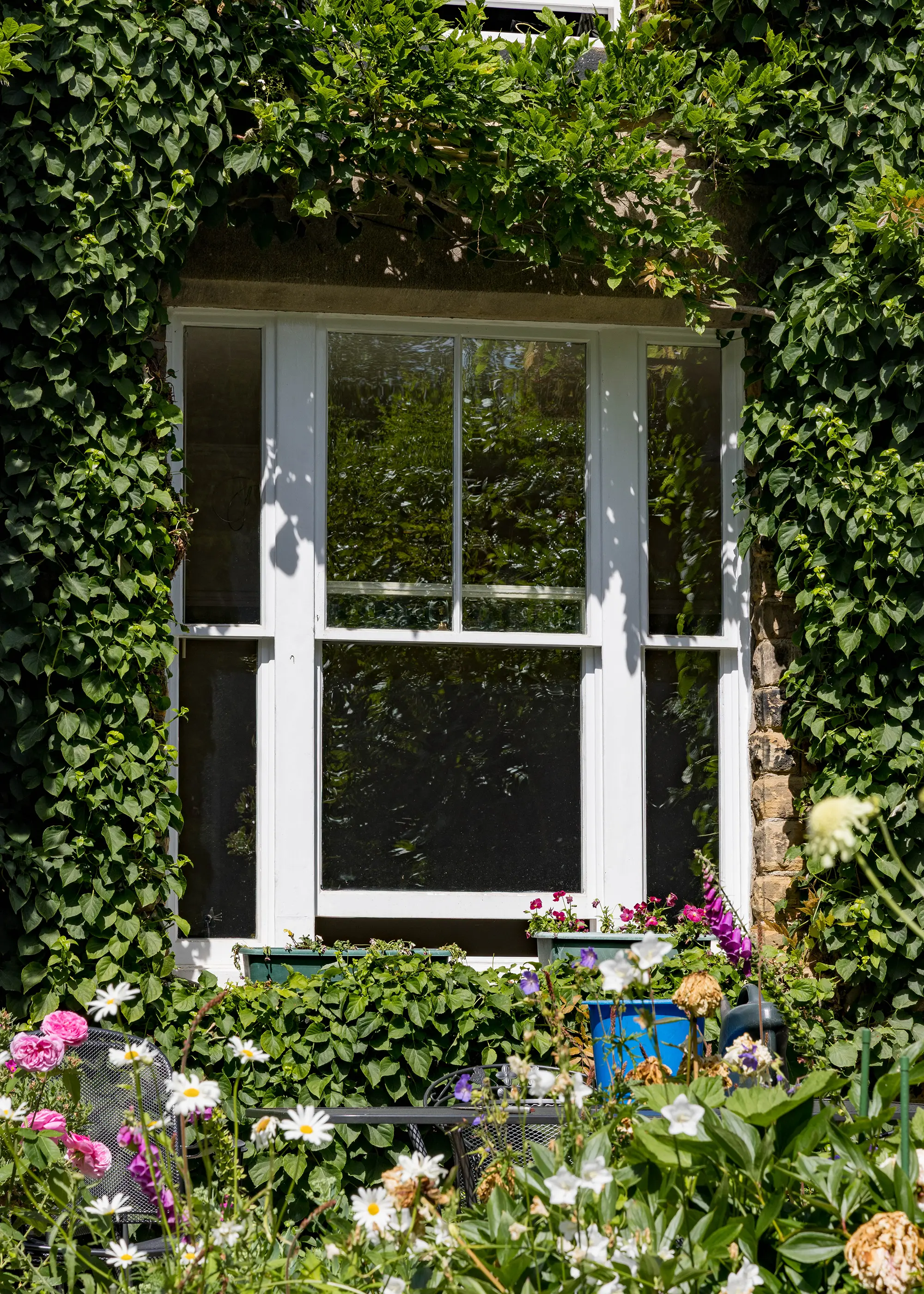
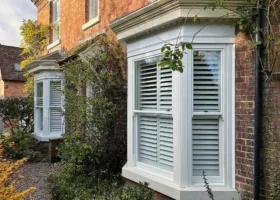
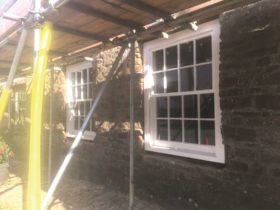
This Venetian-style window from Ventrolla has a two-over-one sash configuration with two side panels of glazing to let in even more light
Timber window maintenance
If your house is particularly exposed to high wind, rain, or salt spray, timber will need more frequent maintenance and repainting. If you want something as low effort as possible, timber may not be the right option for you in these conditions.
Timber window costs
The price of timber frames will vary based on the species of wood and whether it’s soft or hard. Hardwoods and thermally modified timber are the sturdiest and most long lasting, and as a result, are some of the most expensive frame material options on the market. Unlike other materials, however, timber is the least prone to price fluctuations as it’s renewable. This renewability also makes it a good choice for those seeking frames with a smaller carbon footprint. It has less embodied carbon than any other frame material, and it can be turned into wood chip at the end of its life.
Aluminium windows
One of aluminium’s greatest advantages is its strength and durability. Because of its innate stability, you can have smaller frames and larger panes of glass when compared to uPVC and timber. “Ultimately, you’re buying windows to look through and let in light rather than to stare at the frames,” says Edward Stobart, technical sales manager at IDSystems. This strength means it can be used for large picture windows, making it a particularly popular choice for modern properties with expansive glazing.
Although popular in contemporary schemes, aluminium needn’t be grey and square – it’s available in an almost infinite array of colours and can be curved to suit your design, making it very versatile. Having said that, it can be difficult to find casement, sash or other more traditional windows in aluminium, as there is less public demand for them.
Like all metals, aluminium is a natural conductor of heat, so the frame technology must counteract this if the windows are to be thermally efficient. This is often achieved through thermal breaking, where an insulating barrier is placed inside the frame to block the colder or hotter outside metal transferring that temperature to the internal aluminium.
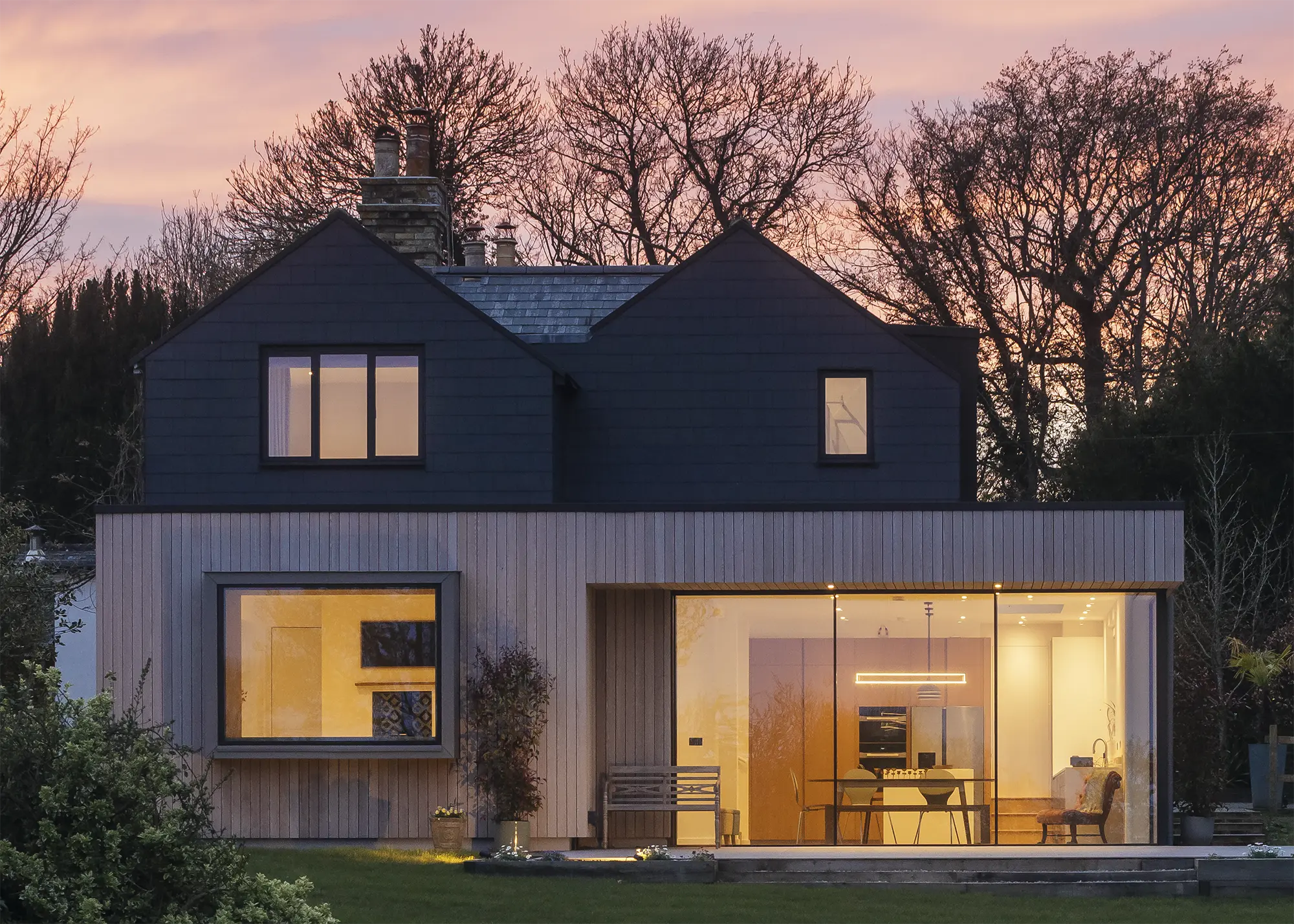
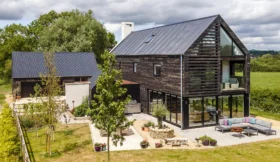
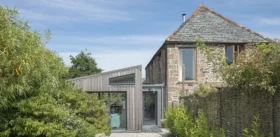
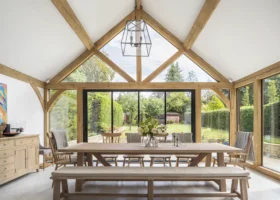
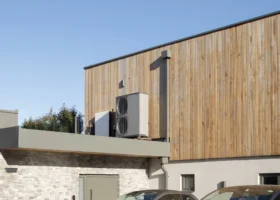
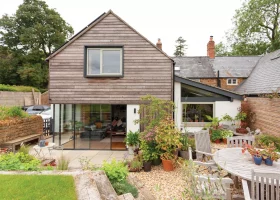
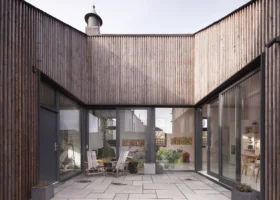
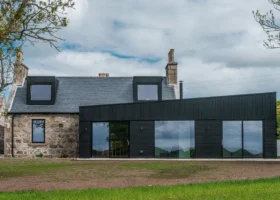
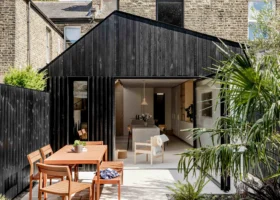
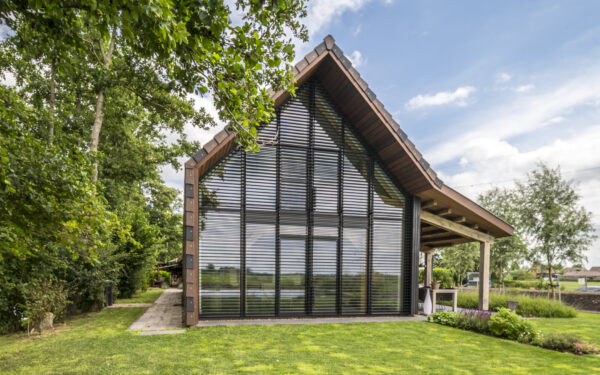
Kloeber fitted the aluminium windows and doors for this timber-clad extension and capitalised on the material’s strength to create a large, slim-framed picture window that matches the small sightlines of the patio doors
Aluminium window maintenance
Compared to other frame materials, aluminium is lower maintenance as, apart from keeping the frame and opening mechanisms clean and lubricated, there is no ongoing upkeep needed. Its strength means it has a very long lifespan, too: according to the BRE, you can expect a well-maintained and looked after aluminium-frame window to last roughly 30-45 years.
When it eventually needs replacing, aluminium is fully recyclable and, even though it is carbon heavy to initially manufacture, its carbon footprint will be spread over a larger lifespan compared to uPVC, which has a shorter longevity.
Aluminium window costs
From a price perspective, aluminium is comparable to high-end timber so is at the top end of the market. Although, the cost gap between it and uPVC is narrowing over time. “Ten years ago, aluminium would have been about 50% more expensive, but now uPVC has developed technologically, it is only 15-20% more costly,” says Edward.
Composite alu-clad windows
Alu-clad is an abbreviation of aluminium-clad – a composite product that comprises a timber frame clad externally in aluminium. This is a great option for those who want the traditional visual appeal of timber for their interiors but lower maintenance and more weather-resistant aluminium external frames.
Even though totally timber frames can be very durable, alu-clad could be a more sensible option for those living in exposed or coastal areas where timber would need greater upkeep and repair. “For exposed locations, particularly by the sea, it’s worth looking specifically at the finish and corrosion resistance of the external aluminium rather than just accepting the base material,” says David Johnson, account manager at Internorm.
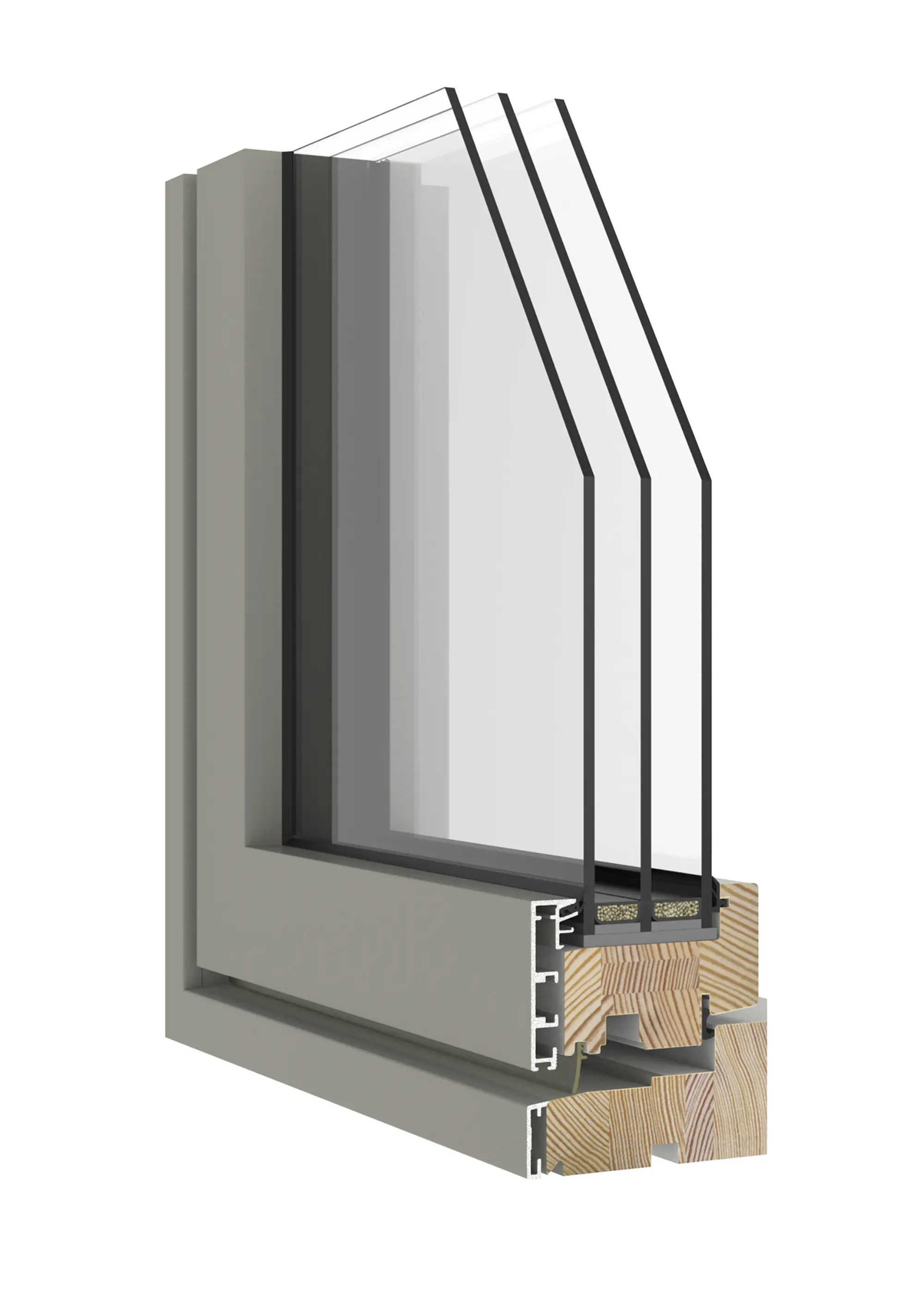
The alu-clad P31 window from Norrsken has internal sightlines of 44mm and can be made into a whole-window system with a U-value of 0.67 W/m²K
Alu-clad window maintenance
As most of the frame is timber with a layer of aluminium cladding, many of the benefits of alu-clad windows are the same as traditional timber – it naturally conducts heat much more slowly than metal, and – with the right care and maintenance – can be the longest lasting option. This makes it a good choice from both a thermal efficiency and durability perspective. While the strength of fully aluminium windows is often used to create slim frames with expansive glazing, alu-clad has the strength of timber, so cannot be used as well in this capacity.
Alu-clad window costs
Alu-clad tends to be more expensive than standard timber or aluminium as the base price of the timber is combined with the expense of aluminium cladding and the manufacturing involved to integrate the two. However, given that the finished product can last up to 65 years and allow people in exposed locations to have a low-maintenance timber frame option, it can very well be worth the cost.
Featured experts

Dave Tiller
Technical director at Ventrolla
Dave Tiller
Technical director at Ventrolla
Dan Todd
Sales director at Kloeber
Dan Todd
Sales director at Kloeber
Edward Stobart
Technical sales manager at IDSystems
Edward Stobart
Technical sales manager at IDSystems
David Johnson
Account manager at Internorm
David Johnson
Account manager at Internorm
Case study Farmhouse-style self build in Angus with sleek, high-performance alu-clad glazing
When Neil and Sandra Caul decided to build a multi-generational home, they had only one site in mind. Three fields away from their house at the time, they found a brownfield site with a series of derelict farm buildings on it. A planning application lodged by former owners for a house on the plot had been refused, and the planning authority said they didn’t see a scenario that would change their mind. “But the plot was beautiful with panoramic views, so we were keen to focus on this as the location for our new home,” says Neil. “We then met architect Ann Nisbet at a trade show and liked a house in rural Ayrshire she designed. She took us on and got us through planning successfully.”
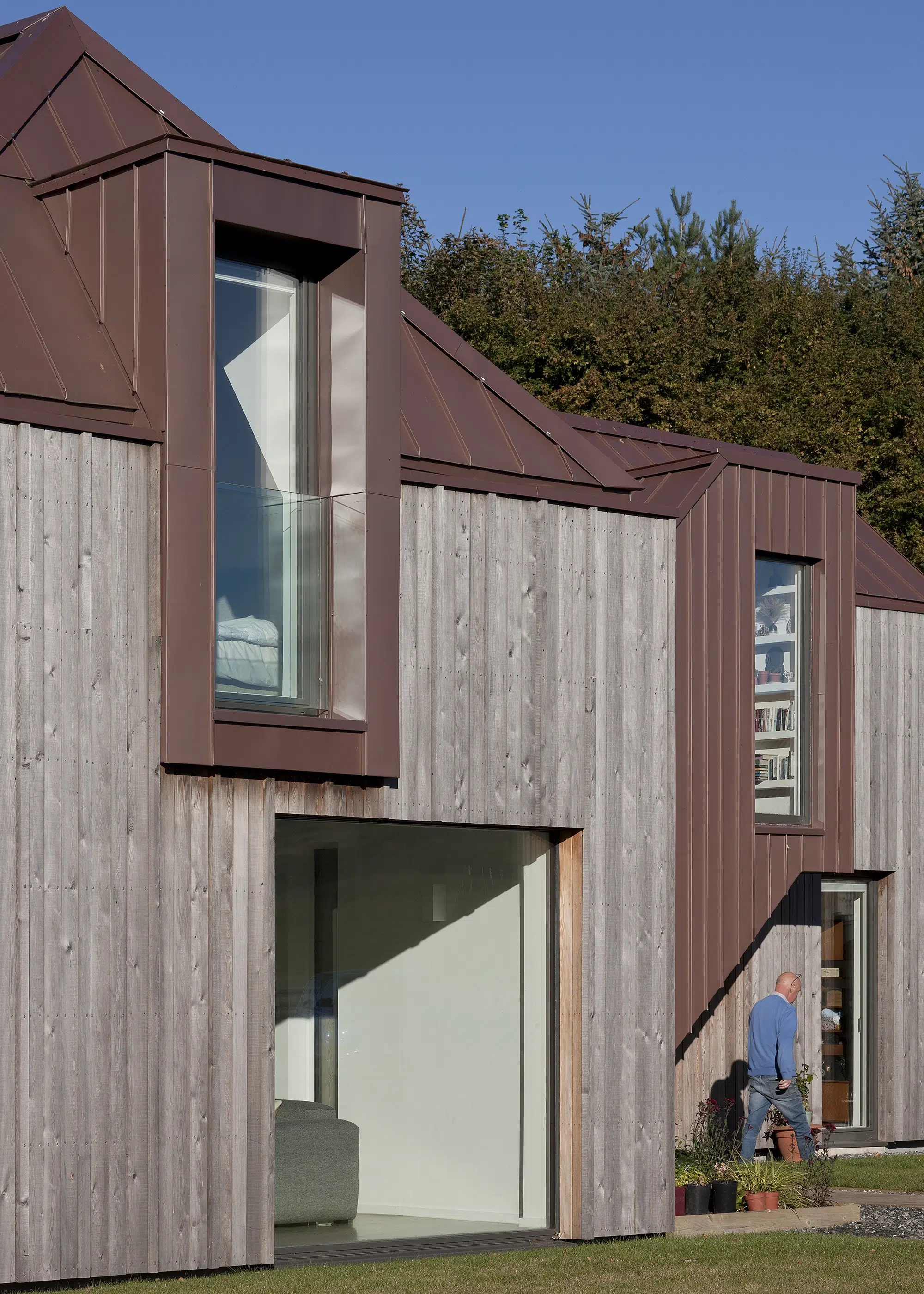
Photo: David Barbour
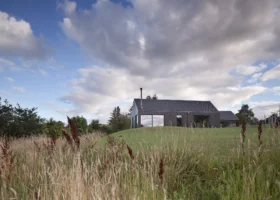
In terms of Neil and Sandra’s brief, they were looking for a new house that was low maintenance, economical to run, had an ecological ethos and would accommodate a mix of family and private spaces for three generations to live comfortably. The overall design, built around the footprint of the original farm sheds, features three buildings formed around a shared courtyard. The main house is comprised of two, one-and-a-half storey buildings arranged as an L-shaped plan. The third structure is a one-bedroom single-storey annexe for Neil’s mother.
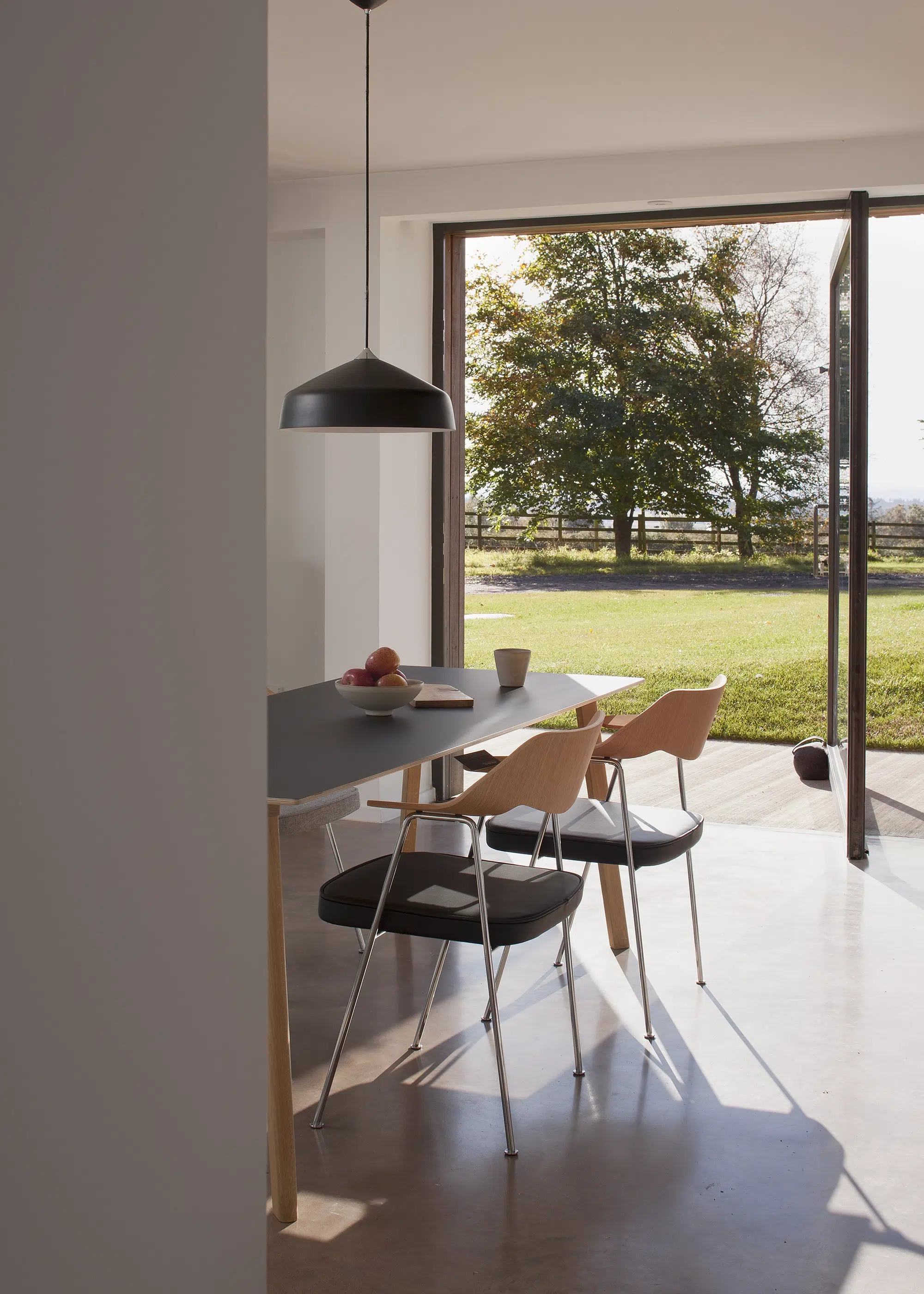
Photo: David Barbour
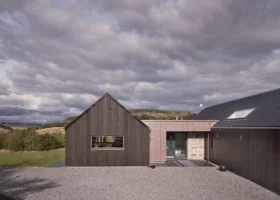
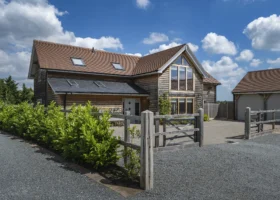
The first view on approach from the road is the south facing facade of the main house, and the three window apertures reflect the form of the cart shed buildings of rural Angus. The house features several stunning, triple-glazed picture windows with slim alu-clad frames. The windows have been designed without mullions to ensure expansive, uninterrupted views over the Perthshire hills, Fife and beyond. Even opening windows and doors are designed to maximise glazing and minimise frames. A mixture of aperture shapes adds playfulness to the overall exterior scheme – large square frames sit next to tall rectangular to add visual intrigue.
The Cauls utilised the east-west facades of the house to maximise solar gain through the windows – a continuous corridor from the east-facing master bedroom to the west-facing lounge with some well-placed windows along the way mean the sun can always enter the home. This, in combination with triple glazing everywhere, maximises the glazing’s potential to heat and illuminate the house.
| Location | Angus |
| Construction method | Timber frame |
| House size | 247m² |
| Project cost | £640,000 |
| Project cost per m² | £2,591 |
| Building work took | 130 weeks |
Premium Content
Downloadable E-Guide
Build It’s downloadable e-guide to choosing windows & doors offers ideas and advice on every aspect of planning your home’s glazing and entrances, including expert tips on the key specification decisions you’ll face. Click below to find out more.
Find out more
Steel windows
Steel and aluminium offer very similar finishes and qualities. Like aluminium, steel is exceptionally strong so is great for thin frames and large panes of glass, perfect for modern houses. It’s primary use historically, however, has been for Art Deco, early-20th century and industrial windows, meaning it is well suited to authentic restoration projects where other materials would feel out of place. If your heritage property is listed or in a conservation area, you may be obliged to replace faulty steel windows like for like – check with your local conservation officer.
Steel window maintenance
If well looked after, steel can be just as durable as aluminium, but it needs higher maintenance of its rust protective coatings to keep it healthy and maximise its longevity. It may therefore not be the most suitable choice for coastal or highly exposed homes. Like aluminium, it needs thermal break technology to ensure good thermal efficiency as, even though steel conducts heat less quickly than aluminium, it can cause heat loss and condensation if not properly insulated.
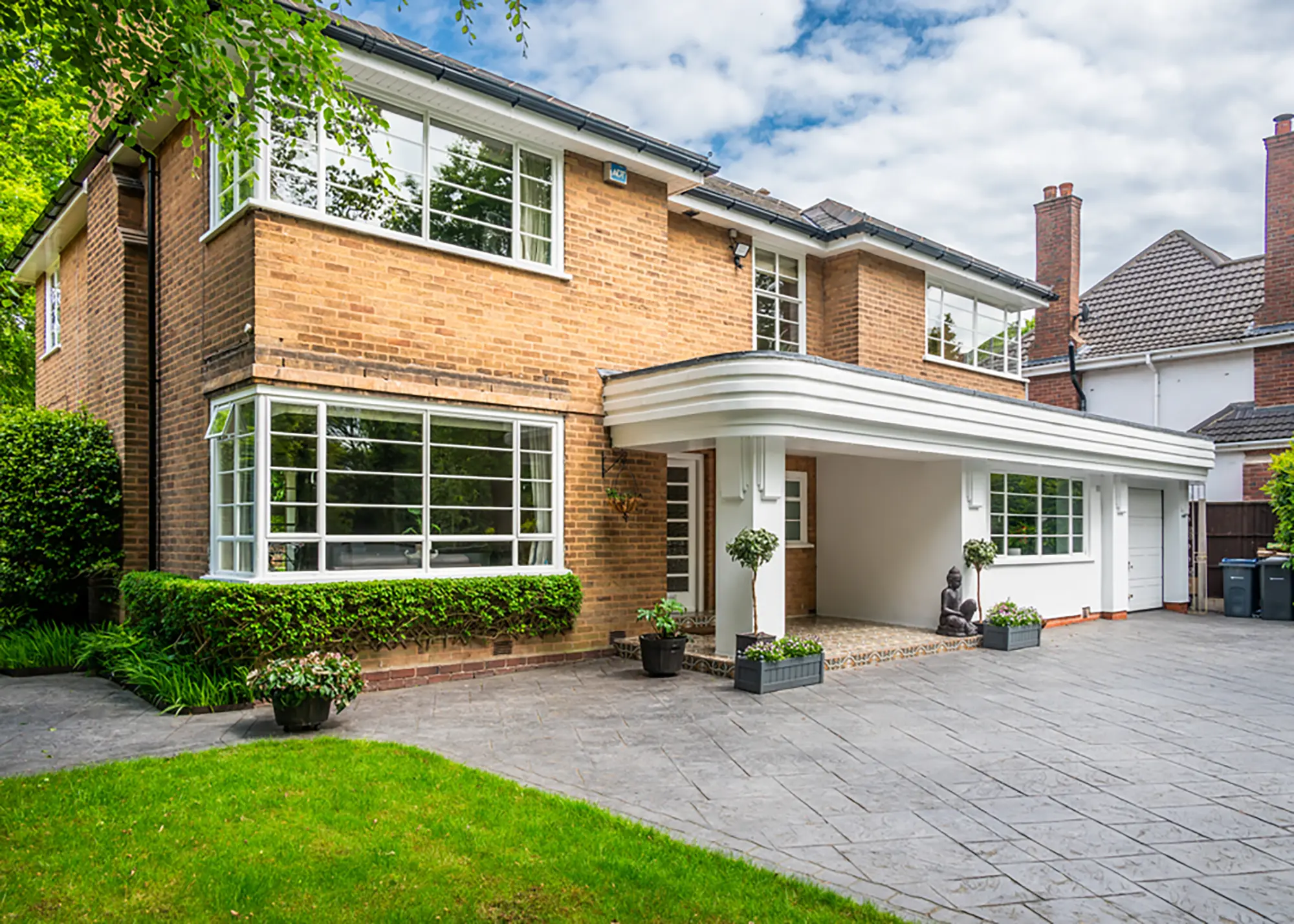
The Clement EB20 range of steel windows is designed to replicate the appearance of historic designs while improving their thermal efficiency and weather resistance
Steel window costs
Steel can be considerably more expensive as the raw material costs more, is heavier and requires more stages in the manufacturing process to protect it from rust. Many homeowners who want the look of steel without the price tag opt for steel-look aluminium – it’s also lighter and easier to maintain.
uPVC windows
In recent years, uPVC has progressed from the purely affordable option to an aesthetic and effective fit for many projects. “uPVC had a bad rep years ago, but it is a good product now and has a place on newer builds looking for something cost effective,” says Dave from Ventrolla. In the past, uPVC was available in only a limited selection of colours and designs, but now there are some convincing timber-effect ranges on the market that can be shaped to mimic heritage designs like sash or mullioned casement windows. When these styles are combined with historical-effect handles, they can produce a classic overall finish at a better price point.
Although there is greater uPVC design variation these days, the material is not as strong as others so isn’t a good fit for large expanses of glazing. Likewise, the sightlines on the frames cannot be as slim as with aluminium or steel, so it tends not to work on sleek modern frames where they are designed to be as unobtrusive as possible.
These timber-alternative uPVC sliding sash windows from Roseview Windows feature thoughtful details like run-through sash horns and deep cills. They are also available with trickle vents that are invisible from the outside
uPVC window maintenance
If you’re looking for a low maintenance material, uPVC needs little ongoing care apart from keeping all the mechanisms clean and lubricated. If kept in this state, the windows should last between 20-30 years before their performance is affected. Telltale signs that a uPVC window is nearing the end of its life is if the exterior starts to discolour and turn brittle.
uPVC window costs
Despite sitting at the more accessible end of the market, uPVC is prone to greater price fluctuations than other materials. “Plastic-based windows have increased in price quite dramatically recently. Because they are made from oil, prices can vary a lot,” says Dan.
How much does each window frame material cost?
Trickle vents, triple glazing, solar control glass, colour upgrades, heritage glazing bars, super-slim frames and lifting equipment can all change the final cost (keep reading for more on these elements). Installation is additional, and window replacement projects may also involve removal, disposal, making good and repairs to surrounding finishes.
| Frame material | Typically supply-only starting price | Notes |
|---|---|---|
| PVCu, white | From £800 | Entry point for better quality PCVu systems |
| PVCu, timber effect | From £920 | Premium for replica finish |
| Aluminium | From £1,015 | Slim sightlines and great stability |
| Softwood timber | From £1,150 | Versatile option for character and performance |
| Hardwood timber | From £1,250 | Greater durability and rich natural finish |
| Accoya timber | From £1,535 | Premium option; strong durability and stability |
| Alu-clad softwood | From £1,280 | Low-maintenance external finish |
These figures are indicative, supply-only starting points for a good-quality 1,200mm x 1,200mm double-glazed, double-opening casement window meeting current Building Regulations, excluding VAT and installation.
Window material FAQs

Can different window frame materials be mixed in the same property?
Yes, different frame materials can be mixed in a single house, and many homeowners choose to do this. Alu-clad frames are often paired with slim sightline aluminium sliding doors, and aluminium windows featured alongside a timber front door is another popular combination I see. For lots of people, it makes sense to utilise the different functions or aesthetics of particular materials across the house for the specific needs of a particular room or elevation.
Which material is best for bespoke windows?
Aluminium and timber are both equally flexible for bespoke windows. Many window manufacturers these days make all their products to order anyway, specifying them to the size, colour, glass and hardware specification of each customer.
Can window frames be replaced without replacing the glass?
Theoretically, you can replace a window frame while keeping the glass but, counterintuitively, this is less economical, and it makes more financial sense to replace both at the same time. From a performance perspective, it’s also better to couple a newer, more thermally efficient frame with the latest glass technology to match.
Which window frame type is easiest to repair rather than replace?
Timber and aluminium are generally the easiest to repair. This makes them good choices for homeowners who want to minimise their chances of having to completely replace their windows. Timber has the longest life expectancy of any window frame material because it’s so easy to keep it fresh and healthy by repainting it.
Does the window frame material affect the size and shape of the final window?
The specific material chosen doesn’t necessarily affect the size and shape of the overall window, but the manufacturer might choose a specific material based on the size and dimensions of the aperture you wanted. For small windows or those with unconventional angles, they would likely use a slimmer frame with a fixed glazing element rather than making opening casements.
Elinor Davies
Previous Article
Turnkey House Design Ideas – 17 Real-Life Turnkey Homes
You may be interested in
Our sponsors