









 Login/register to save Article for later
Graham Blunt is director at Westwind Oak Buildings. Westwind Oak works with self builders, architects and building contractors to create design led, innovative and sustainable buildings that are brimming with character.
- Plan ItBack
- Design ItBack
- Build ItBack
- Homes
- ProductsBack
- CostsBack
- Self Build Cost Calculator
Estimate your project costs instantly with Build It's interactive self-build cost calculator
Calculate Now - Costs & Finance
- Contracts & Warranties
- Build It Estimating Service
Get an accurate, detailed cost breakdown of your project
Submit plans
- EventsBack
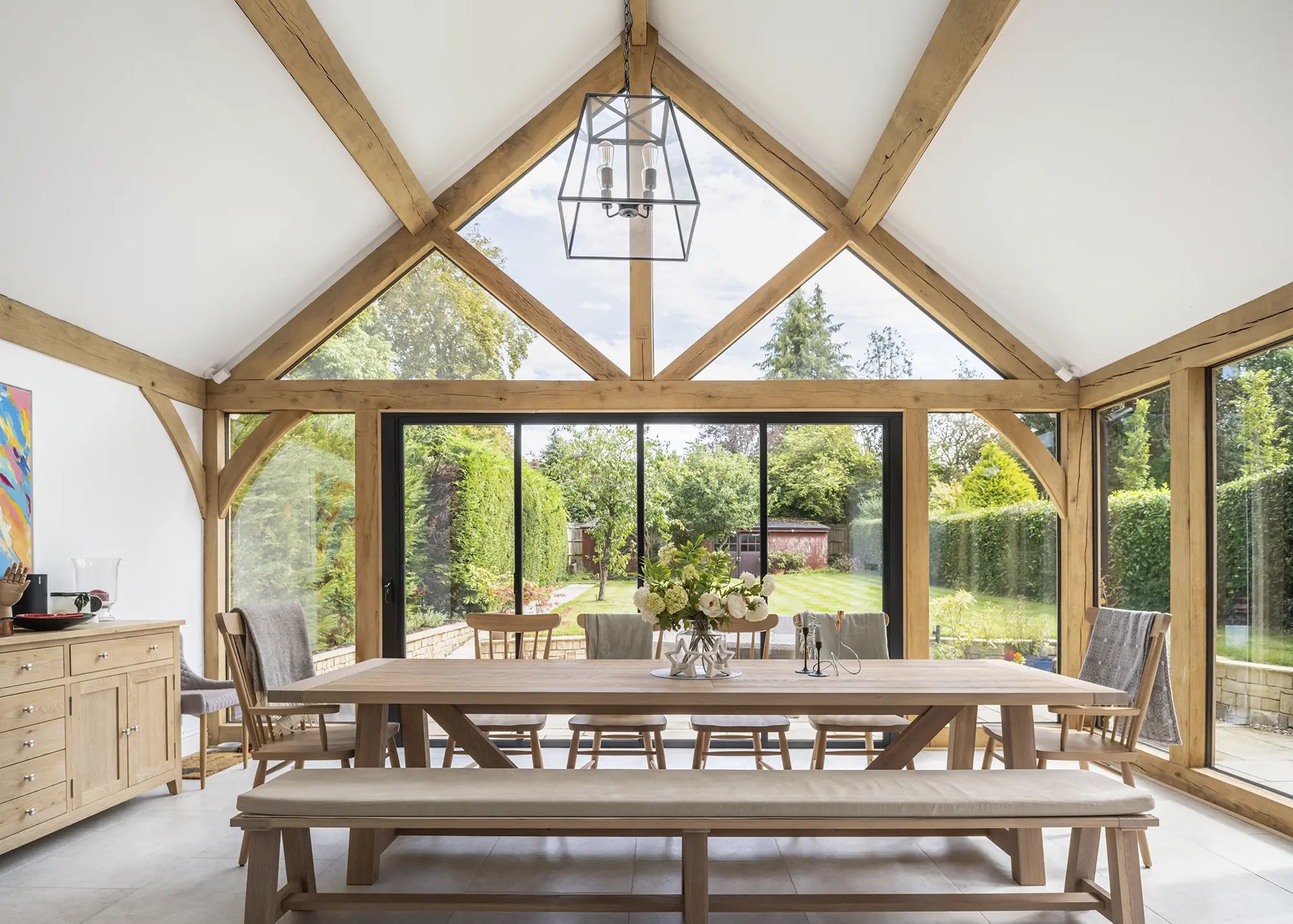
Oak Frame Extension Ideas – 20 Light-Filled Oak Extensions & Expert Advice
Stuck for ideas on how to add space to your home? Take a look at this impressive line-up of 20 light-filled oak frame extension ideas, packed with eye-catching design details and plenty of character


An oak frame extension is the ultimate home upgrade – adding character, style and valuable, additional space to your property. Oak frame extensions can be designed to fit all kinds of schemes – suiting both contemporary and traditional-style homes. The material is a premium structural option, and is usually cut and prefabricated offsite – allowing speedy build times and impressive results.
As with any home extension, whether or not you’ll require planning permission will depend on the size, location and design details – ie the cladding and exterior finishes. You can do plenty under permitted development but it’s always worth checking with your local planning authority. Many oak frame suppliers will advise you through planning as part of the process, while also offering a Building Regulations package.
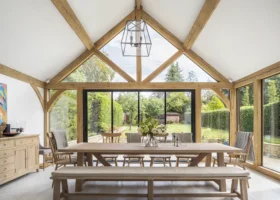
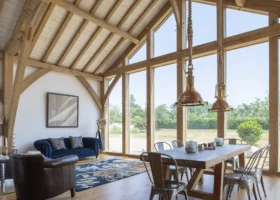
The majority of oak frame extension designs feature plenty of expansive glazing, and some with full-height glazed gables or vaulted ceilings. This is popular as it allows the oak to really shine while ensuring a light-filled, wow-factor extension. But how can you design an oak frame addition that’s perfect for you? Take a look at our collection of 20 inspiring ideas.
1. Light-filled oak frame kitchen extension idea
While planning a renovation plus a large extension to their 1930s house, Mared and Nick Morant were drawn to the idea of introducing oak features to their home. The pair approached a local architect who’d designed extensions with oak and glass before – they wanted a big open-plan space with lots of glazing and a large master suite upstairs. Looking for some extra design inspiration, Mared and Nick visited one of Welsh Oak Frame’s open house events, spoke to an in-house designer and showed them the plans. “We liked his ideas so we didn’t approach anyone else” says Mared.
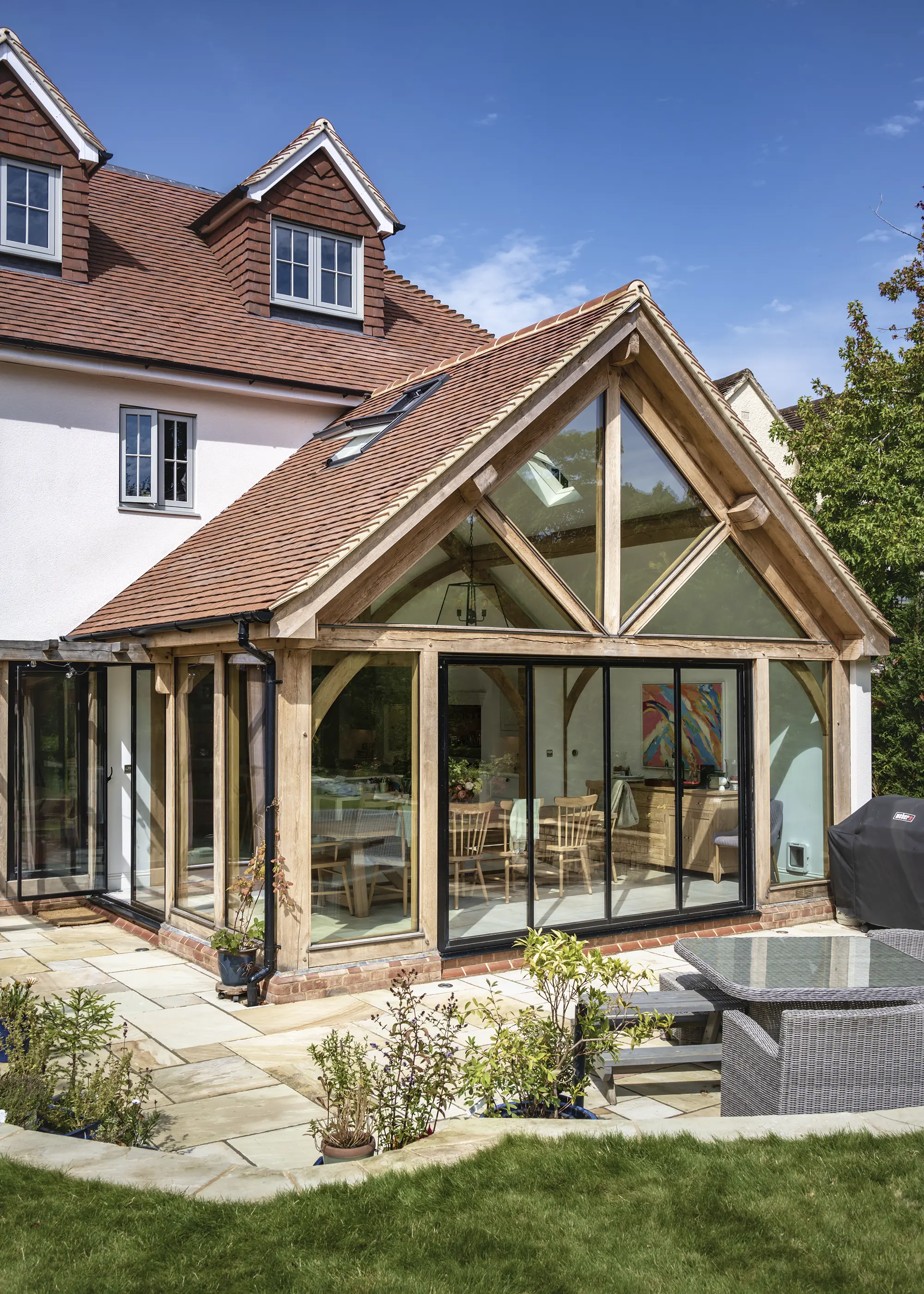
Photo: Nikhilesh Haval
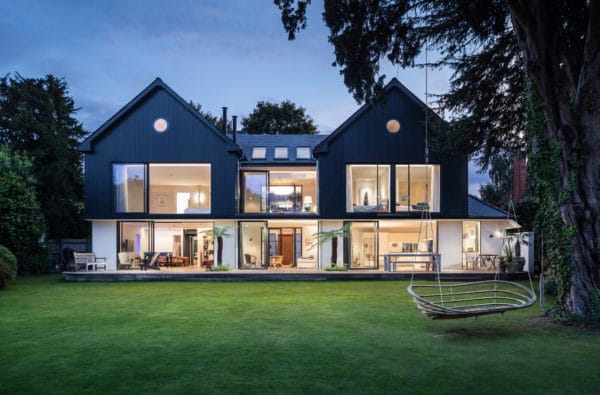
“We didn’t expect to create a double-storey extension but our builders said that we needed a new roof anyway and it wasn’t going to increase the height,” continues Mared. “So, we ended up with a two-storey L-shaped extension formed with a rectangle and a pitched gable. We had no problems with planning as we were the last on the street to extend and were catching up.”
Photo: Nikhilesh Haval
Once planning was approved, Welsh Oak Frame stepped in and did the structural drawings and finer details for the oak and glazing. “Their input was invaluable for the character they brought to the design” says Mared. Together, they selected how much oak to have in the kitchen, living room and the two bedrooms above. Having discussed how the gable extension would look, they settled on floor-to-ceiling glazing with narrow frames designed to work with the movement of the oak. The 256m² oak frame extension package cost approx £95,000.
Premium Content
Downloadable E-Guide
Build It’s house extension downloadable e-guide will help you plan, design and construct an addition that enhances your existing property while meeting your needs and budget.
find out more
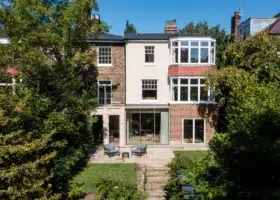
2. Contemporary oak frame extension to an Edwardian vicarage
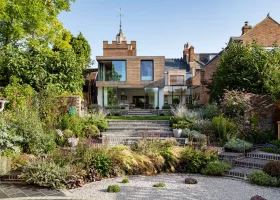
Designed and constructed by Carpenter Oak and Crosby Granger Architects, this contemporary, double-height extension to an Edwardian vicarage has a strong connection with the outdoors.
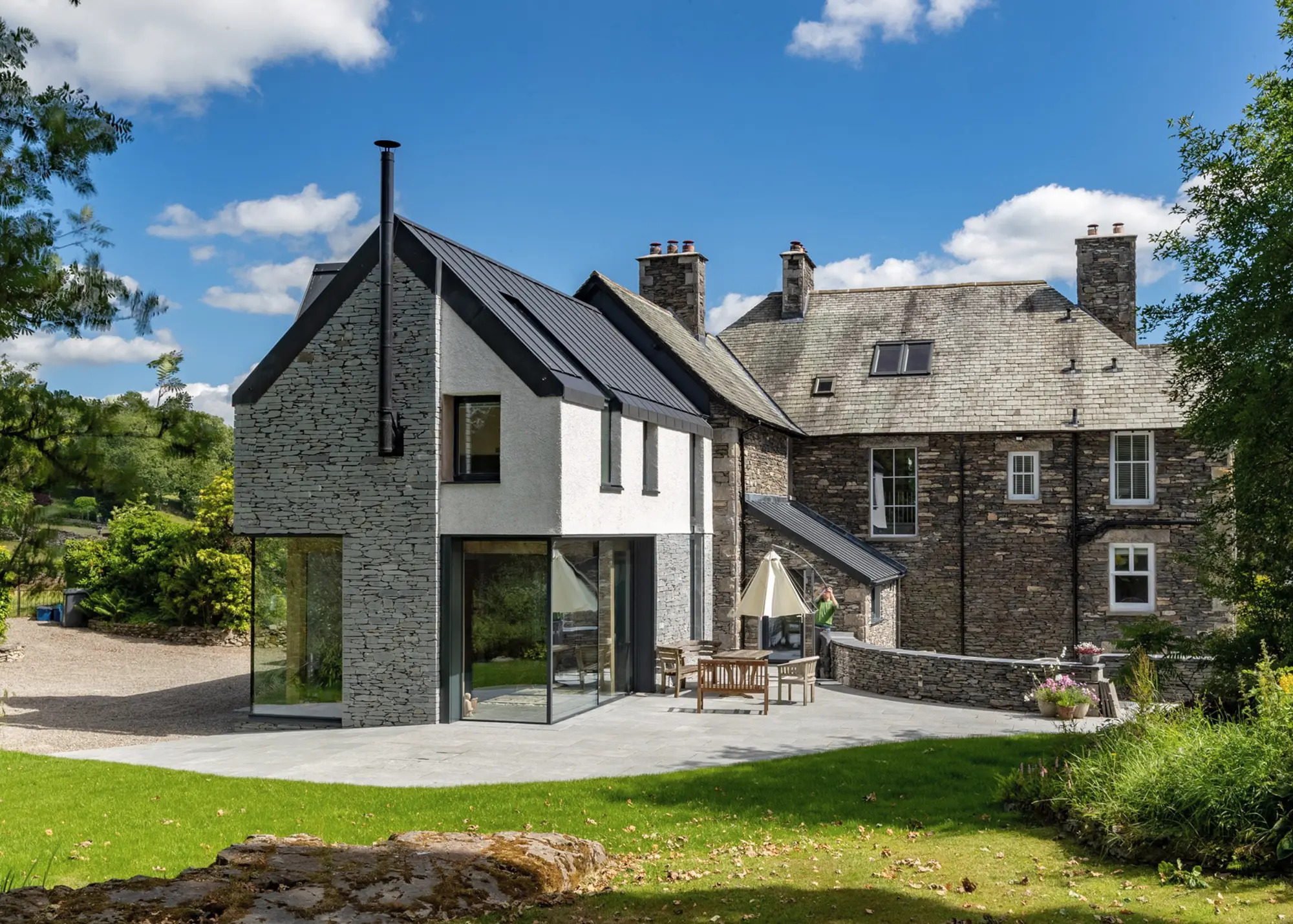
Photo: Carpenter Oak
At ceiling level, steel I-beams create a cantilevered corner that negates the need for a supporting corner post, allowing the glazed doors to be pulled back completely, blurring the boundaries between indoor and outdoor spaces. The extension is proportional to the house’s north gable and uses materials such as cut face stone to ensure a sympathetic design whilst establishing a clear distinction between old and new.
3. Charming oak extension for a 17th-century listed home
Oakwrights was appointed to design a new garden room to add a light and airy, adaptable space to this 17th-century home in West Yorkshire. The exposed oak frame construction instils rustic charm, while the three external walls use extensive frameless face glazing to incorporate the extension into the landscape.
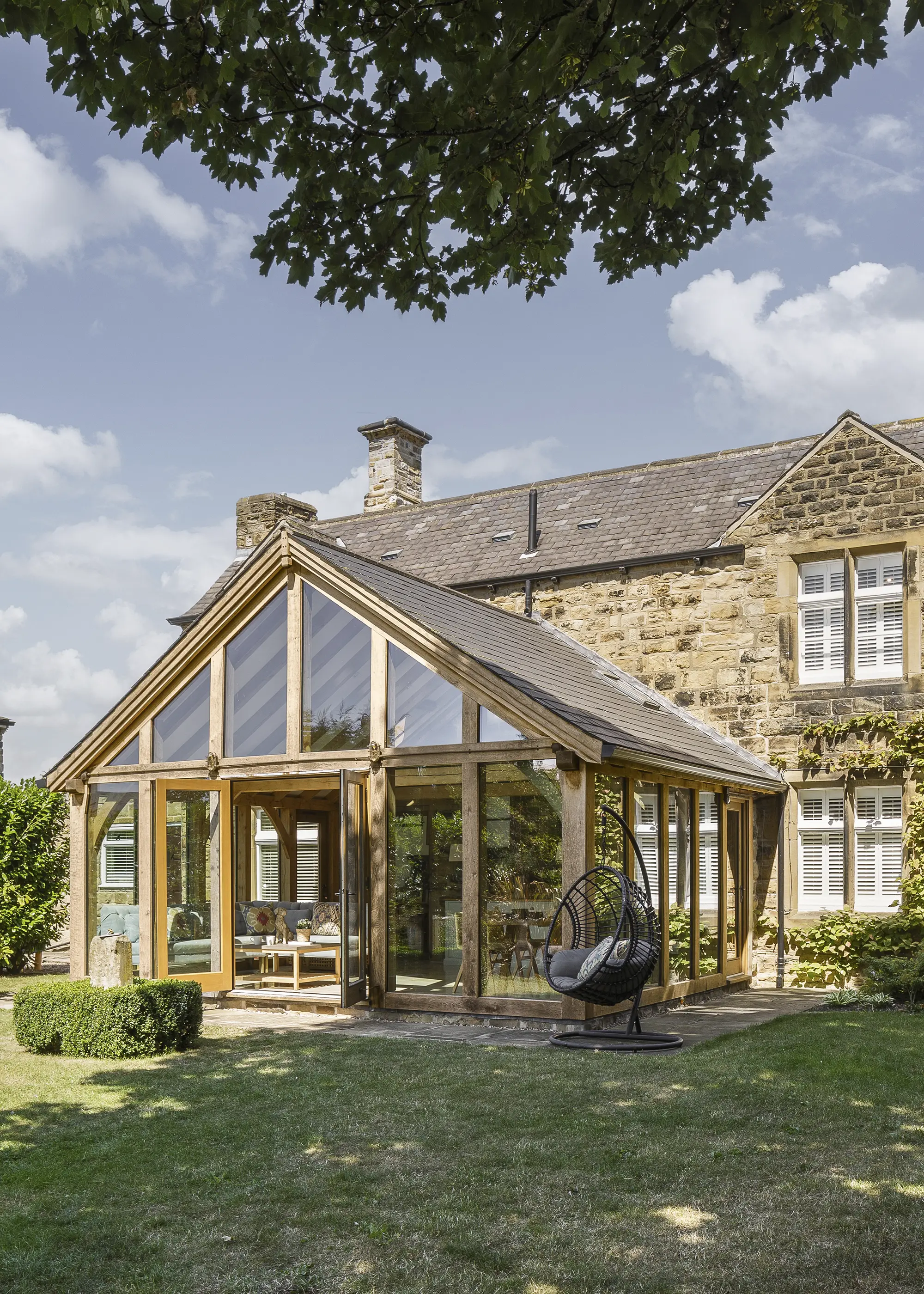
Photo: Rob Crawshaw
A new set of double doors allows occupants to easily move between the sunroom and the garden, while the choice of underfloor heating (UFH) means the space feels cosy and warm over the winter months.
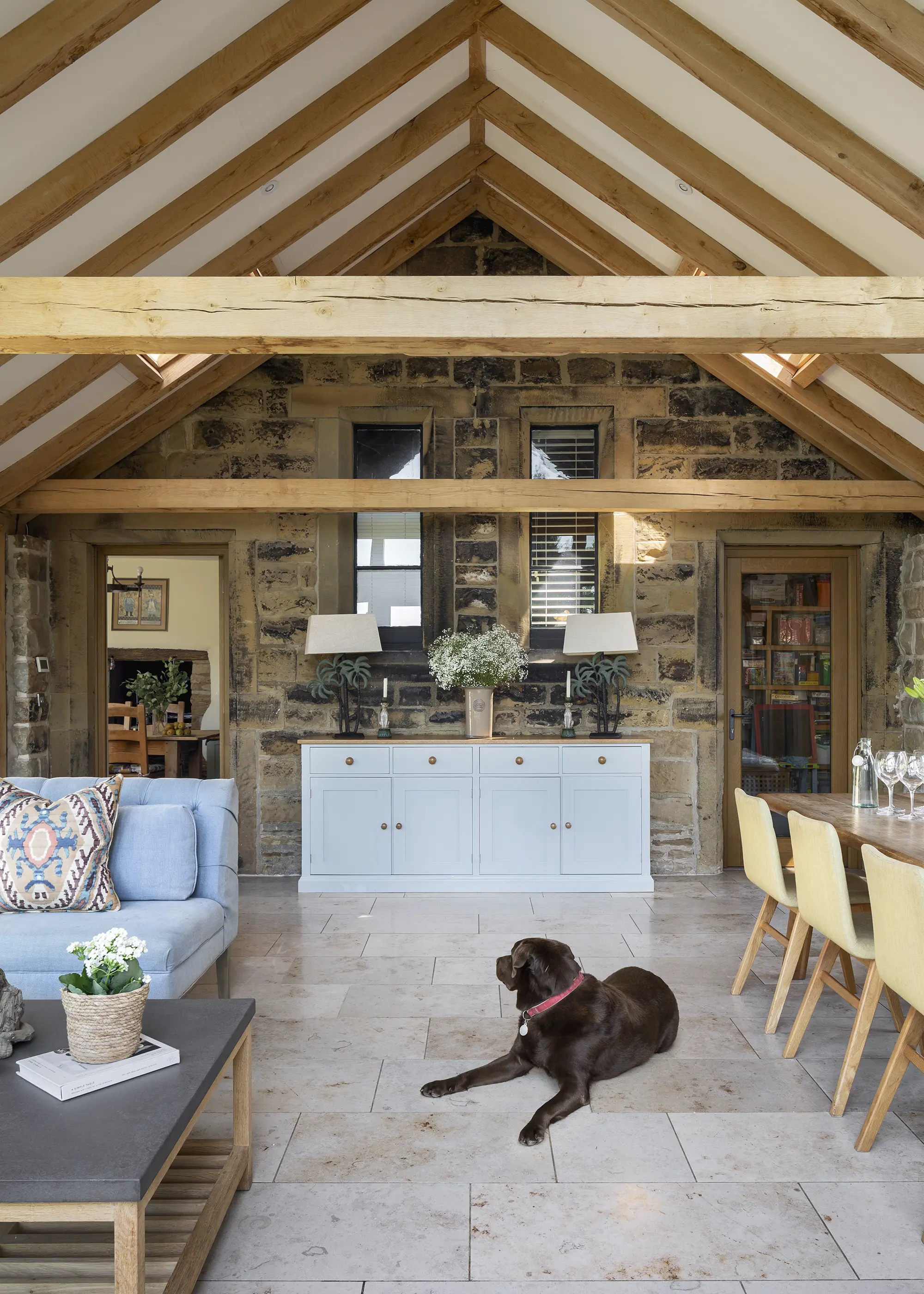
Photo: Rob Crawshaw
The original exterior of the property has become an enchanting feature of the new interior, with its light sand, beige and brown tones shaping the neutral colour palette of the internal space.
4. Light & airy oak frame extension to a stone farmhouse
When Penny and Robert bought a beautiful two-storey stone farmhouse on Dartmoor in Devon, they wanted to extend and create a large, glazed living space. “We were looking for an innovatively designed natural structure that would sit perfectly nestled in the hillside at the back of our newly renovated 1865 stone farmhouse,” says Penny.
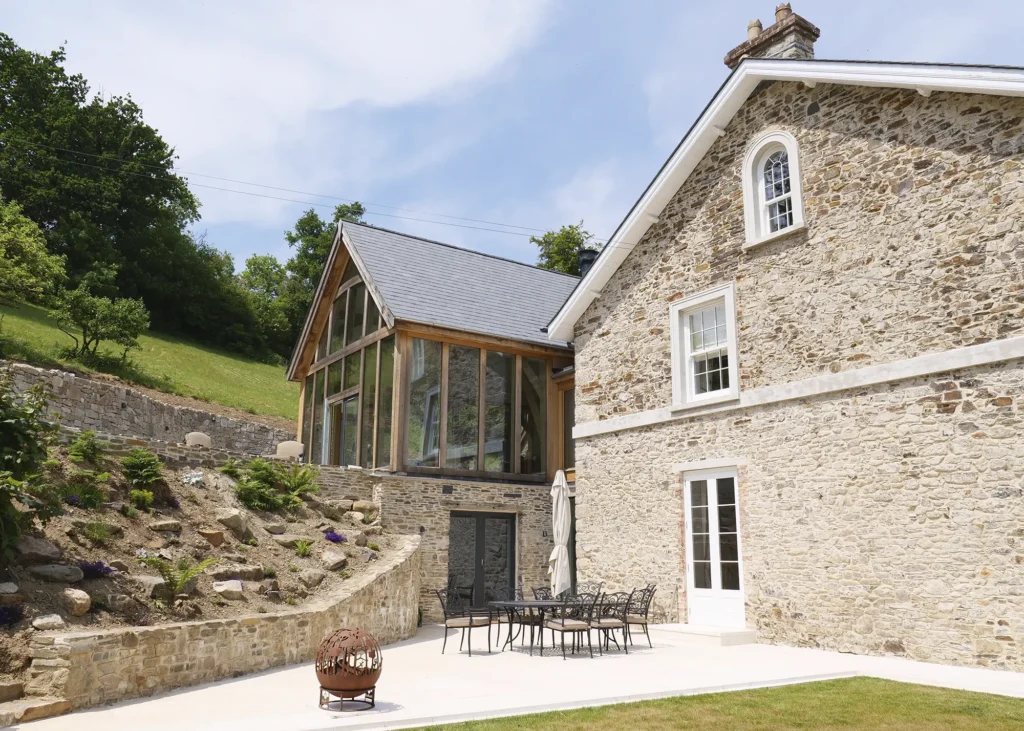
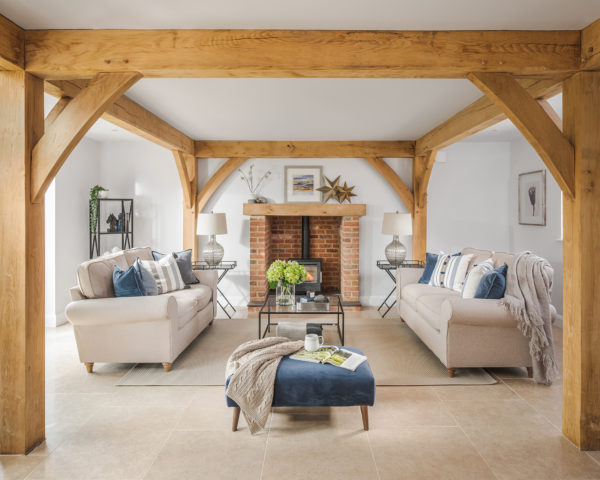
“We wanted a design that complemented the original stone building while creating a different look and feel. We felt a timber structure would meld both old and new and formal and informal perfectly.” The couple chose Carpenter Oak for their new oak frame addition, which has two gable ends and sling braces. The centrally placed woodburner means that the open plan space is separated into two distinct zones.
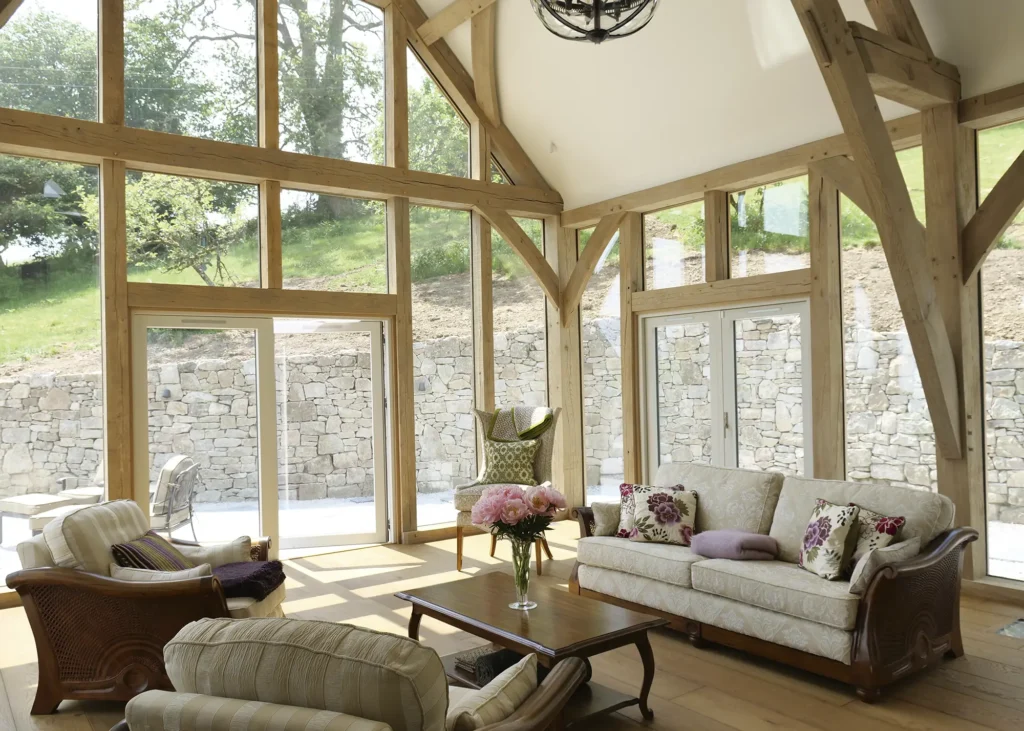
“The oak frame extension more than meets our expectations,” say Penny and Robert. “The innovative design and the sheer pleasure of seeing the beautiful oak structure with sweeping arches and columns combined with the extensive glass panels and doors creates a magical view from both inside the room and outside.”
5. Stunning three-storey oak frame extension to a 1960s house
Tim and Ali Lovett’s passion for house projects led them to purchase this 1960s detached property with a view to building an oak frame extension on the front. “We wanted to give this unloved house the wow factor, which is why the oak concept was so important to the brief,” explains Tim. “We imagined admiring the beauty of an impressive structure from the outside and sitting in a relaxed room that felt like part of the garden. The end result is stunning – the design is exactly what we hoped for.”

The couple moved house for more space and found this three-bedroom property set back on a large, overgrown plot in the village where Tim grew up near Salisbury. Tim and Ali attended an exhibition where they met Welsh Oak Frame, who they ended up commissioning for the project.
The Welsh Oak team were very organised throughout the project, which impressed the couple. “Drawings and details were really comprehensive, so there was zero guess work and they answered all our questions quickly,” says Tim. Now finished, the couple have a large, glazed living room and a huge master bedroom with a dressing room and ensuite. “The three-storey extension has turned what would have been a roof void into a relaxing and beautiful room,” says Tim.
6. Wow-factor oak frame extension for a farmhouse
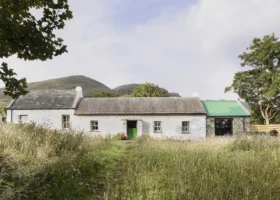
Nestled into the Dartmoor National Park, this former milking parlour forms part of a cluster of agricultural buildings, adjacent to a main farm house. The parlour had been left redundant for a number of years and so required a complete overhaul in order to become a comfortable, habitable space.
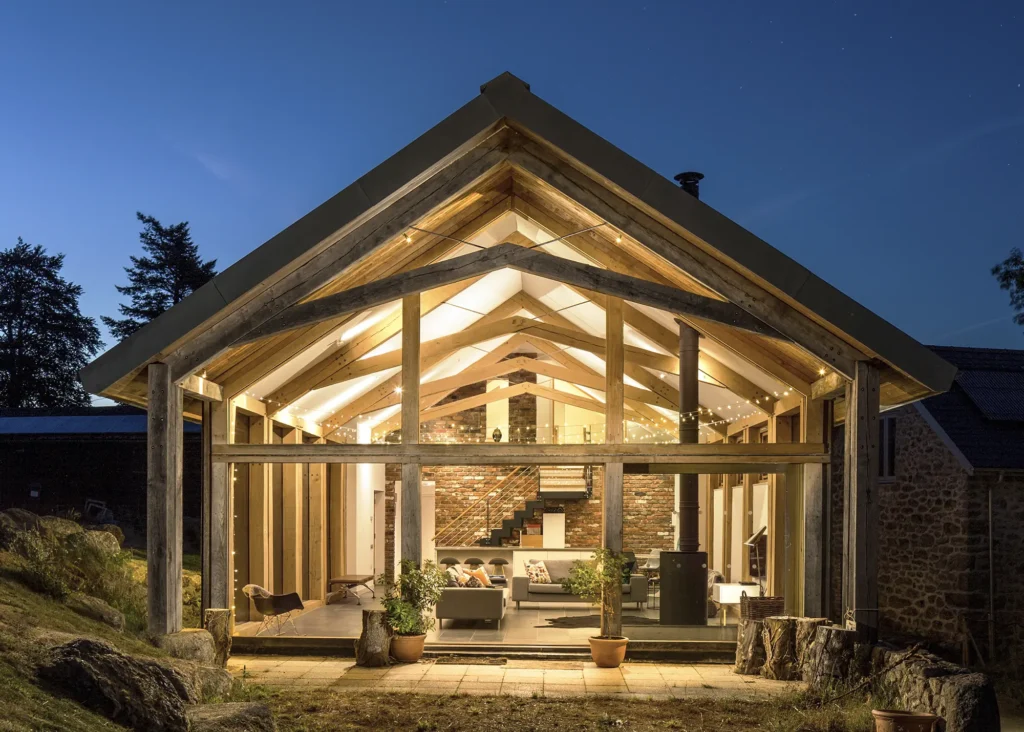
Photo: George Fielding
VESP Architects created this outstanding redesign, which involved retaining the parlour’s original road-facing appearance, while making a more extensive revision to the rear elevation.
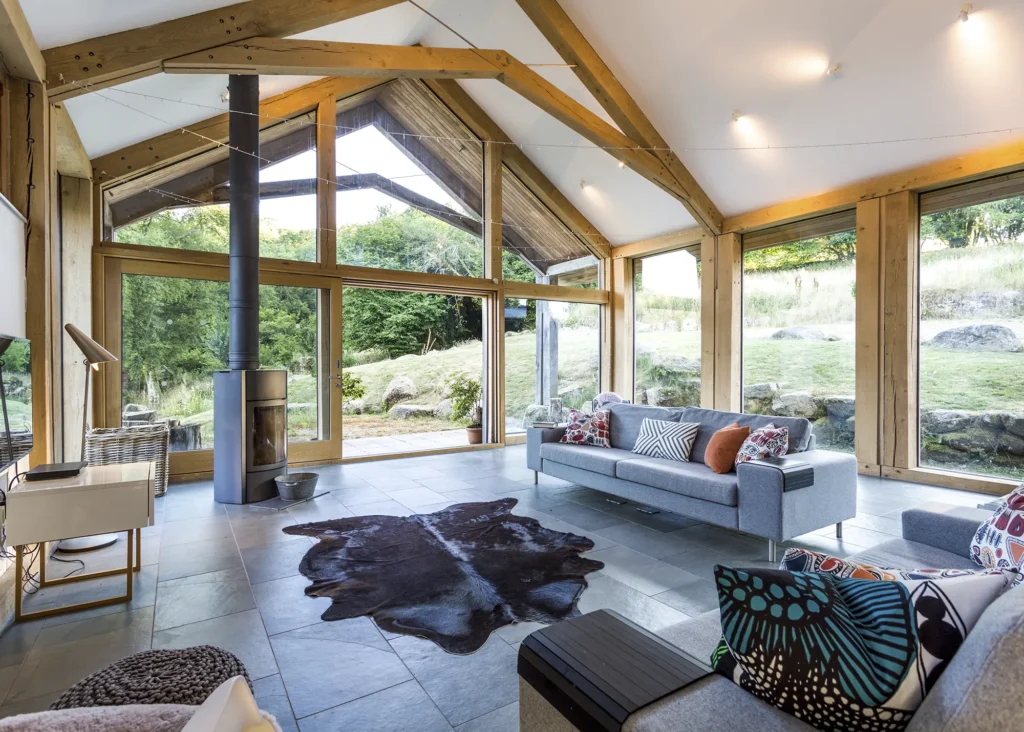
Photo: George Fielding
The practice demolished half of the barn and, adopting the same footprint, built outwards to create a rear extension with a striking green oak frame. The newly-converted space contains a bright, lofty kitchen-living-dining area, with the oak beams left exposed throughout as a nod to the building’s agricultural roots.
7. Riverside property with an oak frame extension
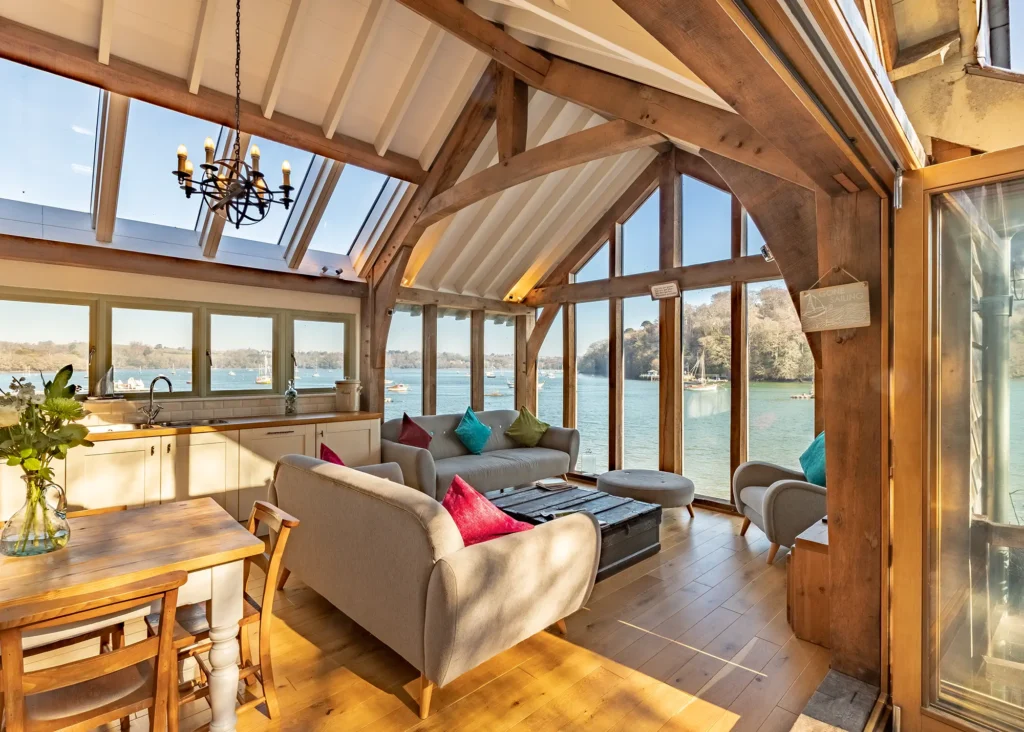
Set on the banks of the River Dart in Devon, this cottage has been extended to form a large, open-plan kitchen/dining/living room with panoramic views. Due to the site’s gradient, the floorplan is partly elevated with the outlook through the glazed gable end seeming to project out over the water. The arch brace frame by Carpenter Oak has hidden steelwork to reinforce the structure and bifold doors open onto a side terrace.
Oak frame FAQs

What are the benefits of oak frame construction?
Green oak timber framing is a widely-known, highly sustainable construction method, combining renewable materials, efficient manufacturing and exceptional longevity. Offsite manufacture reduces waste, improves accuracy and helps shorten build times. Oak frames offer outstanding design flexibility, allowing bespoke solutions with dramatic open-plan spaces, large, glazed areas and adaptable living environments. Combined with energy-efficient systems, an oak frame home can minimise environmental impact while creating a unique, timeless building designed to last for generations.
Does oak shrink and move over time?
Timber shrinkage is a natural and expected aspect of a green oak frame, making it an important consideration during the design and construction process. A newly erected frame should be viewed as the beginning of the building’s natural maturation. Our designers and craftsmen are experts at detailing joints, glazing and adjoining materials to accommodate these natural changes. When correctly designed, the oak’s shrinkage actually enhances character.
What are the glazing options for an oak frame structure?
Direct glazing is a proven method widely used in oak-framed buildings. It allows large areas of glass to be incorporated into the frame while respecting the movement of the structure. Oversized glazing units are fixed directly to the external face of the timber frame using softwood packers and kiln-dried external oak cover strips. Other options include internal glazing systems and curtain wall solutions, each offering different performance benefits. The choice of system depends on the style, level of glazing required and how the oak frame will interact with the surrounding spaces.
How is an oak frame insulated?
A well-designed oak frame building can achieve excellent insulation and energy efficiency. We wrap our frames in structural insulated panels (SIPs) creating an airtight and insulated envelope around the frame, providing outstanding thermal performance.
Precision CNC-cut panels integrate accurately with the oak structure, reducing construction times. Alternatively, natural insulation systems offer a low-carbon solution by using recycled materials.
8. Charming double-storey addition with an internal mezzanine level
The build system you choose for your extension project may influence how it looks and feels. Building with oak creates the perfect opportunity to leave the skeleton exposed, meaning you can transform your extension’s structure into an amazing design feature. Oakwrights masterminded this two-storey addition, which holds a kitchen-dining-living area and master bedroom suite. The oak frame extension features a striking glazed gable and two sets of bifold doors that make for a fabulous, light-filled interior. The original building’s stone facade has been carried through to the extension and paired with the oak for a seamless design.
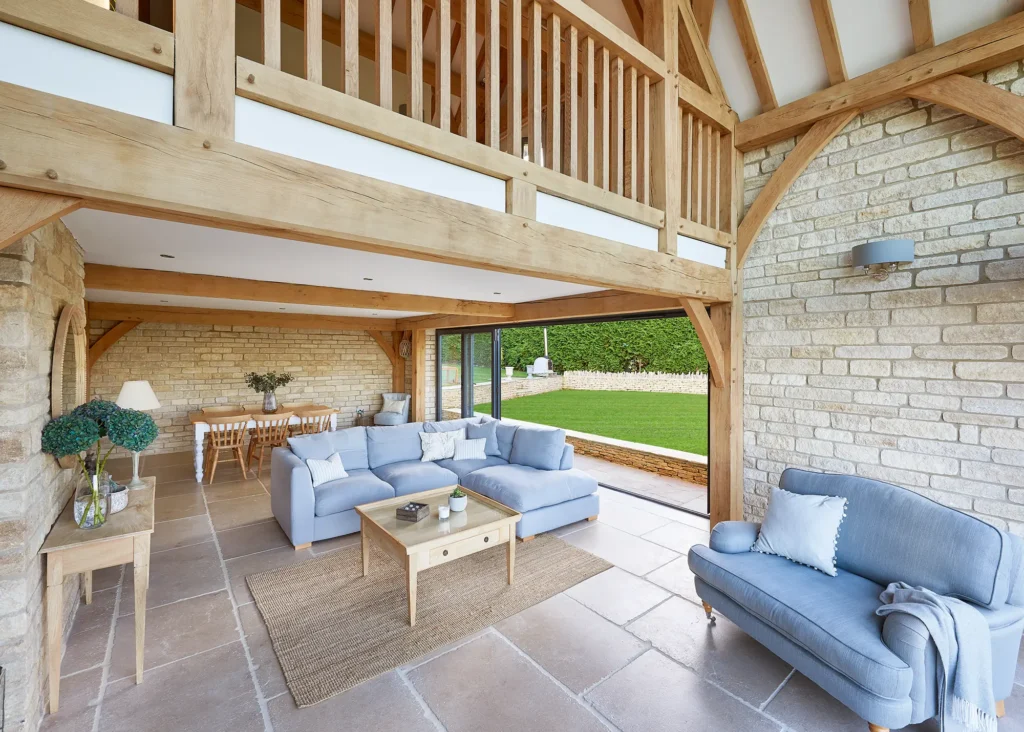
Photo: Richard Kiely
The oak frame extension features a striking glazed gable and two sets of bifold doors that make for a fabulous, light-filled interior. The original building’s stone facade has been carried through to the extension and paired with the oak for a seamless design.
9. Oak frame extension to a country farmhouse
Welsh Oak Frame designed this farmhouse extension with galleried landing, taking on board that the owners didn’t want too much oak, preferring the minimalist look with clean lines. The frame was put together in the yard and craned into place, taking just seven days. Building the floor level of the extension in line with the house creates a seamless transition between the old and new through an archway, with the resulting space offering breathtaking views through floor to ceiling glazing.
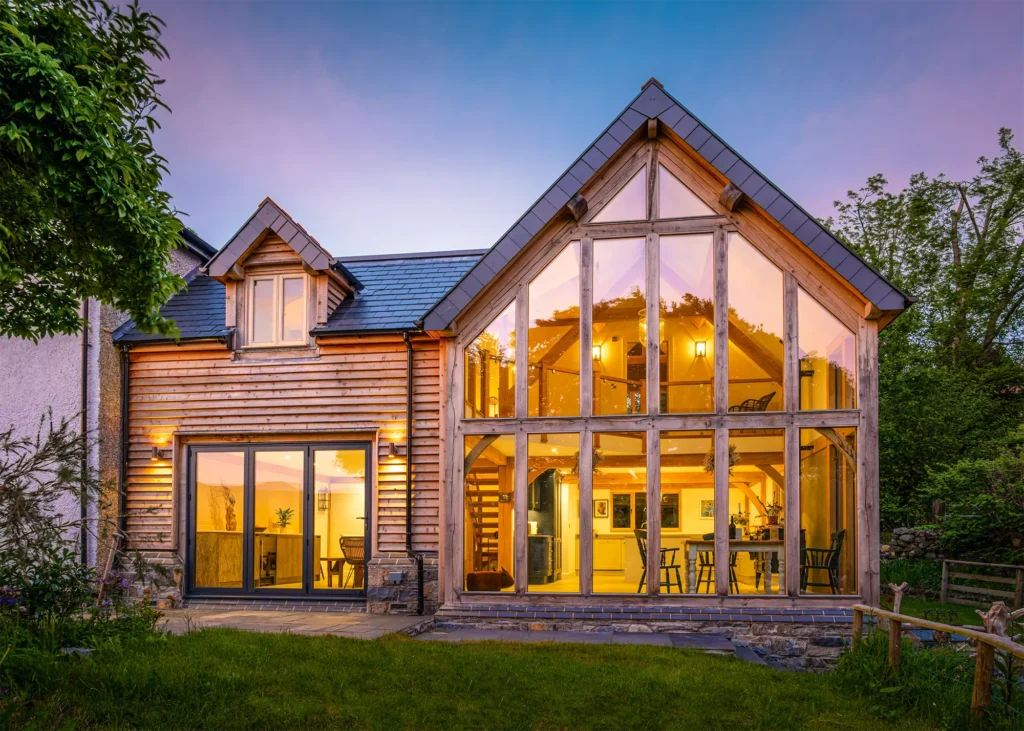
Photo: Nikhilesh Haval
10. Double-height oak addition
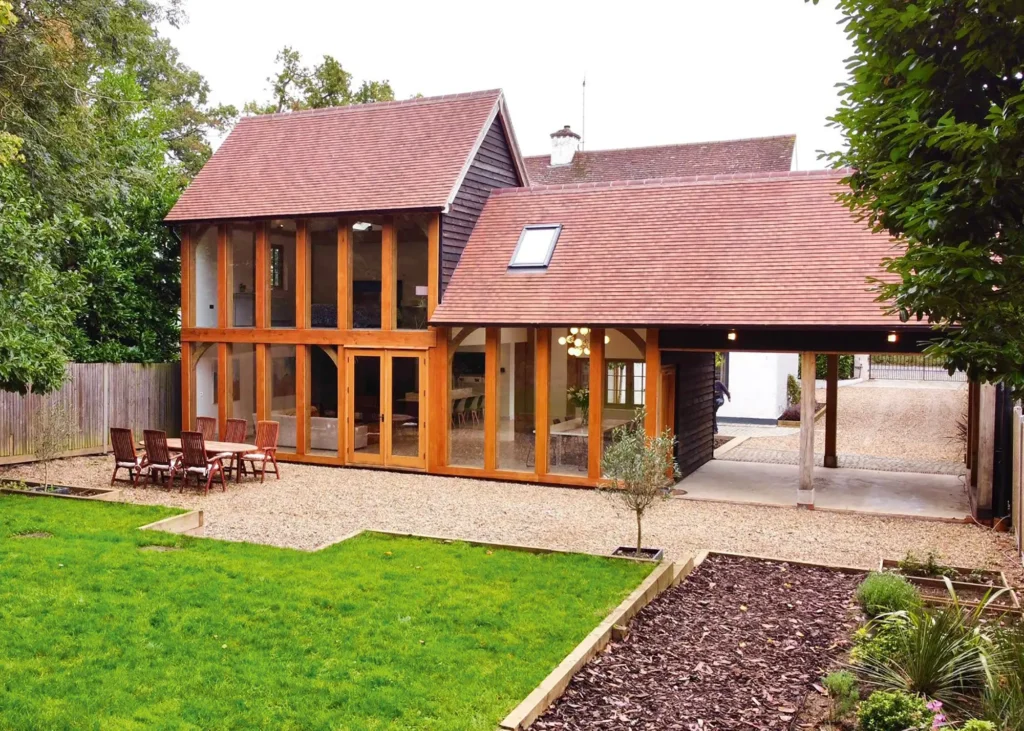
The previous single-storey link and double-storey extension in this house had a disconnected layout, making rear rooms redundant. The homeowners achieved planning to rebuild on the same footprint. However, they wanted a sense of volume throughout and were also granted permission to add a second storey to the link portion. The result is a large, open-plan living/dining/kitchen area on the ground floor, designed by The Oak Glasshouse Company . Above are two bedrooms, including a master ensuite with a vaulted ceiling and glazed elevation.
11. Charming oak frame extension to a period home
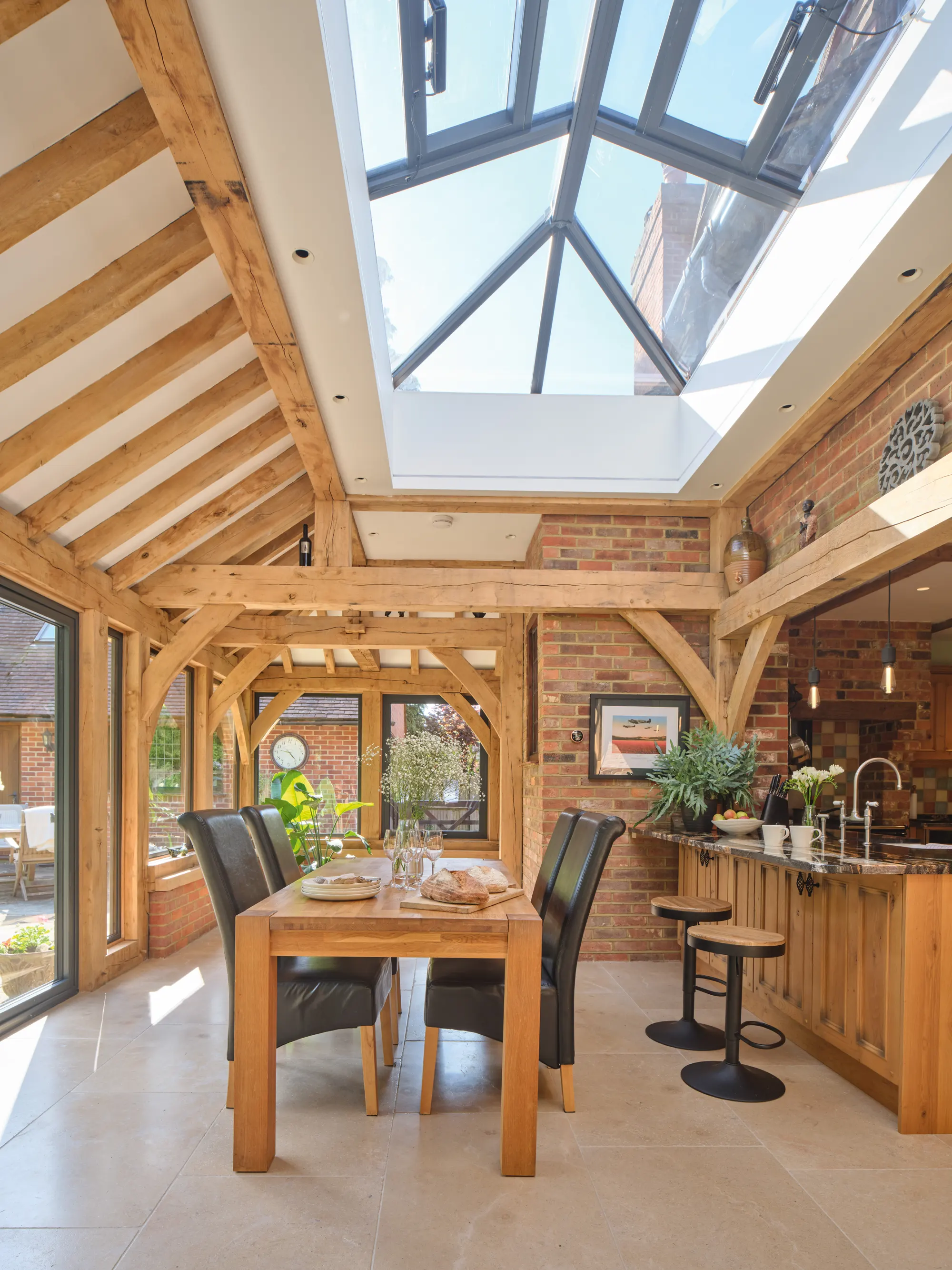
Typical for houses of the era, this beautiful 1920s Arts & Crafts home was a little dark inside. So when owners Paul and Karen Ayton needed to replace the old boiler room adjoining the back of the property, they took the opportunity to extend their kitchen by creating a garden room that was perfect for indoor/outdoor entertaining. Oakwrights‘ green oak frame extension was chosen for its instant charm. The project in full cost them £140,000.
12. Gabled oak frame extension with a render and cladding mix
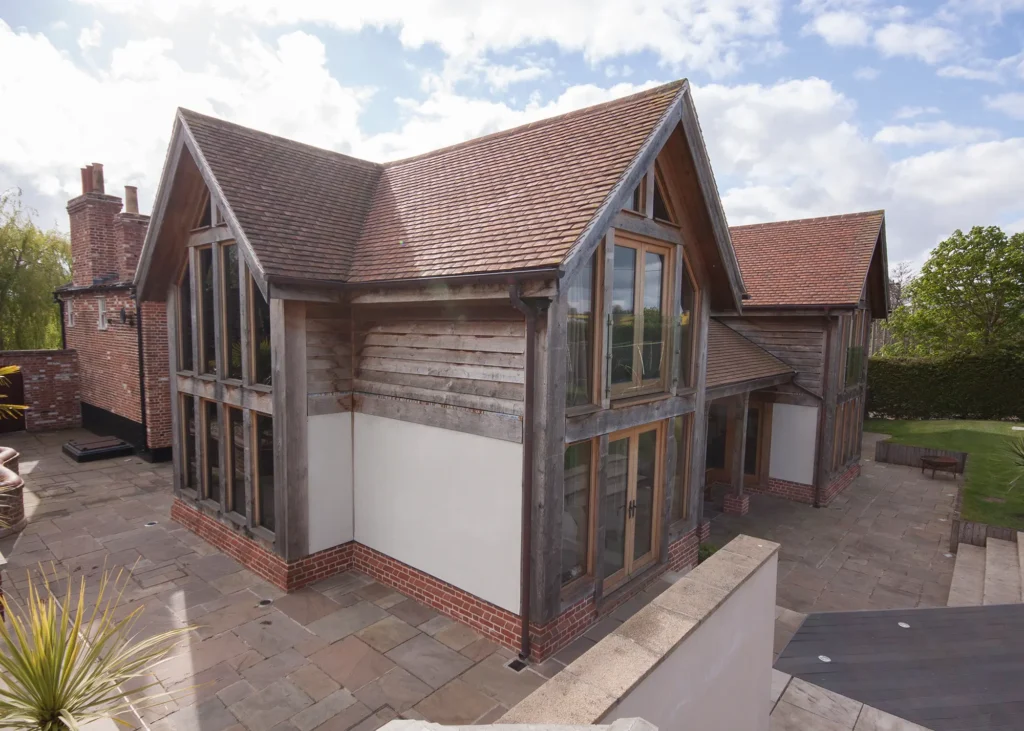
Extending this 300-year-old Georgian property in Sussex with a trio of two-storey oak frame gables has doubled its size while remaining sympathetic to the original character. Two volumes face the garden and are connected by an oak link, while a double-height entrance forms a galleried hallway. There’s also a large kitchen-diner, bedrooms, an office and a gym. Oakmasters made and pre-assembled the frame in its workshop before erecting it on site.
13. Barn-style house extension with exposed oak trusses
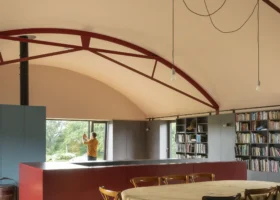
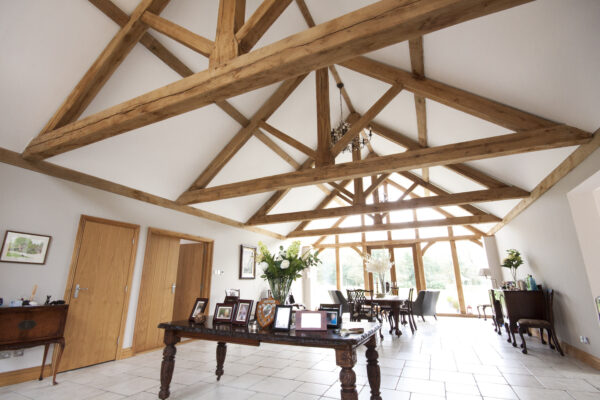
The owners of this home wanted to create a multi-functional space large enough for the whole family to gather to cook, eat and socialise with an improved connection to the garden. Situated at the rear, the barn-like design features a vaulted ceiling, adding drama and architectural interest to the property.
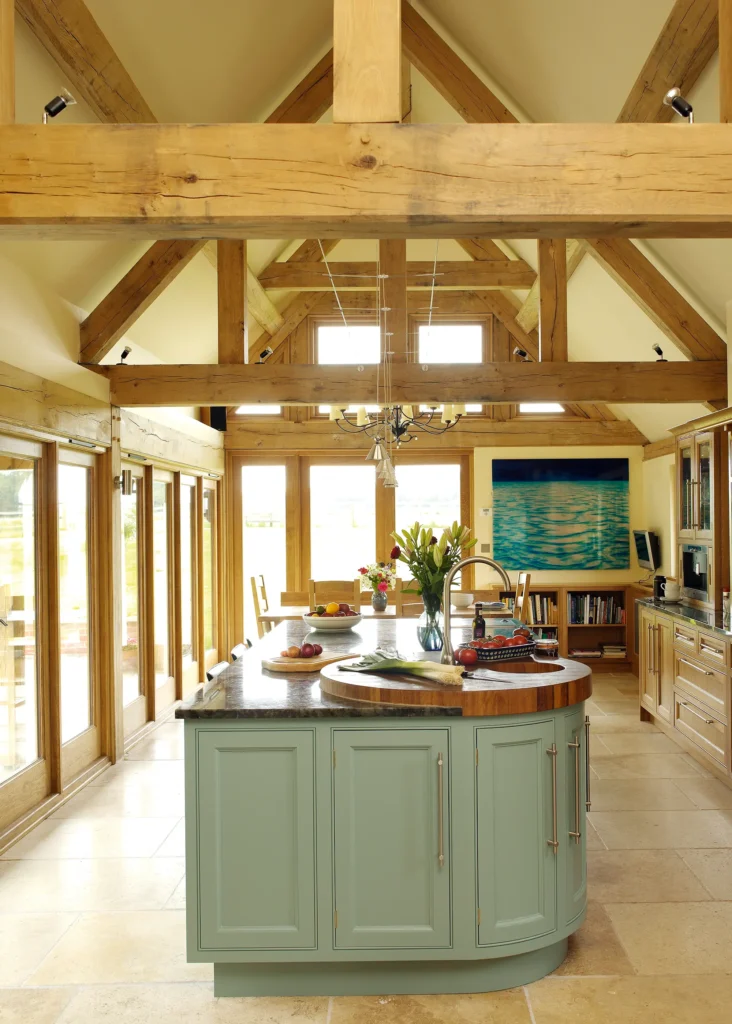
The green oak frame was handmade by Border Oak in its workshop and erected by hand, then wrapped with an insulated panel system. The self-supporting structure didn’t require a complex or intrusive connection to the house.
14. Light-filled oak frame kitchen-diner extension
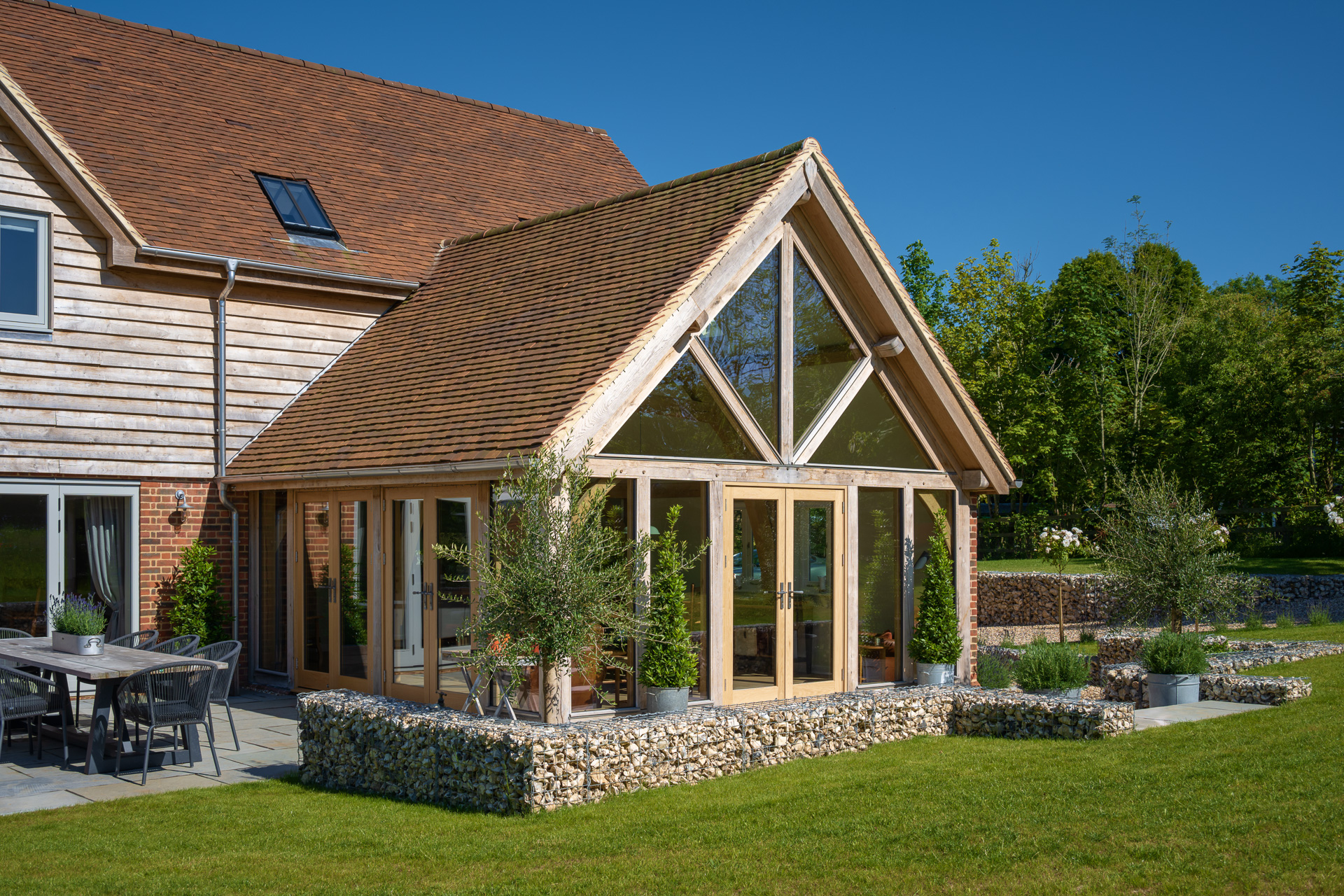
Jamie Adams and his wife Madeline chose to add an oak frame sunroom to expand their kitchen and dining space. Welsh Oak Frame created the wow-factor addition, which is complete with charming oak trusses and a striking glazed gable that looks out over the garden. The stunning oak frame extension project cost the couple £45,000 for the full 30m² addition.
Oak frame design tips

Zoe Grey is outbuildings and extensions sales manager at Oakwrights, a multi award-winning company specialising in the architectural design and construction of oak frame homes, extensions and outbuildings.
Design for flexibility
Think beyond your immediate needs and create a future-proofed space that can evolve over time. A garden office today could become a home gym, studio, hobby room or guest bedroom in the future. Designing a multifunctional layout from the outset will help ensure your outbuilding remains adaptable and useful in the years to come.
Prioritise natural light
Natural light can dramatically transform your outbuilding or extension, making it feel significantly brighter, roomier and more comfortable to use. Incorporating large or numerous windows, glazed doors or rooflights into the design will improve both the look and functionality of the space, while also creating a stronger connection with the garden.
Plan for future insulation
Even if your outbuilding isn’t intended to be a fully habitable space straight away, it’s worth considering insulated walls during the design stage. Future-proofing the structure now can make it much easier and more cost-effective to upgrade later if your needs change.
Make the most of the roof space
A vaulted ceiling is an excellent way to create a greater sense of height and openness, making even a compact building feel much larger. Alternatively, incorporating a loft area within the roof can provide valuable storage without increasing the building’s footprint.
Don’t overlook practicality
If you’re designing a garage, make sure there’s enough room to comfortably park your vehicle and fully open the doors without feeling restricted. Ensuring you allow adequate circulation space will make the building much easier and more enjoyable to use every day.
15. Modern oak extension links historical barns
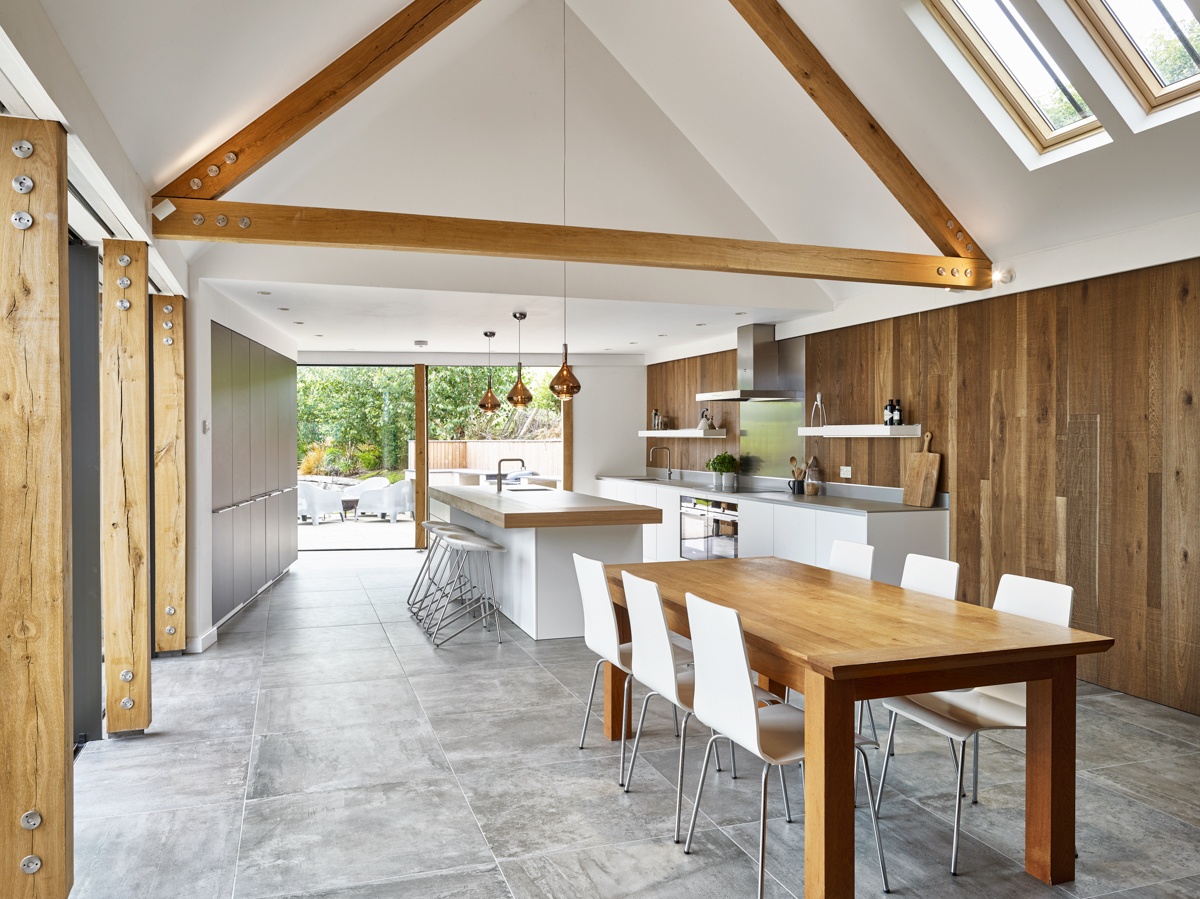
This contemporary barn extension, designed by Carpenter Oak, provides a new kitchen and link between the historical and sensitive stone barn buildings. The design adopts a contemporary look and feel, using the oak to create an open-plan, vaulted roof form. The owners wanted the new space to feel well-connected to the garden beyond. They chose big glass screens that slide open between the oak posts – ensuring the kitchen and dining areas have much greater connection with the outside areas and far-reaching views over Dartmouth.
16. Spectacular sunroom oak extension
For this project, the homeowners wanted a glazed sunroom, accessible from their kitchen and study, to use as a relaxing living room. The addition was positioned to capture views of their garden and river beyond. The oak frame allowed large amounts of glazing to be used, while the style complements the main grade II listed house, which also feature elements of oak. Contractors C Curtis Building completed the design work in-house using a 3D model. The pre-mortised and tenoned frame was fabricated by a German supplier, and erected with oak dowels in one-and-a-half days.
17. Wow-factor glass & oak blend
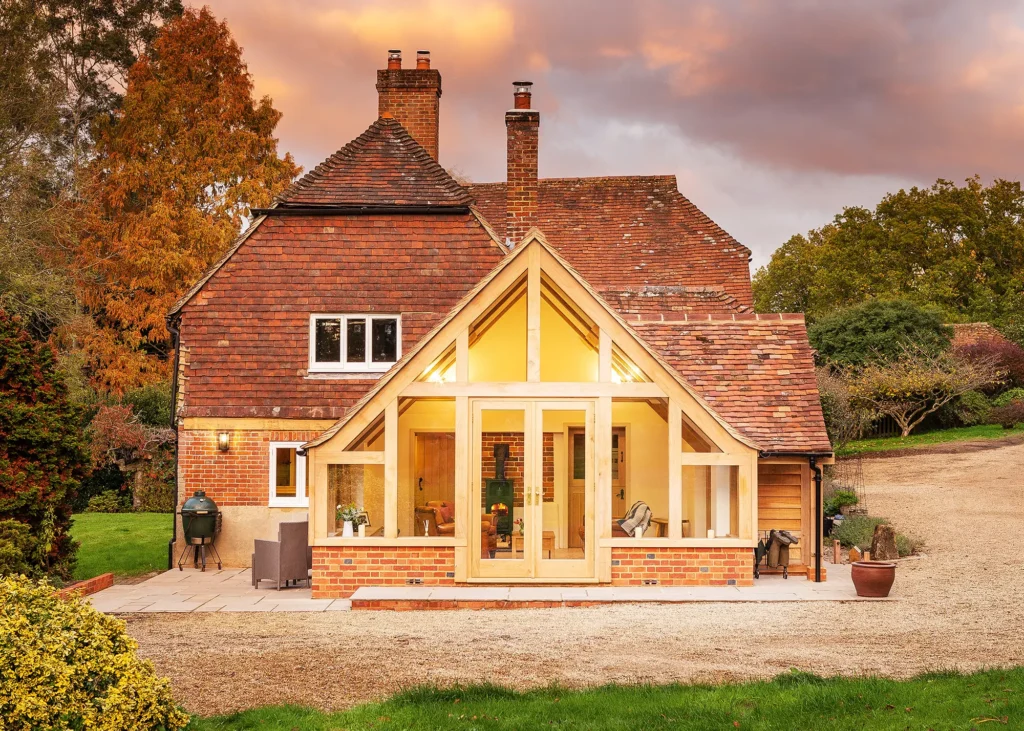
The owners of this Cheshire farmhouse decided to extend the living area at the front of their home with a 30m² oak frame garden room. After being inspired by the character of local buildings, they went to see Oakwrights. They were attracted to the company’s method of crafting the oak in a workshop and the face glazing system that allows the use of glass to be maximised without compromising energy efficiency. Symmetrical windows and oak trusses were an important aspect of the design, as were the traditional double doors that open onto the patio. An inset woodburner and underfloor heating keep the room warm in winter.
18. Traditional-style addition with a large roof lantern
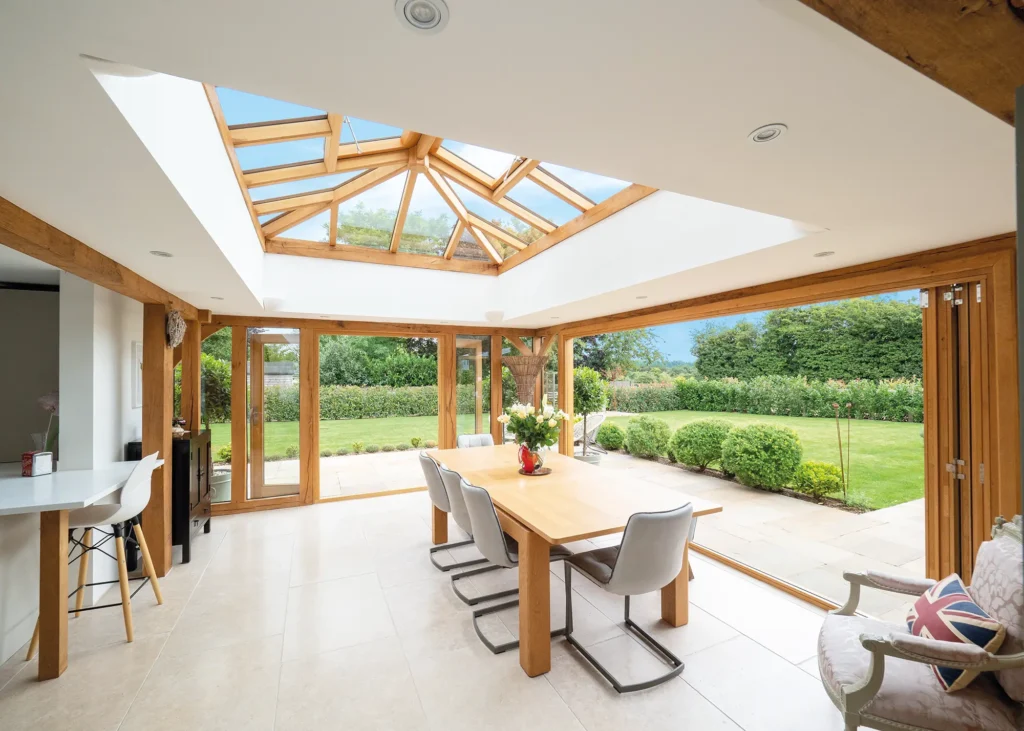
An impressive orangery by Prime Oak has added space and rejuvenated the layout of this Hertfordshire home by providing the missing link to connect the kitchen, living room and garden. An abundance of natural light floods into the dining area before spreading throughout the downstairs, thanks to a roof lantern and wide glazed doors on two sides. The flat roof surrounding the lantern is insulated and finished in a subtle grey rolled lead to draw the eye to the wood tones in the oak frame.
19. Oak frame extension with a unique roof design
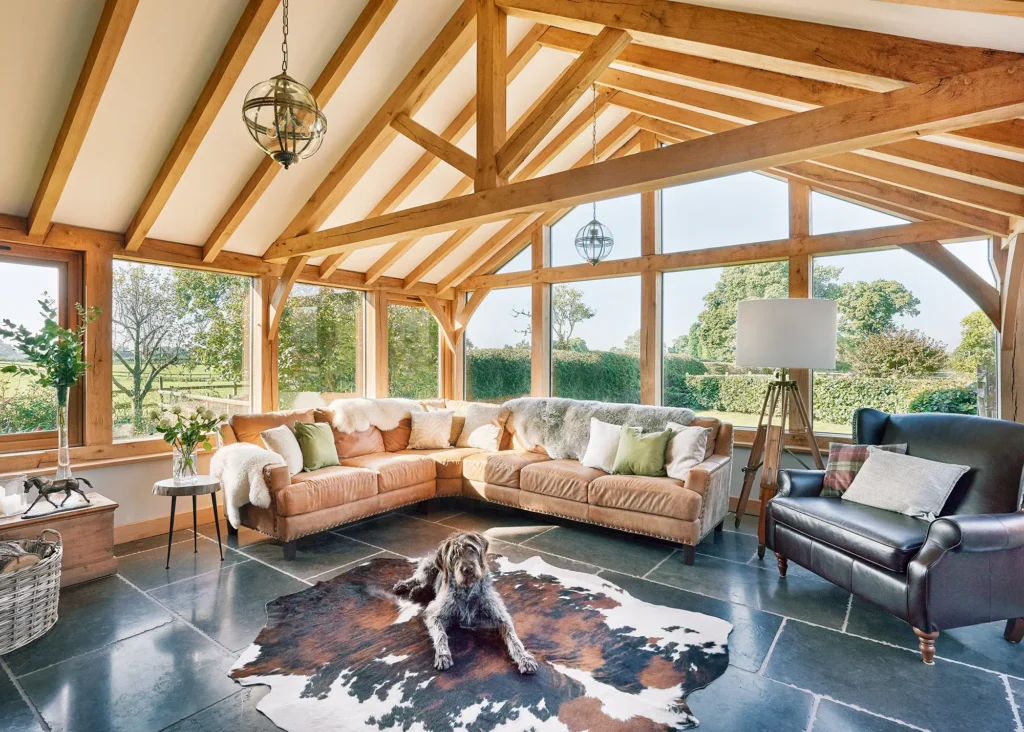
This stone home in the Cotswolds benefits from an unusual garden room design, with six angled windows that take in the grounds and countryside views. The new zone extends the kitchen seamlessly into a comfortable seating area, where the homeowners chose to accentuate the volume and drama of the frame with exposed trusses. The frame was supplied by Welsh Oak Frame. The direct glazing system made it possible to create the building’s curved shape with floor-to-ceiling glass, while the solid wall allowed an inset fireplace to be installed for cooler months.

20. Charming garden room addition with a pyramid hipped roof
Situated within the beautiful Chew Valley, this stunning garden room was designed by Westwind Oak to reflect its historic surroundings, highlighting the importance of a sensitive materials palette. Slate was used for the pyramid hipped roof, while the walls were made from local stone. Inside, the space has a spectacular central finial, connecting ties to the hips, which provide the dining room with a bright, refreshing appearance.

The contemporary use of glazing in this design is especially remarkable, with large expanses fixed inside the oak frame’s principal posts rather than on the outside, imbuing the traditional frame structure with a modern yet timeless feel.

Anamika Talwaria
Amandine Lefevre
You may be interested in

Our sponsors