

































 Login/register to save Article for later
Richard Eaton is senior design manager at Tissino and is responsible for designing many of their market leading bathroom products.

Claim your two free tickets now!
21st-22nd February 2026 - time to get your dream home started!
BOOK HERE21st-22nd February 2026 - time to get your dream home started!
BOOK HEREEstimate your project costs instantly with Build It's interactive self-build cost calculator
Calculate NowGet an accurate, detailed cost breakdown of your project
Submit plans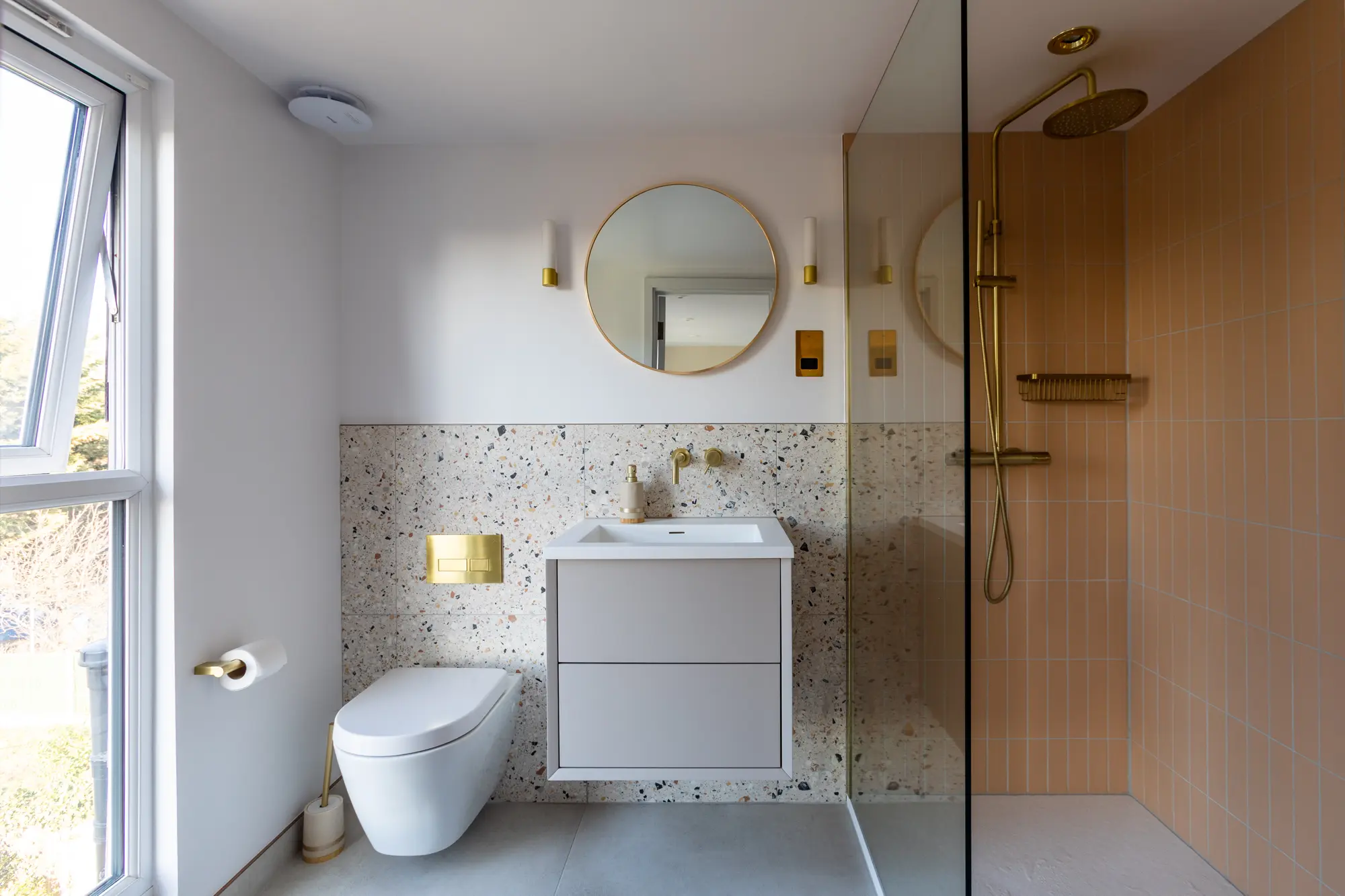

A wet room is a fully-waterproof, tanked bathroom with an open-plan layout. The shower is often flush with the rest of the floor, with a gentle gradient guiding any access water to the drain. As a walk-in environment without a fully closed-off enclosure to contain water, the layout becomes the main framework that elevates the room’s overall feel and functionality.
A wet room can be tailored to your exact design goals, and depending on the space, can allow for eye-catching architectural features such as half walls, glazed partitions or changes in floor type. To show you what’s possible in both big and small wet room spaces, here I’ve rounded up a collection of real-life projects – each embracing unique design details.
Neil Dusheiko Architects combined British heritage and a Scandinavian design ethos to achieve this charming, yet calming wet room.
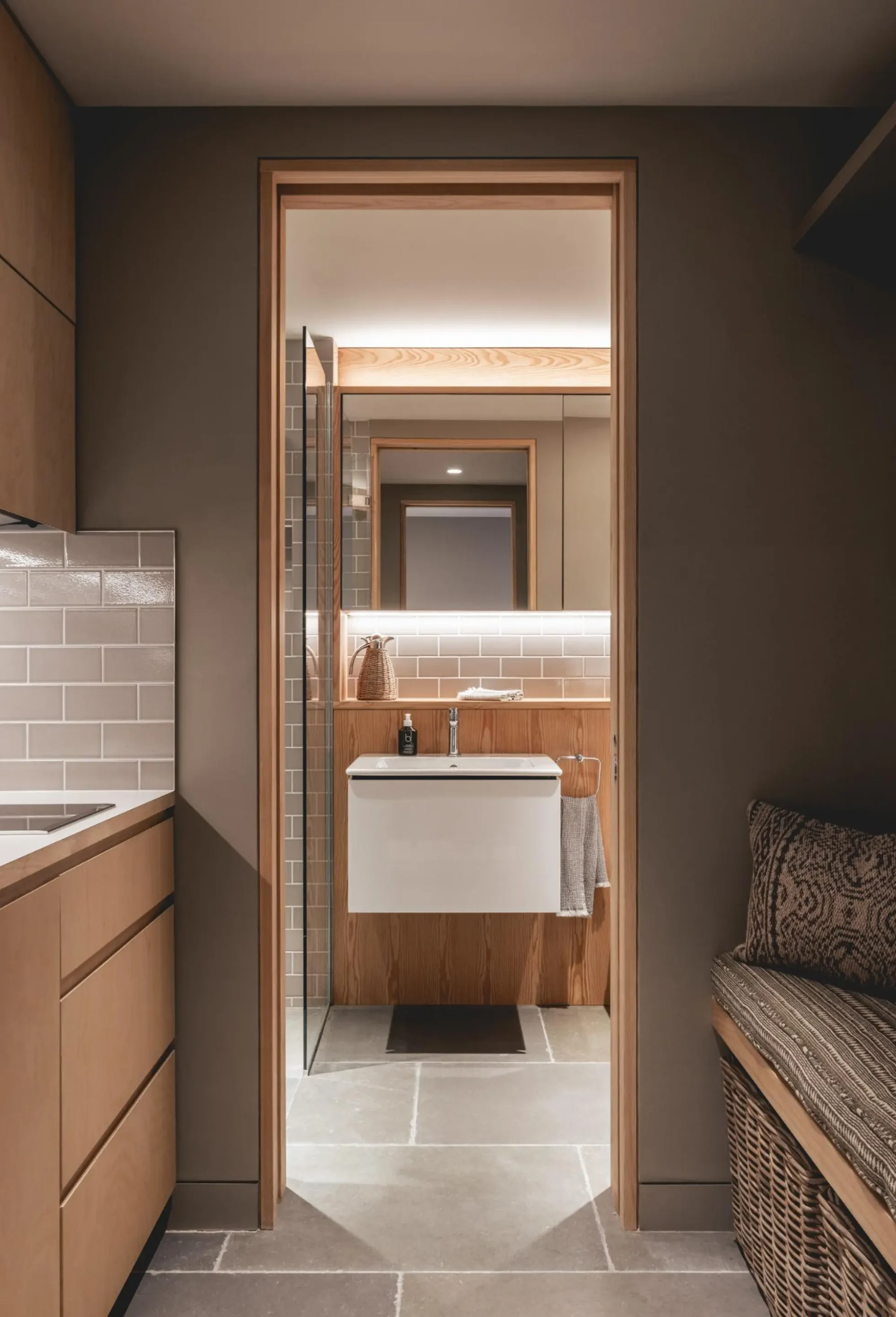
Photo: Billy Bolton
As with the rest of the home, this wet room meticulously balances materials and clean lines, reflecting the architectural language and overall scheme.
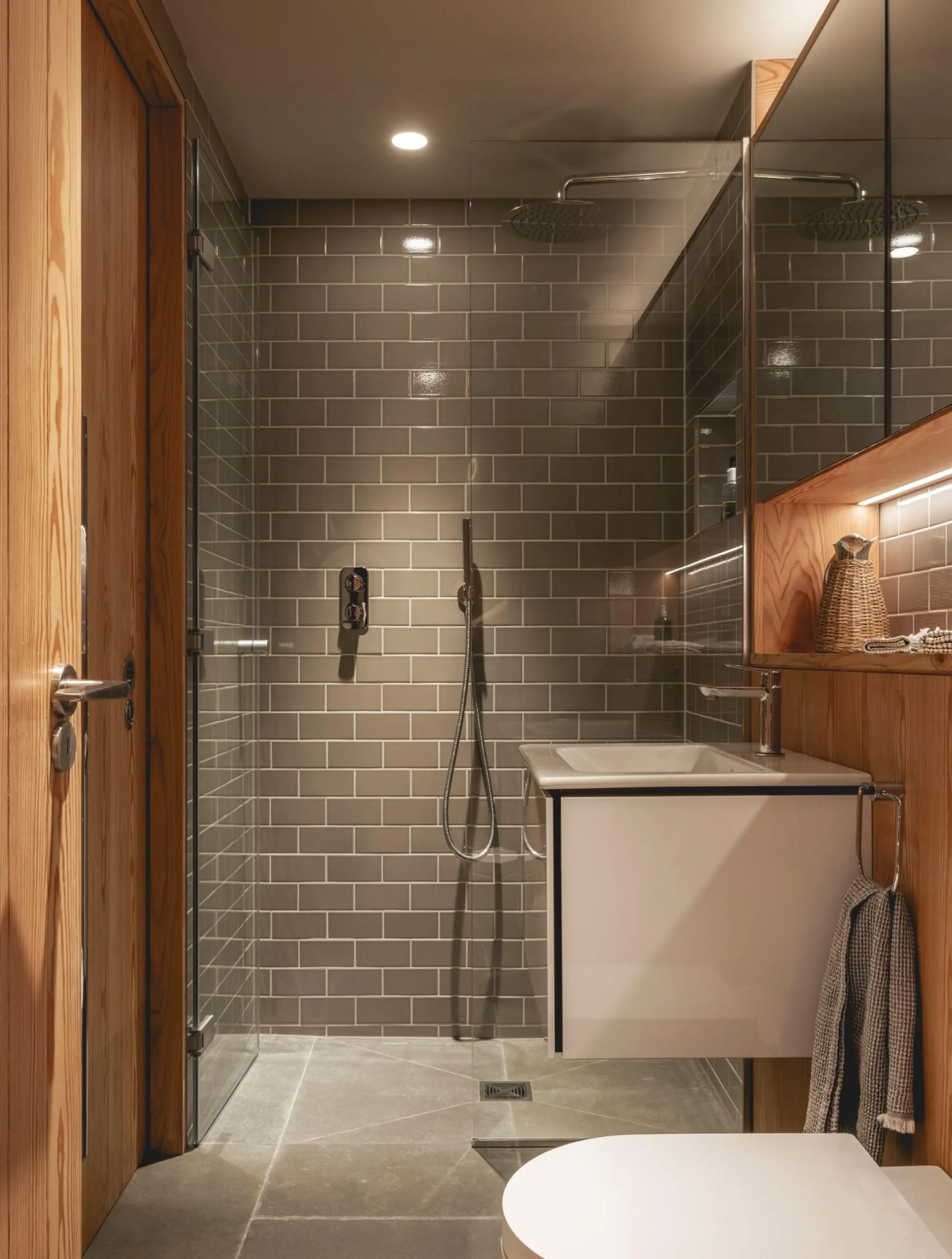
Photo: Billy Bolton
Lighting is used strategically throughout the space to add depth and enhance the sense of luxury.
Designed by Abbie Naber, this wet room features decorative arch terracotta zellige bathroom tiles, which frame the shower beautifully, while plain terracotta field tiles are used in contrast to create visual breathing space.

Prior to the installation, a random dry lay of the coloured arch tiles was carried about to achieve a more free-form, imperfect finish.
Designed by Abbie Naber, this wet room features decorative arch terracotta zellige bathroom tiles, which frame the shower beautifully, while plain terracotta field tiles are used in contrast to create visual breathing space.
Prior to the installation, a random dry lay of the coloured arch tiles was carried about to achieve a more free-form, imperfect finish.
In this wet room by JJ Bathrooms, the aim was to create a practical, spacious and elegant family space.

A half-height wall was used instead of a glass screen for the shower to maintain an open feel while providing privacy. A linear wet deck allows for seamless tiling, making the space feel larger. Terracotta tiles were added to create a wow-factor focal point.


Richard Eaton is senior design manager at Tissino and is responsible for designing many of their market leading bathroom products.
In a wet room, lighting needs to work hard without ever feeling overtly technical, which is why balance matters more than layering for its own sake. Ambient lighting should provide an even, shadow-free base that creates a calm and legible space – this particularly important in open, level-access layouts where there are fewer physical boundaries. This is typically achieved through recessed, IP-rated ceiling fittings with a warm neutral colour temperature that flatters skin tones and materials rather than creating a clinical feel.
Task lighting then becomes more targeted and purposeful, most often concentrated around the vanity and shower area. Rather than relying on brightness alone, careful positioning helps avoid glare and harsh shadows, especially in mirror zones. Accent lighting should be used sparingly to introduce depth and atmosphere, highlighting textures, niches or architectural details, but always as a supporting element rather than a distraction.
Lighting is one of the most effective tools for zoning in a wet room because it allows different areas to be subtly defined without interrupting the clean, open nature of the space. Changes in light intensity, direction or placement can signal shifts in function, guiding the user intuitively from circulation space to washing and showering areas.
For example, a softly lit shower zone can feel enclosed and calming even without a screen, while brighter, more focused light around the basin supports daily routines and gives that area a clearer sense of purpose. This approach is particularly valuable in compact or open-plan bathrooms where physical dividers are intentionally avoided, allowing the room to feel cohesive while still being clearly organised.
The starting point for lighting in any wet room is full compliance with bathroom zoning regulations and appropriate IP ratings, as moisture exposure is unavoidable even outside the immediate shower area. All fittings must be suitable for their specific location, with careful attention paid to seals, gaskets and installation methods to prevent water ingress.
Coordinating the lighting design and the waterproofing system itself is equally as important. Penetrations through ceilings or walls must be properly detailed so that membranes remain continuous and uncompromised. This is not just a technical consideration but a longevity issue, as poor detailing can lead to hidden failures that are difficult to rectify once the room is complete.
Well-designed wet rooms demonstrate that waterproofing and aesthetics are not opposing forces. Flush-fitted luminaires, concealed fixings and integrated LED solutions allow lighting to sit comfortably within tiled or panelled surfaces without introducing visual clutter or weak points in the waterproofing layer.
Material choices also play a role, as reflective finishes, lighter tiles or subtly textured surfaces can amplify available light, reducing the need for excessive fittings. This allows the design to remain visually restrained while still meeting performance requirements, proving that a technically robust solution can also feel refined and intentional.
In the absence of natural light, a wet room benefits from a lighting scheme that prioritises softness and consistency rather than brightness alone. Even illumination across walls and floors helps avoid the flatness that can occur in enclosed spaces, while indirect lighting can introduce a sense of depth and comfort.
Colour temperature becomes particularly important here, as overly cool lighting can make the room feel stark and unwelcoming. Pairing warm, controlled artificial light with materials that respond well to it, such as matt tiles or softly honed surfaces, helps create a space that feels balanced and inviting despite the lack of daylight. When handled correctly, a windowless wet room can feel deliberate and atmospheric rather than compromised.
This wet room was carefully designed to feel calm and quietly restorative, using a suite of quality bathroom fixtures from Tissino.
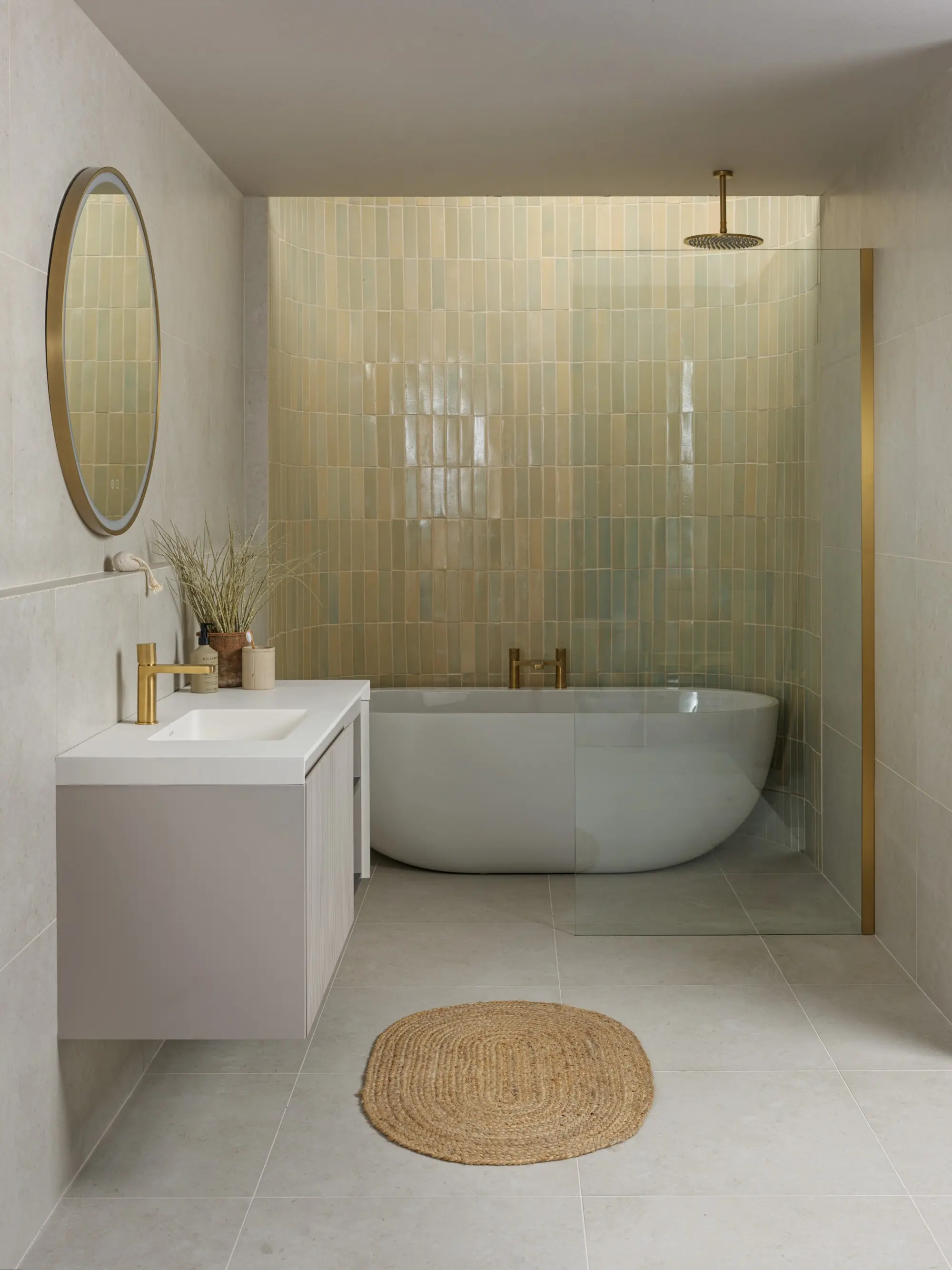
Photo: Tissino
By choosing a functional, yet spa-like layout, a combined bath and shower arrangement maximises flexibility without overcrowding the space. A frameless glass screen ensures sightlines remain unbroken while maintaining a clean, architectural feel.
Studio Tashmina embraced the limited space in this narrow bathroom space, using a bold mustard yellow wall colour and patterned floor tiles from Otto Tiles to add impact.
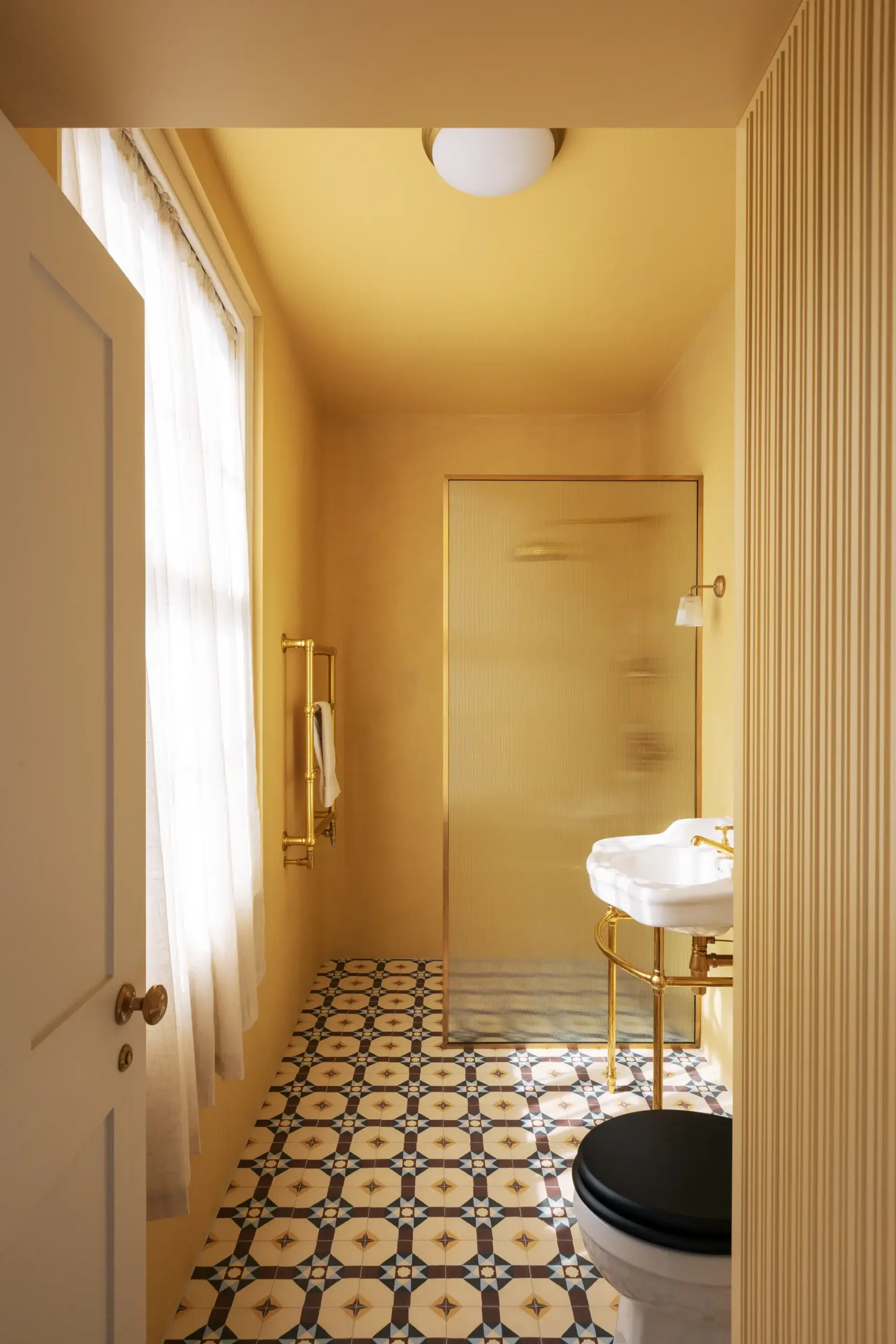
A sleek linear drain allows for continuity of the flooring for both practicality and style, while a heated towel rail provides sufficient heating for the room.
Using a simple material palette of glass, concrete and soft lighting, The D Haus Company transformed a once dated bathroom into a clean, minimal wet room design with a hotel feel.
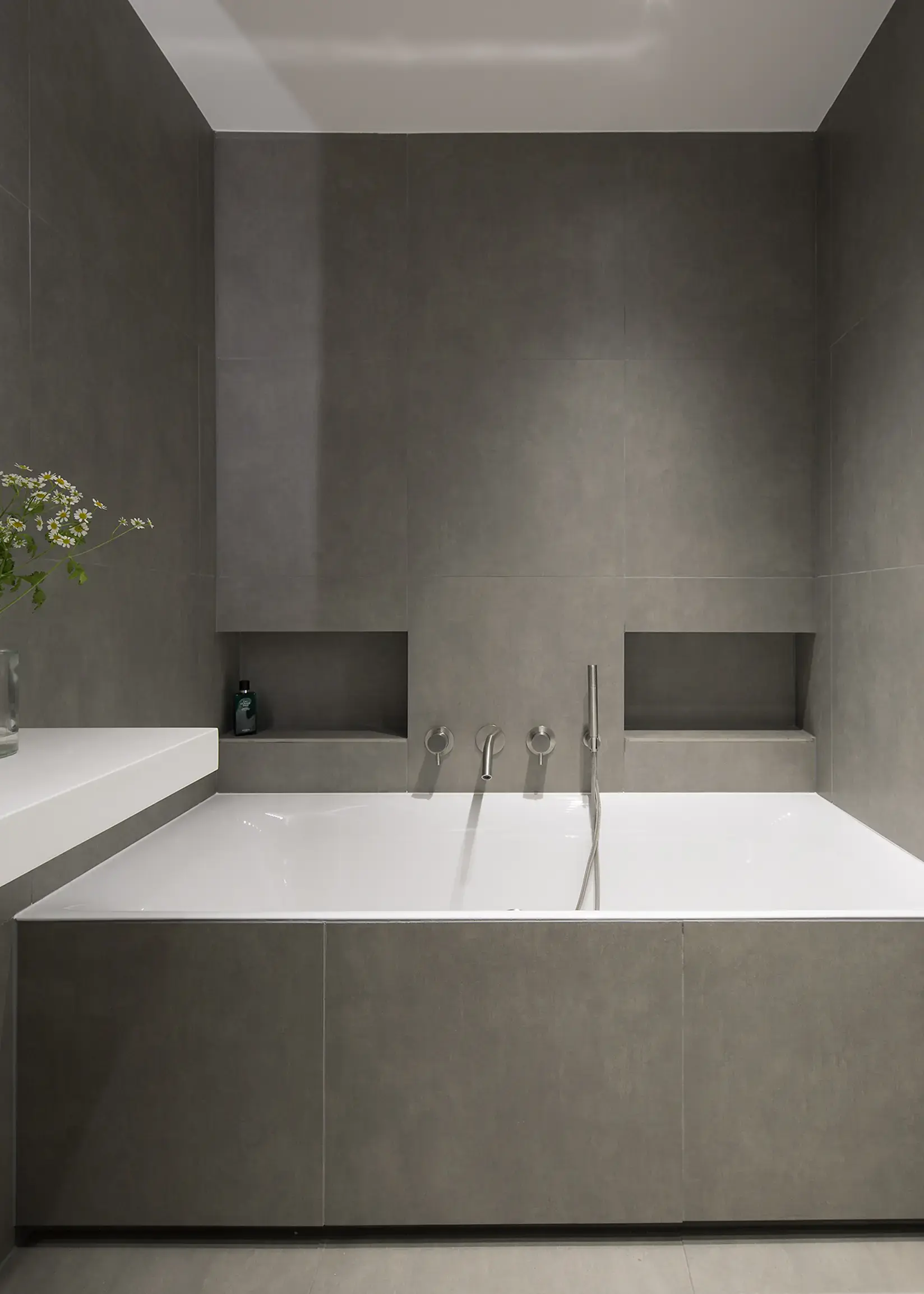
Photo: The D Haus Company
High specification sanitary fittings were installed and deep niches were created to play with the weight and depth of the space in line with the geometry of the tile layout.
Designed by Pencil + Brick, this playful yet stylish ensuite wet room in East London ensures a seamless flow throughout the space, showing how small bathrooms can still feel expansive.
Photo: Pencil + Brick
A large window draws in daylight to flood the room while soft orange tiles serve as an accent feature, creating a balanced, uplifting bathroom environment.
Complete with a classic checkerboard floor and antique furnishings, this wet room nods to the iconic black and white floors found in French Baroque architecture and interior design.
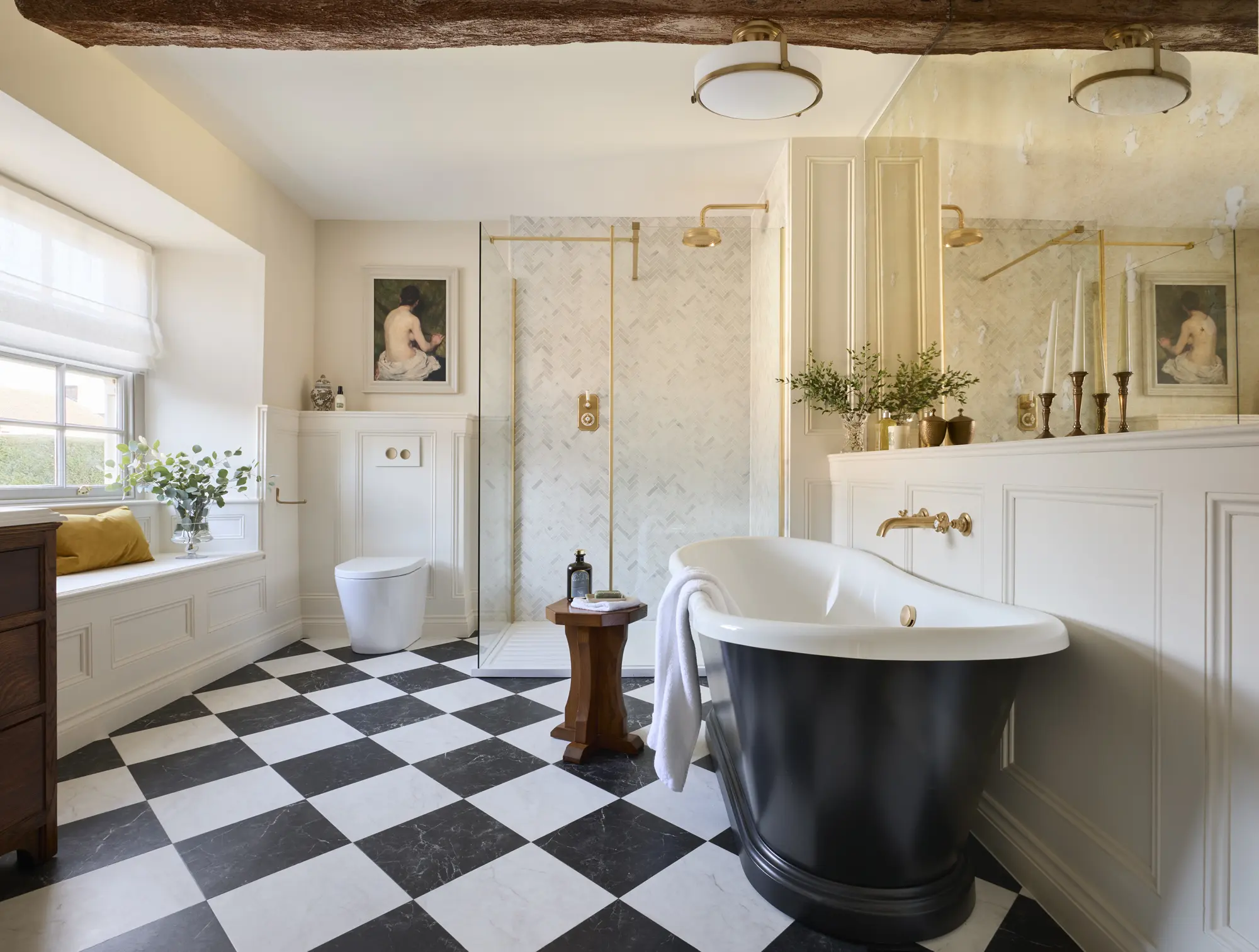
Photo: Darren Chung
BC Designs sought to create a space that would suit the period property without dating it, opting for large mirrors, wall panelling and accent lighting for a modern twist.
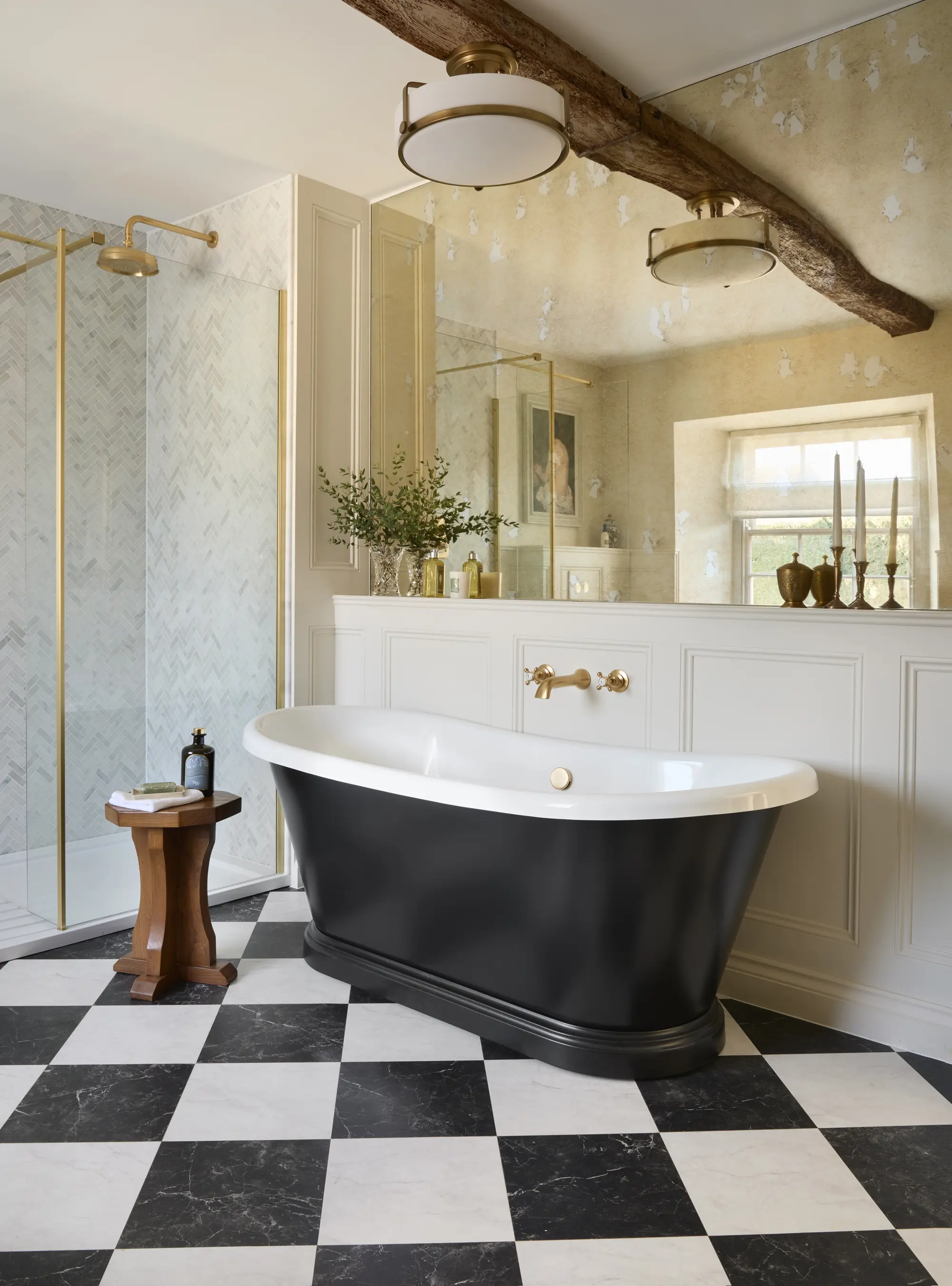
Photo: Darren Chung
Wet rooms make clever use of space, which is why they work so well in smaller bathrooms, family homes and accessible layouts. Screens and half walls play a key role. They clearly define the shower area without closing it off, and they help keep spray away from the rest of the room, so you avoid wet feet when brushing your teeth! Glass screens or half walls keep the shower connected to the rest of the room, making it feel larger, and from an aesthetic point of view, choosing details like fluted or Crittall style glass can add real character and visual interest.
Getting the build right is crucial. Proper tanking and waterproofing prevent leaks and protect the structure. The floor slope must direct water efficiently to a drain that can handle the flow. Ventilation matters just as much and higher extraction rates than minimum guidance help remove humid air quickly. Choose materials that cope with constant moisture; non-porous, non-corrosive finishes, anti-slip tiles, easy-to-clean fixtures, and correctly rated electrics. These all work to keep the space safe, durable and low maintenance.
In small wet rooms, the focus is on making the space feel open while staying practical. Frameless glass screens help define the shower without breaking the visual flow, giving the impression of a larger, continuous room. In more spacious wet rooms, you have more flexibility. You can combine a shower with a freestanding bath, place vanities and toilets further from the wet zone or even skip screens entirely. Finishes can reflect this too: lighter tones work well in small rooms, while larger spaces can handle darker, bolder colours without feeling cramped.
Good futureproofing starts with solid basics. Proper construction avoids costly repairs later, and planning ahead makes the space adaptable. Installing backing for future grab rails or choosing higher-grade anti-slip flooring early means the room can evolve with changing needs. It’s important not to just comply with the minimum requirements to meet Building Regulations but truly envision how the space is being used now and in the future. This includes ensuring layouts work for mobility or vision challenges, fixtures are easy to reach and use, and maintenance is simple. Strong ventilation from the start protects the room and reduces the risk of upgrades down the line.
Because wet rooms are one continuous space, they have two key benefits ‒ they make access simpler and cleaning quicker. On the other hand, it’s worth noting that a fully-tanked wet room has higher cost implications due to the extended waterproofing needed. Walk-in showers can allow for a luxurious feeling with a smaller budget. It can also be beneficial to have a shower tray instead of a level shower for repairs or changing the tray in the future. Both options can look clean and modern when designed and built well. The choice usually comes down to how much structural work you want to take on, how flexible the budget feels and how important a completely level floor is for daily use.