

- Plan ItBack
- Design ItBack
- Build ItBack
- Homes
- ProductsBack
- CostsBack
- Self Build Cost Calculator
Estimate your project costs instantly with Build It's interactive self-build cost calculator
Calculate Now - Costs & Finance
- Contracts & Warranties
- Build It Estimating Service
Get an accurate, detailed cost breakdown of your project
Submit plans
- EventsBack









































































 Login/register to save Article for later
How to Avoid Costly Mistakes When Laying Your Build’s Foundations

Getting the foundations right is critical for any build. For many projects, trench fill foundations will be the default choice: they’re widely used, relatively quick to install and cost-effective in the right ground conditions. But they’re not suitable for every plot or project. Here’s how to secure the right solution for your build.
Why is early investigation key?
While building control won’t always ask for one, it’s sensible to commission a soil survey early in your project. It’s not an iron-clad guarantee of conditions on site, but it does enable engineers to work with a better picture of what’s likely to be in the ground, reducing the risk of unexpected surprises.
Foundation designs are often caveated as ‘to be agreed on site’. That’s because, until excavation begins, ground conditions remain uncertain. What’s unearthed can have major implications – particularly if a new, engineered solution is required.
As a site insurance and warranty provider carrying out thousands of foundation inspections each year, we often see projects where assumptions don’t match reality. Designs then need revisiting – sometimes urgently – at a point where costs are mounting and the options feel limited.
What are trench fill foundations?
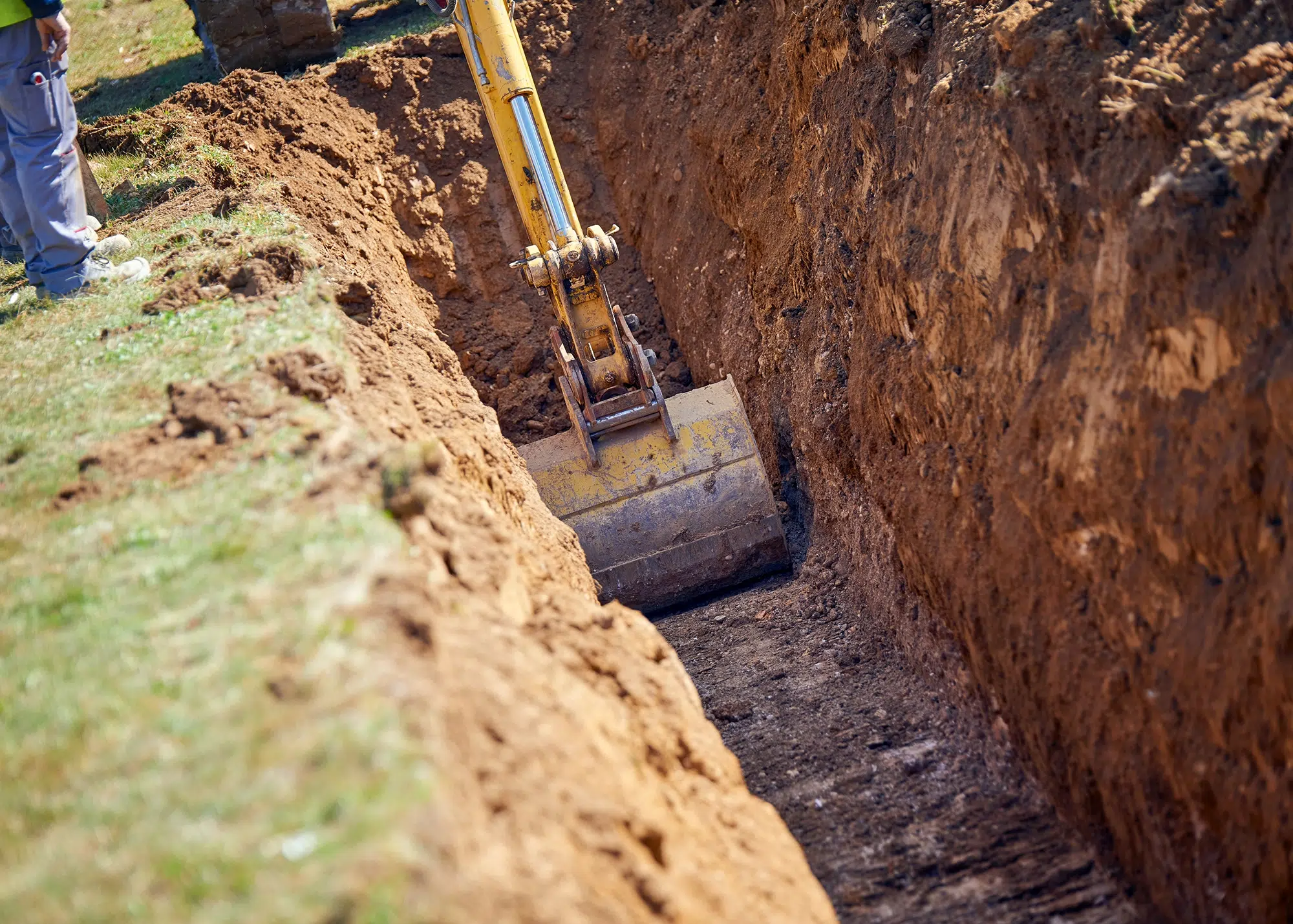
Trench fill foundations are formed by excavating trenches down to a suitable bearing stratum, before filling them with mass concrete. They’re suitable for most subsoils and the relatively modest loads associated with domestic buildings. Design is governed by the structural loads transferring into the ground, and the bearing capacity of the subsoil.
Trench fill foundations are easy to install and typically specified at widths of 450mm to 600mm to match excavator bucket sizes
Engineers use standard tables to estimate likely bearing capacities based on typical ground conditions found locally. But these assumptions can quickly unravel if your site behaves differently. The better you understand soil conditions before the foundation design is developed, the more likely you’ll get a robust, cost-effective result.
Why can problems emerge on site?
While major issues such as historic mining tend to be identified early, many of the most disruptive challenges are localised and only revealed during excavation. Common issues include:
- Tree roots or remnants from removed vegetation.
- Old foundations or partially demolished structures.
- Watercourses, wells & springs.
- Soft spots, made ground or buried rubble.
- Contamination hidden beneath the surface.
Without a ground investigation, excavation is often the moment these issues come to light. They could mean building control or warranty inspectors require deeper trenches or even a complete redesign – triggering delays, extra concrete, increased labour and higher plant costs. In more severe cases, trench fill may need to be abandoned altogether in favour of engineered solutions, such as piles, requiring specialist installers and significantly higher budgets.
The real cost of getting it wrong
Unexpected ground conditions can cause £10,000s in extra costs before a build reaches ground level – eating into contingencies. In one recent extension project, a hidden spring rendered the planned trench foundations unviable. The redesign, drainage works and piled solution added £15,000 to the budget. Thankfully, the homeowner had suitable site insurance in place, which covered the extra costs.

Typical domestic pile foundations require bespoke engineering. They can extend to depths of around 6m to 8m – or even further – to reach good ground bearing strata. Photo: iStock.com/Anastasija Vujic
Site contamination can present significant challenges. Remediation works may be required to protect the structure and occupants, with significant implications for project costs and the value of the finished property. Pre-purchase reports, such as environmental searches, can help to uncover contamination risk.
How can you protect your project?
The best defence against groundwork and foundation surprises is early investigation. Commissioning a soil survey – ideally before you buy the plot, and certainly before the design is finalised – can flag up risks while there’s still flexibility to respond.
Independent oversight is vital. Obtaining a structural warranty gives you a safety net, as any issues on site will be raised during the inspection and audit process. We’ve even seen contractors attempt to press on with inappropriate foundations despite poor ground conditions. As a client, you may not be confident judging a founding surface yourself, hence third-party technical audits are invaluable.
Understanding your site’s ground conditions – and putting the right professional checks and insurances in place – can prevent costly reworking and delays. Get it right, and the rest of your build starts on solid ground.

Protek


You may be interested in