

- Plan ItBack
- Design ItBack
- Build ItBack
- Homes
- ProductsBack
- CostsBack
- Self Build Cost Calculator
Estimate your project costs instantly with Build It's interactive self-build cost calculator
Calculate Now - Costs & Finance
- Contracts & Warranties
- Build It Estimating Service
Get an accurate, detailed cost breakdown of your project
Submit plans
- EventsBack











 Login/register to save Article for later
Oak Frame Home Built on a Historic Walled Garden Plot for Just £250k

Hailing from Liverpool, Moira and Tony Cain originally thought they might move to the Lake District in their retirement because Moira had a yearning to live in the countryside. Their plans changed when they visited a friend in Llangollen, Wales. “We discovered the beauty of the region and thought we’d buy a house here instead,” says Moira. “But when Tony was retired early from the police force after a bad accident and began renovating houses, finding a plot and building our own home seemed like the natural next step.”
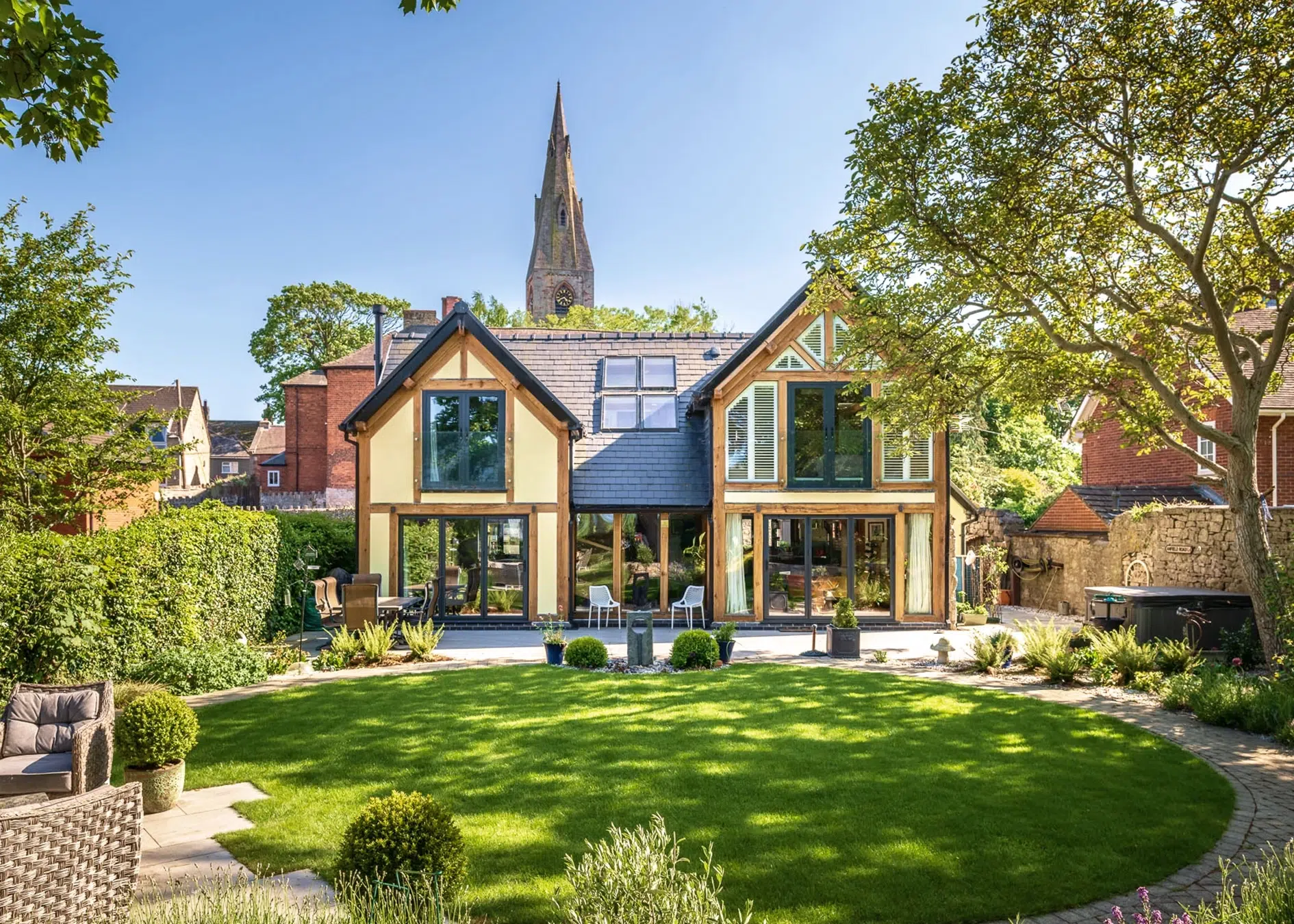
The couple searched online and spotted a neglected piece of land in Ruthin – a pretty historical market town with a castle. The walled plot had once been the garden of a grade II listed church and already had planning consent for a four-bedroom red brick house, similar to the vicarage and sheltered housing on either side.
“The plot was surrounded by an old 10ft stone wall on two sides with another stone wall through the middle, dividing the land in half,” says Moira. “It was overgrown and we wanted to change the design from the start. But we liked the location because it’s within walking distance of the town square, shops and amenities yet still has a countryside feel.”
Dealing with challenging planning stipulations
Tony and Moira wanted to submit a revised planning application to the one that came with the land, but the sensitive location created an extensive list of stipulations. Ruthin is a town of listed buildings, with this plot next to the church and close to a school dating back to the 13th century. Plus, the stone wall at the bottom of the site had been identified as being part of the town’s original defence wall, giving the land historical importance status.
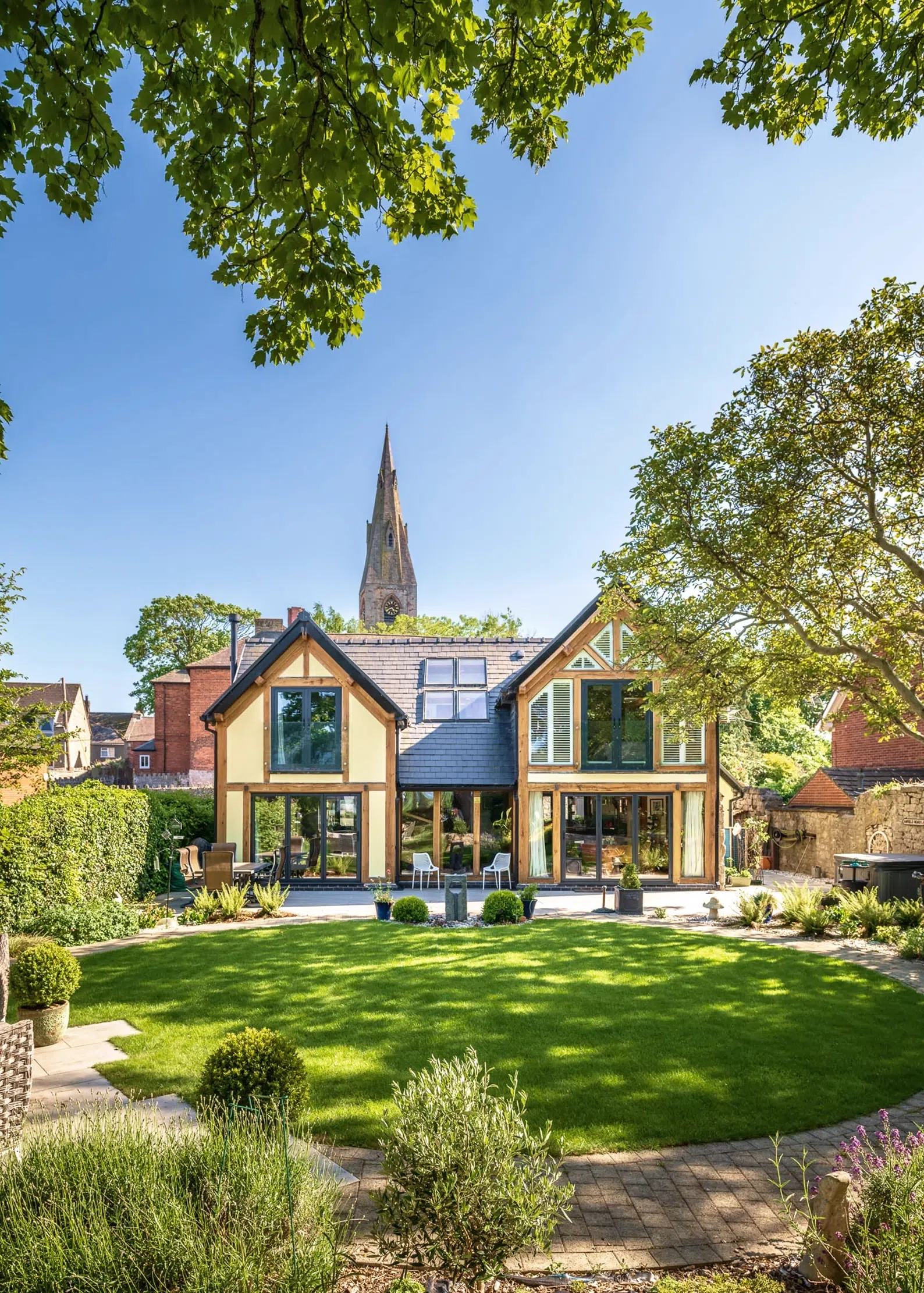
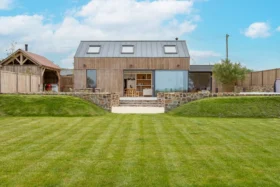
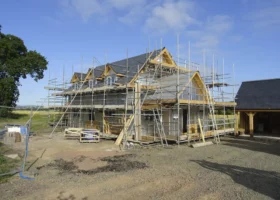
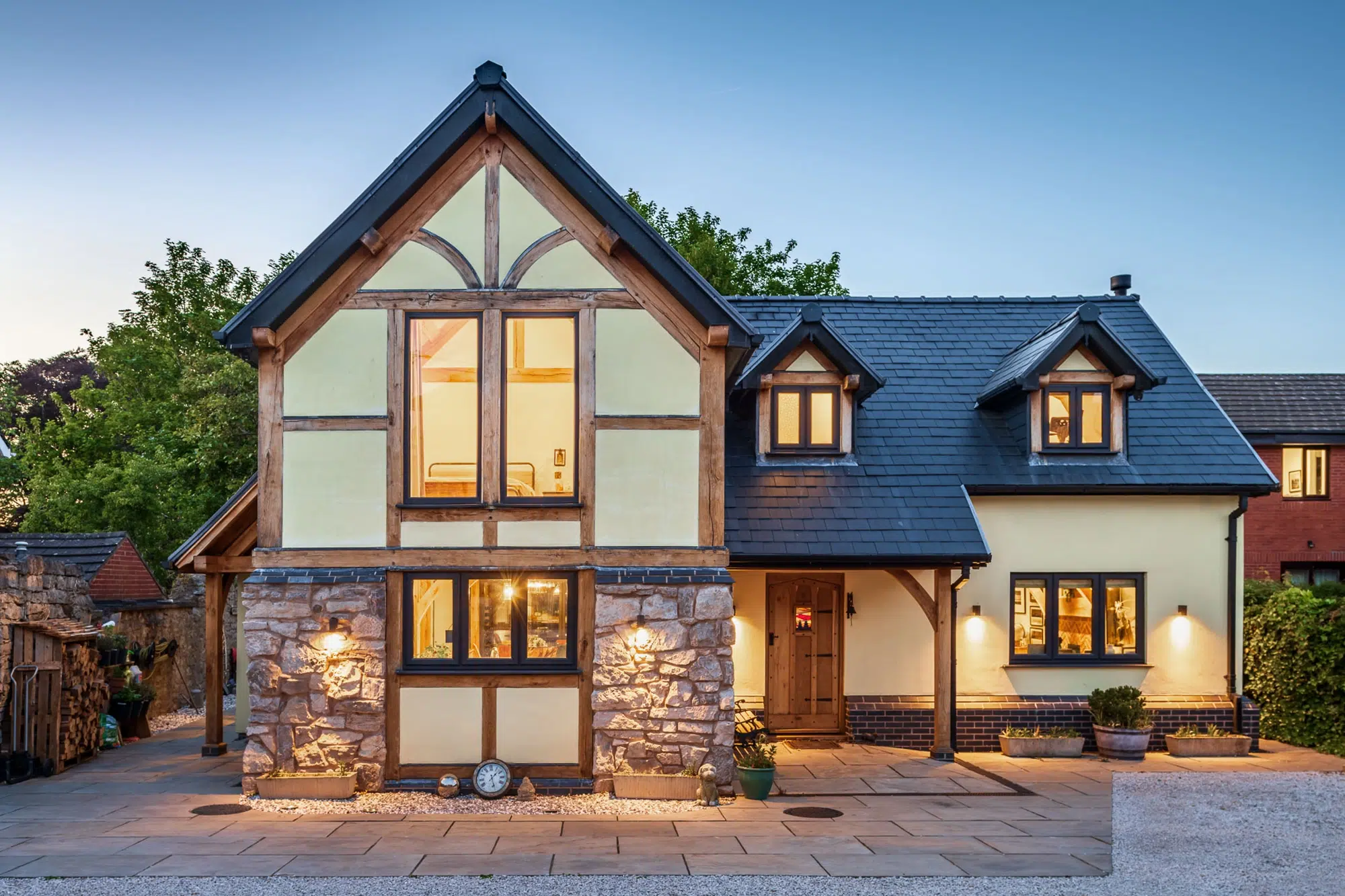
The oak frame was designed and built by Welsh Oak Frame and is wrapped in structural insulated panels
One concern was the possibility of uncovering evidence of an early settlement during the build. “Clearing the site and digging the footings had to be done with a pre-approved archaeologist who conducted a watching brief,” says Tony. “It cost us £1,000 a day and he said there’d be more days on top if he found any skeletons. Our hearts sunk when he found a headstone from 1924 – but fortunately it was the grave of an old dog belonging to a former vicar.”
The couple had to submit a detailed landscaping plan to show how they’d preserve the ancient wall, as well as do a bat and tree survey. Previously, tree preservation orders (TPOs) had been placed on two trees thought to be around 200 years old. However, Tony and Moira still had to submit an updated tree report to show their new planting scheme to mitigate the loss of (less significant) trees while clearing the site.
- NAMESMoira & Tony Cain
- OCCUPATIONSRetired
- LOCATIONDenbighshire
- TYPE OF PROJECTSelf build
- CONSTRUCTION METHODOak frame & SIPs
- PROJECT ROUTEHomeowners project managed
- PLOT SIZE690m2
- LAND COST£135,000
- BOUGHTAugust 2018
- HOUSE SIZE182m2
- PROJECT COST£250,000
- PROJECT COST PER M2£1,374
- TOTAL COST£385,000
- BUILDING WORK COMMENCED February 2020
- BUILDING WORK TOOK36 months
- CURRENT VALUE£730,000
Designing their dream home
The couple began thinking about the type of house they might build. Having lived in an Edwardian property for many years, they weren’t keen on a modern style. “We also felt red brick would stand out in a town with several old timber frame buildings,” says Moira. “An oak frame house seemed much more in keeping.” The couple went to a Build It Live show to investigate this method of construction, where they discovered what they’d assumed might be an expensive way to build was, in fact, within their budget.
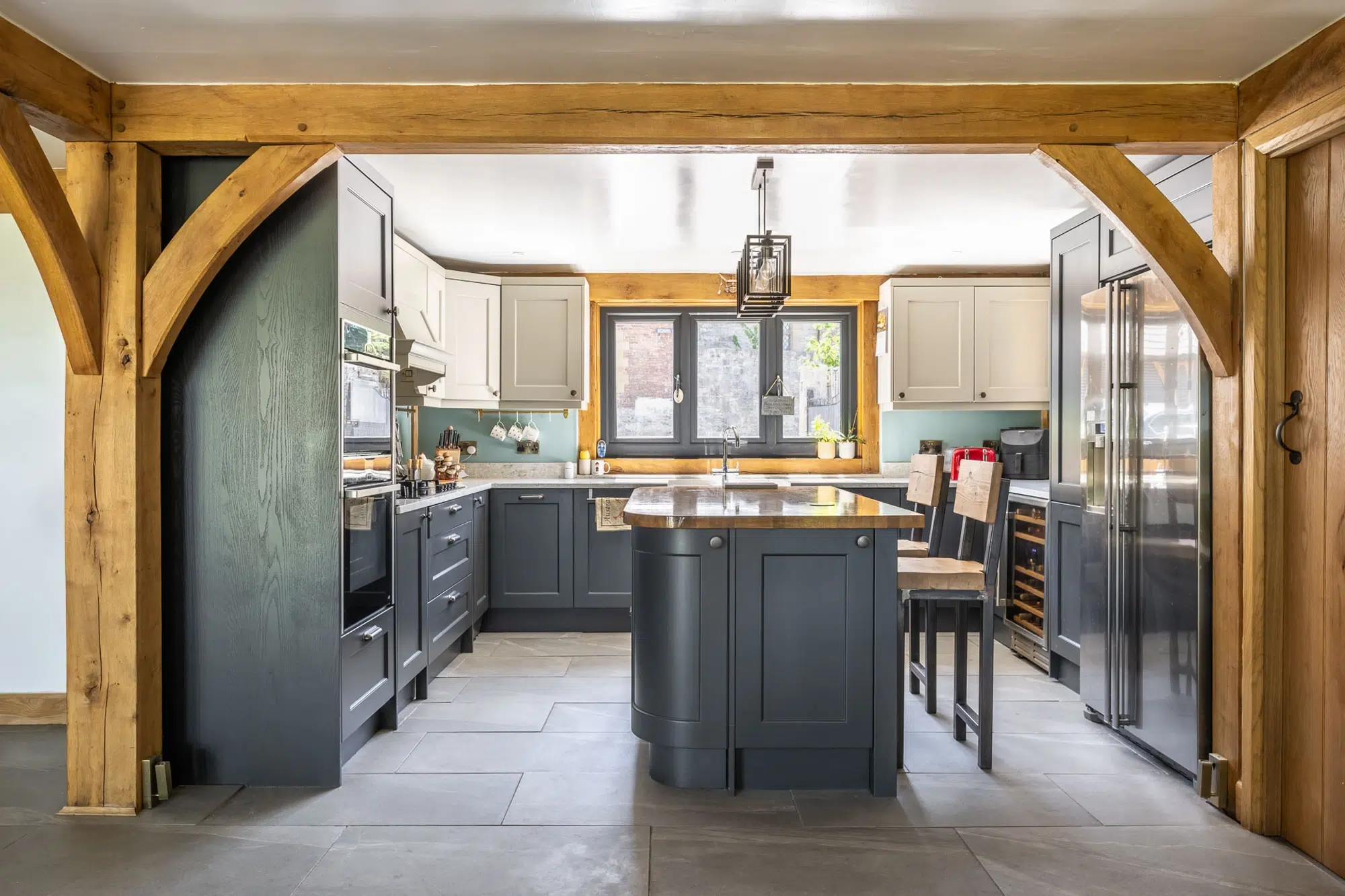
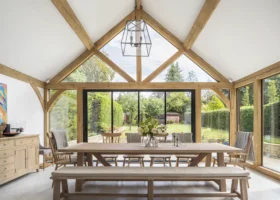
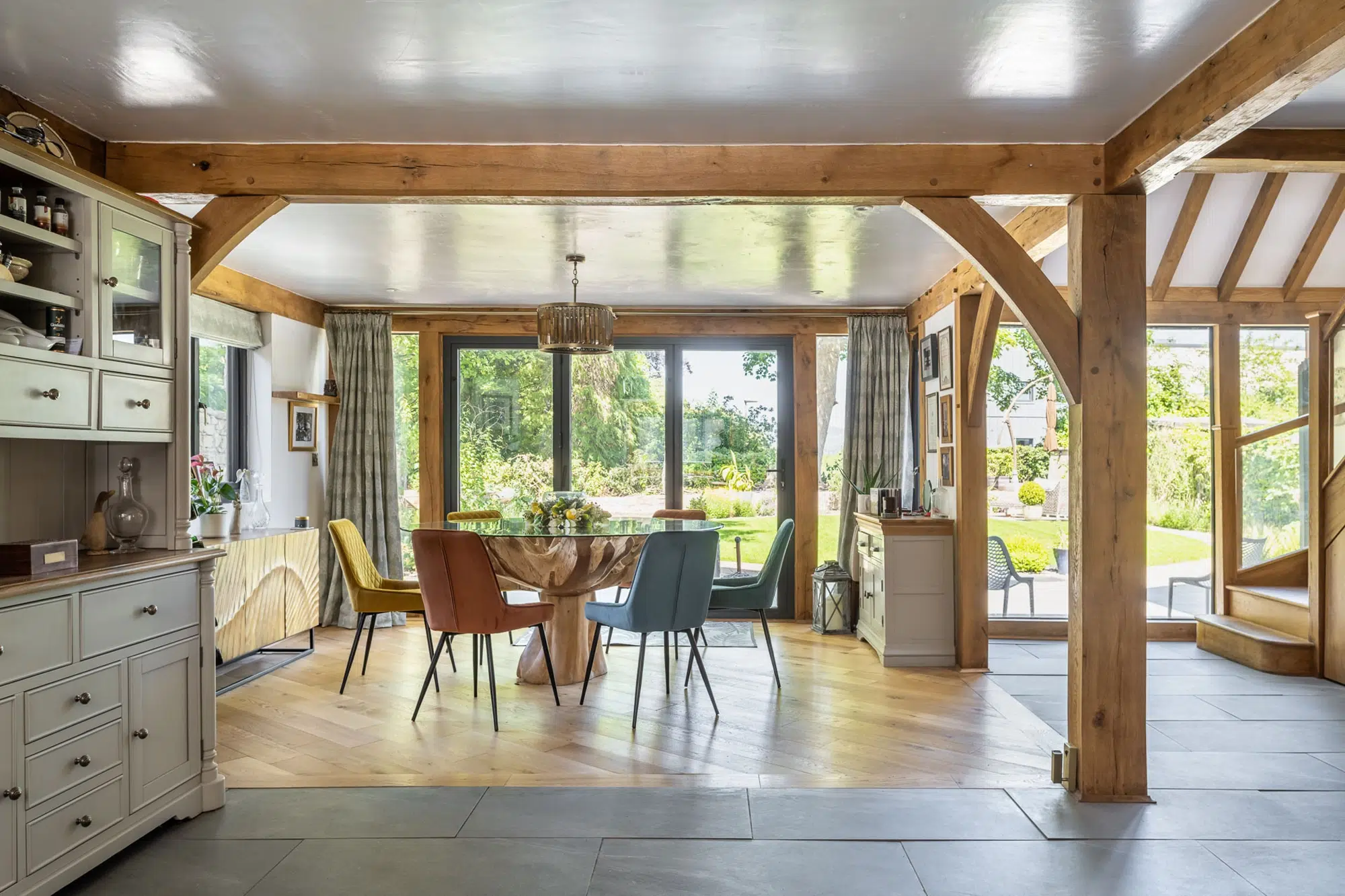
The open-plan space is zoned by the post and beam structure and the visual mix of slate and wood flooring from R M Jones Joinery
Moira and Tony approached Welsh Oak Frame who were a natural fit for the project location. “When owner, Paul Edmunds, took us around his own home, we never looked back,” says Moira. “The tour confirmed an oak frame was for us and everyone at the company was so approachable and friendly.”
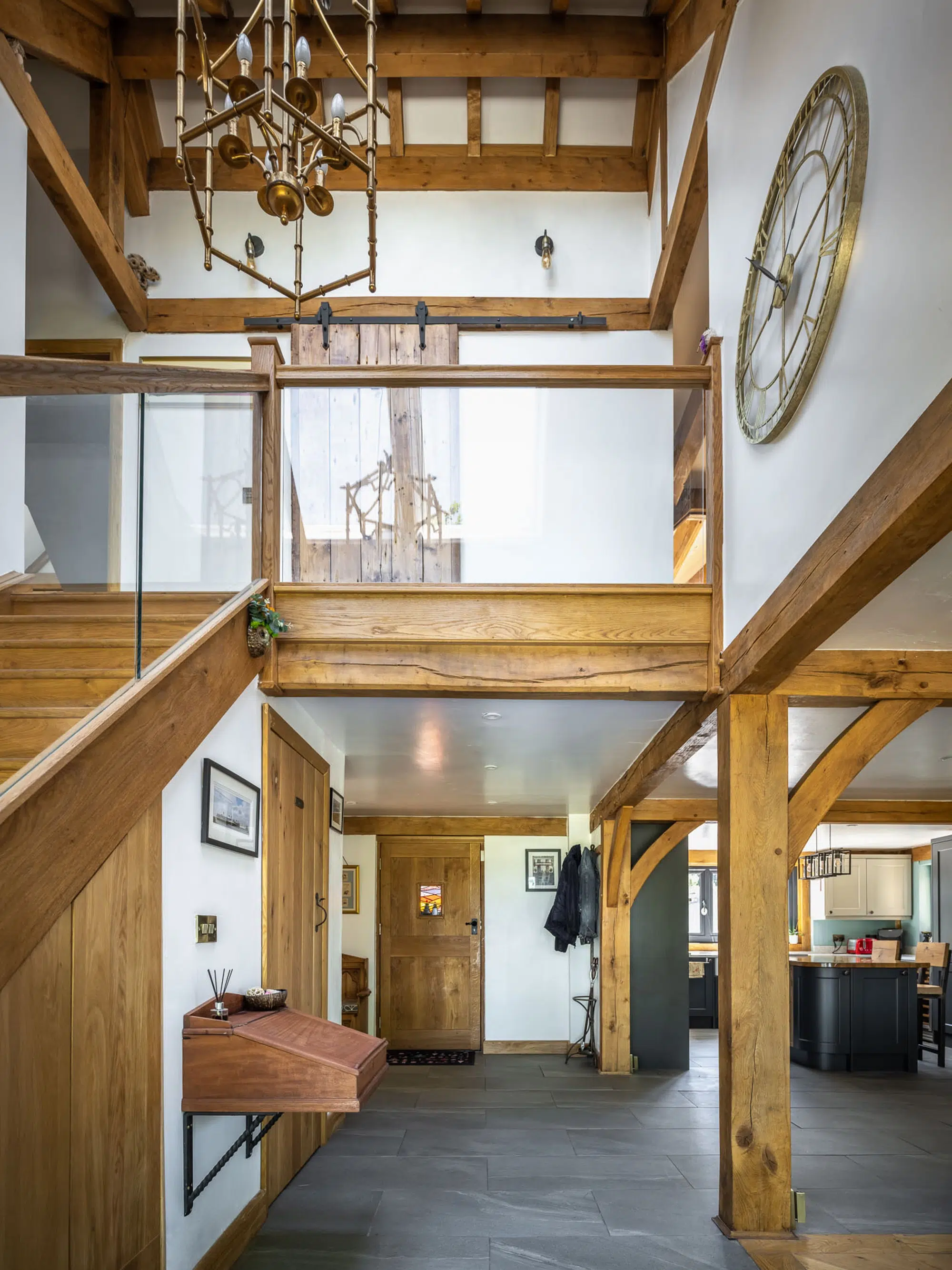
The couple didn’t have a strong wish list for their design, simply wanting four bedrooms and open-plan living, so they looked through Welsh Oak’s portfolio for inspiration. One of the schemes became their starting point. “Our designer put the drawings up on a huge screen, we did a 3D walk-through, and tweaked some of the wall positions,” says Moira. “We had so much trust in his work and the final design was far better than the first company we went to.” The couple settled on a double-height entrance hall with an oak staircase. Downstairs is largely open plan while upstairs bedrooms have vaulted ceilings with oak in the bathrooms.
Getting the oak frame self build started
Moira and Tony used planning consultant, Stephen Locke, who was recommended by Welsh Oak Frame, to make sure they met all the planning conditions. In January 2019 they submitted their planning application for a two-storey oak frame house with a detached garage. “The council were really pleased with our design as it looked more historical than the plans that were previously approved and we were given consent without any problems a few months later,” says Tony.
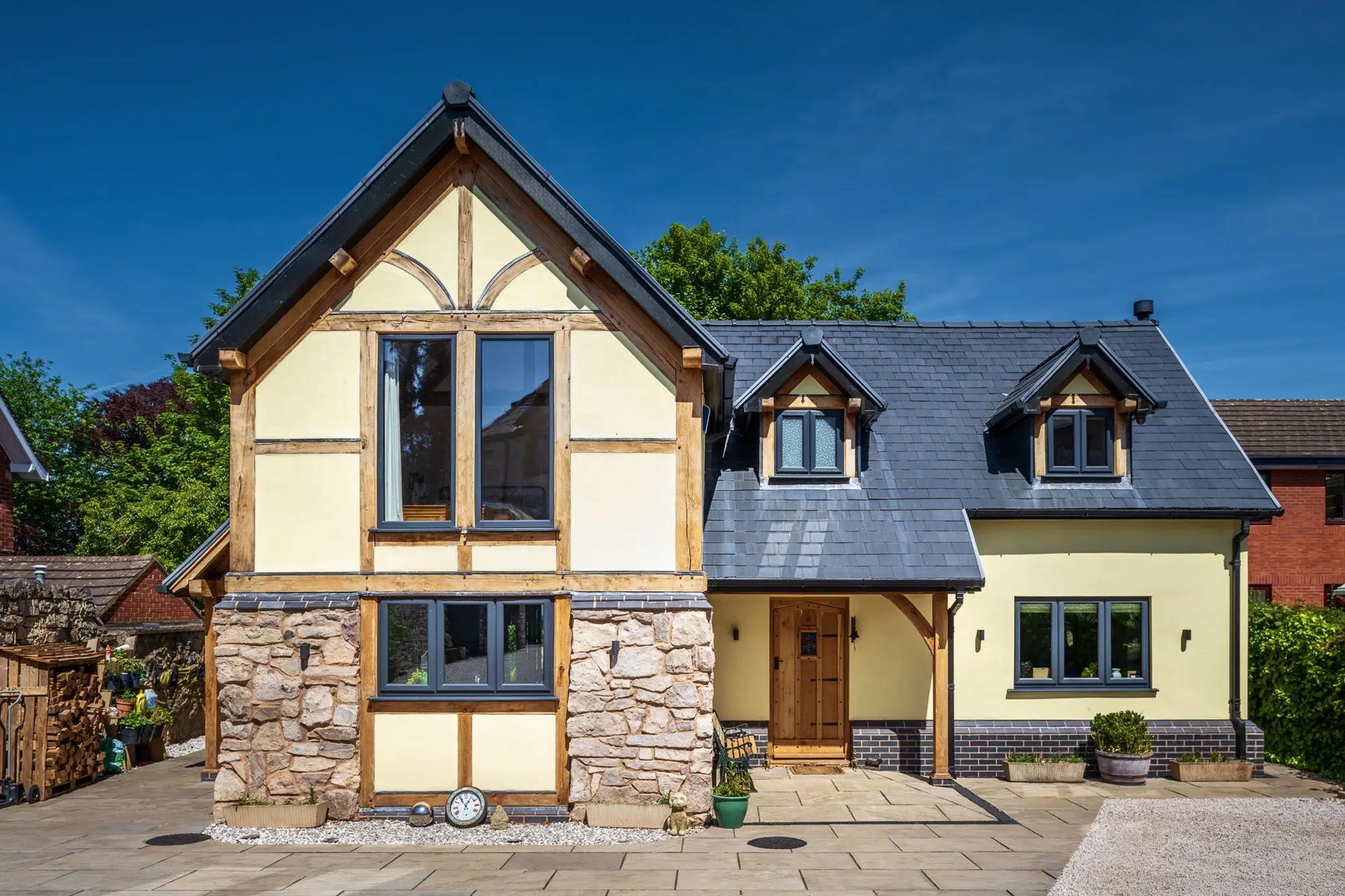
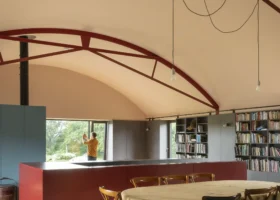
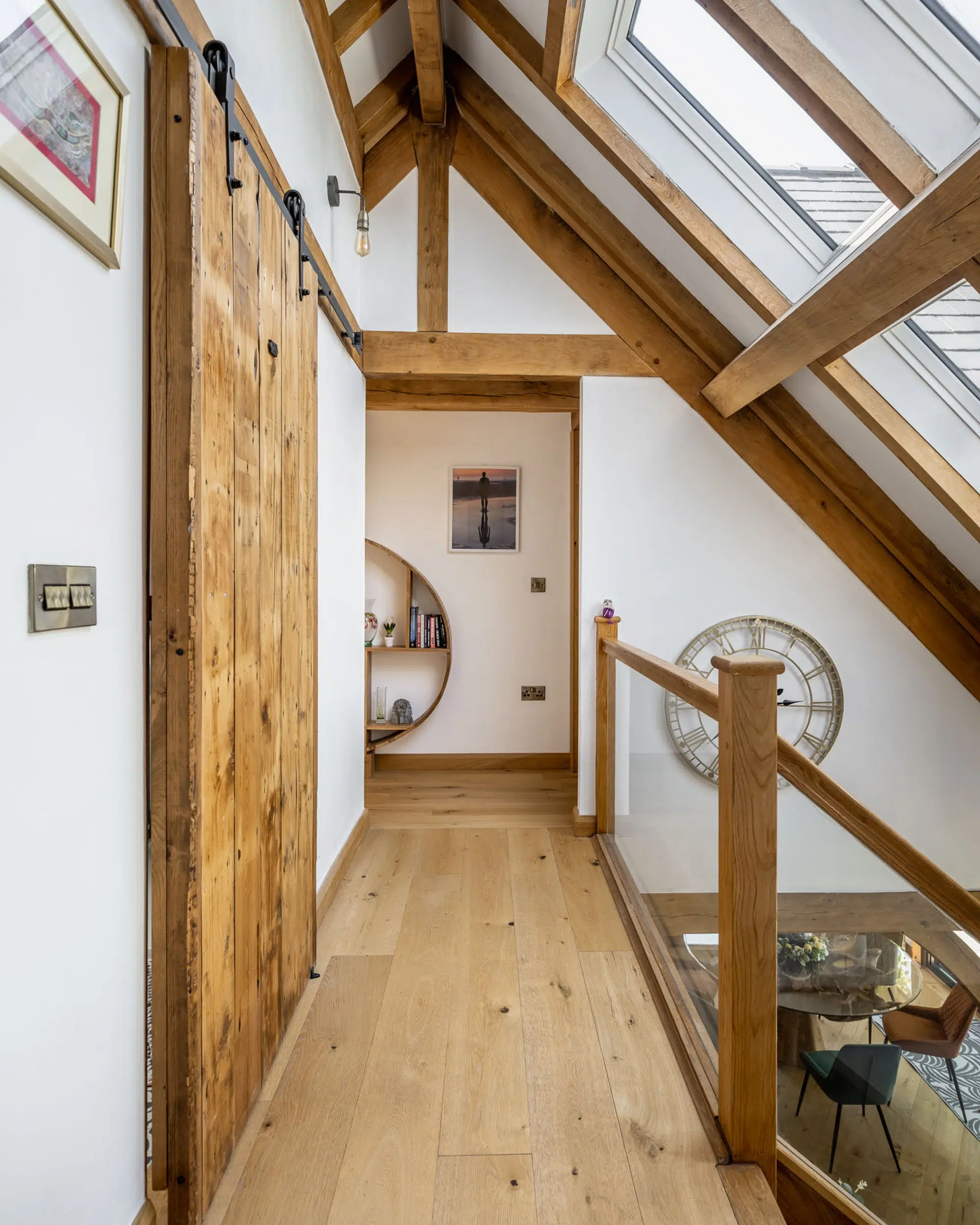
The roof is a hybrid of oak and softwood to make a focal point of the oak frame in key living spaces. This method of construction is a useful way to keep the costs down in oak frame building
One of the stipulations was to brick up the archway between the plot and the vicarage next door, which had to be done within three months of taking possession. However, the jungle-like plot needed clearing, so Tony went back to planning to clarify they wouldn’t start digging until the archaeologist was on site.
“The tree surgeon was meticulous about reading the paperwork to make sure he didn’t cut down any trees with TPOs,” says Tony. “The groundworker advised we push the tree stumps down into the ground with a JCB as it’s quicker than trying to pull them out. However, the vehicle caused a bit of a stir, as it was thought we’d started digging before we were allowed, although we hadn’t.”
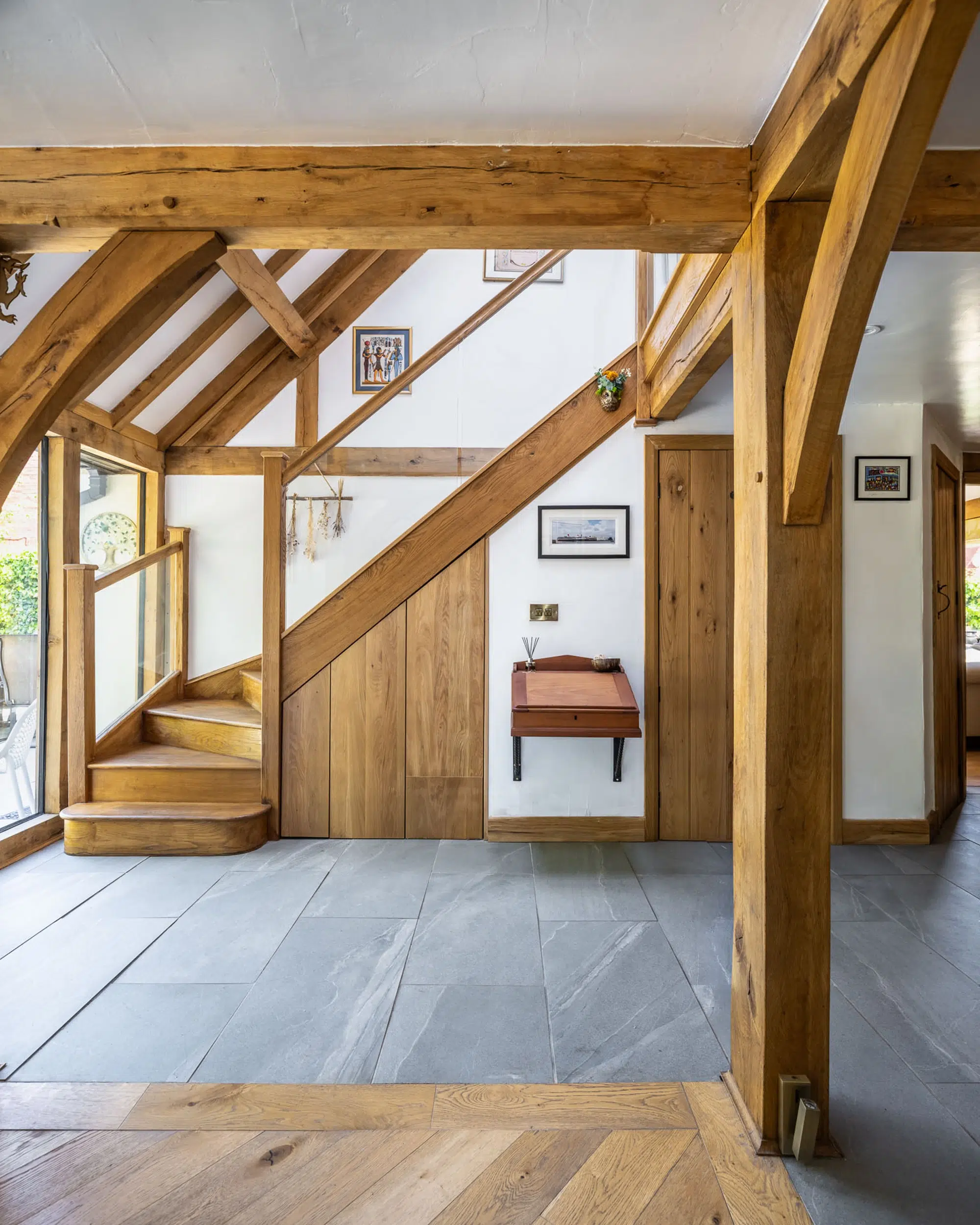
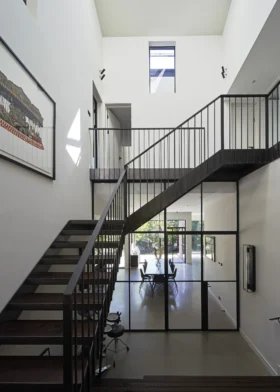
Oak details inside the house make a spectacular first impression when entering the property
By the time the foundation trenches were dug, the couple also had permission to remove the (less significant) wall that was positioned through the middle of the plot and later re-purposed the stone to clad the base of their new home. They were also allowed to temporarily take the front wall down to create access for vehicles and build it back up at the end of the project.
The beauty of building with oak is the external wood doesn’t have to be treated but simply left to age. Untreated oak will weather to a silvery grey over time. If you want to maintain its golden honey appearance, timbers need to be oiled or sealed to be protected from the elements and retreated every couple of years or so. An oak frame is built with green oak, which has a high moisture content, so timbers are easier to cut.
As the frame dries out, it shrinks and tightens the joints to strengthen the structure. This is also when splits and cracks begin to appear across the grain, creating the unique rustic character that makes oak framing so appealing. This is all part of the natural process and accounted for during the design engineering phase, so it doesn’t affect the structural integrity of the building in any way. |

Getting the frame up
Tony took on as much of the build as he could himself. With previous renovation experience, he had a large collection of tools, which saved him on hire costs. He travelled down from Liverpool and worked half the week, somewhat limited by his mobility issues. “Bringing in trades was a good way to meet local people,” he adds. “The groundworker recommended a stonemason, who suggested a plasterer, all of whom were very reliable. I was also introduced to a local lad who laboured alongside me throughout the project.”
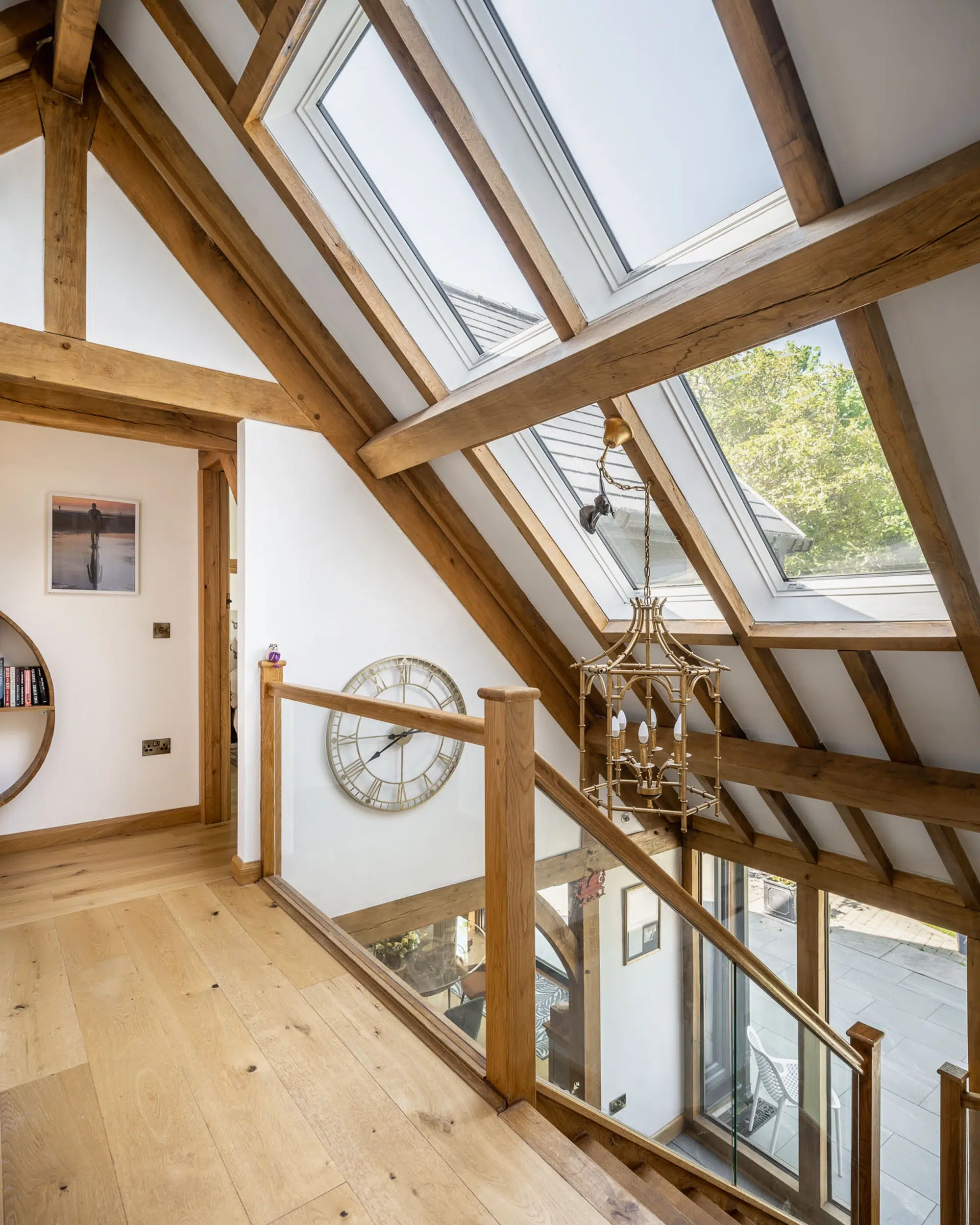
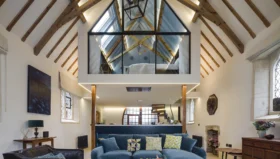
A quadruple arrangement of rooflights fills the double-height space with natural light and captures views
Tony continued splitting his time between Wales and Liverpool, although in the pandemic he sometimes wasn’t allowed over the border because he didn’t have builder qualifications to validate his trip. The oak frame arrived towards the end of 2020, but a mix-up between the crane and delivery driver meant they couldn’t both fit on the site at the same time. “The crane reversed onto the plot and, since the frame was on the back of a HIAB truck with a crane on the back, they moved out into the road and lifted the frame over,” says Tony. “The crane driver was fascinated and afterwards stayed for the day to watch it being put together.”
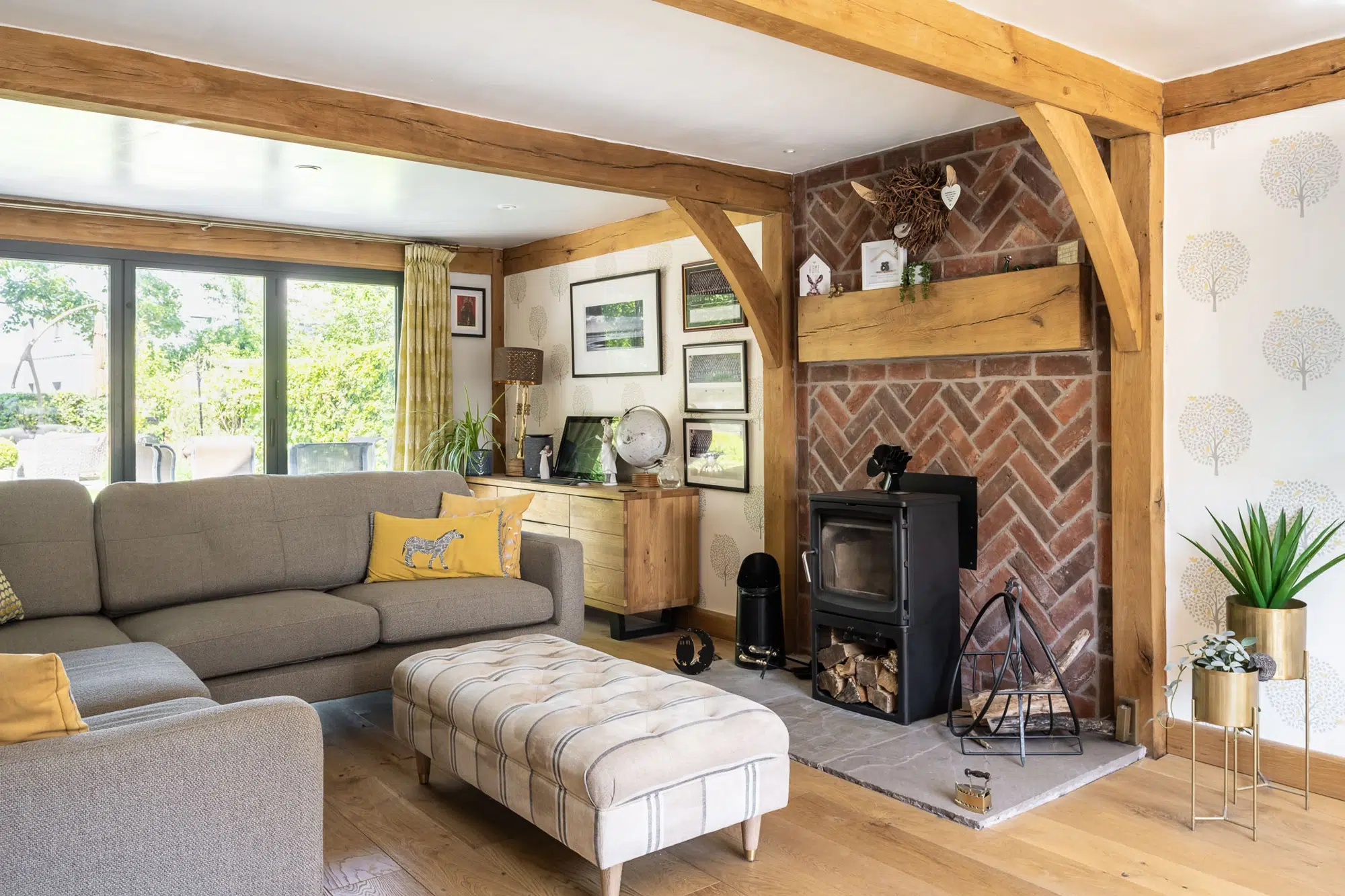
A charming brick chimney breast takes centre stage in the living spaces, supported either side by oak frame posts
The oak frame shell was up within a week or so and Moira arrived just before it was finished. “By now, it had been about two years since we bought the plot and I was overwhelmed to see our home coming to life,” she recalls. “It was a really emotional moment.”
Hands-on approach
Once the house was watertight, Tony began to stay overnight. “The first time, I didn’t plan to stay over and got so cold I ended up rolling myself up in one of the roof felts!” he says. “An owl appeared every night between 10.30pm and 12.30am like it was watching over me.”
Tony wrapped the oak frame with structural insulated panels (SIPs) and installed triple glazing supplied by Welsh Oak Frame – an airtightness test carried out just after completion confirms their home is close to airtight. He also installed a mechanical ventilation and heat recovery (MVHR) system and an air source heat pump. “A ground source heat pump would have meant digging in the garden, an expensive option not just because of the excavation but because an archaeologist would have had to be on site,” he says.
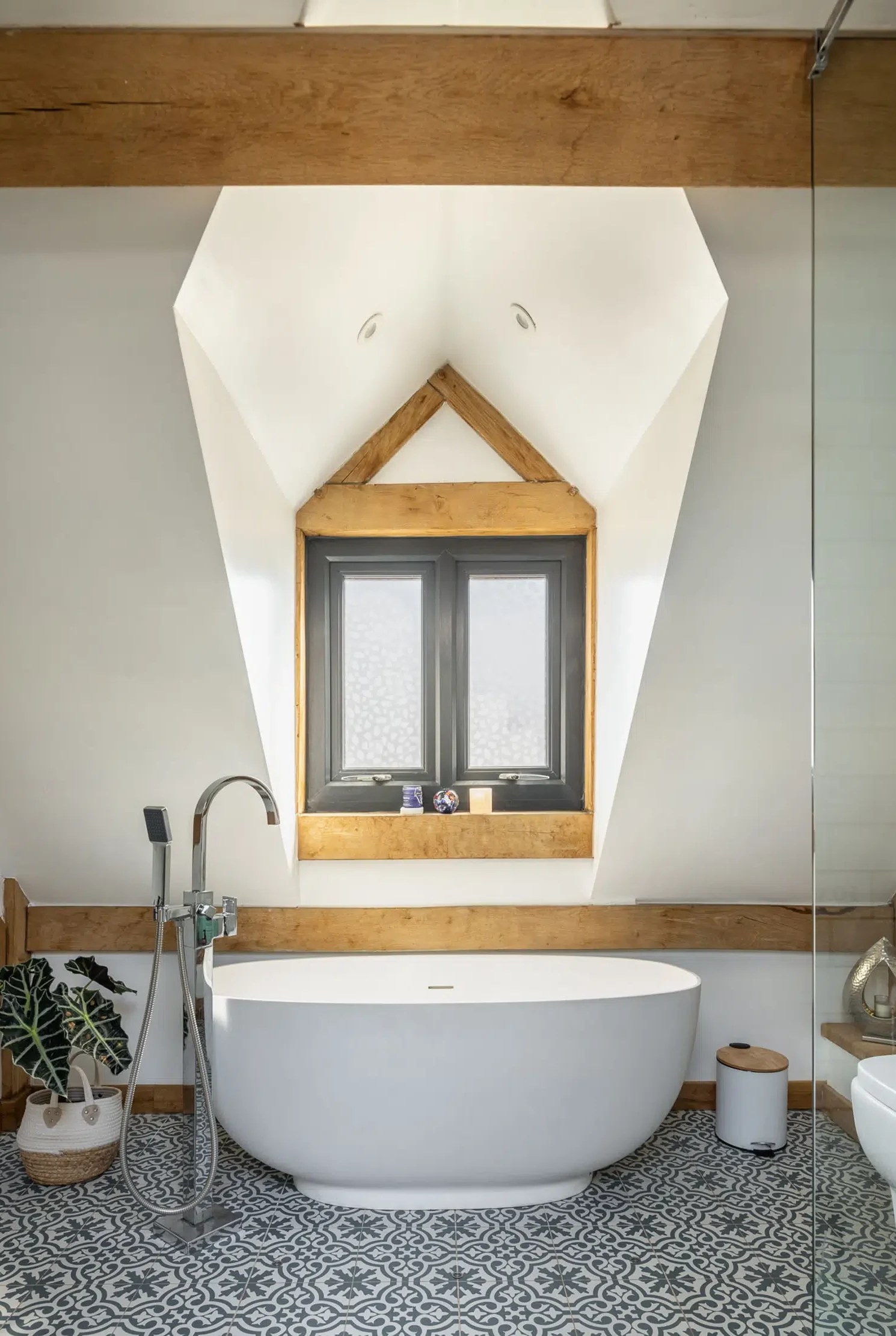
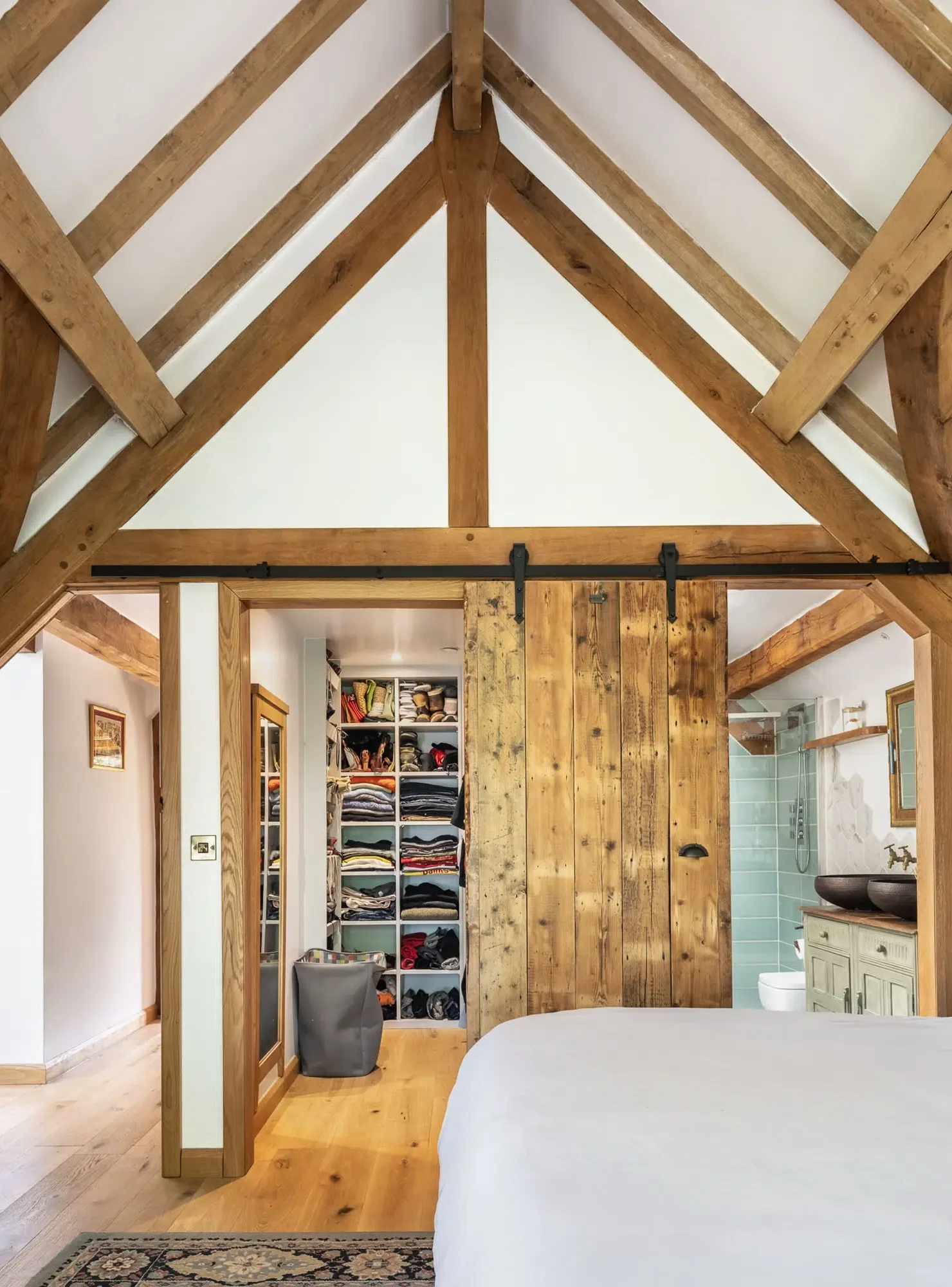
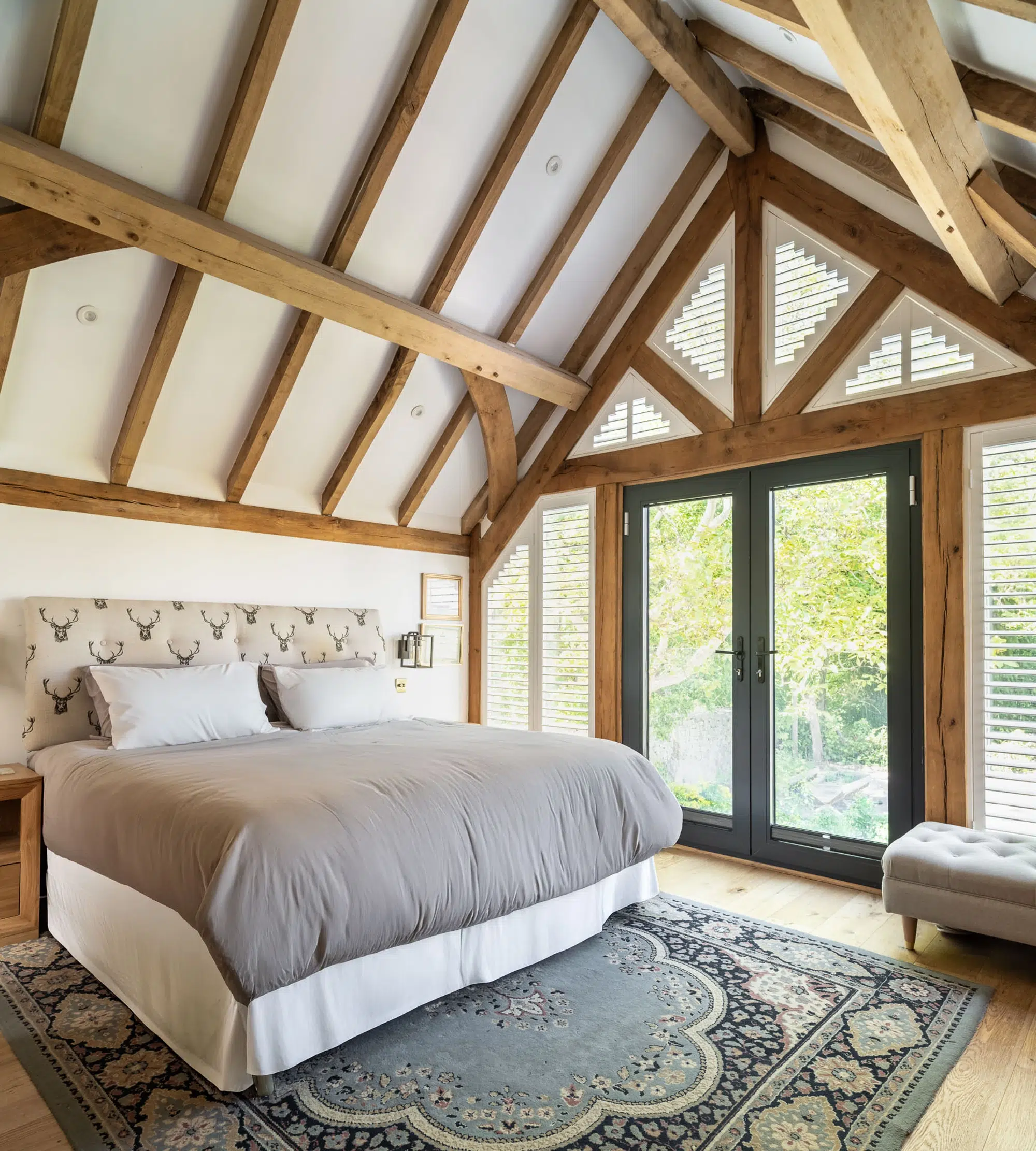
The project progressed slowly but steadily, concluding with a total build cost of just £250,000. Tony and Moira were able to move in during April 2022. However, there was still lots more to do on site, including hanging doors, fitting the glass balconies and decorating. The following year, the landscaping got underway and more recently the driveway was finished in a permeable resin.
“Living here is like being on holiday, it’s such a good feeling,” says Moira. “The quality of the build is perfect – I think Tony would say it was worth all those years of his hard work! We both love the design, the oak is gorgeous, and it fits in very well with the historic site. Sometimes visitors pass by and are surprised to hear it’s a new build. We’re absolutely delighted, we feel like we’ve won the lottery.”
We learned
- There are lots of jobs you can do yourself without hiring trades, such as setting out the site, groundwork excavation, plaster boarding and basic plumbing. YouTube tutorials can be a useful resource when you get stuck and need advice.
- Open accounts with all local building suppliers in the area – get your name known to get the best prices. I used to email all the managers for a quote making sure they were aware I’d put in a request elsewhere. And check their stock for items you’re looking for. I got a quote for five roof windows direct from the manufacturer only to find a local building supplier’s quote was £800 cheaper.
- Using a private building control inspector was great. We found different council inspectors came along each time, all with a different expectations, which was tricky to navigate.
- Get to know locals for trade recommendations and ask building suppliers, too, as they know the ones who are efficient and trustworthy. In turn, they can recommend other trades.
Jane Crittenden
You may be interested in