Just over two weeks to go until our brand new show!
Build your dream home with confidence
BOOK YOUR TWO FREE TICKETS HEREBuild your dream home with confidence
BOOK YOUR TWO FREE TICKETS HEREEstimate your project costs instantly with Build It's interactive self-build cost calculator
Calculate NowGet an accurate, detailed cost breakdown of your project
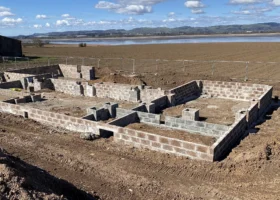
Submit plansWe recently bought two-thirds of an acre of building land sited outside the development policy boundary. There was an original building on the site which had been demolished and foundations for a new property laid. When we bought the land it had been substantially enlarged and we applied for permission for a new building on another part of the plot. Planning permission was duly granted but the local council omitted to revoke the previous planning permission. It has subsequently agreed that there are two valid planning permissions on the plot and immediately agreed the landscaping scheme we had submitted with our planning application. The council has told us that both permissions cannot be implemented together but we have overlaid both the original layout plan and our latest plan and there is only one area of conflict. The area around the existing foundations tends to be wet and we had proposed planting a tree in that location. The council has suggested we apply for something called a certificate of lawful use (CLU) but as far as we can tell, neither type of CLU is relevant to this situation. None of the case law (Pilkington v Secretary of State and its derivatives) seems to apply due to the differences in timeline and while it was an understandable action, we are not sure the council acted properly when agreeing the proposed landscaping. Obviously we would prefer not to pay out yet another application fee, nor to waste any more time and we would like to have an additional building plot available to us. How should we proceed?
In this type of situation councils generally go to great lengths to ensure that they don’t end up with two houses. However, here it appears from the further details you supplied that the planning permission granted in 1998 has been implemented – in other words the works have started and the planning permission, therefore, has been kept ‘alive’. The subsequent grant of permission in 2006 for another house, on another part of the plot, appears to also be capable of implementation. You say that the only area of conflict is a tree shown on the 2006 application landscaping scheme. Presumably the scheme could be amended to relocate the tree? Assuming this could be done, there’s a great deal to be gained financially by having two plots instead of one. Accordingly the small cost of an application for a certificate of lawful use would be worth investing for peace of mind. The alternative – simply going ahead with both builds – is a risky strategy. I’d strongly recommend you take professional advice either from a planning consultant or a planning solicitor.