

- Plan ItBack
- Design ItBack
- Build ItBack
- Homes
- ProductsBack
- CostsBack
- Self Build Cost Calculator
Estimate your project costs instantly with Build It's interactive self-build cost calculator
Calculate Now - Costs & Finance
- Contracts & Warranties
- Build It Estimating Service
Get an accurate, detailed cost breakdown of your project
Submit plans
- EventsBack


















 Login/register to save Article for later
A Former Water Mill Upgraded with a Glazed Extension After Suffering Flood Damage

Susan and Rob Caslake had always intended to make improvements to the family home in rural Aberdeenshire where they have lived since 2014. However, flooding damage caused by a storm in the summer of 2020 forced their hand. The couple turned this event around, as it led them to take on a more ambitious project. In doing so, they have managed to create their ideal long-term family home.
Catalyst for change
The Caslake’s home is a former water mill that had been converted into a house in the 1990s. “When we bought it 11 years ago, it had planning permission for an extension, which we put in the back of our minds as something we might do in the future,” says Susan. “When we moved in, we had a two-year-old and another on the way, so we weren’t keen to get into a building project straight away.”
They were holding out for the right time both in terms of their finances and family life. But, when a big storm hit in August 2020, sudden rain on the quite low-lying house brought surface water inside the ground floor of the property. “It was horrendous – the drainage wasn’t up to the standard it should have been,” says Susan. “We were lucky that the ground floor is on two different levels. The kitchen-diner and the study on the upper level were fine, but our sitting room, bathroom, entrance and hallway were all flooded.”

The fabric of the existing extension, onto which the new dining area addition has been built, was upgraded
Everything had to be dried out and stripped back to the subfloor. “All of this was in the middle of Covid, too, when Bob and I (we are both hospital doctors) had to keep working,” says Susan. “It was also during Pandemic restrictions.” The damage and upheaval was difficult, but also precipitated the couple’s decision to look at improving the whole house once and for all. “We had some insurance money from the flooding,” says Susan. “But we thought that we should look at the bigger picture to renovate and extend to try and make a positive thing out of a negative.”
- NAMESSusan & Rob Caslake
- OCCUPATIONSDoctors
- LOCATIONAberdeenshire
- TYPE OF PROJECTRenovation & extension
- CONSTRUCTION METHOD Timber frame
- PLOT SIZE1.5 acres
- HOUSE SIZE200m2
- PROJECT COST£250,000
- PROJECT COST PER M2£1,250
- BUILDING WORK COMMENCEDJune 2022
- BUILDING WORK TOOK16 months
The vision
The main focus of their project was the 1990s concrete extension that housed the property’s entrance, hall, sitting room and bathroom. The family felt this part let the building down aesthetically and wasn’t being used as well as it could be. “The lower ground level of the house flooded in two different ways,” says Susan.

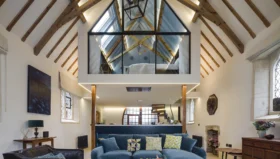
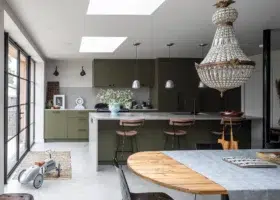
The new dining area was created as a more formal dining space for entertaining. Steps lead up from the cosy sitting room into a dramatic double-height space with vaulted ceiling, statement lighting and a fully glazed gable to take in views of the surrounding garden
“It had come through the subfloor space, so we wanted to get rid of this and install a concrete slab that would prevent water ingress. We also had three old sets of glazed French doors that let the surface water in, so we wanted to look at replacing this arrangement. In terms of our brief, although we had a big kitchen-diner, we really like entertaining, so thought it would be good to have a large separate, more formal, dining area.
We also wanted to extend the entrance hallway to make it more practical with more storage space for shoes and coats in a new vestibule. Outside, we wanted an additional sitting area, with everything on a raised level.”
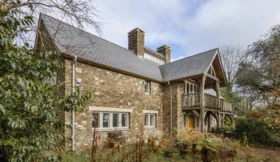
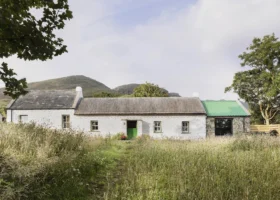
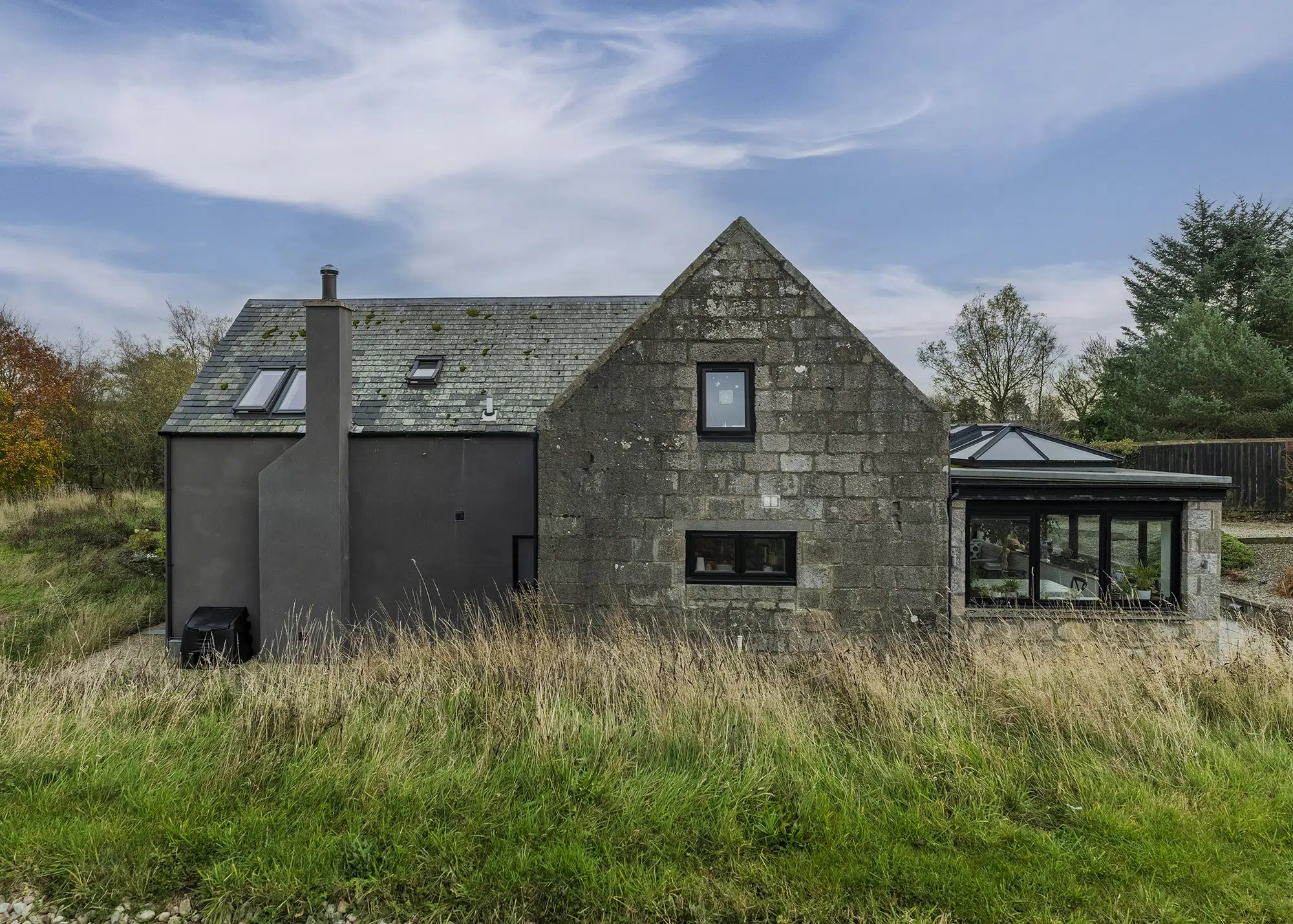
The property was once a water mill, dating back to around the turn of late 19th/early 20th century. It was converted into a house in the 1990s
Word of mouth led the couple to Aberdeen-based Tinto Architecture to creating a much more functional, user-friendly home. Initially, the idea was to submit a planning application for a two-storey extension to create a larger master bedroom suite on the first floor. But with spiralling costs, caused in large part by the pandemic, the final design was for a single-storey addition that features a new dining area with an adjoining vestibule into the hallway.
“The advantage of just a ground floor extension is that we have this big apex in the dining area and big pendant lights that creates drama and we wouldn’t have had this with a bedroom above, as there would have been a flat ceiling,” says Susan. “It makes the dining area better and more exciting as a space.”

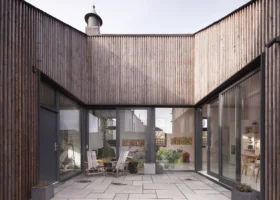
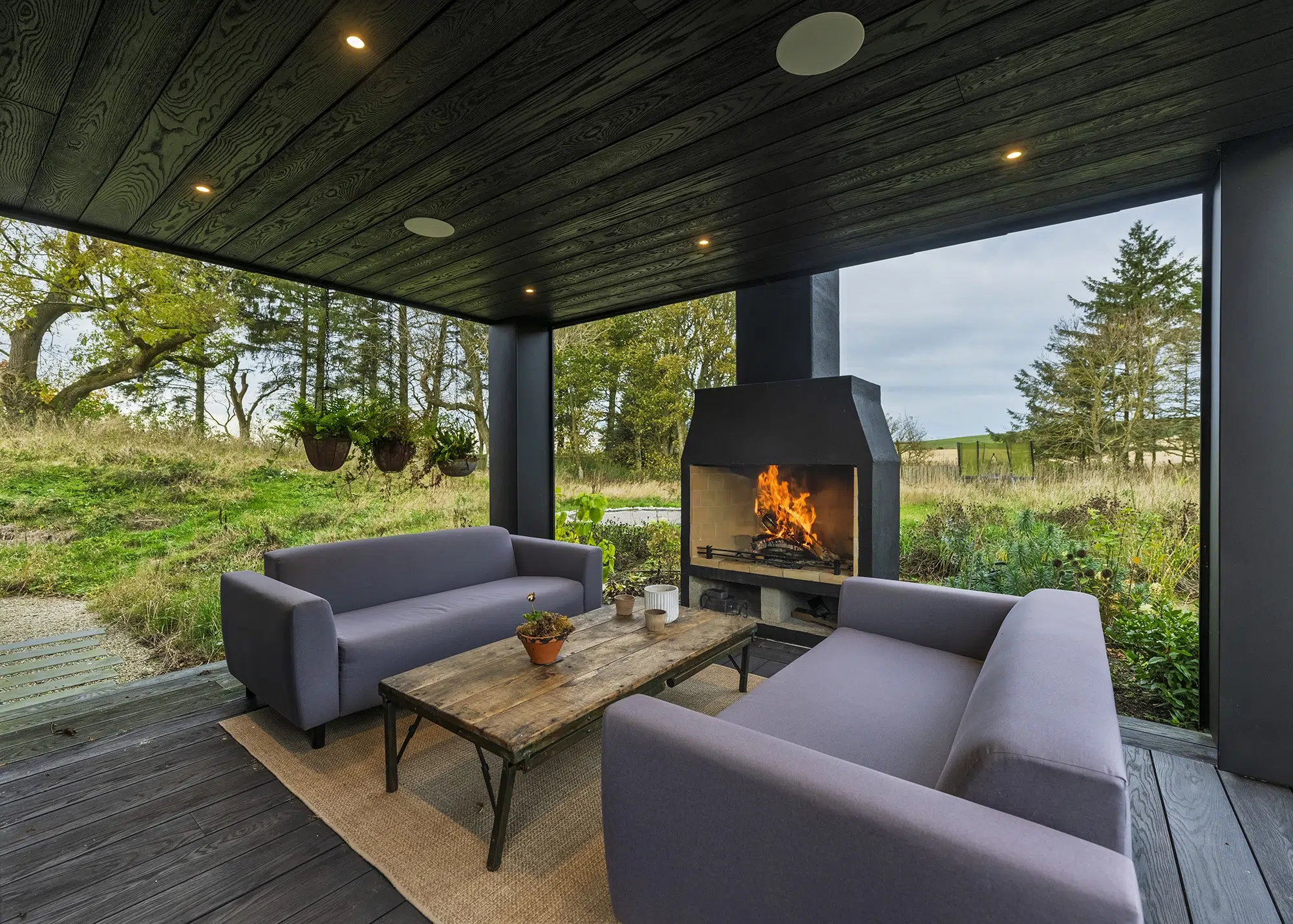
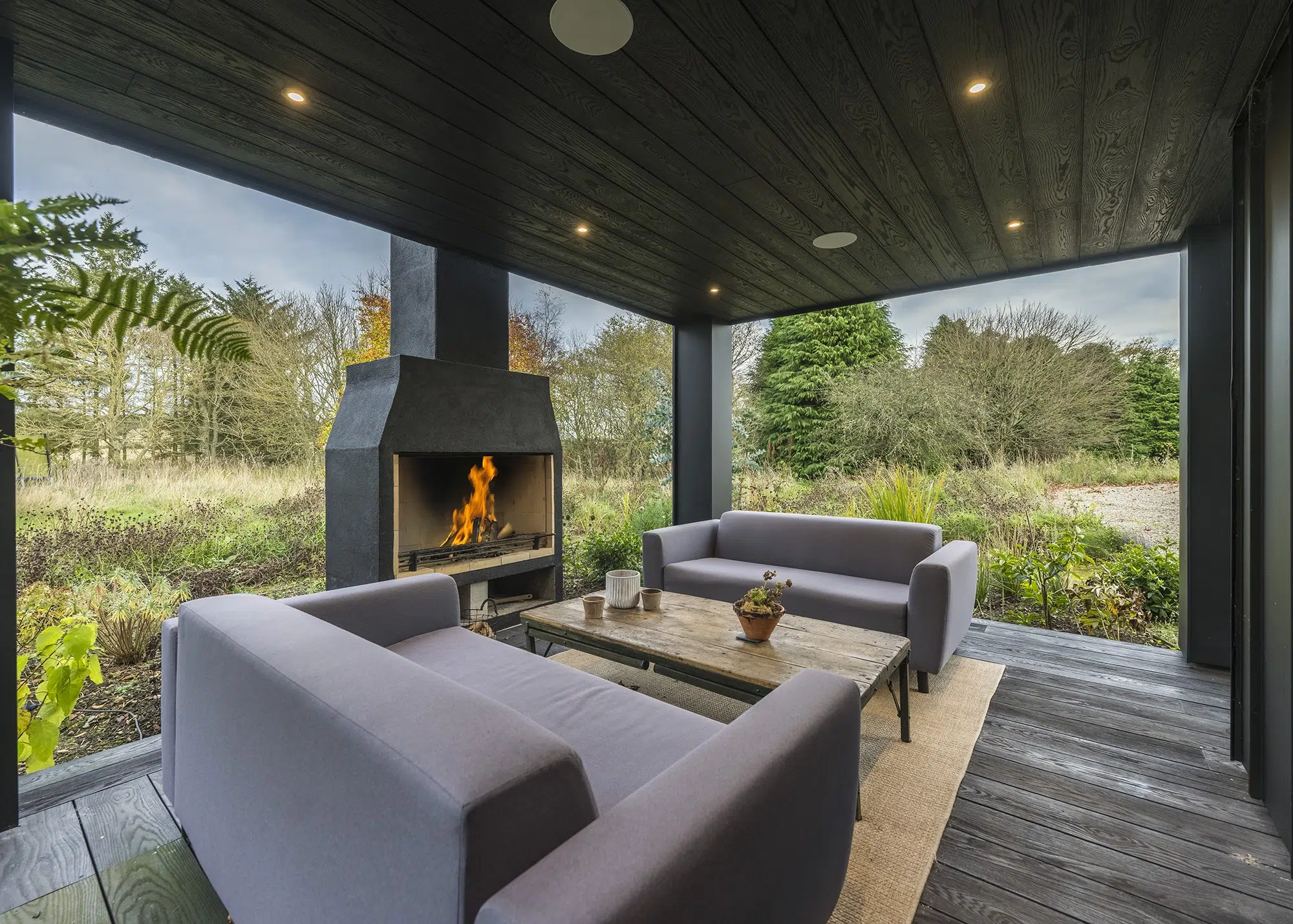
The deck is a composite material that was chosen for its low maintenance properties as well as aesthetically combining well with the black stained timber soffit to create an enclosed feeling and sense of cosiness to
The local planners were prepared to accept the second single-storey plan as a revision, with the reduced height of the apex. “Don’t get too bogged down if things don’t work or are unaffordable. And don’t worry about going back to the drawing board. Often, it’s not the first solution that’s the best,” says Susan.
Project architect Richard Tinto adds: “The areas in the blockwork extension were underutilised as living spaces, so we were keen that the design reset the balance between the east and west of the house to ensure the whole ground floor was being used.”

Patterned ceilings in the bathroom and lounge bring depth and interest to the interior palette
When the plans for a new master ensuite above the extension fell through, Susan and Rob looked at how they could make their bedroom more functional. “Our bedroom was under the eaves and it meant we were always banging our heads when getting in and out of bed! We also didn’t have a great amount of storage,” says Susan.
“We worked with Tinto Architecture with the plan of blocking off the original window in the gable and putting in rooflights as well as creating an area for wardrobes. The bedroom is the same size but by making these changes it works so much better. It was just reorganising the space and making it function better rather than creating an extra storey to the extension.”
Architect Richard Tinto says: “Do you really need an all singing, all dancing master suite or could you just give it the love it deserves and come up with what is needed in the brief? The final single-storey scheme we went for is much more subservient to the house and a better solution than a larger, more overbearing structure to the side.”
CLOSER LOOK The outdoor areaA covered deck sits alongside the new extension, offering the perfect place to sit in the garden whatever the weather. An outside stove brings a cosy ambience and warmth while wired-in speakers enhance the space further, providing the perfect ambience for entertaining.
The deck is a composite material chosen for its low maintenance properties as well as aesthetically combining well with the black stained timber soffit to create an enclosed feeling of cosiness. “Outside we wanted an additional sitting area, with everything on a raised level,” says Susan. “We’ve had a lot of good evenings out there with the kids, with the fire on playing board games.” |
New extension
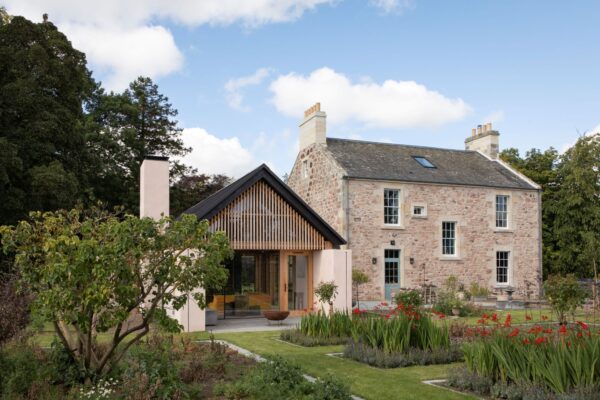
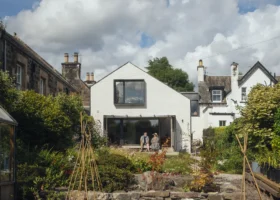
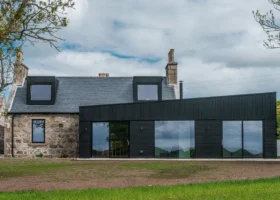
The extension has created a fully-glazed dining area. The form of this new timber frame structure (with steel support) reflects the line and apex of the original mill building gable that it sits alongside. A new raised sheltered deck wraps around the new dining extension to create an external sitting area to the north-west part of the building.

The former entrance was increased in size to feature a new vestibule area for shoes and coats and storage. They’ve installed a new Nordan front door
The dining space features expansive double glazing that allows the surrounding landscape to flood into the building. Although the new structure is contemporary and distinctive, it also sits seamlessly and sympathetically with the original building’s traditional gable form. “The cherry on top for me is the wildflower garden that comes right up to the edge of the house. It creates a softness to the way the house sits within the landscape,” says Richard.
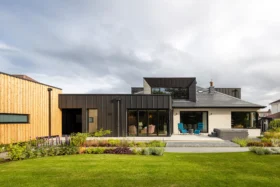
There is a lightness of touch despite the black finishes to the new extension and sheltered deck, which Susan was keen on from the outset. Black profile metal was chosen for the cladding and roof, with black stained timber to the soffit and decking of the new outside ‘sitooterie’ (seating area). “The design landed well with the planners as it’s not overbearing and the black contrasts well with the granite of the existing building. It clearly works and enhances the house’s historic value,” says Richard.
Survey delays
“The planning application was originally submitted in winter 2020, but a bat survey had to be carried out,” says Susan. “This could only take place from May when the bats came out of hibernation. May 2021 was one of the coldest we’ve had and the bat survey could only be done when there were flying insects. So, there were delays as the bats took longer to come out. Final planning permission came through that August.”

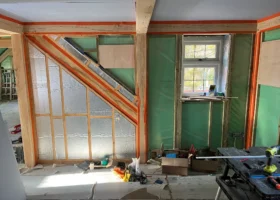
The previous extension was stripped back to the walls, insulated and tanked to create a secondary defence to the surface water. The existing windows were re-painted in black to tie in with the black of the extension finishes
Following appointment of the builder, the project went on site at the beginning of 2022. The first phase of works was to complete the civil engineering and drainage works to make sure the area would be dry with no risk of future flooding. This cost around £60,000. “We had a topographical survey done and they drew a drainage plan. The groundworks were carried out in January 2022, coinciding with our entire family having Covid!” says Susan.
They stayed on site for the duration of the main build, which began in June 2022. “The heating downstairs is in two circuits, so the lower ground floor that was flooded was ripped out, but the kitchen diner, study, bathroom and bedrooms were fine,” says Susan.
Ideal result
The project was completed in March 2023 and despite the upheaval and delays, the Caslakes now have the family friendly home that they sought back when they bought the house. “Having lived in a building site and a half-flooded house, it doesn’t get old being somewhere comfortable – you don’t take it for granted,” says Susan.

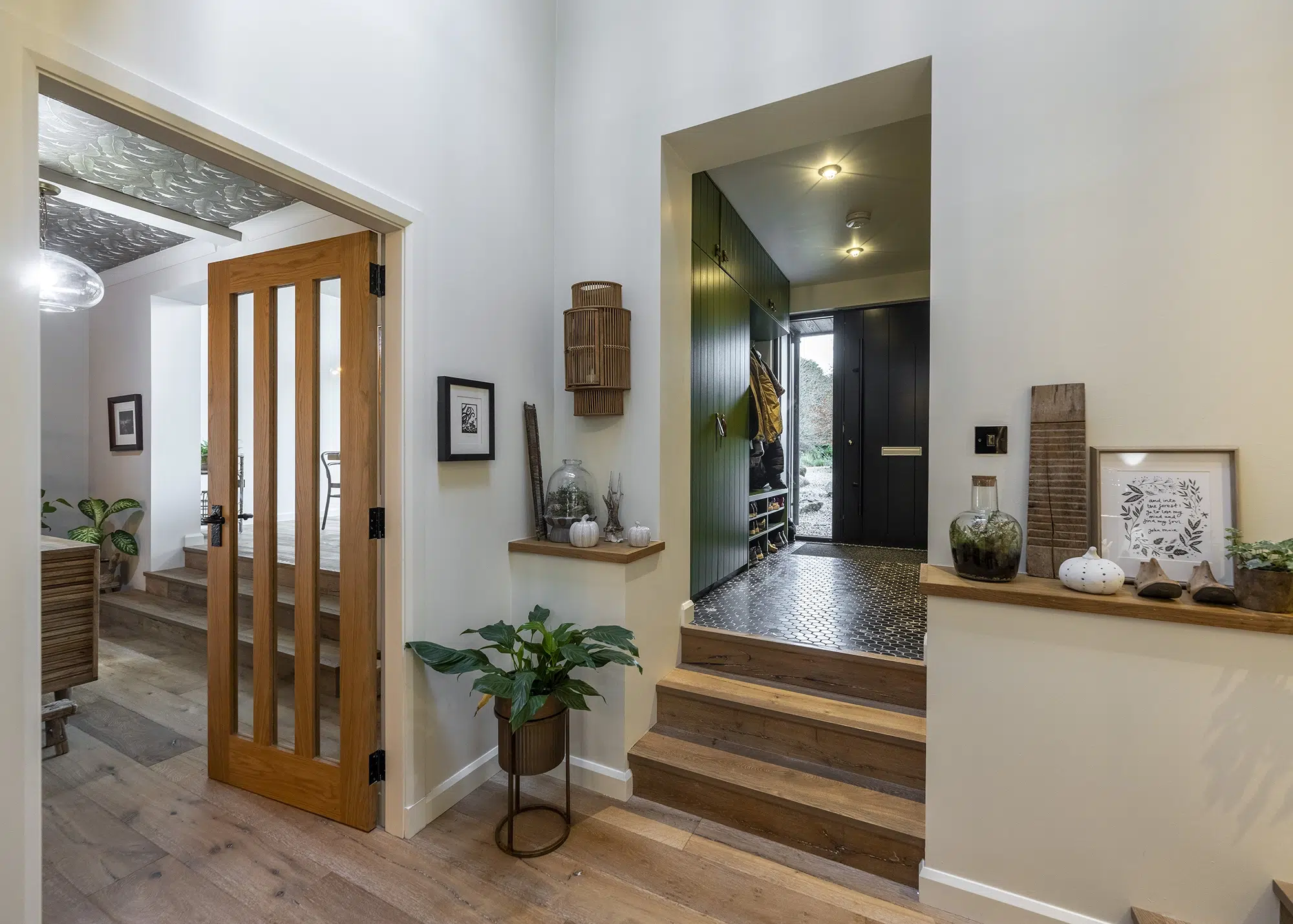
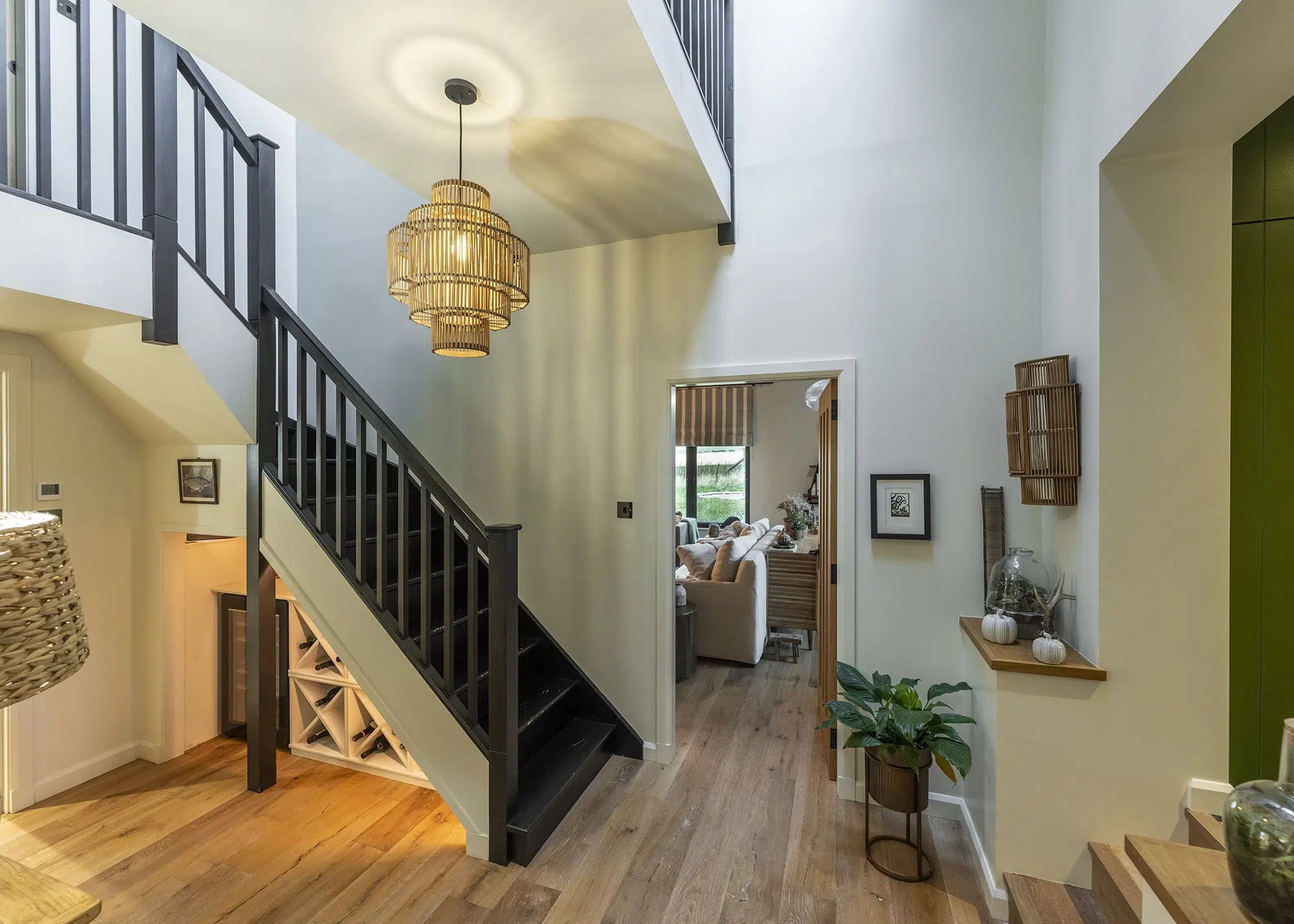
“The different ceiling heights and variation of spaces creates the idea that you’re in a more interesting house now. The new entrance is great – there’s lots of storage to put shoes and bags away. We also like the contrast of the cosy sitting room, which is on a lower level, and the new dining room above which is spectacular with the apex and this huge picture window looking out to the trees and greenery.”
We learned…
- IT REALLY HELPED having lived in our home for six years as we had a clear idea of how we used the space, how we lived and how we could improve the space to better suit our lives.
- DESIGN IN CLEVER STORAGE and organisation. Having enough storage really supports you to live in a tidy well organised home, which in turn helps your life run so much more smoothly.
- TAKE YOUR TIME to find an architect that shares your vision. Great communication and relationships with all those working on site is key to a smooth successful project.
- STAYING IN THE HOUSE during the building work meant we lived through three winters with some of the living spaces essentially outside. It’s rotten when you look back. But seeing the progress of the project keeps you going.
Caroline Ednie
You may be interested in