Just over two weeks to go until our brand new show!
Build your dream home with confidence
BOOK YOUR TWO FREE TICKETS HEREBuild your dream home with confidence
BOOK YOUR TWO FREE TICKETS HEREEstimate your project costs instantly with Build It's interactive self-build cost calculator
Calculate NowGet an accurate, detailed cost breakdown of your project
Submit plans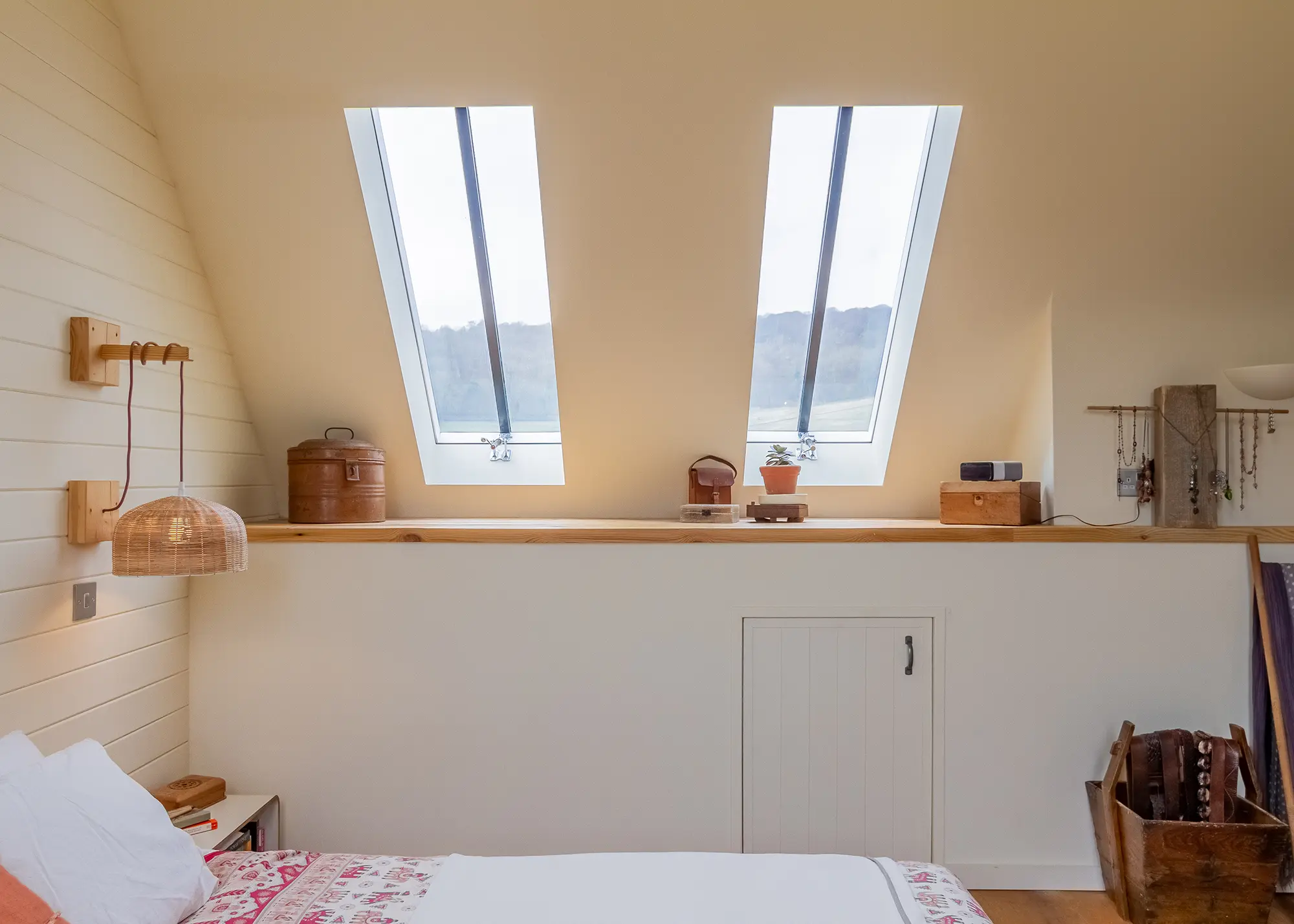

Rooflights and overhead glazing will make a significant impact on the feel of your home, but the vast array of design solutions to suit self builds, extensions and loft conversions can seem mind-boggling at first. As an initial step in your journey to buying the best product for your situation, it’s worth getting your head around some of the terminology. According to Building Regulations, a rooflight is, “a glazed unit installed out of plane with the surface of the roof on a kerb or upstand.”
Some manufacturers also refer to this solution as a skylight or roof window – but it’s essentially the same thing. On the other hand, a roof window is, “installed in the same orientation as, and in plane with, the surrounding roof.” If you have a bigger budget, you might even be tempted by a roof lantern – an elongated, pyramid-shaped structure that sits on a flat roof.
Each glazing solution provides an effective means of pouring sunshine into your home, as the glass is angled towards the sun, whereas a standard window sits vertically in the wall. This roof window guide looks at the key factors you need to consider when specifying and installing a system.
There’s an array of sizes, shapes, frame materials and opening configurations to choose from. Much of the decision depends on what kind of space the rooflight will be going into. If you’re tackling a loft conversion or side return extension with a pitched (sloping) roof, there’s an array of design solutions and opening configurations available. You can choose between centre-pivot and top-opening products, or even balcony-style setups (for attics) that open out to create an area big enough to walk out onto.
“If the space is going to become a bedroom, you’ll want the option to black the room out, so consider whether the product includes a blind or can easily have one fitted,” says Jeremy Dunn, technical director at Rooflights.com. “If the zone is going to be used as a study or craft space, you’ll require as much natural light as possible, in which case a larger rooflight or roof window might be required.”
One of your most important, and likely one of the first, decisions will be around rooflight size – if you’re working with a fixed budget, off-the-shelf products that fit your rafter spacings are the go-to. However, many suppliers offer bespoke options, too. “Sizing merits careful thought,” says Trevor Smith, national housing manager at Velux. “Many self builders later wish they’d specified larger windows; this is your opportunity to be generous and create the bright, healthy living spaces you want.”
find glazing suppliers in Build It’s Directory
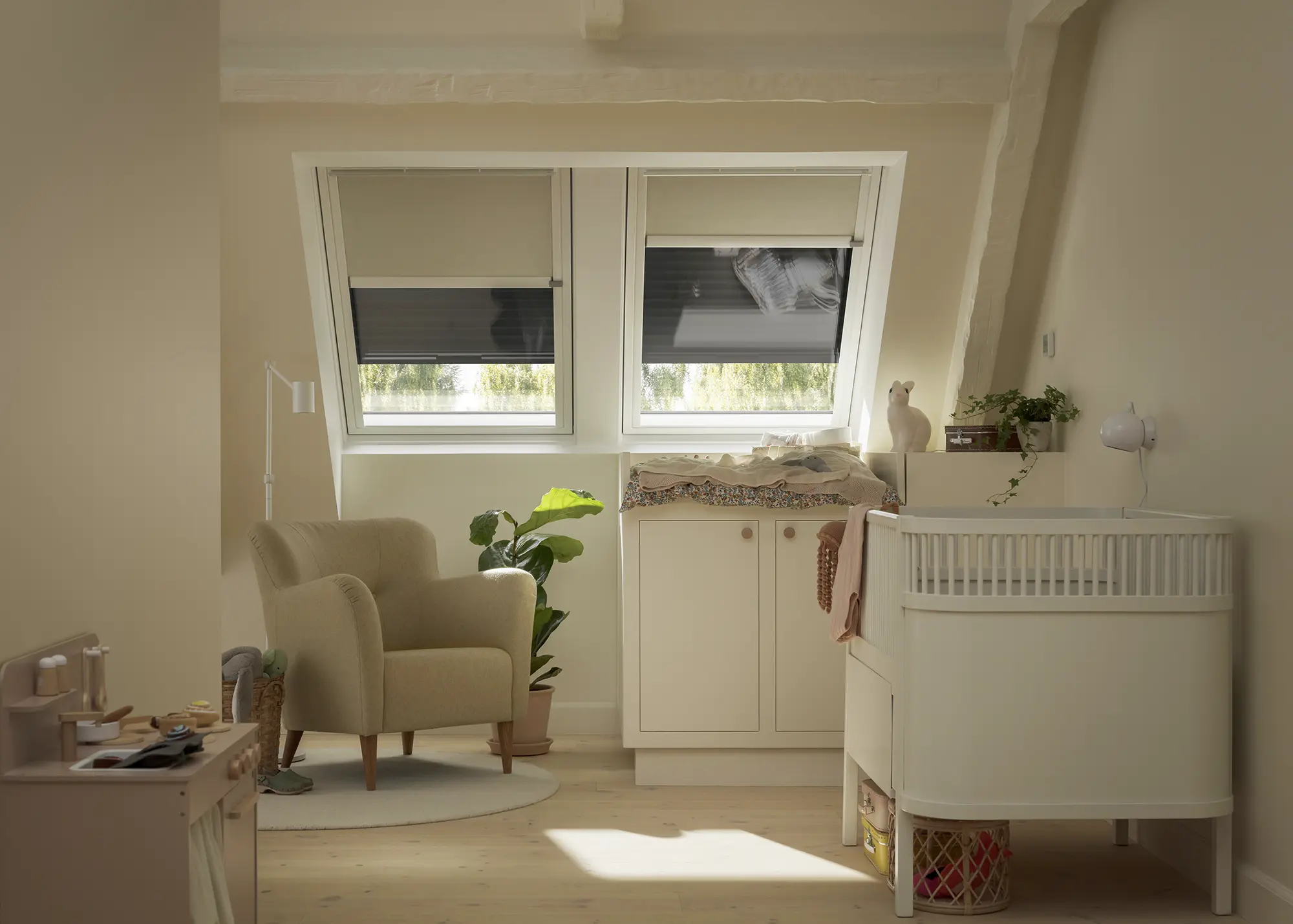
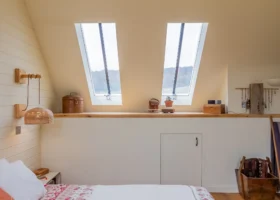
These pitched rooflights from Velux feature integrated blackout blinds – a welcome feature in loft bedrooms
Ventilation is another important factor to consider – do you want a fixed overhead window or one that you can open to invite a fresh breeze through? “For openable rooflights, you need to take into account the ceiling height of where the product sits in comparison to the finished floor level,” says Jeremy. If the unit is within easy reach, then a manually operated solution will typically do the trick. Otherwise, you’ll need to investigate the options for electrically operated products.
If you’re doing a rear extension, incorporating overhead glazing at the back of the addition (where the rear elevation of the house was originally) is a smart way to form a visual break between the old and new parts of the property.
Plus, integrating a roof window here means you can channel light into the zones that sit closer to the centre of the floorplan. Flat roof solutions come in a plethora of configurations, too, whether you want glazing that’s fixed, openable or domed.
Another element of the spec that’s well worth tailoring is the glass itself. Most suppliers offer a suite of options, including double or triple glazing (or sometimes even quadruple), solar control coatings, acoustic glass and finishes that provide an element of self-cleaning. In terms of thermal performance, this comes down to the whole unit, including frame, glazing and how effectively it’s been installed.
For a new build house, roof windows must achieve a whole-unit U-value of 1.6 W/m²K or lower (1.4 W/m²K or better in existing homes). But the highest-performing options can reach as low as 0.9 W/m²K. In addition, some models now come with insulating collars for a speedy, straightforward route to achieving the required detailing on site.
Fixed rooflights are suitable for scenarios where natural light is desired, but ventilation is not essential – for instance, above stairwells or double height spaces. “They may also be the preferred choice in projects where improved thermal performance is required, as fixed units can offer slightly better airtightness,” says Sarah Hastings, head of marketing at Fakro GB.
Featuring a handle at the bottom of the unit, this solution is hinged at the top so the glass pane opens outwards. As the entirety of the pane opens when the rooflight is open, this configuration tends to offer better views than a centre-pivot design.
This solution is hinged at the centre, which means that when the rooflight is opened the bottom of the pane tilts outwards and the top tilts into the room. Many products in this category can be rotated through 180°, which makes for easier cleaning than with a top-hung solution.
This setup comprises two glazed panels. The top pane sits on the same plane as the roofline when shut and opens in the same way as a conventional top-hung rooflight. The bottom panel opens out to form a vertical balustrade that sits perpendicular to the roof. Velux’s solution, for instance, is attached to a set of rails that slides out of the window to form a dormer-shaped balcony.
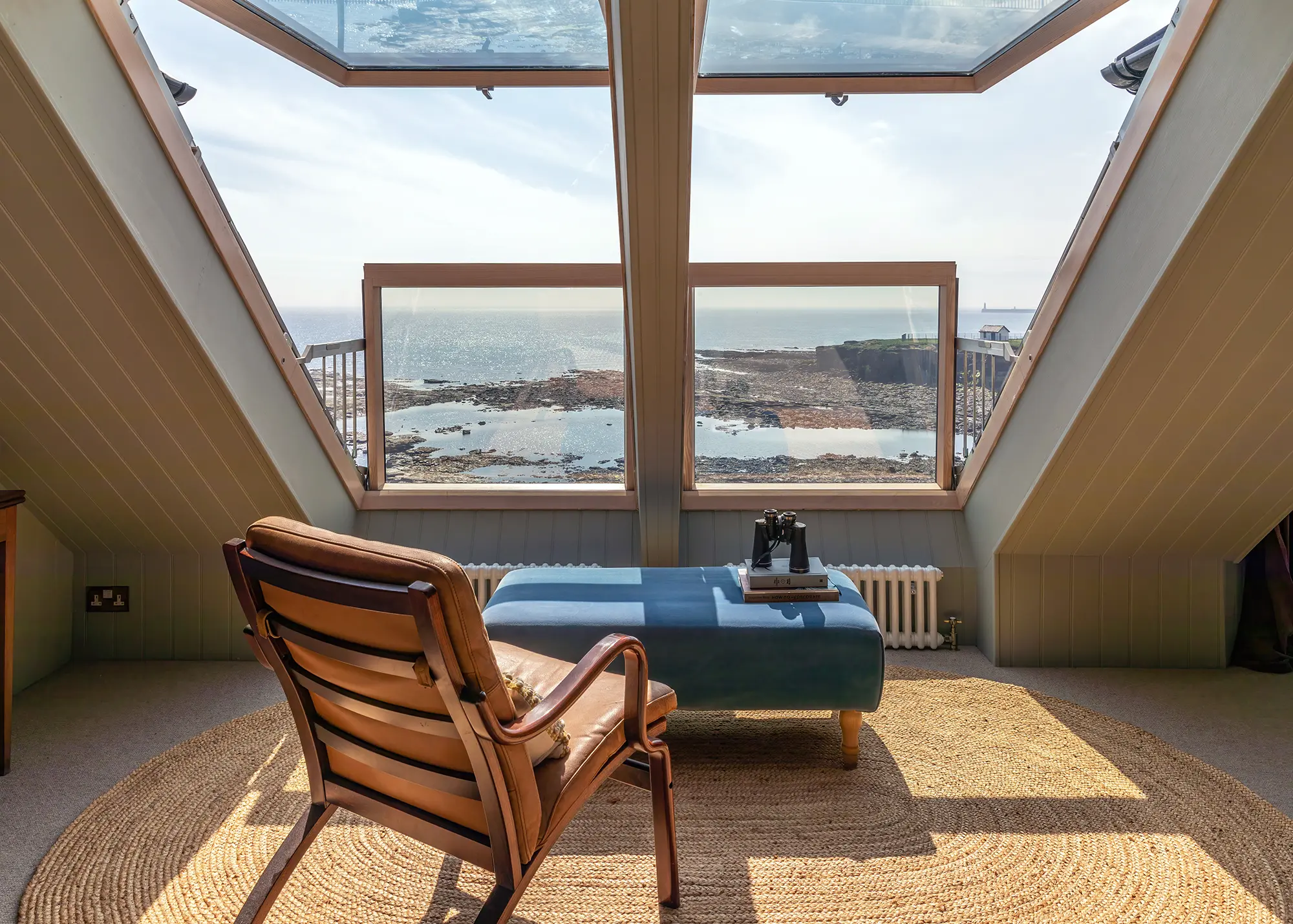
This wow-factor rooflight setup, supplied by Fakro, opens out to create a small balcony, drinking in the glorious views and inviting plenty of fresh air inside
Once you’ve sussed the opening configuration of your pitched rooflight, you’ll need to decide whether you’d prefer a unit that can be operated manually (the cheapest option) or an electric, motorised setup – which can be particularly useful for installations in vaulted ceilings.
High-end products might come with a raft of automated features; for instance, some can be programmed to close when they sense rainfall. “Solar and hard-wired options remove accessibility constraints and integrate seamlessly with smart home systems, enhancing comfort and control,” says Trevor from Velux. “Manual variants suit installations within easy reach, offering reliable simplicity.”
Typical options include timber, PVCu, aluminium or steel. Metal solutions have the edge when it comes to creating a sleek aesthetic with minimal framing. “Plus, aluminium can be powder-coated to provide a long-lasting, durable exterior finish,” says Jeremy. It is also lightweight, which makes it easier to install.
“Steel is most often used in conservation areas,” he says. “Timber or plastic are most likely to be used as the internal material, but if the frame is thermally broken, aluminium and steel are commonly used.” Another advantage of a metal frame is that it can be recycled at the end of its useful life.
The Rooflight Co’s conservation rooflights are designed to authentically mimic the look and feel of traditional Victorian roof windows, while meeting modern standards for efficiency
Timber and PVCu can’t match the innate strength of metal, so tend to result in chunkier frames. On the plus side, wood provides a natural charm that is great on traditional homes. It’s also strong, durable and a natural insulator. Typically, wooden frames require more upkeep than other options as timber can degrade over time if it’s not property sealed or maintained.
PVCu frames are the most affordable option and require no maintenance, aside from periodic cleaning. This material is also corrosion resistant. On the downside, it’s more likely to become brittle in cold weather and typically offers a shorter service life.
Updated in June 2022, Part L of Building Regs lays out the required standards for rooflight installations. The efficiency of a rooflight or roof window is set out in U-values: a unit of heat loss where lower numbers mean better performance. The lowest acceptable U-value for a rooflight installation in an existing dwelling is 2.2W/m²K. For a roof window, it’s 1.4W/m²K. In practice, most homeowners will look to beat these figures.
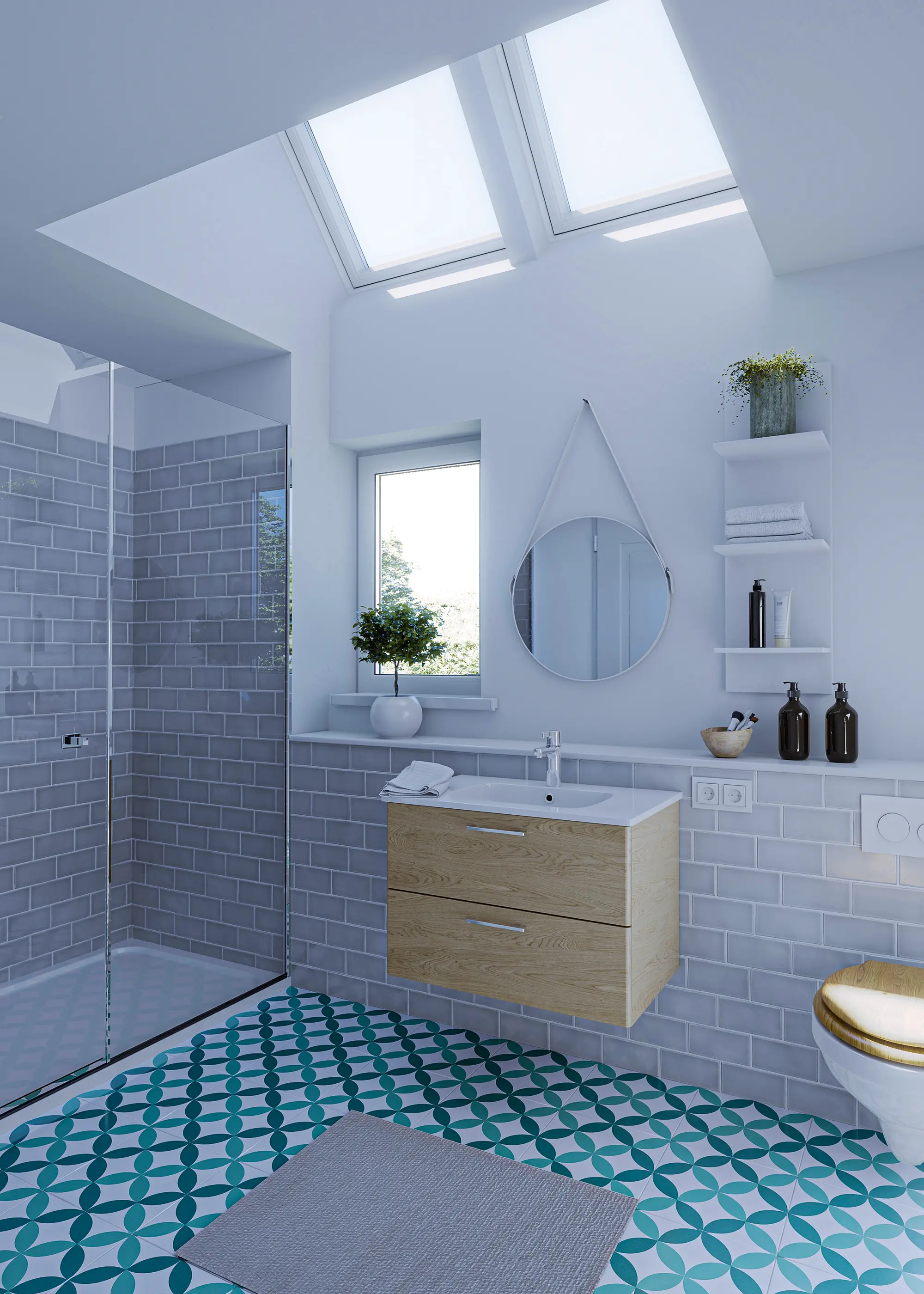
The slim frame and invisible sash on this Velux rooflight provide maximum daylight. Available with double or triple glazing, this model offers excellent thermal performance and noise insulation
One of the key things to look out for is whether the U-value is for the whole unit or just the centre pane of glass. “The latter can be deceiving as it makes a window appear to be more thermally efficient than it actually is. This is because the measure doesn’t consider the performance of the frame, which is where most heat loss occurs,” says Peter Daniel, innovation director at The Rooflight Co.
U-values for the entire unit may appear less efficient at first glance, but as they include the glass and its surrounds, they actually offer a more accurate measurement of how much heat will be lost.

Innovation director at The Rooflight Co

National housing manager at Velux
Premium Content
Build It's loft conversion downloadable e-guide takes you through the essential considerations, from costs to an estimated project timeline. Click below to find out more.
find out more
Most installations are covered by permitted development (PD) rights, providing they do not protrude more than 150mm beyond the plane of the roof slope and do not sit higher than the highest part of the roof. “If they are on a side elevation, they must be obscure-glazed and either non-opening, or no more than 1.7 metres above floor level,” says Sophie Nguyen, director at Sophie Nguyen Architects. “However, if additional volume is created by the installation, it may be treated as an extension and separate rules apply.”
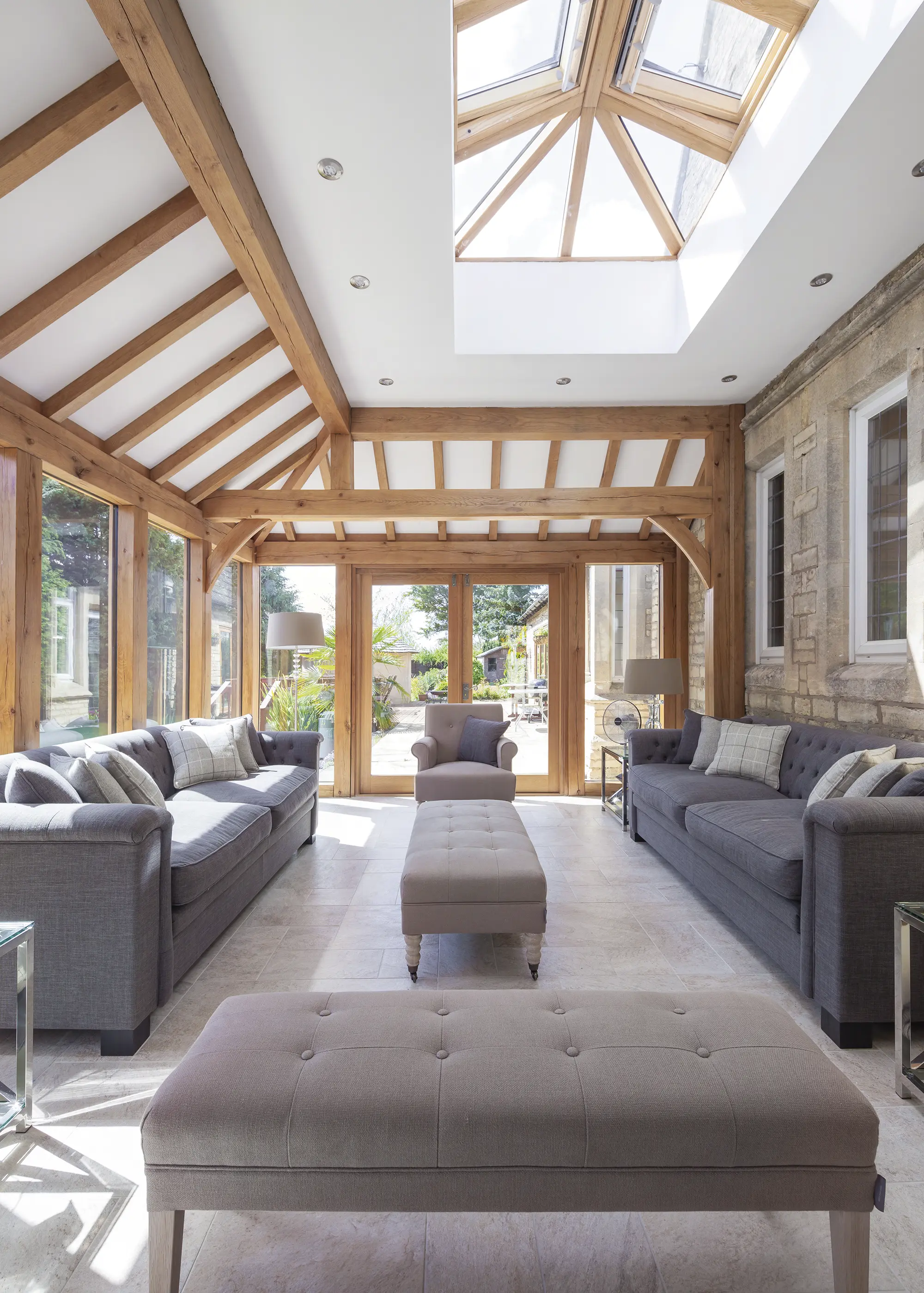
This orangery project by Welsh Oak Frame features a charming roof lantern with a timber frame inside and powder-coated aluminium exterior. This allows the structure to blend seamlessly with the exposed oak inside the addition while offering a durable, low-maintenance glazing solution
Remember, PD rights don’t apply to listed buildings or those in conservation areas, so if your home falls into either category, you’ll need to apply for consent. “If you live in this type of designated zone, opt for products that use materials and designs that maintain the aesthetic of the building,” says Peter. “Manufacturers now make high-performing products that look the part, such as our Conservation Rooflight, which takes the look and feel of the original Victorian rooflights and combines it with modern materials.”
Rooflights aren’t a fit-and-forget glazing system. They require regular maintenance to avoid wear and tear, and keep them looking fresh. “Water leakage is a key issue to look out for, particularly after heavy rain, as sealant can sometimes deteriorate and allow water or moisture to gather inside,” Adrian Buttress, managing director of The Skylight Company. “Ventilation may also have been limited if the skylights have not been opened consistently during cooler periods, which can lead to condensation build up, water damage, or mould growth.”
Cleaning your rooflight will help to clear any dirt or debris build-up, but it may also highlight any damage to the outside. “To get the most out of your rooflights, it’s a good idea to have a thorough inspection to check for any damage or deterioration, covering the frame, glass, surface area and the operation of the skylight,” says Adrian.
Failing to properly consider overheating risk – particularly in loft conversions – is a common issue with roof windows. Your choice of glazing can play a huge part in mitigating this. Solar control coatings can help to offset some of the effects of excess warmth from the sun. If you’re installing rooflights in an attic bedrooms, blinds are an important addition for keeping the early morning sun out.
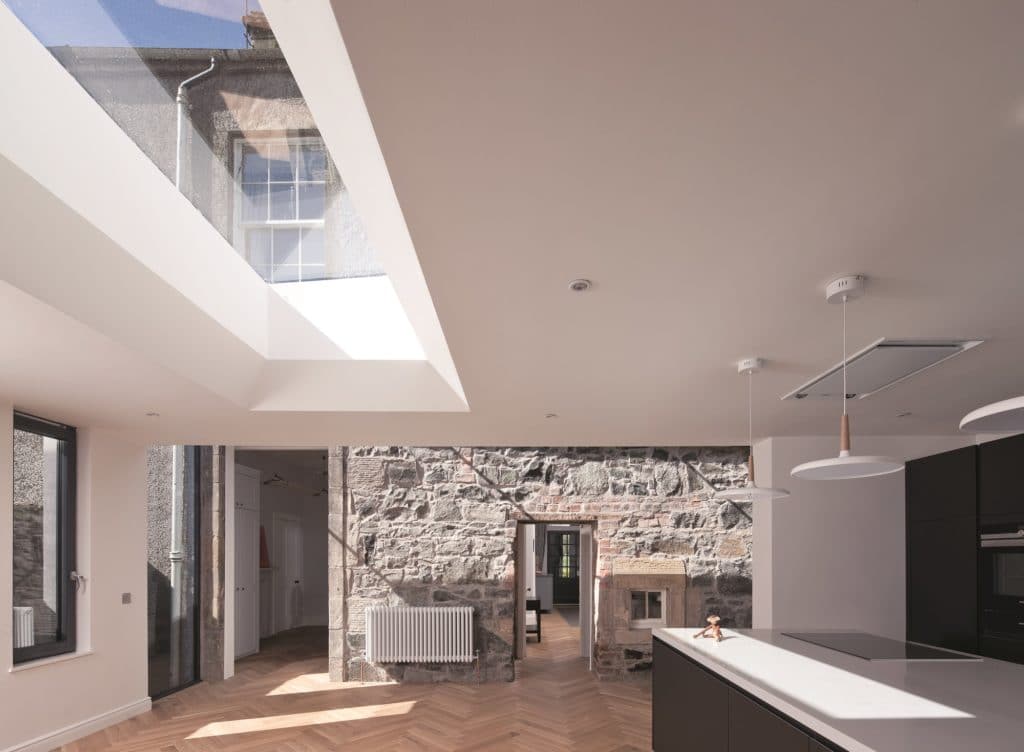
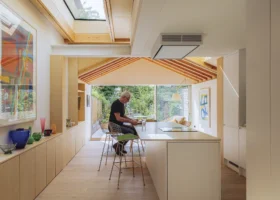
Caroline and Gustavo Ordonez-Sanz‘s single-storey rear extension was constructed with structural insulated panels (SIPs) for maximum efficiency and utilises a large rooflight stretching across the ceiling to illuminate the home’s charming stone wall and bring as much light in as possible. Photo: David Barbour
Another common mistake is failing to properly consider the angle of the pitch and type of roof covering before specifying. Some suppliers offer rooflights in different profiles to suit differing roofing types. “For instance, we have one for thicker materials such as pantiles, and one for slimmer roofs such as slate,” says Peter. “This ensures the rooflight will lie flush with the roofline once installed.”
If you stick to standard sizing, fixed or manually opening pitched rooflights are available from around the £300 mark. For an off-the-shelf 55 x 78cm double-glazed roof window from Fakro, for instance, homeowners should expect to budget approximately £330 for a manual centre-pivot window or a fixed unit.
“Upgrading from double to triple glazing generally adds around 40-50% to the cost of a standard sized rooflight,” says Sarah from Fakro. Optional extras such as acoustic glazing or solar control will further increase the amount you pay.
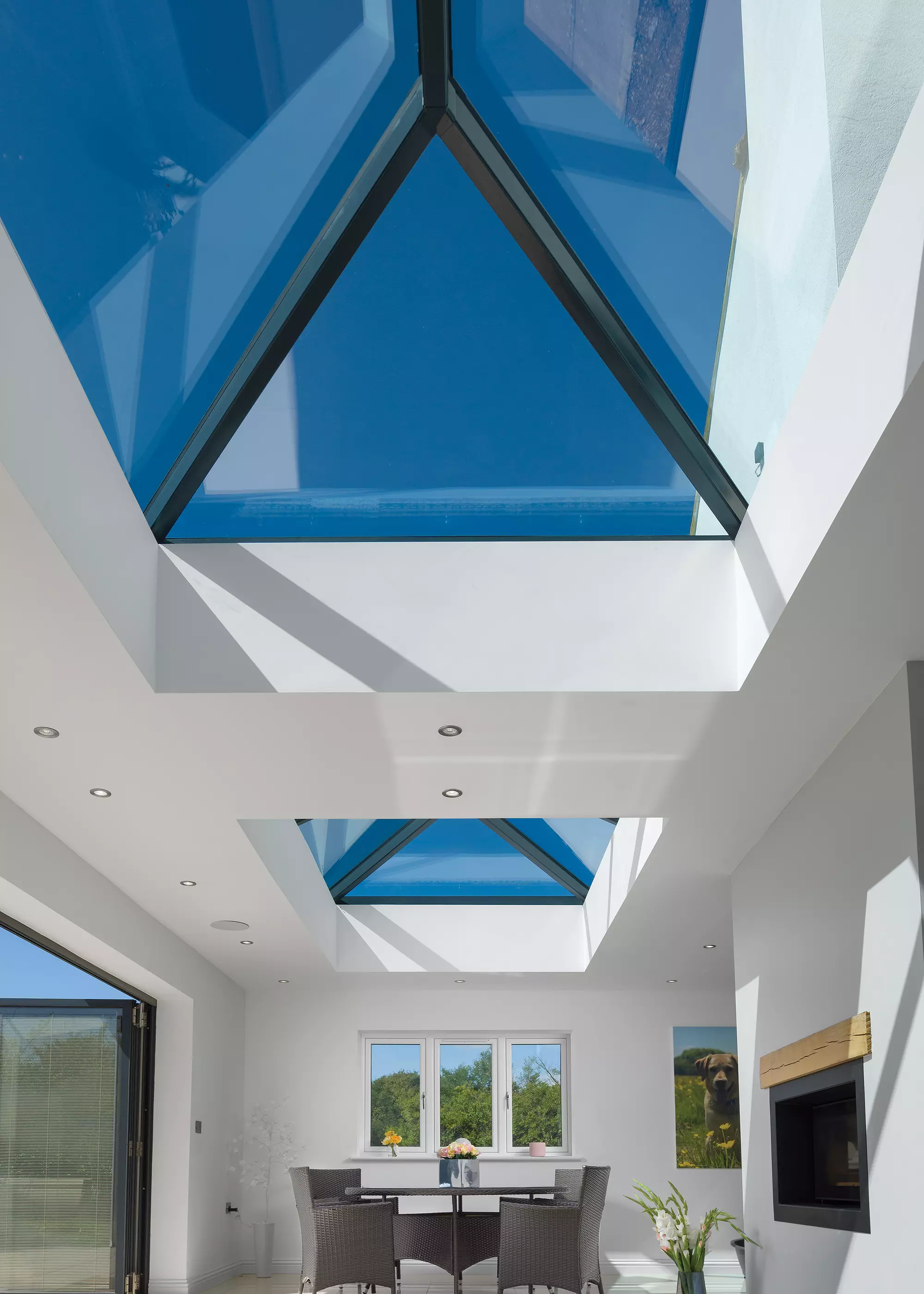
With ultra-slim framing, this roof lantern from Korniche maximises the amount of sunlight that can flood into the room below. There are no visible fixings on show, which makes for a clean, crisp aesthetic
Typically, electric opening solutions cost significantly more. “The uplift would depend on the type of system specified and options such as rain sensors, wall switches or remote control,” says Caroline Cowdrey, sales manager at The Rooflight Co. “With the addition of motorisation, our prices vary between £450 and £900, depending on the size and specification required.”
Don’t forget to factor in the cost of installation. On a straightforward replacement job, budget labour rates of between £300 and £600 per rooflight. “For more complex installations, such as cutting new openings, altering rafters or forming structural supports, costs for installation can rise to more like £1,000-£2,500+, depending on the work required,” says Sarah.
“For conservation projects, we particularly recommend choosing a skilled tradesperson who is well-versed in working with heritage properties and period-modelled products,” says Peter. “There are certain nuances that come with installing solutions of this nature, and without the expertise, they can be fitted incorrectly.”

Sales manager at The Rooflight Co
























 Login/register to save Article for later

Comments are closed.