

- Plan ItBack
- Design ItBack
- Build ItBack
- Homes
- ProductsBack
- CostsBack
- Self Build Cost Calculator
Estimate your project costs instantly with Build It's interactive self-build cost calculator
Calculate Now - Costs & Finance
- Contracts & Warranties
- Build It Estimating Service
Get an accurate, detailed cost breakdown of your project
Submit plans
- EventsBack
















 Login/register to save Article for later
How to Create a Sustainable Garden When Self Building – an Eco Expert’s Guide

In terms of sustainability, your outdoor space and how it is landscaped is just as important as the design and materials used for the house itself. Gardens provide much of the setting for a property, and enhance the beauty of the overall aesthetic. In addition, a garden offers us a place to relax and take leisure, a habitat for wildlife, and somewhere we can grow vegetables, herbs and more. The benefits of gardening to mental and physical health can hardly be overstated.
Where should you start when creating an eco-friendly garden?
With all these benefits in mind, why is the garden so often left until last on self build schemes? It’s frequently an afterthought, an adjunct to the main project – the dwelling. But by the time the house has been completed, the surrounding soil has often been removed, polluted or compressed. Whatever trees and shrubs may have been there originally may have been damaged or removed altogether, and the land used as a dumping ground for building materials or excavated spoil.
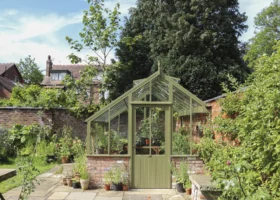
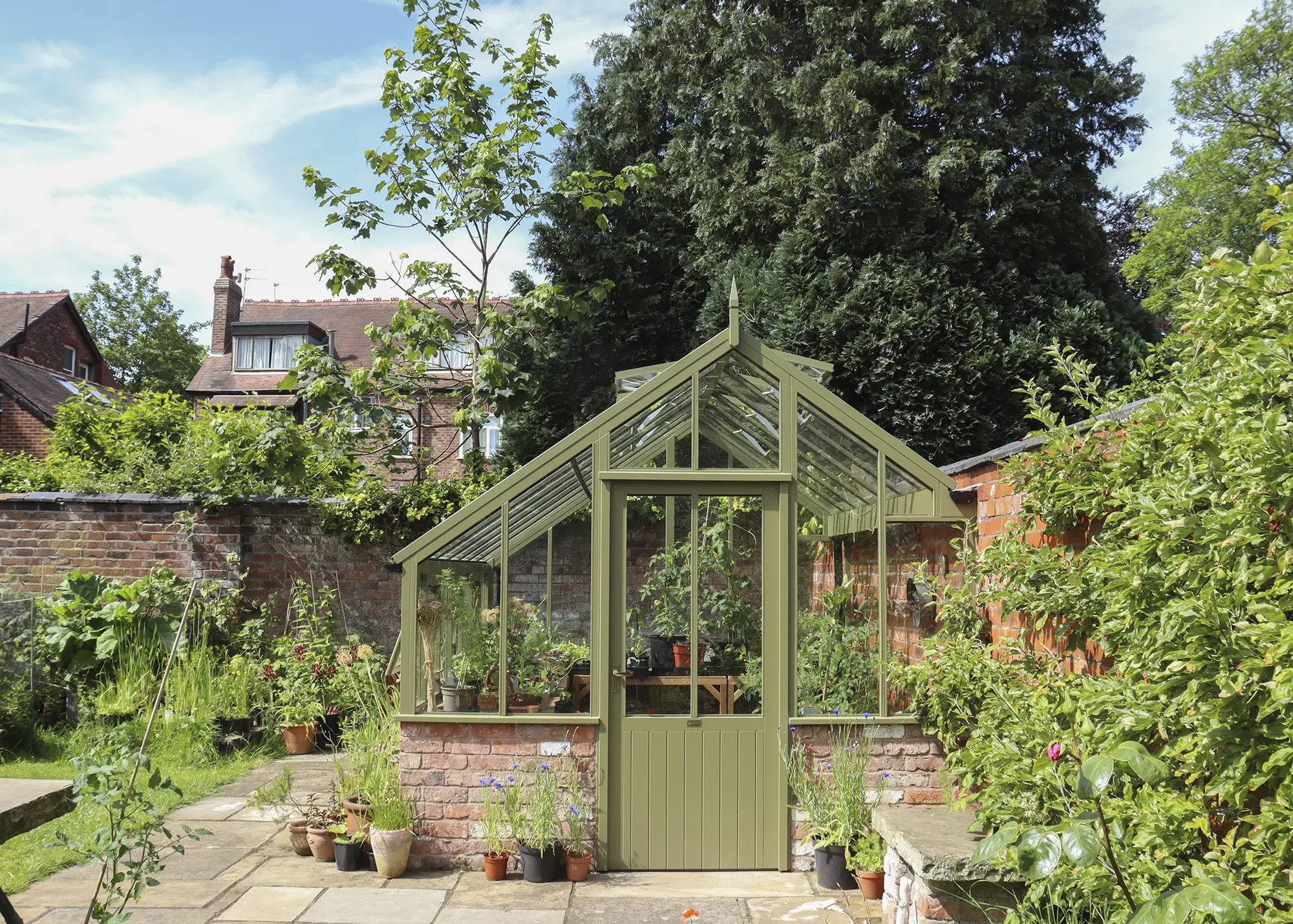
One of the joys of having outdoor space is being able to grow your own food. A great place to start is with a greenhouse. Finished in Reed Green, this bespoke Edwardian three-quarter span design, by White Cottage, adjoins an existing garden wall via a valley junction, blending beautifully into the garden and providing an ideal space for cultivating fruit, vegetables and flowers
We all know that planning takes time, as does design and procurement. This is valuable time can be put to good use by observing, learning, protecting and planting. In the two or three years it can take for a build to begin, trees could be taking root and shrubs establishing themselves.
These, along with any existing garden features, will need physical protection during construction – but the best safeguard is a well-briefed contractor. This fallow period is also the ideal opportunity to get to know your land: to see which plants appear across the seasons, to observe existing wildlife, and to start thinking about how to enhance habitats for the future.
To begin, it’s helpful to set some priorities – do you want something low maintenance, or a garden largely given over to food production? If your priority is supporting wildlife, your garden will look very different from one designed for entertaining or family play. This decision will naturally guide you toward an initial design; this can evolve as the project progresses and the shape of the house is finalised. However, perimeter planting is rarely affected, so you can get started early with hedges and structural trees. On larger plots, you might even be able to get stuck in creating an orchard or a pond.
Whatever your priorities and design, you’ll need to think about soil health, hard landscaping, water use, and ultimately providing an attractive and sustainable context for your new build house.
Why is soil health & composting so important?
In our home’s gardens, soil health is often better than in agricultural land, which has been intensively farmed, ploughed, drained of nutrients and treated with weed killers and artificial fertilisers. If you’re starting your garden from scratch, topsoil can be imported, but it’s much better to make your own.
You should begin your sustainable garden adventure with a compost heap. Much of the material which is cleared in the preparation of a site can be composted – even turf and larger woody material, which takes longer to break down, providing a habitat in the meantime.
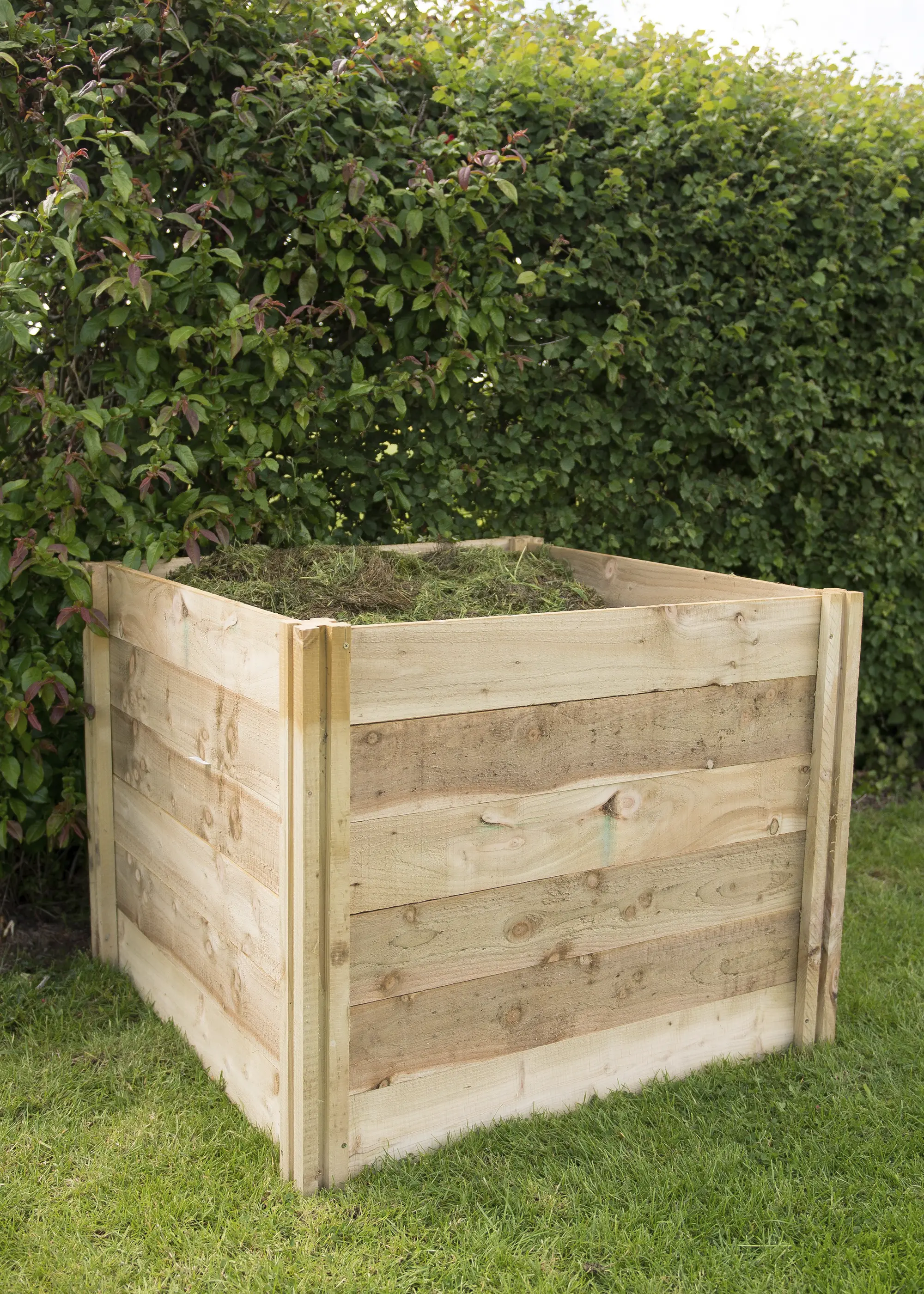
Composting is one of the best ways to create nutrient rich soil for your garden, and is a great way to reuse garden waste. This Slot Down Compost Bin (£139.99) from Forest Garden can hold approximately 650L of green waste, and is suitable for kitchen scraps, too
If you have to move more quickly and space is at a premium, then the ash from a clean bonfire can happily be added to the compost heap. As you manage the site and clip the hedges, this will continue to fuel the heap in a positive cycle of sustainability. Actually, you’ll need at least two if not three heaps, at different stages of decomposition, but make this space right at the start, as you won’t regret it.
Adding the resulting composted material to your flower and vegetable beds will result in healthy soil structures that retain moisture and feed your plants. Don’t use peat – its extraction destroys vital habitats, releases stored carbon, all while offering no essential benefits that compost can’t provide itself.
Increasing the biodiversity of your garden & encouraging wildlifeTrees provide not only structural landscaping features but also shade, roosts and nests for birds, and many also provide fruit. Dense hedges offer nesting opportunities and protection from predators but can also be used as corridors to connect wildlife within your site and in neighbouring properties.
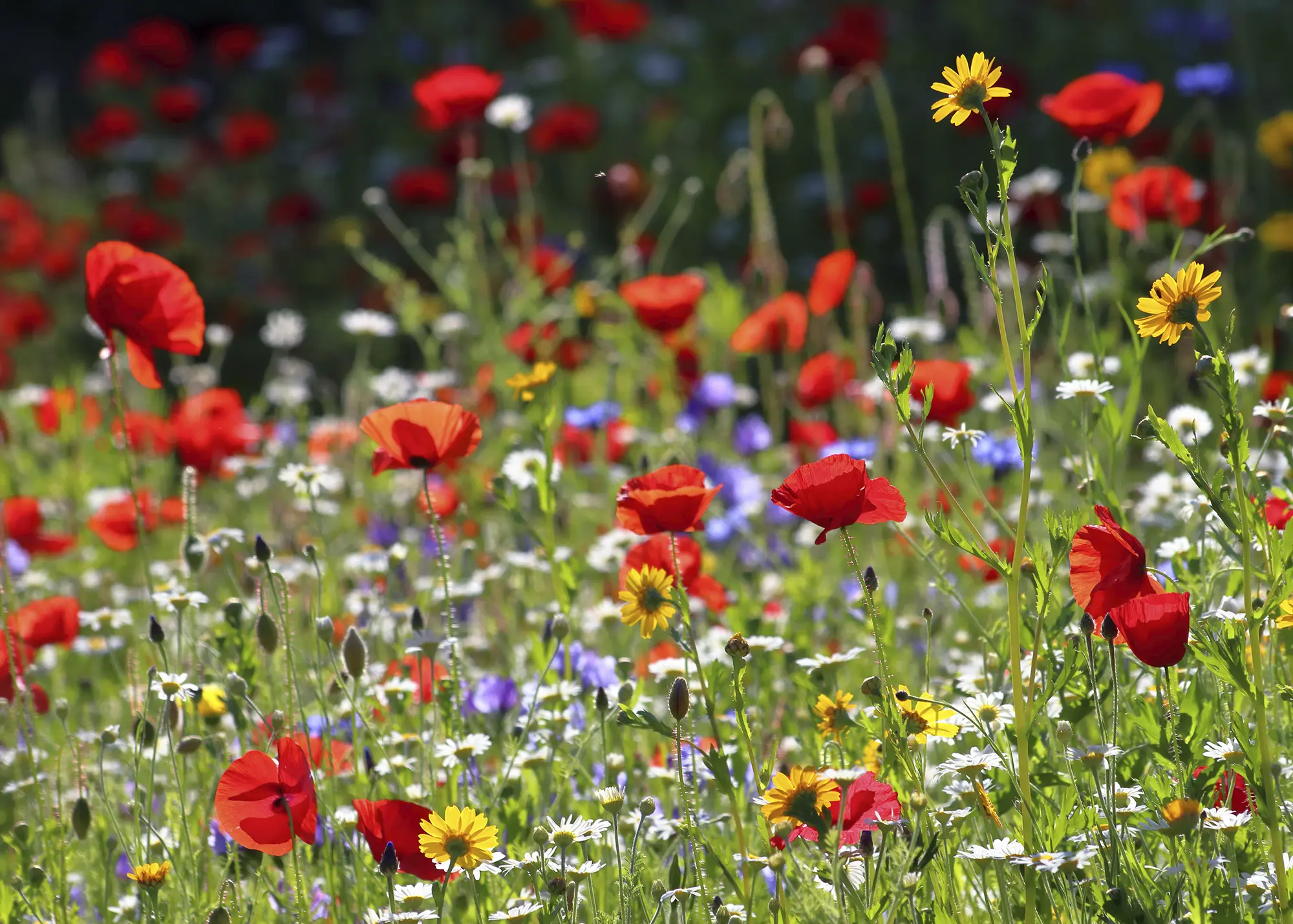
If you have the space, consider diverting part of your garden to a wildflower meadow, which will welcome pollinators and deliver a riot of summer colour. Photo: istock.com/peter swan It’s a two-way process – the wildlife will repay you in different ways. Both native and non-native flowers, shrubs, and trees will attract pollinators such as bees and butterflies, while berry-producing plants feed birds throughout the year. Hedgehogs eat slugs, so do everything you can to encourage and protect them (and be very careful with the strimmer, especially in long grass). Dry stone walls are magnets for slow worms (which also eat slugs) and attract a variety of nesting insects. Avoiding pesticides will help to maintain a healthy insect population – this is so important as they are near the bottom of the food chain in the ecosystem. Water features such as ponds will provide a different habitat entirely, but also drinking water for other wildlife. Lastly, purpose-made habitats such as bat and bird boxes can be used to enhance the natural environment that you are creating. |
How can you make sustainable hard landscaping choices?
Much of the environmental impact of building a garden arises from hard landscaping. The most sustainable products are those that are already there – reuse what you can. Sometimes there is an existing building to be demolished – this can yield bricks or stone to be used in paving or retaining walls, and concrete can be crushed for hardcore beneath a finished hard surface. Woody matter that is no use for construction can be chipped and laid for paths or just used as a mulch.
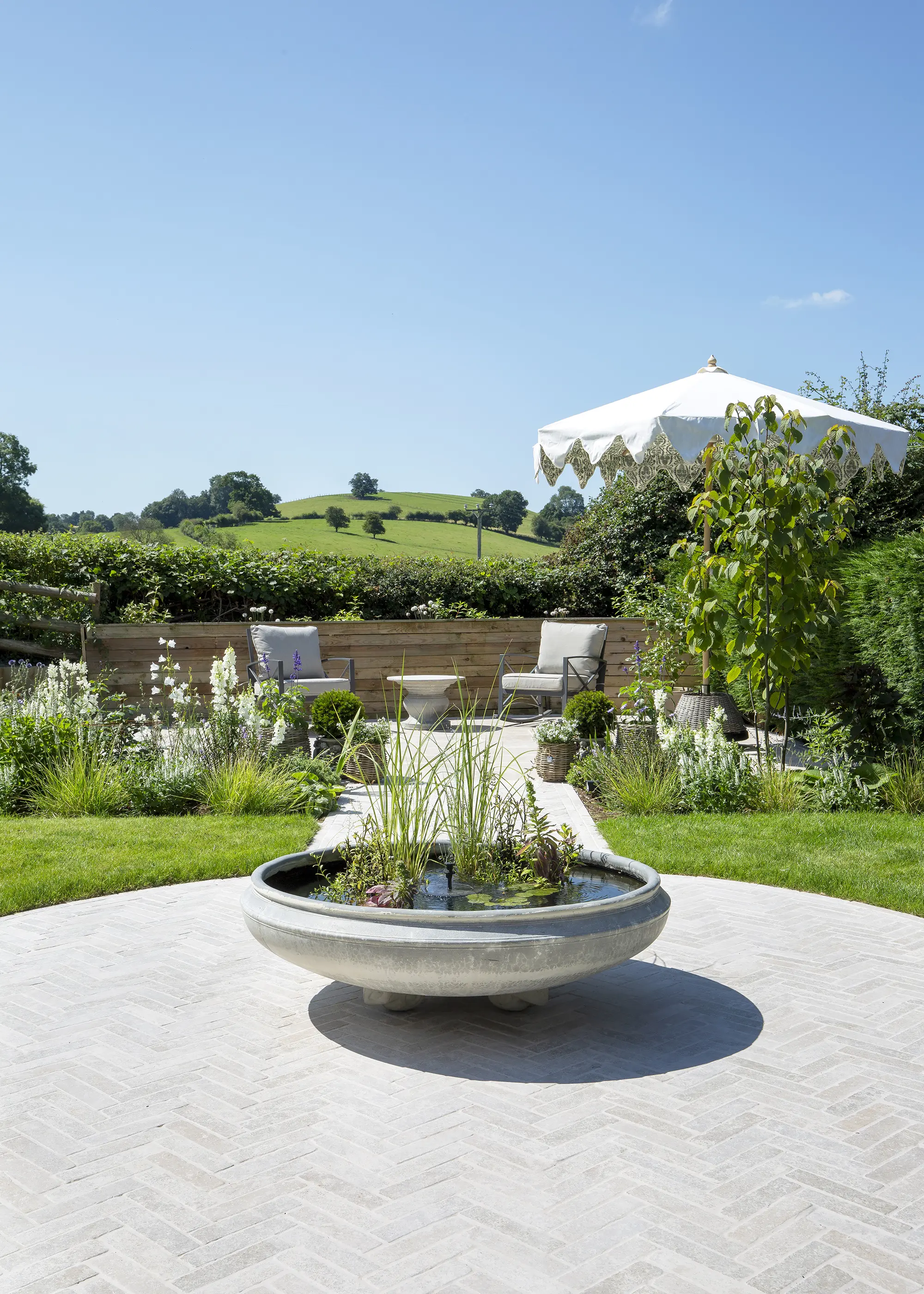
Where recycled products from site are not an option, choosing a natural hard landscaping material will aid your sustainability credentials. Located next to an ancient woodland, this garden has been transformed from a simple patch of grass, to a beautiful and patio with planting using Quorn Stone’s Dijon Tumbled Herringbone Cobbles
Next, in terms of impact, are recycled materials brought onto the site. While you’re waiting for planning you can be keeping an eye out for bargains – often material which is free to collect via the likes of Freecycle. Local is optimal, especially where heavy items such as paving and topsoil are concerned. Reclaimed timber materials can often be used for constructing garden sheds, raised beds and pergolas, and reclaimed metal can provide elegant and unique structures for various climbing plants. The more reclaimed materials you can use in your project, the more you encourage recycling to happen in the first place.
New materials have a variety of different impacts. Some stone products are imported from abroad, and this is hard to justify when local alternatives are available. Concrete paving products are higher in embodied energy, but serve a useful purpose, are cheaper, and last well. Decking, being made of timber, is inherently eco-friendly – so long as the timber is sustainably harvested and replanted; it is low on concrete use, has a relatively small carbon footprint, and will last a generation if properly maintained.
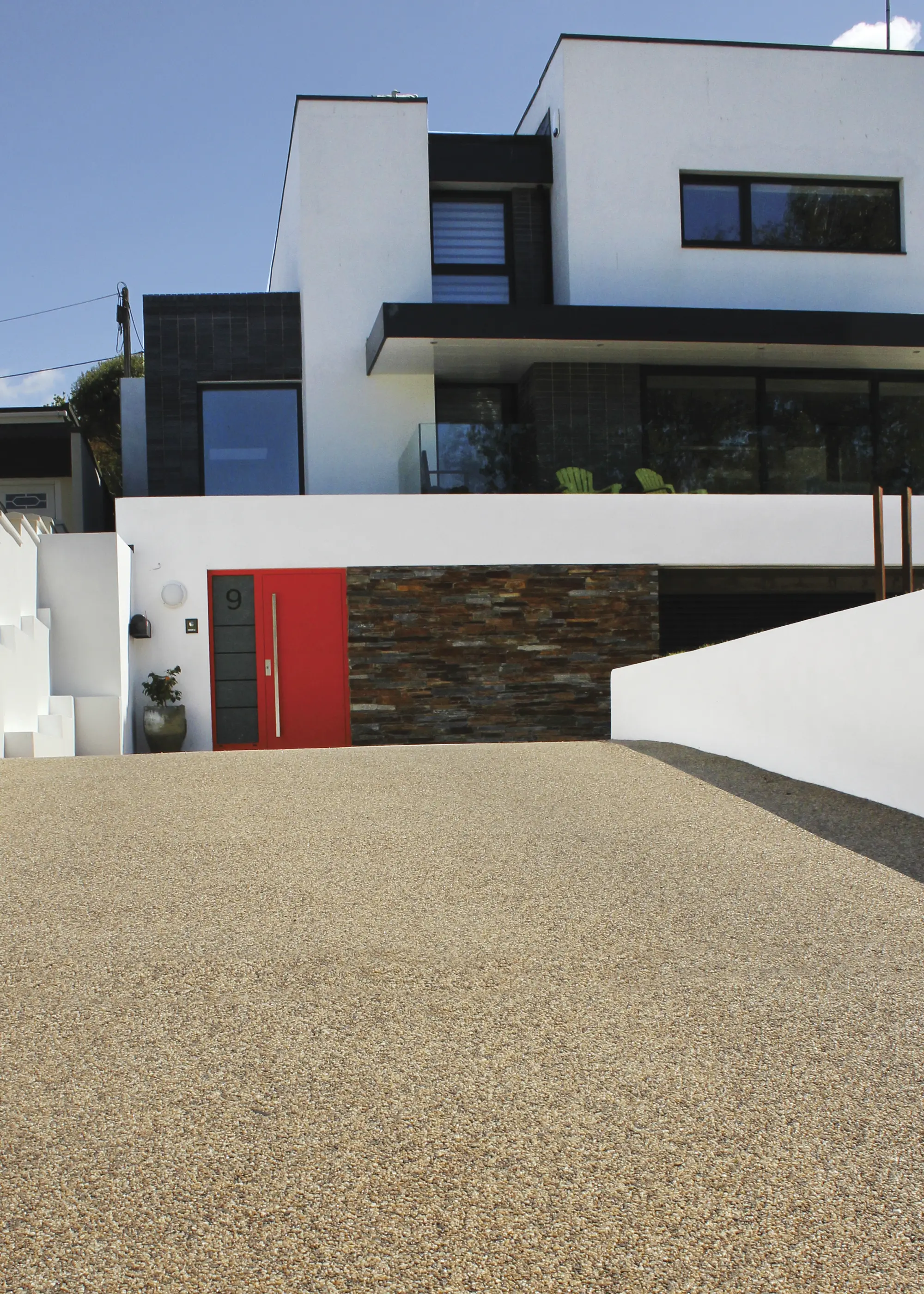
Oltco Recycle Bound is a permeable, SuDS-compliant resin-bonded driveway solution made using waste plastic straws, drinks bottles and food packaging
Drainage is highly site dependent, but whatever you can do to eliminate or slow down the passage of rainwater into the public drainage system will reduce the incidence of flooding downstream. This is known as sustainable drainage or SUDS and can be achieved in several ways:
- Use permeable paving, decking or gravel for hard surfaces;
- Drain any impermeable hard surfaces to soakaways (could just be a flower bed);
- Harvest rainwater from downpipes to rainwater butts;
- Introduce holding ponds for rainwater – which can then become a wildlife feature.
- Front gardens, so frequently paved over for parking, should of course always have permeable surfacing.
What’s the best way to save & recycle water?
As a proportion of our total household potable water use, garden watering is normally a fairly small percentage. Water butts will provide unchlorinated water for use in the garden, and it’s quite rare to empty them – normally you have the opposite problem, and they are full to overflowing after periods of heavy rainfall.
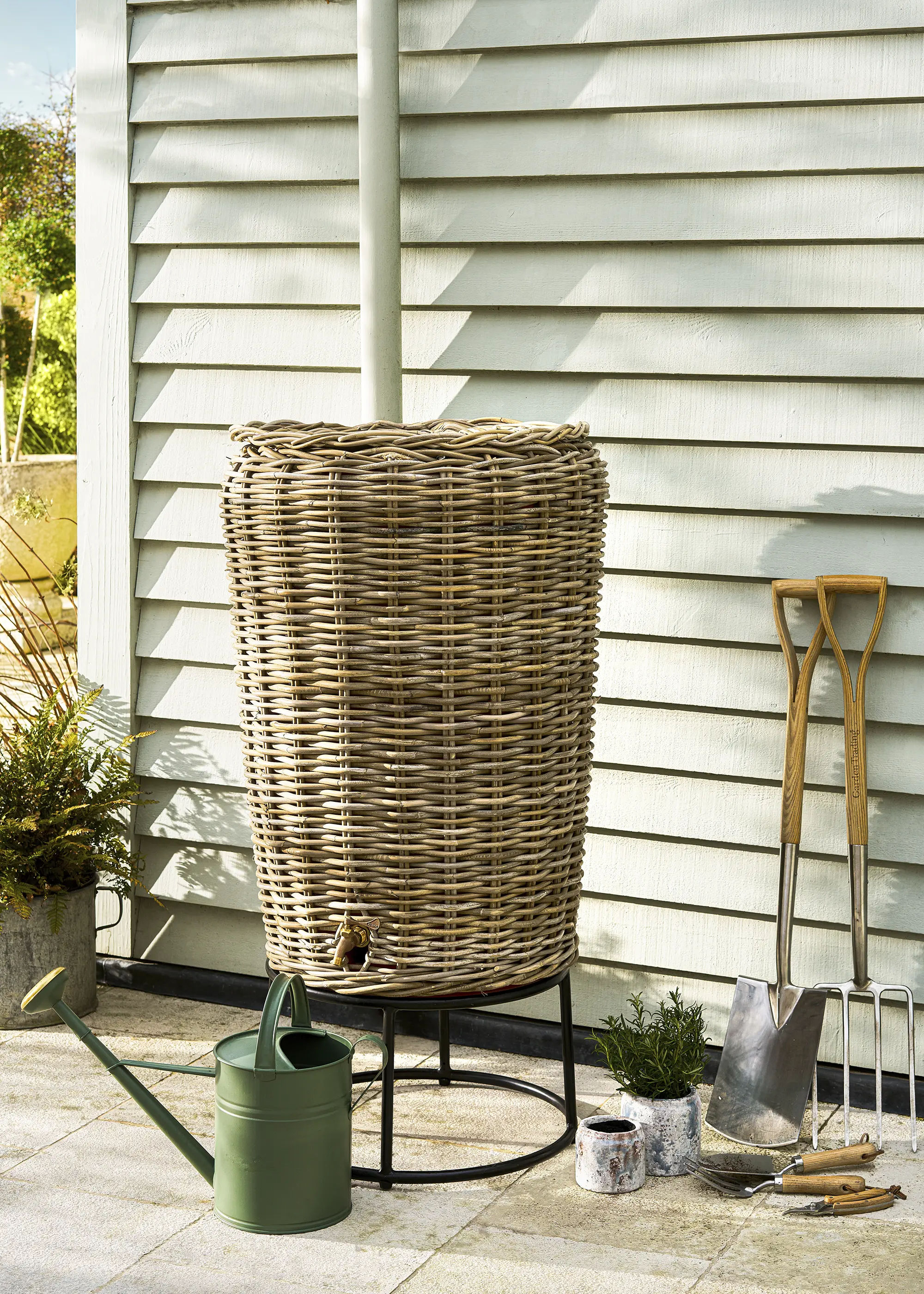
Save on mains water use in your garden by using a water butt. This 200-litre Kingscote Rattan Water Butt, from Garden Trading is both stylish and sustainable. It’s expertly hand-woven from grey rattan, made from a frost-resistant plant making it sturdy and durable
Try to resist the urge to use mains water on lawn that turns brown – it’s only the foliage that dies back in drought conditions, the roots are normally undamaged and the lawn will quickly recover once the rain returns. In my own garden, new plants might get some watering in the first few weeks if it’s unusually dry weather, but after that they have two choices – live or die. As a result, my garden is full of plants that really want to be there, and can flourish in all conditions. In a broader sense, this comes down to using plants that are appropriate for the soil type, and for the conditions.
Possibly a larger water use in the garden these days may be jet-washing block paving and slabs, or even washing the car. There’s no reason why harvested water can’t be used for these purposes, though it will take a little design work and plumbing to get it set up effectively.
Garden storage choices
As we have gotten better at recycling, our bins have proliferated. In terraced streets in particular the front garden – if not given over to parking – has become a permanent bin store, despoiling the appearance of our lovely Georgian and Victorian streets with multiple coloured plastic containers.

To help you use your garden more, and appreciate its aesthetic, bin storage can transform your space. Made from natural timber, this Double Wheelie Bin Storage Shed from Sue Ryder is equipped with its own lifting mechanism, making it simple to use, and can be locked, too
If they really can’t be stored at the rear of the property, then at least they can be covered over and hidden in bin stores, made from timber of course. Bike storage is more about security and protection from the weather and tends to be located in rear gardens than the front, but the more items that can be stashed out of view, the more the eye will be drawn to plants and trees that are really what gardens are all about.
Growing vegetables & herbs
Even the smallest gardens can produce food. There is nothing more rewarding than eating produce that you have grown yourself from seed, planted out, nurtured and harvested with care and patience. Assuming you avoid pesticides and artificial fertilisers, your produce will be chemical-free as well as tasty.
If you have very little space, you can grow herbs in containers. If you have more land available, you could add raised beds or a greenhouse, or a soft fruit area, or an orchard, then you can have year-round organic fruit and vegetables. It’s not just the harvesting and eating that contributes to our mental and physical health, it’s the soil preparation and the tending of the plants that gets us outdoors, listening to the birdsong, breathing fresh air, and enjoying the rest of the garden.
Nigel Griffiths
You may be interested in