


- Plan ItBack
- Design ItBack
- Build ItBack
- Homes
- ProductsBack
- CostsBack
- Self Build Cost Calculator
Estimate your project costs instantly with Build It's interactive self-build cost calculator
Calculate Now - Costs & Finance
- Contracts & Warranties
- Build It Estimating Service
Get an accurate, detailed cost breakdown of your project
Submit plans
- EventsBack












Q&As
Is Knock-Down & Rebuild VAT Free?
Wondering if you could please help us as we have had little advice so far, and this event has been forced upon us.
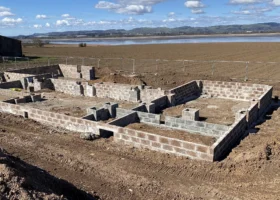
We had a house fire in July 2018 which has severely damaged our bungalow. We are likely to have only the floor slab and internal block wall of the exterior cavity walls left.
We are considering accepting a cash settlement from our insurance company to rebuild and make changes to the property ourselves.
I am disabled and use a wheelchair so obviously unable to self build the property myself although fairly capable with the knowledge and experience I have accumulated over the years but although the mind is willing the body is not!
Our original bungalow was adapted to my needs except some rooms which remained inaccessible, my son’s bedroom was far too small and we were flooded five years ago because the bungalow sits too low.
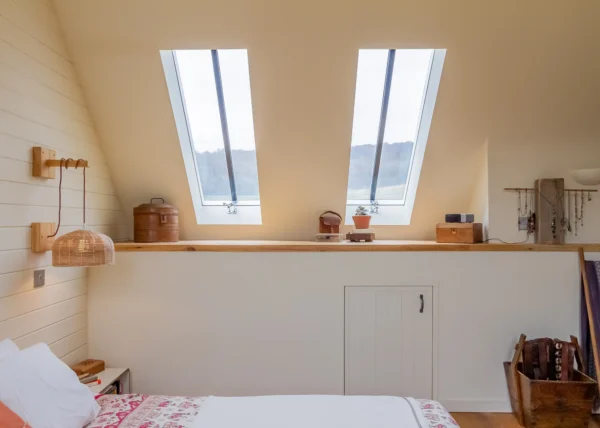
We'd like to create a dormer style bungalow with two large bedrooms, a study and a family bathroom upstairs.
And to avoid another flooding occurrence, we'd like to raise the floor level by at least 200mm. The ground floor 175m2 and we hope to replicate that as close as possible on the first floor.
We were wondering if we could keep the original floor slab and put a raised raft over it to form a new raised floor slab and then build a timber frame property on it. This would be to avoid the cost of removing and reinstating the foundations. Could we build this VAT free?
The other option is to keep a couple of existing exterior walls and demolish the rest, rebuilding them to almost the original outline using brick and block which will make the pouring and raising of a new floor slab easier without having to cut a new damp course etc into the existing walls. Would you consider this to be the better proposal, and would it classify as a new build and be VAT free?
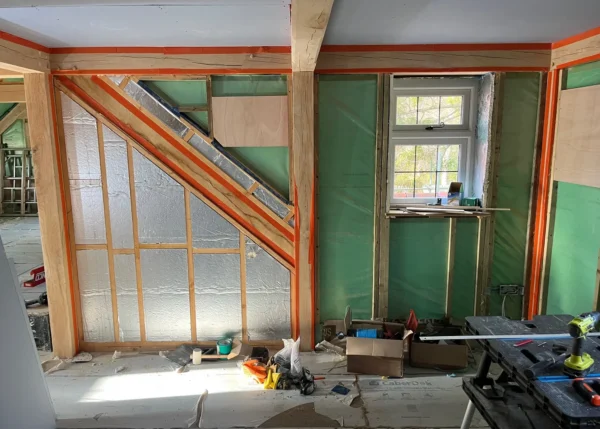
Once the ground floor has been reconfigured then we would build the upper floor using a half wall and timber frame method, hopefully utilising the entire downstairs floor area, although budget may require us to reduce the floor plan upstairs.
Which of the two options would you consider to be less expensive and economic to undertake? We are about to put our ‘Plan A’ into planning in the next couple weeks using our surveyor’s drawings but if they prove too expensive for our budget we could scale back if necessary.
Kind regards,
Paul
One Answer





You can reuse the original floor slab and still reclaim your VAT as a new build under VAT Notice 431.
In certain circumstances, an external wall, sometimes two can also be retained, but this would have to be dictated by the planning approval.
In this case, I would suggest demolishing all of the old structure and starting afresh. Raising the slab sounds complex and the practicality of what you are proposing very much depends on the condition of the existing foundations and if they can be incorporated into the new design.
It’s a question for a structural engineer specialising in foundation design and I suspect that the cost of designing and adapting would match or exceed the cost of grubbing up the old foundations and starting again. I’d opt for the latter.
Mike Hardwick, Build It expert