Get early bird tickets to our brand new show
30th-31st May 2026 - time to get your dream home started!
GET TWO FREE TICKETS HERE30th-31st May 2026 - time to get your dream home started!
GET TWO FREE TICKETS HEREEstimate your project costs instantly with Build It's interactive self-build cost calculator
Calculate NowGet an accurate, detailed cost breakdown of your project
Submit plans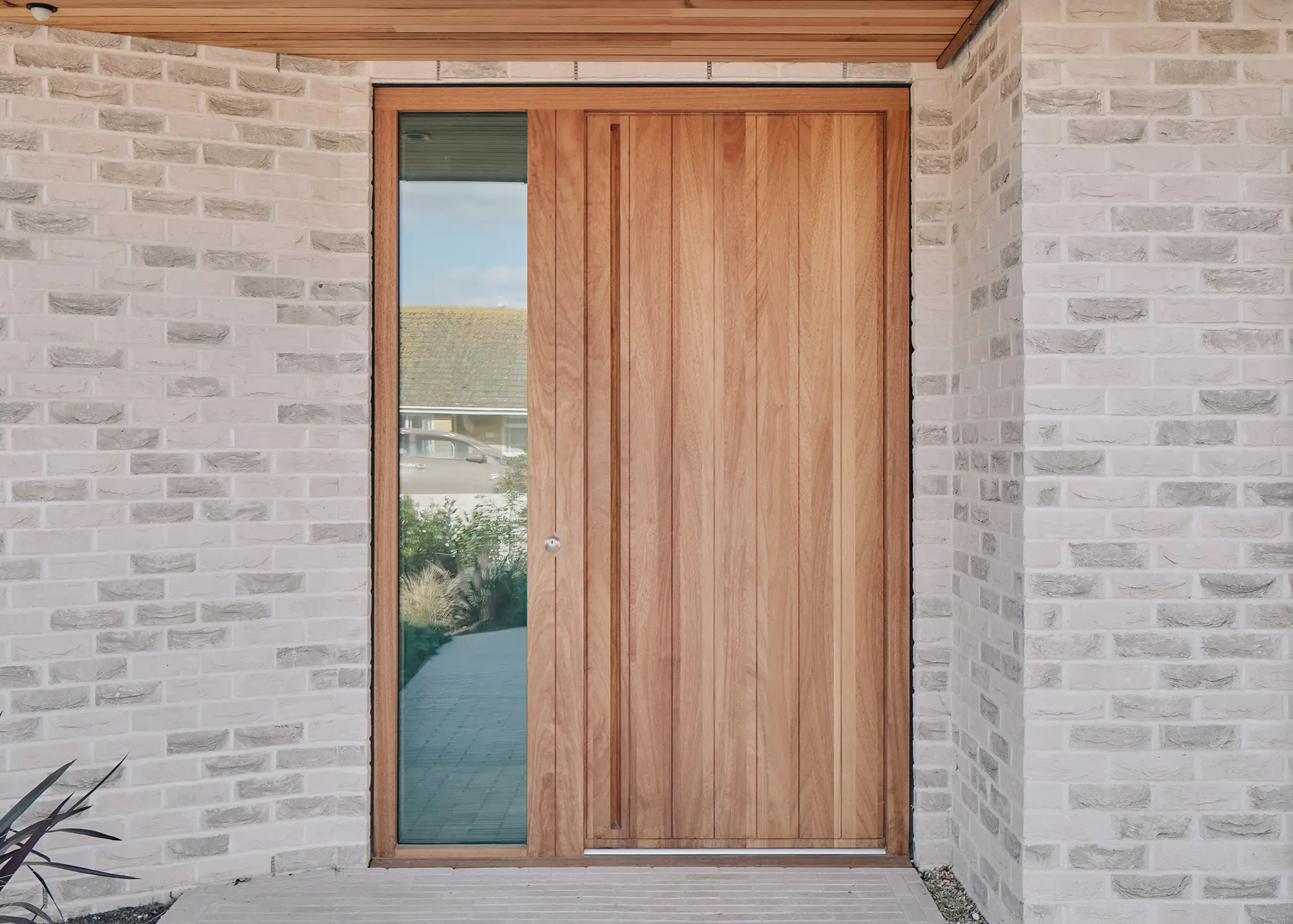


Front doors should be considered early on in the design phase of a project. The entrance is going to be the focal point of your property’s exterior as it’s the first thing you see when arriving, so you’ll want to choose a design you’ll love stepping in and out of every day.
Not only that, but security, energy efficiency and maintenance are also factors that come into play when choosing a front door. “It’s important to consider how much upkeep you are willing to commit to and be clear and educated on how your chosen material performs over time with exposure,” says Elizabeth Assaf, cofounder of Urban Front.
Naturally, a design-led front door is likely to cost you more money than a standard design – while functionality and overall quality will be reflected in the price, too. Here we’re looking at the most popular front door options, which design could work best for you, and what you should expect to budget for the different products and materials.
The first thing to think about when planning your front door is where is it going to go, and how it can help deliver the best experience in terms of arriving at home – whether for you or for your guests. Think about how you will approach the property – do you need easy access from a driveway or path? Would you like a view through to the rear of the house from the entrance? Would placing the door near a boot room make day-to-day life more practical? The relationship between the door, the hallway and the staircase also affects how welcoming and functional the space feels.
You might be thinking that the main entrance needs to go in the middle of the front elevation, but this isn’t your only option. “If it would work better to have the door to one side, you can create a focal point around the doorway to make it look balanced,” says Elizabeth.
Practicality is another important factor to think about. “When planning your front door, consider having step-free access and a level or low threshold that can work towards Part M of the Building Regulations and helps to future-proof your new home,” says Hannah Martin, marketing manager at Solidor.
Internally, the door should complement the interior design. “Treat this door like a piece of furniture; it can be bold or blend in with the specific tones you have in the stairs or other internal joinery,” says Elizabeth. “When you think about it, this is what you will see the most so you should choose something you love.”
find door suppliers in build it’s company directory
Front doors are available in a wide range of materials, including timber, steel, aluminium, glass, PVCu and composite. Each option offers different advantages in terms of durability, insulation, appearance and cost. Ask your supplier about maintenance requirements, as some materials – particularly natural options – may require more upkeep to preserve their look and performance, though modern engineering and factory finishes are highly durable.
If you want a design that enhances the charm and character of your property, wooden doors can add value and kerb appeal. Timber is a timeless material that can suit a range of architectural styles, from contemporary through to heritage homes. It’s strong and durable, too, so it delivers on multiple fronts.
“Timber benefits from traditional aesthetics combined with modern technology to create front doors that are secure, energy efficient and eco-friendly,” says Ryan Schofield, managing director at Thames Valley Windows. “But they do require regular maintenance and the occasional fresh lick of paint.” However, with good upkeep it will last for decades.
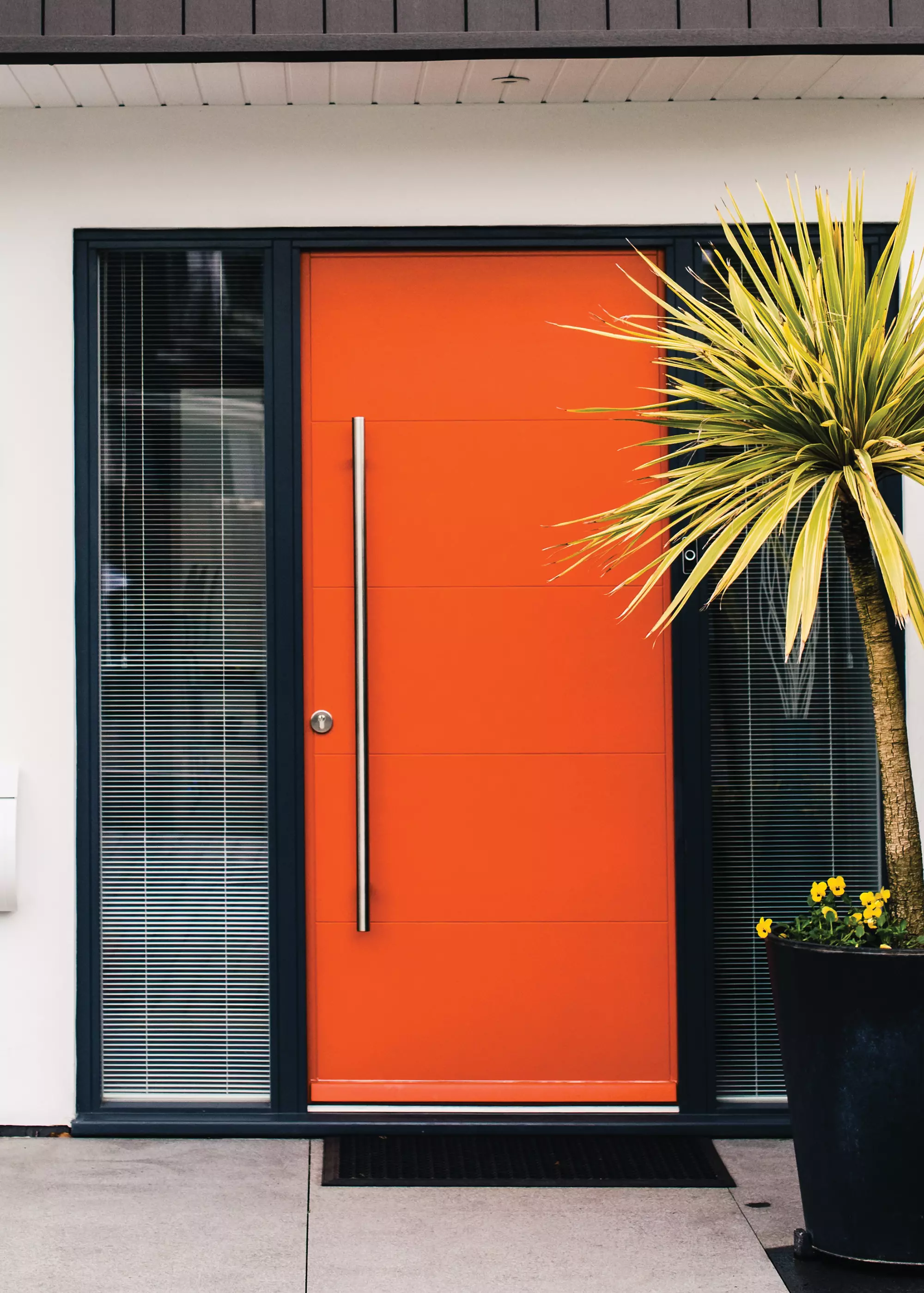
Kloeber’s timber FunkyFront door shown in the Westfalia door panel
Most timber front doors are sold pre-finished with lengthy guarantees on the paint or stain. If you’re going for an oiled finish, it may need more regular upkeep. “Oil might need to be reapplied every six months, or more often if you don’t have a roof overhang, which shades your door from the sun,” says Elizabeth.
The geographical location of your home could mean timber isn’t the right choice for your front door. “If you live by the coast, then maintenance increases due to the salt water,” says Elizabeth. “Nonetheless, wood is beautiful and can easily be sanded back and refinished at any time and returned to its former glory.”
For a long-lasting weatherproof finish, a varnish or lacquer is one of the best ways to seal wood front doors. However, it might not give as good a result as oiling or painting it. Tung and linseed oil both contain additives that give a waterproof coating, but you’ll need to apply multiple layers to ensure it’s sealed from moisture.
“To maximise the character and uniqueness of a timber door, consider going for a stained finish so the natural texture can be seen,” says Matt Higgs, managing director at Kloeber. If you’ll want to adapt the look of your front door, timber can also be repainted, a handy future-proofing option.
| How much should you budget? On average, you can expect to pay around £1,600 for the supply and fit of a standard, good-quality timber door, but this varies largely depending on what manufacturer you choose. More bespoke designs can easily reach £5,000 and above (installation included). |
Premium Content
Build It’s downloadable e-guide to choosing windows & doors offers ideas and advice on every aspect of planning your home’s glazing and entrances, including expert tips on the key specification decisions you’ll face. Click below to find out more.
find out more
Aluminium doors are weather resistant and durable. They’re also very strong and aren’t at risk of warping or changing shape. Front doors made of this material come powder-coated in a variety of colours, meaning it’s easy to adapt them to your desired design and make a truly statement feature out of your home’s entryway.
On top of that, the finish is unlikely to peel or crack, so your door will last for many years. “The aluminium structure is extremely strong and offers outstanding thermally efficiency with no maintenance needed,” says Ryan.
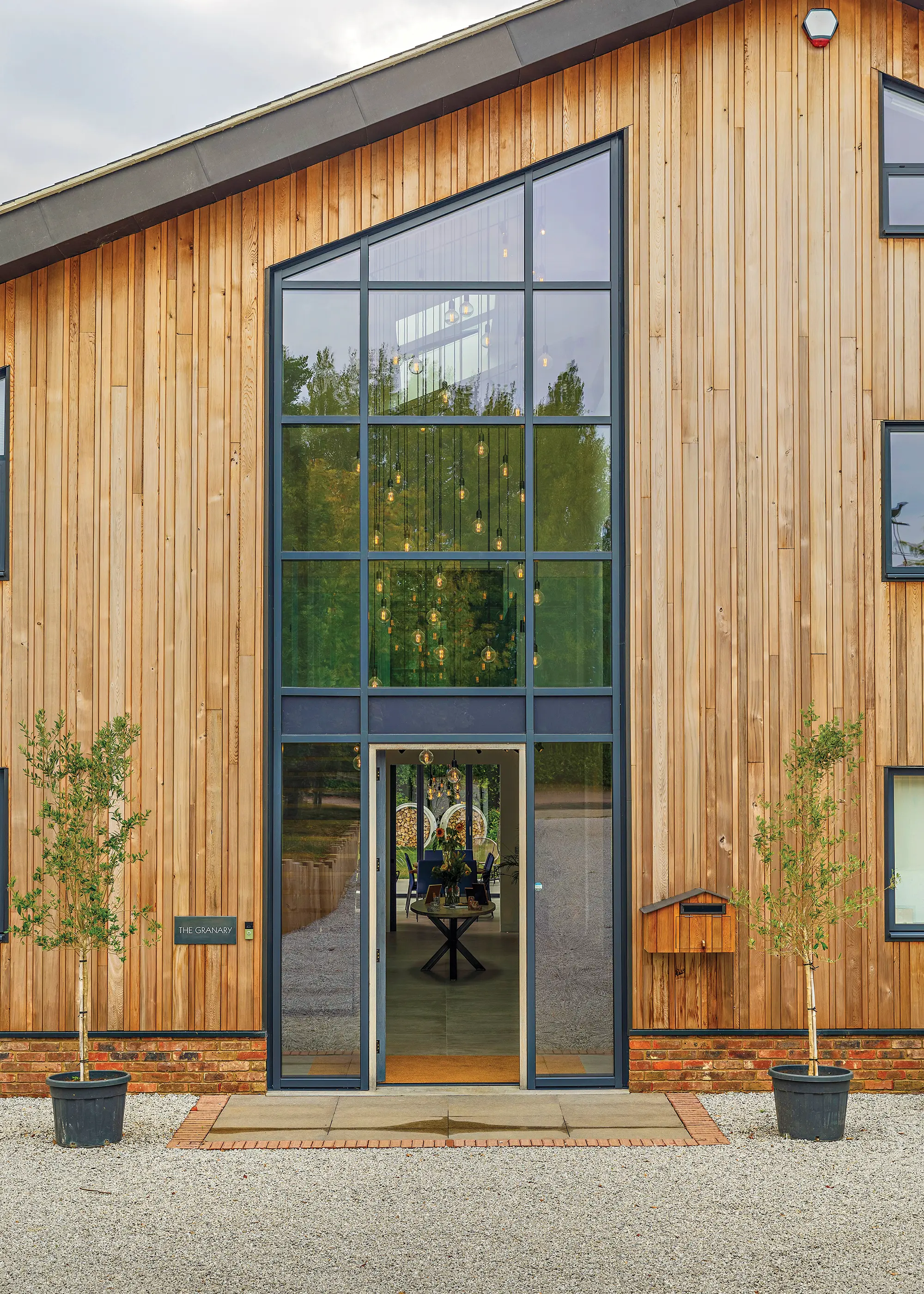
This project features IDSystems’ aluminium Hoveton front door in gun metal grey textured (DB703). Installed within a triple-height glass cur tain walling frame, it fills the core of the home with light and opens up ever-changing snapshots of the local woodland
Aluminium doors require no more than the occasional clean to maintain their appearance. The easy upkeep will help you save on the long-term costs, however they generally come in at a higher price point compared to composite and PVCu models. To make sure you are getting the best energy efficiency aluminium can offer, many manufacturers – such as Dortech – offer models which incorporate thermal breaks, which maximise the unit’s thermal performance.
The front door you choose needs to fit in with the build’s overall design. “Aluminium lends itself to a more modern property with its precise and clean finish,” says Matt. “An aluminium door on a period cottage probably won’t work, and a classic panelled door with brass hardware won’t look right on an ultra-modern home, so you should consider your home’s architecture.”
| How much should you budget? Prices for the supply and fit of aluminium doors are comparable to that of timber options, starting around £1,500-£1,800, depending on the supplier. Bespoke designs could set you back several thousand. |
Composite doors are modern option that can still give you a timber aesthetic. They’re available in a grained finish and come in a variety of colours. Although not as strong as aluminium, the reinforced materials of high-quality models offer excellent security and peace of mind. Both contemporary and traditional designs are readily available.
“Composite doors are an extremely popular choice. Not only do they look good, but they are robust, highly secure, thermally efficient and low maintenance,” says Ryan. Their foam or timber core offers excellent insulation properties, helping with heat retention and minimising energy loss.
It’s the outer skin that gives these doors their impressive resistance to wear and tear. This could be of glass reinforced plastic (GRP) or you might prefer a protective aluminium facing (often referred to as alu-clad). Russell Hensman, group marketing manager at Endurance Doors – a specialist in bespoke composite doors made with a solid timber core – says: “The idea with a composite door is that they can look like timber or even aluminium but are near maintenance free.”

Endurance Doors’ Alto composite door with solid timber core, shown in grained anthracite grey
These front doors are known for being some of the most secure on the market. “They are designed to operate for the long-term and most come with multi-point locking and high security cylinders,” says Russell. “3-Star cylinder locks are standard with the better composite doors and are anti-snap, pick- and bump-proof and recognised by the Master Locksmiths Association.”
| How much should you budget? For a more basic composite door, prices can start from around £1,200 for supply and install. For a higher-end model, then you could be looking at around £2,000-£3,000. |
The most budget-conscious option on the market for your front door tends to be PVCu. Not only are these products more affordable, but they generally require less maintenance. “They’re easy to look after and are perfect for the demands of modern living,” says Ryan.
If you’re opting for PVCu, it’s important to look for a high calibre model, as cheaper ones won’t last as long and may be less secure. But this isn’t the case for all PVCu designs, as many do come with a Secured by Design accreditation, meaning they’re manufactured to meet rigorous security standards, as defined by the police.
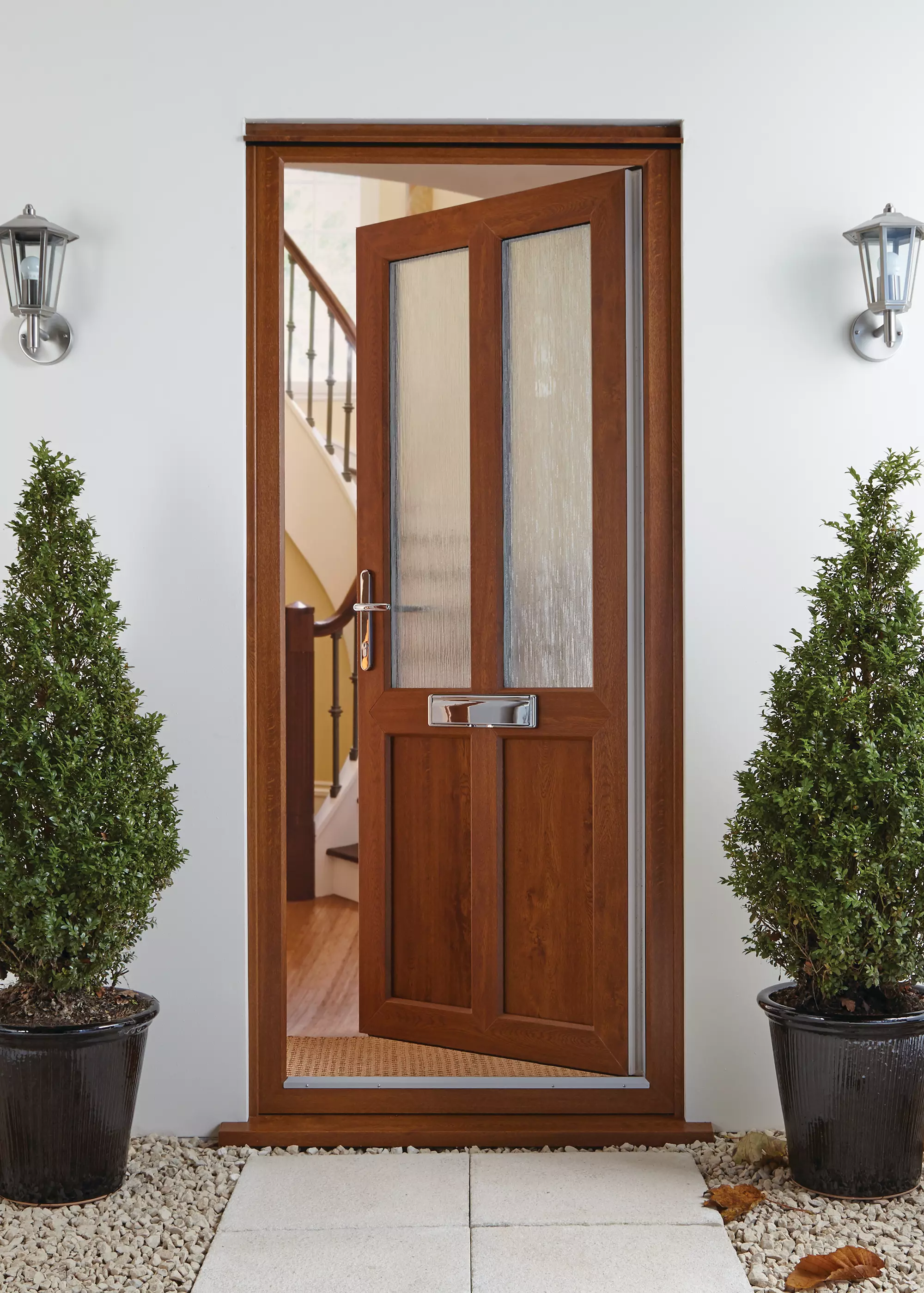
Everest’s Secured by Design-accredited PVCu door, shown here in Golden Oak with Cotswold privacy glass
You may think that, because they’re so budget-friendly, PVCu front doors lack the design-led finished of other types. But innovation over recent years is delivering high-quality results. “Technical advances mean these designs are available in a colour of your choice with a fantastic range of traditional and contemporary styles available,” says Ryan.
It’s easier than ever to find PVCu front doors that fit seamlessly with the rest of your property, leaving the bright white plastic look in the past. Some manufacturers also offer different finishes that can mimic the smooth, dark aesthetic of aluminium or the woodgrains of timber, giving your front door a higher end look for less.
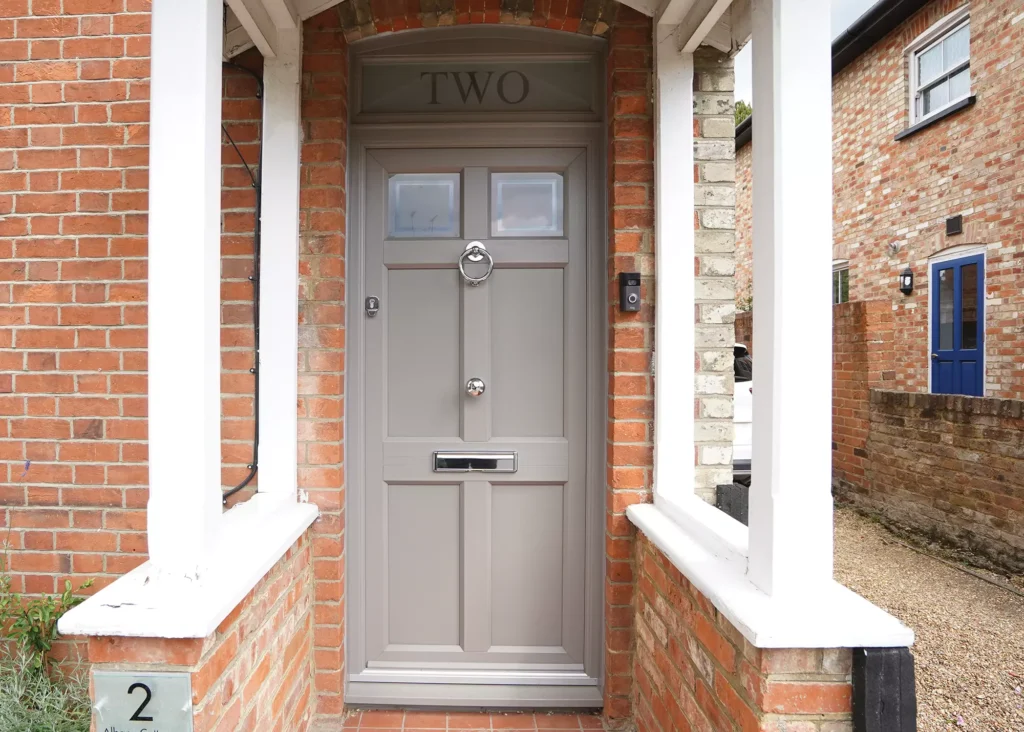
Thames Valley Windows’ Lavenham style PVCu door from the Ultimate Heritage Collection, shown in the colour Balmoral
When it comes the energy efficiency of these front doors, PVCu sits highly. The material itself is a low conductor of heat, so, just like with any door, provided it’s correctly fitted, it will deliver good energy performance. A PVCu front door is also easy to clean and the finish will be robust against the elements. The coating on PVCu is usually protected against UV rays, too, preventing them from fading from prolonged exposure to the sun.
| How much should you budget? Being the most affordable option, you can expect to pay from around £800 for a PVCu front door (which includes fitting) depending on the quality of the door purchased. |
As well as the variety of materials and finishes you can get for your home’s entryway, there is a plethora of designs on the market that vary in size and even the way in which they open. For instance, pivot doors are becoming an increasingly popular choice. Unlike regular hinged styles, they’re connected at the top and bottom of the door, rotating on a vertical axis. “Formerly only oversized doors were available with pivot hinges, but that isn’t the case anymore. Any design can have either a pivot or standard hinge no matter how wide it is,” says Elizabeth.
Pivot doors are a stunning and sleek addition to your architectural scheme, particularly on modern houses. The support at the base of the frame also means solid, heavy doors are kept more stable than on standard side-hanging hinges, which could be an added benefit if you want a statement door for your property.
They don’t require a door frame (although you can choose to have one), as the opening hardware is built into the door, allowing it to rotate around into both the interior and exterior simultaneously. The pivot movement mechanism also means it needs less clearance space when opening and closing.
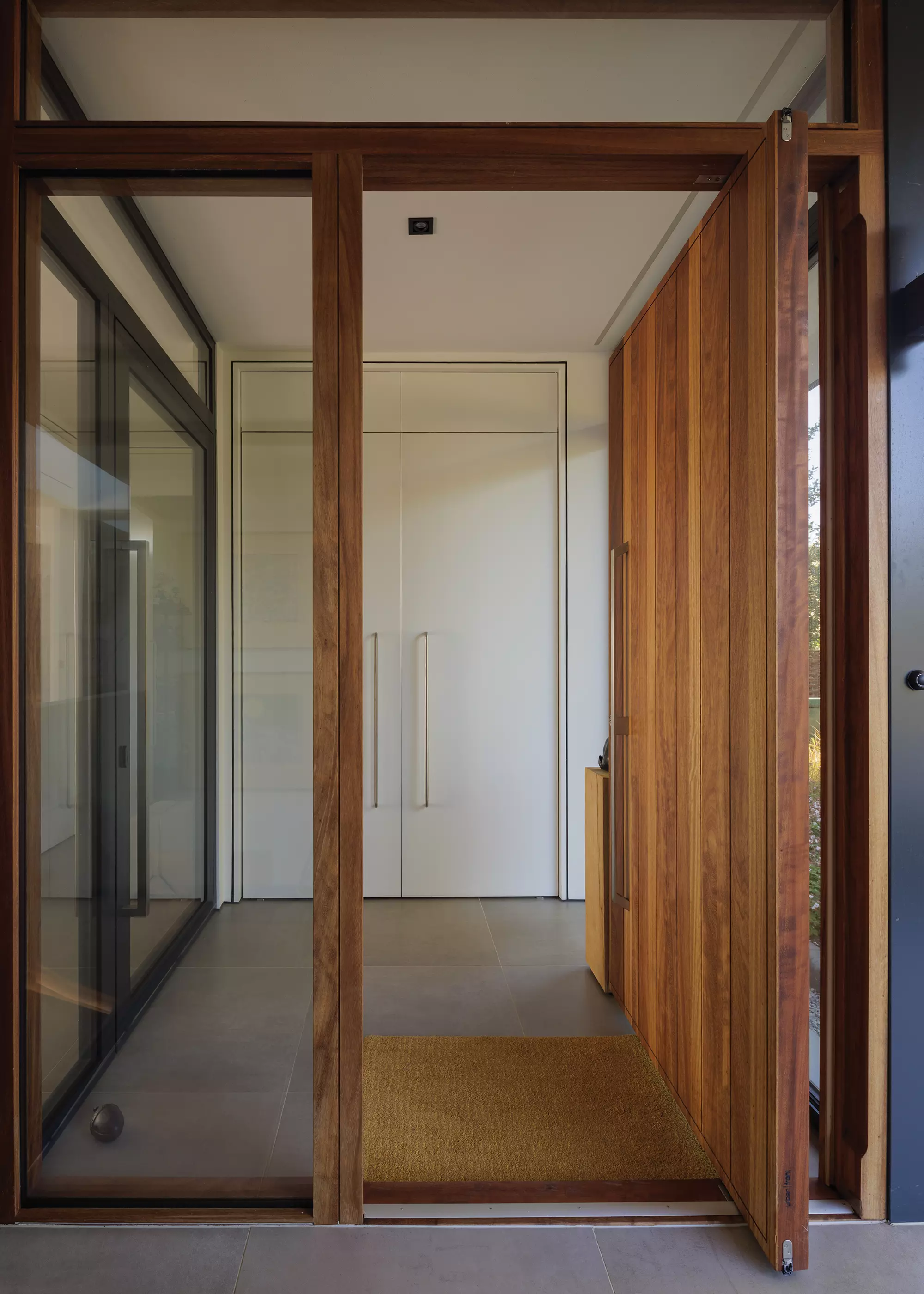
Urban Front’s Porto e80 pivot door in Iroko, with matching sidelite, storeylite and Option 11 stainless steel handle
Bear in mind that because the hinges need to be placed further along the top and bottom of the door, you’ll lose about 150-200mm of walkthrough space, narrowing your entryway. Pivot doors also don’t benefit from being as fully weather-sealed as standard hinges. If your house is in an exposed location, it’s recommended you build a porch around your pivot door or install an overhang that is at least half the length of the door for sufficient protection.
To achieve the required walkthrough, pivots must be wider than conventional doors. Urban Front’s designs are a minimum width of 1200mm, for instance, which means they’re more expensive than standard narrower doors. From this size upwards, however, all of Urban Front’s doors are the same price whether pivot or standard hinged.
One of the key functions of a front door is to underpin your home’s security – and to do that, it needs to be well-constructed, properly installed and fitted with appropriate hardware. Approved Document Q of the Building Regulations sets out reasonable security standards for self builders and renovators to follow, but understanding whether your front door meets them can be a bit of a challenge.
The key thing to look for is whether the product you’re buying has been tested and accredited under the PAS24:2016 British Standard (not the outdated 2012 version). Don’t just take things at face value, either – ask to see the certificate and check that it relates to the specific door model you’re buying.
One option is to go for a product that carries the police-approved Secured By Design accreditation. You can look up suppliers’ accredited design systems online.
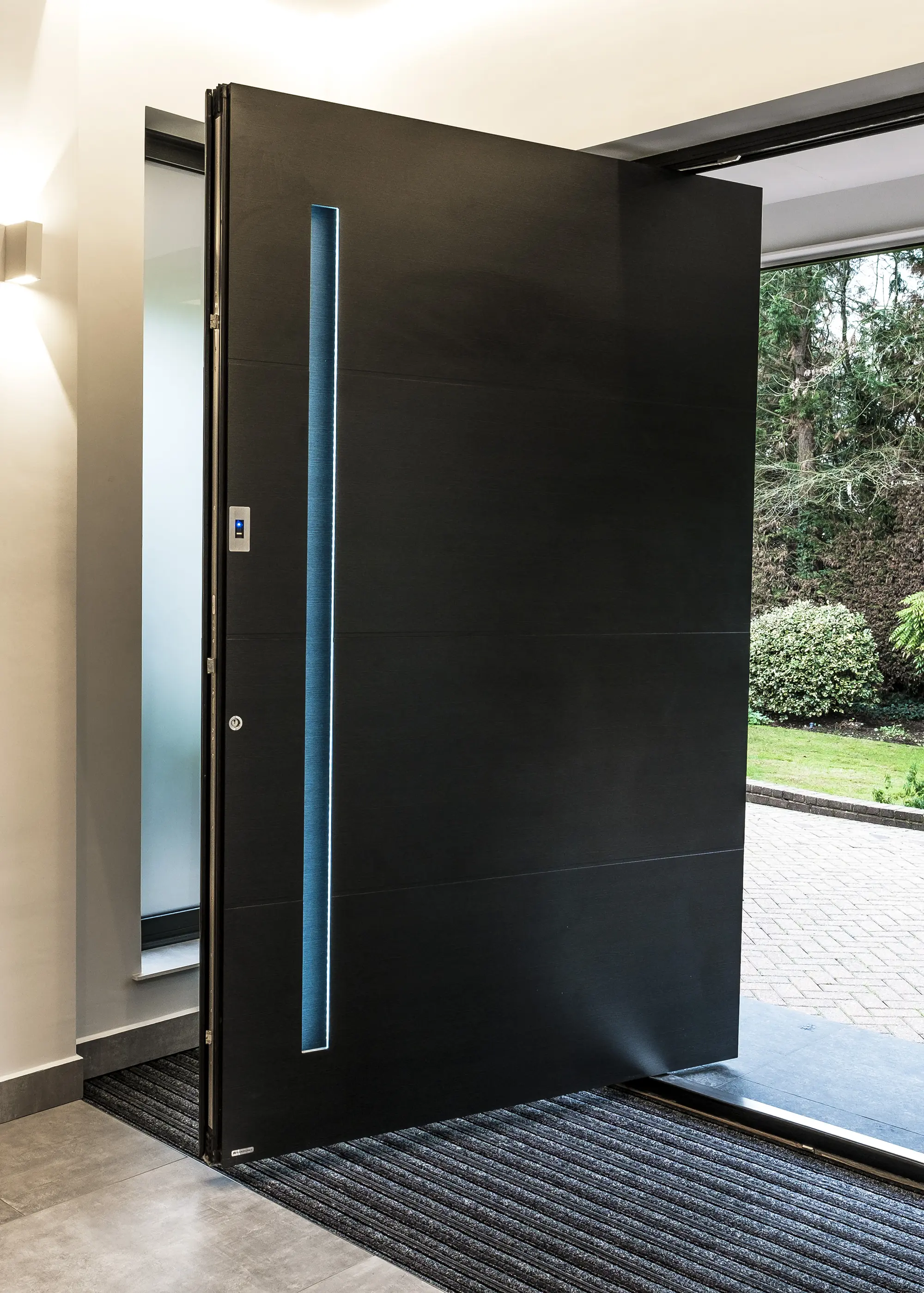
Why not go for a pivot front door to add a striking architectural feature to your project? These pivots from RK Door Systems can achieve a U-value of 0.72W/m²K and have full PAS 24: 2022 and Secure by Design enhanced security certification as standard
These days, many self builders aim to integrate security into a wider smart home setup. For instance, if you hit the ‘goodbye’ button on your way out of the house, everything locks, the rooflight shuts and your alarm is switched on. “Having an automatic door lock installed is a great security feature, with a 10-point locking system activated simply by closing the door. All you need to do is turn the key,” says Ryan.
Suppliers such as RK Door Systems can actually offer keyless or fingerprint entry for their doors – handy if you’re carrying a ton of shopping or a crying child. Yale also offers a product that uses your phone to lock and unlock the door remotely. It’s always worth checking that any third-party smart security products can be easily integrated into your door on site before purchasing them.
Energy efficiency is a priority for self builders, so you’ll need a door that delivers thermally. You don’t want to spend time and money investing in a well-insulated, airtight home, only for heat to leak out the front door.
The current Building Regulations require a minimum U-value of 1.4W/m²K for new build homes. Anything lower is a welcome bonus as it means less heat will be escaping through the doorway. Crucially, this should be matched with high-quality sealing components for air and weathertightness. “Suitable Q-lon, wool pile or rubber gaskets are crucial for maintaining energy efficiency, preventing draughts and helping to keep water out,” says Hannah.
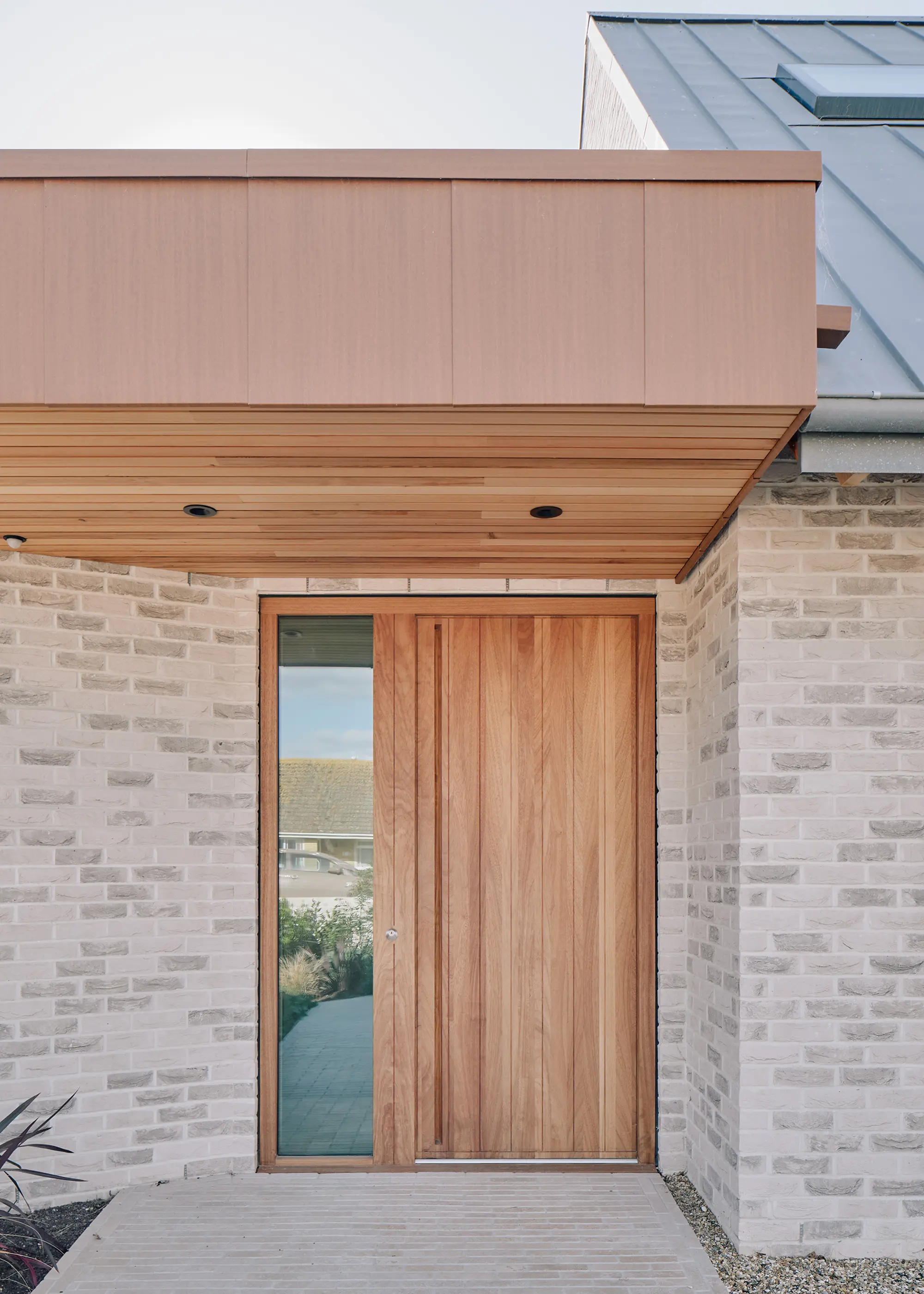
This coastal home was designed by RX Architects and features Urban Front’s e80 Porto door in iroko. The door’s natural hardwood material and enhance tones complements the pale brick facade and corten detailing
Perimeter sealing systems are also important for ensuring a flush installation with draught protection. “Options that combine robust seals with a fitted, low aluminium threshold, such as AM3 and AM5EX-type versions, are great at managing airflow while providing step-free access,” says Hannah.
Front door ironmongery plays a significant role in both functionality and style. “Most people think of hardware as an accessory, but the right choice can make a statement on your door,” says Elizabeth. From handles and hinges to letterboxes and knockers, there are plenty of options to suit your style, whether you prefer a lever handle, vertical bar or classic doorknob.
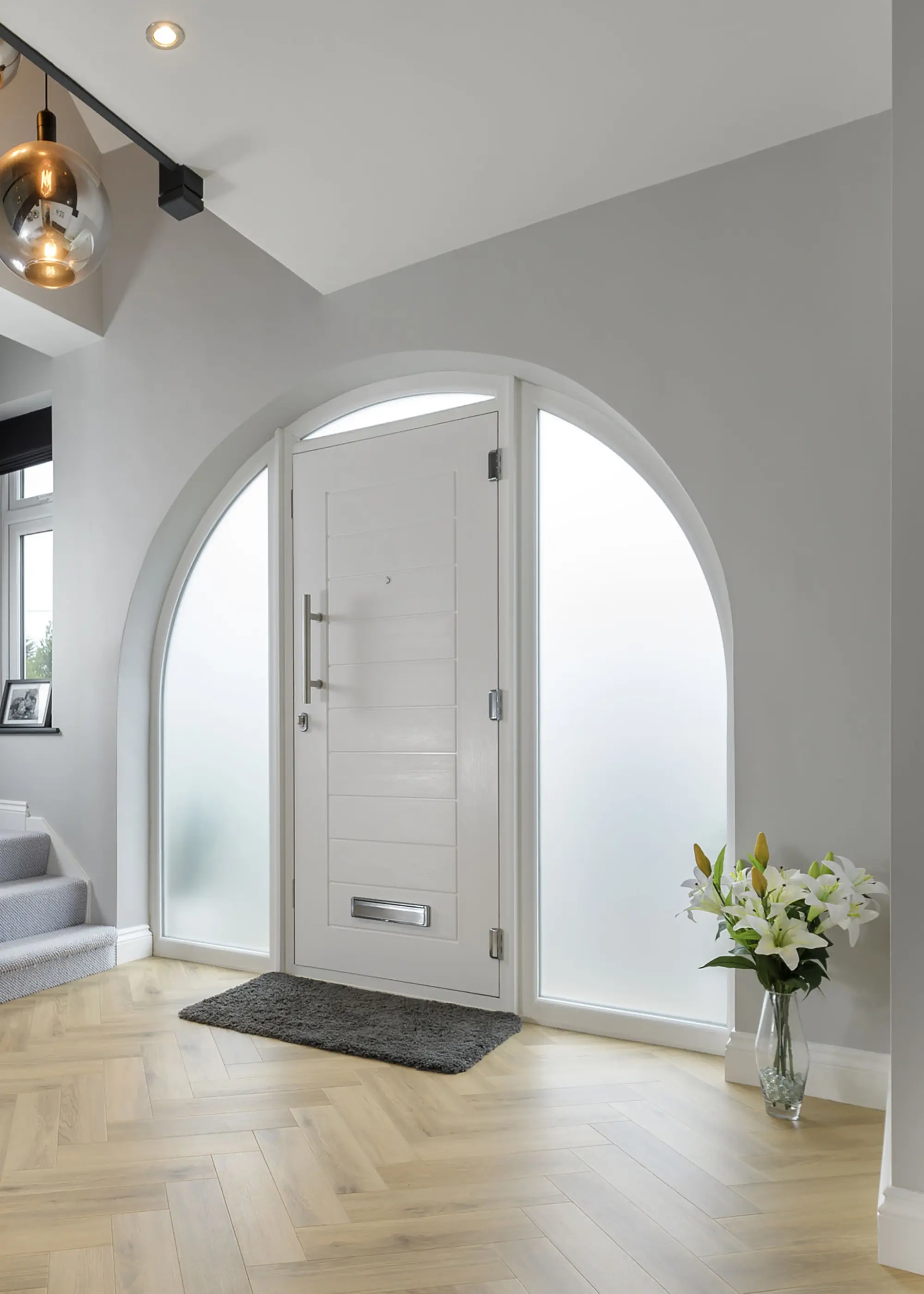
Solidor’s Palermo composite door is made from layers of wood, fibreglass, reinforced plastic and toughed glass. This makes it robust and secure, while the clean aesthetic works in both modern and traditional settings
For a modern finish, concealed handles offer a clean, sleek appearance, while a long pull handle can create a dramatic focal point. Components come in a range of materials, such as bronze, brass and stainless steel, allowing you to tailor the overall aesthetic to your taste.


































 Login/register to save Article for later