What’s the Quickest Way to Build a House? Your Guide to the Speediest Structural Systems
What is the fastest way to self build a brand-new, bespoke home? Amandine Lefevre explores three mainstream building methods that will enable you to realise your dream project, fast, and looks at how to properly prepare your site
Amandine Lefevre
Rapid build systems offer numerous advantages for self builders, notably a significantly faster project completion, predictable costs through reduced labour and waste, and superior quality control in factory settings. Getting into the dry quicker insulates your project against adverse weather conditions and protects neighbours against lorryloads of deliveries for weeks on end. It also means you can be more confident in your build schedule and even get ahead of the game by ordering products such as glazing off-plan.
Three popular rapid construction methods –timber frame, structural insulated panels (SIPs) and insulated concrete formwork (ICF) – stand out as key options for swift delivery. With all three systems, your supplier will take the architectural plans (some can offer the planning design, too) and engineer them specifically for the building method. At this stage, wall layouts, load paths and connection details are resolved, and once finalised, the panels are then manufactured offsite in a controlled factory environment. Many providers also offer on-site assembly to ensure fast completion.
Each system offers an individual approach to creating comfortable, energy efficient homes that are built to last – quickly and cleanly. Here, I’m speaking to experts about the main factors you need to consider to maximise build speeds.
How long does it take to build a house using timber frame?
Timber frame is a proven system and a hugely popular option for self builders. The structural elements are prefabricated to a high degree of precision, as the storey-height wall panels are factory-made with insulation and membranes pre-installed. Floor joists and roof trusses are fully engineered and manufactured offsite, too.
Once the panels arrive, they are quickly assembled onsite. The speed of construction will be determined by the size and complexity of the project. However, a typical four-bed family home might take around two weeks to reach weathertight stage – with larger or more complex projects taking perhaps three or four weeks.
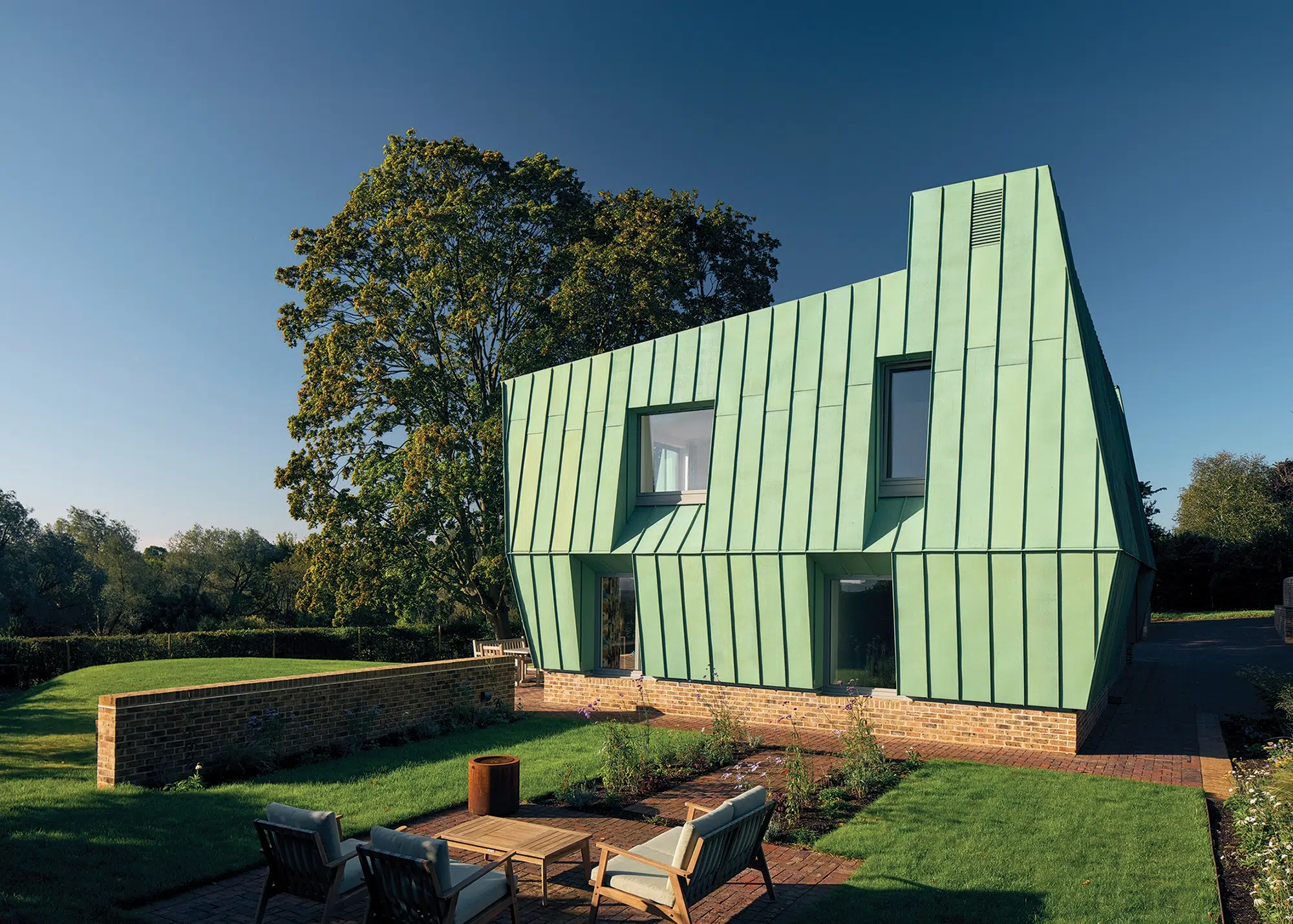
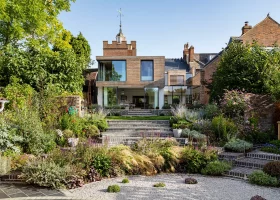
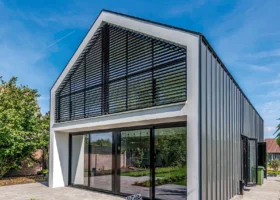
Working in collaboration with Adrian James Architects, Timber Innovations crafted this striking, modern family home in Oxford. Its unique geometric design acts as a brise soleil on three of the facades, helping to manage solar gain, plus a porch on the fourth. The dynamic sculptural form is clad in stylish copper, offering a delightful, durable finish, which is also both 100% recycled and 100% recyclable
If required, additional insulation linings can then be installed to achieve the desired performance level. For maximum speed, pair the system with fast-install external finishes such as timber cladding or brick slips in order to avoid time-consuming wet trades.
One of the key benefits of timber frame is its flexiblity, both in terms of design and throughout the course of its lifetime. “During the design stage, layouts, spans and openings can be adjusted with relative ease as the structure is digitally modelled in 3D software before manufacture, allowing a high degree of freedom right up to final sign-off,” says Sarah Mathieson, managing director at Fleming Homes. The finished house remains adaptable, too; non-load-bearing internal walls can be reconfigured, and extensions are common.
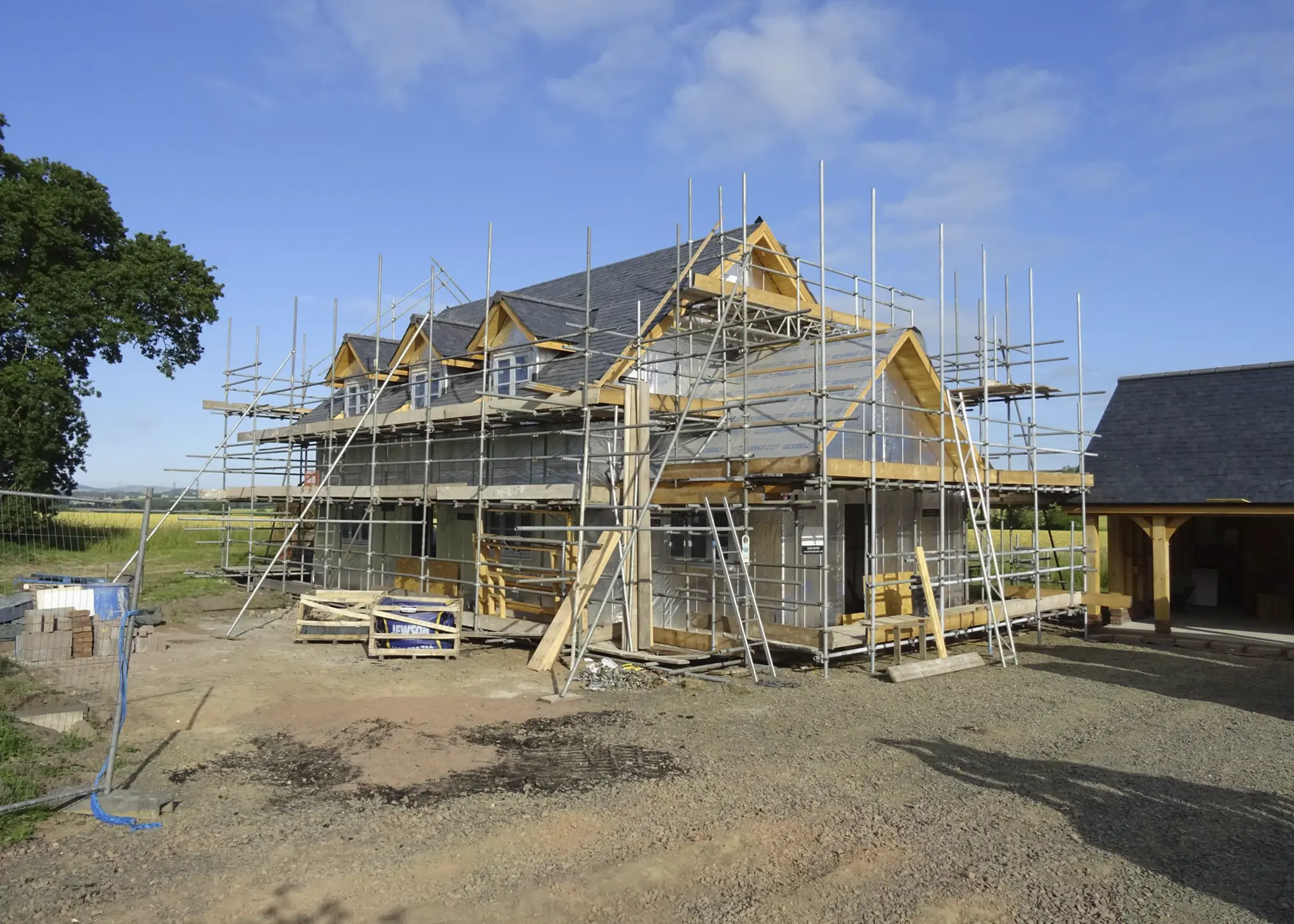
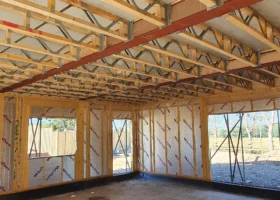
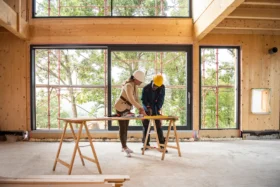
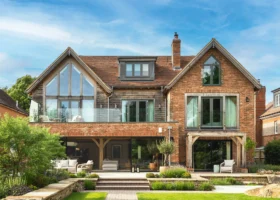
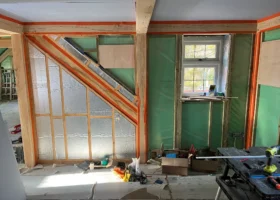
A Fleming Homes timber frame self build taking shape onsite
Timber frame is often perceived as the most cost-effective rapid build system on the market. “Long-established UK supply chains and efficient off-site manufacturing help keep prices competitive while still delivering the speed of construction and erection,” says Sarah. So, self builders can expect a quick route to a warm, energy efficient and value-for-money home with consistent, predictable thermal performance and long-term savings on bills in the long-run.
Where should you start when planning your home building project? Build It’s in-depth downloadable guide to self building a house contains everything you need to know to make your project a success.
How long does it take to construct a home using structural insulated panels (SIPs)?
SIPs construction can be described as a front-loaded process, with decisions made early on, resulting in speed, accuracy and performance on site. The factory-made superstructure can be erected in a matter of weeks. Construction is straightforward, too, as – just like timber frame – elements such as door and window openings are pre-cut, and the inside of the panels can be pre-battened ready for the application of plasterboard.
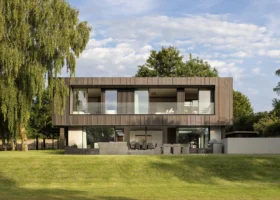
Fuggles Pocket by Glosford SIPs was awarded Build It’s 2021 for Best SIPs Home, showing how a factory-made system can be integral to even the most intricate home design
All connections are mechanically fixed and fully sealed to ensure structural continuity and airtightness. “Because the structure, insulation and airtight layer are combined in one system, a typical house can be weathertight in under two weeks,” says Matt Banks, managing director at SIPs Eco Panels. From here, services, windows, external finishes and internal linings proceed in a similar manner to other builds routes, but often with fewer delays and less remedial work. Again, pairing the system with lightweight, quick-fit claddings will maximise efficiency in your build programme.
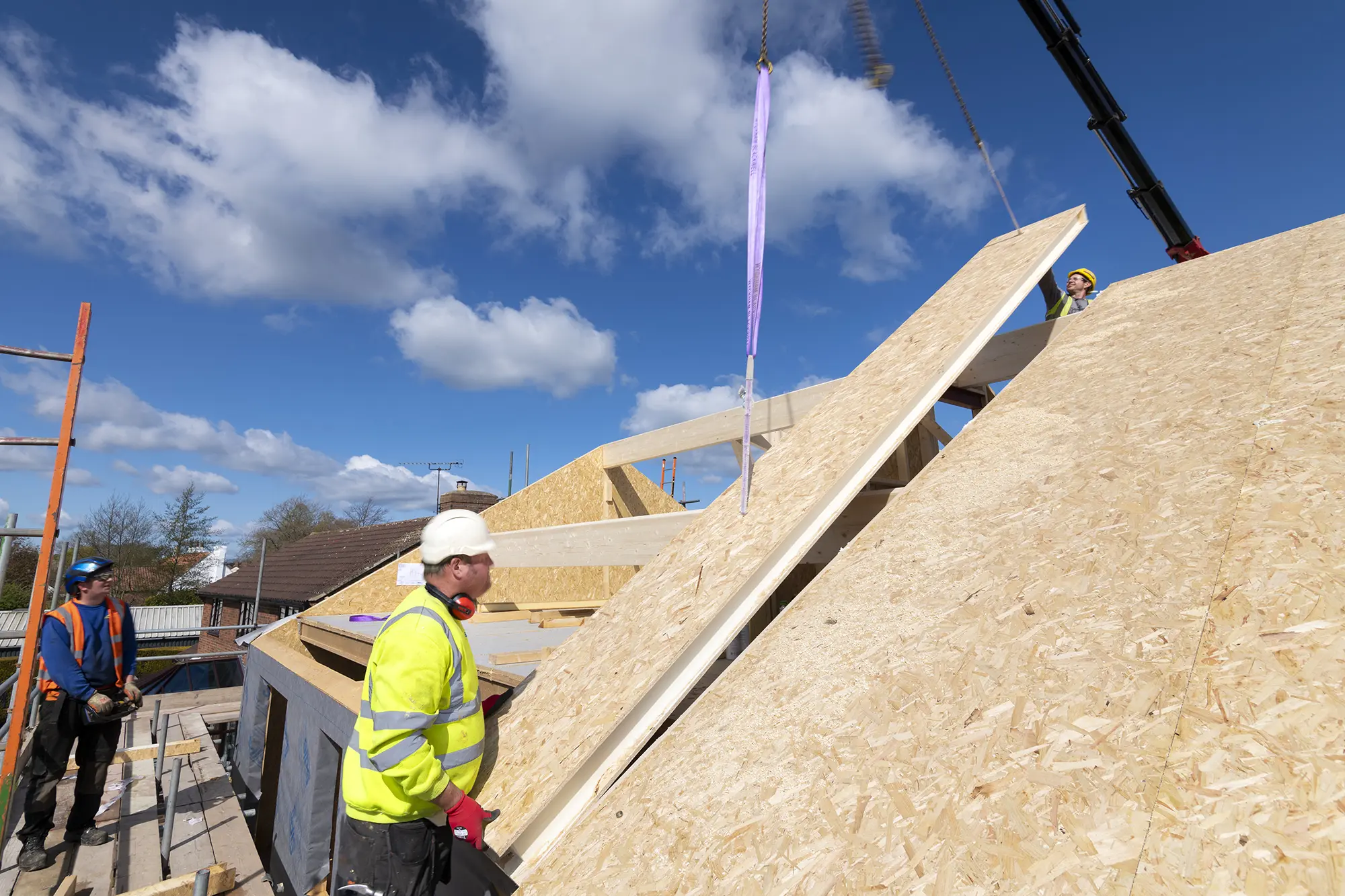
A pre-insulated roof panel being craned into place as part of a SIPS@Clays project. The system’s innate strength enables a much clearer attic void than standard trussed rafters – supported here by a glulam ridge beam and purlins
A key benefit of a SIPs build is its strength. “Each panel forms a continuous structural element, meaning loads are spread evenly across the wall or roof rather than being concentrated at regular stud positions,” says Matt. This results in a structure that’s exceptionally stable, enabling wide spans and easy integration of architectural wow-factor features, such as vaulted ceilings.
The old misconception that SIPs houses are sealed boxes, with limited options for creative design, has long been debunked. In reality, these homes are carefully ventilated, often using mechanical ventilation with heat recovery (MVHR), to create comfortable, healthy living spaces. “SIPs are also extremely versatile and well suited to open-plan layouts, large openings and contemporary architecture,” says Matt.
How long does an insulated concrete formwork (ICF) house take to build?
ICF is a modern, in-situ method of construction, using lightweight blocks or panels made from two layers of insulation, which are stacked and interlocked like giant building bricks. Once in place, the hollow core is filled with concrete, forming a strong, energy efficient shell, before external and internal finishes are applied at the end to complete construction of the build.
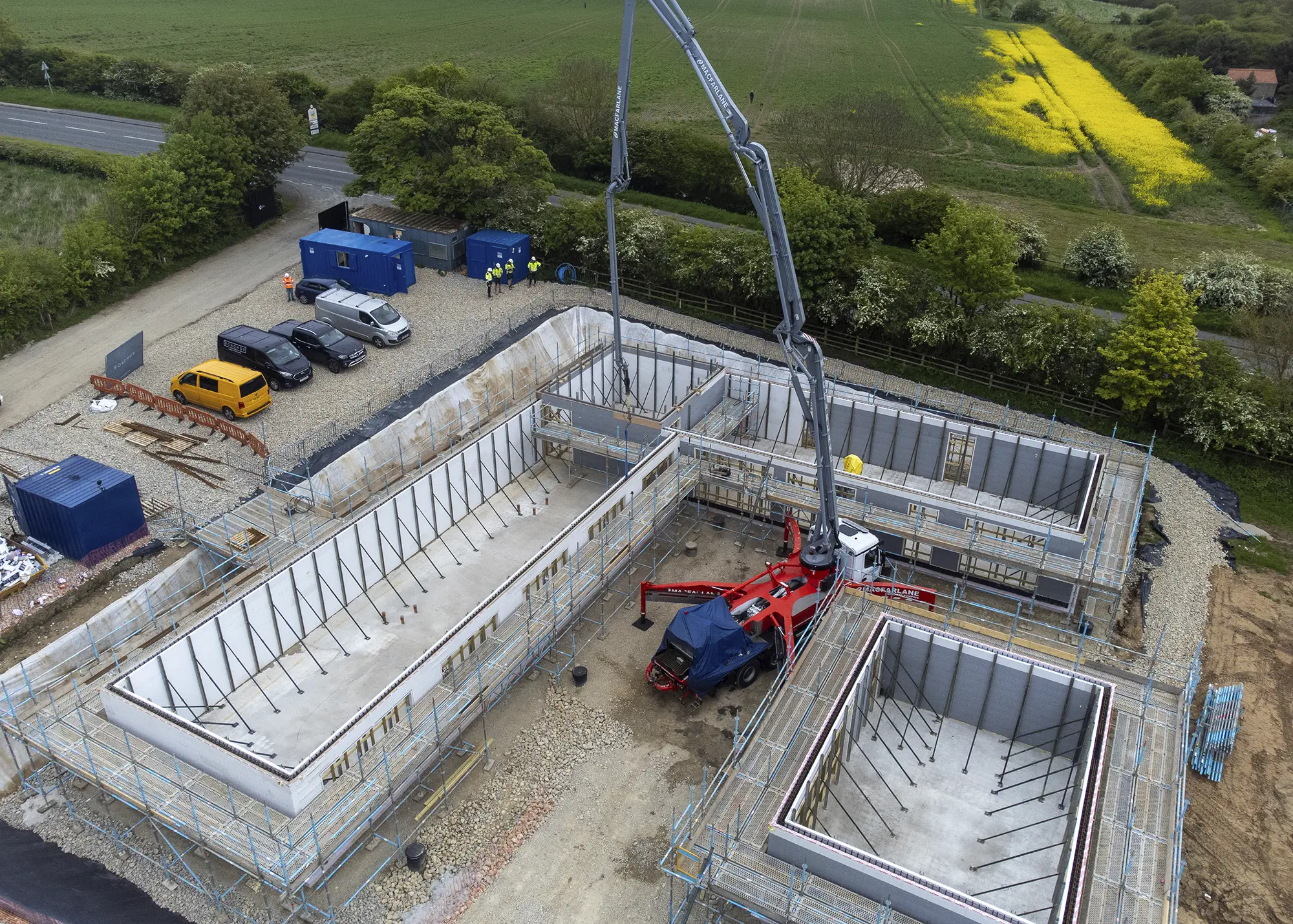
The construction of this home by ICF Bondmor used 484m² of ICF walling with a 412m² insulated raft foundation. The entire build took 60 days to complete, and the finished property has an impressive airtightness level of 0.26m³/hr/m²
For ICF, the speediest route is to use direct-applied finishes, such as silicone render, which can be added straight to the external surface without the need for extra backing systems. Once out of the ground, a standard build might progress at a rate of three days per storey lift for an average-sized detached property. With the walling in place, a further two to four weeks for glazing and roof construction will get the build to a watertight stage. So, not quite as fast as timber systems – but lightning quick for an on-site method, and much more weather resilient compared to traditional masonry.
One of the main benefits of ICF is an incredibly strong structure. “The concrete core within an ICF structure has in the region of four to five times more load bearing capability than even masonry building, allowing for tremendous flexibility when it comes to the architectural design,” says Richard Leonard, business manager at Beco Wallform.
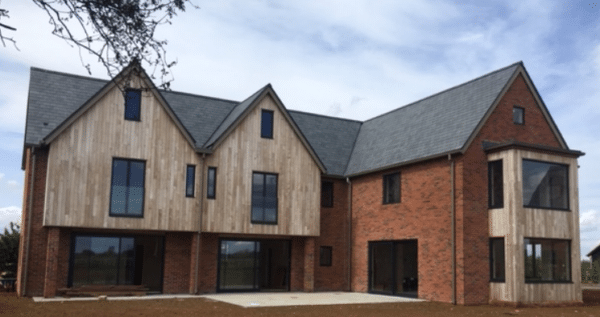
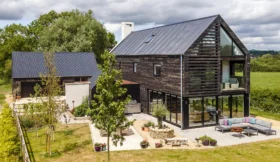
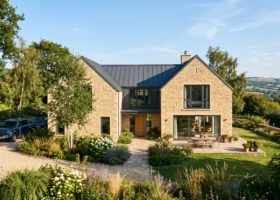
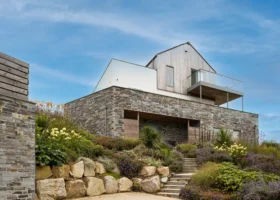
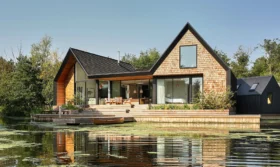
This award-winning home was completed in 2019 by the self builders themselves, using Beco Wallform ICF to create a robust, highly insulated structure finished with timber and stone cladding
It’s wrapped in continuous insulation, resulting in excellent long-term performance. Just be sure the construction details are planned: even partially-cured concrete is tough and time-consuming to cut, so sleeve out for services and ensure window/door levels are clear prior to the pour.
ICF ticks all the boxes of fabric first design principles. These types of builds provide very low U-values, excellent airtightness performance, high thermal mass and the elimination of thermal bridging, with companies such as Beco Wallform even achieving Passivhaus Compatible Component status. “For the homeowner, these features translate into reduced running costs, low maintenance requirements and high levels of comfort,” says Richard.
How can you prepare your site for a self build to speed things up?
Most early-stage project delays occur when the site simply isn’t prepared and ready for construction; incomplete ground investigations, unsatisfied planning conditions and poorly-realised groundworks can be common causes of this. A site investigation is essential if you want to take advantage of a rapid build system. This will include a soil analysis to assess the strength and stability of your land and largely inform the foundation design of the build. A topographical survey is also required to confirm site levels and boundaries. “Without these in place, the structural design will be provisional, slowing the project,” says Sarah.
When building the Build It Education House, we were supplied two smaller welfare units, rather than the single large one we ordered. The price was the same, but we had to pay an electrician more to connect up temporary services
Foundations and groundworks should be designed and agreed upon at the technical design stage and in consultation with your system provider. Designing the superstructure and substructure with them will reduce delays and on-site risk and helps ensure a smooth build programme.
Power to the site will be required during the build phase, so a temporary electrical supply is recommended and can be moved inside later on. “Anything below ground needs careful coordination early on, including foul and surface water drainage, incoming services such as water and electricity, and any ducts that may be required through the slab,” says Sarah.
Can I change the design of my timber frame home once the construction process is underway?
Ideally, once your home’s structural frame has been fabricated, you shouldn’t make any changes. This is why it’s so important to enlist the skills of a good designer, who by this point would have gone through all the different design options and who understands how you’ll want to use the rooms and space early on in the process.
You can work with your supplier to make changes to the design right up to the point where it’s signed off and sent to the factory for manufacture. Any alterations to the scheme after that could be costly as you’d be paying for a structure that has already been manufactured and that won’t be needed anymore, on top of the cost of the new elements.
Answered by Gareth Edmunds
Gareth Edmunds is design director at Welsh Oak Frame, a leading oak frame supplier specialising in bespoke oak frame homes, single storey and double storey extensions.
Is it hard to make structural alterations to a SIPs home post-build, such as adding an extension?
Homes constructed using SIPs are no more difficult to extend or alter than any other form of construction, providing you have selected a well-known and reputable company to undertake the SIPs superstructure. Make sure your supplier gives you fully detailed as-built drawings, structural calculations and warranty information once handover of the build has taken place. These documents can all be used to ascertain future opportunities for any alterations.
Answered by George Glifford
George Glifford is commercial director at Glosford SIPs, a Hereford-based SIPs supplier offering a complete service for your structural building envelope, using renowned Kingspan TEK wall and roof panels.
Is it tricky to find a builder who has worked with SIPs?
Whilst SIPs is considered a modern method of construction, it follows many of the principles of timber frame, which has been used for centuries across the UK. It is not necessary to select a builder that has worked with SIPs previously. However, it is of paramount importance that the substructure is installed within tolerance and to the best standard possible. Once the SIPs have been erected, the follow-on trades will have a square, level and insulated substrate to work with. Both indoor and outdoor trades can start simultaneously, unlike conventional timber frame, which vastly reduces build times.
Answered by George Glifford
George Glifford is commercial director at Glosford SIPs, a Hereford-based SIPs supplier offering a complete service for your structural building envelope, using renowned Kingspan TEK wall and roof panels.
Is the timber frame manufacturing process eco-friendly?
It’s true that timber package homes are both sustainable to live in and create. These self build houses have been expertly designed to deliver excellent thermal and airtightness properties. Plus, as they are manufactured within a controlled factory environment, high performance is guaranteed and waste is minimised throughout construction.
Closed panel timber systems can achieve U-values from 0.18 right down to 0.09 W/m²K. On top of these impressive performance indicators, timber is the only naturally renewable structural material. Timber frame is a highly sustainable and eco-friendly form of construction, with the lowest embodied carbon of any mainstream structural building material.
Answered by Simon Orrells
Simon Orrells is the managing director at Frame Technologies, and has over two decades’ experience in self build timber frame construction. Frame Technologies offers a flexible range of timber services to cover full supply-and-erect, or supply-only packages.
How much does it cost to build a timber frame home in the UK?
Simon Orrells, managing director at Frame Technologies, says that a timber frame house could cost £350-£365 per m² (as a rough guide), based on a fairly standard self build spec (above Building Regulations). This would include the detailed design, supply and erection of the insulated timber frame on site. There are various factors that will move the needle, from the insulation spec to whether you’re incorporating large spans of glazing. Mark Stevenson of Elsworth Projects pins down how much of your total build budget the frame should make up: “A typical insulated timber frame should be about 18%-20% of your build budget,” he says. “Of course, that will be a different amount of money each time. This percentage is normalised; it will skew the budget if, for instance, you plan to spend £100k on a luxury kitchen.”
Amandine Lefevre
Amandine Lefevre is Build It's features writer. She's passionate about home design, and is always on the lookout for inspiring, creative self builds and renovations.





















 Login/register to save Article for later