


- Plan ItBack
- Design ItBack
- Build ItBack
- Homes
- ProductsBack
- CostsBack
- Self Build Cost Calculator
Estimate your project costs instantly with Build It's interactive self-build cost calculator
Calculate Now - Costs & Finance
- Contracts & Warranties
- Build It Estimating Service
Get an accurate, detailed cost breakdown of your project
Submit plans
- EventsBack





























 Login/register to save Article for later
Smart Home Security Guide – How to Choose a Smart Tech System that Works for You

When you’re investing time and money into creating a bespoke home, security shouldn’t feel like an afterthought. Yet many houses still rely on systems that only spring into action once something has already gone wrong – an alarm sounding after a break-in, or a smoke detector alerting you when a fire has already taken hold.
Smart home security takes a more proactive approach. By linking sensors, lighting, alarms and access control into a single, connected system, today’s technology can respond automatically to potential risks and keep homeowners informed in real time. Used well, these systems can contribute to safer, more comfortable living. Here, I’m speaking with the experts about how smart security can be integrated into a modern home, and what to consider when planning your setup.
What are the main benefits of a fully integrated smart home security system?
At its core, smart home security is about bringing multiple protective measures together. Cameras, motion sensors, access control and alarms operate within one coordinated system rather than isolated components. This allows the home to respond dynamically to different scenarios, whether that’s alerting occupants to unexpected movement or locking down access points automatically.
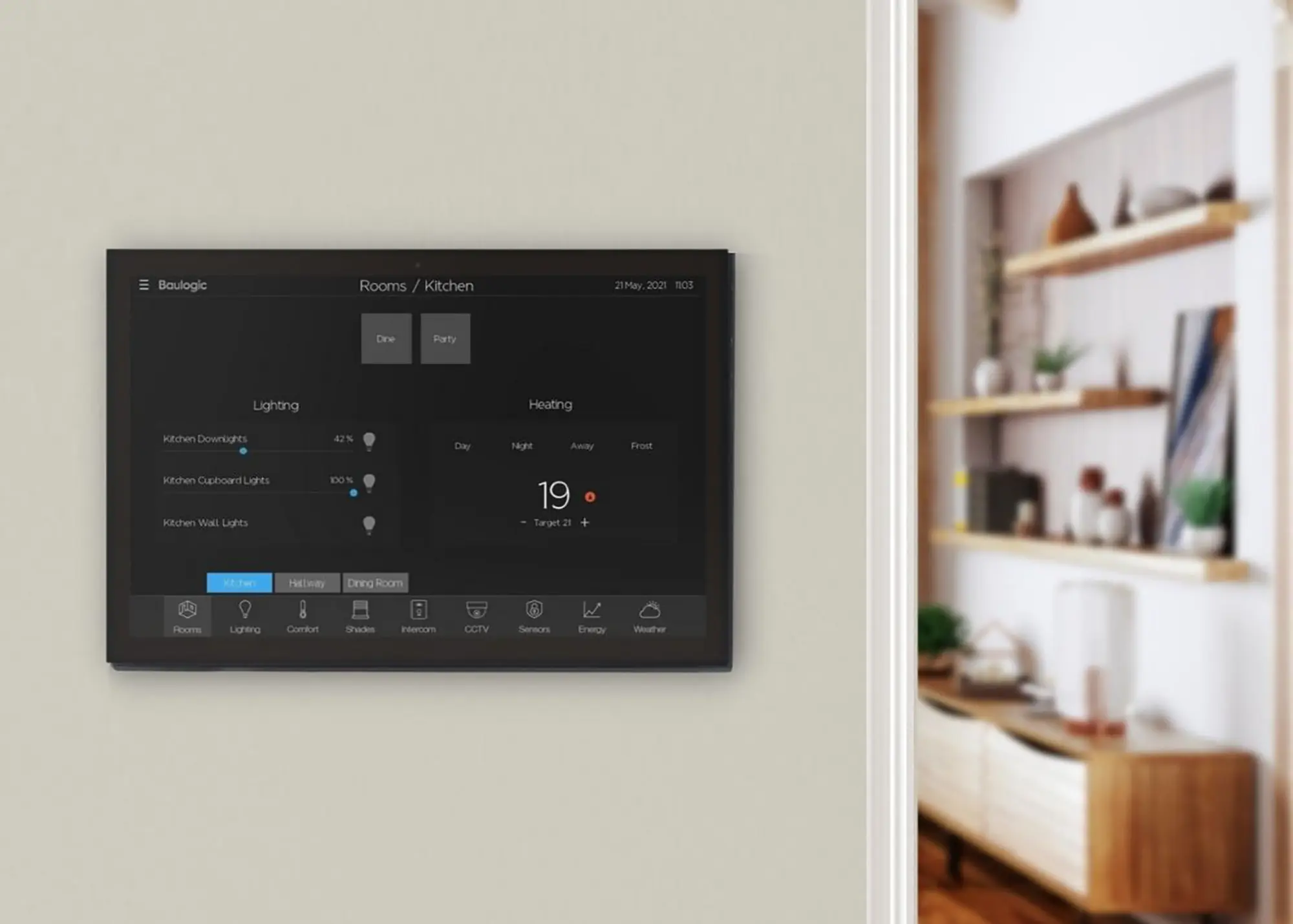
This Baulogic smart home security setup includes an accurate and highly detailed motion lighting system to ensure safe movement around the home at night
“What makes these systems smart is their ability to adapt and react in real time,” says Darren Palmer, senior director at Baulogic. “Increasingly, they connect with lighting, blinds and other home controls to create the impression of occupancy or trigger responses automatically when unusual activity is detected.”
Remote access is a defining feature. Homeowners can check camera feeds, receive notifications and control systems via their phone, providing reassurance whether they’re at work or away on holiday. “The value of smart home devices centres on everyday convenience and peace of mind,” says Martin Pansy, CEO and co-founder of Nuki Home Solutions.
How important is security lighting?
Enhancing security and safety isn’t just about shutting up shop. Motion-activated lighting can illuminate spaces automatically when movement is detected, for instance, reducing the risk of accidents at night while also acting as a visible deterrent to intruders. External lighting, in particular, can draw attention to activity around the home and discourage unwanted access.
Modern systems allow lighting responses to be carefully calibrated. “Lighting can be set to specific levels, such as 20% brightness at night, so that homeowners can see without being blinded by strong light,” says Darren. Combined with accurate motion sensors and efficient LED technology, this approach enhances protection and can even provide energy savings versus standard switched lighting.

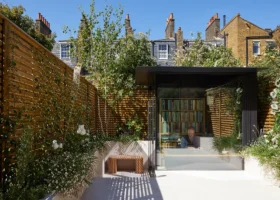
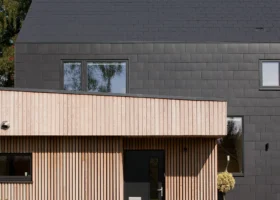
This front elevation extension by Brosh Architects incorporates lighting systems to provide security, while helping to boost the home’s
Again, an integrated whole-house system will deliver the best results. For instance, occupancy simulation can be particularly effective when combined with cameras and alerts that notify homeowners straight away if any strange or potentially concerning incidents occur. “Immediate notification of unusual activity means that homeowners can react quickly, preventing theft or damage before it escalates,” says Darren.
How do smart locks work on a front door?
Smart locks, such as fingerprint-based and app-controlled systems, combine security with increased control and convenience. Unlike keys, which can be lost, stolen or copied, these new systems make use of secure digital authentication or unique biometric data. They also allow homeowners to grant and monitor access in real time, with some systems even enabling you to grant temporary entry rights to guests (whether family, friends or trades).
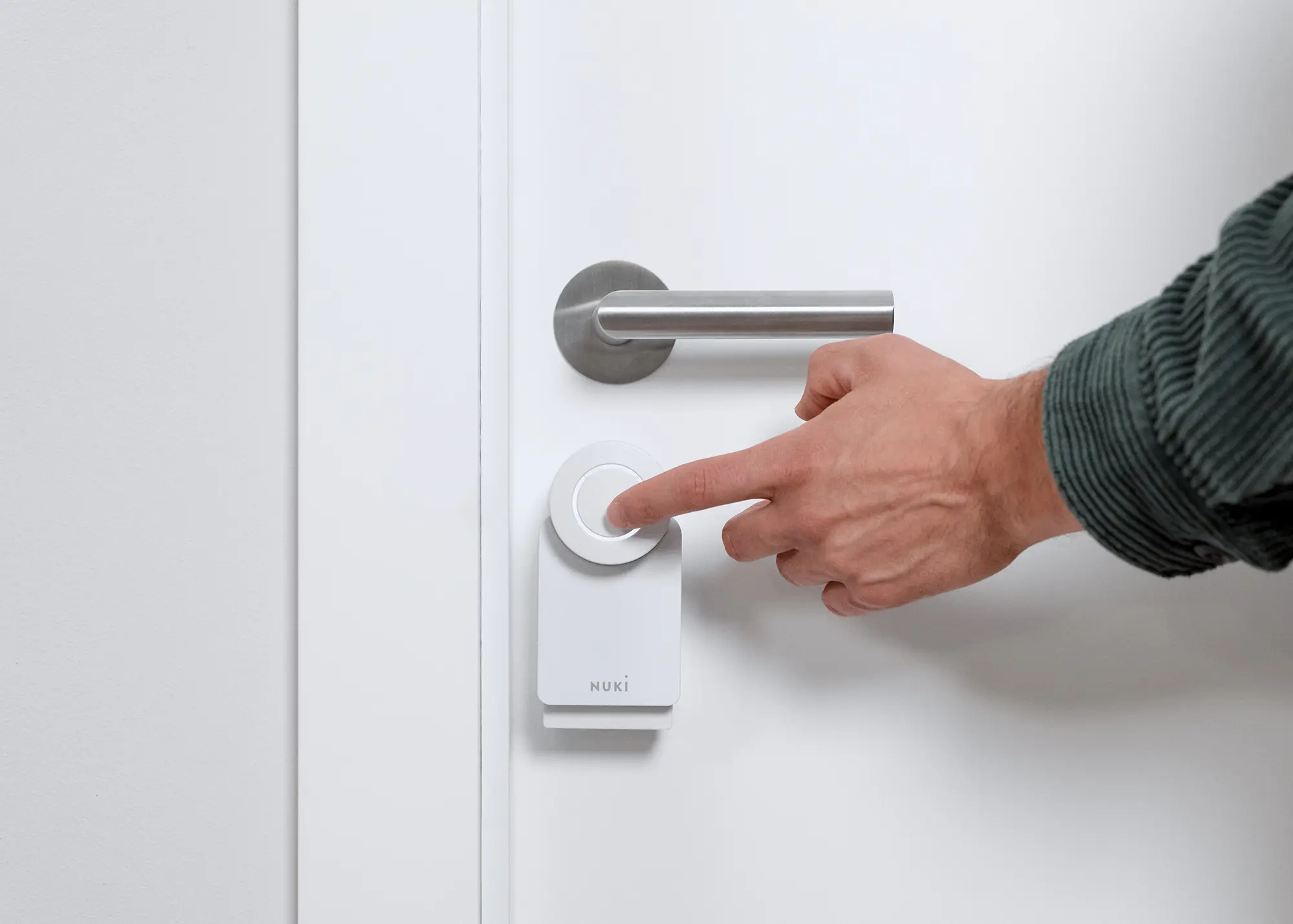
Available from £139, the Nuki Smart Lock Go uses state-of-the-art encryption mechanisms used in online-banking for maximum safety and security
One common misconception around smart locks is that they could be stolen or hacked “With strong encryption algorithms, similar to those used in online banking, and the so-called challenge-response procedure, it’s impossible to eavesdrop on or copy and replay lock commands,” says Martin. Many smart locks are also installed on the inside of the door, which means it is impossible to remove them from the outside.
They’re also not just for the techy few: you don’t necessarily need a smart phone or watch to use them. Fingerprint or keypad access suits those of a more analogue persuasion, while products with an emergency function often include a physical access key as backup – which could sit with a local family member or neighbour, for instance.
One thing to be aware of is how the smart tech is integrated into the door – does it replace the entire locking system, or is it an add-on? This could have implications for the individual door’s security certification (such as PAS24 or Secured by Design) and could have an impact on insurance policies. Some door suppliers offer their own pre-approved smart lock upgrades to avoid complications.
How can you create an emergency response system using smart technology?
Beyond intrusion prevention, smart systems are also playing an increasingly important role in safeguarding occupants during emergencies. Fire detection, sprinklers and emergency lighting can all be integrated into a single platform, for instance, allowing coordinated responses in case something goes wrong.
Fire safety
Smart sprinkler systems work alongside modern fire detection technology to activate automatically in affected areas, helping to suppress flames before they spread out of control. However, proper planning and professional installation are essential. “Homes that have multiple zones or bespoke layouts may require more extensive planning and installation work, which should be carried out by qualified professionals,” says Darren.
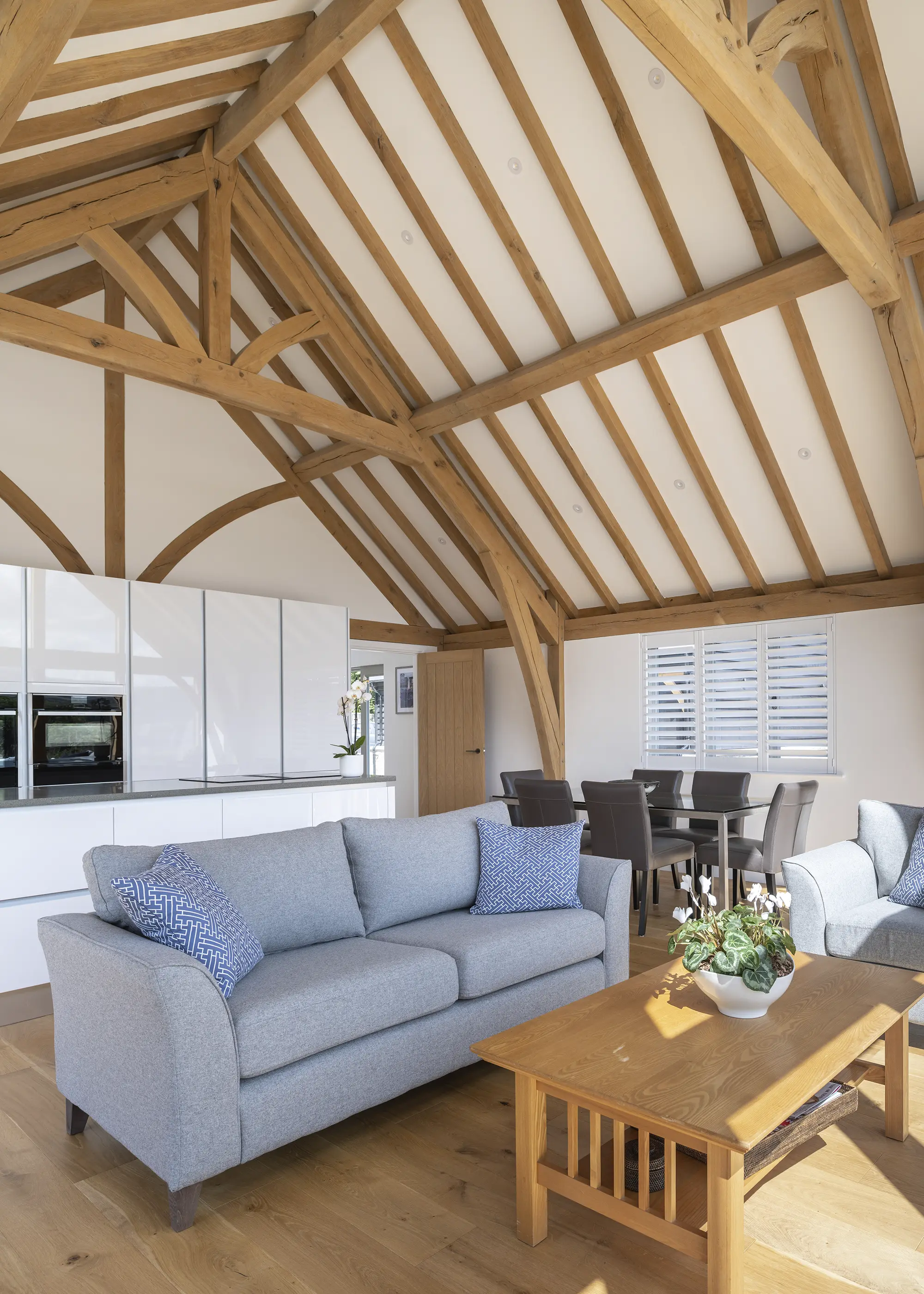
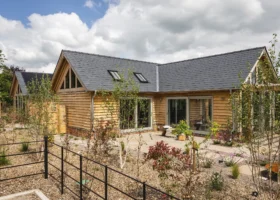
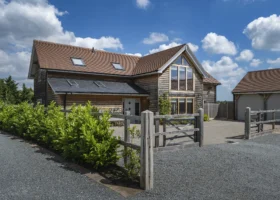
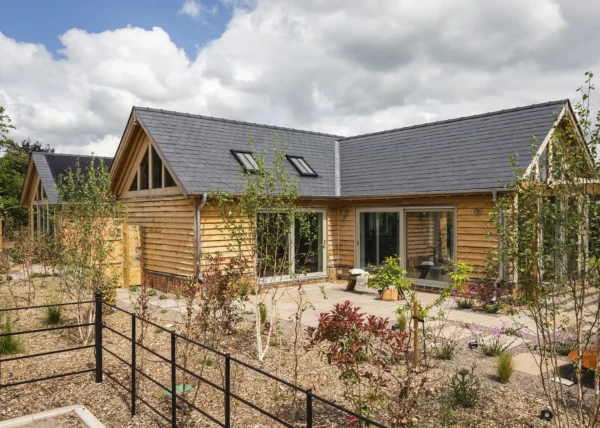
Graham and Diane Roberts built their oak frame home and a separate garage with guest accommodation on the car park of a former pub in Wales with glorious mountain views. The house features a wireless lighting and sprinkler system, a Building Regulations fire safety requirement for new builds in Wales. Photo: Nikhilesh Haval
Power outages
Emergency lighting is another valuable feature. When a fire or smoke alarm is triggered, predefined routes – such as hallways, staircases and exit paths – can illuminate automatically. This helps occupants orient themselves quickly, reducing panic and enabling safer evacuation. “Emergency-activated safety lighting benefits a wide range of homeowners, but it’s particularly valuable for families with young children, older occupants or anyone with reduced mobility,” says Darren.
Battery-backed circuits or uninterruptible power supplies can keep essential lighting operational even during power outages. And for peace of mind, smart systems often include diagnostic tools and alerts. “This can identify faults or maintenance needs, simplifying upkeep and providing reassurance that the system will perform as intended in an emergency,” says Darren.
How important is professional installation when specifying a smart security system?
As with any connected technology setups, smart security networks require quality design and installation. While standalone products such as video doorbells can be straightforward retrofitted DIY, working with specialists is key for more advanced or whole-house solutions. There are also legal requirements to consider. Cameras and sensors should be positioned to cover critical areas without infringing on private spaces, and homeowners must be mindful of recording areas that could capture neighbouring properties or public land.
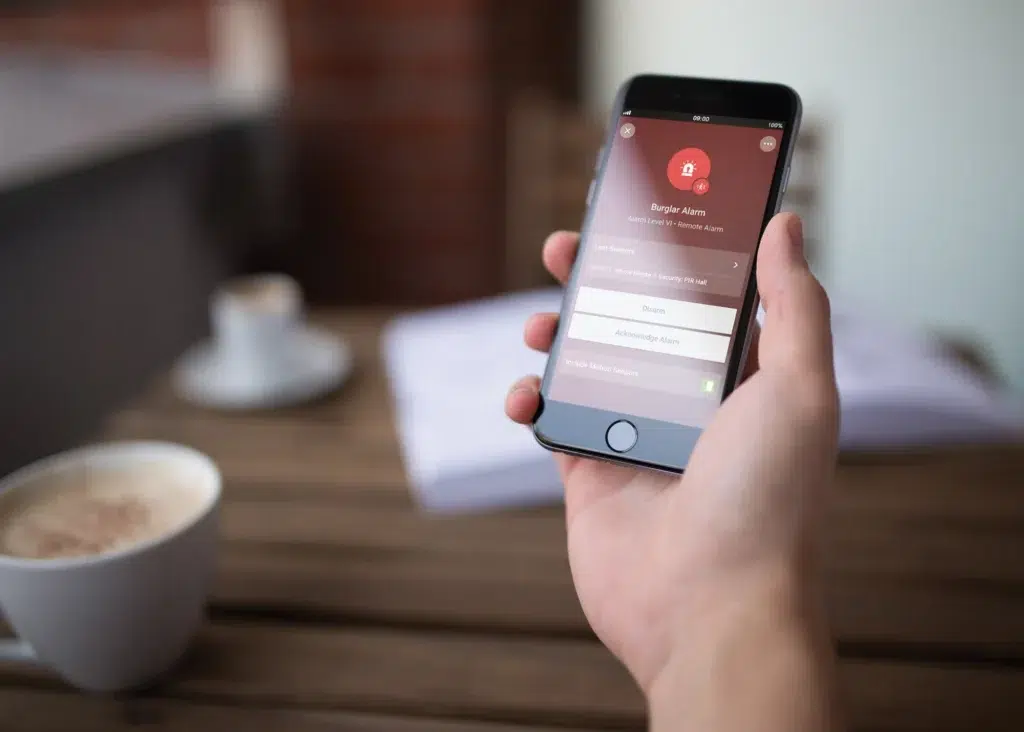
The Loxone Smart Home App includes a customisable burglar alarm system, allowing you to remotely arm/disarm, receive calls or notifications in real time for threats and trigger automated responses such as flashing lights or playing sirens through the app’s intuitive interface
Cybersecurity is equally as important as physical protection. Password protection, encryption and regular software updates are essential to maintain data security and prevent unauthorised access. It is important to bear in mind that opting for reputable manufacturers and installers, and keeping systems up to date, will help ensure long-term reliability.
Ultimately, the most effective smart security solutions are those that are planned holistically. When security and safety technologies are integrated from the outset, they can work quietly in the background, enhancing everyday living while providing reassurance that the home is protected from both external threats and internal risks.
Scarlett Deamer

You may be interested in





Very interesting, as I have permission to build a small affordable home for myself.
Numerous problems overcome already, but probably more to come as local opposition to the small house on my own land is very virulent!!
However I have found a super builder and hope to get first stage underway soon!