How Much Does Planning Permission Cost in 2026? UK Planning Fees Explained
From how much the different types of planning application cost through to land surveys, design work and more, we break down how much you should expect to budget for planning permission in the UK in 2026 and answer your planning fee FAQs
Mike Dade
If you’re planning to build a house or extend your existing home, it’s likely you’ve questioned “how much does planning permission cost in the UK?” For any scheme where planning permission is needed, be it a self build, conversion or extension, the process will involve planning fees paid to the council, but how much it costs will depend on the type of project.
As of the 1st April 2025, planning fees have changed, with householder planning application fees and prior approval fees almost doubling. These updates respond to the National Planning Policy Framework (NPPF) consultation held in 2024, which proposed updates to UK planning application fees.
It’s easy to overlook or underestimate some of the costs associated with planning permission, but the last thing any project needs is to go over budget on the preliminaries before construction has even begun.
Planning fees fall into three camps. There are the rates for statutory planning applications, then council charges including pre-app costs, the Community Infrastructure Levy (CIL) and other payment demands, and finally, professional estimates.
The first of these is the most certain, as prices are set nationally, so are the same throughout the UK. Self builds are exempt from the CIL, so if your project qualifies then you won’t pay this.
Other council expenses, like for pre-app or legal agreements, vary greatly and can be considerable. Similarly, professional fees can swell your budget hugely, especially if you have to engage several on your project. Architects, planning consultants, land surveyors and tree, ecology, archaeology, environment, drainage and highways specialists are amongst the most commonly encountered.
Looking for a plot of land for your self build project? Take a look atPlotBrowser.comto find 1,000s of plots and properties nationwide, all with outline or full planning permission in place
Here I’m looking at the cost of planning of permission in the UK in 2026 and answering your other questions surrounding planning fees. The averages given for professional services here exclude VAT. Bear in mind some practitioners don’t charge VAT while others may add expenses that increase their quoted rates.
How much does it cost to get planning permission in the UK? Planning fees 2026
Planning fees increased on the 1st April 2025, with the last increase on 6th December 2023, where they rose by 25% across the board. Planning application fees in 2026 are now as follows:
Householder applications
Householder planning applications cover proposals to alter or extend a house, and relate to works undertaken within the boundary or garden. This is the most common type of planning application used for homeowners looking to alter their property or build in the garden as they generally require less detail.
It costs £528 for a householder to make an application for alterations to a single dwellinghouse, including works within a home’s boundary (this could include adding an extension to your home or creating a garden building). This does not cover works to a flat.
Householder applications for minor home improvement works (ie not development to the actual house) cost £262.
Full planning applications require you to submit an application containing all the details relating to a particular development. This is necessary if you’re building a new house or if you’re significantly altering a domestic property.
It costs £588 to make a full planning application for the erection of each dwellinghouse (up to 10 dwellinghouses).
To make an application for between 10-50 dwellinghouses, it’ll cost £635 per house.
It costs £528 to make a full planning application for an alteration/extension to a single dwellinghouse (or single flat).
Outline planning applications
An outline planning application is made when you’re looking to find out whether your proposed developments/plans are going to be acceptable either in principle, in whole or just in part. Generally, an outline planning application requires less information.
For site areas under 0.5 hectares, it costs £588 per 0.1 hectare to make an outline planning application.
For sites between 0.5 and 2.5 hectares, it costs £635 per 0.1 hectare.
Planning permission in principle
It costs £512 (per 0.1 hectare) to make an application for planning permission in principle.
Change of use
For applications of fewer than 10 dwellinghouses, it costs £588 to make a planning application for a change of use.
Other planning costs
You can cover multiple conditions under a single request, but if you want to submit the documents online via the Planning Portal, there is service charge of £70.83 +VAT.
If you wish to resubmit a planning application, you will have to pay the full fees as part of your resubmission.
You can calculate your potential planning application fees via the Planning Portal’s cost calculator service below.
Are you looking for some one-to-one planning guidance?
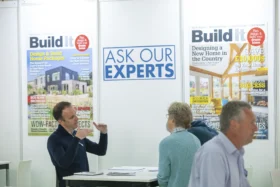
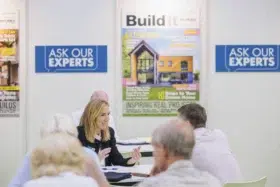
Visit Build It Live and visit the Ask our Experts Lounge for some valuable and impartial advice from our experts Julia Riddle and Martin Gaine.
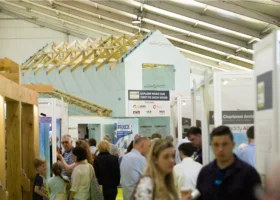
Build It Live takes place three times a year in Kent, Malvern and Exeter. The next show will be on 26th and 27th February 2027 in Maidstone, Kent. Claim a pair of free tickets today and start planning your visit.
Not sure where to start with your plot search? Kick-start the journey with Build It’s complete downloadable e-guide to finding the perfect self build site. Click below to find out more.
Seeking pre-application advice is generally encouraged. Prices vary from nothing at all through to a similar level to the cost of planning submissions. To receive this type of assistance, you’ll need sketch plans to hand upfront at the very least.
The CIL charge can be significant, and rates vary depending on the area. But if you’re building a new house, extension or annexe project for your own use, you should be eligible for an exemption. It’s vital that you fill out the correct forms at the right times to succeed with these claims, so check the rules carefully.
Local authorities will usually charge additional sums when permission is applied for or granted to put towards things like mitigating environmental damage to protected habitats or contributing to affordable housing.
The commitment to pay is usually secured through a Section 106 agreement and the council will generally expect you to cover their fees as well as your own. Consult a solicitor about these legal charges.
How much will surveys cost on top of a planning application?
For many projects, the first step is a topographical survey of the site to ensure its dimensions, trees, buildings and obstacles, as well as levels, are accurately recorded. Depending on scale and complexity, prices for this should be in the £600 to £1,200 range. However, for sites with steep gradients or tricky access, this could rise to around £1,500. For conversions, a structural survey is often needed, costing around £750 to £1,500.
If your site has a dense tree population, the local council might require a specific tree-related survey to comply with BS 5837 standards.
Build It Newsletter
Be the first to hear about the latest project advice, inspiration and product guides from Build It magazine. Also gain free show tickets and special magazine offers.
How much do architects and designers charge?
Design fees are likely to comprise the biggest element of your planning budget. You’ll incur charges for pre-app sketches and detailed application drawings, with additional fees for any amendments or if the architect’s input is required.
These are calculated as a percentage of the overall build price, given as a quoted lump sum or based on time occupied. Inevitably, a great deal depends upon the scale and complexity of the design and if you’re engaging an architect, architectural technician, building surveyor or some other kind of draughtsman.
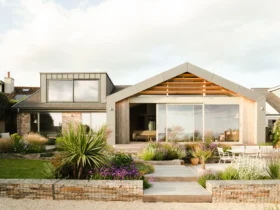
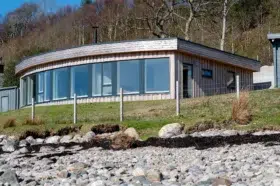
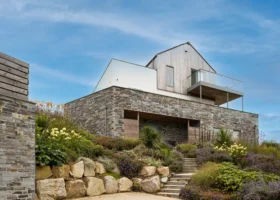
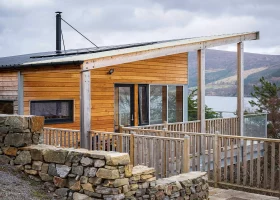
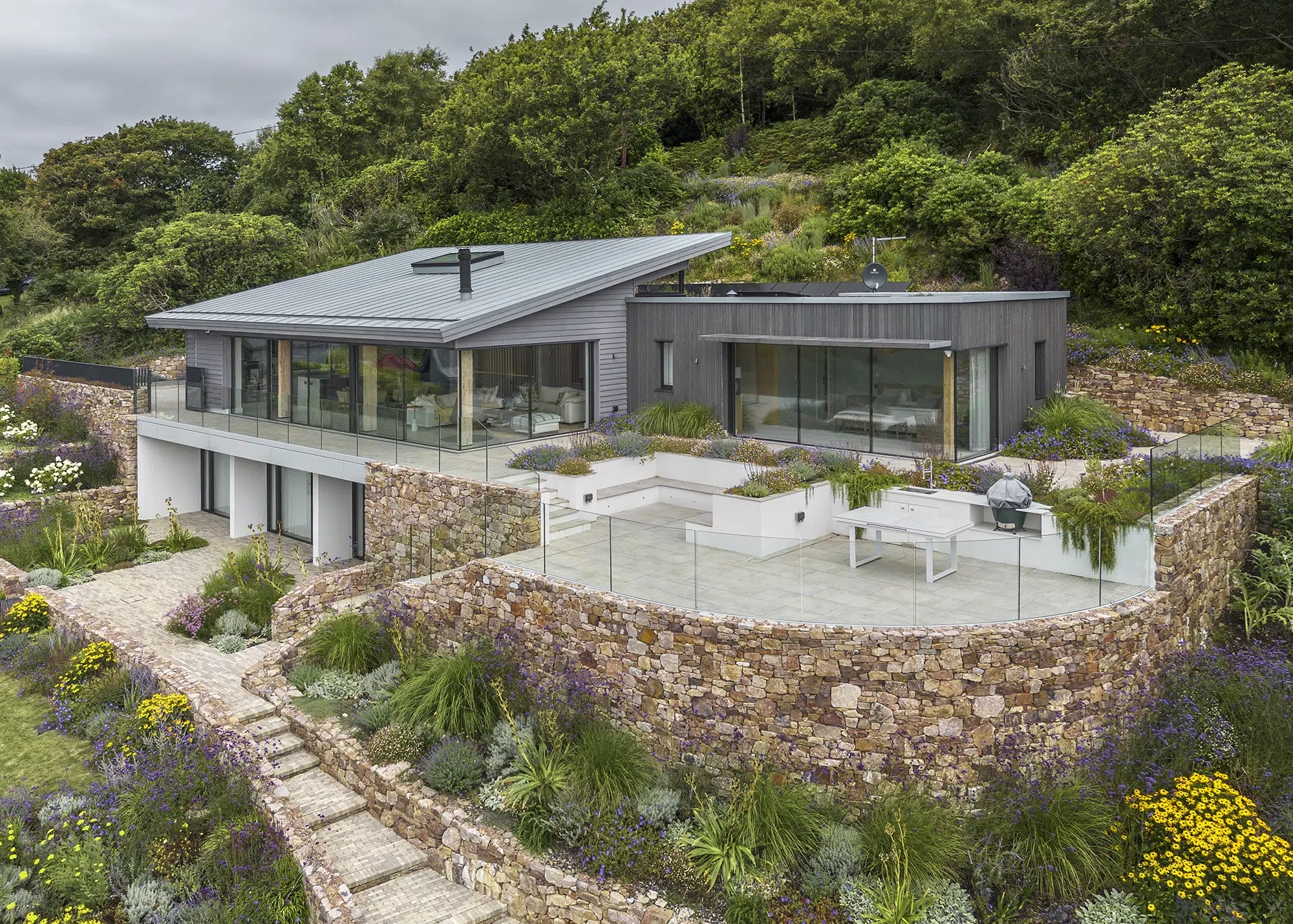
Developed in close collaboration with the clients, Roderick James Architects’ site-responsive, sustainable design embeds much of the structure into the hillside to reduce visual impact. A green roof, restrained earthy materials palette and dry stone retaining walls knit the building into the coastal heathland. This project won the 2025 Build It Award for Best Architect for a Self Build. Photo: Richard Downer
Pre-app drawings could cost from a few hundred to several thousand pounds, especially if ‘design development’ is included in this phase. Detailed illustrations for planning applications span from around £1,500 up to £15,000 – a huge range showing how important it is to get firm quotes for all work undertaken. Remember that if you change your scheme as it evolves, or amendments are needed, you might have to pay extra.
How much should you budget for the help of a planning consultant?
Whether or not you will need a consultant’s help depends upon how contentious your build might be, its complexity and the confidence and experience of your building designer or architect.
Sometimes specialist input is helpful at the very start of the project to assess the plot’s potential and determine whether it’s a viable option. On other occasions, having a professional’s view can be helpful if things start to go wrong – particularly if you have to appeal a refusal.
Quotes for these services are usually given as a firm figure for the likely work or on an hourly basis. ‘No win no fee’ offers might appear to be attractive but they are frowned upon by professional bodies. You could end up paying well over the odds for input that might otherwise have cost only a small fraction of your budget.
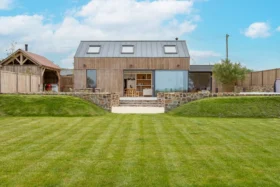
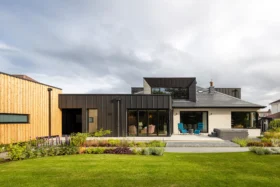
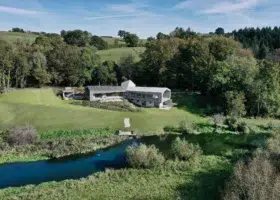
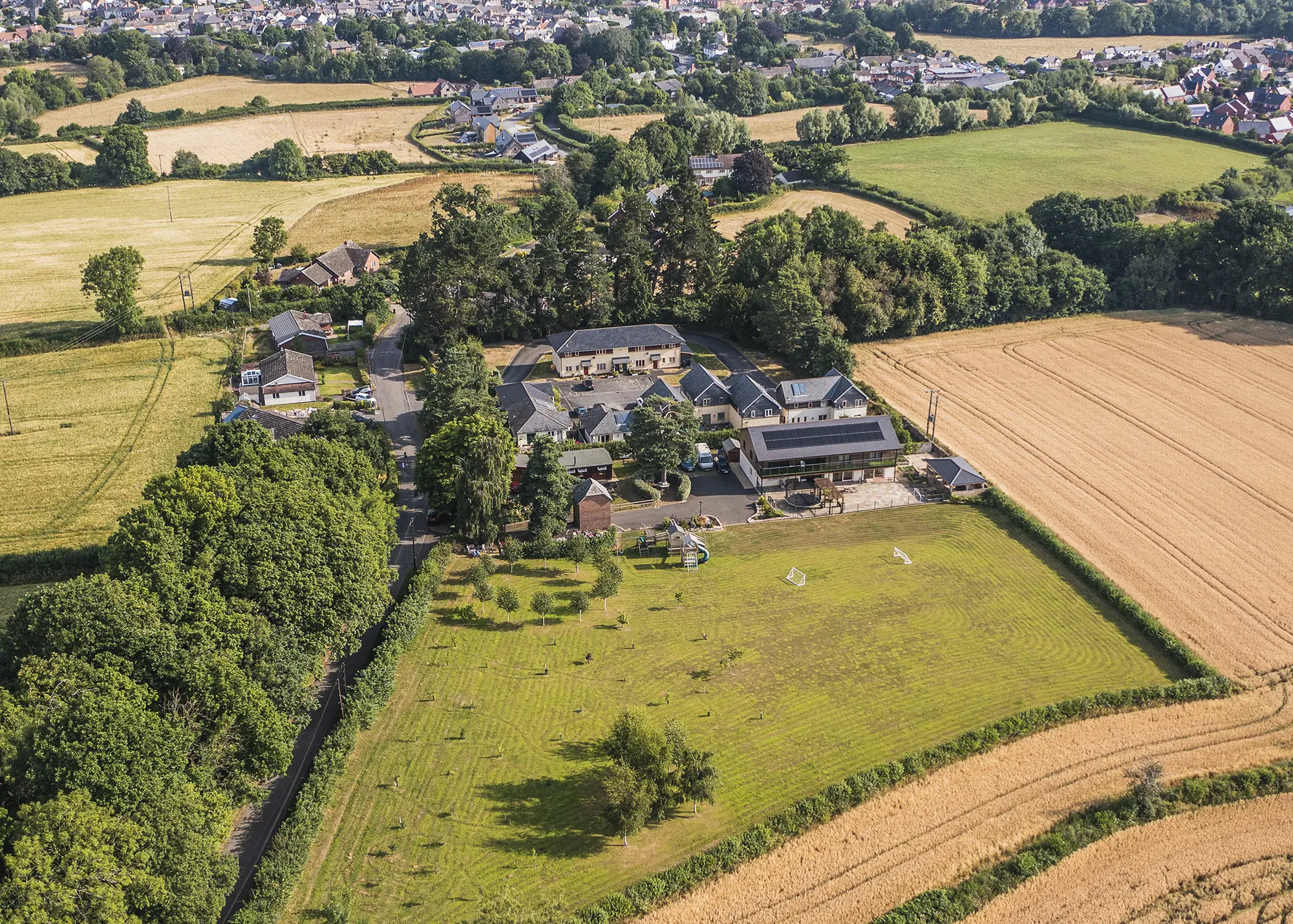
Pauline and Frank Mace built their 388m² Frame Technologies home on a 1.5-acre site. The couple bought two plots of land, one with existing planning consent, and the adjoining field, therefore ensuring no development could take place on the site and interrupt the beautiful views from their home
Charges for site assessments and helping with pre-app advice might run from £300 to £1,000, and for progressing a planning application for you, anywhere from £750 to £2,000. Making a written appeal, if all else fails, is likely to cost between £1,000 and £3,000 depending on complexity.
What other professional services should you expect to pay for?
There are various specialists who you could need to produce reports to accompany your application. If you take pre-app advice on your project, this should flush out what the local authority might expect. Here are the other services you should factor in:
Arboriculturist
Typically, you will need an arboriculturist – most councils will request an assessment of the implications for trees if there are any that could be affected by your plans. Fees for this are generally around the £300 to £1,000 mark.
Ecological reports
An ecological ‘Phase 1’ report will be necessary if your project might impact protected species. That often means bats and owls for converters, and on plots it could be reptiles like newts in ponds, or bats roosting in trees. These are between £600 and £1,200 for most self builds. Be aware that if these animals are found, then further surveys could be required, adding to the overall cost.
Risk assessments
You may also need to do flood risk, drainage, highways, archaeologist or environmental assessments. The latter is common on brownfield sites in order to check for contamination. These generally fall within the £600 to £1,500 range, but if a problem is found, charges can start to ramp up.
For example, if an environmental survey does find contamination, then a clean-up strategy will have to be devised and agreed and the physical task of rectifying the issue will have to be undertaken. This means that a £1,000 initial report could lead to a further £10,000 of professional and contractor inputs to sort it all out.
FAQs
What is a supporting statement & why is it important when submitting an application?
A supporting statement is an accompanying document to your planning application. It provides context and will ensure that the case officer understands the reasoning for your application fully and considers the different factors. It’s one of the most cost-effective ways to improve your chances of winning consent and the time spent getting it right is almost always worth it
A supporting statement is especially important when you need to highlight key information that might otherwise be overlooked by your case officer, such as positive pre-application advice from the council, any changes made following earlier discussions or the presence of a very similar development at an existing neighbouring property.
Martin Gaine is one of Build It’s planning experts. He runs planning consultancy Just Planning. A former case officer, he has experience on both sides of the planning divide and now specialises in helping homeowners win consent at appeal. He is the author of How to Get Planning Permission: An Insider’s Secrets.
How do local planning authorities differ & will this affect your chances of being granted planning permission?
In England, there is a single document that provides the highest-level strategic policies – the National Planning Policy Framework (NPPF). Policies at national and regional level set general principles, such as reducing carbon emissions, delivering a minimum number of new homes and discouraging new development in the countryside or the green belt.
Local areas follow their own policies, set out in the Local Plan, which contains the policies adopted by your council to control development. If you are planning a home extension or a new build, this is where you will find your local area’s individual rules and restrictions. Note that smaller areas, such as individual towns, villages or hamlets, also now have the power to draw up Neighbourhood Plans, with policies relating specifically to their own individual areas.
Julia Riddle is a planning consultant with experience in advising on a range of commercial and residential development. She runs Castle Planning and has written guidance to inform the national approach to Custom and Self Build and is a member of the Right to Build Task Force.
What’s the difference between planning control & building control?
Many often get confused between planning permission and Building Regulations approval. While both are required for most development projects, they serve different purposes. The planning system focuses on the appearance of buildings, their impact on neighbours and how they are used.
Building control ensures that houses are properly constructed in terms of their structural stability, fire safety, ventilation and insulation. These systems operate independently, meaning approval under one system doesn’t guarantee that you will be granted consent under the other.
Martin Gaine is one of Build It’s planning experts. He runs planning consultancy Just Planning. A former case officer, he has experience on both sides of the planning divide and now specialises in helping homeowners win consent at appeal. He is the author of How to Get Planning Permission: An Insider’s Secrets.
Is it possible to start a building project without having planning permission in place?
Failing to obtain planning permission before starting any building work (that would require formal approval) is not an offence – you have not committed any crime. However, the law also provides councils with planning enforcement powers, allowing them to investigate planning breaches and take appropriate action.
This could lead to an Enforcement Notice, requiring that unauthorised works be reversed. That power is discretionary – a council can identify a breach of planning control and conclude that no further action is necessary.
So, if you build a new house or extension without any kind of planning permission, it is very likely a neighbour would alert the planners and you may have to demolish it.
Martin Gaine is one of Build It’s planning experts. He runs planning consultancy Just Planning. A former case officer, he has experience on both sides of the planning divide and now specialises in helping homeowners win consent at appeal. He is the author of How to Get Planning Permission: An Insider’s Secrets.
Why is a site’s planning history so important when assessing your chances of approval?
Even if the site you are looking at already comes with planning permission, it is sensible to familiarise yourself with the approval and any previous applications. Perhaps permission was only granted on the basis that very expensive groundworks would have to be carried out, or a tree removed to make way for the development.
Any objections from neighbours might reveal a long simmering dispute over a boundary that you would inherit. You should also always check when the permission was approved, so that you can be sure you have enough time to start work onsite before it expires (usually after three years), and check for unexpected conditions or legal agreements that might trip you up.
Martin Gaine is one of Build It’s planning experts. He runs planning consultancy Just Planning. A former case officer, he has experience on both sides of the planning divide and now specialises in helping homeowners win consent at appeal. He is the author of How to Get Planning Permission: An Insider’s Secrets.
Mike Dade
Mike Dade is a land and planning specialist, as well as being Build It magazine's longest-serving expert. He's one half of Speer Dade Planning Consultants and the author of several must-read books on plots and planning.













 Login/register to save Article for later










Comments are closed.