Window Opening Styles – a Homeowner’s Essential Guide to the Different Types of Window
Aesthetics, functionality and location will all influence the window opening type and style you choose for your project. We take a look at the characteristics of the four main window opening styles and configurations to help you make the right decision
There’s a few different window opening types to choose from when selecting the fenestration for your self build, renovation or home extension. Each window style and configuration can make a significant impact on your home’s character, whether it be a period property or new build.
Many homeowners are pretty well attuned to when the style, proportion and pattern of glazing looks just right for a building – as well as when something’s off. So, it’s little wonder so much time and energy is spent when choosing the right window type and style.
From heritage looks to the more contemporary, the vast window style options available each offer different aesthetic and performance characteristics to accommodate your lifestyle. Here we take a look at each window opening type’s key characteristics to help you make the right decision for your project.
How important is window opening style & what are the options?
Period houses and heritage-style new builds tend to have well-defined rules when it comes to glazing and use either sliding sash or casement window opening styles.
If and older building’s original windows are missing or repair isn’t possible, you can take your design cue from nearby homes and the architecture of the era. This will likely go down well with the local planners and conservation officers, too, as you’re proving you’re looking to keep your build sympathetic to the surroundings.
Modern architecture, on the other hand tends to favour big, unbroken panes – think windows with maximum glass and minimum frame, for example. Some of this glazing might be opening sashes, some fixed panes. This kind of window style can bring maximum light and a spacious feeling to your home, but there are considerations to bear in mind.
For example, how will the window arrangement look from the street or the back garden? Do you need very energy efficient windows to ensure good comfort levels; or could their be an overheating risk in summer? What about overlooking from neighbours? And on a practical note, how easy will it be to keep higher-up windows clean?
In this window opening style guide, we’re looking at:
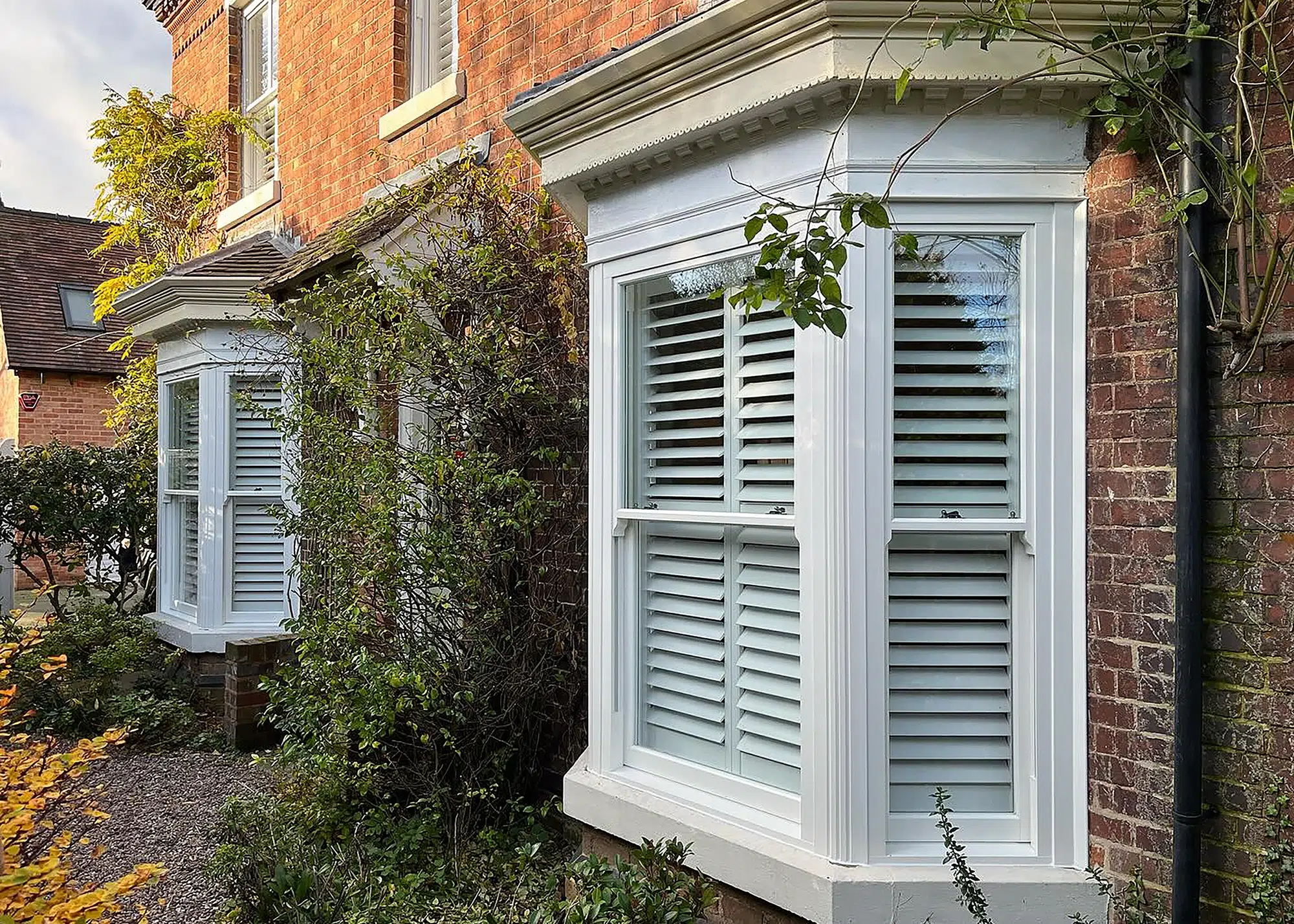
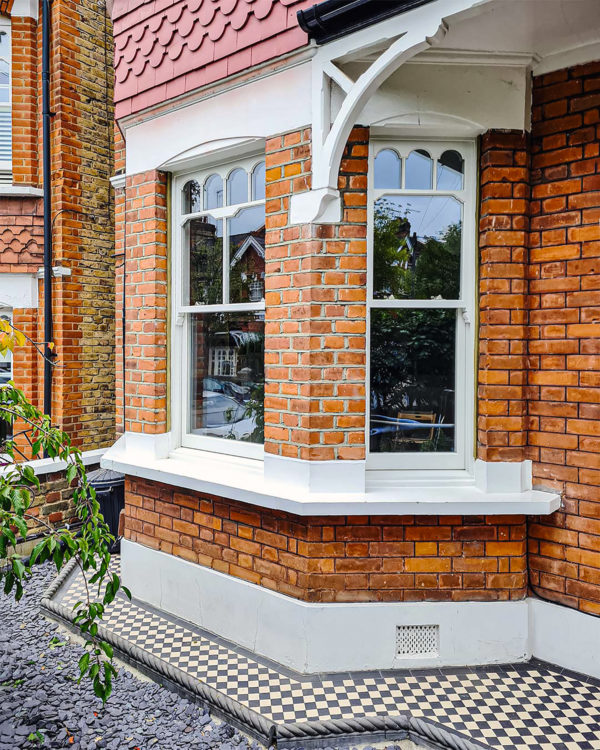
These classic windows are synonymous with Georgian and Victorian architecture. Their slim, elegant sightlines underpin the character of many period properties and heritage-inspired new homes, offering a simple and elegant aesthetic.
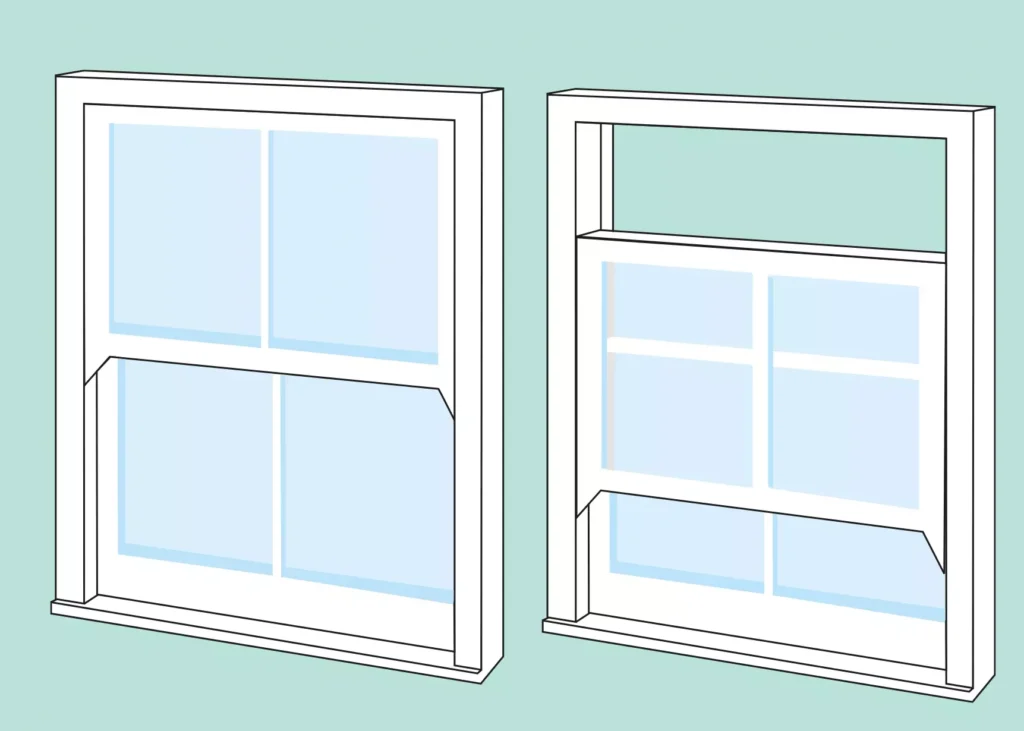
With this window opening type, one or both sashes move vertically in front of the other to provide ventilation. So sash windows don’t swing outwards or into the room like other window types. Traditional sash mechanisms are based on weights and pulleys, but concealed sprung-balanced designs are now also available.
Sliding sash windows
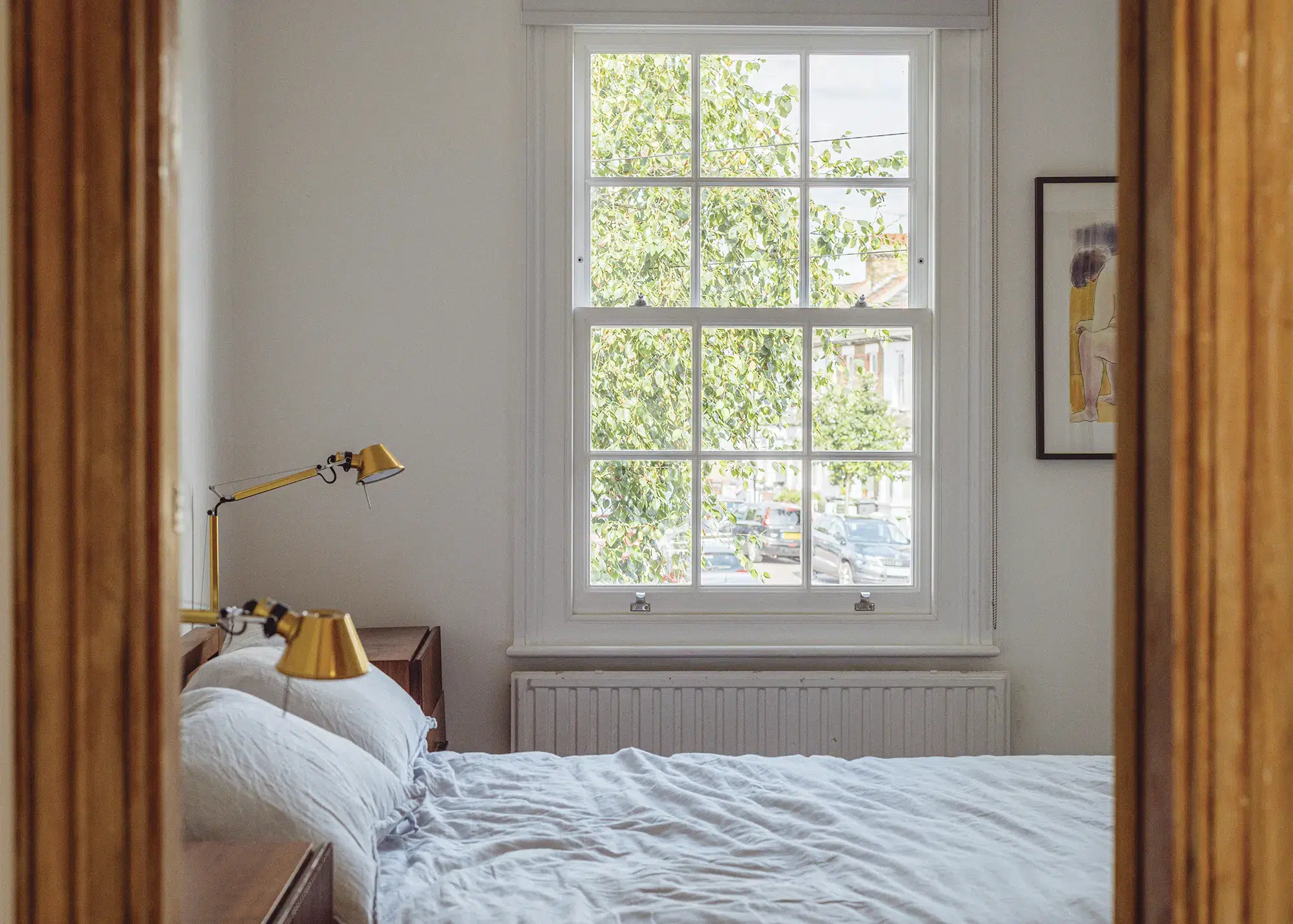
Although sash windows are versatile and brings good ventilation, it’s important to select the best configuration for your property’s style. Think about whether you need sashes made up of six-over-six panes, for example, or would two single panes better suit the architecture?
If you’re thinking about replacing your home’s windows, check first whether it would be better to repair and upgrade what’s already there. This can be cost-effective and a low-impact way of achieving high-performing sashes that preserve your home’s authenticity. Factory-made and pre-finished timber or metal sash windows offer slim sightlines in a range of styles, and are great options for those building a new home inspired by historic designs.
Winner of Best Sash Window at the 2024 Build It Awards, Roseview Windows’ Ultimate Rose is a timber-alternative PVCu sliding sash with sleek 35mm mid-rail sightlines and heritage detailing, including fully mechanical joints
A number of manufacturers now also offer high-quality PVCu glazing with authentic-looking profiles. Alongside this, new modern seals and insulating techniques mean contemporary sliding sash windows deliver excellent performance to comparison to other types of rival design.
CASE STUDY Maximising light & character with traditional sash windows
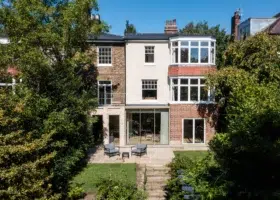
Build It reader Ian Turkington transformed a dark and damp East London Victorian property into a contemporary 93m² home full of natural light. Creating a direct connection with the garden and framing views of the new, prairie-style planting was high on the wish list. However, Ian wanted to restore the cottage’s original facade, replacing the poorly fitted modern glazing with a series of sliding sash windows that would be more sympathetic to its rich history.
Photo: Whittaker Parsons
Ian was also looking to improve the efficiency and eco credentials of the building, opting for sustainable building materials replacing the current windows with double-glazed conservation units to prevent warmth from escaping. The new glazing came to a total £14,000 (£150 per m²). The final result is a bright, nature-inspired home, with carefully selected glazing inviting in the stunning views of the garden as well as securing and improving the original fabric of the cottage.
Build It’s downloadable e-guide to choosing windows & doors offers ideas and advice on every aspect of planning your home’s glazing and entrances, including expert tips on the key specification decisions you’ll face. Click below to find out more.
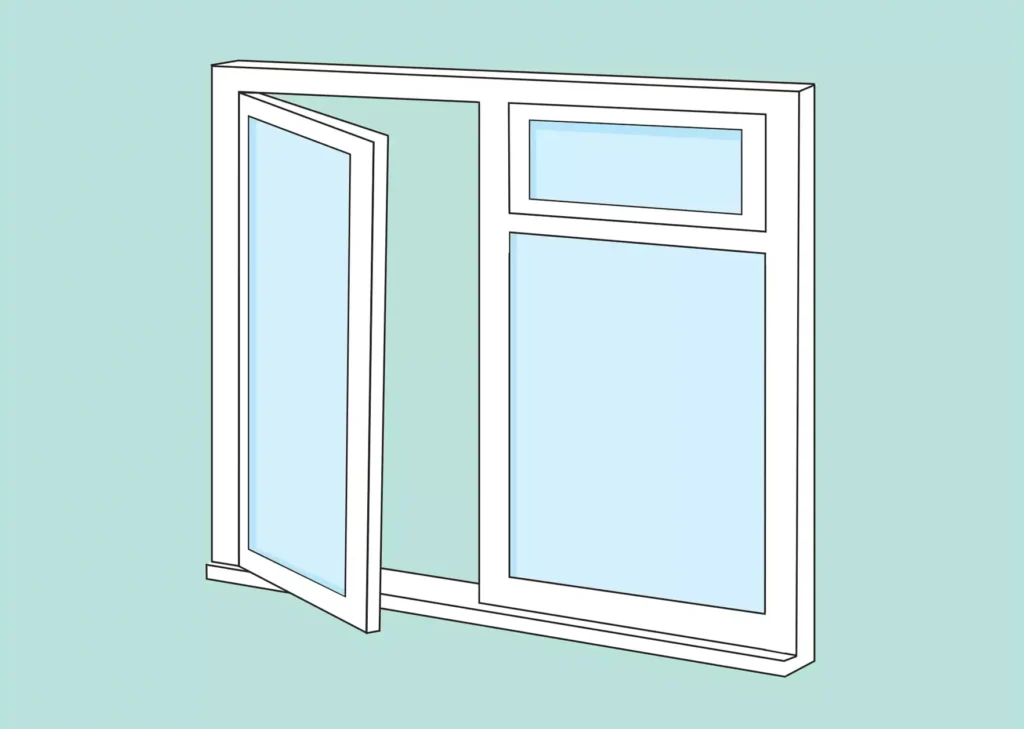
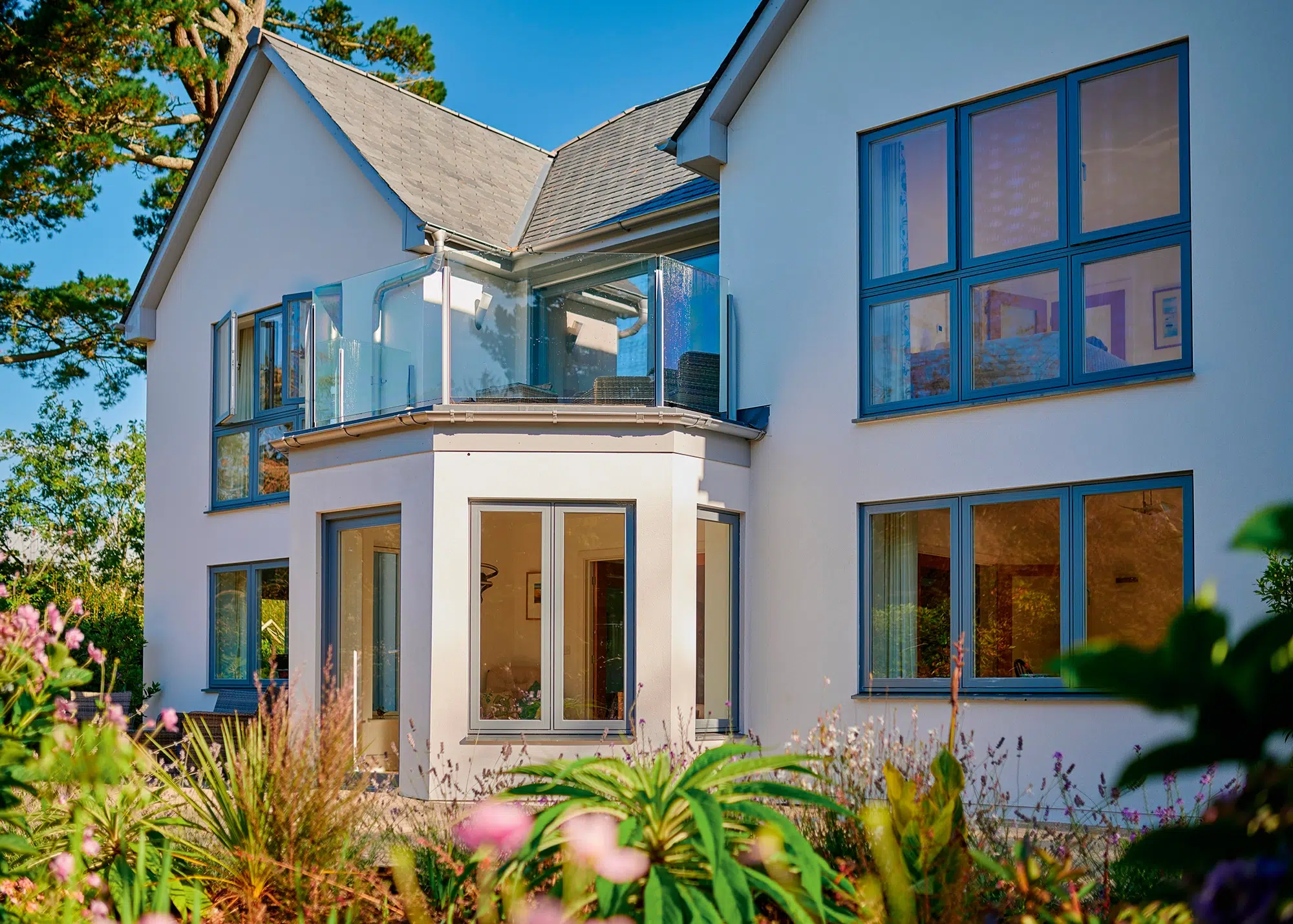
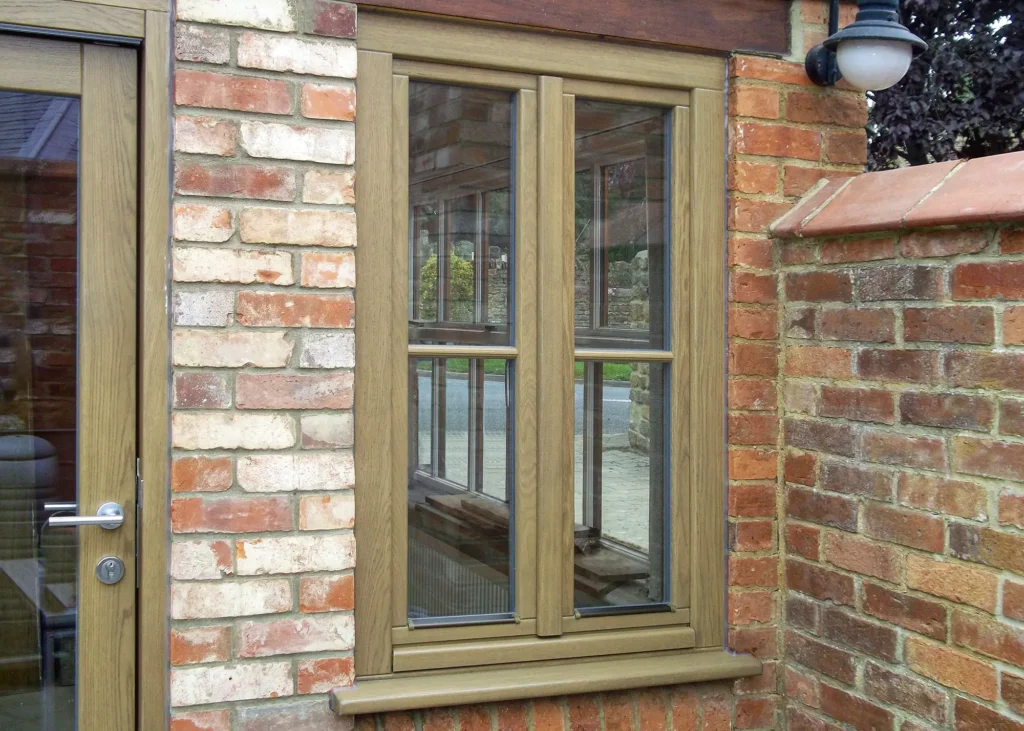
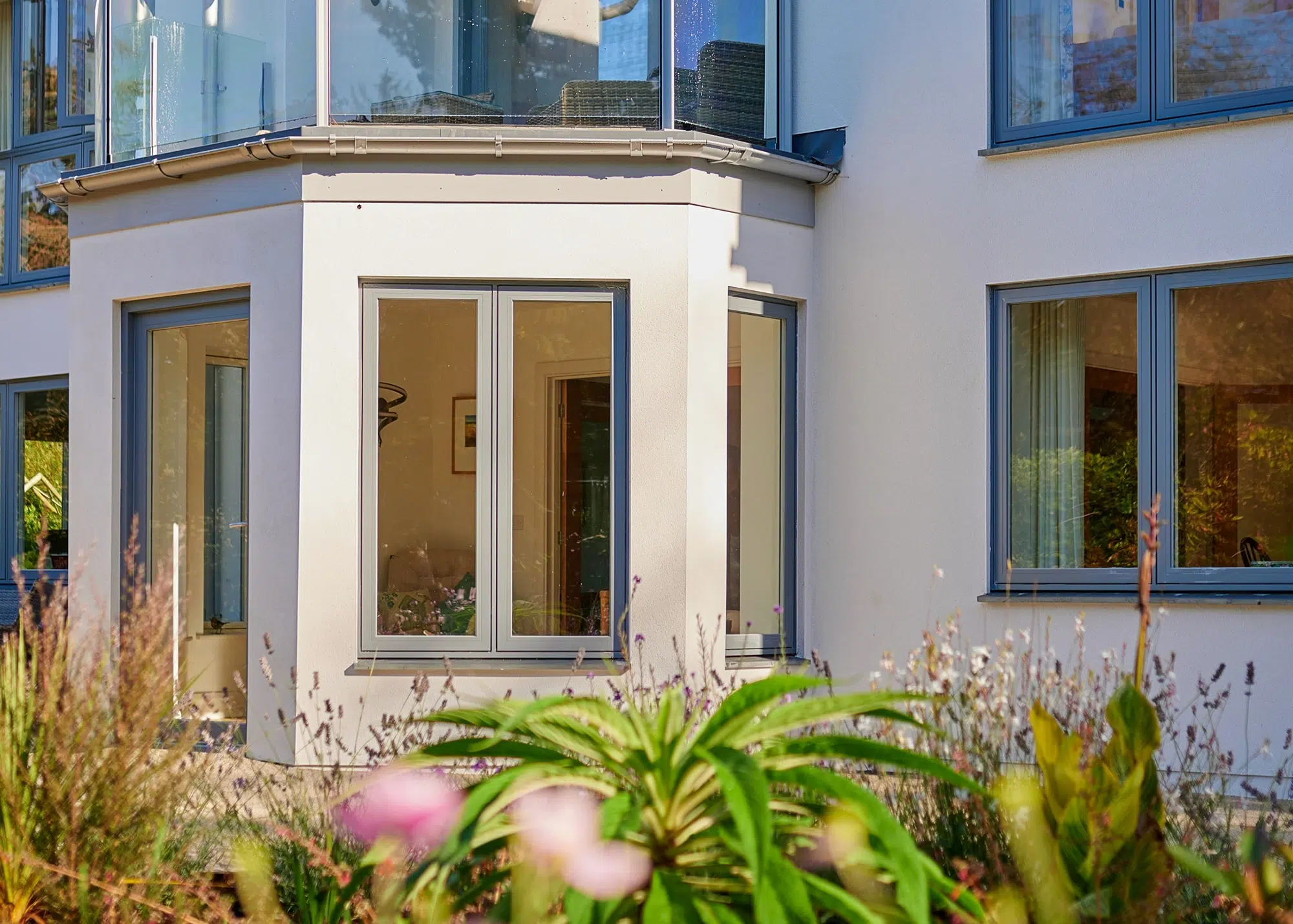
Casement windows are affordable and versatile, and are available in options that will suit both traditional cottages and ultra-modern self builds. Flush casement windows are a UK favourite. They give a clean look, as the opening sash is designed to sit flush with the frame surround when closed. Do bear in mind, however, that if you’re pairing casements with fixed glazing, the framework for opening windows will usually be thicker.
Casement windows
In comparison, rebated designs – or storm-proof windows – are designed to sit slightly proud and lip around the frame surround. This provides added weather protection, but doesn’t look as sleek.
Winner of Best Casement Window at the 2024 Build It Awards, the Aura Plus casement window from Rationel is available both double glazed and triple glazed, with U-values down to an excellent 0.75 W/m²K
When recreating the look of heritage leaded light windows, most manufacturers will now use a single double-glazed pane with stuck-on glazing bars in order to optimise thermal performance whilst retaining that classic design. Because of their high demand, you’ll have your pick of materials from PVCu to alu-clad timber frames – in addition to some non-standard options, such as hardwood, steel and bronze.
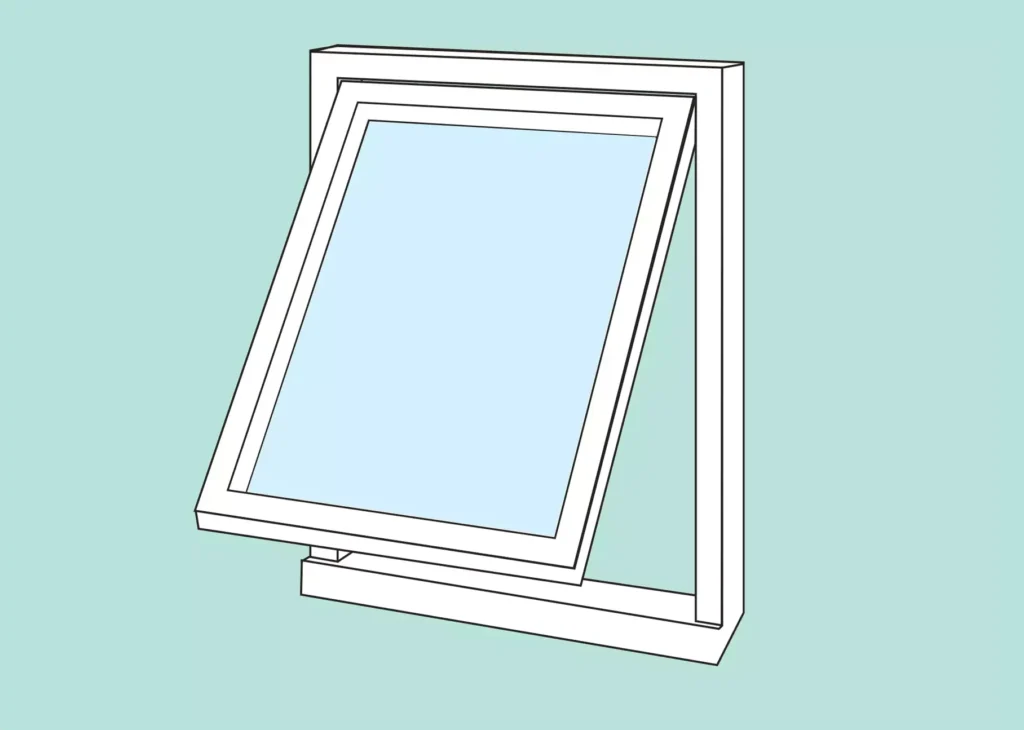
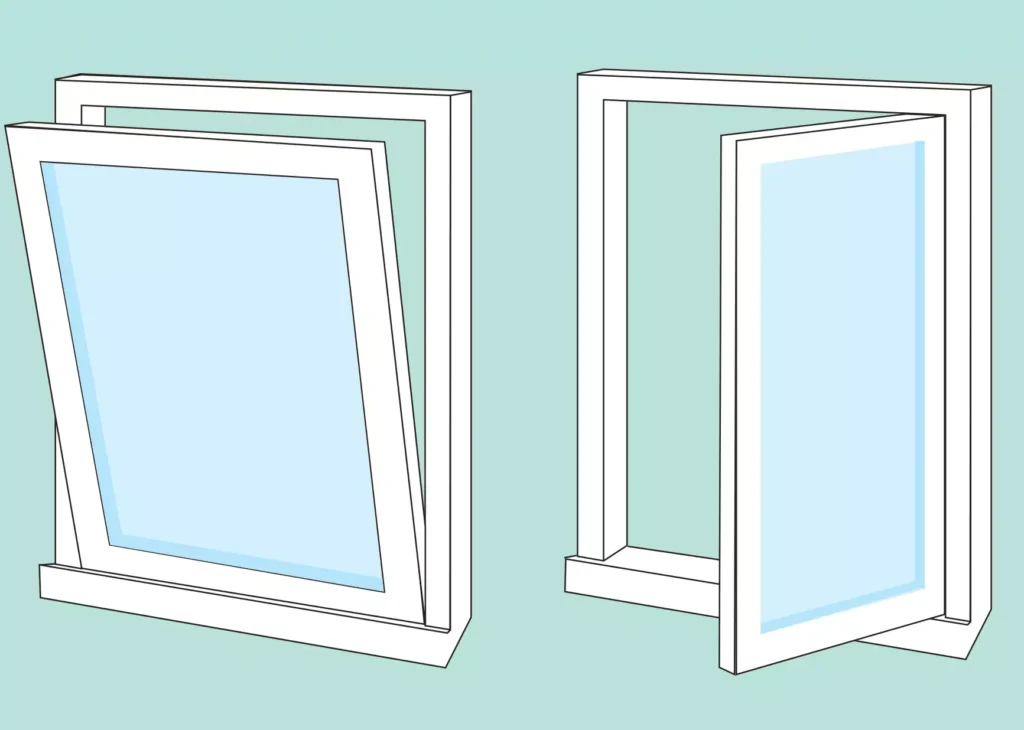
This window opening type is hinged from above with the handle featured at the bottom of the unit. They can work particularly well in places requiring high-level glazing or where you might need to reach across a space to access the opening, like a kitchen worktop, for example. They also look identical to other types of casement window from the exterior – so you won’t face any restrictions in terms of architectural style.
Top-guided versions are available, too. In this window opening type, the upper section of the panel slides downwards as the bottom opens outwards, offering a more controlled ventilation system. Top-guided window opening types are very stable, as the hinge position enables good load balancing, so they’re great for bigger windows.
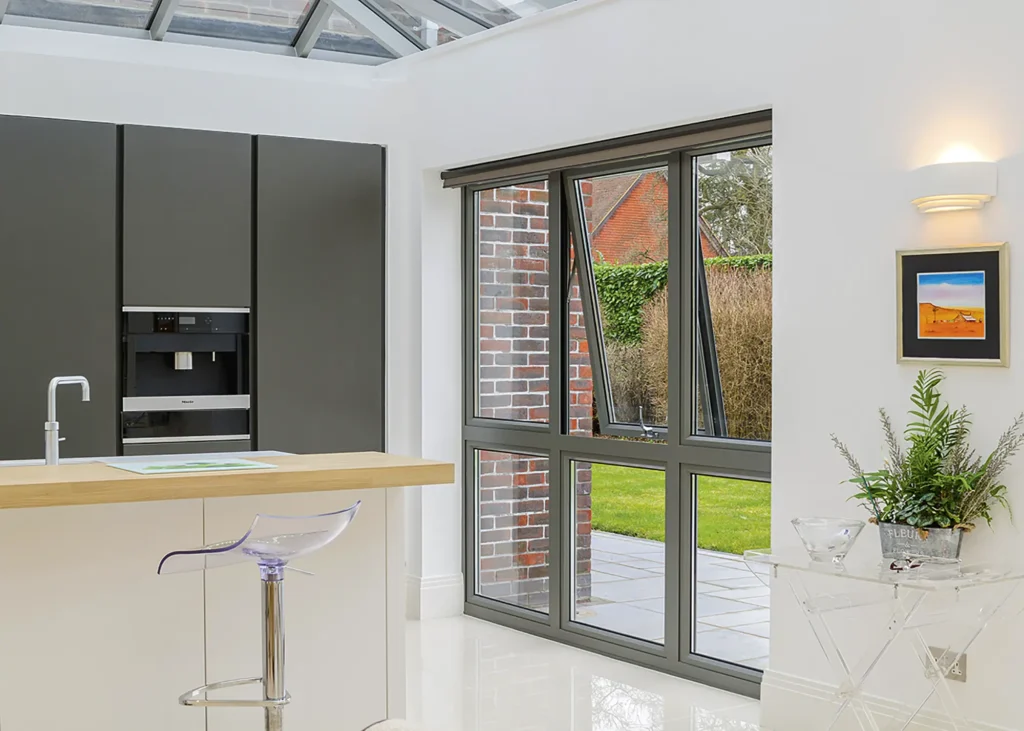
Top-hung units can support sizeable panes of glass, like this aluminium design from Origin that provides great light flow and sightlines as well as secure ventilation
For easy cleaning, try fully-reversible top-guided designs. These allow you to swivel the window around to access the exterior pane from inside the house. Top-hung styles are common in rooflights, as well as for small top lights above side-hung casements and other hard-to-reach openable panels.
This versatile window opening type uses a dual-opening configuration. You simply rotate the handle to the correct position to either tilt the window inwards (hinging at the bottom), or operate it as a casement (usually inward-opening).
Tilt-and-turn is a European window design. As it offers two window modes in a single unit, you’ll get two choices of opening style depending on the requirements and the option of easy-access cleaning.
Tilt mode offers secure ventilation, with key-locking systems available to hold the unit in position. As a result, this format is popular for bathrooms where you can get the ventilation you want without needing a full window to be opened. In turn mode, you all get the benefits of a standard casement – including tonnes of airflow and a fire-safe escape route.
This design from Kloeber features a stained oak frame and glazing bars for a classic finish
As there’s more going on behind the scenes, tilt-and-turn frame profiles tend to be chunkier and more expensive than other window types. So, consider if you really require both functions and how these may impact your home’s design.
For those looking to combine both function and style, tilt-and-slide windows replicate the look of sliding sash windows – but allow you to tip the panels inwards as well as moving them up and down. A variation on the theme, tilt and slide models replicate the look of sliding sash windows, but allow you to tip the panels inwards as well as moving them up and down.
Window opening style FAQs
Answered by Ed Stobart
Ed Stobart is technical sales manager at IDSystems. He has 20 years’ experience working closely with thousands of customers, builders and architects to offer advice and support on glazing solutions.
How does the window opening style impact on heat retention and energy efficiency?
Window heat retention and energy efficiency calculations are based on the window being closed. So, from a technical perspective, the type of window opening won’t make a significant difference to the performance. In reality, however, the larger the opening the more heat will be lost when the window is opened.
It is also worth noting that U-value calculations are theoretical performance measurements based on the modelling of materials. They do not take into account how well an opening sash seals against the outer frame. Fixed frame windows (with no openings) and then casement (including top-hung, side-hung and tilt & turn sashes) are therefore likely to perform better than traditional sash windows.
To get an indication of real-world effectiveness you need to consider the windows airtightness performance as well as the U-value figures.
Does my house's heritage status or location impact the type of window opening style I choose?
It’s likely that being in a conservation area, or if your house has listed status, will place restrictions on the type of window, the frame material used and the design you are allowed to choose from. It’s wise to check with your local planning authority early on to ensure you understand any restrictions in place.
Which window style is the most reliable for homes in exposed locations?
Whilst energy efficiency performance is calculated on a theoretical basis, the weather performance (wind resistance, watertightness and air permeability) tests are physical ones carried out by testing bodies in laboratory conditions. The performance of different types of windows from several manufacturers will vary significantly, so it is worth doing your research on your specific window requirements to know which is the best for your home.
Which window type can handle the highest structural loads?
The limiting factor when it comes to the size (and weight) of opening sashes tends to be the hinges, so fixed frame windows (without openings or hinges) can achieve huge glass sizes of up to 750kg. For casement windows, tilt-and-turn openings are typically capable of creating larger openings than side hung or top-hung sashes, but this may vary depending on the window system you choose, and the type of hinges used – so it is worth double checking with the manufacturer.
What is the easiest window mechanism for people with mobility issues?
Ease of use will depend on the strength, reach and dexterity of the person, but tilt-and-turn windows are operated with a handle similar to a door handle and are inward opening, so there is no reaching out of the window required to pull a window closed. Traditional sash windows tend to be the hardest to operate because you are lifting the weight of the window upwards. For those with mobility issues, consider automation via app-controlled electronical motors to open and shut windows.
Georgina Crothers is a former Homes Editor at Build It. She loves finding the most innovative and interesting self build, renovation and extension projects.
Amandine is Build It's editorial assistant. She's passionate about home design, and is always on the lookout for inspiring, creative self builds and renovations.
















 Login/register to save Article for later