George Glifford is commercial director at Glosford SIPs, a Hereford-based SIPs supplier offering a complete service for your structural building envelope, using renowned Kingspan TEK wall and roof panels.

21st-22nd February 2026 - time to get your dream home started!
BOOK HEREIf you’re looking for a construction system that delivers design freedom, fantastic thermal performance and swift build speeds on site, it’s likely that you’ve already considered structural insulated panels (SIPs) for your project – but what exactly is this build method and what does it involve?
SIPs are precision-engineered structural panels consisting of an insulating foam core, usually EPS (expanded polystyrene) or XPS (extruded polystyrene), sandwiched between two facings, typically oriented strand board (OSB). This combination forms a highly durable and airtight structural envelope that can be used to create walls, roofs and floors for a wide range of building types.
The panels are manufactured offsite in a controlled factory environment – ensuring consistent quality and accuracy – and then supplied the exact dimensions required for your specific house design. “This prefabrication includes pre-cutting all elements to accommodate window and door openings, so no on-site cutting is required,” says Ian Clay, a founding partner at SIPS@Clays. “Once the panels are cut to size, they are routed, packed and sequentially stacked wall by wall, roof panel by roof panel, then delivered to site ready for installation.” Erection of the kit can be completed in less than two weeks, paving the way for speedy construction progress thereafter.
So, could SIPs be the right structural system for your self build project? In this complete guide we’ll answer your key questions, looking at the following areas:
SIPs can be used as the exclusive structural system for your self build or paired with other methods such as oak frame to create a hybrid solution. The lightweight nature of the panels means they can easily be used to extend existing houses, too, such as the addition of a second storey on a bungalow.
“SIPs can also be used for extensions, though factors such as architectural design and site location would need to be considered,” says George Gifford, commercial director at Glosford SIPs. “We’re often faced with interesting challenges, and it’s very rare that a workable SIPs solution isn’t found.”
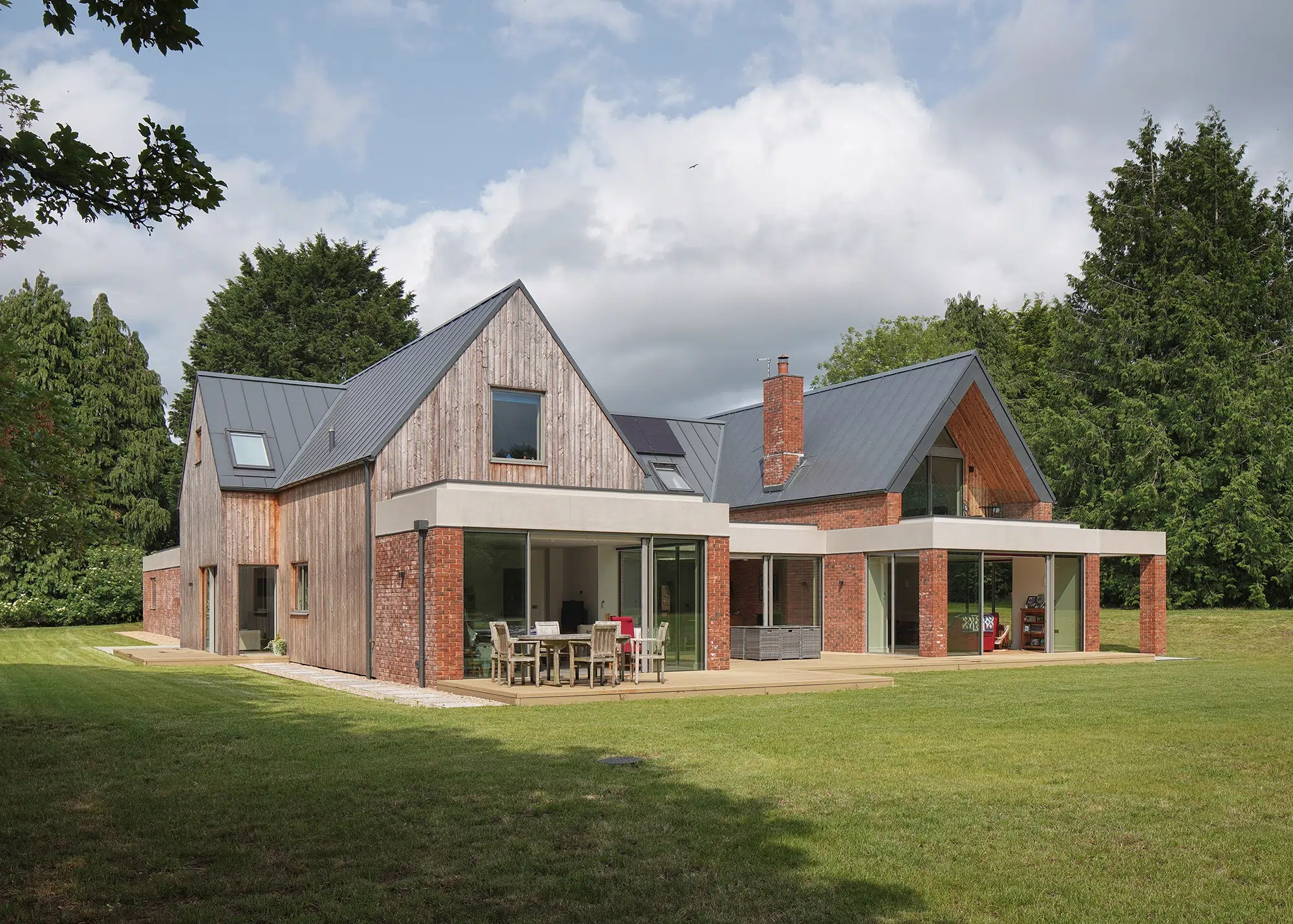
If you’re worried that using a prefab panel system might restrict you to an unoriginal, boxy home – fear not. This couldn’t be further from the truth when it comes to SIPs. “The flexibility in design and ease of construction mean there are no limitations to what can be achieved, offering complete freedom,” says Ian.
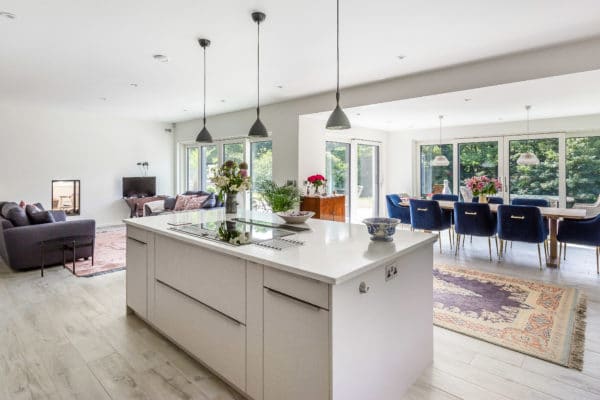
As the panels form a strong structural shell, internal load-bearing walls are often unnecessary, allowing for creative architectural features. “The system can be engineered to suit bespoke layouts, large open-plan spaces, expansive areas of glazing and complex roof structures,” says Matt Banks, managing director at SIPs Eco Panels. This versatility makes it possible to create both traditional and modern style properties with ease.
A striking yet contextual self build home by SIPS@Clays, accommodating three generations of the same family, which combines modern performance with local materials, such as knapped flint
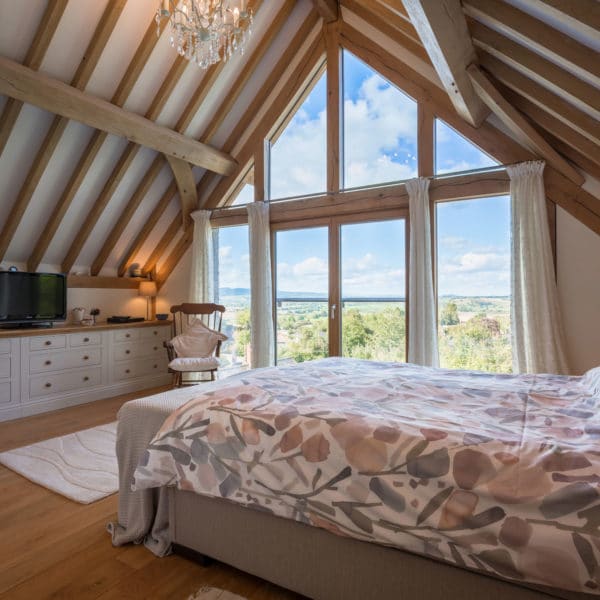
This flexibility often lends itself to spectacular vaulted ceilings – SIPs systems don’t need to incorporate trusses to support the roof, as the panels themselves serve as the structure. “As SIPs doesn’t use roof trusses, our panels span from the top of the wall head up to the ridge, creating a vaulted area as standard,” says Derek McIntyre,SIPs director at JML SIPs. “This ceiling style proves very popular in one-and-a-half storey houses, or room-in-the-roof homes, where the usable space is maximised without the need for traditional roof trusses.”
SIPs structures can be clad in an array of finishing materials, too, including brick, render and timber cladding, to create your desired aesthetic. SIPs manufacturers typically collaborate closely with designers from the earliest stages to ensure the buildability of a project – giving you peace of mind that your dream home can become a reality.

Compared to conventional construction methods, SIPs deliver excellent results in terms of their thermal efficiency. “Low U-values can be achieved with thinner wall build-ups compared to other build systems, but more importantly, airtightness levels are exceptional for SIPs – meaning they are great for those looking to achieve a Passivhaus-standard home,” says Derek. U-values measure the transfer of heat in and out of the building fabric; the lower the figure, the slower the heat passage in and out of the building and the better the insulating quality of the construction components.
The combination of a continuous insulation layer and precise factory production ensures consistent energy efficiency across the build. When constructed with attention to detail, SIPs can deliver impressive airtightness results. “Typically, masonry builds with additional membranes and taping may achieve an airtightness rating of 3-5m³/hr/m² @50 Pa, but this depends on workmanship and takes a lot of time and effort to reach,” says Matt.
“With careful detailing and standard airtightness taping, SIPs structures can very comfortably reach below 1m³/hr/m² @50 Pa.” Such levels of performance help maintain stable indoor temperatures and minimise heat loss, which contributes to lower energy use and improved comfort year-round.

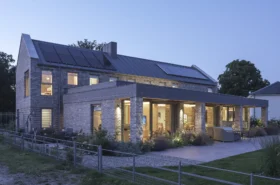
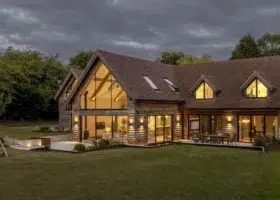
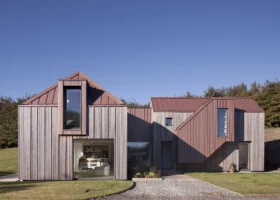
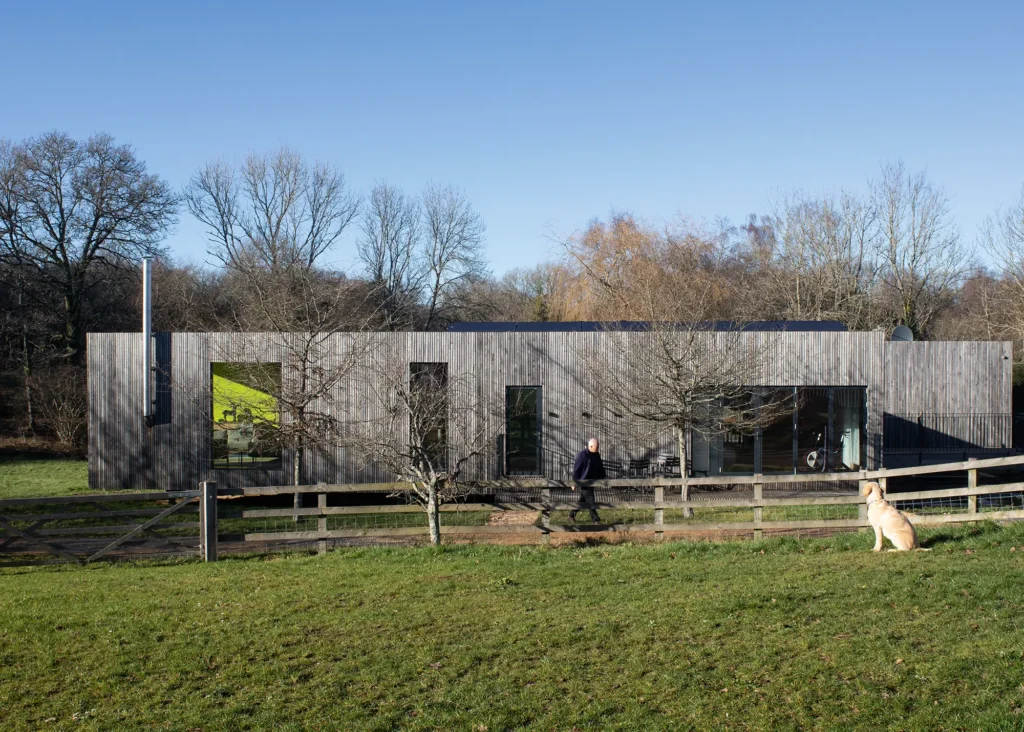
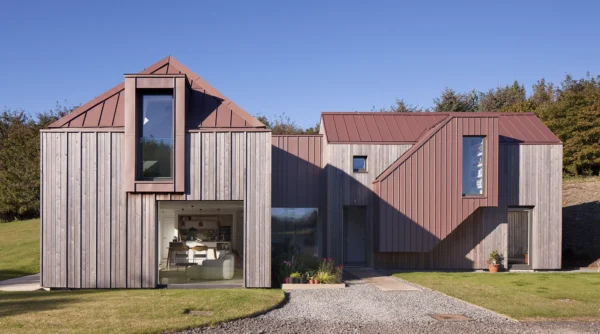
In this project by PAD Studio, the lightweight SIPs structures sit on top of cross beams that are supported by screw piles, allowing them to float above ground level. The property’s two wings are connected by a floating oak deck
To achieve the intended performance levels, it’s essential that all joints are sealed correctly, especially around windows and doors, and that any openings made by follow-on trades are properly closed after installation. This will help to minimise thermal bridging, which is a major win for those aiming for high levels of efficiency.
What’s more, the high degree of precision involved in the construction process means it’s possible to accurately determine the thermal performance of the finished superstructure at the design phase of the build. The ability to conduct heat loss surveys on each room of your home before it’s even constructed allows you to be confident your heating and cooling strategy will deliver as expected.
Premium Content
Where should you start when planning your home building project? Build It’s in-depth downloadable guide to self building a house contains everything you need to know to make your project a success.
find out more
The lightweight nature of the panels can lead to a reduction in the amount of concrete required to construct your home’s foundations. Not only does this boost your property’s green credentials, but it also helps minimise the cost of groundworks. Using timber – a renewable resource – as the principal construction material further enhances your project’s sustainability score.
“Over the lifetime of the building, the performance of the SIPs envelope will vastly reduce the CO2 emissions from the heating alone,” says George. “SIPs superstructures are also sympathetically designed to ensure timber-based components are utilised wherever possible, which greatly reduces the embodied carbon within the building materials.”

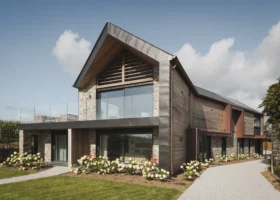
Designed by Alma-Nac, this house stylish home in Hampshire was constructed using SIPs, ensuring the building components could be manufactured offsite and erected swiftly once delivered. Photo: Jack Hobhouse
Always check the materials’ supply chain to ensure they’re from a responsibly managed source – your supplier should be able to provide details on this. For instance, the wood used to form the OSB panels should come from fast-growing trees grown in plantations with the Forest Stewardship Council (FSC) seal of approval.
Even if you want to use an independent architect to draw up the design for your new home, it’s worth bringing your SIPs supplier on board as early in the process as possible to pave the way for design success. Companies use different systems with different size/thickness panels, which is an important detail that needs to be factored into the technical drawings sooner rather than later.

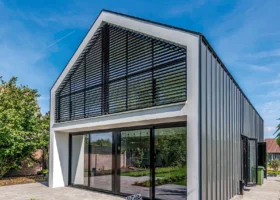
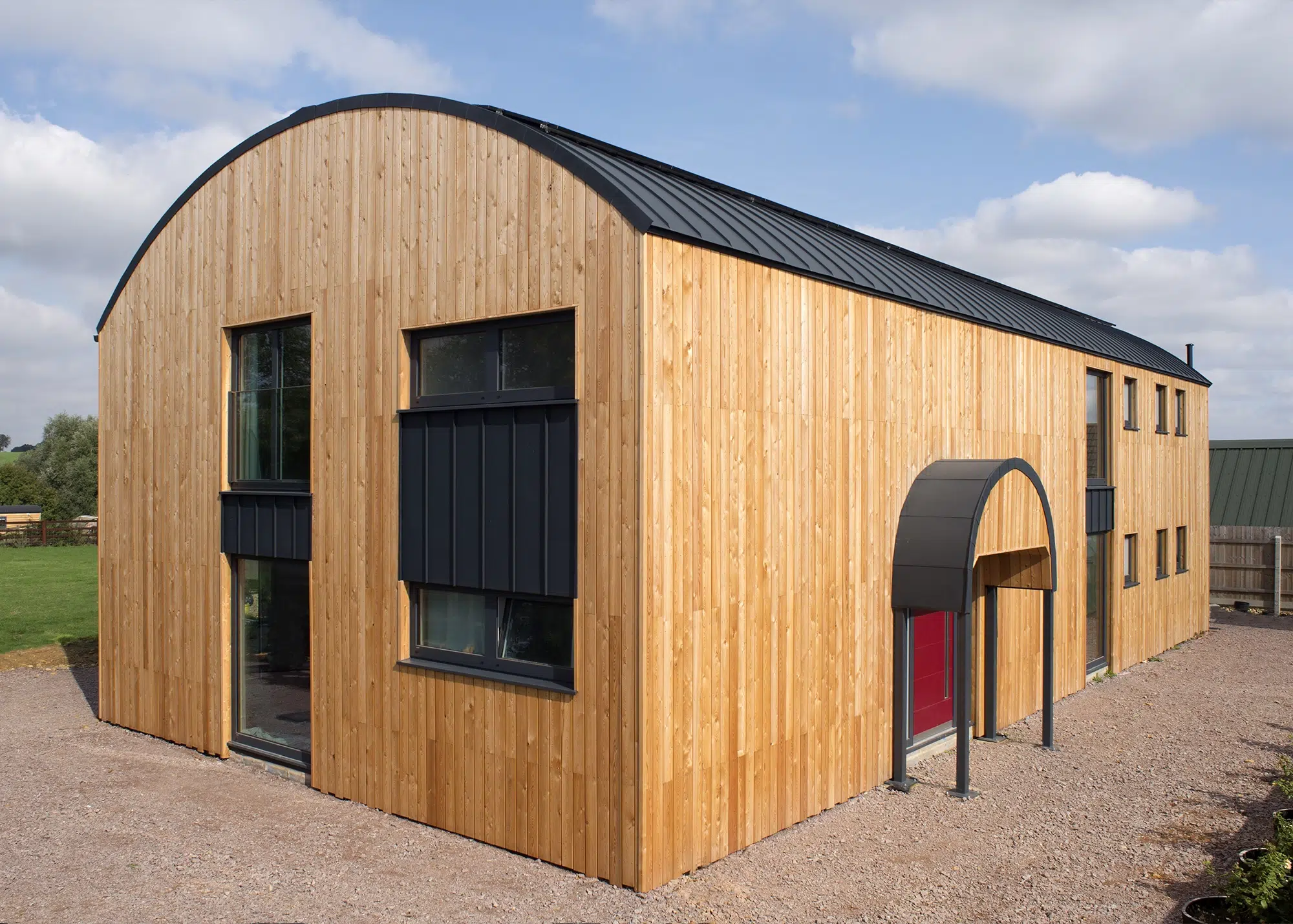
Built using the Glosford SIPs system, this modern Dutch barn-stye home showcases SIPs’ ability to create striking design details, such as this vaulted curved roof
“Choose your building system early after planning permission is received so you can work with your preferred supplier on the optimal solution,” says Derek from JML SIPs. “As SIPs is a structural system, the company you work with will carry out the structural engineering design and calculations as part of their service and provide this information for building control approval.” Bringing your supplier into the picture early will therefore save you both time and money, rather than having to get your technical plans redrawn to suit the nuances of their system details later on.
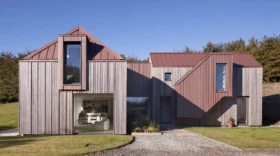
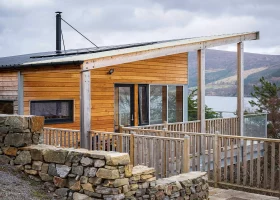
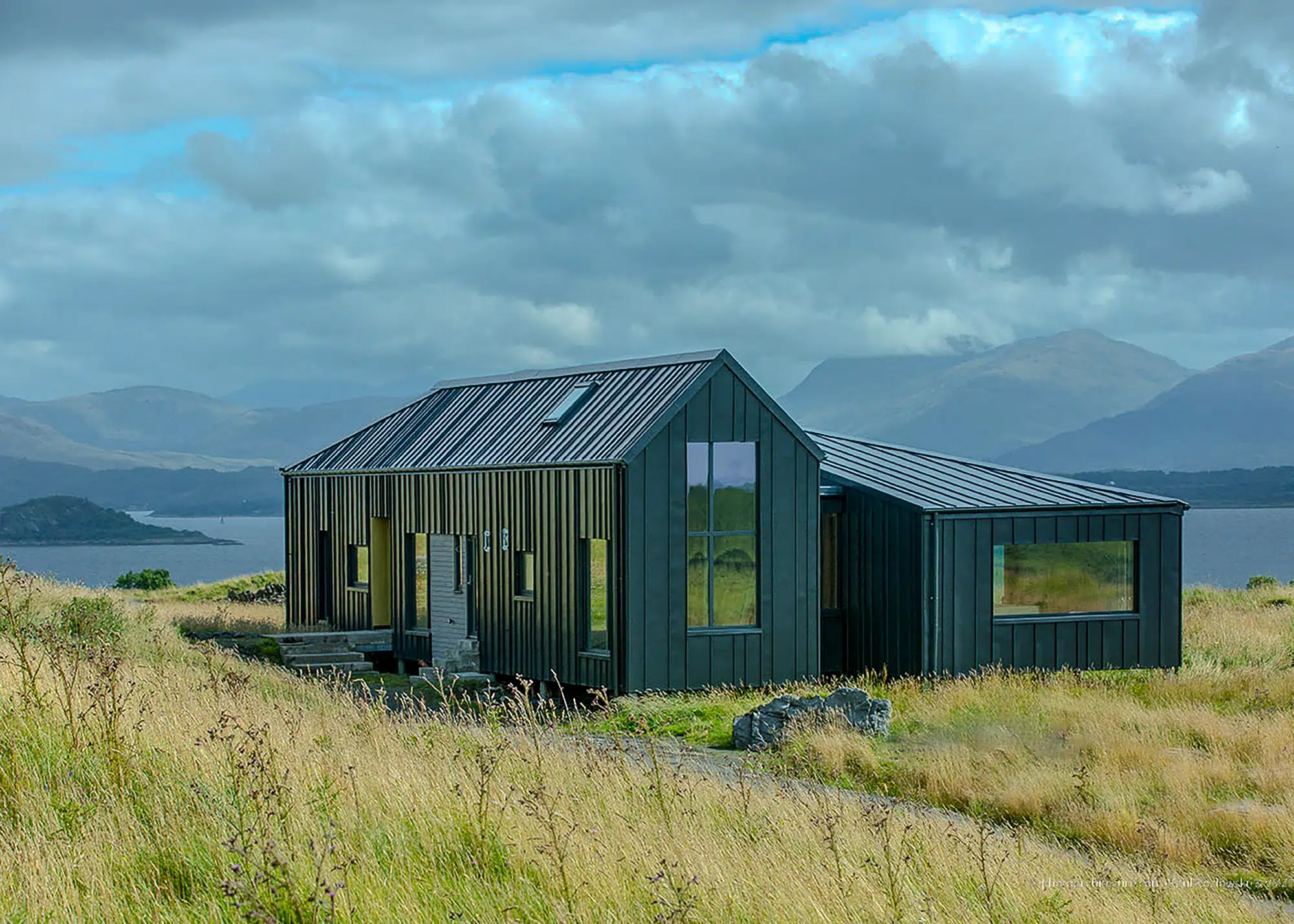
Baligrundle by JML SIPs took home the 2025 Build It Award for Best SIPs Home. Set on the exposed Isle of Lismore, the 180m² home responds to both the landscape and the client’s brief for a modern, low-energy replacement dwelling that could withstand harsh weather while treading lightly on the croft.

Photo: JML SIPs
JML’s precision-engineered SIPs panels delivered a highly insulated, airtight and structurally robust shell, which was lifted on steel piers to protect the terrain. The system also allowed for clean, rectilinear forms and generous glazing – including a triple-glazed corner window that frames expansive views across the Sound of Mull.
Offsite manufacture and rapid on-site assembly proved vital on the remote hillside plot, reducing disruption, waste and construction risk. Where required, steelwork was integrated internally to preserve the thermal envelope. Externally, a single palette of bold zinc cladding makes a stylish statement and nods to the building’s functional purpose. The result is exceptional energy performance, with the finished home achieving a SAP rating of 98A, and uplifting internal spaces.
| Type of project | self build |
| House size | 180m² |
| Location | Inner Hebrides |
Once the components are delivered to site, they are erected by a team of experienced fitters from your chosen supplier. “They will begin by installing a damp proof course on the foundation, with beads of silicone sealant applied to the top surface, then a deep treated softwood soleplate,” says Ian. “The team will then ensure the foundation is level, and pack with levelling shims if needed.”

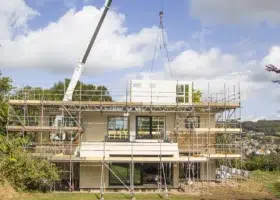
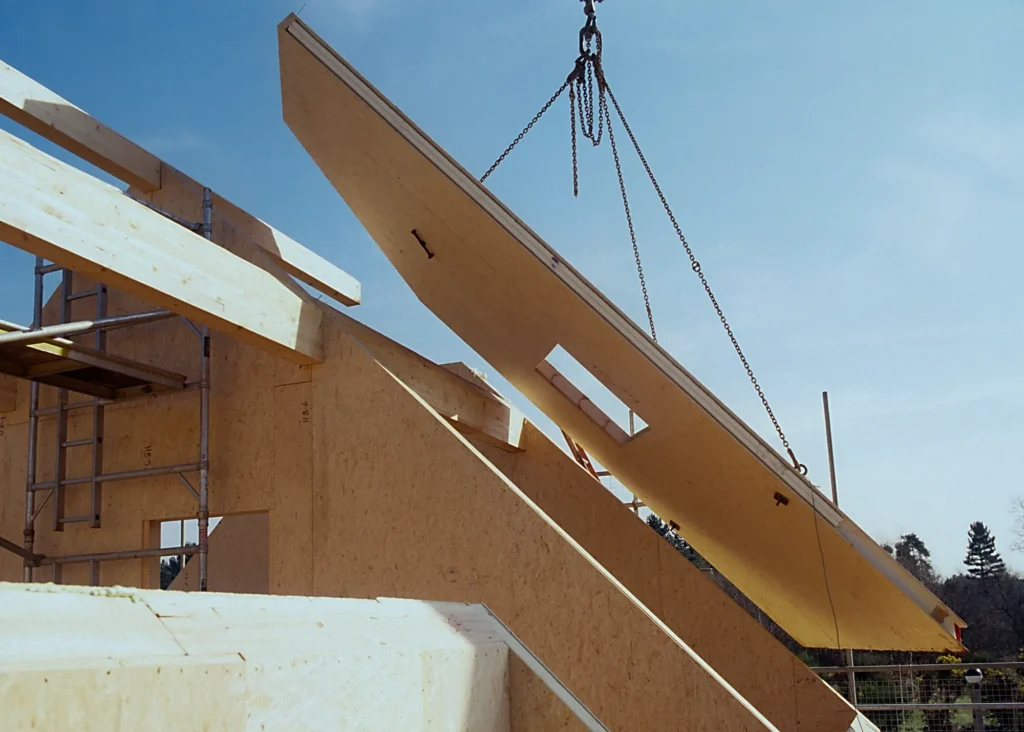
On this project by Glosford SIPs, a crane slots the Kingspan TEK building components carefully into place to form the roof of the house. Openings for rooflights have already been pre-cut into the panels
The Kingspan TEK building system that’s used by various SIPs providers utilises a panel-to-panel jointing system to connect the construction components together. A telehandler is then used to manoeuvre the wall and roof panels into the correct position. “With the Kingspan TEK solution, the roof panels, which have been made into large sections at ground level, require a crane or Hiab to lift the heavy components into position,” says Ian.
The superstructure of a SIPs home can be erected in a matter of days. As the door and window openings are pre-cut, and the inside of the panels can be pre-battened ready for the application of plasterboard, construction is straightforward, too. “Once the kit is up, the homeowner is left with an insulated shell of a building ready to receive follow-on trades,” says Derek.
To pave the way for a smooth process on site, you’ll need to ensure your plot has suitable access. “This is because large sections of panel are lifted into place, usually by a mobile crane over the top of a perimeter scaffolding,” says George. In addition, the dimensions of the foundations need to be measured and built accurately so that the prefab building components fit perfectly on top.
SIPs has a reputation in the construction industry for being a more expensive building method when compared to traditional timber frame or brick and block. On average, the supply and installation of the pre-insulated superstructure might come in at around £350-£500 per m². However, the total cost of a SIPs home will always depend on individual factors such as the level of internal finish, the size of the build, the amount of glazing you want to incorporate into the scheme and the specification choices you make throughout the interior and exterior design process.
how much does it cost to build a house in the UK?

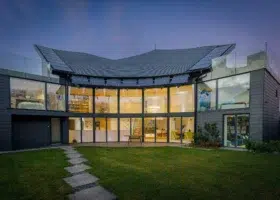
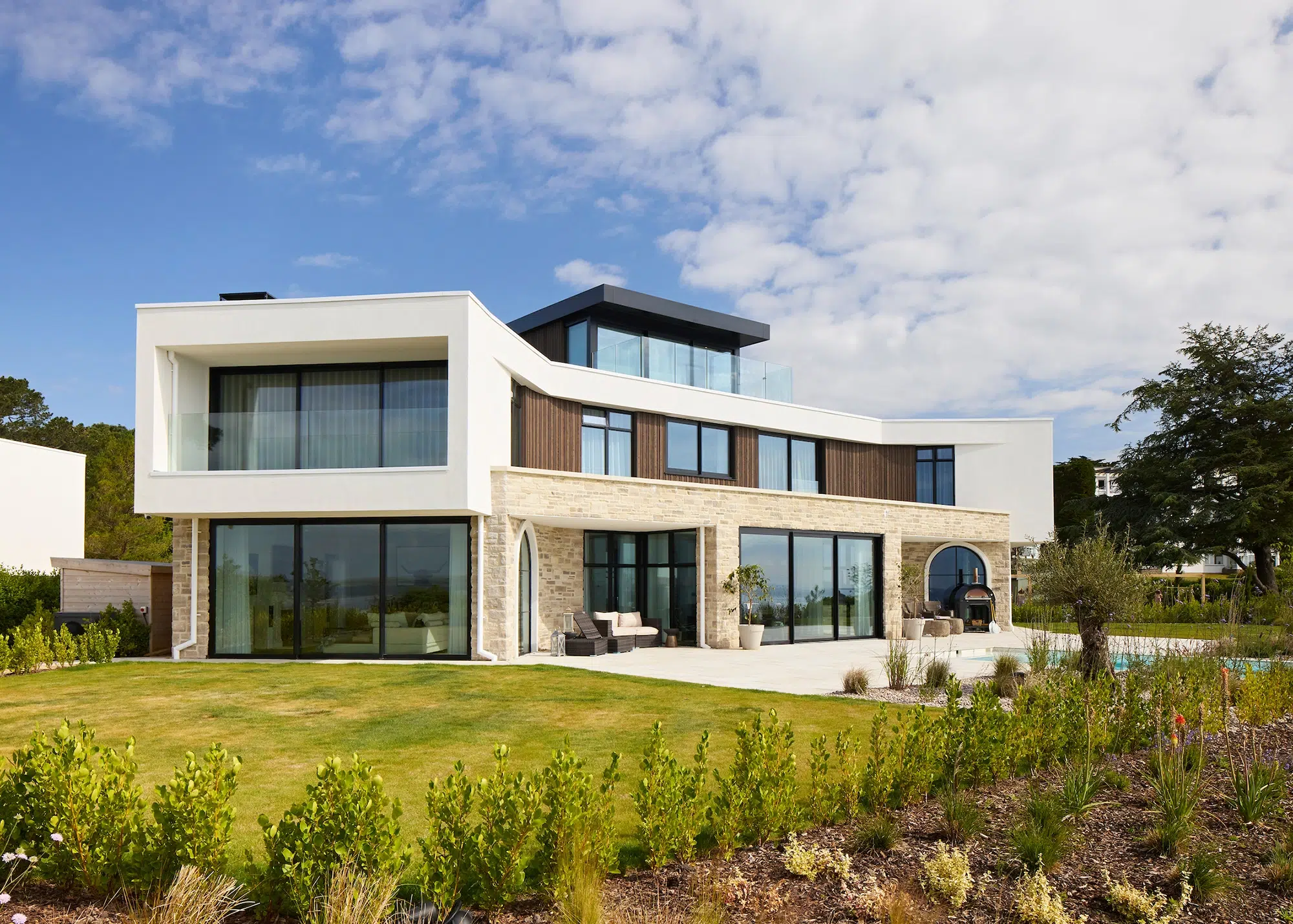
Located on a stunning clifftop in the prestigious Canford Cliffs area of Bournemouth, this showstopping home and annexe were designed by ARC Architecture and constructed by Ecologic SIPs. Photo: Ecologic Sips/arc architecture/bay view/developments
It’s important to consider the wider picture when comparing costs, too. “Substantial savings are made with the offsite manufacturing, speed and efficiency of construction, reduced on-site labour costs, dry build process and having a predictable build schedule,” says Ian. Traditional site-based build methods often carry hidden expenses – such as ongoing scaffolding and site welfare fees – that can make SIPs more competitive once the full build process is taken into account.
“A kit is often about 20% of a home’s total build cost, so if a SIPs kit is say 10% dearer for the superstructure than another system, this will only add 2% to your budget,” says Mark Stevenson, Build It’s project management expert. So, the price difference is often smaller than it might first appear.
In short, you will be paying more money upfront if you choose this build route, but in the grand scheme of things, a SIPs build can lead to long-term savings through its excellent thermal efficiency and reduced running costs.
In an era when energy costs are soaring, SIPs are a great option for homeowners keen to keep their bills down. The system satisfies changes made to SAP 10 in 2022 – SAP is the methodology used by the government to determine a home’s environmental and energy performance. Though SIPs were once considered an alternative form of construction, there has been growing acceptance of the method amongst industry-leading structural warranty and building control bodies, too.
“Thanks to work led by the Structural Timber Association (STA), the likes of LABC Warranty, Premier Guarantee, Protek Warranty, Build Zone Warranty, Self Build Zone Warranty, BuildStore, BuildCare Warranty and ABC+ Warranty now formally recognise STA Assure Gold members,” says Ian.
SIPs buildings are relatively lightweight and compatible with many types of house foundations. The primary factor that dictates foundation type is the ground conditions of the site. Trench foundations, piled foundations and ground bearing insulated rafts are all commonly used. Accuracy is vital in the substructure: it must be level, square and engineered in line with the loadings provided by the SIPs manufacturer.
SIPs provide a strong, flat and well insulated substrate for a wide range of cladding systems, which makes them extremely versatile. The key factor to note is there must be a ventilated cavity between the panel and cladding finishes to dissipate any condensation that naturally forms on the breather membrane. Lightweight cladding systems such as timber, render board, metal, tiles, brick slips and composite boarding can be supported directly off the SIPs with vertical battens. Full masonry systems will generally have a 50mm cavity and be supported from ground level upwards. Where this is not possible, such as over large-format bifold doors, the SIPs design will need to incorporate suitable masonry supports.
Whilst SIPs is considered a modern method of construction, it follows many of the principles of timber frame, which has been used for centuries across the UK. It is not necessary to select a builder that has worked with SIPs previously. However, it is of paramount importance that the substructure is installed within tolerance and to the best standard possible. Once the SIPs have been erected, the follow-on trades will have a square, level and insulated substrate to work with. Both indoor and outdoor trades can start simultaneously, unlike conventional timber frame, which vastly reduces build times.
Homes constructed using SIPs are no more difficult to extend or alter than any other form of construction, providing you have selected a well-known and reputable company to undertake the SIPs superstructure. Make sure your supplier gives you fully detailed as-built drawings, structural calculations and warranty information once handover of the build has taken place. These documents can all be used to ascertain future opportunities for any alterations.
Comments are closed.