

- Plan ItBack
- Design ItBack
- Build ItBack
- Homes
- ProductsBack
- CostsBack
- Self Build Cost Calculator
Estimate your project costs instantly with Build It's interactive self-build cost calculator
Calculate Now - Costs & Finance
- Contracts & Warranties
- Build It Estimating Service
Get an accurate, detailed cost breakdown of your project
Submit plans
- EventsBack































































 Login/register to save Article for later
Is a Resin Bound Driveway the Right Option for You? Here Are the Pros & Cons

When planning a self build or renovation, your driveway may not always seem like a top priority – but selecting the right surface can have a bigger impact than you might think. In fact, your chosen material often needs to be specified in your planning application due to SuDS (Sustainable Drainage Systems) requirements, which focus on managing surface water and reducing flood risk.
Factors such as appearance, maintenance, installation and cost also come into play – and striking the right balance between them will ultimately determine whether a resin driveway is the best choice for your home. Here, I’m weighing up the pros and cons and offering practical guidance to help you decide whether it’s the right fit for your self build or renovation project.
What is a resin bound driveway?
Resin bound gravel is made by mixing small natural stones with a polyurethane resin before it’s laid onto a stable sub-base, such as tarmac or concrete. As the aggregate and resin are thoroughly blended, every stone is fully coated, which creates a smooth, durable finish that remains permeable, allowing water to drain through and helping to prevent surface flooding.
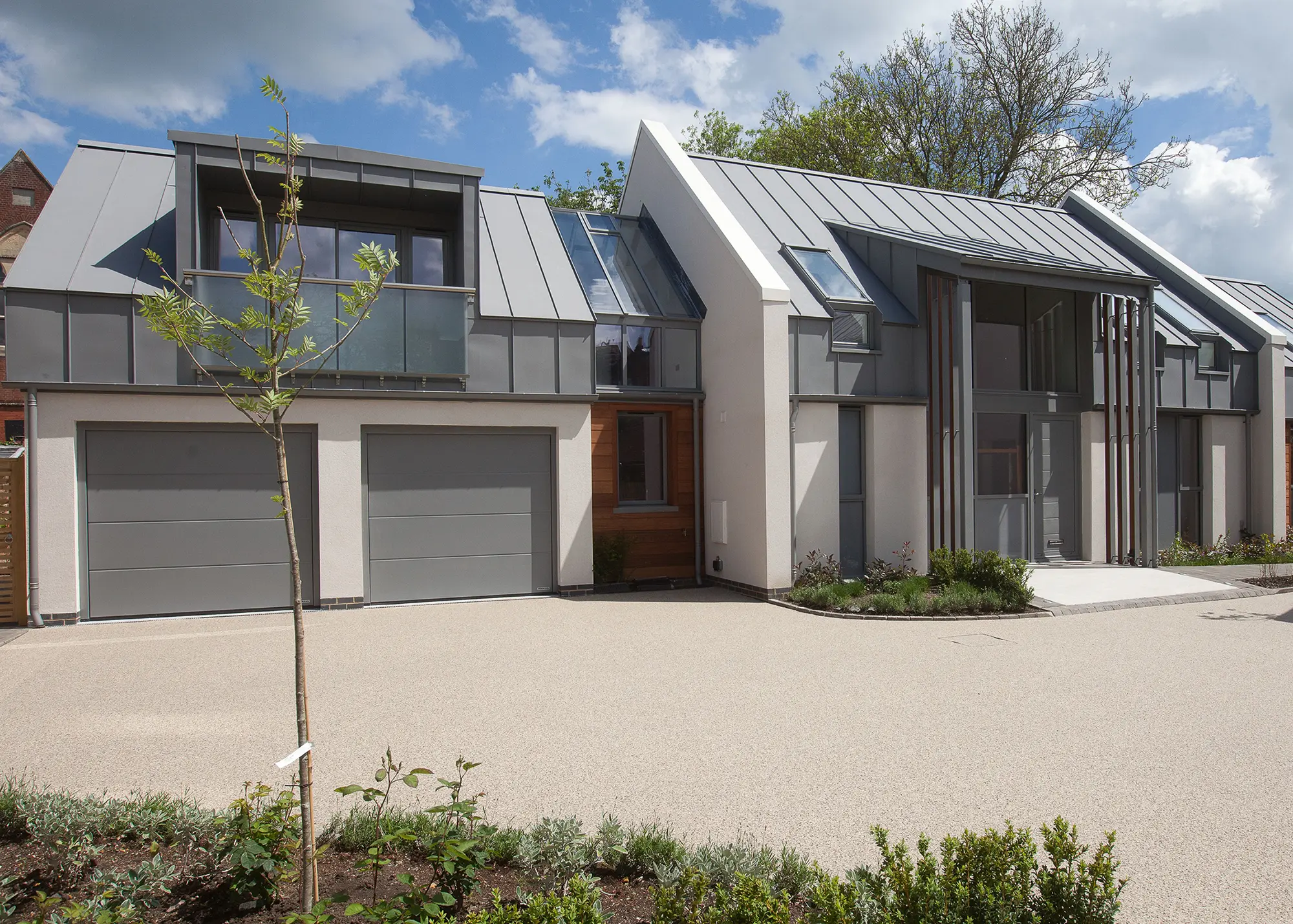
This project features 345m² of natural aggregate from Sureset and includes 70 linear metres of straight edging, creating an attractive, low-maintenance solution
It has become an increasingly popular option for driveways over the past 25 years due to its clean aesthetic, durability and practical benefits. It’s worth noting, however, that this is different from resin bonded gravel, which is a rougher, non-porous alternative, where resin is spread onto the substrate and loose stones are then scattered over it.
What are the benefits of a resin bound driveway?
The main advantages of a resin bound driveway – compared to materials like concrete or block paving – are mainly practical. Of course, appearance matters, and resin is a great choice thanks to its wide range of colours and styles, from rich reds and blues to greys and softer, more natural tones. But thinking about the practical benefits of your driveway material early on will ensure good looks and decades-long performance.
A resin bound solution offers a seamless, smooth finish that avoids many of the common issues associated with traditional materials. “Unlike block paving, there are no joints for weeds to grow through or blocks to shift over time,” says Emma Dutton, head of sales at Sureset. It’s also resistant to fading and less prone to cracking, providing a durable and refined finish.
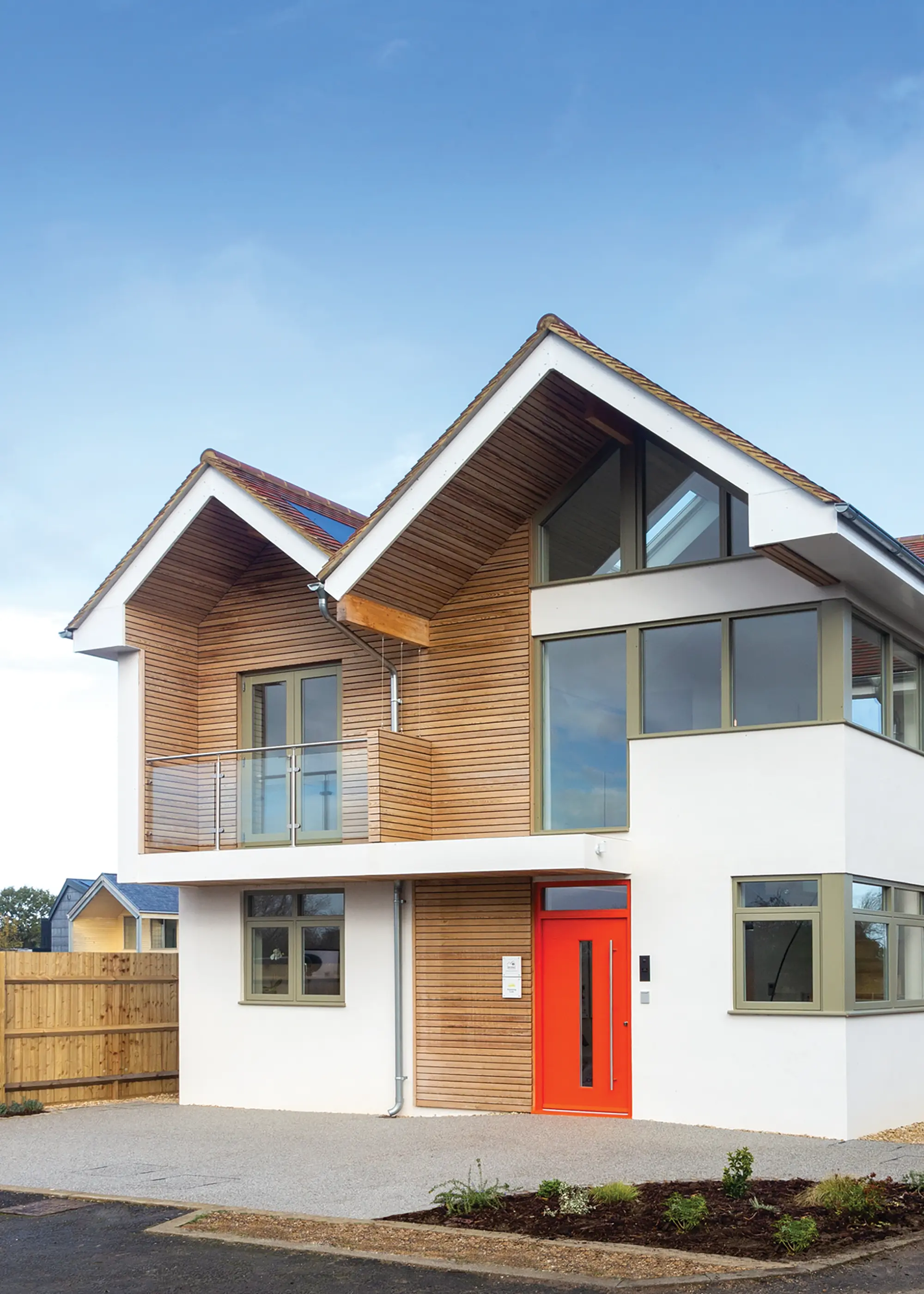
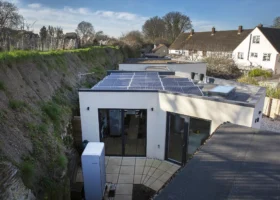
At the Build It Education House, we chose a modern Sureset resin-bound permeable front driveway – a durable solution that offers the drainage qualities and look of gravel without the maintenance
One of the standout benefits of resin is its permeability. When installed on a suitable SuDS compliant base, water drains through the surface rather than running off, helping to prevent puddling and reducing flood risk. As a result, homeowners often avoid the need for additional drainage solutions or planning permission when installing a new resin bound driveway. “In practical terms, this means fewer regulatory hurdles and better long-term water management,” says Emma.
What maintenance does resin bound gravel require?
Maintaining a resin driveway requires minimal work. “Sweeping and a regular jetwash are usually sufficient to keep the surface looking its best,” says Samuel Buckley, group managing director at Daltex. Because the surface is bound and smooth, there are no loose stones to replace. Periodic inspections are still recommended, however, to remove debris and ensure drainage pores remain clear. “A well installed system can comfortably last 15-25 years or more, maintaining both structural integrity and appearance over time,” says Emma.
Where does this type of driveway work best?
While resin bound is a versatile system that can suit a broad range of projects, it is important to consider traffic type when planning your driveway. Standard installations are ideal for cars, but not typically designed for regular vehicle traffic exceeding 10 tonnes (think agricultural equipment, trailers, lorries etc). “Similarly, areas that are subjected to heavy turning movements, such as those used by articulated vehicles, should be subjected to a survey for suitability,” says Samuel. This surface may also not be ideal where the existing base is unstable and cannot be replaced easily or economically.
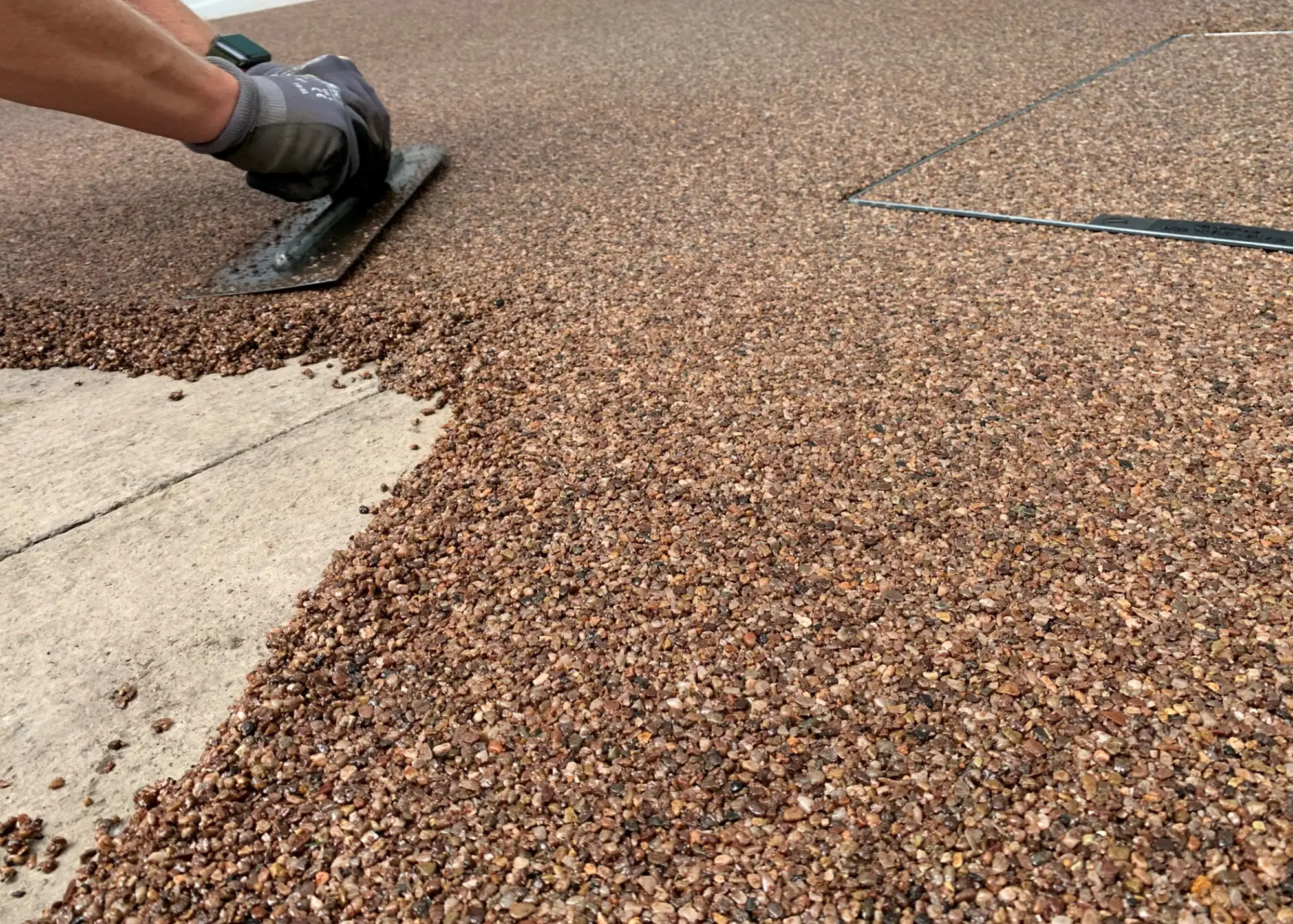
Here, a bespoke blend of resin bound gravel from Daltex is being trowelled onto a sound and level concrete sub-base
With such a broad range of natural aggregates, homeowners can select different colours, textures and patterns to add a personal touch to their property’s entrance. However, it is important to note that it could be less appropriate in rural or sensitive heritage settings where a more traditional material, such as loose gravel, is preferred for its authenticity and subtlety.
Case study Resin driveway for a period home
Completed by Cheshire Design Resin Surfacing, this large-scale driveway replacement involved the installation of approximately 420m² of resin-bound surfacing at a beautiful, high-end property. The client sought a new drive that would complement the character of their home whilst remaining reliable for daily vehicle use, opting for the Daltex springtime blend for its warm, natural hues.

Due to the scale of the driveway, careful planning was essential. The project began with groundwork and base preparation to ensure a stable, long-lasting foundation across the full area. Once the base was prepared, the resin-bound material was mixed on-site and applied in sections to maintain a consistent finish throughout. The installation required precise coordination to ensure seamless joins and a uniform appearance. Attention to edging details and transitions around the property helped to frame the driveway and enhance the overall design. The result is a smooth, fully-bound surface with no loose stones and excellent permeability.
The completed driveway has dramatically transformed the entrance to the property, creating an attractive, lasting first impression. The resin finish enhances the sense of space while providing the owner with a practical, low-maintenance solution. The homeowners now benefit from improved accessibility, a stunning entrance and a durable surface capable of handling multiple vehicles.
How is this driveway surface installed?
A resin driveway is only as strong as the surface it’s laid on. The installation process will typically begin with a survey that includes an assessment of the existing base. If suitable (eg sound concrete or asphalt), it may be reused – otherwise, a new permeable sub-base will have to be installed. “Ground conditions such as poor drainage, clay-heavy soils or structural instability must be noted before installation,” says Emma. Resin and aggregate is then mixed and hand-trowelled onto the surface, and will cure sufficiently to drive on after around 24-48 hours, depending on weather conditions. “Precision at this stage is key to achieving visual appeal and durability,” says Samuel.
The technical elements that define a high-quality installation include:
- A strong, permeable sub-base
- High quality UV-resistant resin
- Clean, dry and dust free aggregates
- Accurate resin-to-aggregate ratios
- Correct depth and application of the resin-bound layer
- Skilled installation
Factors such as tree roots can cause movement over time, so root barriers or flexible base solutions may be required. “Slopes are generally manageable, but steeper gradients may need enhanced slip resistance and careful installation techniques,” says Emma.
How much does a resin bound driveway cost?
As a general guide, homeowners can expect to pay between £50-£80 per m² for a professionally installed resin-bound driveway, which includes materials, labour and basic groundwork. “Base preparation can increase costs to around £120-£200+ per m², depending on the site and amount of work required,” says Samuel.
Amandine Lefevre


You may be interested in