

- Plan ItBack
- Design ItBack
- Build ItBack
- Homes
- ProductsBack
- CostsBack
- Self Build Cost Calculator
Estimate your project costs instantly with Build It's interactive self-build cost calculator
Calculate Now - Costs & Finance
- Contracts & Warranties
- Build It Estimating Service
Get an accurate, detailed cost breakdown of your project
Submit plans
- EventsBack















 Login/register to save Article for later
How Much Does a Driveway Cost in the UK? What to Budget for Driveway Surface Options

A well-designed and installed driveway doesn’t just boost your home’s kerb appeal – it provides access to your property, parking space for cars and adequate drainage from your site. Whether you’re building a new drive or a replacement, key elements to factor into the budget include waste removal, the sub-base, surface finish and edging materials, plus labour – so, how much does a driveway actually cost altogether?
Your total spend depends on the size of your driveway – the average double-car space is typically between 30 and 36m², and triple-car driveways measure between 45 and 54m². For simplicity, we’ll provide costs based on an average size of 40m².
“The cost for a budget driveway, including labour, materials and waste removal, sits between £3,000 and £4,000,” says Johnny Lovett, project manager and quantity surveyor at Grangeway Partners. “For mid-range, expect to pay between £4,500 and £6,000 and for high-end, £7,000+.” Ballpark costs will, of course, vary by location, material, ground conditions and design, but these figures should serve as a useful starting point.
To prevent overspending on your driveway, stick to simple shapes, and avoid unique curves or complex patterns to minimise labour costs. Mixing and matching different driveway materials will keep spending down, too – for instance, pairing block paving with a cheaper material like gravel down the side of the house. Choosing permeable surface is generally best, as it reduces planning issues and avoids extra drainage work.
In this driveway costs guide, we will take a look at:
- Prep work costs
- Resin bound driveway costs
- Permeable block paving costs
- Tarmac driveway costs
- Gravel driveway costs
- FAQs
How much do driveway prep works cost?
For a smooth driveway that stands the test of time, installation involves more than slapping down a new finish on top of what’s already there. First, the space needs to be excavated to a level of 200-300mm. “Make sure you know where your services are and that you’re compliant with current SuDS legislation,” says Trev Knight, head of group technical operations at Marshalls. “If the area of land you are excavating is completely flat, it’s vital to form a gradual slope so any surface water can drain away. This is done with the hardcore layers – we recommend a 1cm drop for every 80cm of length being paved.”
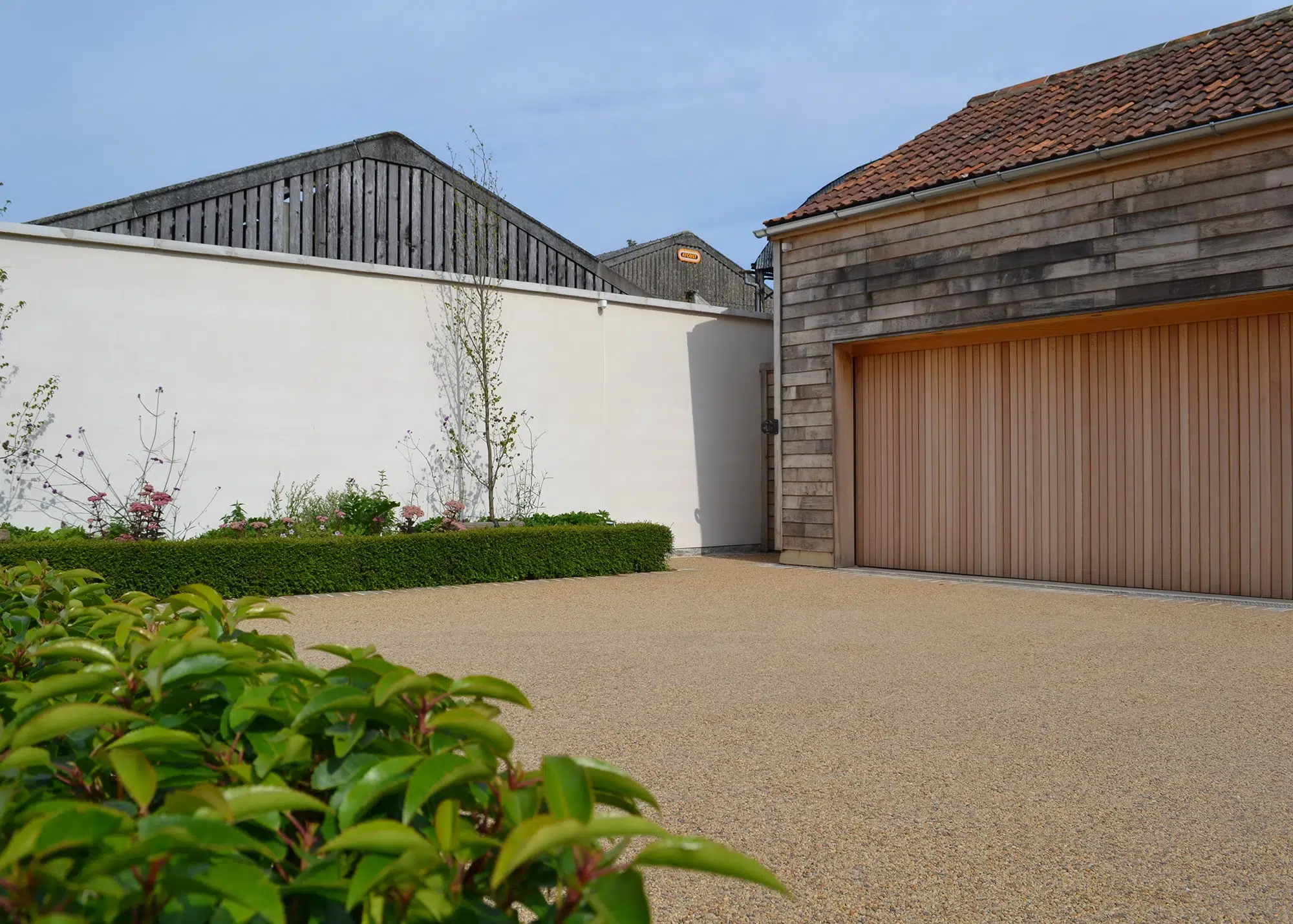
This sleek, resin- bound driveway was installed by SureSet. Typically, a compacted layer of MOT Type 3 will provide a suitable sub-base for this surface finish
Next, the dug-out earth and rubble is removed before the edging is installed. “The kerbs and edge restraints frame your drive and hold it together,” says Trev. “This is what gives the surface integrity, stopping any lateral spread.” The next step is to lay a membrane to prevent weed growth before installing the load-bearing sub-base. The surface finish you want dictates the composition of this layer.
“Most domestic driveways use MOT Type 1 hardcore, but if you’re installing resin-bound gravel, tarmac or concrete, the surface needs a smoother, well-compacted base – and sometimes a concrete slab beneath for strength,” says Johnny. Next, you can put in the bedding/screed layer before laying, compacting and finishing your chosen surface.
- According to Checkatrade, groundworks for a new driveway typically cost £20-£100 per m², depending on the project’s complexity and how much work you plan to do yourself.
- A robust quote should include allocations for items such as hiring a skip – you’ll pay around £120-£225 per week for this, depending on skip size, location and whether you need a parking permit.
- Mini diggers typically cost around £160 per day.
- A hired compactor might come in at £100-£200 per week.
- Installation costs for the completed sub-base commonly sit at £12-£16 per m².
| QUICK ANSWER Groundworks for a driveway cost an average of £60 per m². You can get a skip from £120 per week, and installation costs for a sub-base cost an average of £14 per m². |
Resin-bound driveway costs
Clear resin mixed with decorative stones provides a sleek, long-lasting finish, that’s available in various shades. This low-maintenance solution is weed resistant and easy to clean. “It’s permeable, fully SuDS compliant and reduces surface water runoff,” says Yvonne Holloway from SureSet. “There are no loose stones, which makes it ideal for wheelchairs and bikes.” Resin-bound driveways sit at the premier end of the spectrum compared to other options. “Areas with high water tables or clay soil may require additional drainage design,” says Yvonne.
On a supply-only basis, materials cost between £35 and £55 per m², depending on the aggregate type, colour and thickness. “For a 40m² driveway, material-only costs range from £1,400 to £2,200,” says Yvonne. Base preparation and full installation typically takes three to four days, including one day for the surface layer. “For a 40m² driveway, budget an additional £2,000 to £3,200 for installation, on top of material and prep costs,” says Yvonne.
| QUICK ANSWER Resin-bound driveways cost an average of £45 per m² for the material and £130 per m² for installation. |
CASE STUDY This is what to expect from installing a resin-bound driveway
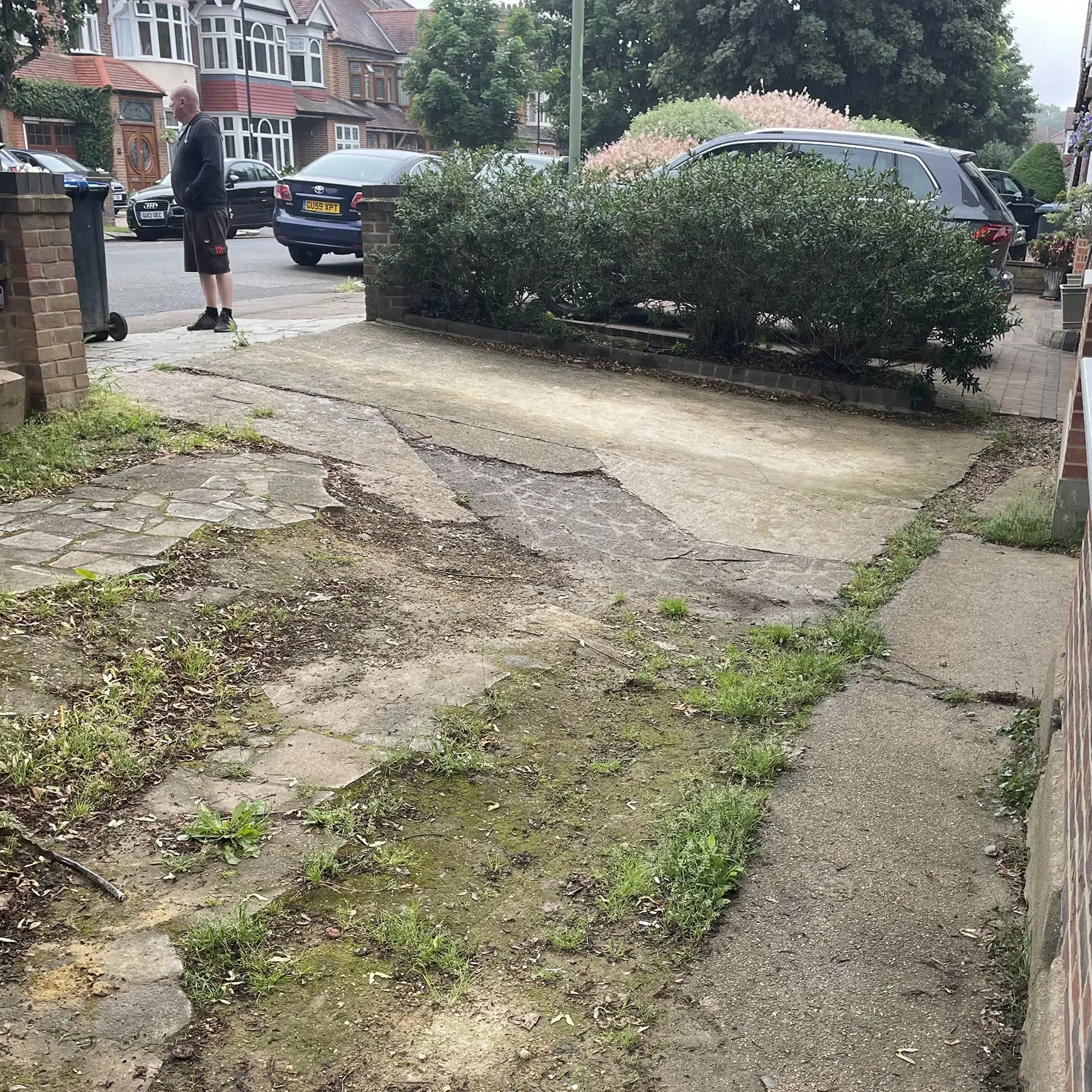 |
BeforeThis unloved driveway was in dire need of TLC before Grangeway Partners were brought in to improve the space. The old concrete surface, paving stones and weeds had to be removed before work could begin. |
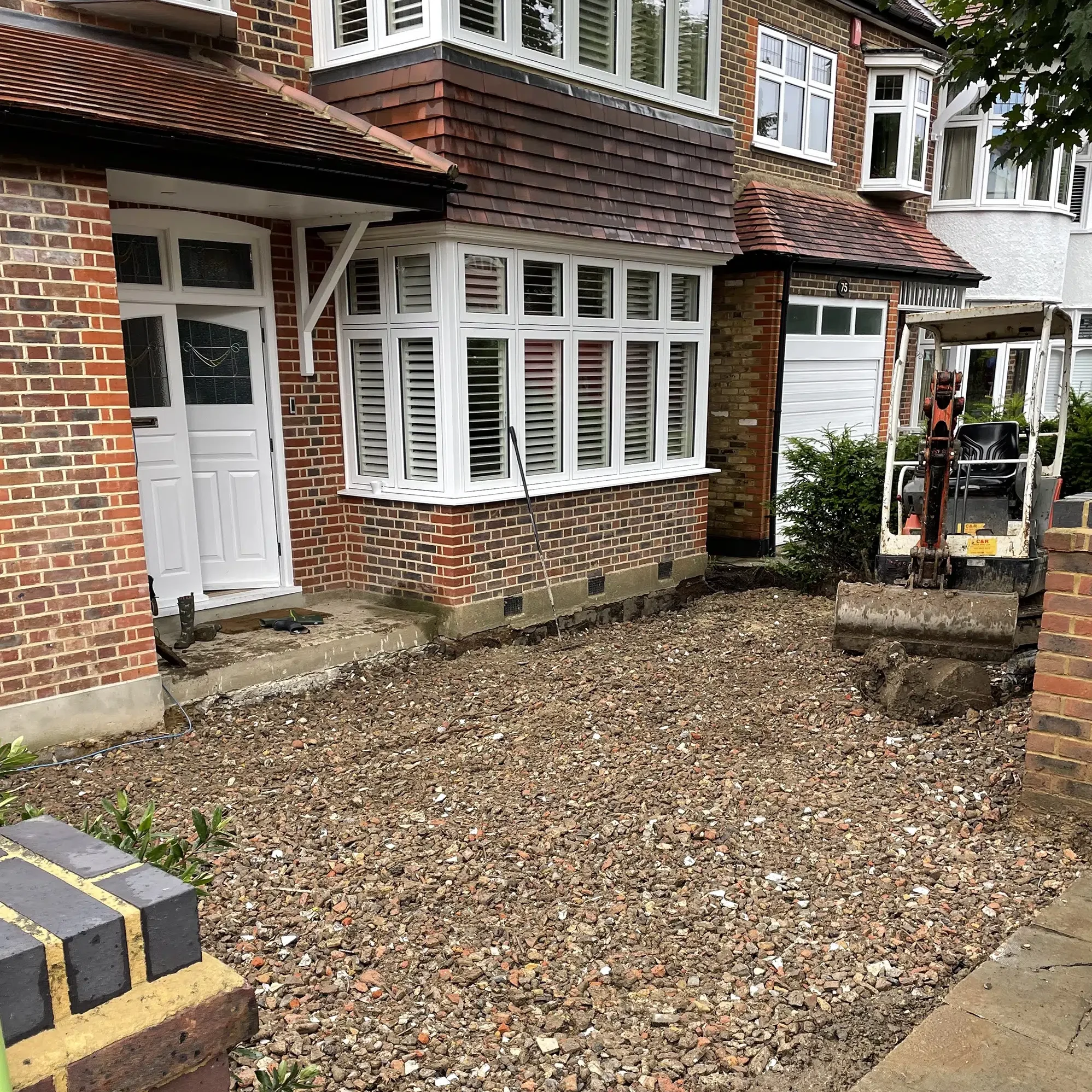 |
DuringAfter excavation, the sub-base was carefully |
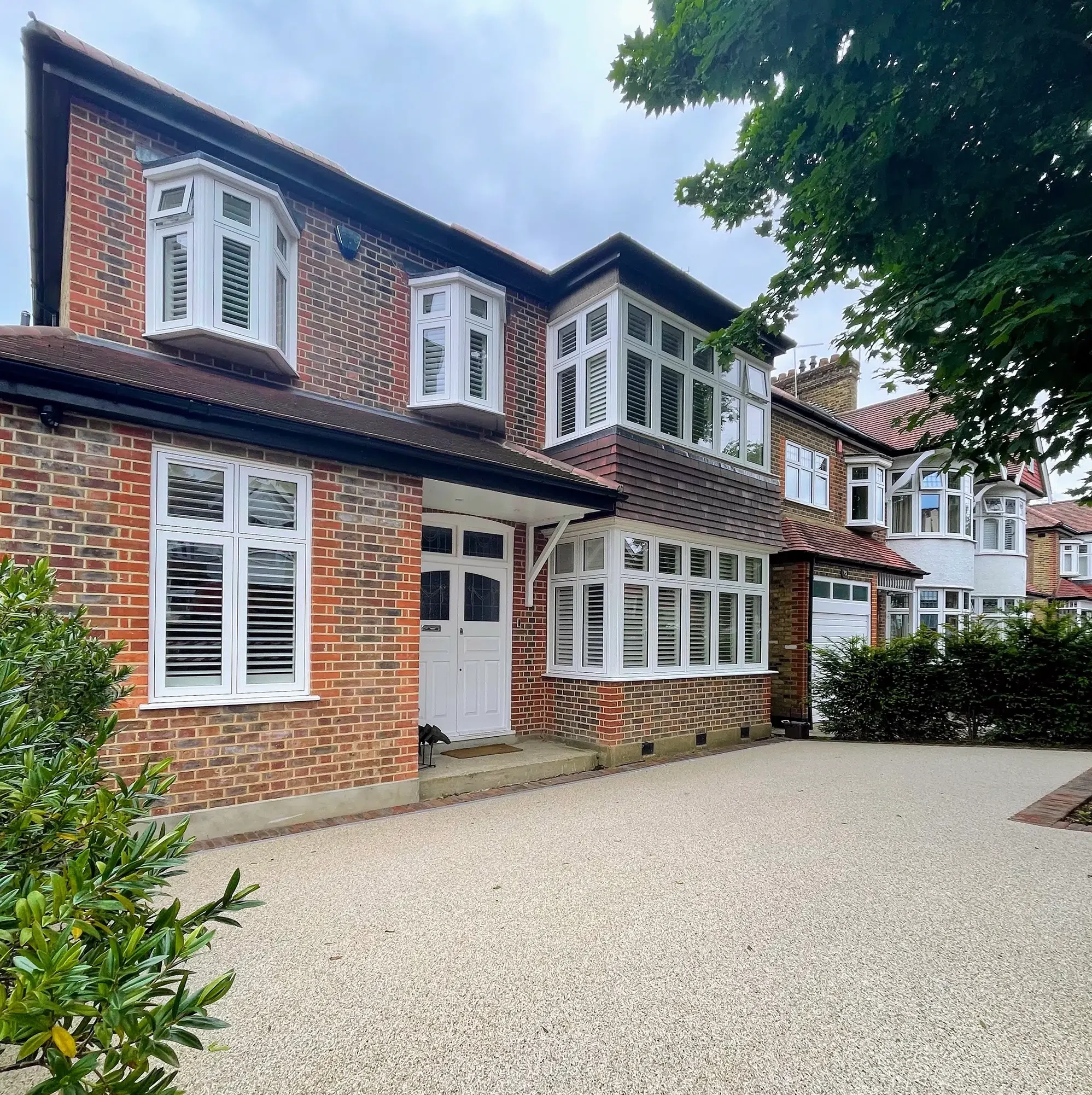 |
Finished resultThis smooth, resin-bound driveway is the result. The sleek finish is bordered by edging stones, with soft landscaping around the outer edge of the drive to soften the look of the hard landscaping. |
Permeable block paving
A permeable block paving driveway is made up of a collection of interlocking pavers, which can be laid in a pattern of your choice to establish a characterful surface. The units are durable and come in numerous colours and finishes. Permeable versions are available to support excellent water drainage, too, taking away the need to apply for planning permission – keep reading for more on planning permission for driveways.
Individual blocks can be lifted out and replaced when damaged, simplifying any repairs needed. For best results, professional installation is required – but the same is true of most driveway options. Ongoing upkeep is also needed, including occasional cleaning.
The average cost of a block paved driveway is between £90 and £120 per m² (£3,600-£4,800 for our 40m² example). You should expect to pay between £300 and £400 per day for a driveway installer. This type of surface finish will take between five and seven days to lay, depending on the specific job’s complexity.
| QUICK ANSWER Permeable block paving driveways cost an average of £105 per m² for the material. |
Tarmac driveway costs
Made from stone and bitumen, this smooth and robust driveway finish provides a practical, low-maintenance solution. Plus, it’s cost-effective, skid-resistant and recyclable. On the downside, it’s not as attractive as block paving or resin-bound surfaces.
“Expect to pay between £3,000 and £4,500 for a 40m² driveway on a supply only basis,” says Johnny from Grangeway Partners. A two-person team will cost in the region of £400 per day for installation – but steep driveways or awkward spaces will cost more as they will take longer. A tarmac driveway should take one to three days to lay, with an additional three or four days for site and sub-base prep.
| QUICK ANSWER Tarmac driveways cost an average of £94 per m² for the material. |
Gravel costs
If you’re after a rustic, natural look with a simple installation process, gravel could be your best bet. Made from small loose stones compacted into place, gravel is affordable, easy to install and good for drainage.
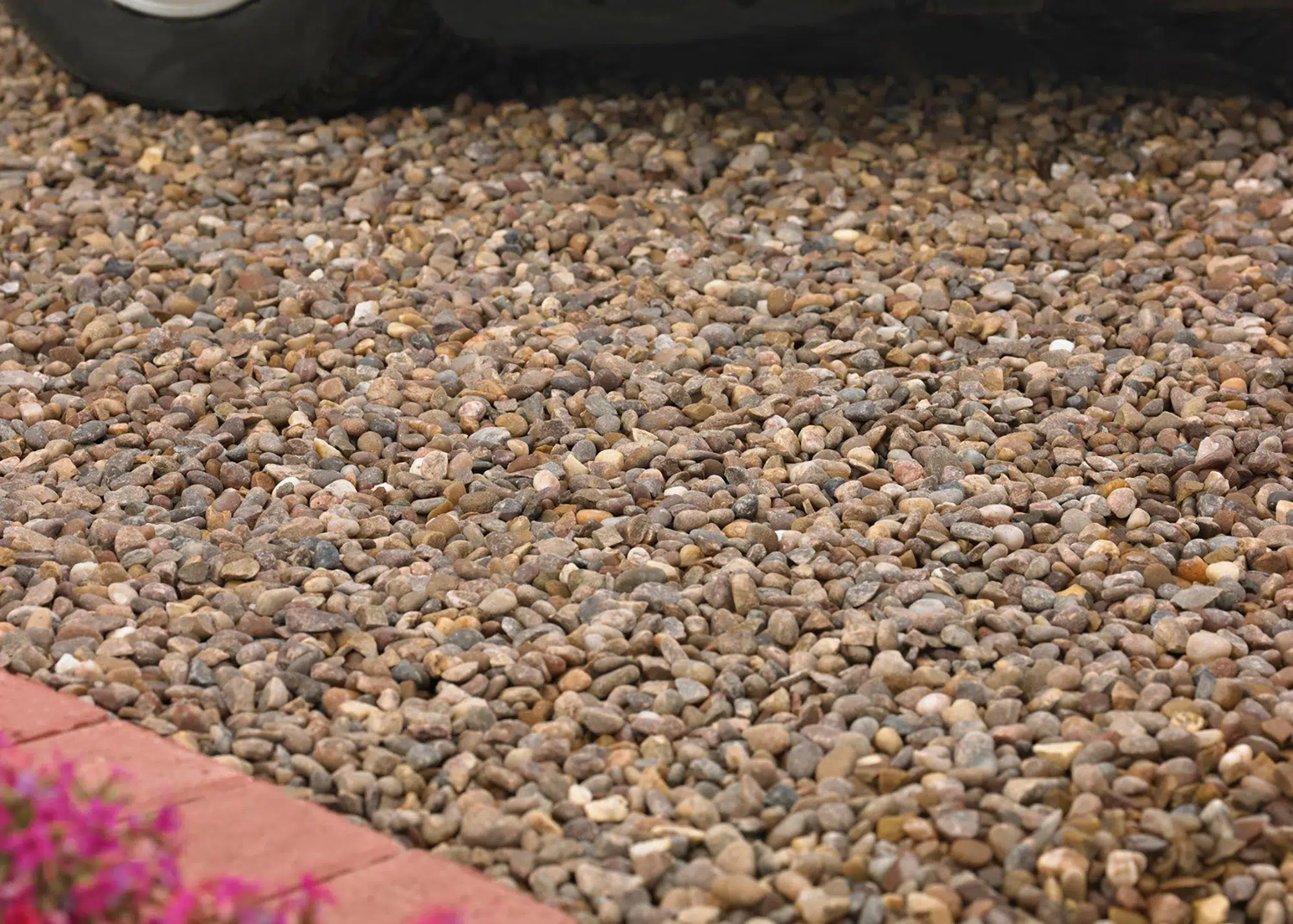
Gravel provides a natural looking finish that’s easy to install. These naturally rounded brown decorative stones from B&Q cost £8 per bag and will cover an area of 0.3m²
Gravel surfaces may require regular raking to keep them tidy, plus periodic top ups. Expect to pay between £15 and £40 per m² for materials. Installation is quick and easy and should take a team of labourers around one to two days – or you could save money and do it yourself. For a driveway installer and one or two labourers, expect to pay around £300-£400 per day.
| QUICK ANSWER Gravel driveways cost an average £27 per m² for the material. |
FAQs
Do I need planning permission for a new driveway & how much does it cost?
If you’re self building a house, the driveway will already form part of your planning permission – so, you won’t need to submit a separate application. If you’re upgrading an existing surface, however, there are several instances where consent is needed (for example, if you plan to significantly widen an existing driveway). You’ll also require planning if you intend to use non-porous surfacing on an area greater than 5m². It costs £262 to apply for planning permission to change a driveway in the UK.
your guide to planning permission costs
How much do drainage works cost?
Depending on your chosen surface, soil type etc, you may need to do drainage works to prevent rainwater runoff. Even if you are using permeable surfacing materials, there may still be occasions where channel drains and/or soakaways are required. “Drainage can add anywhere from £300 to £1,200+ to your driveway costs,” says Johnny from Grangeway Partners.
What to budget for decorative edging
The cost of decorative edging varies depending on the material used and installation complexity – putting in edging stones on a sloped surface or in tight spaces might necessitate additional tools and labour. Budget solutions from the likes of B&Q cost from £6 per 60mm length.
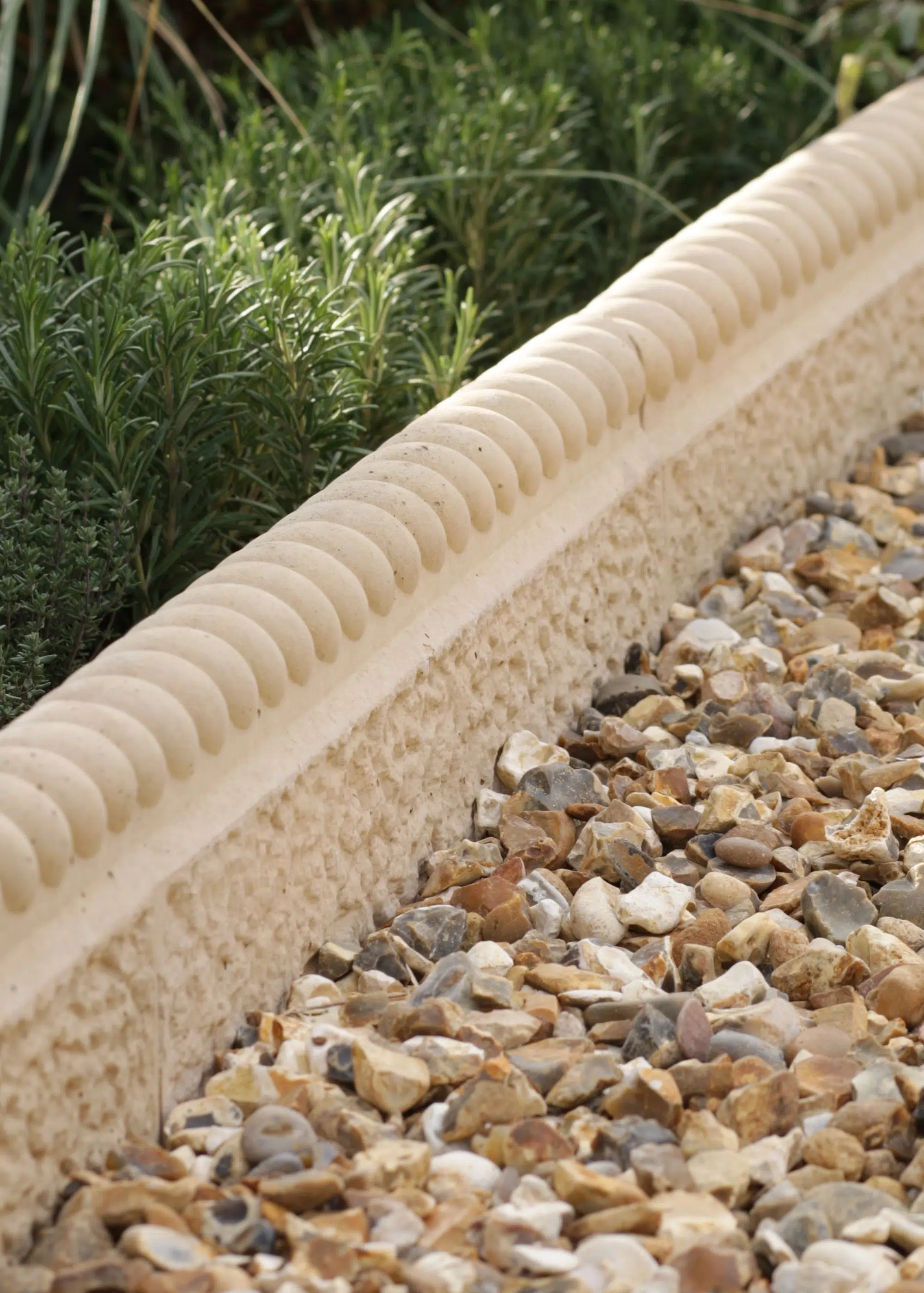
Supplied by B&Q, Bradstone’s Cotswold Paving edging is priced at £11.50 for a length of 600mm
What does it cost to put in a dropped curb?
If you’re changing or adding an access point, you’ll need to budget for a licence from the council to put in a dropped kerb, plus the cost of the work. Many councils require you to use a contractor authorised to work on the highway and provide quotes for a dropped kerb directly. For example, Dorset Council states that a typical 5m dropped kerb on a 1.8-metre-wide footway could cost around £2,000, plus £370 for the licence itself.
Rebecca Foster
You may be interested in