How Much Should You Pay for a Plot of Land? This is How to Value a Self Build Site
How much should you really pay for a plot of land for a self build? Project manager and serial self builder Mark Stevenson reveals what you need to know to value land effectively and bag the perfect site for the best price
Mark Stevenson
One of the biggest worries for anyone buying a building plot is whether they’re paying too much. It’s a fair concern. Good plots are scarce, competition intense and the moment a site comes to market with planning consent, it can feel like a race to get an offer in before someone else buys it. So, how much should you really pay for a plot of land?
Estate agents often say that a plot of land is only worth what someone is prepared to pay for it. This might be true from the seller’s point of view, but if you’re a buyer, this kind of thinking will get you in trouble. Overpay for the plot and you will quickly find that the rest of the project becomes a constant battle to stay on budget.
Fortunately, valuing a plot isn’t black magic. It’s far more logical than most people realise. The challenge isn’t the maths, it’s understanding the variables and keeping your emotion, excitement and of course the competition in check long enough to close the deal.
Looking for a plot of land for your self build project? Take a look atPlotBrowser.comto find 1,000s of UK plots and properties, all with outline or full planning permission in place
How can you work out the value of a plot of land?
The key to paying the right price for a plot of land is understanding what kind of project it can genuinely support, what the finished home will be worth, and how much it will cost to get there. Once you’ve figured this out, the plot value reveals itself.
Conventionally, this is done via what’s known as a residual plot valuation. You start with the value of the finished house, deduct all the costs of development, and what’s left over is what the site is worth to you. It’s a relatively simple calculation – but it can be completely ruined by endless variables.
People tend to struggle with valuing a self build plot successfully for three main reasons:
The pressure of competition. When there are multiple buyers fighting over a piece of land, it’s easy to let the fear of missing out drive the number rather than the fundamentals of what it’s worth.
Different motives. A self builder, small developer and volume housebuilder will all see a different value in the same plot because they have differing objectives and cost structures.
Not understanding the development costs. f you don’t fully understand the true cost of developing a site, I can be very easy to convince yourself that the plot in question is worth a lot more than it really is.
Before you can sensibly talk about what a plot is worth, you’ll firstly need to understand what can actually be built on it. This means looking carefully at planning policy, site constraints and the surrounding context. It’s not necessarily about what you’d like to build, but what the local planning authority is likely to approve.
Overestimating what the plot can support is one of the most common ways people inflate land values. The temptation, particularly when a plot is expensive, is to justify the price by assuming a more spacious or valuable house is possible. Remember, local planning departments exist to control development by assessing the scale, massing and impact. They will impose limits whether you like them or not.
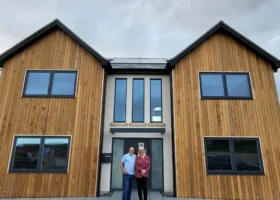
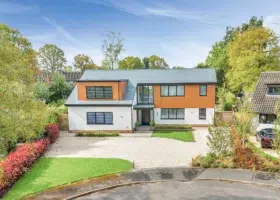
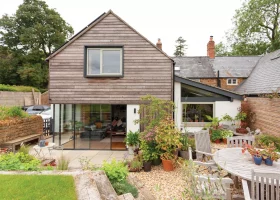
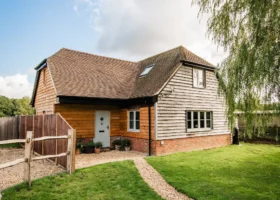
Build It readers Rick and Julie Anderson replaced a former chicken shed in the Kent countryside with a beautiful, contextual two-storey home. From a planning perspective, a key advantage of the site was that it’s located just outside of the local conservation area and the green belt. The 0.25 acre site cost the couple £450,000. The 273m2 self build cost a total of £550,000. Photo: Katherine Malonda
Once you have an idea of what kind of home is likely to be approved, estimating the end value becomes a research exercise. Look for sold prices of comparable properties in the area. Speak to local estate agents, too, but be careful about making comparisons with asking prices, which might be inflated. Ideally, get a RICS valuer to sanity-check your assumptions.
Valuing a self build that doesn’t yet exist is never an easy task, particularly when the specification and quality can’t be seen yet. It’s therefore always a wise decision to build in a margin of caution.
Premium Content
Downloadable E-Guide
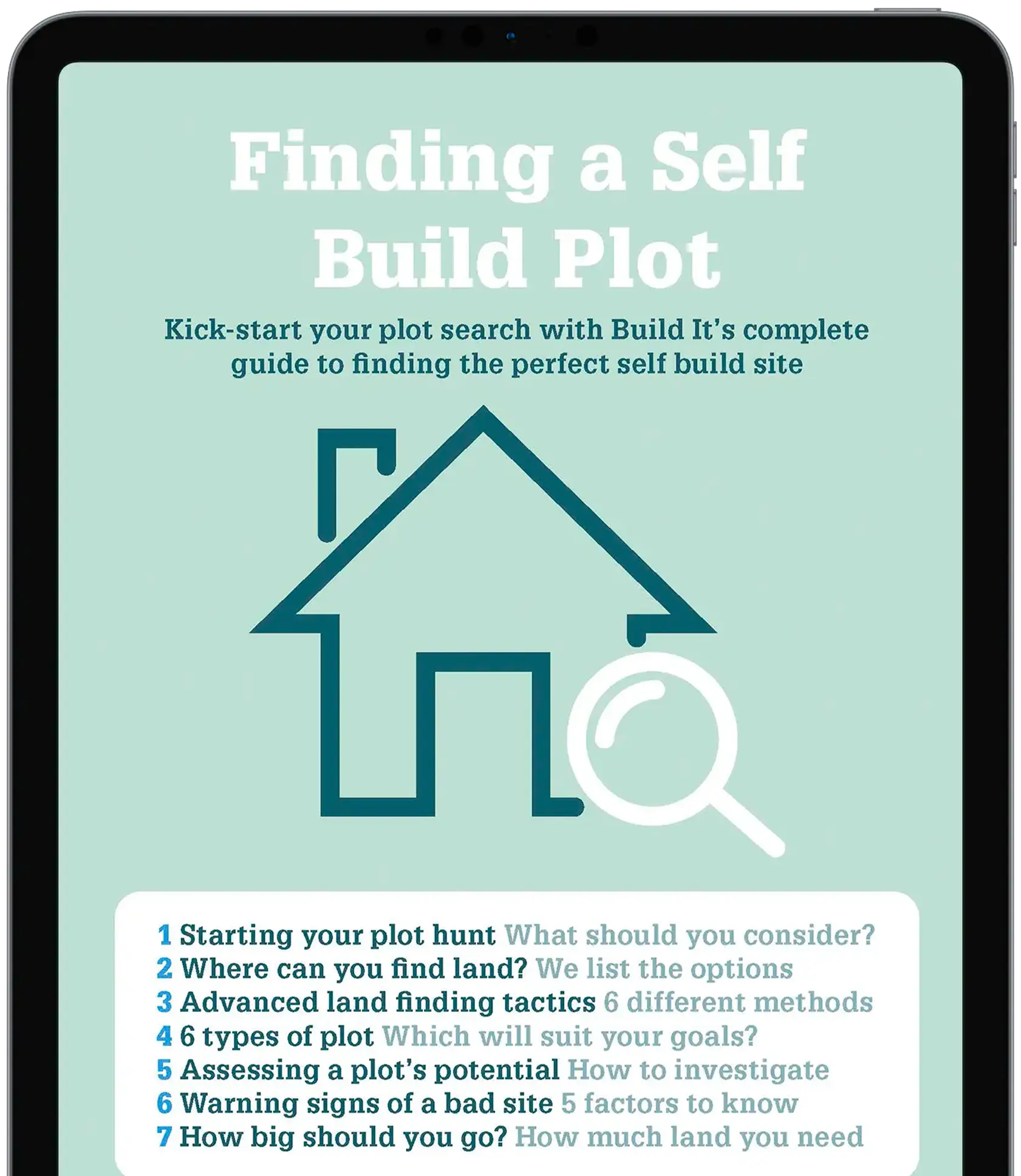
Not sure where to start with your plot search? Kick-start the journey with Build It’s complete downloadable e-guide to finding the perfect self build site. Click below to find out more.
Case study Stunning ICF home on a 0.5-acre plot in West Sussex
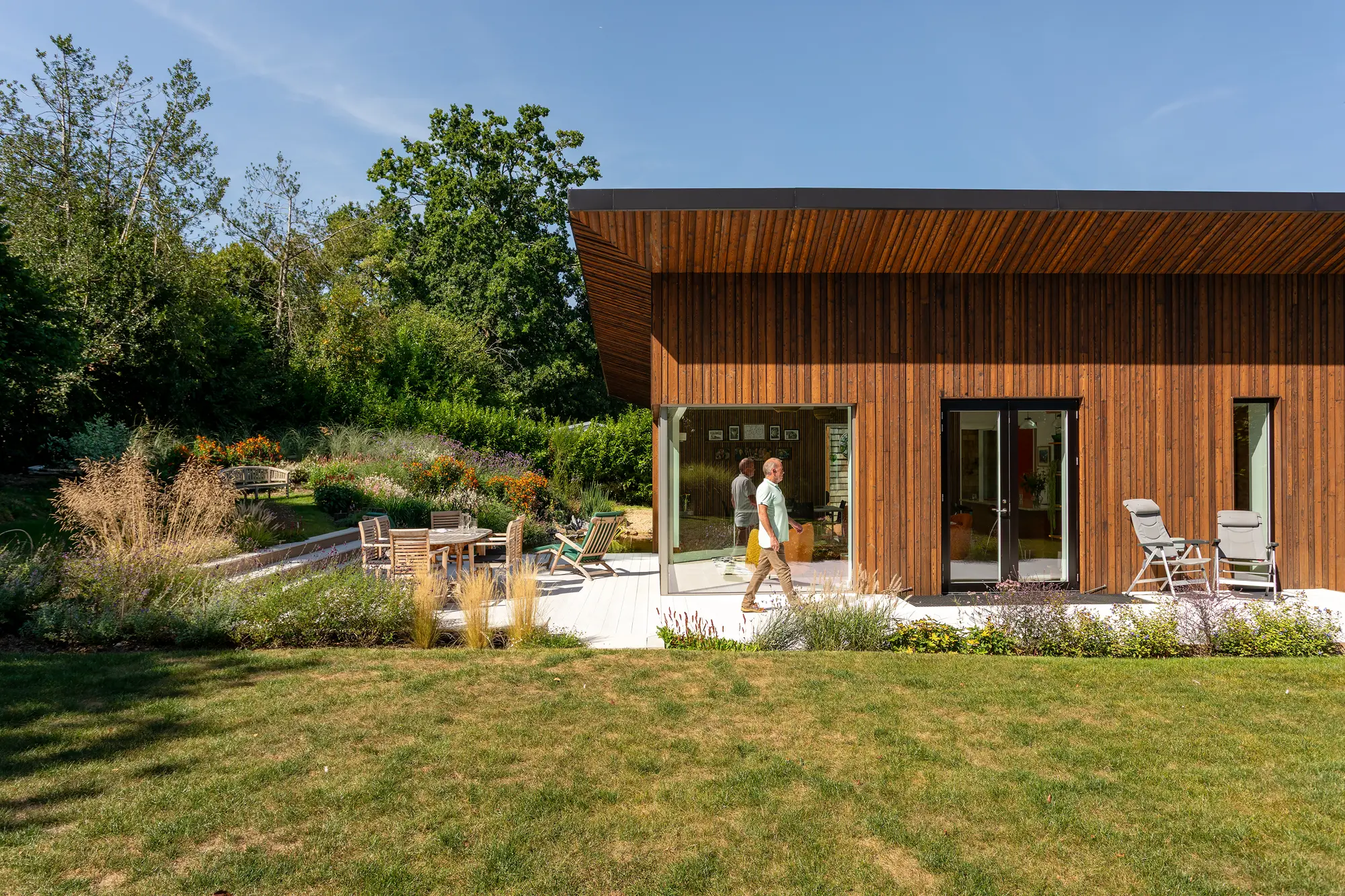
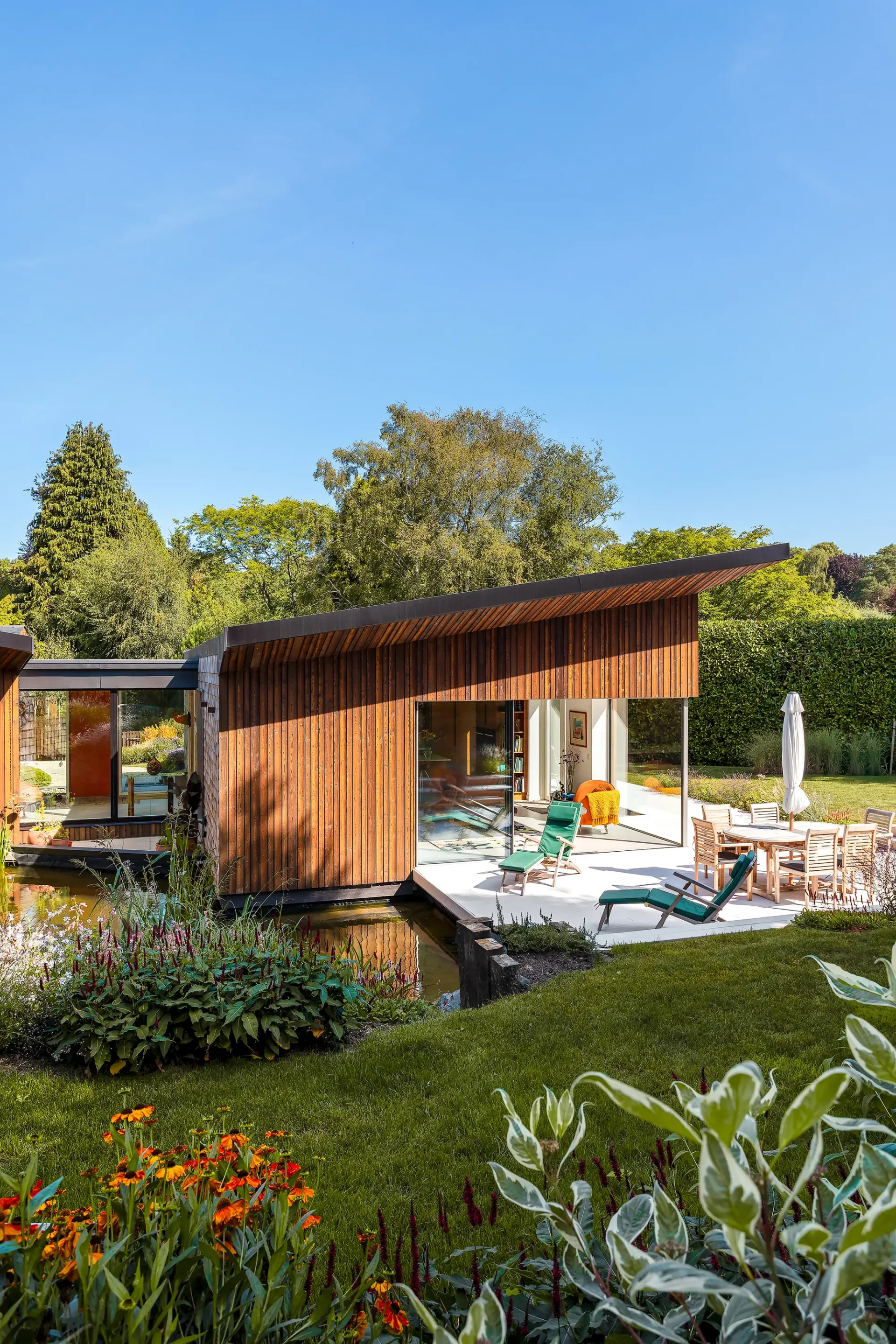
When Build It readers Martin and Mandy Newnum visited the half-acre plot that they ended up buying, even though it didn’t come with the view they desired, they knew it could be transformed into the right place for them. Although not the home they wanted to build, it came with planning permission for a five-bedroom house with tile-hung elevations. They looked at replacing the existing consent with a design better suited to them, working with a local architect to create new plans for a single-storey dwelling with a double monopitch roof. Rejected at first due to it being too modern, support from neighbours meant it passed on appeal.
Photo: Katherine Malonda
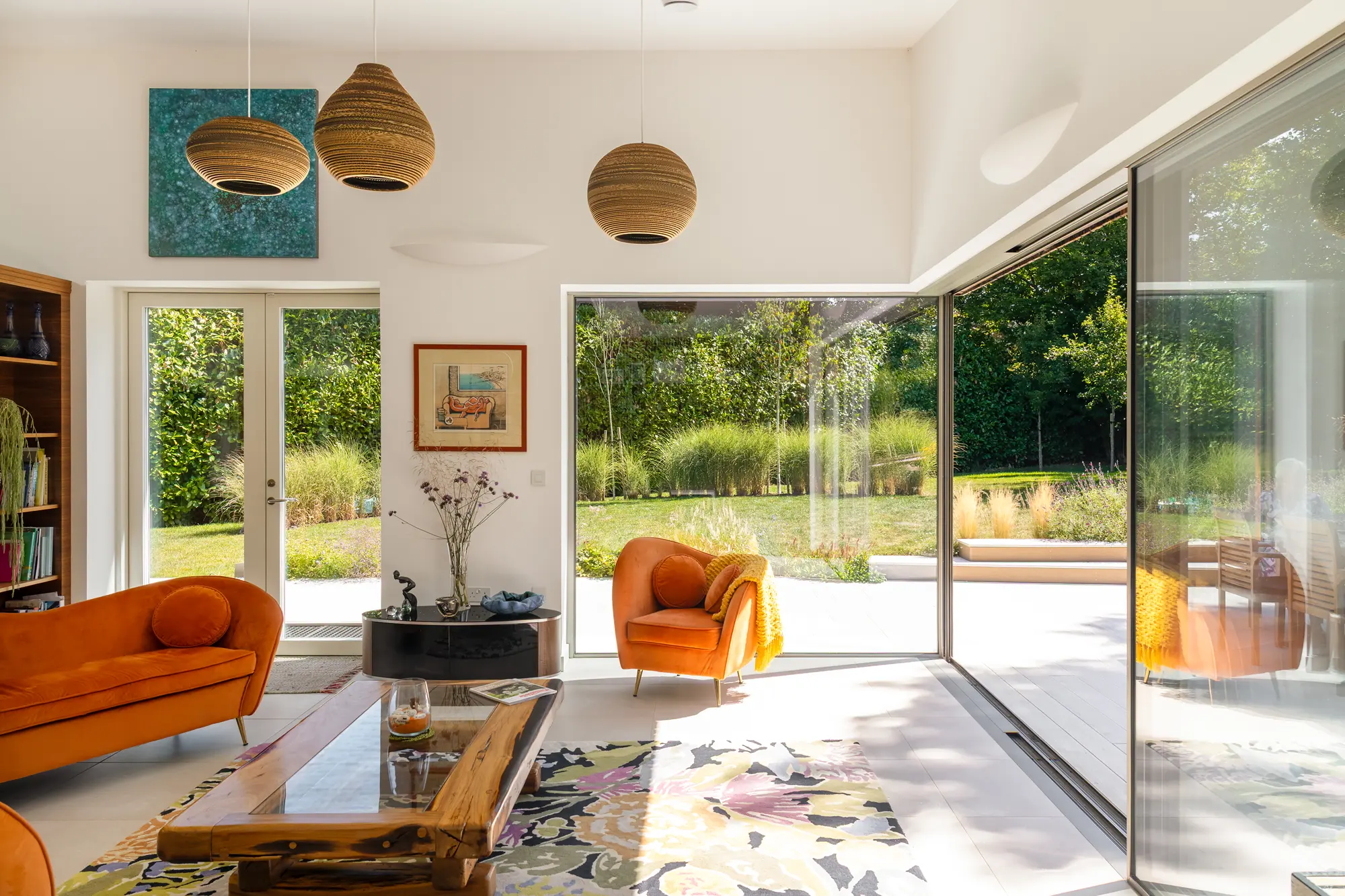
The layout was inspired by a butterfly. “It struck me that this could be the shape of the building, with the accommodation in one wing and the living spaces in the other,” says Martin. The floorplan consists of two rectangle-shaped wings, connected by a glazed link entrance hallway. The space is all on one level and every detail was thoroughly considered. The bedroom side of the building sits parallel to the edge of the plot and the other rectangle is angled to ensure daylight falls into the living spaces in the morning and early evenings.
Photo: Katherine Malonda
For the build they opted for insulated concrete formwork (ICF). However, they came up against an issue with their supplier as there weren’t enough ICF blocks to build the house, which ended in a court case and left the couple £3,000 out of pocket.
The finished combination of the main building, garage and landscaped garden creates a striking home full of eyecatching details. The building features a mix of timber cladding, angled roofs with overhanging edges, corner glazing and two ponds that surround the building a bit like a moat. The airtight house has an air source heat pump, underfloor heating and a mechanical ventilation with heat recovery system (MVHR).
With the end value established, the focus shifts to understanding the development costs. This is where things unravel, particularly for inexperienced self builders. Development costs include far more than the construction itself, and every pound that’s underestimated artificially inflates what you think you can pay for the plot. Here’s what to consider:
Buying the land
Start with the cost of buying the land. Legal fees, searches, surveys and site investigations all need to be included. There may also be some less obvious costs involved, such as dealing with restrictive covenants, rights of way or ransom strips – all of which can have an impact on your finances.
Design costs
Design and planning costs are another key element. Unless the plot already has consent, you’ll need to pay for an architectural design and fund the planning process. While it’s possible to do this cheaply, most self builders will invest in professional architects and designers. Good design can add value in numerous ways (not just financially). But if the fees don’t translate into higher end values, that cost has to be absorbed somewhere – potentially reducing what you can afford to pay.
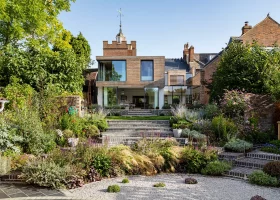
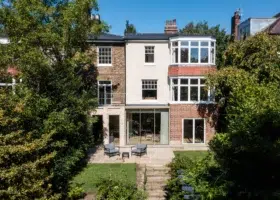
First-time self builders Chris and Mary Noon created a stunning oak frame home in Dorset, with unbeatable sea views. The project, designed by Roderick James Architects, went on to win the coveted, reader-voted Best Self Build Project at the 2024 Build It Awards. The 0.7-acre site originally held a bungalow and cost the couple £420,000. The knock down and rebuild cost a total of £662,500. Photo: Richard Downer
Planning permission
Planning permissions also come with various strings attached. Conditions can require additional reports, surveys or construction measures that increase costs. Planning obligations, particularly the Community Infrastructure Levy (CIL), can also be significant. Many self builders qualify for a CIL exemption, which can save a considerable sum and could put you in a position to outbid developers.
Self build costs
Build costs themselves vary enormously depending on how the project will be delivered. A one-stop turnkey contractor offers convenience, but that convenience will come at a price. Appointing a project manager or managing the build yourself can reduce costs, but only if the person undertaking the role has the time and experience to do it properly. Developers often have the advantage here because they will build efficiently and are expert risk managers.
Site-specific expenses shouldn’t be overlooked either. Poor ground conditions, contamination risks, steep slopes, difficult access or expensive service connections will all add cost. These issues need to be identified and quantified as early as possible to save time and money. Finding the least costly solution to overcoming a specific problem is one of the most effective ways to develop a competitive advantage.
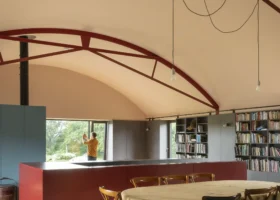
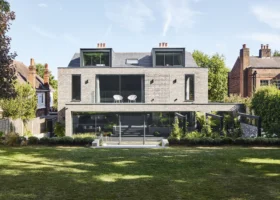
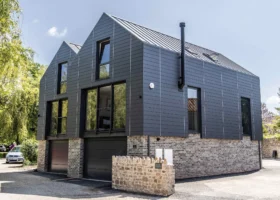
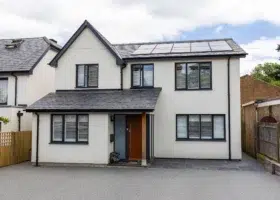
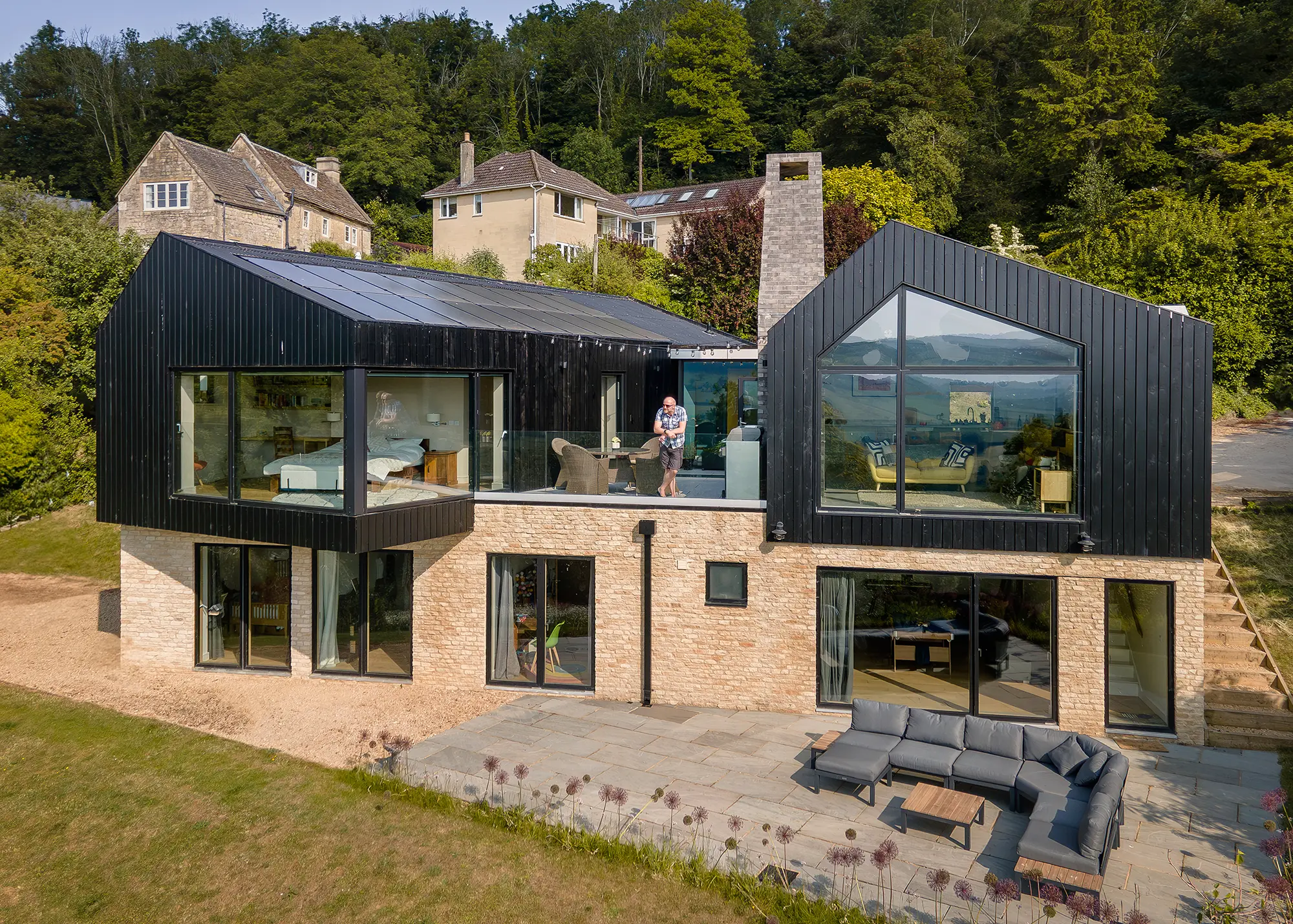
When Calum and Sally Land found a run-down bungalow in Bath, they decided it was the perfect spot to knock down and rebuild their new home. With the plot being on a slope, getting around a few construction challenges and incurring additional expenses were an inevitable part of the process. The 224m² self build project cost a total of £550,000. Photo: Pete Helme
Profit
The final variable is equity, or profit. For developers, profit is essential and without it, a project just won’t stack up. A margin of around 20% is typical and has a major impact on land value. Self builders think differently and aren’t typically driven by profit, potentially enabling them to pay more for land.
How can you negotiate the best price for a plot of land?
This isn’t about haggling for the sake of it. In my experience, getting the best price for a plot hinges on a thorough understanding of the numbers and being able to explain them. Sellers respond well to buyers who are well informed and credible. If you can demonstrate that your offer is grounded in clarity and honesty about what the site can support, as well as the cost to develop it, you’re in a much stronger position to strike a deal.
In the end, paying the right price for a plot comes down to discipline. Do the appraisal properly, understand the variables and don’t let the fear of losing out push you beyond what the numbers will support. Different buyers will always see different values, but if your offer is realistic and justifiable, you’ll be able to make offers with confidence, knowing that you’re not paying over the odds.
FAQs
How much do the different types of planning application for a self build cost?
Full planning application fees
Full planning applications require you to submit an application containing all the details relating to a particular development. This is necessary if you’re building a new house or if you’re significantly altering a domestic property.
It costs £588 to make a full planning application for the erection of each dwellinghouse (up to 10 dwellinghouses).
Outline planning applications
An outline planning application is made when you’re looking to find out whether your proposed developments/plans are going to be acceptable either in principle, in whole or just in part. Generally, an outline planning application requires less information.
For site areas under 0.5 hectares, it costs £588 per 0.1 hectare to make an outline planning application.
Planning permission in principle
It costs £512 (per 0.1 hectare) to make an application for planning permission in principle.
Change of use
For applications of fewer than 10 dwellinghouses, it costs £588 to make a planning application for a change of use. You may need to make this type of application if you’re converting an industrial building.
How do local planning authorities differ & will this impact your project's chances of success?
In England, there is a single document that provides the highest-level strategic policies – the National Planning Policy Framework (NPPF). Policies at national and regional level set general principles, such as reducing carbon emissions, delivering a minimum number of new homes and discouraging new development in the countryside or the green belt.
Local areas follow their own policies, set out in the Local Plan, which contains the policies adopted by your council to control development. If you are planning a home extension or a new build, this is where you will find your local area’s individual rules and restrictions. Note that smaller areas, such as individual towns, villages or hamlets, also now have the power to draw up Neighbourhood Plans, with policies relating specifically to their own individual areas.
Julia Riddle is one of Build It’s planning experts. She a planning consultant with over 13 years of experience in a variety of planning work, including advising on and achieving planning permission for residential development on a range of scales. She has been involved in writing guidance on custom and self build to inform the national planning approach and has specifically been advising self builders for over six years.
Is it difficult to get planning permission for a self build in the green belt?
The National Planning Policy Framework (the NPPF) says the main aim is to keep green belt land permanently open. There are a few exceptions, such as extensions and knock-down and rebuilds. For self builders, it is possible to build a new house within a village where it would fill a gap along a built-up frontage. In addition, you can reuse existing buildings (by converting a barn, for example) and you can also redevelop previously developed land.
If you are planning a new build, it is unlikely you’ll be granted permission on a vacant greenfield site. The whole purpose of green belt designations is that new buildings should not appear where there is not currently development. The exception for ‘infilling within villages’ is tightly controlled – it generally needs to be a small site for one house only, within a village and on a fully built-up frontage.
Martin Gaine is one of Build It’s planning experts. He runs planning consultancy Just Planning. A former case officer, he has experience on both sides of the planning divide and now specialises in helping homeowners win consent at appeal. He is the author of How to Get Planning Permission: An Insider’s Secrets.
What is custom build & is it right for you?
Custom build is a route to creating your own bespoke home, but with some of the work already taken care of. Where self build projects involve sourcing a plot, applying for the relevant permissions to develop it and arranging services and access, the custom building process usually involves multi-plot sites bought and prepared by an enabling company or developer. They key benefit is the enabler secures planning, installs key infrastructure and utilities, and, in some cases, prepares the site with foundations or your bespoke home’s structural shell.
Drawing a clear line between custom and self build can be difficult. Typically, a custom build scheme will follow either a serviced plot approach (utilities, access and planning in place, with foundations to suit your final design included in the sale) or a customisable home model (where you tailor a pre-designed house).
When it comes to self build, one of the biggest challenges is finding a plot that will be straightforward to develop. In comparison, custom build sites aim to remove this hurdle by providing a development-ready plot – but you may find there are differing levels of design control available over the finished property.
What should you check once you think you’ve found a suitable self build plot?
Am I ready to act quickly? It’s important to have your funds and/or borrowing lined up and legal representation ready to go so that your offer looks enticing to the vendor (if you’re buying at auction, this is essential).
Is planning permission in place? The outline or full consent shouldn’t be about to expire, as this could put your dream home project in jeopardy. Any conditions attached to the permission must be acceptable to you.
Are there any fees? Double check whether you will be liable for a Section 106 charge or any other financial contributions to the council as a condition of the planning permission. These could increase your project costs markedly, and may need to be accounted for in your offer.
Am I getting all the land? Ensure the plot area that’s for sale is exactly the same as that indicated on the current planning permission – otherwise you could run into trouble with ransom strips and other issues.
Can I change the consent? The majority of self builders will want to tweak the design to some degree, so think about whether you want to revise the existing planning permission and if these amendments are realistic.
Are there any other obstacles? Check whether the plot has a right of access to the public highway and ascertain if any legal issues, such as restrictive covenants, might bring extra costs or prevent you building.
Mark Stevenson
Mark Stevenson has worked as a construction professional for over 35 years and is a serial self builder. He runs project management consultancy Elsworth Projects and, as chair of NaCSBA, advocates for the interests of self builders and contributes to the success of the emerging custom build industry.
Good morning, I am currently looking at purchasing a plot of land to build a new home for myself in my village on the outskirts of York. The agent acting for the seller suggested a price prior to the land going to auction, I offered a figure 35% lower which has being accepted. The land will be sold freehold and has no planning permission, I have contacted my local council and submitted a Pre Application for Planning Permission form as I would like to know if I would get planning permission for a build.
The average house cost in my village ( if any come onto the market) I guess will be £450K +!
What would be the increase % value of the land with planning permission as opposed to not having it.
I am looking for assistance from ‘Build it ‘ to guide me through the process from purchase to finished product.
I look forward to your comments.
regards
Robert Precious.














 Login/register to save Article for later










Good morning, I am currently looking at purchasing a plot of land to build a new home for myself in my village on the outskirts of York. The agent acting for the seller suggested a price prior to the land going to auction, I offered a figure 35% lower which has being accepted. The land will be sold freehold and has no planning permission, I have contacted my local council and submitted a Pre Application for Planning Permission form as I would like to know if I would get planning permission for a build.
The average house cost in my village ( if any come onto the market) I guess will be £450K +!
What would be the increase % value of the land with planning permission as opposed to not having it.
I am looking for assistance from ‘Build it ‘ to guide me through the process from purchase to finished product.
I look forward to your comments.
regards
Robert Precious.