

- Plan ItBack
- Design ItBack
- Build ItBack
- Homes
- ProductsBack
- CostsBack
- Self Build Cost Calculator
Estimate your project costs instantly with Build It's interactive self-build cost calculator
Calculate Now - Costs & Finance
- Contracts & Warranties
- Build It Estimating Service
Get an accurate, detailed cost breakdown of your project
Submit plans
- EventsBack











 Login/register to save Article for later
Build It Award-Winning Off-Grid SIPs Home with Views of Hadrian’s Wall

Enjoying views of Hadrian’s wall and a nearby castle to the north, plus fantastic sunsets to the west, Peter Mouncey and Diana Taylor couldn’t be happier with life in their newly self built home in Northumberland. “We don’t have any regrets – if anything, we wish we’d done it sooner,” says Peter, whose previous build experience amounted to the odd bit of DIY. “We’d been looking for a piece of land on the coast for quite a few years. We wanted a house in the countryside for retirement, to have more time for cycling and walks.”
They originally dismissed this idyllic plot of land as it was too expensive, but when it came back onto the market at a lower price, they were able to negotiate it down even further. “Things came together; it was a combination of circumstances and opportunities – I’d just finished a major piece of work, there was a great piece of land available and we were in the right time of life,” says Peter. “As it turned out, just a few months after we started our self build, Covid hit, so it felt really good to have a project to focus on.”
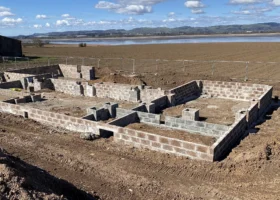
The previous owners had acquired planning permission for a house and even started the build, but not got further than some strip foundations. That was in the 1980s, so it had become almost scrub land by the time Peter and Diana bought it. Luckily, because of these works, even though Hadrian’s Wall became a UNESCO World Heritage Site in 1987, the principle of a house in this isolated location had been accepted by the council. “We ended up going through three planning applications – first to verify what was there was covered, then to change that design and another to go through details that hadn’t been imagined in the 1980s, such as our wind turbine,” says Peter. They secured planning permission, however, it was a lengthy process, with the application for the wind turbine alone taking 18 months.
Highly efficient build system
Although Peter is an architect, he hadn’t designed a house for about 30 years as his career had focussed on commercial projects, so he enjoyed the opportunity to put the plans together for his own property. Being an isolated and exposed site, they wanted a structure that could be enclosed as quickly as possible – SIPs (structural insulated panels) fitted the bill perfectly. “I’d worked with SIPs on a university project, so understood the manufacturing and installation process,” he says. “When I first made contact with SIPS@Clays, they directed me to another project to visit, see it first hand and talk to the team on site about the challenges and benefits.”
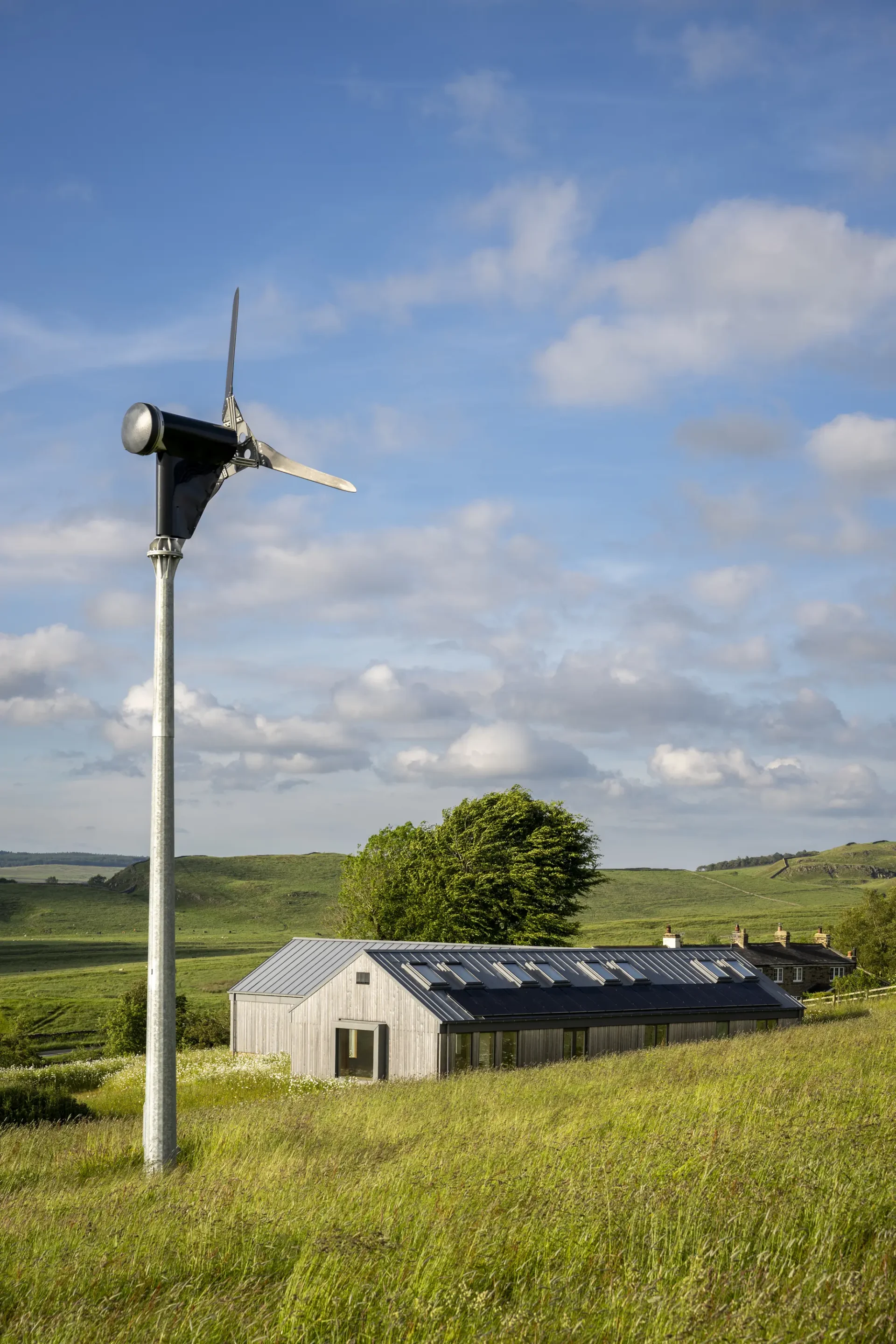
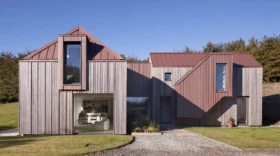
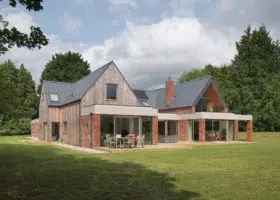
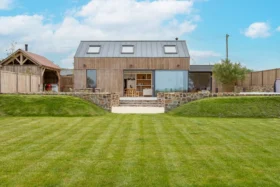
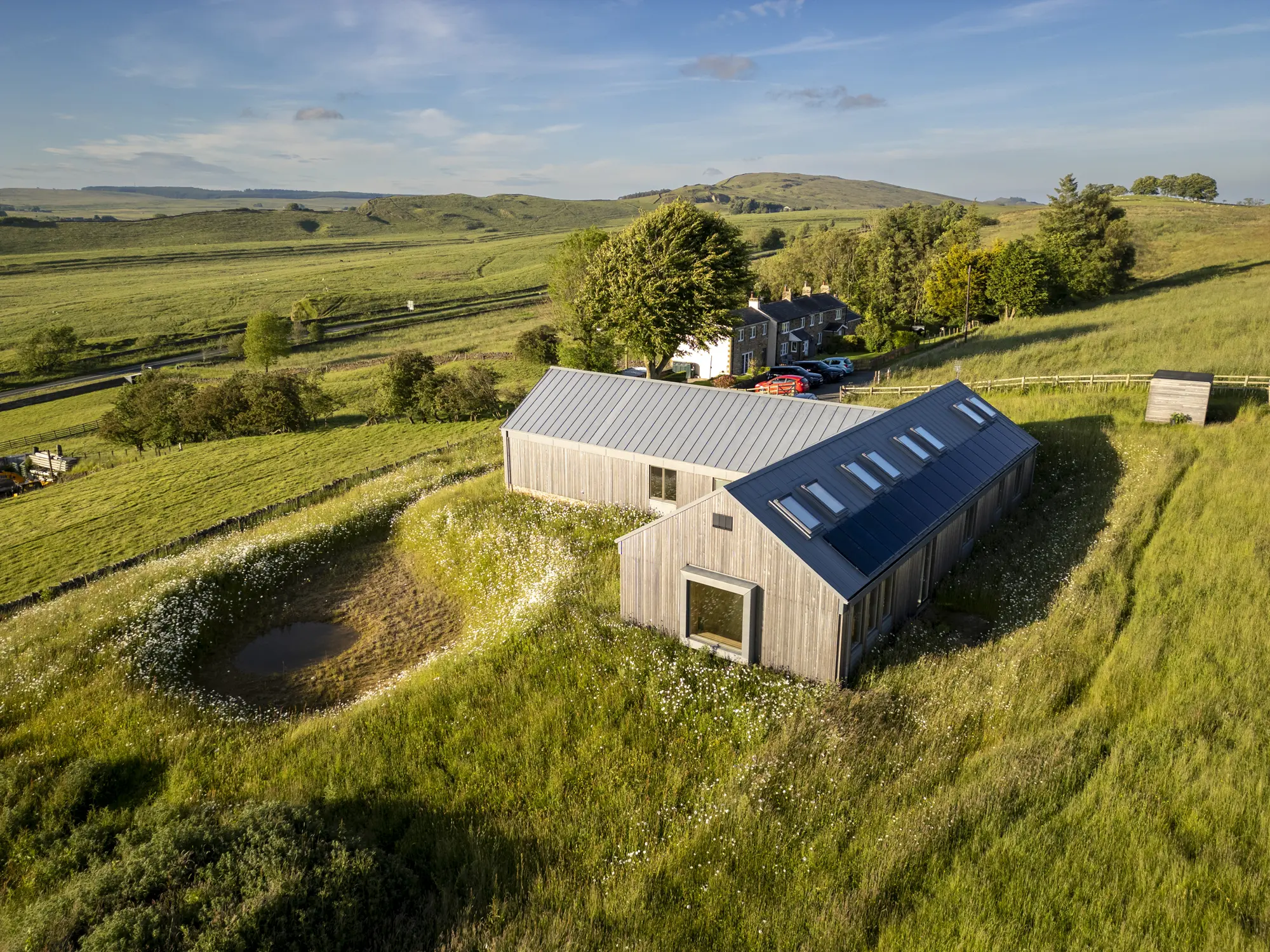
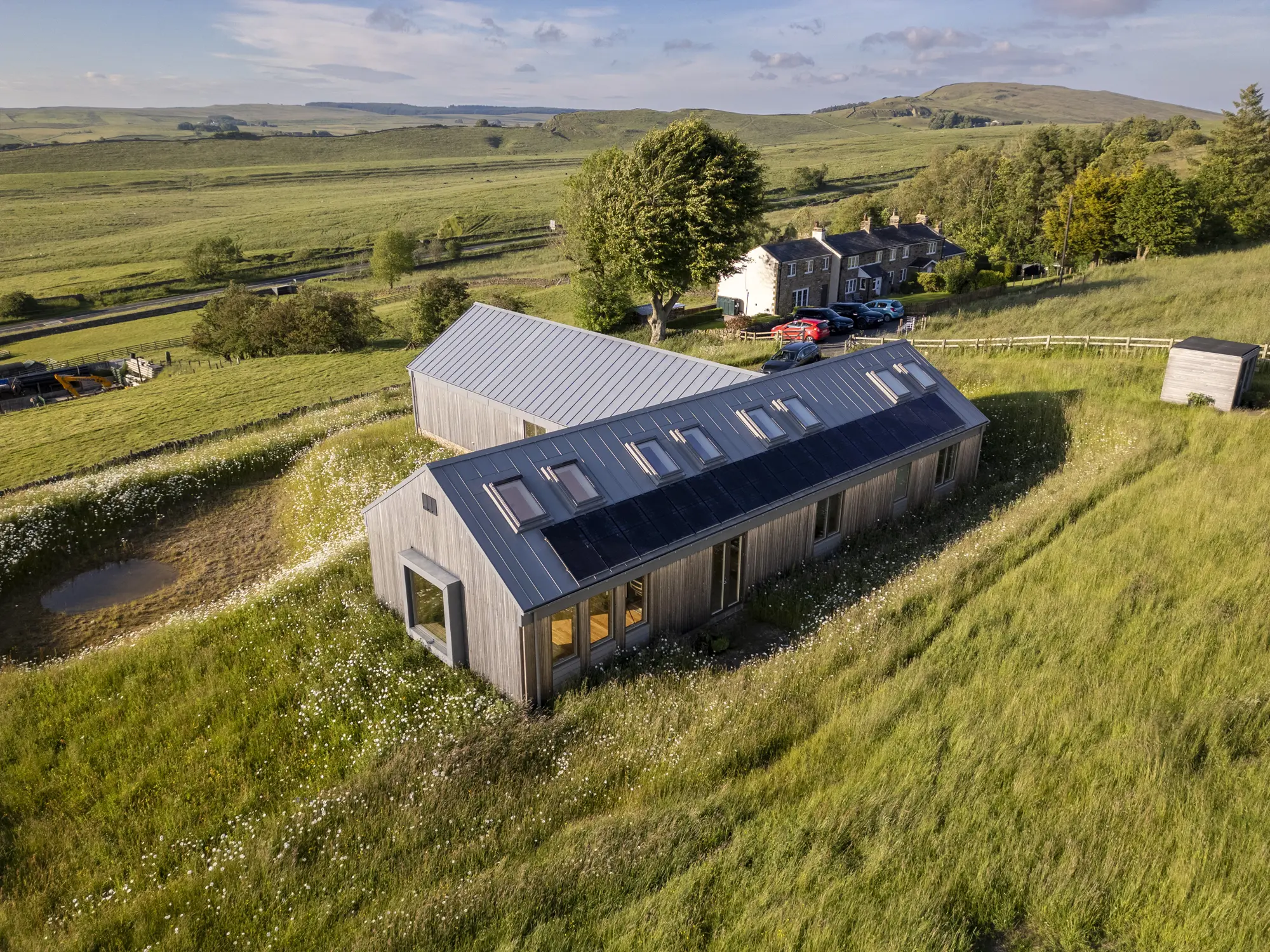
Peter and Diana opted for a SIPs (structural insulated panels) build, finished with timber cladding and a zinc roof. The T-shaped building has four downstairs bedrooms along with an integrated garage
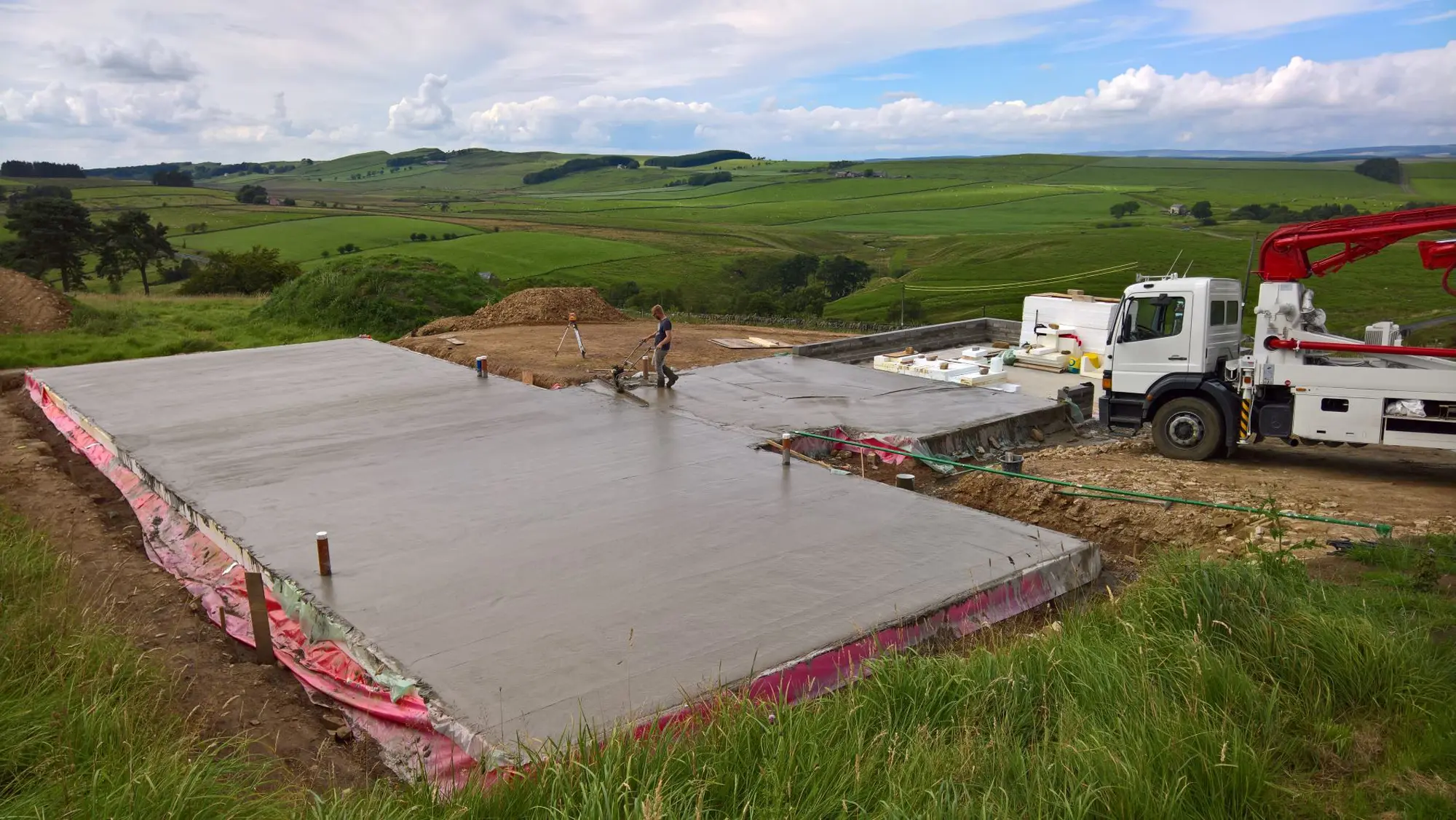
Build Lite’s insulated raft foundation system was chosen to create a solid base for the high-performance structure. “Its efficient and accurate placement means that there is less wasted concrete, plus, being in largely clay soil, but it’s variable, the raft bridges the area of poor ground, resisting clay heave,” says Peter. “This year the clay is so dry that the ground is splitting apart, but we’re not worried about our foundations as it’s one solid, reinforced piece. Plus, being insulated means it reduces heat loss and acts as a thermal store.”
The SIPs build sits on an insulated raft foundation system, which provides a level, stable base for the home, while improving thermal performance
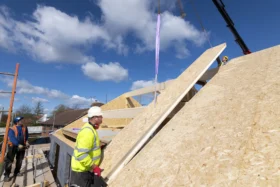
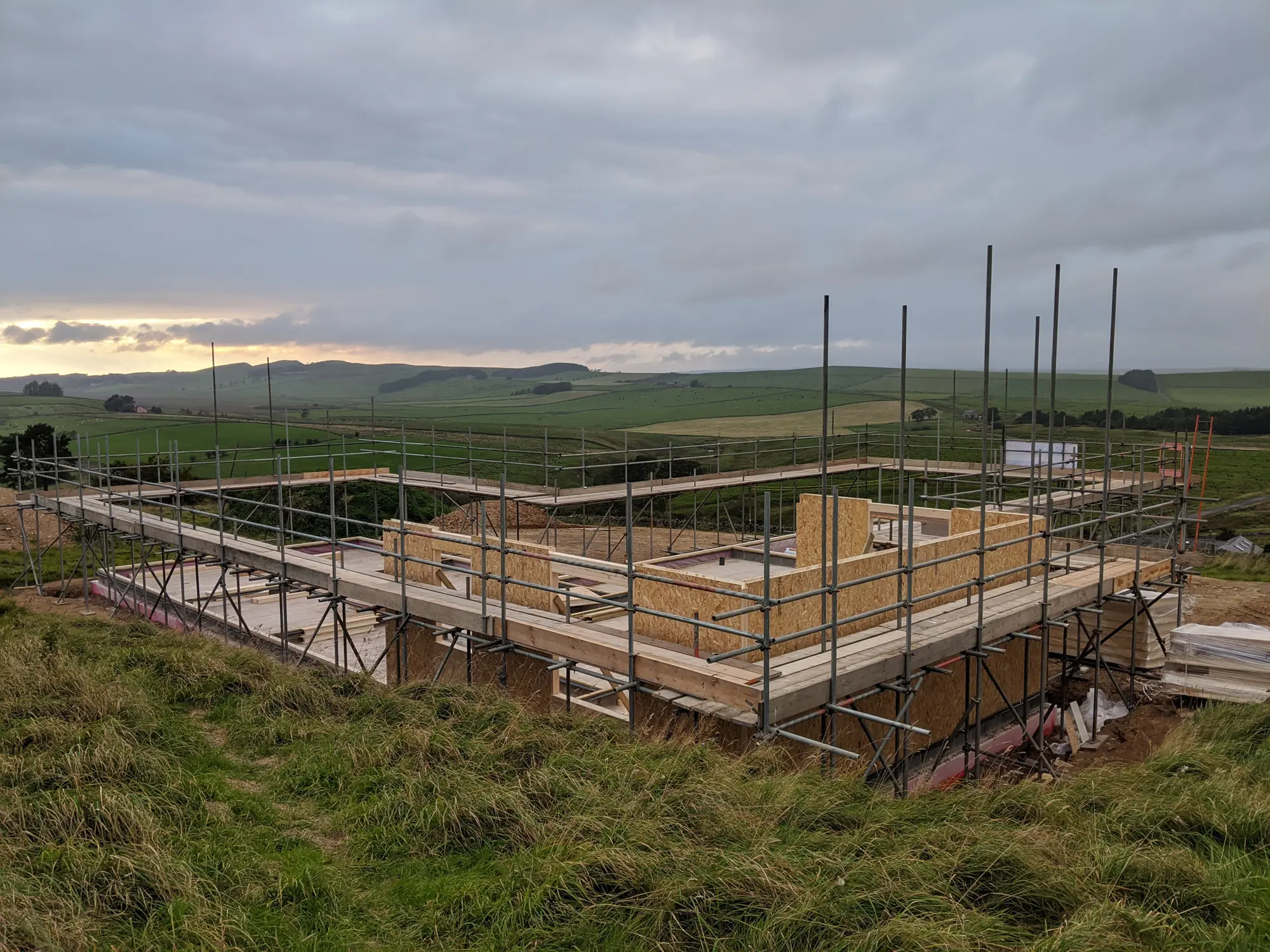
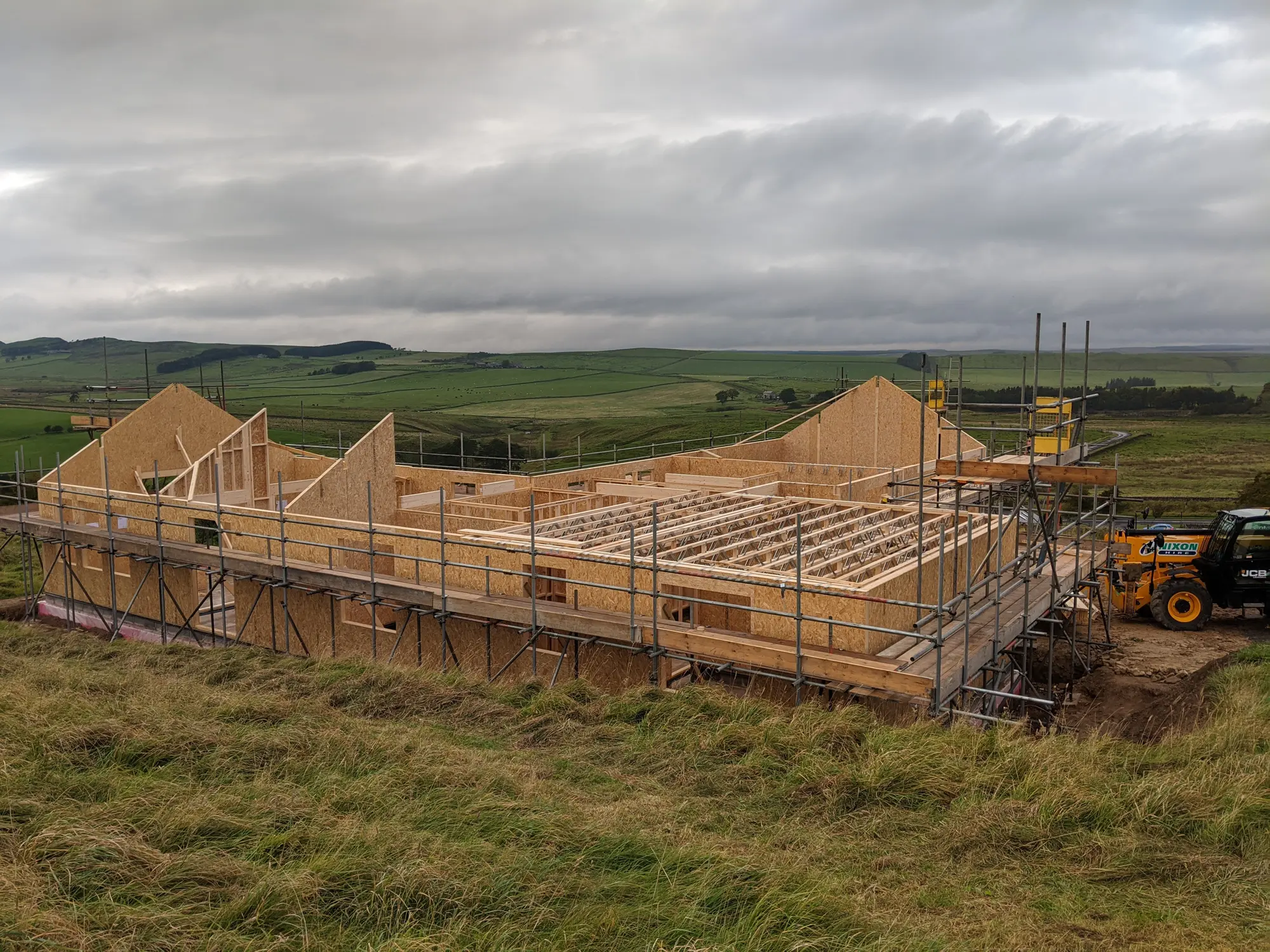
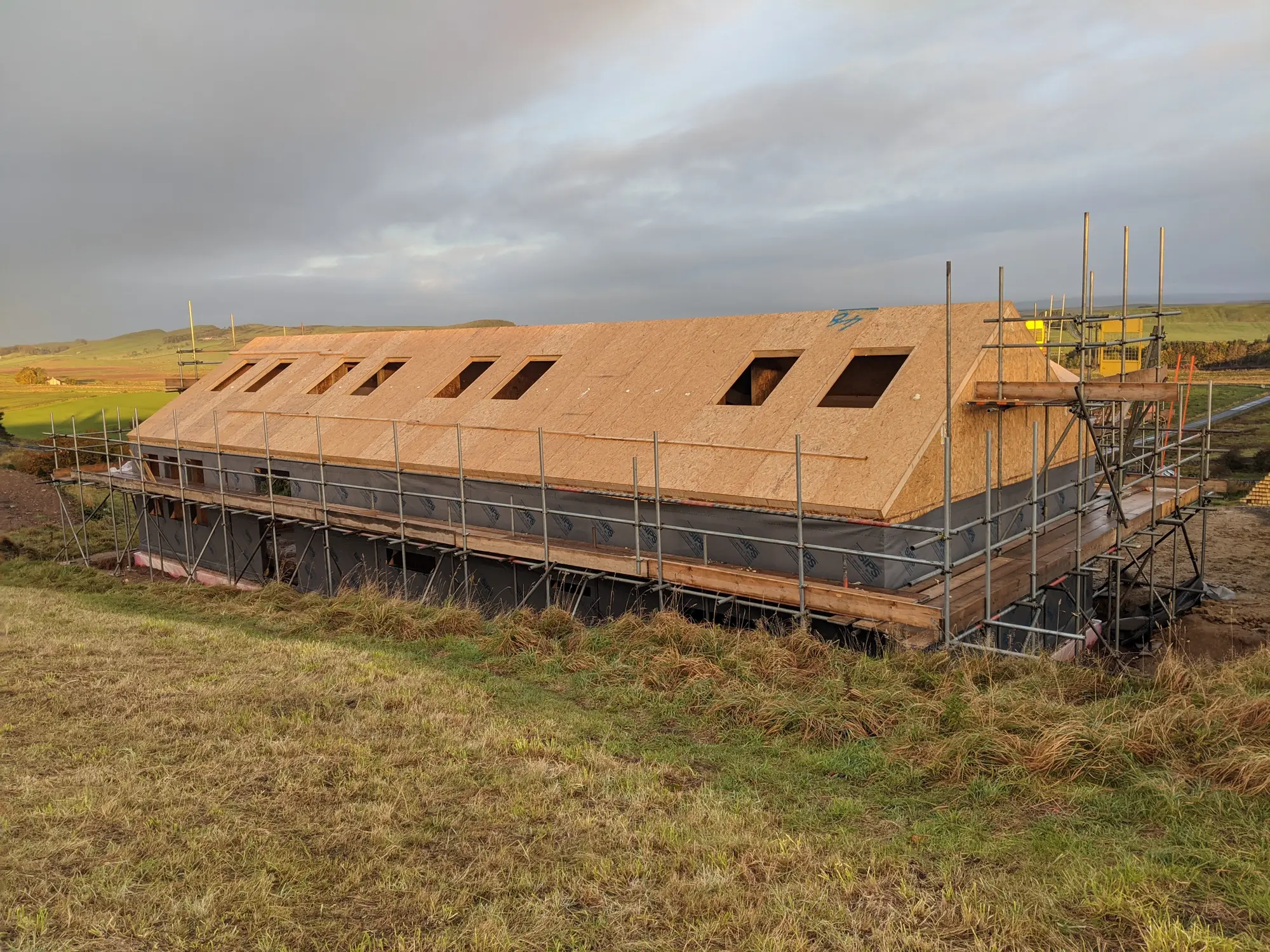
In October 2020, the SIPs were installed and within just four weeks there was a structure in place that the couple could stand in and even walk on the floor upstairs, all with a vaulted SIPs roof overhead. Peter hadn’t intended to get hands on with the build, but with the Pandemic, the plans they had with trades and contractors evaporated, leaving him with an opportunity to rekindle his passion for practical architectural work. “I ended up doing a lot of the work myself; it was almost like therapy getting back to doing and making things with my hands,” he says. “In my career I got further from the thing that attracted me to it in the first place – you get less involved in the nitty gritty of onsite works as you get more senior.”
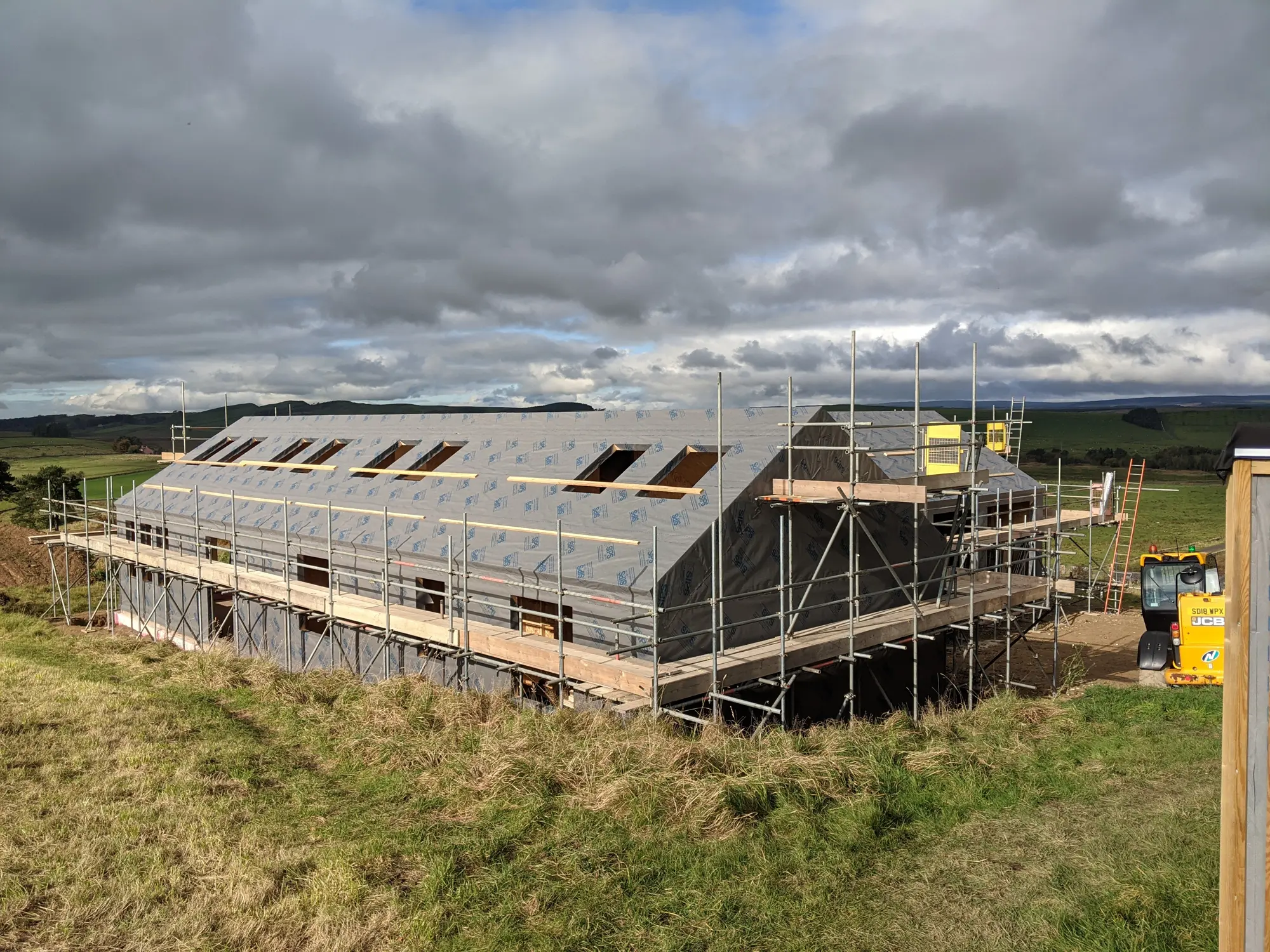
VMZinc panels were installed on the roof, Peter put the timber cladding on the walls and an installer came to fit the Velfac windows. “I spent a lot of time inside the house with tape and vapour membranes sealing everything up, and then we plasterboarded. Although, we did get someone in the do the skimcoat as my efforts looked poor!” he says.
- NAMESPeter Mouncey & Diana Taylor
- OCCUPATIONSArchitect & dentist
- LOCATIONNorthumberland
- TYPE OF PROJECTSelf build
- STYLEContemporary
- CONSTRUCTION METHODStructural insulated panels (SIPs)
- PROJECT ROUTEHomeowners designed & project managed
- PLOT SIZE2 acres
- LAND COST£165,000
- BOUGHT2019
- HOUSE SIZE300m2 (including 50m2 garage)
- PROJECT COST£444,860
- PROJECT COST PER M2£1,483
- VAT RECLAIM£21,510
- TOTAL COST£613,860
- BUILDING WORK COMMENCED July 2020
- BUILDING WORK TOOK2 years 11 months
- CURRENT VALUE£900,000
Living on site
Peter decided to retire to focus on the project. “A few months later, Covid meant I could have been paid to stay at home, but I have no regrets. I found it refreshing and it was good for my own wellbeing to work with my hands and create things,” he says. He lived on site in their motor home during the week, while Diana stayed at their property in Newcastle, which they borrowed against to fund the build, alongside using savings. “Diana would come along every weekend to see what I’d been doing – it was great positive feedback and I really felt like I’d achieved things,” he says. “When the SIPs went up I moved the motorhome into our new garage.”
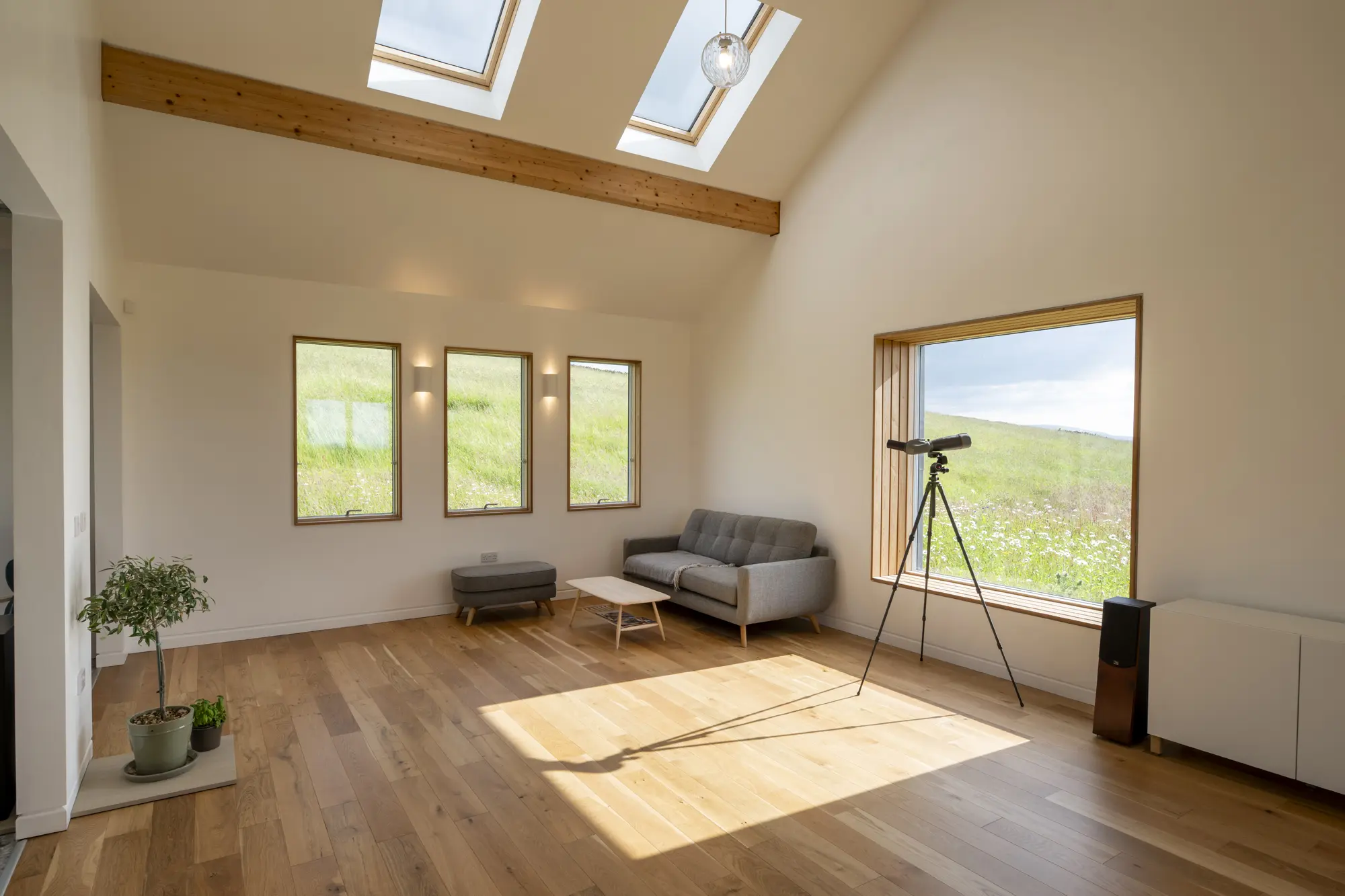
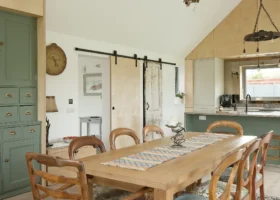
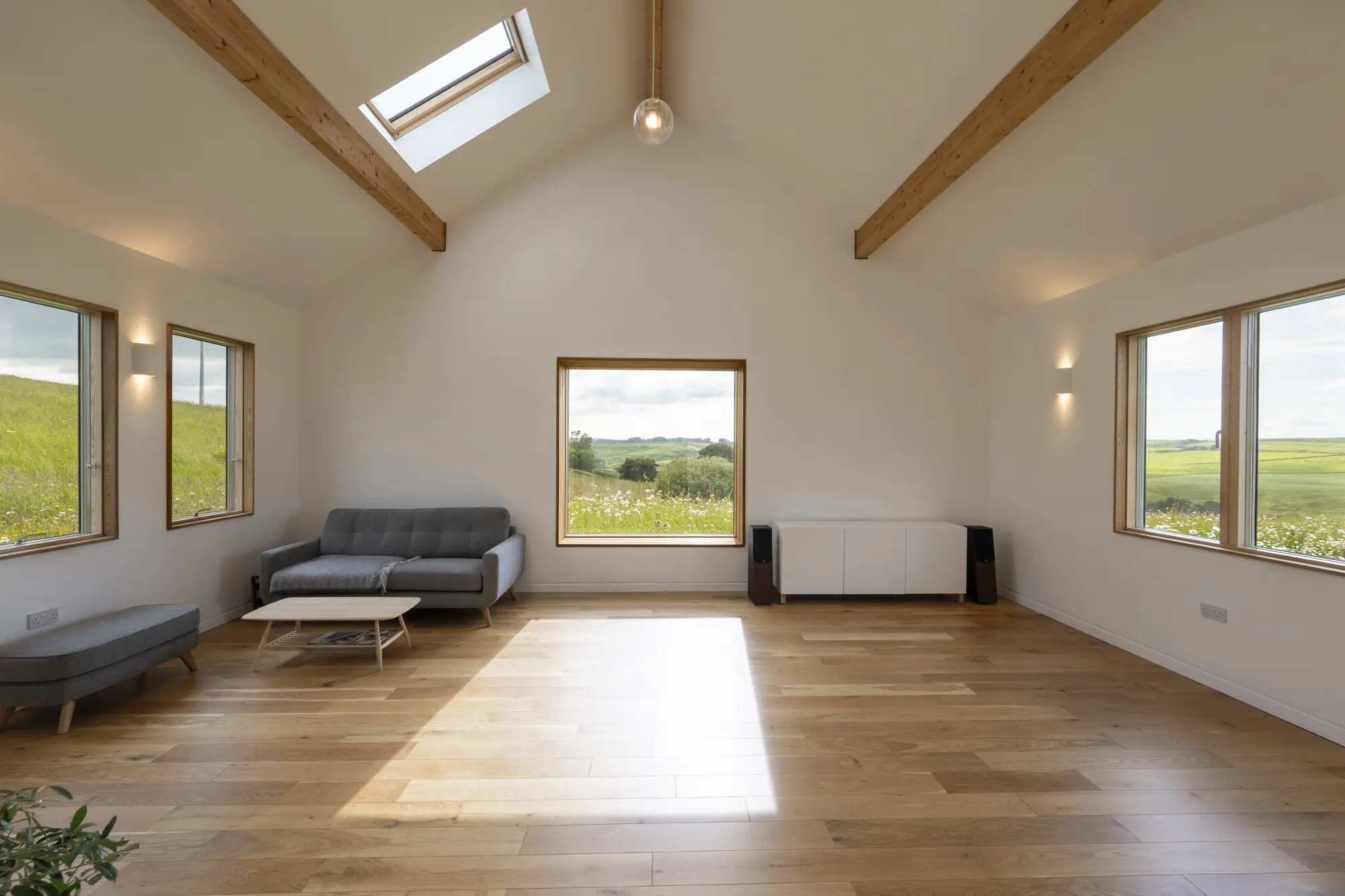
Fresh white walls and kitchen cabinets add to the bright and airy feeling in the new property. A large picture window in the living area is the perfect viewing spot for the stunning surroundings
Coming from a construction background, Peter was confident in taking on the role of project manager, benefitting from knowing when to schedule everything to run a site efficiently and keep track of the budget. “We were glad for our detailed spreadsheet as we could understand where the price points were moving around in the Pandemic,” says Peter. “We moved money around to accommodate things like timber costs going up, so we spent less on finishes. Diana was keen to make sure I had time and money under control, as she was still working while I was onsite. We came in on budget, but spent considerably more on some elements and less on others.”
The build’s progress on-site
Off-grid home
The house is an airtight and highly insulated building – a big change from their 1830s stone terrace in Newcastle. It benefits from insulated foundations and an off-grid power supply. It’s designed to Passivhaus standards, but the couple decided not to go for official certification, as they felt this would give them greater freedom over choice.
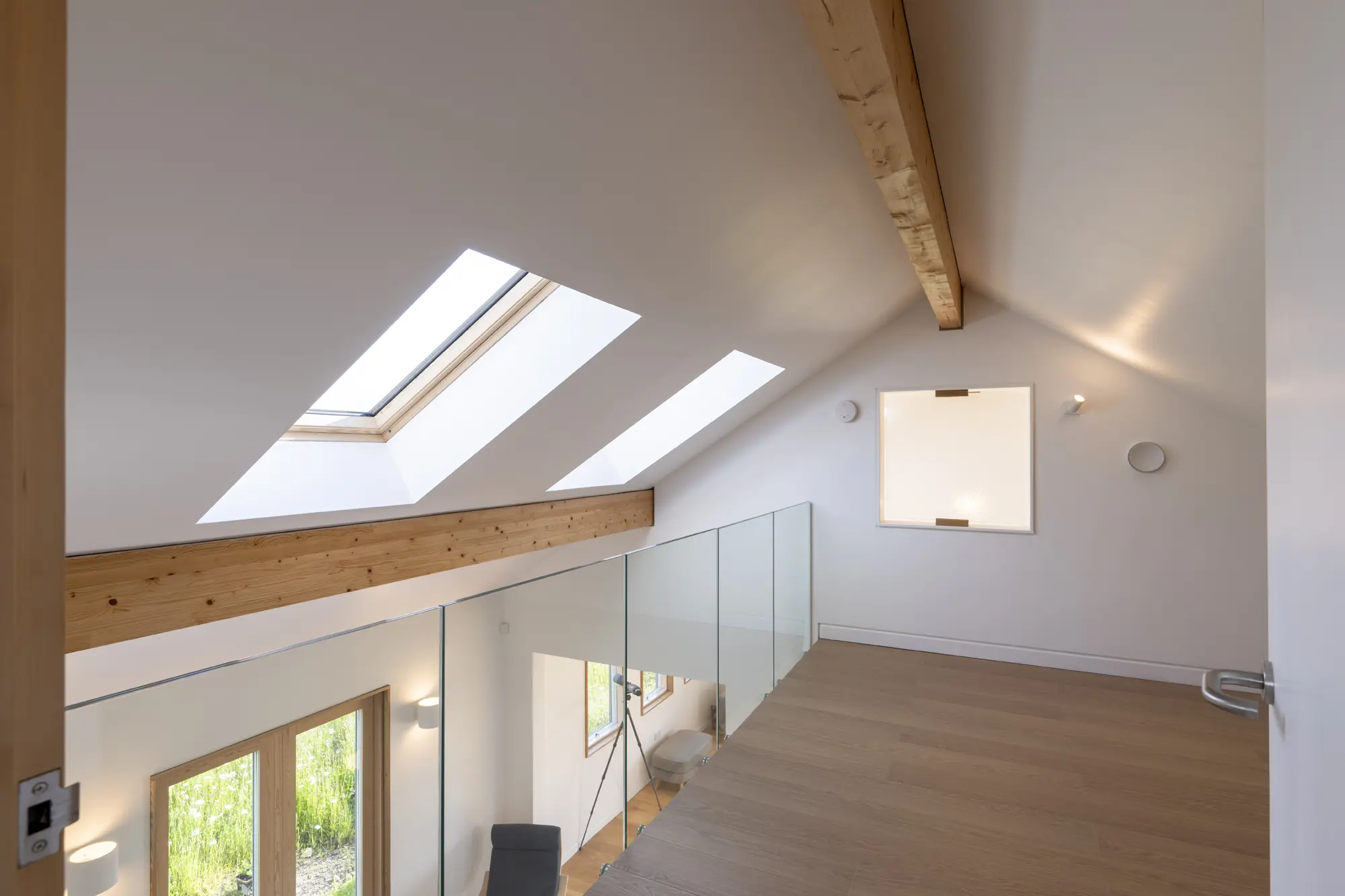
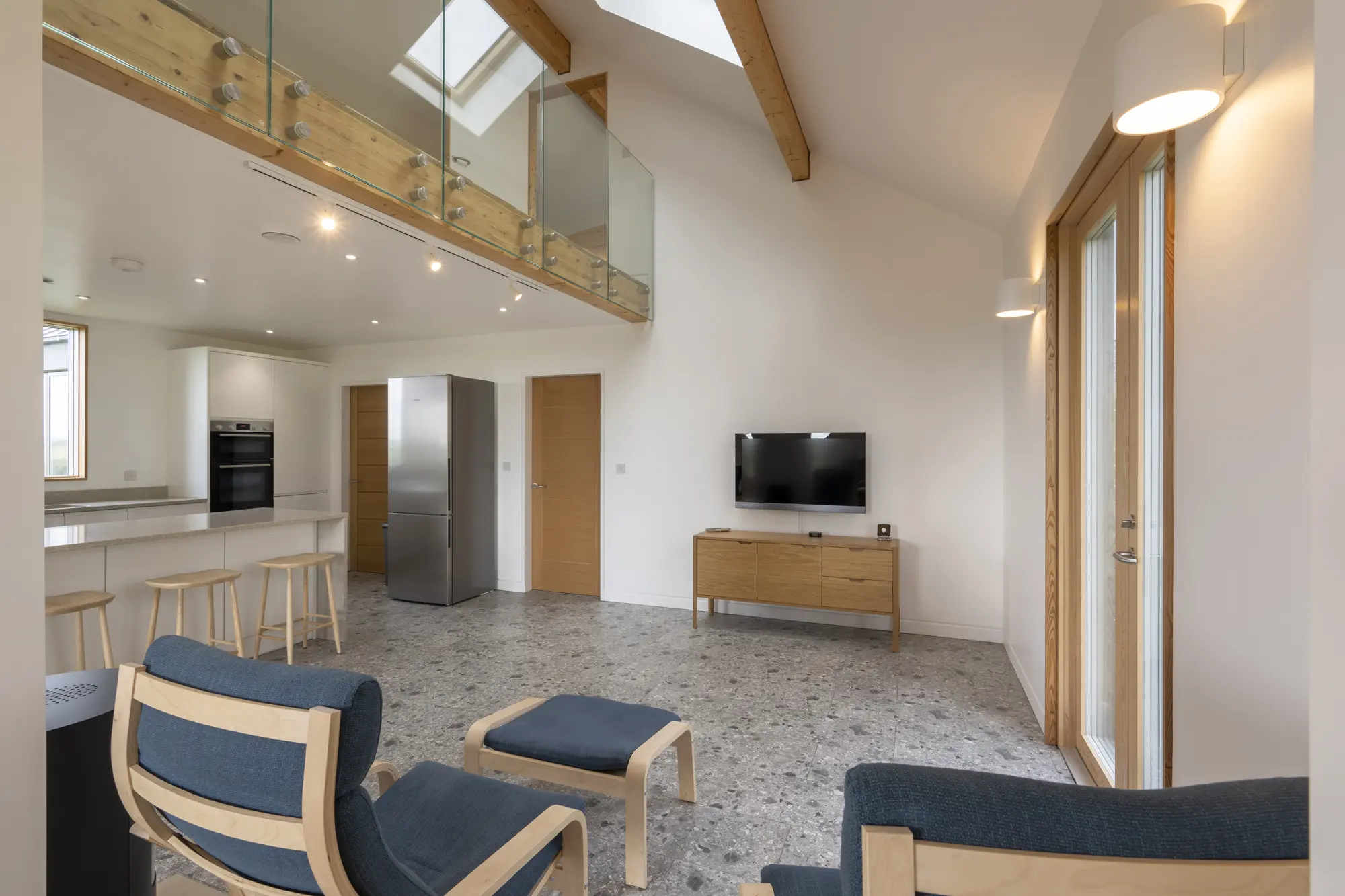
The upstairs mezzanine has a glazed balustrade overlooking the living space below, with rooflights filling the open space with light
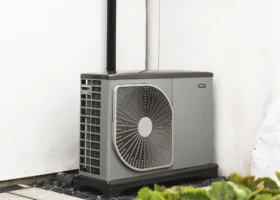
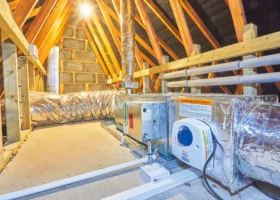
“Our previous home had lovely period features, but it was listed and had single glazing, so was expensive to heat in the winter, plus needed lots of maintenance,” says Peter. “We don’t have any of those worries now.” A large thermal store warms the radiators, while an MVHR system circulates fresh air and warmth around the house. There are also several bioethanol burners and plug-in oil radiators. “Rather than a simple one-size-fits-all solution, we wanted a range of things as we were conscious that, being off grid, there might be times when we have lots of electricity and times when we wouldn’t, so would need to rely on bioethanol,” he says.
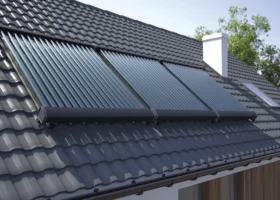
Peter and Diana generate electricity for the house via a solar PV array and their very own wind turbine. Energy is saved in a battery store and occasionally backed up with a generator. “The next-door property has mains power, so we could always connect if we wanted to, but we did our sums and it didn’t look like giving surplus energy back to the grid would pay more than our connection fee,” says Peter. “The thing we get the most good feelings from is the fact we’re not contributing to climate change. We’re self-sufficient in terms of energy; that’s good for the heart and for the head.”
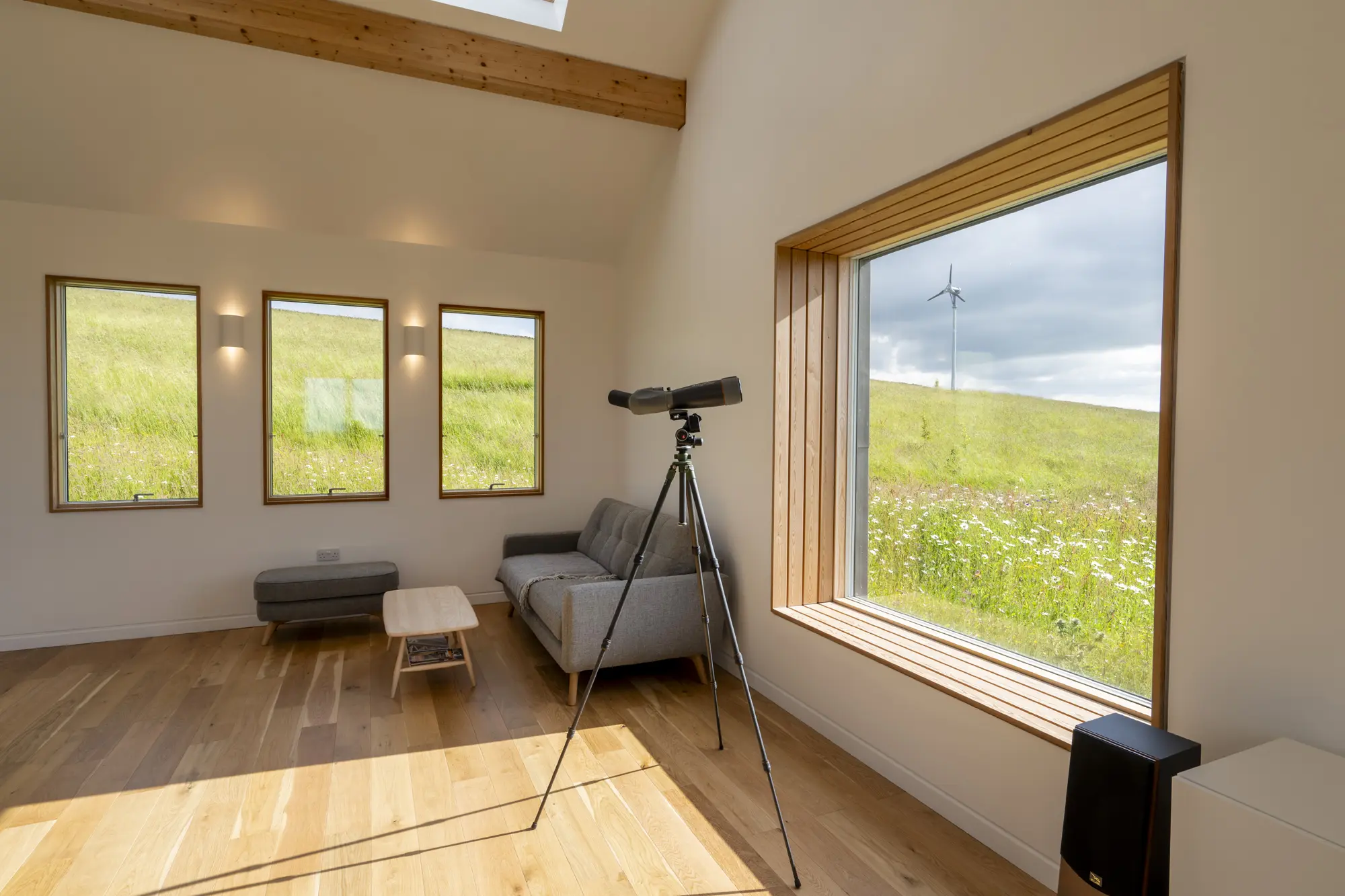
CLOSER LOOK Wind turbineA wind turbine was always part of the energy mix that Peter and Diana had in mind. The elevated, exposed site is ideal for this technology. The turbine is 11m high and sits on a hill around 200m above sea level, benefitting from an airflow that isn’t disturbed by the landscape. “We did lots of research and found one we liked that was made in Scotland and tested in the Falkland Islands, so we knew it would withstand the worst weather,” says Peter.
“We managed to find a local installer who had the skills and supply chain to support that. The site suits wind and we knew there would be occasions when we couldn’t rely solely on solar power. In fact, we’ve had high winds a couple of times when power lines have gone down locally and neighbours have been without energy, but we were okay. Plus, we don’t have to worry about what the next energy bill is going to be.” |

Home for life
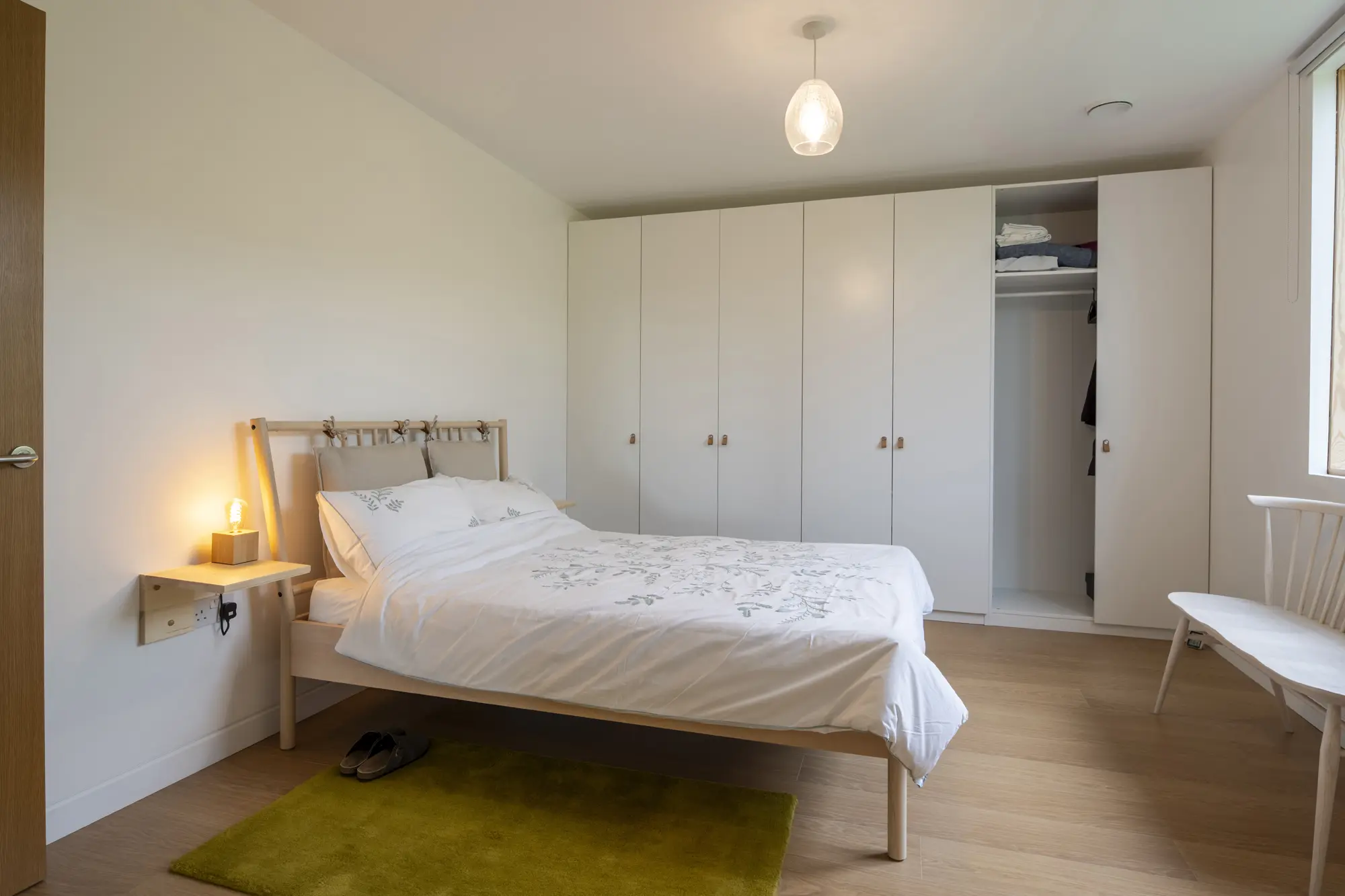
The new property’s living spaces and four bedrooms are all on the ground floor, along with an integral double garage. Upstairs is a space that the couple use for hobbies. “The views out are the great thing about this house,” says Peter. “When I designed it, I made 3D CAD models and a physical model to take to people and show our vision. We would stand and look out of what would be our big window, which is now one of our favourite features – it’s an oriel that you can sit in and has an ever-changing picture. It’s nice to have a client like Diana, who has a passionate interest in how it would turn out – it was a good test of the communication skills.”
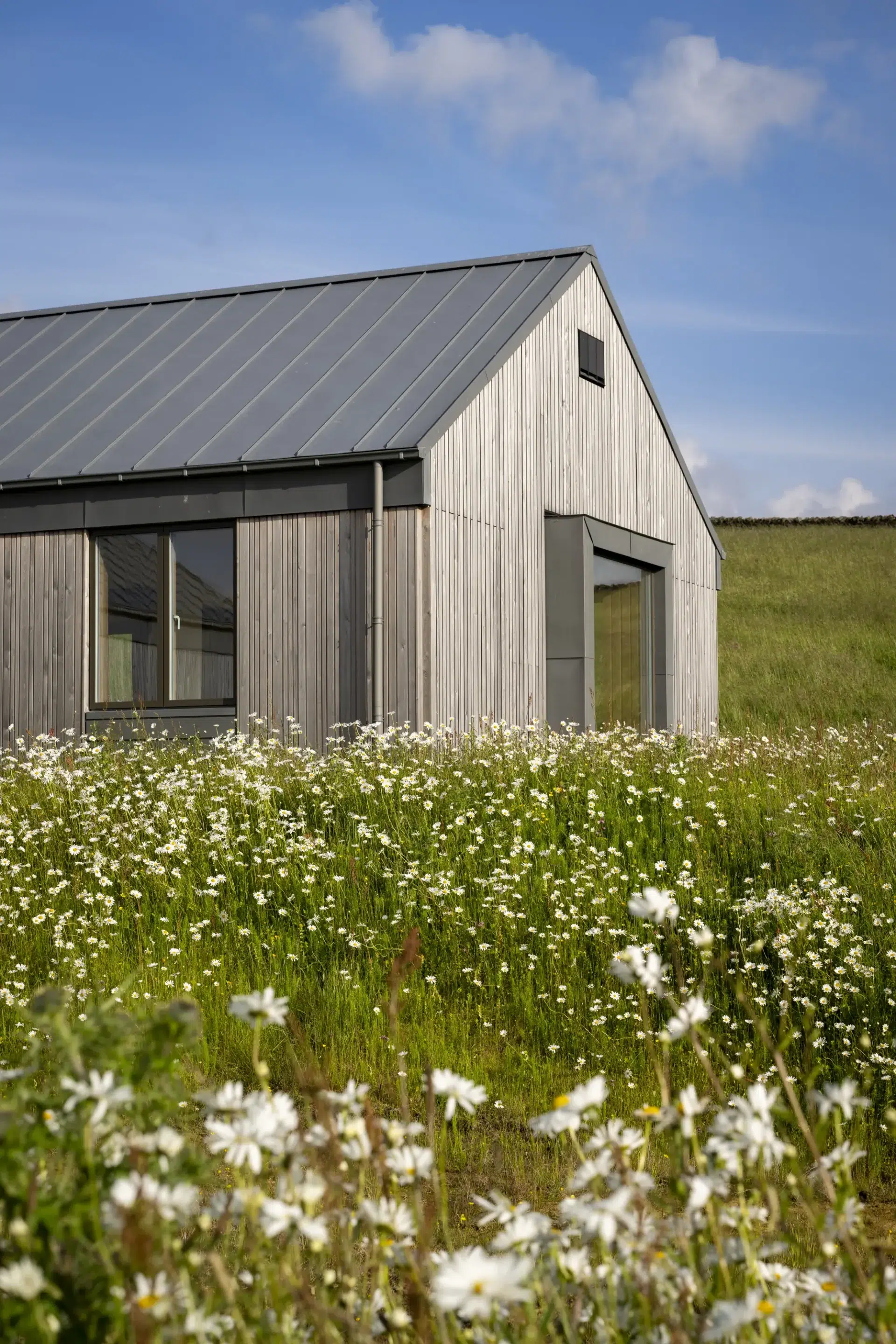
The home fits into its rural surroundings perfectly, with timber cladding and zinc details
The house was designed with the future in mind, meaning low maintenance and keeping things all on one level, with space for a live-in carer if needed. “I hope it’s our forever home,” says Peter. “That said, we also bear in mind what other people might want from the house so that everything is here for whoever lives in it in the future.” So, another self build isn’t on the horizon for the couple: “I do hanker over something to do next, and what if I were to find the right opportunity… but I don’t think Diana would agree!” adds Peter.
In terms of challenges along the way to their dream home, nothing other than slight Covid-related complications spring to mind for Peter, who is ever positive. “There’s no such thing as problems – just hurdles to overcome,” he says. “There were some bits that were more worrying than others, such as financing the project and then the house price crash happening just as we were hoping to sell our house in Newcastle. It changed some of our equations of what it would cost to build. If you’d asked me that question when I was nailing strips to the cladding supports outside with bare fingers when it was -5°C, I might have given a different answer!”
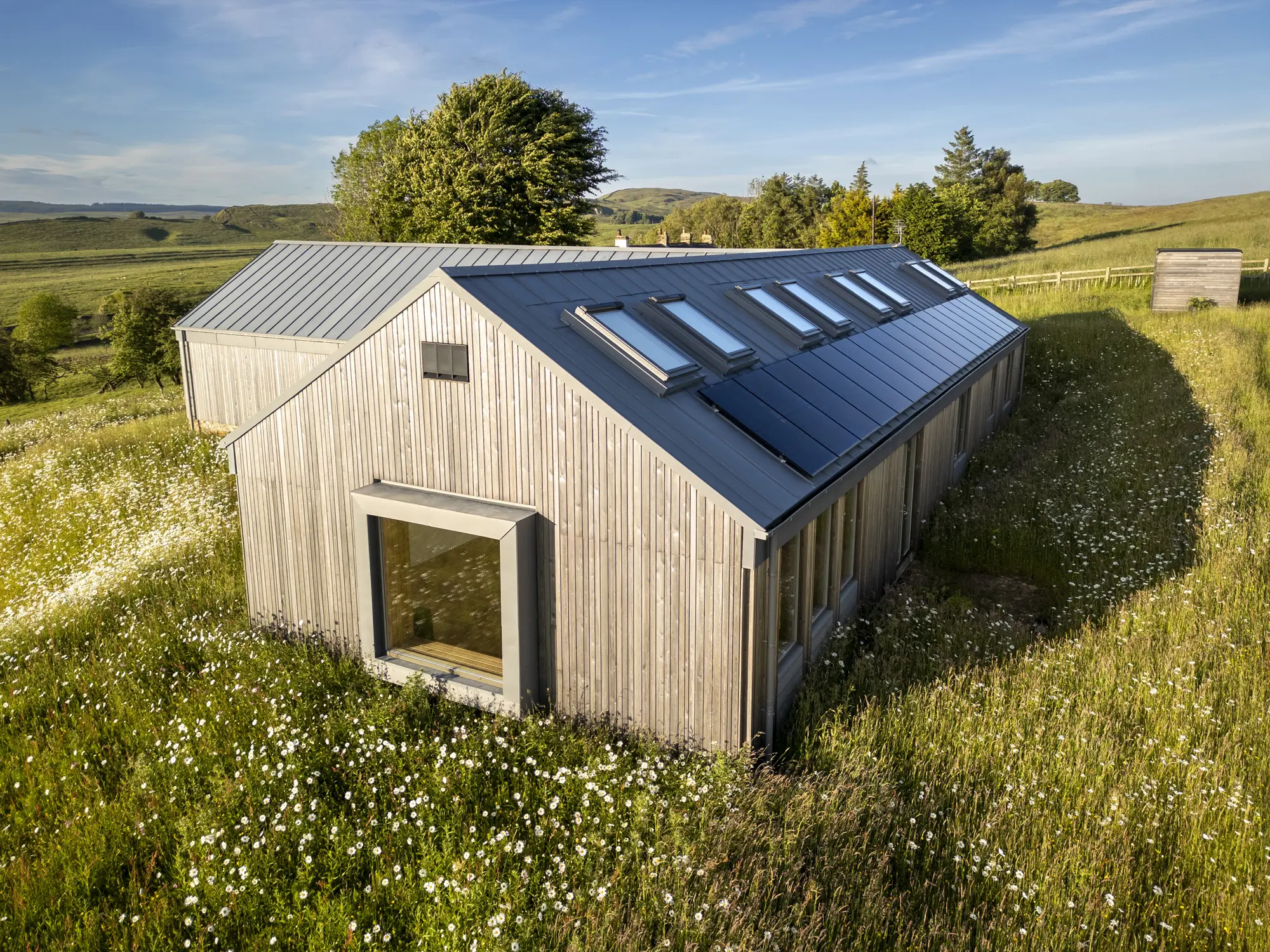
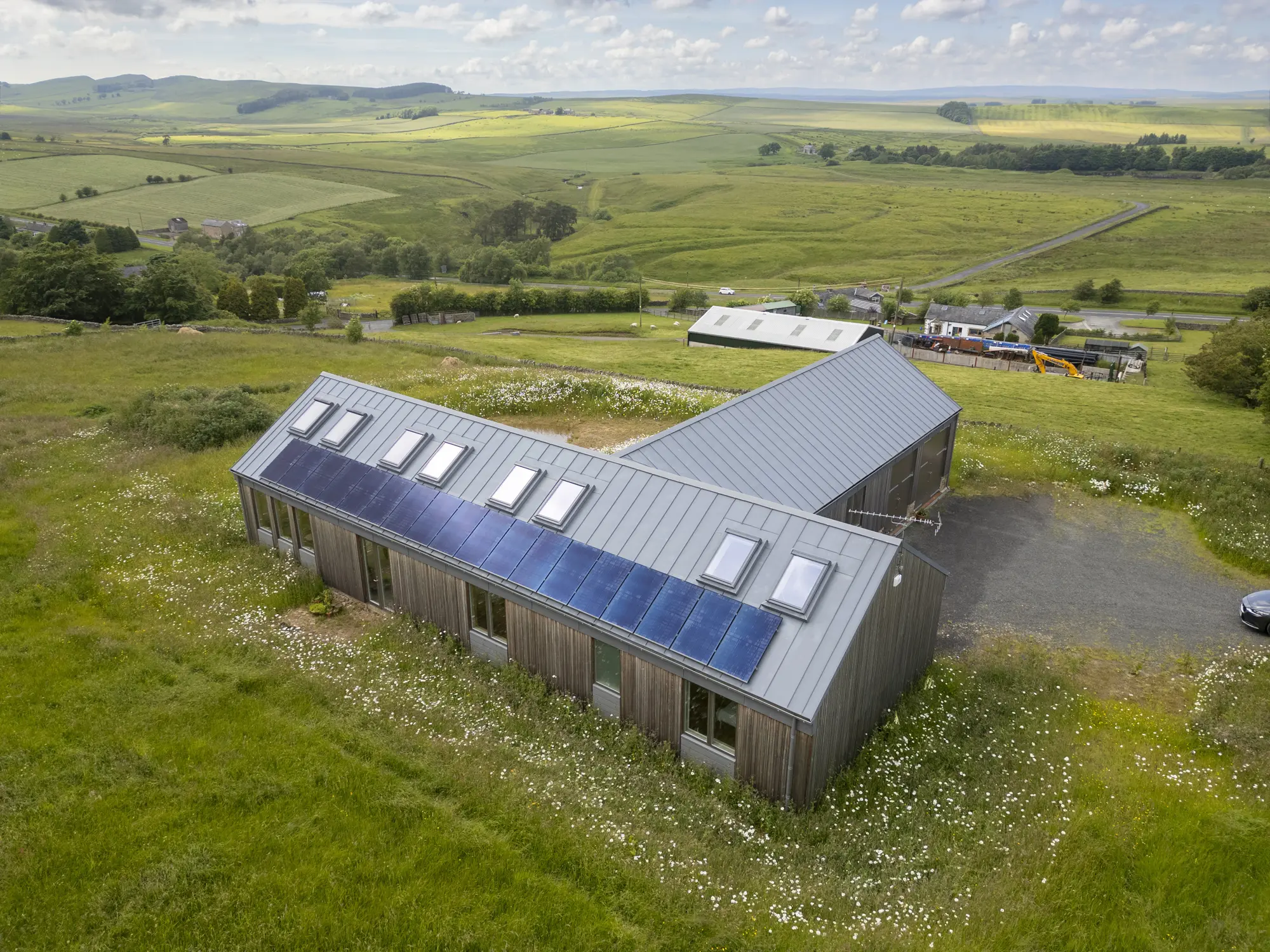
The house sits within two acres of land, so restoring the landscape to improve biodiversity is another important project for the couple in this rural spot. “We’ve been encouraging a better wildflower mix to support more insects, birds and mammals. We have regular wildlife visitors, such as owls and kestrels feeding on the voles in the field,” says Peter. “Our quality of life has improved so much since moving here. It’s quieter, the air is cleaner and there are less worries about the house as, if anything goes wrong, I have an intimate knowledge of how to sort it out. Plus, the finished value shows we’ve made £200,000 – that’s the kind of endorsement that’s universal, whether you agree with our approach to sustainability or not.”
We learned
- Be adaptable and recognise when things are changing over the course of your project. That could be materials prices or legislation. But also have a vision and hold onto it where you can.
- Living off grid means you need to have enough battery storage, as when you’re getting the power in is when you’re least likely to need it. We’ve put more batteries in and are currently looking for a bidirectional charging system so we can draw energy back from our electric car when needed – the tech exists but car manufacturers haven’t agreed it with the grid yet.
- Seek professional guidance if you haven’t got construction knowledge. It’s best not to rely on one main contractor – it’s always good to have a second pair of eyes looking over things if possible. Even though we have a good background in construction, we benefitted from help from specialists along the way.
- SIPs is now accepted as a mainstream build system but it can nevertheless be difficult to source follow-on trades that are suitably experienced with it.
Emily Batesmith
You may be interested in