

- Plan ItBack
- Design ItBack
- Build ItBack
- Homes
- ProductsBack
- CostsBack
- Self Build Cost Calculator
Estimate your project costs instantly with Build It's interactive self-build cost calculator
Calculate Now - Costs & Finance
- Contracts & Warranties
- Build It Estimating Service
Get an accurate, detailed cost breakdown of your project
Submit plans
- EventsBack































































 Login/register to save Article for later
A Project Management Expert Explains How to Develop a Robust Self Build Schedule

One of the biggest reasons that self build projects go off the rails isn’t because of bad weather, poor workmanship or budget overruns. It’s because the timeline wasn’t properly thought through in the first place. I’ve seen it many times – people start with good intentions; a neat Gantt chart and a rough sense of how long things should take. But once construction starts, delays ripple through the programme and, before you know it, a build that was meant to take nine months is still going 18 months later.
As a project manager, I know that an accurate and robust build schedule is essential. This isn’t just a sequence of dates – it’s the backbone of the entire build and how things will get done. It keeps everyone focused, highlights potential problems and orders the chaos that inevitably comes with building a home.
So, what’s the best way to put one together and, just as importantly, how do you stay on top of it once things get underway? Here are the top nine factors to note for your construction programme to work for you and your build team.
1. Work backwards from your goal completion date
Every good construction programme begins with the end date – or at least a realistic target of what’s possible. This might be the date you want to move in, the end of a rental term or a fixed completion milestone linked to a finance agreement. Whatever the target date is – provided it’s realistic – you can anchor your plan around that.
From there, work backwards. If you need to move in by next Christmas, for instance, and you know your build will take about 12 months on site, you’ll need to break ground no later than the previous December. This means that planning permission, design, procurement and pre-start conditions all have to be wrapped up months before that.

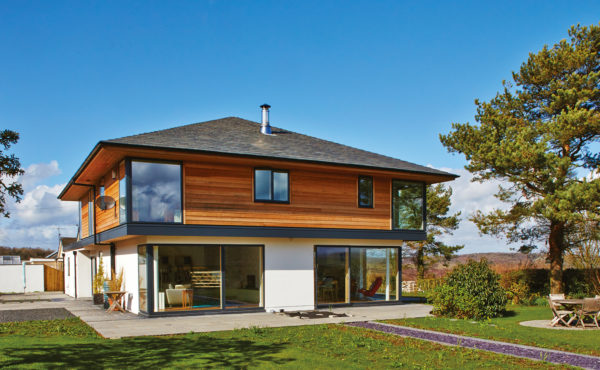
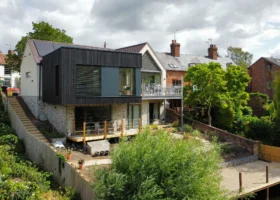
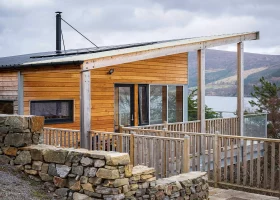
Stunning natural surroundings and far-reaching views gave rise to the design of Esther Horwood’s new home – a striking modern abode nestled on the bank of the River Avon. Esther took the lead when it came to tracking down a good main contractor to build the house. As they had carried out extensive soil surveys, the team didn’t encounter any nasty surprises when it came to laying the foundations and this part of the project proceeded smoothly. Photo: Martin Gardner
Put all that together and, suddenly, a start on site date that felt months away can seem much closer. Working backwards like this brings reality into sharp focus – and it’s often the moment self builders realise that getting a project started takes much longer than they expected.
Premium Content
Downloadable E-Guide
Where should you start when planning your home building project? Build It’s in-depth downloadable guide to self building a house contains everything you need to know to make your project a success.
find out more
2. Ensure your build schedule contains right level of detail
A common mistake that detail-focused self builders make is trying to plan everything to the hour. At the other extreme, having only a vague idea of the main milestones can prove equally as problematic. The right approach sits somewhere in the middle, with enough detail to manage sequencing and dependencies but enough spare time to accommodate day-to-day issues and minor delays.
I usually start by mapping out the key stages: pre-start activities, substructures, superstructure, enveloping, first fix, finishes and completion. Once those broad phases are in place, I then layer in the specific activities under each one. The key is to capture the logical flow of the build and make sure the sequence makes sense.
3. Understand the critical path & the works that could cause significant delays
Every project has a critical path – a sequence of activities that directly determine the project duration. If any of these slip, then the completion date will inevitably be delayed. To some degree, the other tasks will have an element of float or flexibility, meaning they can shift without affecting the overall build duration. Knowing which activities are on the critical path will identify the priorities to focus on.

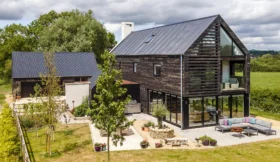
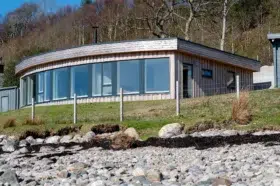
After a fire destroyed their thatched cottage, Len & Yvonne Rose tackled their first self build scheme, creating a modern, chalet-style home on the same plot as their old house. The couple brought PJR Carpentry & Joinery on board to build the timber house. Yvonne and Len worked directly with him, agreeing a fixed price and a four-stage payment plan. Photo: Fourwalls
For example, if there’s a delay on external cladding of a timber frame build, plenty of internal work can still progress in parallel – so the build can keep moving without too much impact on the completion date. But if the delay is in the foundations or frame erection, these are critical activities and nothing else can progress until it’s resolved.
4. Factor in lead times for different materials & approvals from officials
Timelines often fail not because of the work on site, but because of the things that have not happened before the project got started. Long lead time items, such as bespoke windows, timber frames and other manufactured products, can take weeks or even months to sort out and be delivered. The same goes for discharging of planning conditions, building control and warranty approvals, as well as utility connections. A robust programme considers all of these, and factors in the time needed for them to be sorted in line with the critical path.
5. Ensure you schedule in enough contingency time (because things will slip)
No matter how well you plan, there will be problems and sometimes delays. Bad weather, material shortages and design changes will all happen. The trick is to allow space for these without blowing the timescales.
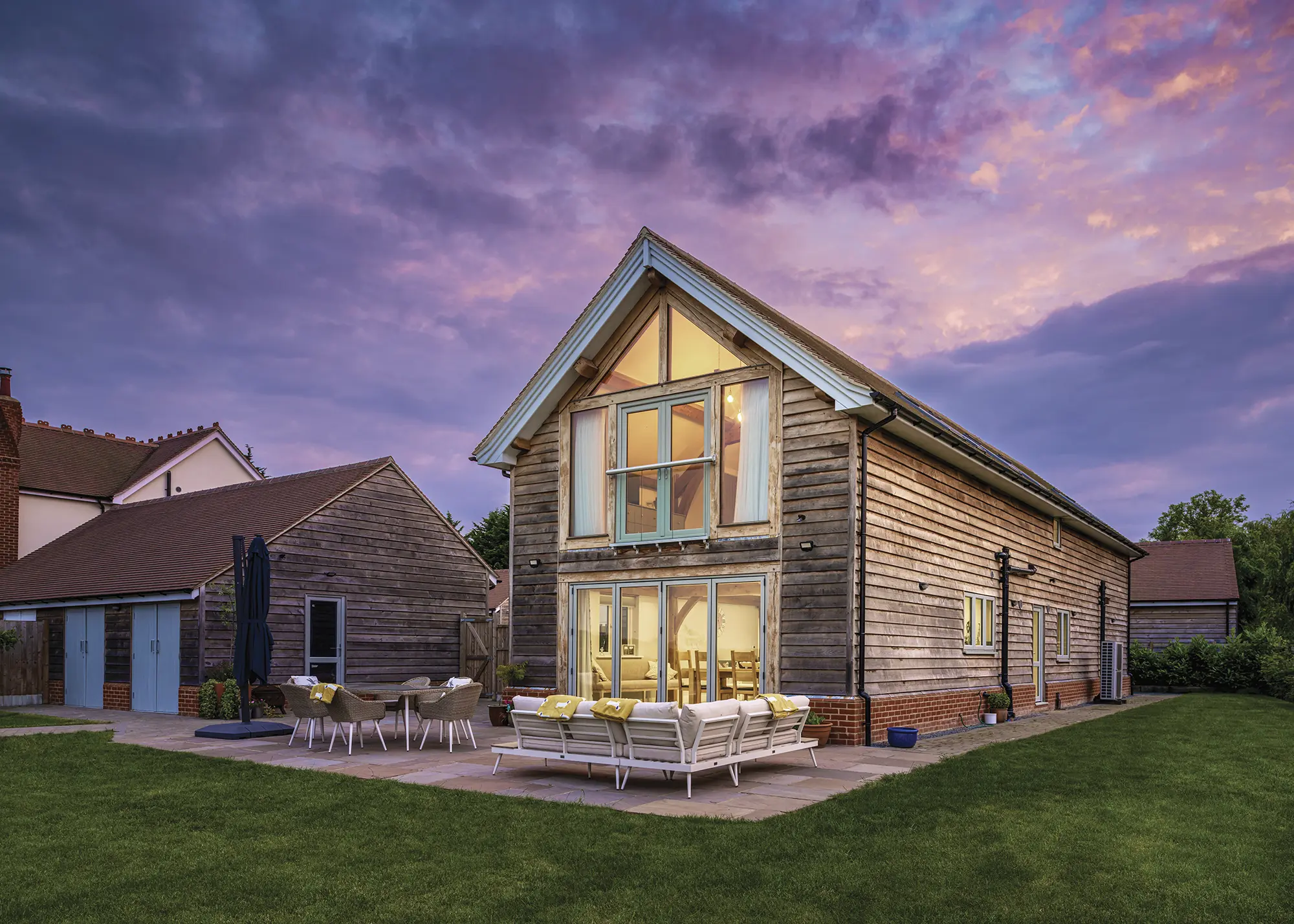
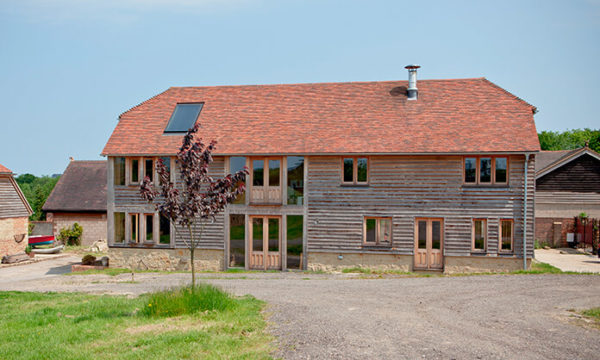
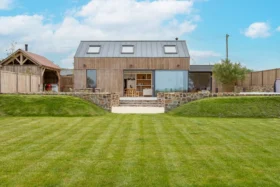
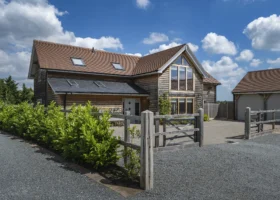
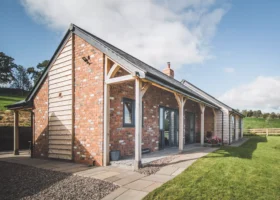
Anthony and Alison Goodey built their traditional oak-framed home after a change in planning law allowed them to section off a piece of land belonging to their livery stable yard, bought some years before. Anthony struggled to get hold of materials at times due to shortages caused by Covid-19, resorting to bulk buying and storing everything on site. Photo: Nikhilesh Haval
I tend to build contingency into each major phase rather than tagging on a lump of extra time at the end of the whole project. By having slack between each stage, there’s time to take stock and get ready for the next phase. If you’re self-managing, resist the temptation to cram the programme too tightly. A good rule of thumb is to assume everything will take, say, 10% longer than you think. Then, if something does go wrong (and it will), you’ll have room to breathe.
6. Use the right tools & find a scheduling system that works for you (but don’t overcomplicate)
You don’t need fancy software to put together a good project programme. A well thought-through spreadsheet, or a Gantt chart in something like Microsoft Project or even Excel, is perfectly suitable for a self build. What matters is that it’s clear, realistic, regularly updated and shared with everyone who needs it – builders, designers, suppliers etc.
Personally, I like to have a single master programme for the overall build supported by simplified shorter programmes for day-to-day use. This ensures that the team knows what’s happening without getting bogged down in unnecessary detail.
7. Make sure you’re regularly updating your build programme to reflect accurate site progress
A build schedule is a living document that needs constant attention to keep it accurate. It’s best to check progress regularly and update it when each activity is complete. This will give you a finger on the pulse of the timeline, so if something falls behind, you’ll have chance to replan and adjust future activities. The key point is to know where you are – so you don’t end up in a position of only realising there’s a delay when it’s too late to do anything about it.
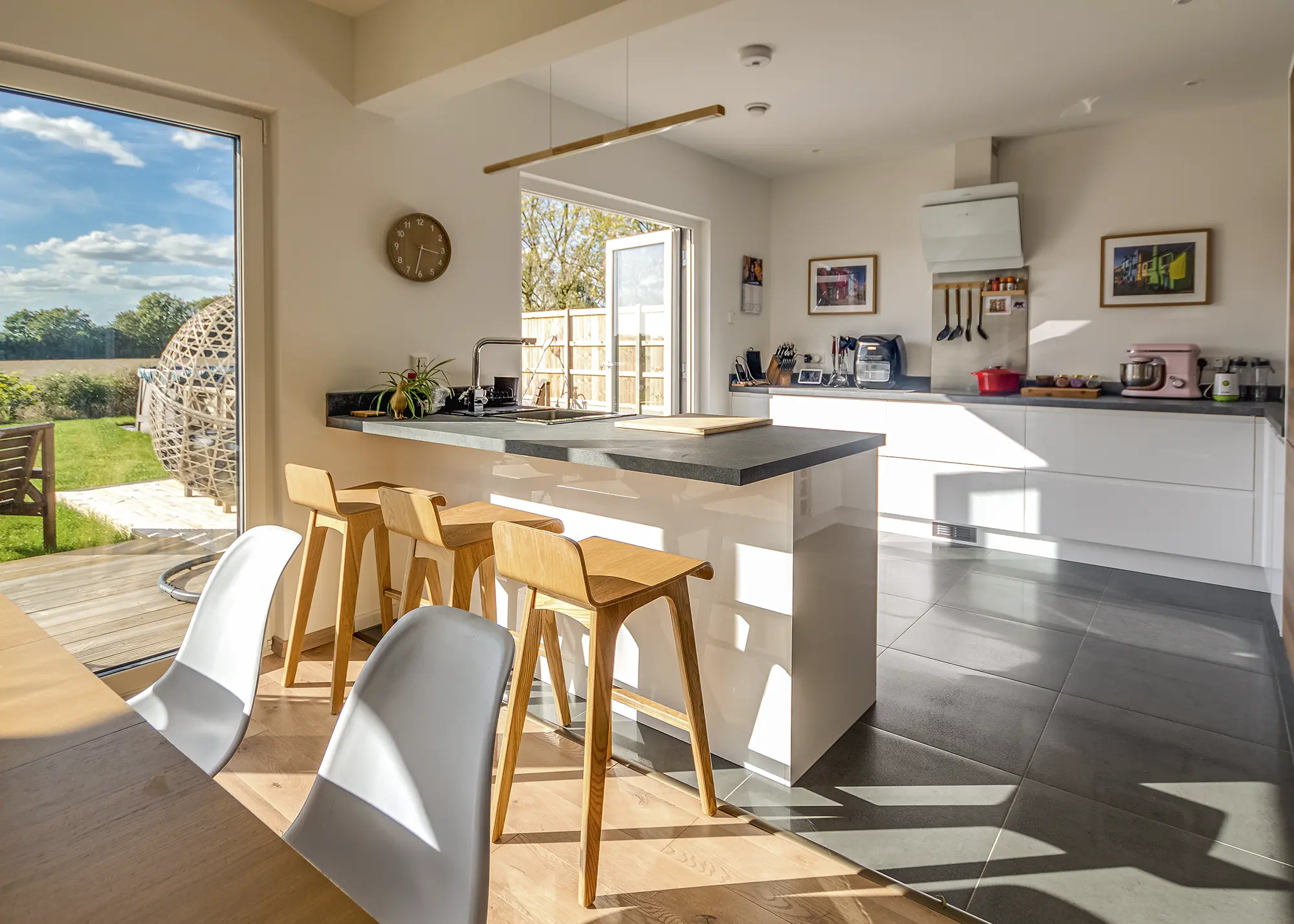
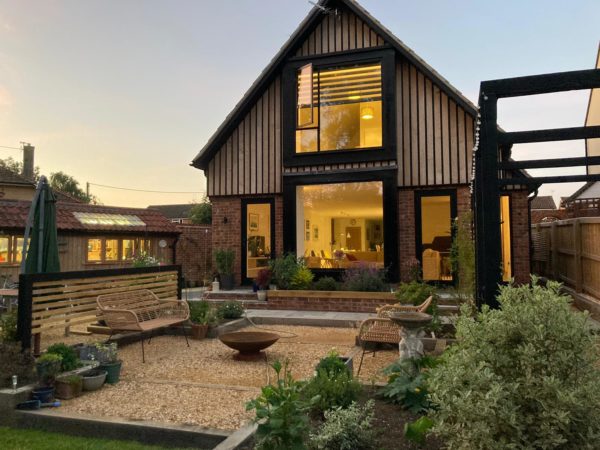
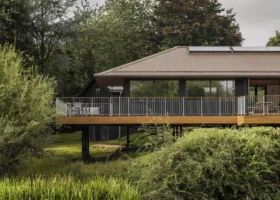
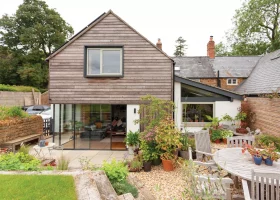
Returning home after three decades in the States, actor Harry Van Gorkum built an energy-efficient timber frame house in a picturesque spot near the Norfolk Broads with the help of Dan-Wood. Harry chose Dan-Wood’s Point 150E design scheme, a one-and-a-half-storey, three-bedroom house that features an open kitchen-dining-living room, a generous entrance hall and staircase, a study and two bathrooms. Photo: Harry Van Gorkum
8. Ensure your construction schedule is clear to other people on your build team
A timeline isn’t just for the project manager’s benefit – it’s a key communication tool. It defines priorities, sets expectations and keeps your build team focused and accountable, especially on milestones and deadlines. Regular progress meetings are crucial to review work, tick off what’s done and agree what happens next. It sounds basic, but this routine keeps everyone on the same page and working towards the same goal.
9. Don’t be afraid to replan if things go off schedule
At some point, the unexpected will happen, and the original timeline will become inaccurate. At this point, it’s best to draw up a new schedule rather than continue with something that no longer makes sense. The key is to treat the programme as a living project management tool, rather than a stick to beat people with.
In summary, what does a robust build programme include?
A reliable timeline is built on clear logic, realistic durations and constant maintenance. Keeping the project programme up to date ensures the works can be effectively steered day-by-day. This will help you to spot issues early, keep trades coordinated and, most importantly, finish the build without the chaos and stress that plague so many projects. Here’s what to put at the core of your programme:
- Start with a clear project scope.
- Plan the key stages with built-in contingencies.
- Have realistic timescales, with a logical sequence and critical path.
- Secure commitments from all the trades involved in your build.
- Carry out regular monitoring and updates.
- Accommodate wider influences, such as approvals & procurement.
- Clearly communicate via progress meetings, and revise the plan as and when needed.
Mark Stevenson
You may be interested in