How Much Does a New Kitchen Cost? What to Budget for Kitchen Design & Installation
How much does new kitchen cost in the UK? If your project involves adding a new kitchen, you need to budget for this on top of the building work. From design to installation, we take a look at how much you can expect to pay for a new culinary zone
Lindsay Blair & Jane Crittenden
‘How much does a new kitchen cost’ is an important question anyone self building, renovating or extending will have asked themselves, the internet, or others who have recently undertaken a project. When it comes to pricing up a kitchen fit-out, however, there are many variables, and the answer is not always straightforward. Project scale and specification play a part, as do location, trade availability and the cost of different kitchen-specific materials.
Do your research, set an overall budget and make a list in order of priorities for your dream kitchen design. For instance, if you love to cook, top-end appliances might be non-negotiable; or you may need plenty of seating, so an island or peninsula is essential. Allocate your kitchen budget accordingly, saving on elements that aren’t as important.
On top of the cost of kitchen fittings and furniture, you need to budget for installation. Trades will charge by the day, hour or on a project basis. Alternatively, you might prefer to go for an all-in approach, whereby one company sets the kitchen cost and uses in-house or subcontracted professionals, within one set price. “Day rates are usually charged for construction and site work, and hourly rates for remedial or rectification work, while price work is usually charged for general installation,” explains Damian Walters, chief executive officer at the British Institute of Kitchen, Bedroom & Bathroom Installation (BIKBBI).
Professional kitchen installation is crucial for quality, long-lasting results. Ensure you have a clear outline of what a price covers before agreeing to any contract, make sure you account for VAT and set aside at least 10% as a contingency. Due diligence pays off, too. Get at least three fully-itemised quotes from kitchen retailers, build companies or independent contractors before agreeing.
In this guide we’re looking at how much to budget for a new kitchen and what to consider when working out how much you have to spend – from flooring to worktops and installation.
How much should you budget for a new kitchen?
Unfortunately, there is no straightforward answer to how much a kitchen costs. “Prices vary wildly for kitchen fittings depending on the level of quality and specification. Generally, the more you can afford to spend on items such as cabinets and appliances, the better the quality,” explains Rob Burnett, co-founder and director of Kitchens by Holloways.
Your choice of style and the features will make a different to the overall kitchen cost. For instance, veneer or lacquered kitchen cabinets with an MDF core cost less than solid wood designs, due to material costs and the labour involved in production.
This kitchen extension has a sloped roof, so the homeowners opted for a floor-to-ceiling pantry on one side with open shelving on the other to maximise available space. The bespoke cabinetry is by The Main Company and starts from £25,000
Handmade and bespoke kitchens will ooze quality but cost more, too. The addition of storage solutions, such as a larder and units with pull-out mechanisms, is more expensive than simple cupboards, while an island unit will also increase the price.
How much should you allocate to your kitchen cost plan? As a broad guide, many designers agree the following for a kitchen budget:
25% on units
10% to worktops
15% to appliances
5% to sink and tap
10% for tiles or wallcoverings
15% for flooring
10% to lighting and heating.
That leaves 10% for finishing touches, with installation costed separately. “Consider works such as general electrics, subfloor preparation, glazing and strip out,” says Selena Quick, MD and founder of PAD Bespoke Kitchens.
Chipboard or MDF cabinets faced with veneer or laminate sit at the most economical end of the scale. You can source flatpack units from budget-friendly suppliers such as Ikea and B&Q for less than £2,000 for a small to average-sized kitchen – though this won’t include the cost of your appliances, worktop, floor finishes etc.
Choosing a budget supplier that prices items individually can give you visibility on prices, helping you to keep costs to a minimum. For instance, Ikea’s Metod base cabinet frame (60 x 60 x 80cm) is priced at £32 per unit. Add in shelves and a cabinet door and the price increases to £115 per unit, and so on. Cabinets such as these can be customised with paint finishes and bespoke hardwear.
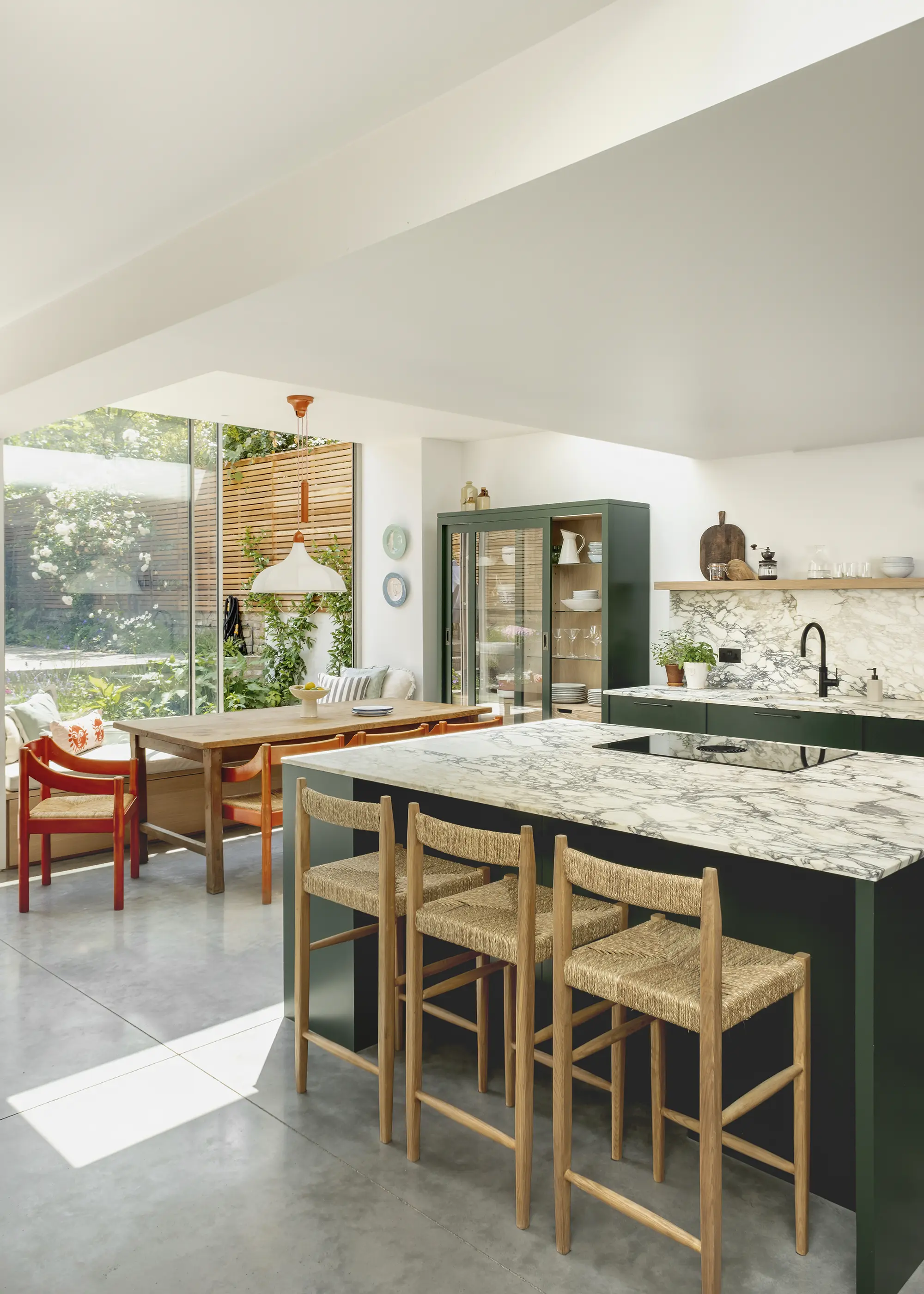
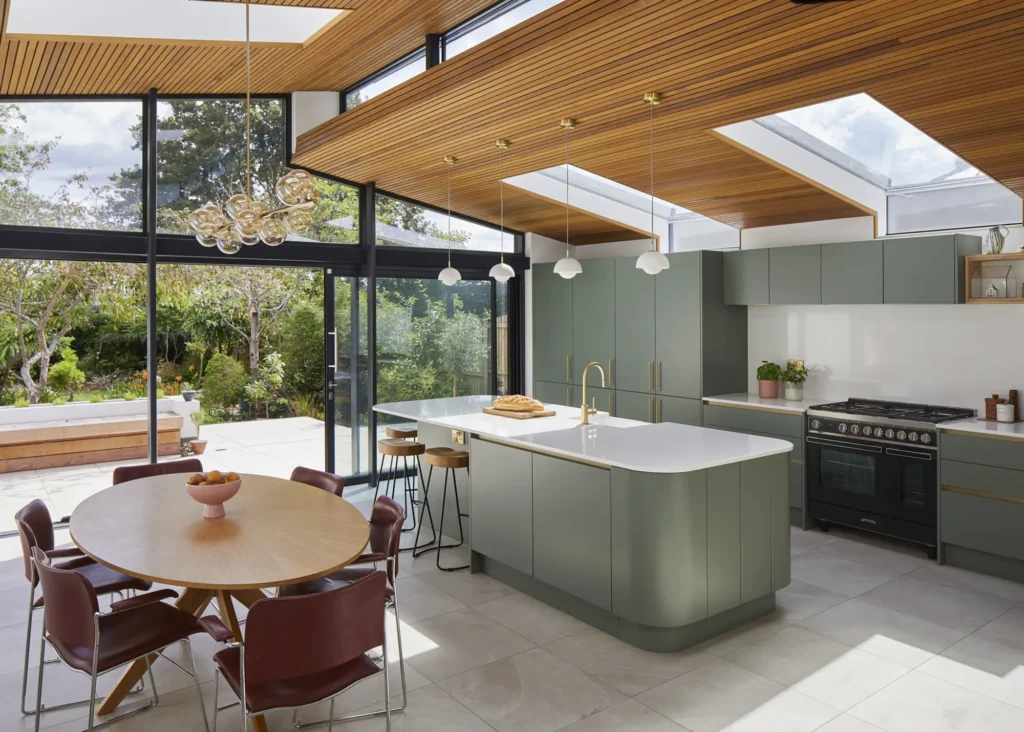
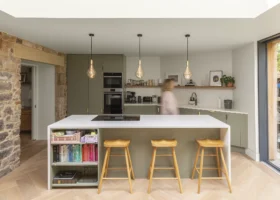
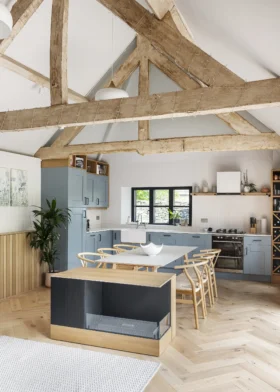
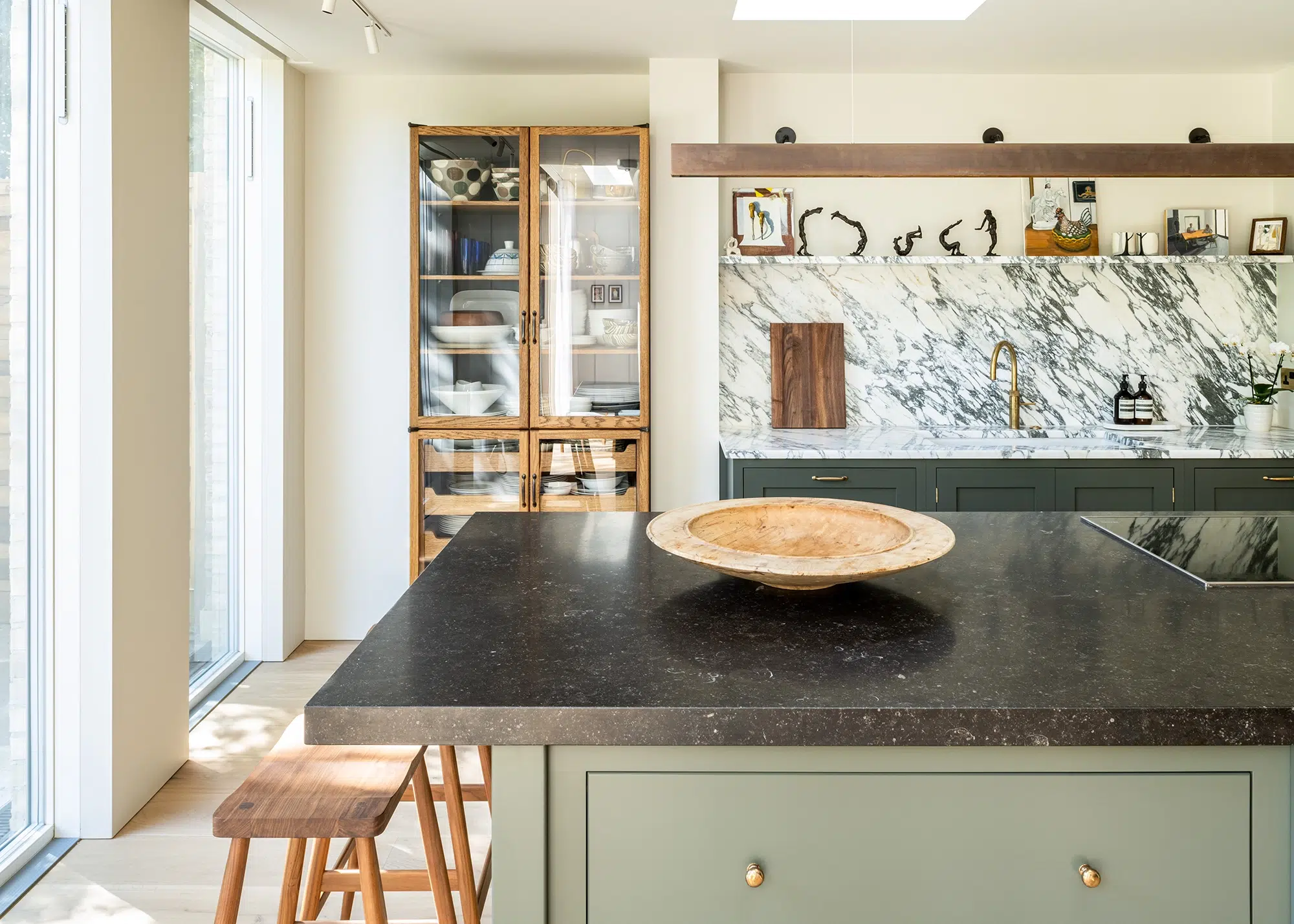
The owners of this extended and refurbished home chose Hush Kitchens for the kitchen design, opting for the Lugn range in Stable Green by Paint & Paper Library. The kitchen cost around £50,000, including units, appliances and a marble worktop. The Lugn range starts at £8,000
Middle-range kitchens from suppliers like Howdens are achievable for between £5,000 and £15,000, depending on the size and the spec you go for. High-end solutions or anything bespoke are likely to cost £30,000+.
How can you maximise your kitchen space (and budget)?
Optimum storage is one of the most important elements of a good kitchen design, but knowing how to maximise the space and how much storage you might actually need can be difficult. Use integrated kitchen storage solutions to enhance the efficiency of your cabinets. This may be shelving units that are already fitted into the cupboard for different purposes, or tall cupboards that have pull out pantry storage (this will be super handy for herbs, spices and condiments).
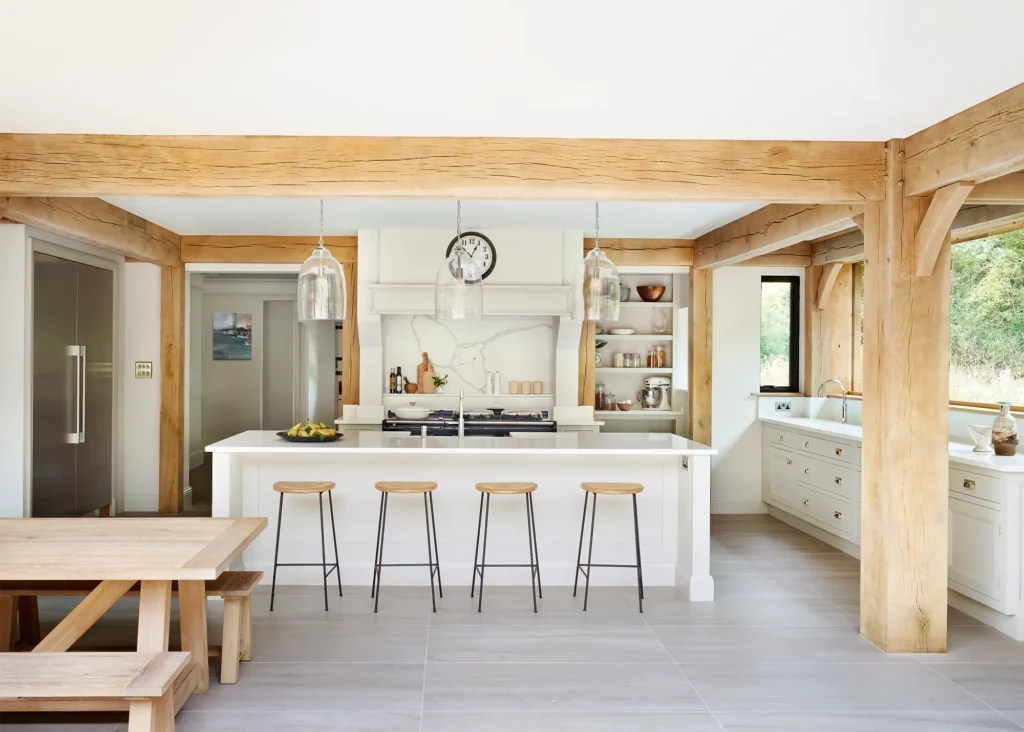
The owners of this house tasked Martin Moore with creating a family-oriented culinary zone with traditional handmade furniture to reflect the property’s rural setting. The island functions as the focal point of the room and the main area for meal prep
Speak to an expert or kitchen designer about which storage systems will work best for your lifestyle. When do you need the different items and in what order, how frequently do you use them and are there heavy items that need to be close to the countertop? These are all questions to consider when deciding how to maximise your kitchen storage.
If you have space for a kitchen island, these multi-functional zones can offer a wealth of benefits. They offer a zone that can be used for food prep, cooking, dining, washing up – the list is endless. Many kitchen islands have integrated appliances on one side (often backing onto the rest of the kitchen), with the other side left open for recessed seating or open shelving units for food or cook books.
How much should you spend on flooring?
Kitchen floors need to be durable and hygenic – they’ll be used consistently by all members of the family with people walking through in muddy shoes and spilling drinks from time to time. It’s important to invest in good quality materials that will last well, suit your lifestyle and fit your budget requirements. They can be expensive, though, so shop around for the best deals. Here’s what to budget for the most popular types of flooring:
Timber
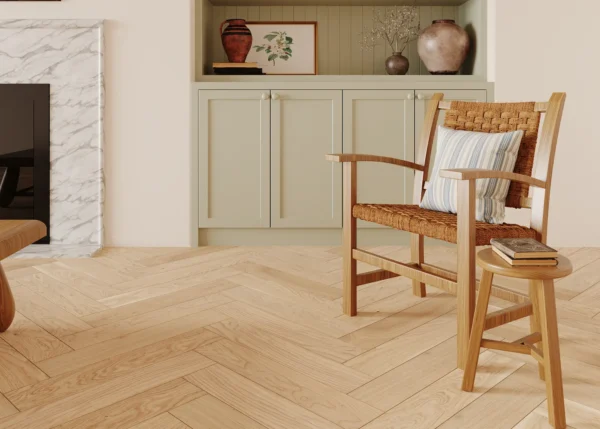
Few materials can match the warmth and timeless appeal of wood flooring, whether you’re in the market for a rustic look or a geometric chevron design. Engineered products are typically the go-to option for kitchens as they are more durable compared to solid wood options. Budget £50 per m² to £250 per m².
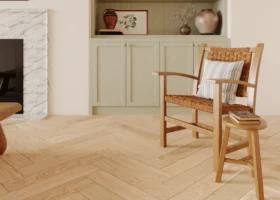
Designed by BetterPad Architects, this country cottage renovation features Havwoods‘ HW3797 Orleans flooring throughout the large kitchen and living areas. The warm tones and natural texture complement the modern finishes and rustic charm, reinforcing the home’s connection to its surroundings. Photo French + Tye
Laminate
Laminate flooring is a versatile solution that can mimic the appearance of wood, stone or tiles. It’s low-maintenance, can help dampen noise and prevent draughts. Budget from £60 per m².
Vinyl
This option is water-resistant, making it ideal for kitchens. You can purchase it in tiles (known as LVTs) or sheet form. Luxury vinyl tiles (LVT) tend to be more hardwearing than vinyl that comes in sheet form, which isn’t as well-suited to busy areas of the home. Budget £10 per m² to £40 per m².
Stone
Radiating natural elegance and classic appeal, traditional stone flooring is well-suited to kitchens. It’s very hard-wearing but, depending on the type of stone you specify, may require routine sealing to protect against stains and moisture ingress. Marble, limestone and slate tiles are among the most popular options. Budget £100+ per m².
Porcelain
Porcelain is available in a wide range of styles, colours and finishes. Porcelain tiles are waterproof and slip-resistant, too, plus they’re a fantastic partner for UFH due to their density. Budget £25+ per m².
Polished concrete
Polished concrete is incredibly hardwearing and water resistant, making it an ideal solution for kitchen spaces. It works beautifully in open-plan spaces, too, thanks to its ability to create a clean transition between the different area. Budget £130 per m² to £160 per m².
Ask yourself how much you’re willing to spend on the worktop in relation to the rest of the kitchen (we suggest allocating 10% to the worktops). The likelihood is that the more expensive the worktop is, the higher the installation costs will be – but also the better quality it will be and the longer it’ll last. “Some people may prefer to fork out on big-budget appliances and spend less on their countertops, whereas others may want to create a quality statement piece, such as a kitchen island in a contrasting material, which calls for a more generous budget,” says Cerys Ford, brand category manager at Howdens.
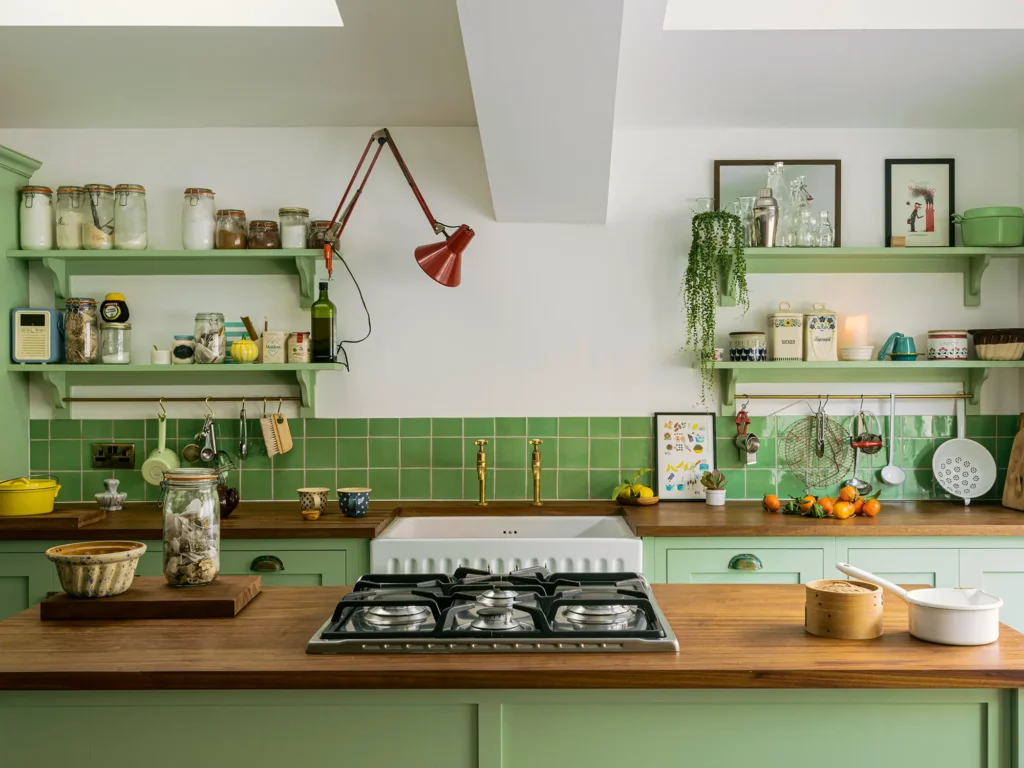
This delightful pea green Devol Shaker kitchen features reclaimed Iroko wood countertops – sourced by the client herself. They’ve been sanded and re-oiled, making a functional yet homely addition. Devol kitchens start from £12,000
Expect to pay around £100 per m² for laminate worktops that are made to fit, though cheaper solutions are available if you can use a standard size. Depending on the species you choose, timber worktops are available for between £150 and £350 per m². Granite or quartz can easily climb above £300 per m², as the material is cut specifically to your dimensions.
Case study Period property in London upgraded with a bespoke Shaker kitchen
After a flood left Nicole and David Price’s London home in a bad state, they had the chance to adapt their much-loved house into their perfect property. A complete overhaul felt like a job to tackle, but a chance meeting with architect Stuart Archer (from Archer + Braun Architects) provided a watershed moment for the project. Nicole set up a meeting with him and architectural practice partner Sarah Braun with an initial brief for a full internal refurbishment. Bringing light into the back of the house and creating a better connection to the garden were also key.
Photo: French + Tye
The Georgian house had been chopped and changed over the years and features three separate elements that are visually distinct. Initially, Nicole was keen on a wide modern glass extension, but this was rejected by planners, who felt that the history of the three styles should be able to be read at the property’s rear. The final design was for a new extension at lower ground with floor to ceiling sliding doors to the dining area.
Photo: French + Tye
The existing layout of the house was small and boxy with lots of walls and beams. Even though the property is south facing, the rooms inside were dark, so the area at the back of the house was remodelled to open things up. “This involved a lot of structural work, including new foundations and floor slab,” says architect Sarah Braun. The whole house has been upgraded with new plumbing and electrics, insulation to the roof, new triple-glazed windows and underfloor heating. Conservation specialists were also brought in to reinstate period details.
The DeVol kitchen sits in the heart of the new space. It was designed to have the feeling of a more informal kitchen that had accrued over time, with a vintage vibe rather than a modern fitted kitchen. Features such as the haberdashery units with glass doors and the island on legs create the loose furniture effect that Nicole wanted. The worktops are from Rossi Stoneworks and the flooring is Russwood.
While many national kitchen retailers will offer a free service in store or virtual tools online, independent kitchen studios usually charge for a design, even if you don’t then commission it. “For a standalone service providing homeowners with the tools to shop around, our design service starts at around £1,200. If we are commissioned to design, supply and install a kitchen, there is no cost for a kitchen design service,” says Selena.
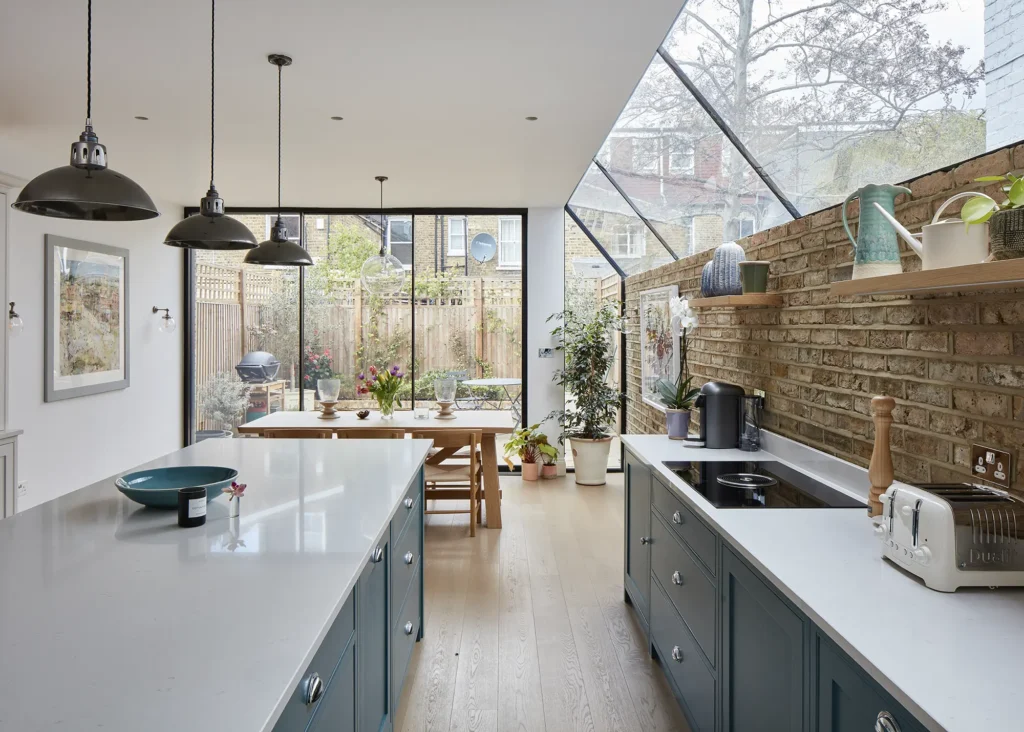
Located within a residential family home, PAD Bespoke Kitchens created a scheme using earthy, natural wood materials with a dominant green tone in order to complement this new extension to a family home, designed by Red Squirrel Architects. Kitchens start from £20,000
Fees vary, so always check. “The amount will depend on the size and complexity of the project, but for a typical kitchen, living, and dining space we charge £1,500,” says Rob. For general tips, kitchen retailers will offer advice and product info for free.
Can an architect design your kitchen?
If your kitchen has been designed as part of your architect’s plans, how do you translate that into ordering the real thing? “Almost always, your kitchen needs to be designed by a kitchen specialist, as the technical and detailed elements that are personally tailored for a client are rarely covered by an architect,” says Selena. “If you are sourcing your kitchen designer directly, get them involved in the process as early as possible and expect professionals to liaise between themselves and keep you in the loop.”
There may also be an interior designer and a project manager. “I’ve worked on projects where six or seven people are at the kitchen design meeting. Ultimately, you have to decide who you would like in your team, and how communication should be handled, during the design stage as well as when the builder is on site,” says Rob.
At the other end of the scale, you could design it yourself for free, taking inspiration and advice from magazines and websites. How about looking to our real-life readers’ homes case studies?
Who can install your kitchen cabinets?
There are three main routes to kitchen installation. The first is an all-in approach where a kitchen company provides an installation service using an in-house team or recommended subcontractors, including all plumbing, electrics, tiling, building, and more. Then there’s dry-fit installation where the cabinets and products are fitted but not connected to services; and a supply-only arrangement whereby you source your own installer.
The advantage of using trades affiliated with a kitchen company is you’ll have one contract to cover the kitchen and fitting, so any concerns can be taken up with one point of contact. You’ll deal with separate terms for each trade you employ when managing a supply-only deal.
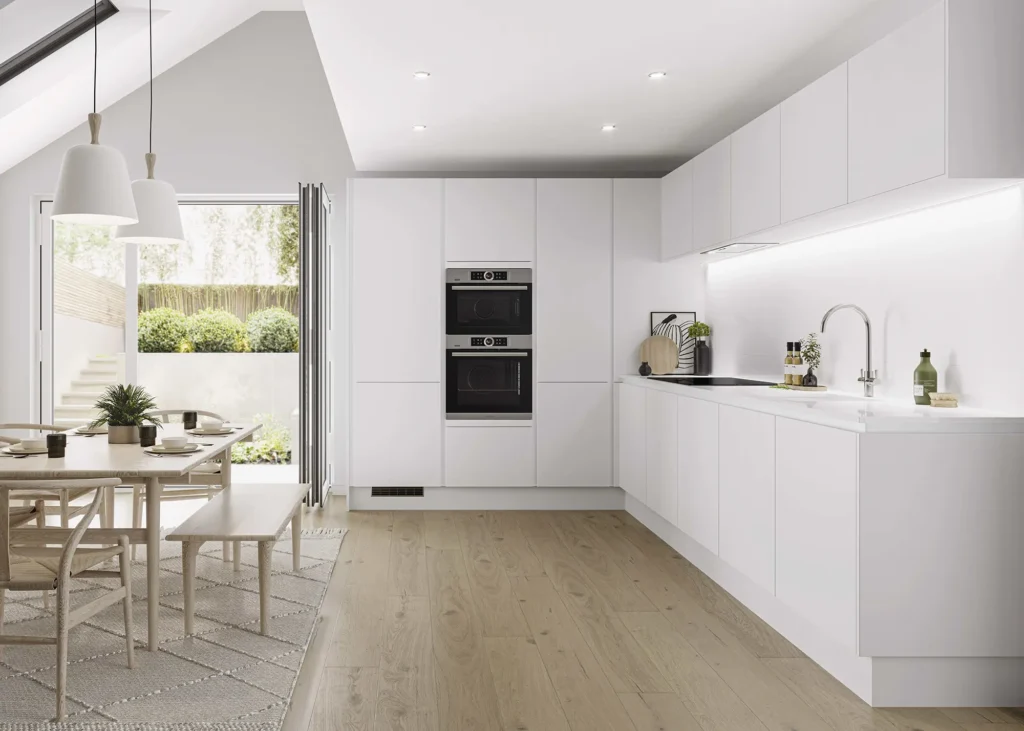
This Hockley super matt white handleless kitchen is from Howdens. Trade suppliers will typically only price via your installer, but may offer good value for money
“Most kitchen firms will provide a price for a dry installation. They will deliver and install the cabinets and worktops, and put the appliances into place. The appliances will then be connected by the builder’s electrician and plumber. The cost of the kitchen installation depends on the size and specification, as well as the access,” Rob explains.
When should you order your kitchen?
It’s a good idea to get all of your professionals on board early. This way, you’ll get expert advice on each element and form a cohesive approach with all parties involved.
Where architectural plans have been drawn up, these can be used by a kitchen designer to create a scheme. In some instances, they may suggest changes to the proposed works to better suit the layout of the units or features such as the location of the extraction, for example. The design process should begin before any work commences on site. Once designed, your kitchen company can provide lead times for delivery and work out when an order should be placed in line with your build timeline.
“If the lead time is short, hold off ordering your kitchen until you have finished walls and floor space. If it’s long, this is where communication between your professional team is key,” says Selena Quick, managing director and founder of PAD Bespoke Kitchens.
Where can you find a good kitchen installer?
Recommendations are a great starting point. Ask friends and family or online forums, research local businesses, read reviews and search directories such as Checkatrade, as well as those from trade bodies such as the KBSA and BIKBBI, where members are subject to a stringent vetting processes. The British Institute of Kitchen, Bedroom & Bathroom Installation (BIKBBI) recommends Protect My Install, which bridges the gap between you and the installer and provides recourse should anything go wrong.
How much does it cost to have a kitchen installed?
Kitchen installation costs can vary on a case-by-case basis. “Broadly speaking, installation can cost the equivalent, and upwards, of 50% of the product value,” says Damian. “So, if you’re spending £10,000 on a kitchen, the installation won’t be far off £5,000, but that is very much dependent on the project requirements. If you’re doing a like-for-like swap out, you’re looking at between £3,000 to £5,000.” Prices vary widely, but an average kitchen installation might cost anywhere between £2,500 and £6,000.
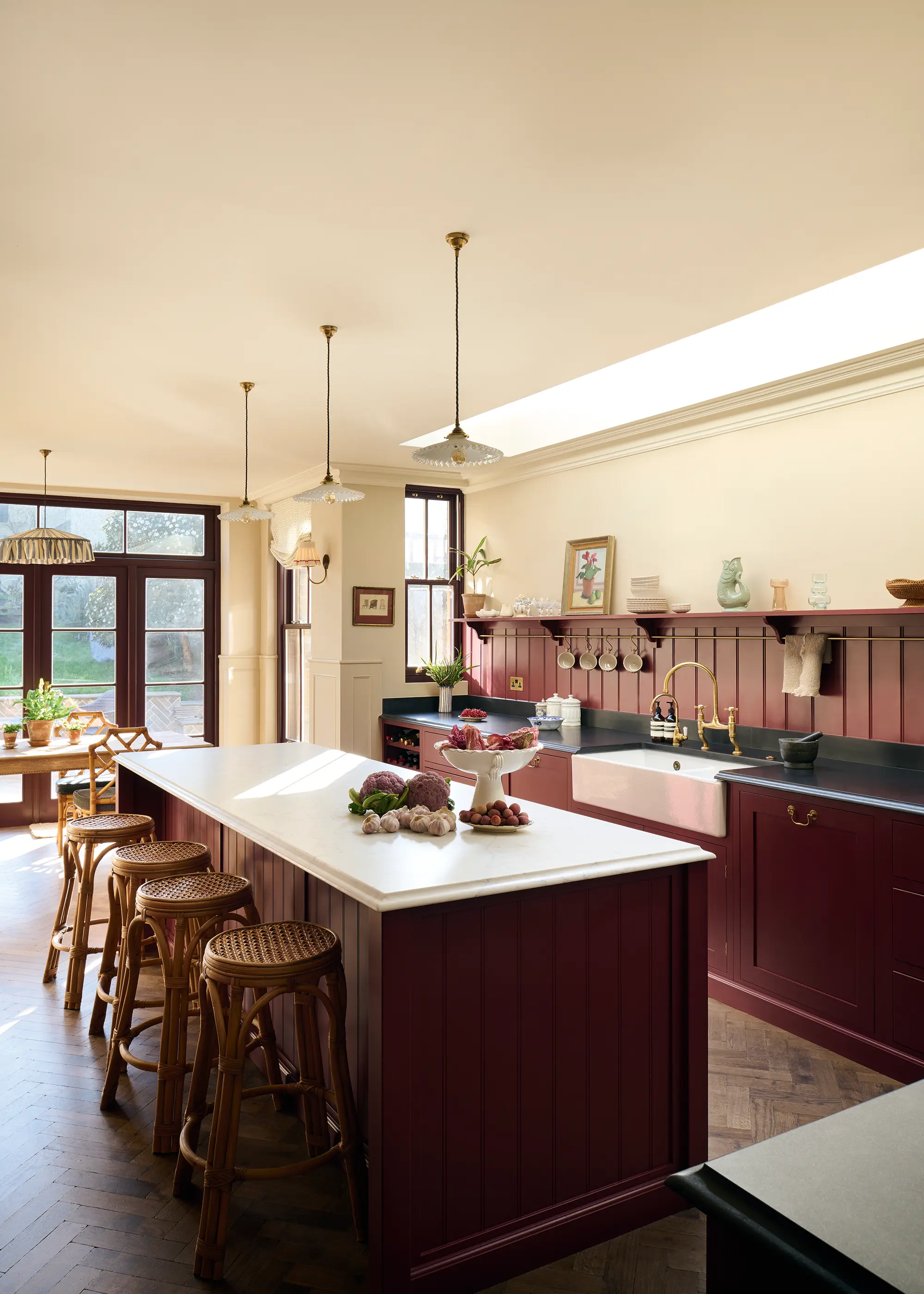
Cabinets from Devol’s Real Shaker Kitchen range lend this space a traditional feel. Honed black granite worktops and Valencia quartz on the island complement the rich warmth of the parquet timber floors. Devol kitchens are priced from £12,000
“Remember to consider the cost for plastering and electrics, too, as most people forget these,” says Jamie Wisewell from Intelligent Maintenance Docklands. Also consider waste removal, skip hire and storage fees. If there are many trades on site, do you want to hire a portable WC? How will your walls and floors be protected elsewhere for entry and exit? Think about cooking arrangements during installation and whether you’ll eat out. For large-scale builds, there’s the potential cost of alternate accommodation, too.
Kitchen cost FAQs
Answered by Al Bruce
Al Bruce is founder of Olive & Barr, a bespoke kitchens manufacturer specialising in specially-crafted, handmade Shaker kitchens.
Is a bespoke kitchen worth the investment?
Bespoke handmade kitchens are beautifully understated, showcasing the very best in fine craftsmanship. The thoughtful placements of every element ensure a seamless functionality which is difficult to match. Whilst other trends come and go, handmade kitchens remain; this gives our customers the confidence that they are investing in a design which will last. The refined style of handmade kitchens also allows you to be creative, adding personal touches to the design, this could be through colour, hardware, worktops and more.
Underpinning all this is a keen focus on quality. Our customers love to hone in on those finer details and so do we. At Olive & Barr our kitchens are handcrafted in solid oak and tulipwood by skilled artisans right here in our UK-based workshop. There is nothing better than knowing where your kitchen is being made and that all carefully sourced materials used are traceable and accountable.
What adds the most value when renovating a kitchen?
Trends come and go, whereas timeless looks are exactly that; timeless. A neutral colour palette, whether that’s creams and greys or dark blues paired with wooden countertops have the broadest appeal and therefore will continue to remain popular for years to come. Not only this, but neutral cabinetry is extremely versatile and will complement a variety of different design styles, allowing the space to easily be re-worked to suit a variety of different personalities.
How can I maximise my kitchen space’s potential?
Ensure your kitchen is used to its full potential, by using all the available space to store utensils and make use of otherwise wasted space, install magnetic strips between your wall and base cabinets. Or, add a spice rack to the back of your cabinet door and use storage baskets and containers to utilise both under-sink and cupboard storage – whatever you can do to your kitchen to improve its storage offering will add value.
A well-designed pantry can add a huge amount of value and appeal to potential buyers and is definitely worth considering when planning a kitchen design. The cost of this is entirely dependent on the property, but you can typically expect it to add 5-10% of the value of kitchen. It’s no secret that a great kitchen can add to the value of a property, and the pantry contribution only adds to that.
How long should a well-designed kitchen last before needing an update?
A well-designed, handmade kitchen built with quality materials should last for decades – and with proper care, there’s no reason it should ever truly ‘wear out’. Longevity depends on getting the basics right, smart design, lasting craftsmanship, and a layout that continues to work for how you live.
Focus on what you truly need day to day, rather than overfilling the space with cabinetry or features that may go unused. For example, too many wall units can make a kitchen feel heavy and dated more quickly, whereas thoughtful internal storage and a balance of open elements like bespoke shelving help it feel lighter and more enduring. It’s also worth thinking about how the kitchen sits within the room. Designs that complement the architecture, rather than dominating, tend to age better visually.
Finally, remember not to only think of what you need from your kitchen at the moment – look a little further ahead. A kitchen designed with future use in mind, whether that’s a growing family or more entertaining, will remain functional for longer and delay the need for costly changes. A design that combines practical layout, quality materials, and long-term thinking won’t just last, it will continue to feel relevant for years to come.”
Answered by Massimo Buster Minale
Massimo Buster Minale is creative director and founder of Buster + Punch, a contemporary kitchen manufacturer.
Which kitchen features should I save on, and where is it worth investing more?
Investing in a high-quality kitchen island is one of the smartest decisions you can make when designing a kitchen. Unlike cheaper, off-the-shelf options, a bespoke island is built to suit your space, your lifestyle and the way you’ll actually use your kitchen, delivering both functionality and long term value.
Constructed from durable materials, a well-designed island is made to withstand the daily wear-and-tear of a busy household, maintaining both its performance and appearance over time. The bespoke element allows you to hide hidden switches and sockets for integrated appliances or charging points as well as offering the option to choose durable, hand-crafted hardware for added appeal.
It’s not just a practical feature either, it becomes the focal point of a room. From food prep to entertaining or even working from home, a kitchen islands acts as a central hub, upgrading the ergonomics of the space by improving the flow and making everyday tasks easier, while also serving as a natural gathering point too. This makes it highly desirable for future buyers ‒ a worthwhile investment that pays off both now and later.
Lindsay Blair
Lindsay Blair is a freelance editor, writer and content consultant with a focus on home design, interiors and lifestyle. Previously editor of Kitchens Bedrooms & Bathrooms magazine, she now enjoys writing for a variety of different homes and lifestyle magazines.
Jane Crittenden has been writing about self build and renovation since 2002 and has completed two of her own house refurbs. She loves talking to homeowners and writing their Readers' Home stories as well as investigating the latest products and services to help readers with their projects.











































 Login/register to save Article for later