What is a Picture Window & How Can You Use this Glazing Feature Properly?
A picture window is a fixed glazing feature designed to help maximise views – but where do they work best and how can you get the installation right? From design to performance, Amandine Lefevre speaks to the experts about the ins and outs of this striking design feature
For most self builders and renovators, a beautiful view is high on the wish list when it comes to choosing or planning a home. Having that close connection between indoors and out can be one of the most desirable features of modern living – and when it’s done well, it can transform both comfort and style.
Picture windows invite the outside world in, creating uplifting, bright spaces that offer ever-changing scenes of the surrounding landscape. Here, I’m speaking to glazing experts and architects about how to get this feature right – from material choices to practical considerations, across both new builds and retrofits.
Picture windows are generally large, fixed (non-opening) panels of glazing designed to make the house’s surrounding landscape an integral part of the interior, and they naturally work best where there’s a lovely vista to frame. Used thoughtfully, they become more than just a source of light and can make a real architectural statement.
Kloeber supplied the glazing for this East Sussex home, including this oriel window with an oak-clad seat inside – the perfect setting to relax while taking in the landscapes.
While they’re most often associated with contemporary homes, with careful detailing, attention to proportion and thoughtful frame selection, picture windows can make an attractive addition to almost any building type. Crucially, they should appear intentional and harmonious with the rest of the fenestration, rather than feeling like random openings puncturing the wall. “They have the most impact in a large space – a generous living area or a double-height hallway – where they can really open up the room,” says Matt Higgs, managing director at Kloeber.
Premium Content
Downloadable E-Guide
Build It’s downloadable e-guide to choosing windows & doors offers ideas and advice on every aspect of planning your home’s glazing and entrances, including expert tips on the key specification decisions you’ll face. Click below to find out more.
How important is the shape & location of your picture window?
Beyond the view itself, the shape and proportion of the glazing can enhance both the architectural merit and interior design of your home. For instance, tall, slim picture windows arranged in a row can complement vertical cladding for a contemporary look. “You can also consider circular, porthole-style windows, which work well as focal points in a gable end or stairwell,” says Matt.
Positioning is crucial, both in terms of the outlook and how the internal space is used. “Think about how you’ll live in the room,” advises Matt. “Some homeowners choose a window that drops low to the floor and build in a deep internal sill to use as a seating area – it creates a lovely spot to sit and enjoy the vistas.”
Of course, a key factor is ensuring the location of the window frames the best views. That isn’t just about which elevation it’s on, but also the height from which you will be looking through it and how the perspective changes in different areas of the room. “In a kitchen, you’re mostly standing, so the window should be set higher up,” says Alan Budden, architect and founder of Eco Design Consultants. “In a living space, where you’re sitting down, it can be lower – or somewhere in between.”
CASE STUDY Capturing coastal views with an expansive picture window
Perched above a Cornish cove, this fisherman’s cottage balances heritage charm with modern living. The brief for Ian Chalk Architects was to create modern, open-plan spaces that made the most of the home’s coastal setting. IDSystems was brought in to install sensitive yet striking picture windows.
“From that elevated position, you’ve got a panoramic outlook over the cliffs, the beach and the sea – and you simply couldn’t achieve that without large picture windows,” explains Ed Stobart, technical sales manager at IDSystems. “That’s what this location is all about: its connection with the surrounding landscape.” The team specified a Sunflex UK window system and a frameless glass-to-glass corner joint. This combination delivers both clarity and performance while blending with the stone and timber palette of the original building.
Double glazing with solar control was also selected to reduce heat from entering the home from direct sunlight. “The frameless glass was absolutely critical,” says Ed. “Because the view runs down the slope towards the coast, any visible framework would have compromised the result.”
Glazing specification should be considered early. High-efficiency double-or triple-glazed panels will be best for winter comfort, but you may also need to consider solar control coatings or external shading to avoid overheating in the summer. A glazing expert will be able to help you balance cost, performance and maximising views.
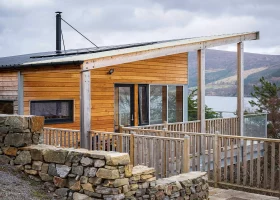
Sat on a dramatic peninsula in West Wales, overlooking the Irish Sea, this project by Hyde + Hyde was an ideal candidate for dramatic glazing. A recessed curtain track in the ceiling adds practicality while preserving a sleek look. Photo: Martin Gardner
Very often, picture windows will need to be fitted with laminated glass, which is designed to enhance security and safety. This is required for all ground floor or easily accessible windows in a new home under Part Q of the Building Regulations. In renovations, safety glass is mandatory for low-level windows (such as floor-to-ceiling panels) and certain other cases.
It is important to consider sound performance, too. “Acoustic laminated glass is ideal for reducing external noise – perfect for homes near busy roads or schools,” explains Martyn Haworth, director at Bison Frames.
What do you need to consider for a successful picture window installation?
For the sleekest result, hide as much of the frame as possible within the surrounding wall structure. “Recessing the frame so that all you see is the glazing creates that seamless finish, which is crucial with picture windows,” says Ed Stobart.
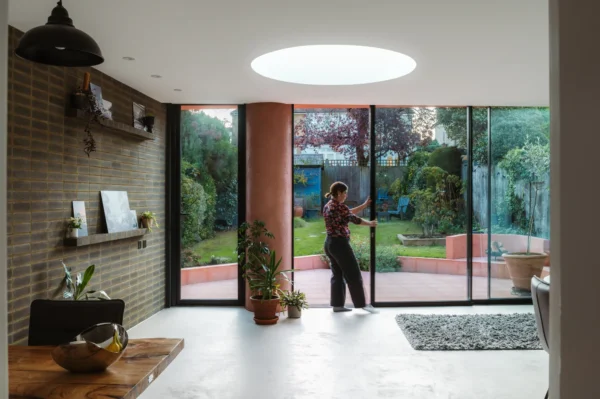
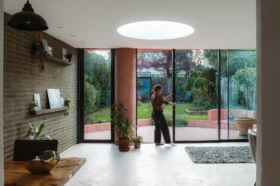
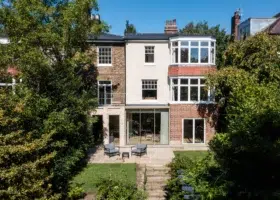
This double-height extension features a sliding picture window and doors set beneath fixed frame glazing – all from IDSystems – which flood the space with natural light and yield ever-changing views of the garden, treetops and sky
If that isn’t viable for cost or practical reasons, aim for slim-framed units – aluminium is a top candidate and low-maintenance to boot. Timber windows will require slightly thicker frames, but the internal finish offers a natural warmth that could work with your interior decor goals. Regardless of your choice of materials, ensure the product provides excellent airtightness and weather protection for year round comfort.
In terms of structure, the opening itself must be designed to prevent deflection, which typically means integrating a suitable lintel or steel beam above. If the window’s to be installed in an exposed or coastal location, wind loads on large, flat glass panels must be considered at the early design and specification stage.
Where should the glazing sit in your wall structure?
Another key factor to think about is how deep the panel sits within the surrounding structure – it should ideally preserve a continuous insulation line within the wall thickness to avoid thermal breaks and heat loss.
It’s also important to consider access when it comes to fitting and installing large panes – particularly for tight plots and urban properties. The bigger you go, the heavier and more complex the glass becomes, which makes installation more challenging. If the only access to the rear of a renovation project is through the house, for instance, you will be limited by what you can fit through a standard doorway. If you have a path or gate at the back of your property, then you’ll have more flexibility and may be able to opt for slightly larger windows.
How can you balance daylight with privacy?
From within the home, a picture window should contribute to an inviting year-round space. A key step is preventing excess heat gain. “We do often recommend solar control glass, which reduces UV and heat transmission,” says Matt. That way, you can still get plenty of natural light without the room turning into a greenhouse. For more dynamic control, external shading – like an overhanging roof, fixed slatted screens or even integrated solar panels – can help moderate the sun’s impact.
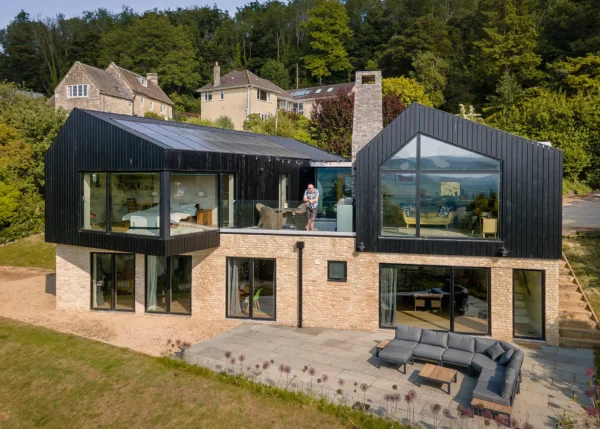
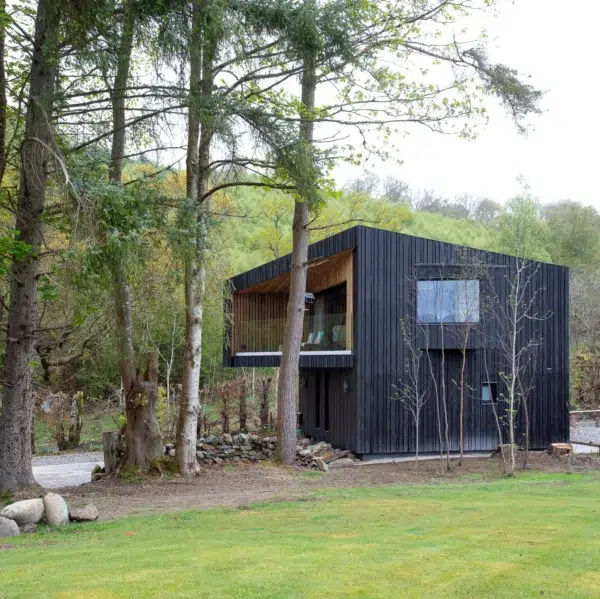
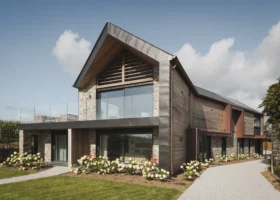
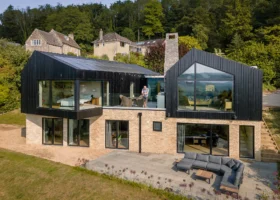
Part of a self build project by Eco Design Consultants, this bay window projects outward from the house, with a sleek black timber rainscreen cladding – lending a contemporary edge to the architecture
Another critical factor is how daylight is distributed throughout the room. “There’s often a temptation to install one very large window, but that can make the front of the space extremely bright while leaving the back in relative darkness,” says Alan. This can make a room feel smaller or gloomier than it really is. The skill lies in planning windows of an appropriate size and positioning them thoughtfully, so that light is dispersed evenly throughout.
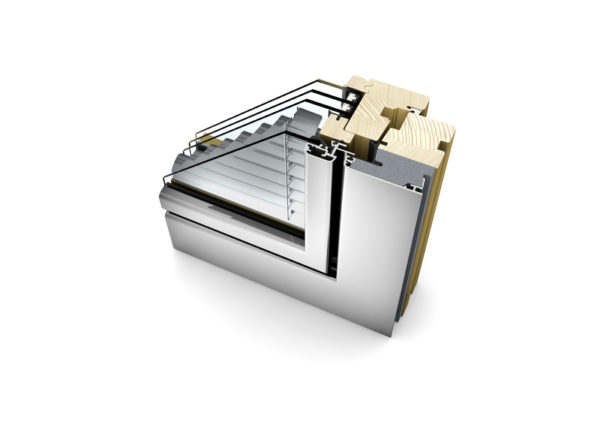
Consider the views looking in, too. If you’re in the middle of the countryside, then maybe you’re okay with a low-set picture window in the bathroom, so you can soak up the landscape from the tub. But if the glazing faces a street or neighbouring property, privacy is a key factor. “Internal solutions like discreet roller blinds or automated systems are great solutions,” says Matt. This could also inform where you choose to locate your windows.
Picture window FAQs
How much should I budget for picture windows?
It really depends on the project, but as a guide you’re generally looking at somewhere between £600-£750 per m². The overall cost can vary depending on what else is involved. If your supplier is already on site fitting other windows and doors, the additional cost of a picture window is relatively small. However, if it is a standalone installation where they’re just coming in to fit that one feature window, then the relative costs of fitting the system will naturally be higher.
Answered by Ed Stobart
Ed Stobart is technical sales manager at IDSystems. He has 20 years’ experience working closely with thousands of customers, builders and architects to offer advice and support on glazing solutions.
How can I determine the best window size?
It’s really valuable for us to experience daylight and see how it changes in the day. Having that movement of light across a space brings it to life and doesn’t always require a large window – even a smaller opening can achieve that beautifully. A full-height window might look impressive, but it can be harder to control overheating unless you add deep shading or overhangs. Often, a shallower panel works better – it’s easier to shade, more efficient and the lower part rarely adds much to the view.
Answered by Alan Budden
Alan Budden founded Eco Design Consultants in 2008 with a mission to create sustainable homes that people love to live in. He specialises in designing buildings that are not only highly efficient but visually appealing, healthy and comfortable all year round.
Do I need planning permission to install picture windows?
In most cases, installing picture windows is considered to be permitted development, so planning permission is not typically required. This is especially the case if you are replacing an existing window with one of a similar size. There are exceptions, particularly for listed buildings, conservation areas or if you’re significantly altering your property’s facade. It is always worth checking with your local planning authority before going ahead with any of the work.
Answered by Matt Higgs
Matt Higgs is managing director of Kloeber, one of the UK’s leading manufacturers of bespoke glazing solutions, specialising in timber, aluminium and composite windows and doors.
Amandine is Build It's editorial assistant. She's passionate about home design, and is always on the lookout for inspiring, creative self builds and renovations.
































 Login/register to save Article for later