
- Plan ItBack
- Design ItBack
- Build ItBack
- Homes
- ProductsBack
- CostsBack
- Self Build Cost Calculator
Estimate your project costs instantly with Build It's interactive self-build cost calculator
Calculate Now - Costs & Finance
- Contracts & Warranties
- Build It Estimating Service
Get an accurate, detailed cost breakdown of your project
Submit plans
- EventsBack


































 Login/register to save Article for later
Your Guide to Specifying Internal Sliding Doors – Installation, Costs & Configurations

Whether you are looking to maximise floorspace or want to create a sleek, modern interior scheme, sliding doors are a fantastic way to add a knockout feature to your build’s overall design. Here, I’m looking at how to integrate a sliding internal door system into your project plans effectively, the configurations available, costs and the key benefits of this mechanism.
What are the different types of internal sliding door?
When selecting your internal door system there’s a wide range of versions you can choose from. The most popular options are as follows:
- Pocket doors, whereby the leaf slides into a hollow space within the wall are one of the most popular choices as it offers a seamless look.
- Barn doors provide a more rustic feel where the door hinges on a visible track over the opening.
- Telescopic doors feature multiple linked door leaves, so as you move one, the others simultaneously move with it. They are then either neatly stacked to one side or housed within a designated wall cavity.

In search of a warmer, more manageable house to enjoy her retirement, Fiona Henderson built a contemporary timber frame home in Aberdeenshire on her own land. The barn-style sliding doors on the entryways to the kitchen and larder are not only clever space savers, but a nod to the home’s rural location. Photo: David Barbour
You can also select from a variety of materials, from timber or oak options for a more traditional look to glazed designs to add a modern touch. You are also able to select fire-rated versions for rooms and hallways which require additional protection. Each will have different characteristics in terms of acoustics, thermal performance, weight and feel. On a practical note, you’ll also need the right track and frame to support the unit.
What are the key benefits of installing a sliding configuration?
One of the biggest advantages of selecting an internal sliding door is that it can save floor area. “Up to 8% of the internal space can be saved in a 100m² area,” says Louise Stacey, marketing manager at Eclisse. This space saving feature can free up valuable room, making it far easier for you to incorporate larger items of furniture and move through the home. “Single sliding doors are also very effective in ensuites and smaller rooms where space is restricted,” says Simon Johnson, commercial director at JB Kind.
Accessibility is also improved with a sliding mechanism, as you remove any awkward door swings and don’t have to traverse over uneven thresholds between rooms, creating a smoother transition throughout the home.
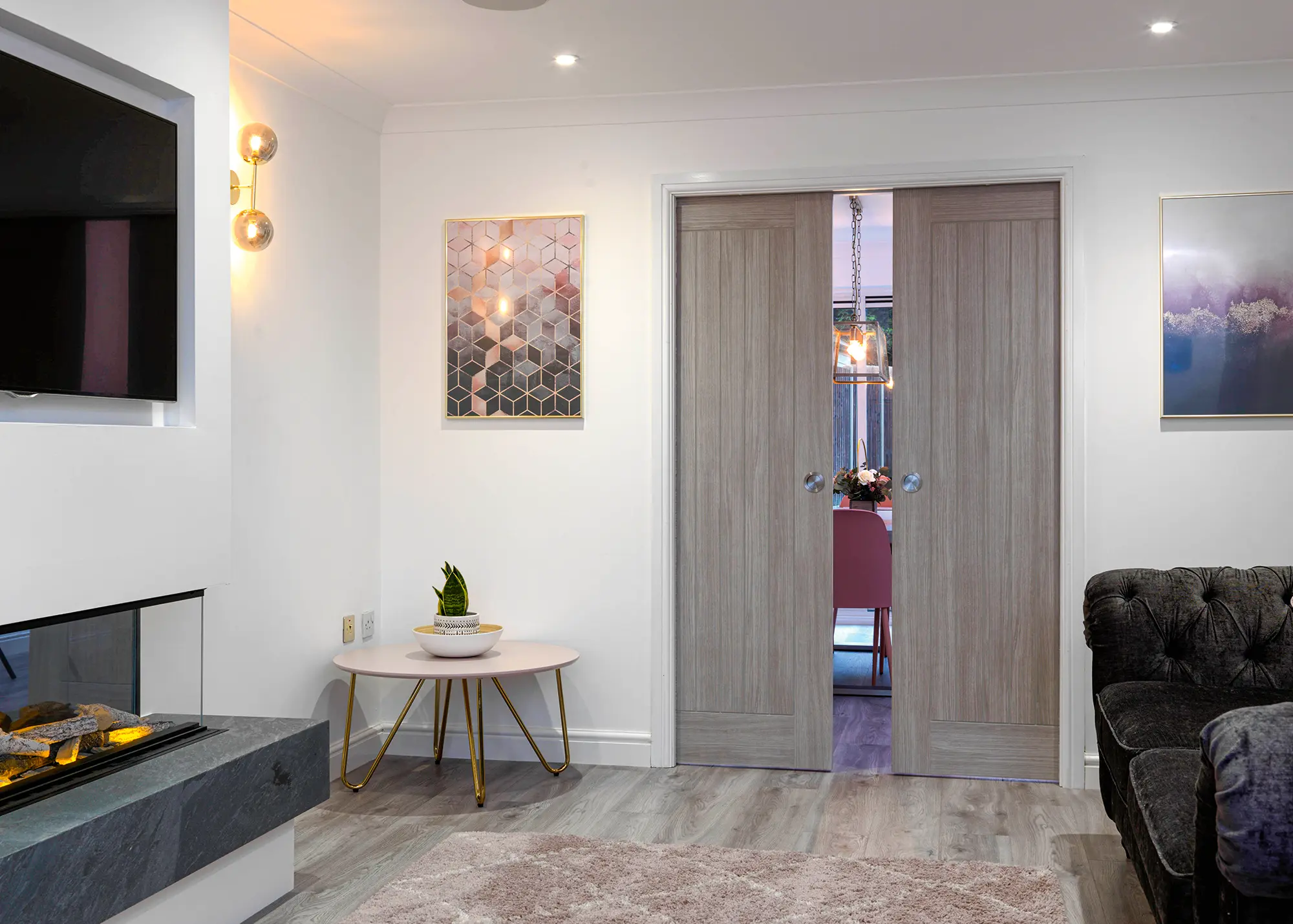
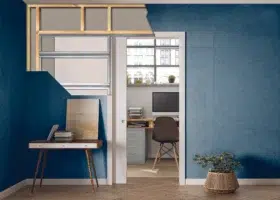
The JB Kind double pocket door kit can be hidden behind standard plasterboard fittings and decorative architraves, and works with your own choice of 35mm or 44mm thick door panel
A sliding door can help you to differentiate distinct zones within your home, too. “These systems are particularly successful in main living/entertaining areas where flexibility is key, allowing spaces to be opened up or closed off as needed – for example, between a kitchen and living room,” says Simon.
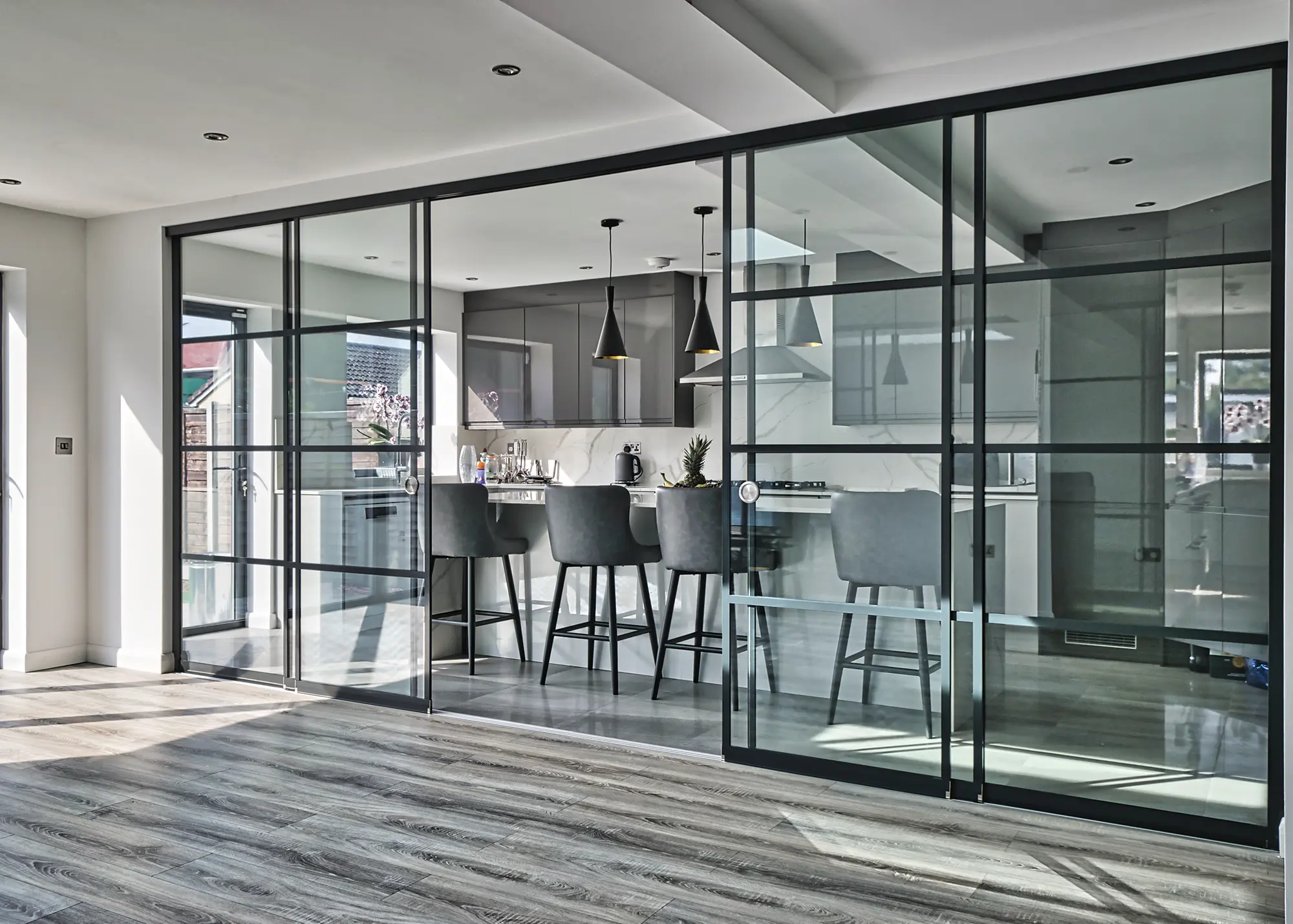
With slim-line black frames and glazing bars, this six-screen centre-opening SF22 glass partition is from IDSystems. Photo: Tradephotographer.com
You have the freedom to create a fully open-plan layout for a light, airy feel or you can close off smaller nook rooms, such as a snug, for a cosy, more private atmosphere.
How is this type of door installed?
Most sliding doors come in a kit form. While this could be installed by an experienced DIYer, a skilled carpenter is the best bet. The kit usually includes the metal framework and jamb kit (the joinery which finishes the rough edges of the door to give the opening a sleek look), although some modern versions don’t require this additional finishing. There are also ready-made options on the market that come with the framework already pre-assembled, for quicker installation.

For the Build It Education House, we choose the Eclisse pocket door system, which can accept standard leaves as well as being certified for use with FD30-rated fire doors
Once the track has been fitted – whether you choose to have this within the wall or exposed – the door panels can then be mounted onto the running gear. Finished floor levels and plaster reveals need to be considered to prevent any potential disruptions that could affect how well the door glides.
When it comes to installing a pocket door, there must be adequate wall depth to accommodate the system’s hidden framework and cavity. “We would always recommend having a wall thickness of at least 125mm when installing a pocket system,” says Simon. For barn-style sliding doors, you must ensure there’s enough space above the opening for the track.
How much do internal sliding doors cost?
Due to the additional framework that goes into creating a sliding door, prices are higher compared to a traditional hinged internal door. The material choice you select will also impact the cost of your system: hollow-core doors are cheap but can feel unsatisfying to use; while glazed units will sit at the top end. Other factors that will increase costs include specifying a bespoke size and finish, rather than an off-the-shelf product, plus opting for double doors or telescopic systems.

This eye-catching design from Hormann is made with a sleek steel frame and features a statement exposed track and rollers for an industrial look. Available in a single or double leaf option, prices start from £4,365
Additional features such as soft close mechanisms or automated smart systems will also add to the finished door costs. That being said, there are a variety of more affordable options available. “As a good starting point, a standard single pocket door can start from £254 + VAT,” says Louise.
How can you maintain an internal sliding door system to maximise its lifespan?
There are some maintenance considerations to take into account to ensure the longevity of the smooth mechanism that makes this style of door so popular. Make sure to keep the tracks clean to avoid any debris or dust build up that can effect the door’s movement. You can also use a lubricant, such as a silicone-based spray, for even smoother gliding.

This telescopic sliding door system from Eclisse allows two doors to disappear into the same pocket, providing a wider passage width
Slamming sliding doors can cause the panels to misalign on the track, so remember to take care when opening and closing the door. Quality, well-kept systems should last decades – but components can be replaced if necessary. Just be aware this may involve some remedial works to floors and walls.
Scarlett Deamer

You may be interested in