

- Plan ItBack
- Design ItBack
- Build ItBack
- Homes
- ProductsBack
- CostsBack
- Self Build Cost Calculator
Estimate your project costs instantly with Build It's interactive self-build cost calculator
Calculate Now - Costs & Finance
- Contracts & Warranties
- Build It Estimating Service
Get an accurate, detailed cost breakdown of your project
Submit plans
- EventsBack






























 Login/register to save Article for later
Kitchen Fit-Out Decisions – The Experts Reveal How to Choose the Best Lighting, Flooring & Finishes

Getting your kitchen fit-out right will ensure a practical, well-designed space that works with you and your lifestyle. But where to start when choosing the right elements? From kitchen worktops to flooring materials, lighting types and appliances – each part of your culinary space needs to work together harmoniously. Here, we’re speaking to the experts about choosing the best kitchen fixtures for your project.
How to choose the right kitchen worktop
Your kitchen worktop will be doing the hard work of hosting all the food prep, and a stained or damaged kitchen work surface could ruin the feel of the whole zone. You need a material that’s moisture and stain resistant, plus capable of withstanding higher temperatures (not that any worktop is recommended for scorching hot pans!).
Timber worktops
Wood kitchen worktops look timeless and elegant, but make sure you’re specifying something that isn’t at risk of staining and water damage around the sink. “It’s all about how it’s finished, protected and sealed. If you have an oiled surface, every time you wipe it over you take a bit of that away, so you have to reapply it every so often,” says Jayne Everett, creative director at Naked Kitchens.
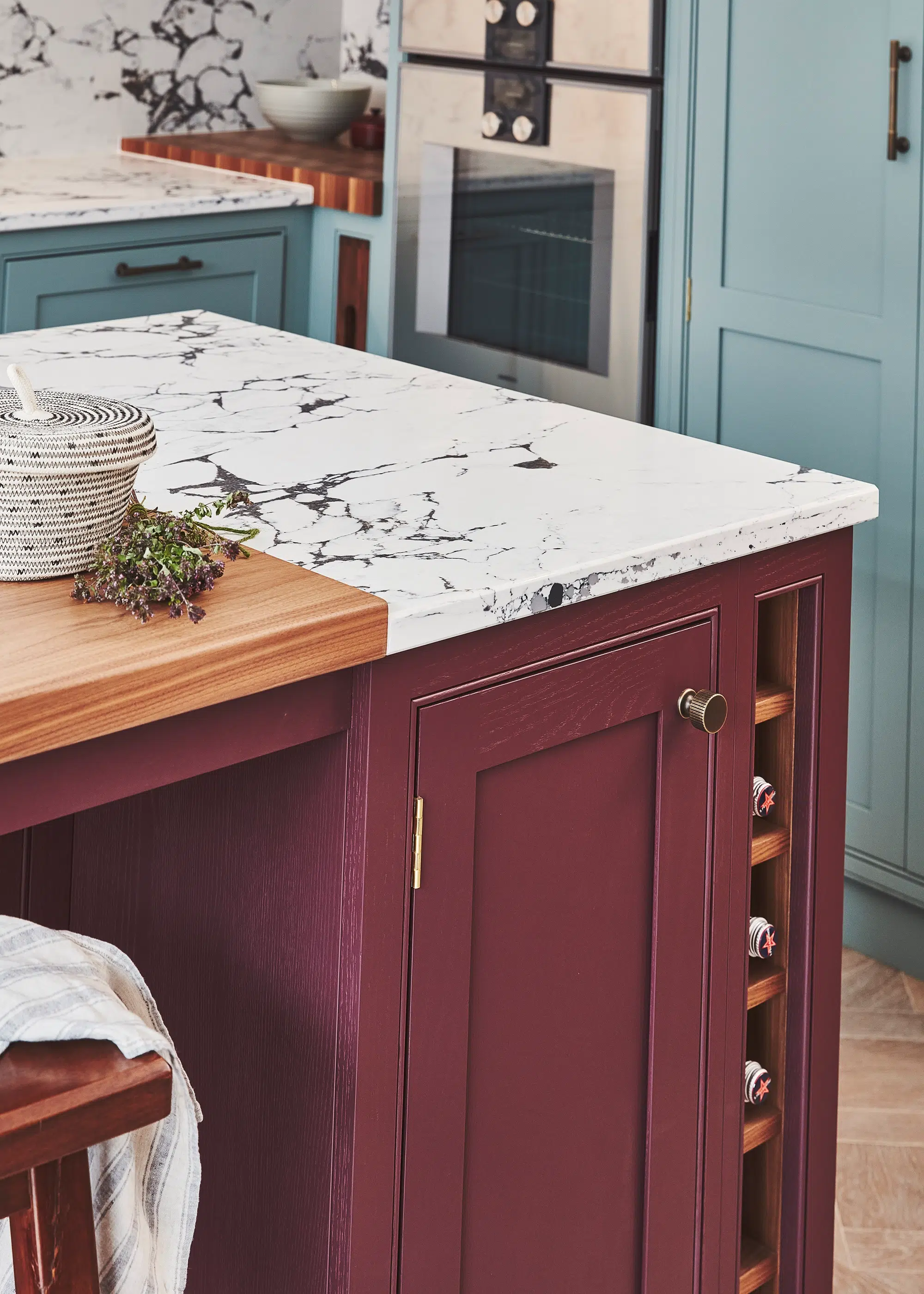
Mix and match worktops to create texture in your kitchen. This design by Naked Kitchens features a pairing of timber and sleek quartz worktops. The use of different coloured cabinetry injects personality and flair
“We use nano treatment that is incredibly tough and repels water – these timber worktops can even be used as a bath surround. Look for a high grade, well produced timber from a diligent manufacturer.”
Quartz worktops
Quartz kitchen worktops have a beautiful, polished look and attractive stone veining throughout, making for a stunning worktop option. Plus, it’s durable and stain resistant. Quartz kitchen worktops have had some bad press due to the potential health risks of prolonged exposure to silica dust during manufacture; an issue that should be carefully managed in the factory with appropriate dust suppression and PPE.
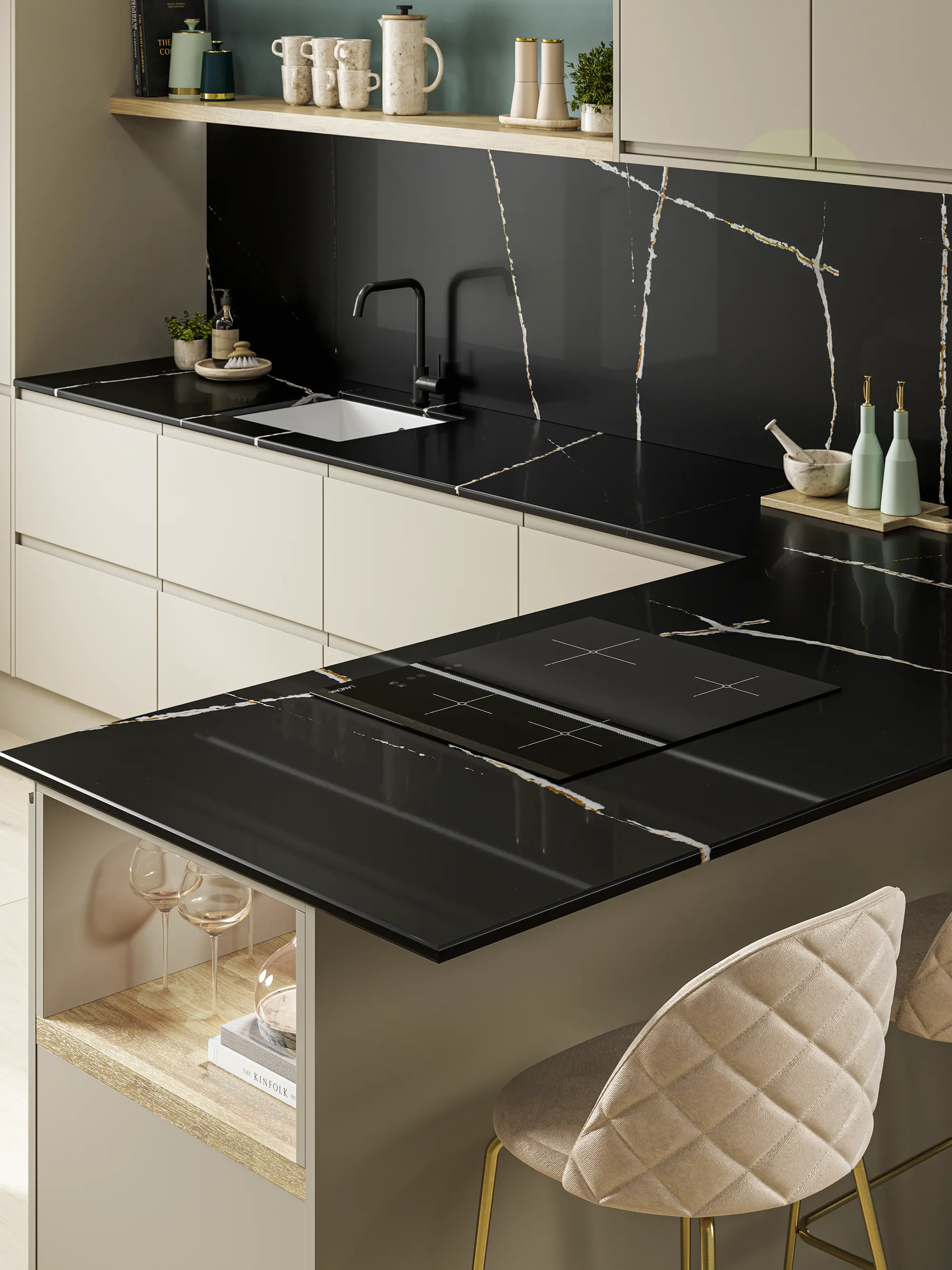
Howdens’ bespoke Silestone Eternal Noir quartz has a polished surface and distinctive, veined look. It’s made to measure and coated with an anti-stain treatment to boost its lifespan
However, once sealed, quartz is considered perfectly safe. Other stone options include marble and granite – both are sought-after, but require regular sealing and must be installed by someone who knows what they’re doing.
Concrete worktops
Concrete kitchen worktops will bring a modern, industrial feel to your culinary space. Concrete is a highly durable, scratch-resistant and can be stained in any colour, however, it’s heavy.
Stainless steel
Stainless steel gives that professional chef look and is easy to keep clean – but any scratches will show.
Mixing & matching surfaces
Mixing and matching kitchen worktop materials is a great way to bring variety, plus it has practical benefits. “Adding a built-in chopping board of end grain timber makes for a great prep area,” says Jayne. “Breaking up your worktops adds personality and texture.”
Which lighting will work best in my kitchen?
Consider natural light when you’re planning your kitchen – many projects have rooflights and large spans of glazed doors to create bright spaces. That being said, this is a working zone that you’ll be using when it’s dark outside, especially in the winter months, so carefully planned artificial illumination and a well-planned lighting scheme is important.
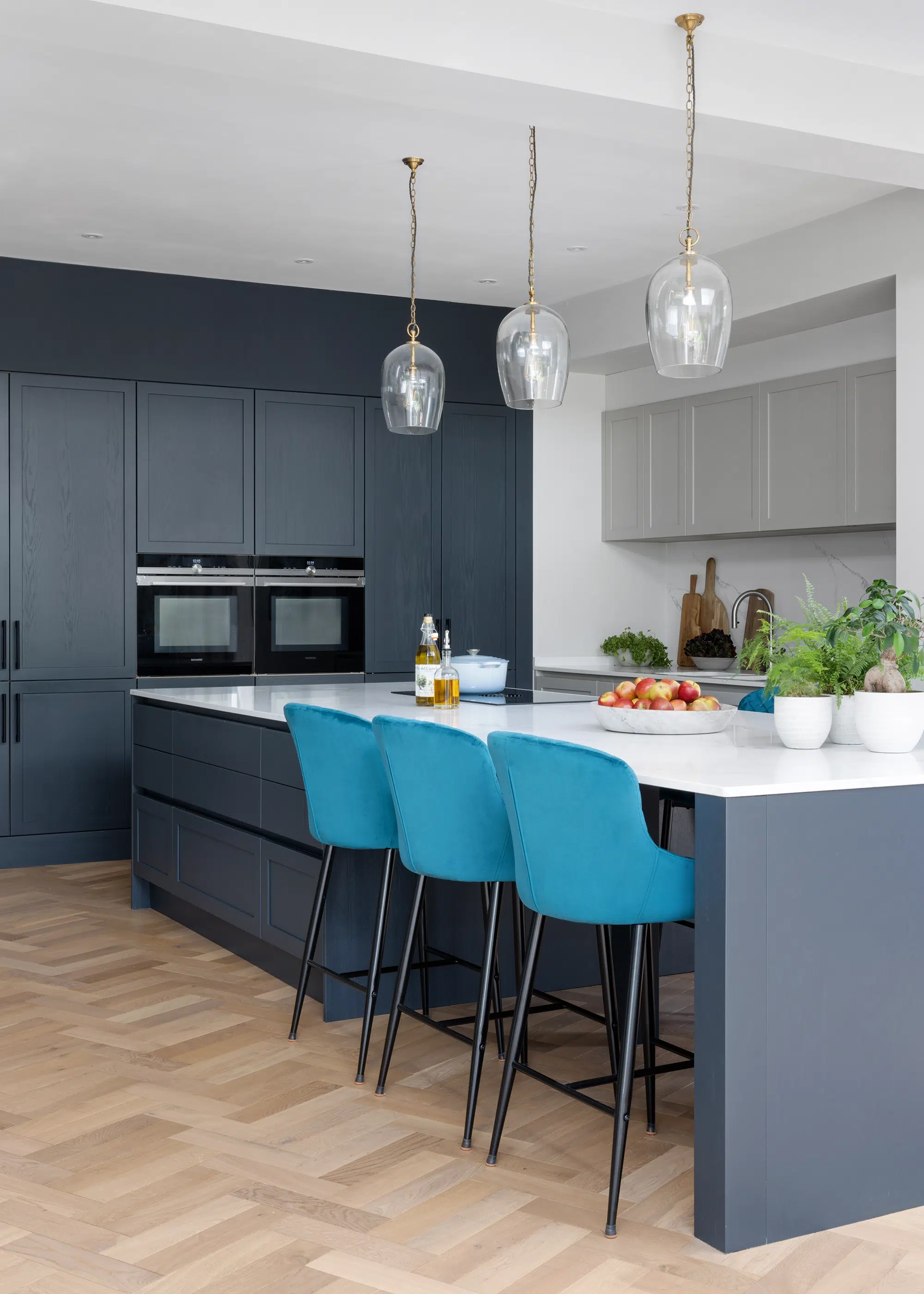
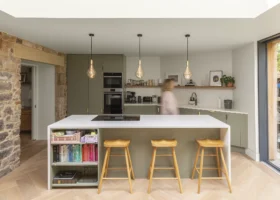
Pendant lights over a kitchen island remain a popular look. This design from PAD Bespoke Kitchens also features a striking herringbone floor
The trick is to layer different lighting products rather than having a single type of lighting do it all. Under-cabinet lights will create a nice glow in the room when you’re not preparing food, while spotlights will focus on areas where you need to see what you’re doing. Pendant lights hanging over a kitchen island are a popular look, often in a row of three. And directional downlights swivel to where you need them.
“Make sure you have plenty of inset ceiling lights to give full-on brightness when needed, but as with all lighting, get dimmers fitted – they make so much difference to atmosphere and function,” says Helen Parker, creative director at DeVol. “Wall lights are a great way of mixing up the feel of a room; they seem to create a softer light and really give character to a kitchen.”
What is a second kitchen (or ‘dirty kitchen’) & do I need one?In floorplans of the past, the kitchen was tucked away separate from the dining room. It was a space you could shut the door on and happily forget about any mess. These days, many people have their kitchens within an open plan living space, meaning there’s nowhere to hide when it comes to messy surfaces, the hum of the fridge and worktop appliance clutter. One solution is to have essentially two kitchens, one that remains sleek and tidy, and the other that is the engine room – a place to hide things you don’t want guests (or even yourself) to see. This second, smaller zone is often called a dirty kitchen. It’s a space to put functional appliances that don’t fit in with your sleek design, such as toasters, microwaves, kettles and suchlike. It’s somewhere you can shove cooking mess that you haven’t had time to sort and dirty dishes while guests are still around to easily keep the entertaining space clear and clean. Of course, a separate utility can also play this role to a certain extent.
A second kitchen that can be closed off from the kitchen entertaining space is a sought-after feature. This design by DeVol includes attractive partially glazed wooden doors This kind of second kitchen is a nice option if you’ve got the space in your home – and budget – but an alternative is to include a large larder/pantry cupboard, sometimes referred to as an ‘appliance garage’ within your kitchen cabinetry. Those with bifold doors are great as they concertina back to display the essentials of a working kitchen, but can be easily closed off to hide the mess from sight. |

How to choose the right flooring for your kitchen
Your kitchen flooring is going to be in constant use and will experience spillages and food splatter. Plus, it needs to withstand the impact of the inevitable dropped glass or crockery. So, from a practical point it needs to be strong and durable. And aesthetically, it’ll play a big role in the look of the space. Tiles and timber remain popular flooring choices for kitchens, especially when laid in a pattern that turns the surface into a focal feature.
Ceramic tiles
Ceramic flooring tiles are easy to clean and come in a wide variety of styles, so there’s something to suit any decor. However, they are cold and hard underfoot, plus slippery when wet. Porcelain is more slip-resistant and denser than ceramic, meaning it’s less likely to crack or chip.
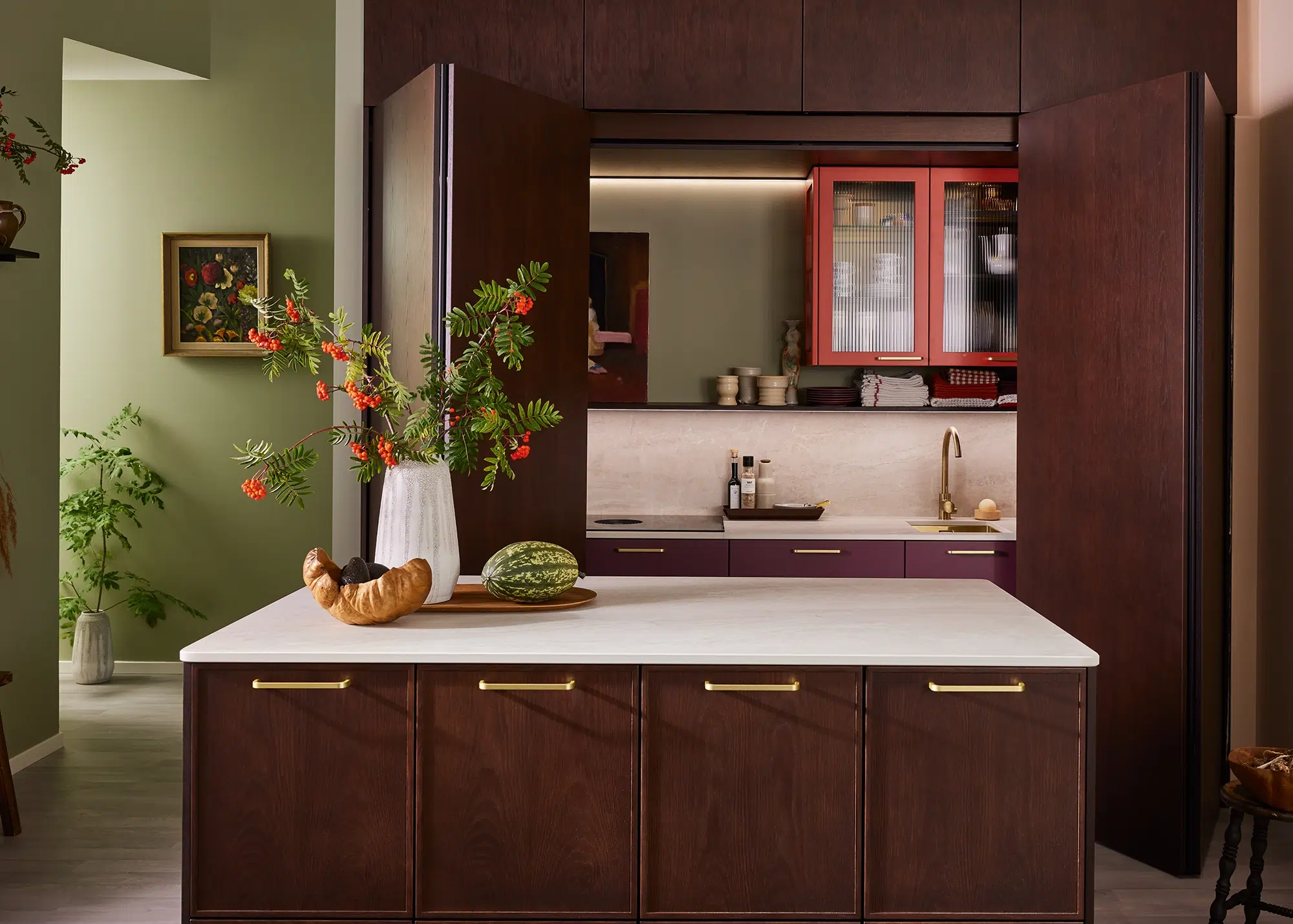
Bifolding doors across the working section of your kitchen are a great solution when it comes to creating a clutter-free space. This scheme is by Sustique
Stone flooring
Marble and limestone are both elegant options, but have high porosity so need sealing and regular maintenance. Terracotta has a rustic charm and adds texture, but likewise, will need periodic sealing to enhance durability.
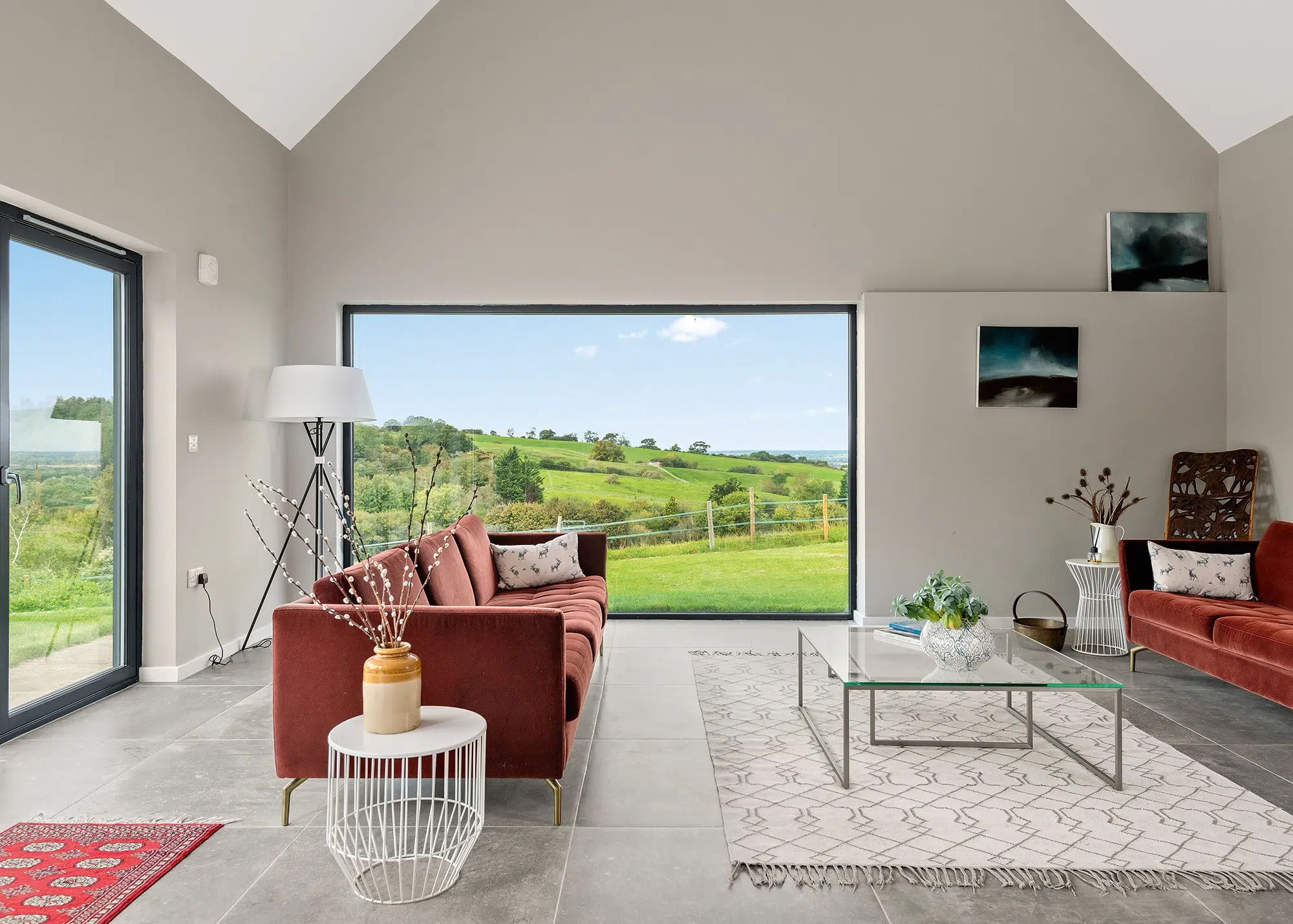
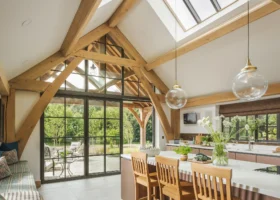
Build It reader Tania Gibson worked with kit house supplier, Heb Homes, to create her dream house in Buckinghamshire. The low-energy, four-bedroom property was built using SIPs and features a light-filled, open-plan kitchen-diner-living area with stone floors from Hard Rock Flooring for a clean, cohesive look throughout
Wood floors
Timber flooring offers character and warmth, plus it’s timeless appeal suits any style of kitchen. Herringbone and chevron oak have had a resurgence in recent years, but Scott Rotchell, sales director at Poggenpohl UK, recommends thinking carefully when it comes to hardwood: “this isn’t necessarily the most practical choice, and so it’s important to consider whether the overall appearance is more important to you.” Engineered timber is a durable and robust solution.
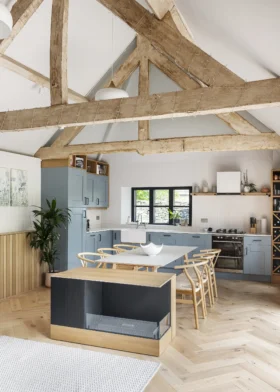
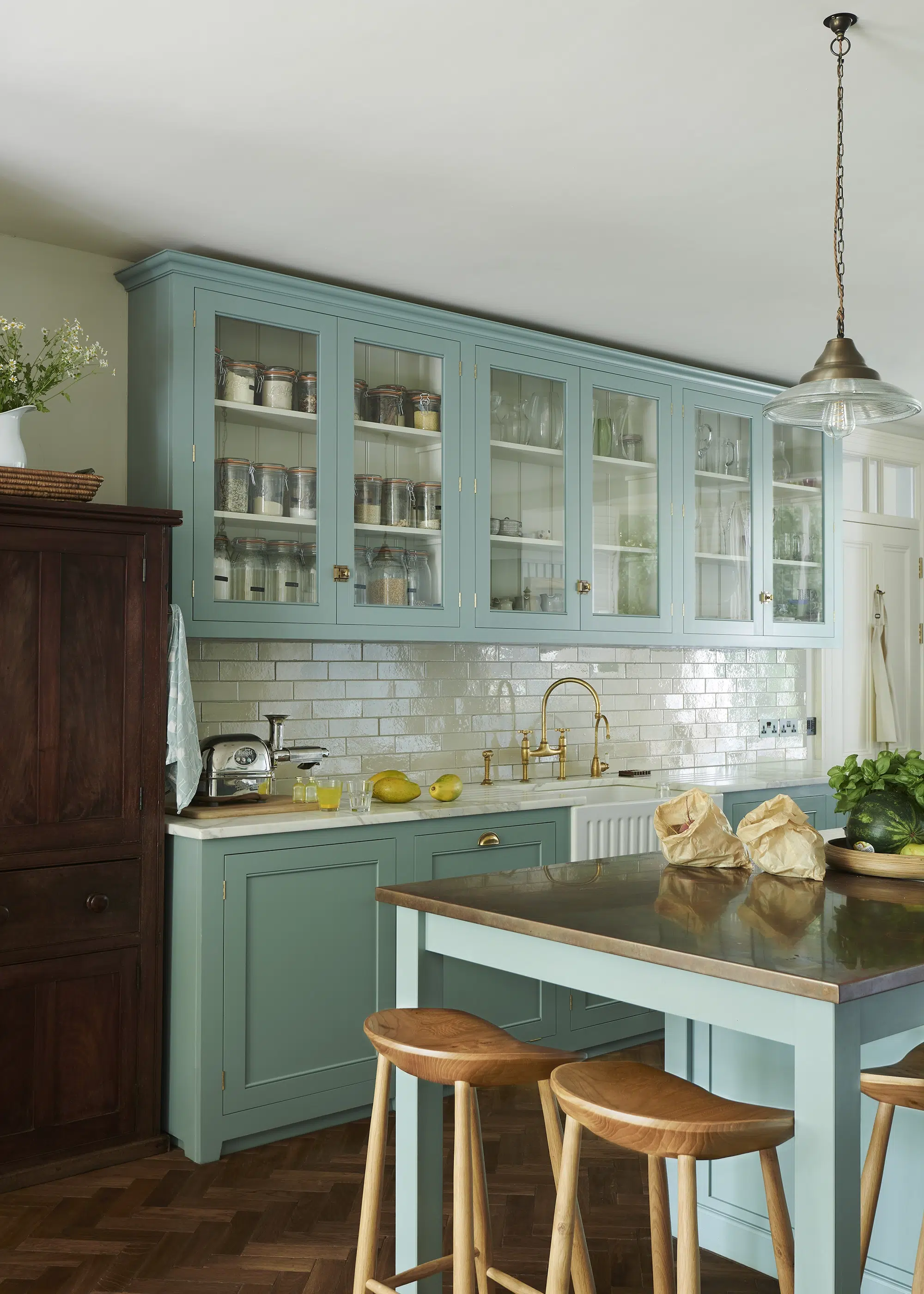
This scheme features a Classic English Kitchen by deVOL, painted in their Trinity Blue shade. Wood flooring laid in a herringbone pattern makes the perfect addition.
Vinyl flooring
LVT is a great choice for high-traffic areas, plus it can provide the look of timber with less maintenance. Made from a synthetic petroleum-based material, this option is water-resistant, making it ideal for bathrooms and kitchens.
Polished concrete flooring
Polished concrete is fantastic in contemporary schemes and is very hardwearing, plus it’s water resistant. This type of flooring stores warmth acquired from the sun that and releases it slowly and steadily over a prolonged period of time, helping to maintain an even internal temperature. Polished concrete can be tinted to suit your particular scheme, too, but most tend to stick to grey.
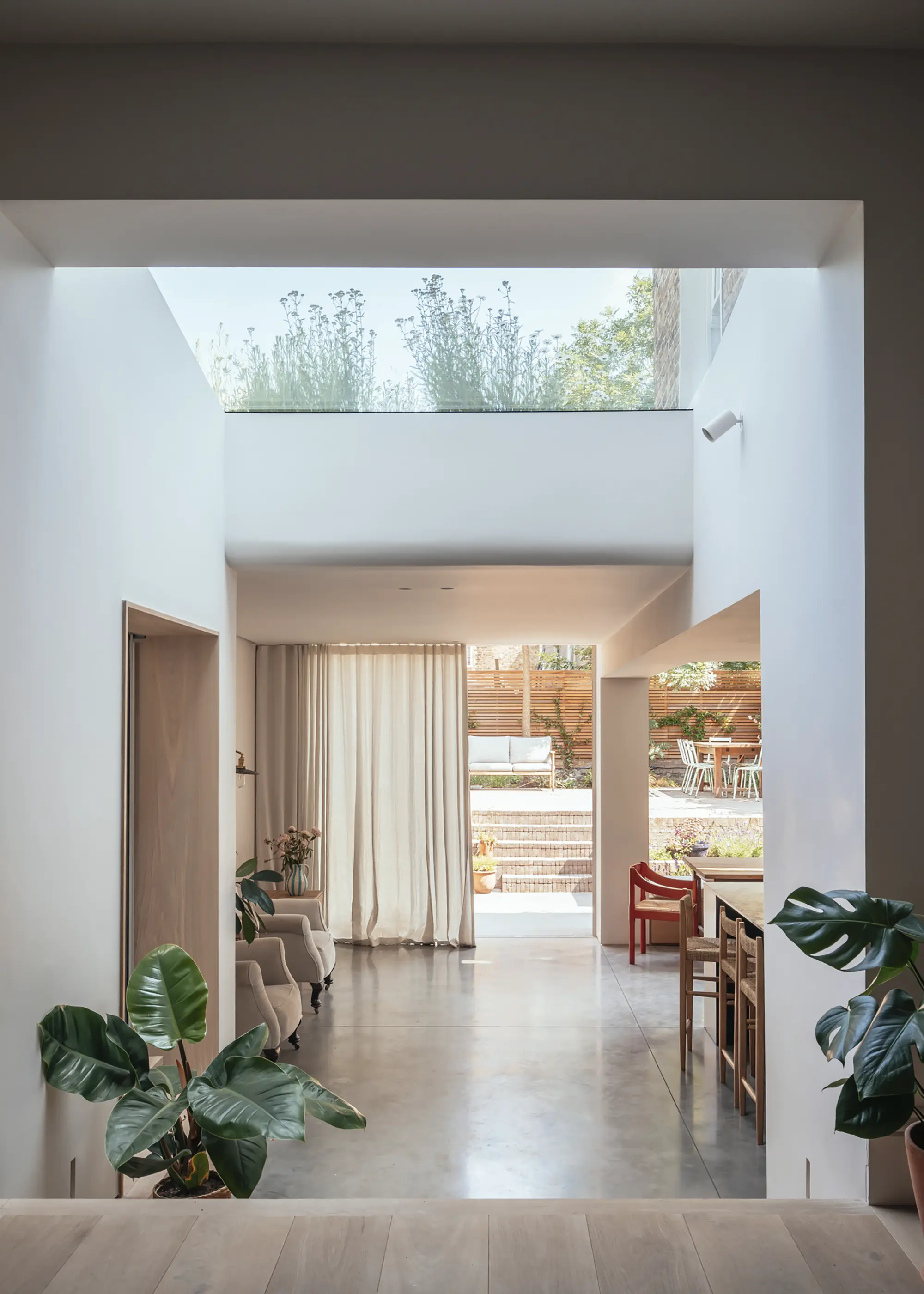
This kitchen extension, designed by Oliver Leech Architects features polished concrete flooring from Steyson Concrete Flooring. It has been carried from the extension out to the patio for a seamless, indoor-outdoor connection. Photo: Jim Stephenson
Most of the flooring types you’ll be considering for a kitchen can work effectively with underfloor heating (a popular choice) – but outputs will need to be carefully designed to suit the floor build up, so do your research.
How to specify the best-quality kitchen appliances
From cookers, hobs and extractor fans through to sinks and fridge-freezers, the appliances in your kitchen need to be efficient and make cooking food enjoyable. Plus, there are a whole host of options in terms of extra gadgets to consider – such as hot water taps, wine storage, pull-out integrated bins and so on.
Choosing the right cooker
A range cooker is a centrepiece and always looks stunning, but needs plenty of space. Positioning built-in ovens at arm-height means you don’t need to keep bending down to check on food – plus this keeps the hot oven door out of reach of young children. Think about what power source you want – induction hobs have good energy efficiency, for instance, while gas hobs (which probably won’t be acceptable in new build homes once the long-awaited Future Homes Standard comes into effect) provide instant control.
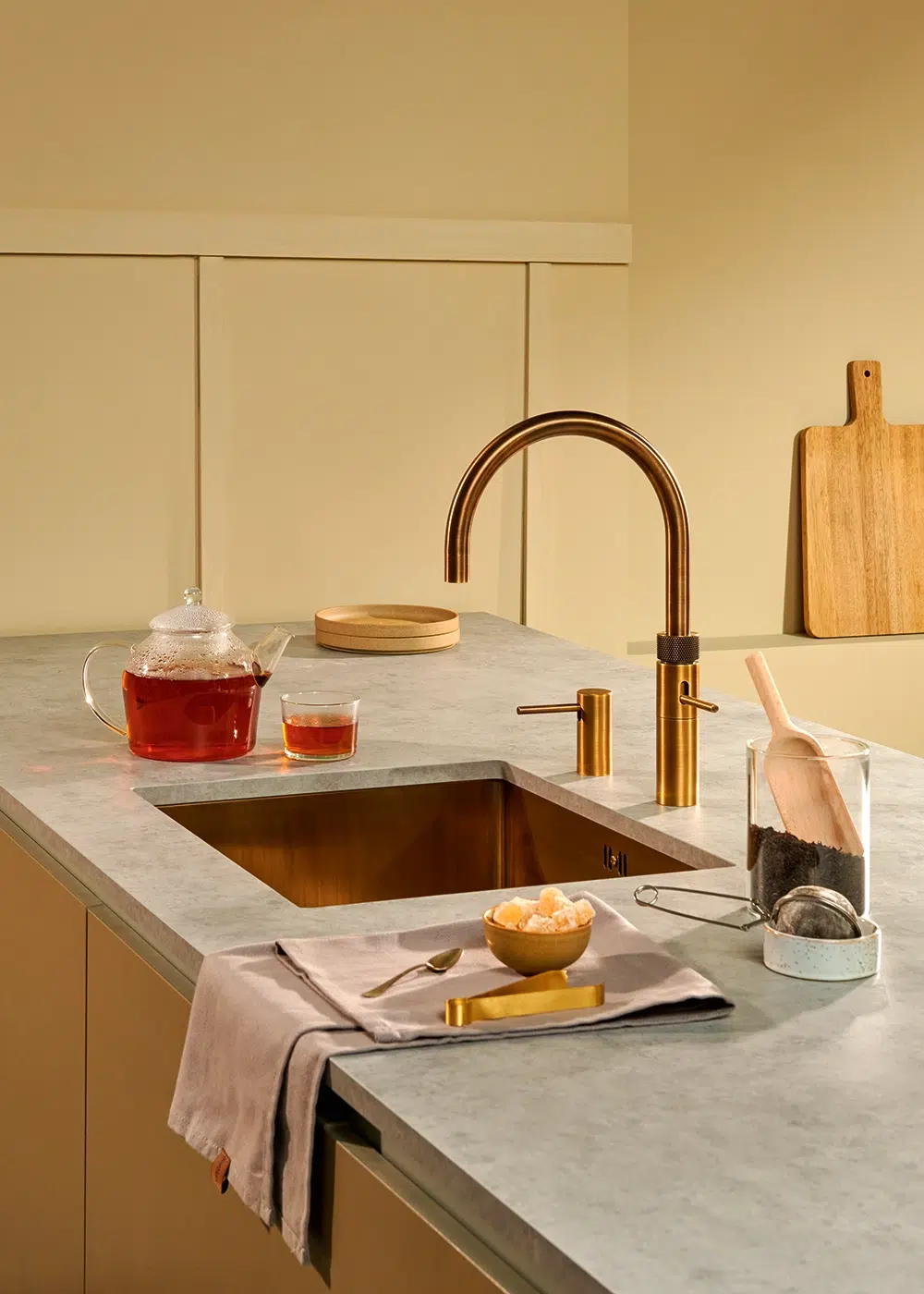
Hot water taps mean you don’t have to wait around to make a tea or get the steamer on. The Fusion and Classic Fusion models from Quooker come in a patinated brass
Extractor fans
The right extractor fan will depend on your kitchen style and hob positioning. A sleek ceiling-mounted hood over an island will bring wow factor, while an integrated version blended into cabinetry is great if you don’t want to make a feature out of it. Downdraft extractors that rise from the worktop are another subtle style, plus they’re the go-to option if you’ve also got an MVHR (mechanical ventilation and heat recovery) system.
Fridges & dishwashers
When it comes to fridge-freezers and dishwashers, decide between freestanding or built-in versions. Do your research on energy efficiency and noise level (Quiet Mark certified products are a good bet) and consider smart features, such as fridge temperature control and energy monitoring.
FAQs
Do I really need a boiling water tap?
An instant hot water tap will save you time, water and energy, if you regularly boil the kettle for cooking etc. “Our taps provide the exact amount of boiling water required and use very little electricity,” says Stephen Johnson, managing director at Quooker. You can opt to invest in models that also provide chilled, filtered or even sparkling water. You’ll also be able to choose a hose and lever that works best for you. “Quooker taps only need a single plug socket, hot and cold water supply, waste supply and a 500mm space below worktop height for the tank,” says Stephen.
When should I bring a kitchen designer on board?
You should look to engage a kitchen designer during the architectural planning stage of your self build or kitchen extension project. This might seem slightly early, but assembling a team of experts in the initial stages will ensure good collaboration and a cohesive approach to the design. An architect can plan a kitchen as part of their drawings, but a kitchen specialist will suggest ways the layout can enhance the property’s features or come up with ideas to change door and window placement to better suit cabinetry configuration.
How tall should my kitchen cabinets be, and how much space should I leave between each run of units?
You should always aim to leave at least 1m of walkway space between runs of units, such as your worktop and island or peninsula counters. For an area where seating is located, consider space for pulling out a chair. Likewise, think about how unit and appliance doors open to avoid blocking a walkway. Kitchen counters and island heights are usually the same in the UK. The standard is 91cm from the floor, but bespoke options can be made to meet specific measurements. Breakfast bars can be the same height as an island or peninsula, or raised for visual interest – 110cm works well.
How much should I budget for a new kitchen in the UK?
A small kitchen at the budget end of the scale might cost as little as £6,000-£7,000 installed. Meanwhile, a bespoke design is likely to run to at least £25,000 – and if you are going for a super luxury scheme, you could easily spend three times that amount (or more). If building a kitchen extension, this will bring its own costs (£2,500-£3,000 per m² of new floorspace is a reasonable ballpark figure for a typical single-storey extension).
How much should you spend on the different elements of a kitchen fit-out?
Many kitchen designers agree the following for a kitchen budget:
- 25% on units
- 10% to worktops
- 15% to appliances
- 5% to sink and tap
- 10% for tiles or wallcoverings
- 15% for flooring
- 10% to lighting and heating.
That leaves 10% for finishing touches, with installation costed separately.
You may be interested in