

- Plan ItBack
- Design ItBack
- Build ItBack
- Homes
- ProductsBack
- CostsBack
- Self Build Cost Calculator
Estimate your project costs instantly with Build It's interactive self-build cost calculator
Calculate Now - Costs & Finance
- Contracts & Warranties
- Build It Estimating Service
Get an accurate, detailed cost breakdown of your project
Submit plans
- EventsBack


















 Login/register to save Article for later
This 18th-Century Doocot has Been Turned into a State-of-the-Art Self Build Home

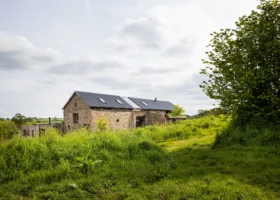
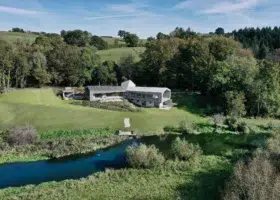
A dilapidated B-listed sandstone Doocot (Dovecot) built in 1750 in rural Angus might seem an unlikely starting point for a contemporary new build home. But the moment homeowner Mike Swankie stood on the site he knew it was the right plot for his forever home. He had been looking to downsize from his house in Arbroath, on the east coast of Scotland, but as he couldn’t really find any houses that suited, he thought he would try his hand at building his own home.
“It was something I had always wanted to do, but was a bit nervous and frightened,” says Mike. “It was all about finding the right plot, which I found by my usual Friday evening look through all the property sites. I had been looking for around two years and had viewed a few plots, but nothing stood out. I didn’t want to build something just for the sake of moving; I wanted to make a mark.”
When Mike viewed the Doocot plot at the end of Autumn in 2022, he was very excited. “The picture looked stunning and within 30 seconds, I knew I had found my site,” he says. “The Doocot looked very tired, but I had formed a picture of what it could look like.”
Designing with the Doocot
When the purchase was secured, Mike approached local designers Voigt Architects, after a floating glass and timber staircase that they had designed as part of a contemporary woodland house in the area, caught his eye on Facebook. This formed the main design inspiration for Mike’s overall idea for the property. The brief was for a house that would make full use of the stunning views, overlooking the Tay Estuary and surrounding Angus countryside.

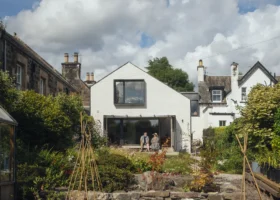
The original stone Doocot forms a central part of the new house. There are a large number of these structures all over Scotland and they are seen as a historically important part of the rural landscape
The site itself is raised slightly from the nearby houses and steadings to reveal views of the sea. The Doocot sits proud right in the middle of the land. The building is also category B listed (2nd highest category) meaning it had regional importance and that Historic Scotland would be required to be contacted as a Statutory Consultee during the planning process. “We had worked with a number of ruins/buildings across Scotland and find that most planning departments are very receptive and encouraging to reuse existing buildings,” says Project Architect Jonathan Reeve of Voigt Architects.
- NAMEMike Swankie
- OCCUPATIONDecommissioning/ intervention superintendent in the oil and gas industry
- LOCATIONAngus
- TYPE OF PROJECTSelf build & conversion
- CONSTRUCTION METHODTimber frame
- PROJECT ROUTE Commissioned architect & builder
- LAND COST£115,000
- BOUGHTOctober 2022
- HOUSE SIZE245m2
- PROJECT COST£593,605
- PROJECT COST PER M2£2,423
- TOTAL COST£708,605
- VAT RECLAIM£108,000
- BUILDING WORK COMMENCED June 2024
- BUILDING WORK TOOK12 months
- CURRENT VALUE£715,000
“Angus Council have a specific Planning Policy for the creation of houses in the countryside, that they will support the creation of a new house via the ‘Conversion of a Non-residential Building’ that is redundant and no longer required. This allows the construction of a house whilst facilitating the restoration of the existing listed building in the countryside, on a site that would normally never be allowed to permit a house. This is due exclusively to the fact you are incorporating the restoration of the existing building.”

The main gable of the double-height open-plan living area faces West over the countryside. The patio area has been built here to enjoy the evening sun
The Doocot itself has a very small footprint of approximately 16m², meaning that realistically the structure could only be used to form a single room. “We explored constructing a new house around it. At a very early stage Mike was keen for the Doocot to be his office and the key issue was how to design a building around the existing historic bit,” says Jonathan. “In developing the initial design we were very aware that the new build element had to sit comfortably with the existing structure, both visually and from a planning perspective – where we knew they would insist that the new structure would not visually dominate.”

The original elements have been sensitively combined with the new structure
Several different options had been discussed with Mike. The emerging preference was for a wraparound design, that would not only respect the existing building in form, but in scale and detail. The final plan that was approved by the local council was for a 1.5-storey L-shaped house, with a combed roof at upper levels. This meant the new build roof ridge sat below the highest point of the Doocot, allowing the exiting building to be the highest and most important part of the build.
The design separates the new house from the Doocot via a new single-storey circulation strip that wraps around the existing building. This allows the new house to connect lightly to the Doocot with glass at each side that exposes the restored stone walls internally. “Jonathan knew exactly what I wanted,” says Mike. “I had the idea in my head and he put it on paper very quickly. We had a few tweaks, but nothing changed from the initial design.”
CLOSER LOOK Getting planning permission for the unique projectVoigt Architects had experience working on historic buildings, so were very aware of what specific elements would be required in the planning submission. They provided a full detailed survey of building/site and bat survey along with comprehensive drawings and 3D visuals. The planning process was pretty straightforward, but did take five months rather than the statutory two-month target. However, given the B Listing and requirement to consult Historic Scotland, this was understandable.
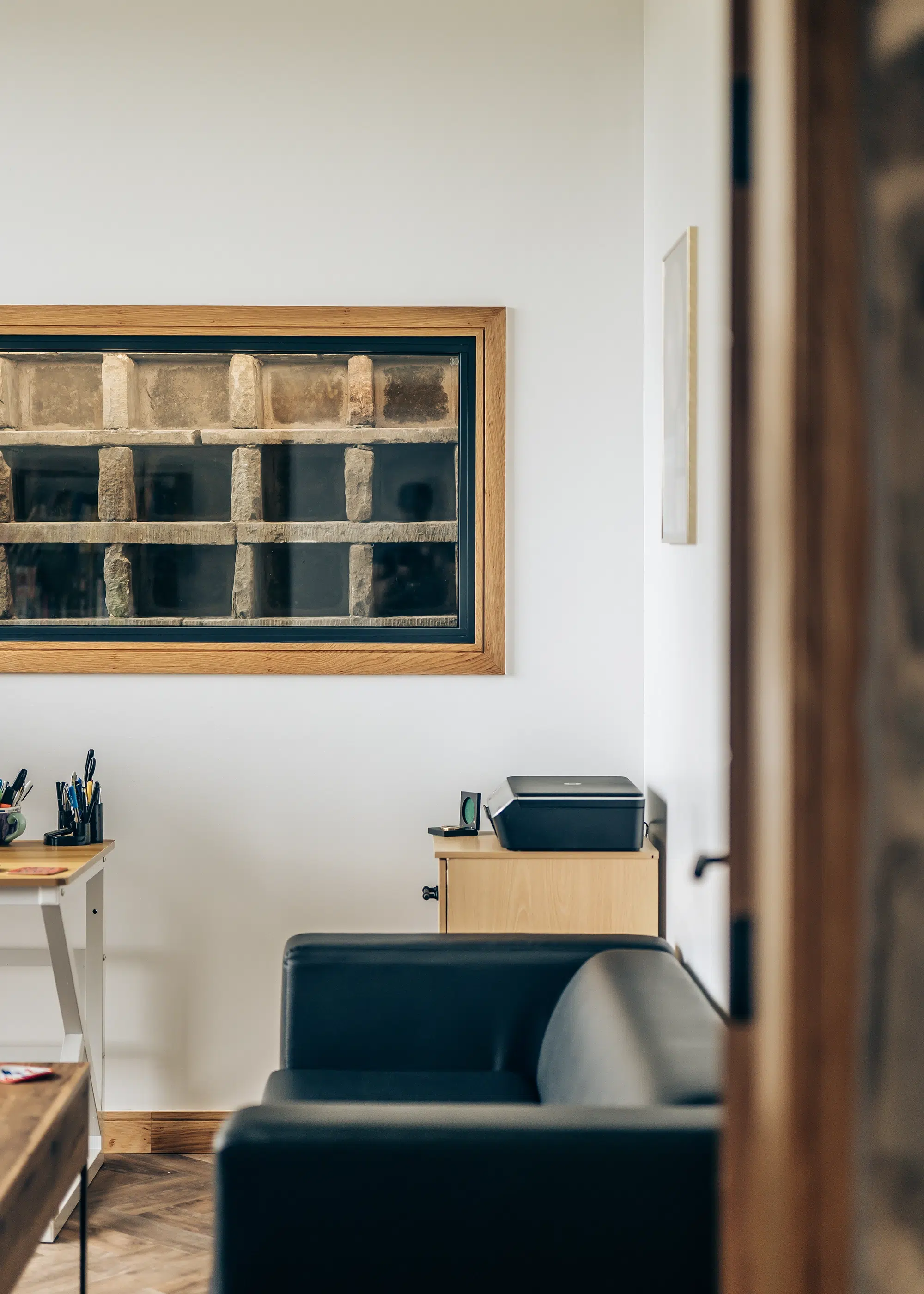
In Scotland, the additional statutory consent required is a building warrant covering all the technical and detailed construction aspects to meet the Scottish Building regulations. One of the main conflicts here was building control wanted the Doocot to be insulated inside to create a habitable/comfortable interior, but planning had a desire for the stone pigeon nesting boxes to be fully exposed. The compromise was for the majority of the space to be insulated, but a section of the wall be glazed to include an illuminated feature display window, showing the historic nesting boxes. The Building Warrant process took another six months – double their usual target determination of three months. |
Wraparound self build
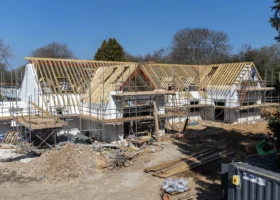
The build went on site in June 2024. The main contractor, West Development, employed a project manager for the full build. Although Mike, who rented a property nearby during the build, left the professionals to do it, he took on the decorating himself.
“The team was great to work with from the start to the end, helping when there were materials to be finalised, sometimes guiding me in the right direction when I went a little bit off piste,” says Mike. “I did the decorating, from the mist coat to the wood protection. I think there was a bit of trepidation from the contractors as they were working to a timeline, but I worked every evening and weekend, including boxing day at 6am. Always with my Newfoundland dog, Sully, by my side. If I had to do it all again, I would want this team on my journey – they were fantastic.”

The build features a mix of natural stone, white render and standing seam (aluminium) cladding
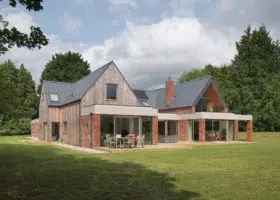
What materialised around the Doocot a year later in June 2025 was a new 1.5-storey timber frame building, constructed of three main materials: natural stone, white render and standing seam metal (aluminium) cladding to the walls and roof.
The ground floor is completed in white render and the upper level features a standing seam metal wrapping up to form the walls and roof. This forms a visual separation for the two levels, with the new standing seam element offering a strong contrast to the existing listed building. The listed Doocot was carefully restored into a new office space with a small opening created from the main hall. The stone walls and slate roof have been repaired. A main feature is the retention and display of the Doocot pigeon stalls via an illuminated feature wall.

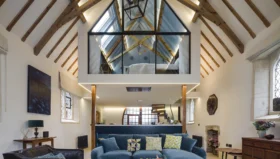
The glazed gable ends help to create a bright, light-filled interior
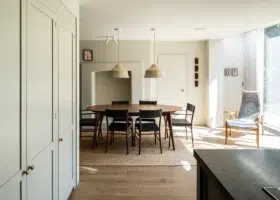
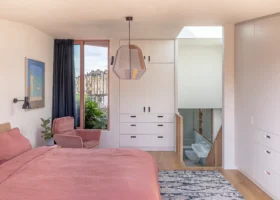
The ground floor features a large open-plan area, with a double-height living space to allow a large, glazed feature window to the west opening out onto the patio area. Another key feature is the beautiful, open tread stairwell with glass balustrades, which leads up to the upper level’s three bedrooms, including a large master suite with a vaulted ceiling and an all-weather covered balcony to enjoy beautiful south views across the Angus countryside and to the Tay.
Creating a unique home
Light and views were key considerations. Carefully placed windows and glazing allow views through the house to the landscape from the main entrance. One of the bedrooms has been stepped back to allow a small viewing area visually connecting the living room with the upper floor, plus a through-view from the stair to the west.


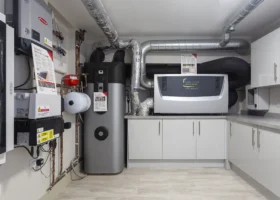
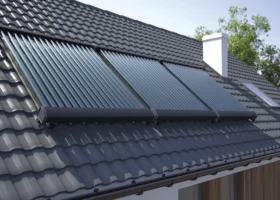
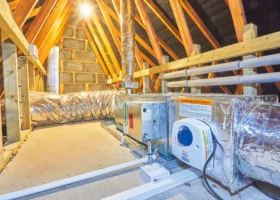
The careful placement of the triple-glazed windows and rooflights optimises solar gain. In terms of additional efficiency measures, the property features high levels of insulation, an air source heat pump powering the underfloor heating, and rooftop PV panels and battery storage to bank surplus energy when needed.
“One of my favourite aspects of the new house, which costs around £80 a month to run, is the heating system. You wouldn’t know it’s on as there is no noise, just a cosy feeling,” says Mike. “I can still remember how run-down the Doocot was on my first visit. Seeing what it has become is amazing.”
WE LEARNED…
- Find the right architect and from there the process will fall into place. Mine was instrumental in appointing the main building contractor. Also listen to advice from your building contractor – this is what they do day in, day out, so they know what they’re talking about.
- Waiting on planning consent was frustrating. But don’t fight the planners – try to work with them and listen to their reasoning. They know what works and what will look right and are only doing what is best for the building.
- If you’re working full time, don’t underestimate taking on parts of the project yourself. It consumed my life for nine months.
- My initial mortgage provider valued the plans for the house and severely undervalued the finished project, so at the 11th hour we had to find an alternative lender and fast track the process, which we did. I can’t thank the lender enough for the help they provided throughout the stressful process.
Caroline Ednie
You may be interested in