Claim your two free tickets now!
21st-22nd February 2026 - time to get your dream home started!
BOOK HERE21st-22nd February 2026 - time to get your dream home started!
BOOK HEREEstimate your project costs instantly with Build It's interactive self-build cost calculator
Calculate NowGet an accurate, detailed cost breakdown of your project
Submit plans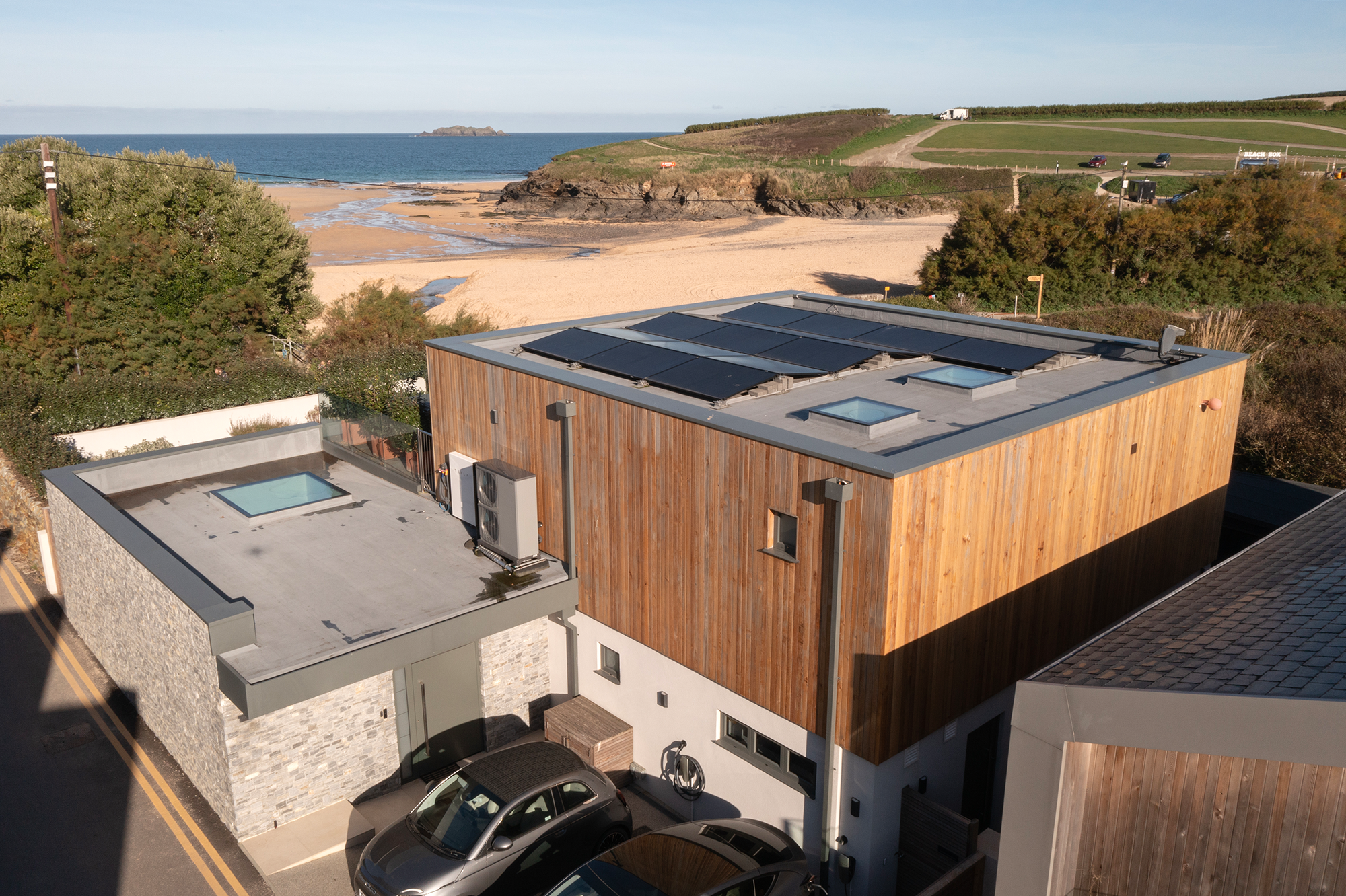

The sea has played a leading role in Adrian Evans’ life. A keen sailor, he lived in Brighton for many years, until an opportunity to create a new home from scratch just metres from the sea in Cornwall came along. Famous for surfing, messing about in boats and family holidays, this stretch of coast is a popular destination.
“I’ve always wanted to self build and few plots in the country are this close to the beach,” says Adrian. “We just wanted to make the best of it.” And the result certainly does just that – a stunning four-bedroom contemporary eco home with a terrace and balcony that enjoys outstanding, uninterrupted views across a perfect sandy beach.
Adrian’s family spent time in this location after his mother bought a bungalow overlooking the beach in the 1980s for £115,000 – a price tag that, 36 years ago, demonstrates the popularity of this spot.
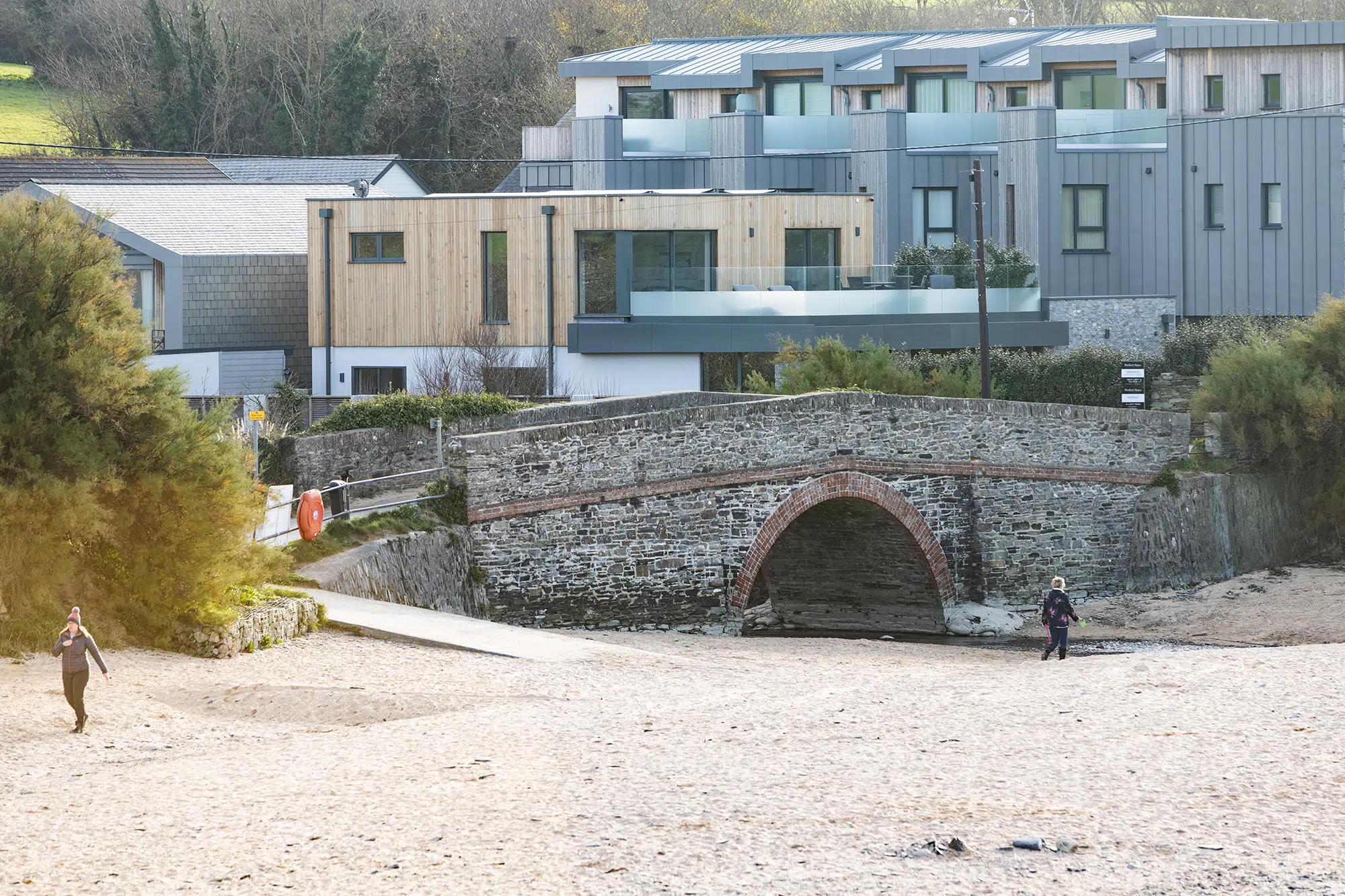
The location of this plot right next to the sea in north Cornwall was a huge point draw for Adrian.
Yet, by 2018, the bungalow had been sat empty for several years. Rather than sell up, Adrian bought out other members of his family with the aim of self building in its place to enable a move to the county. “You don’t often get the opportunity to build on a prime plot 10m from a beach,” he says.
With a stepdaughter studying architecture and his partner Erika, an experienced self builder, by his side, Adrian had access to plenty of knowledge. So, when the height and material restrictions for new homes in this area of outstanding natural beauty (now known as a National Landscape) came into play, it didn’t phase Adrian, who was happy to agree on a planning application for a property with a pitched roof.
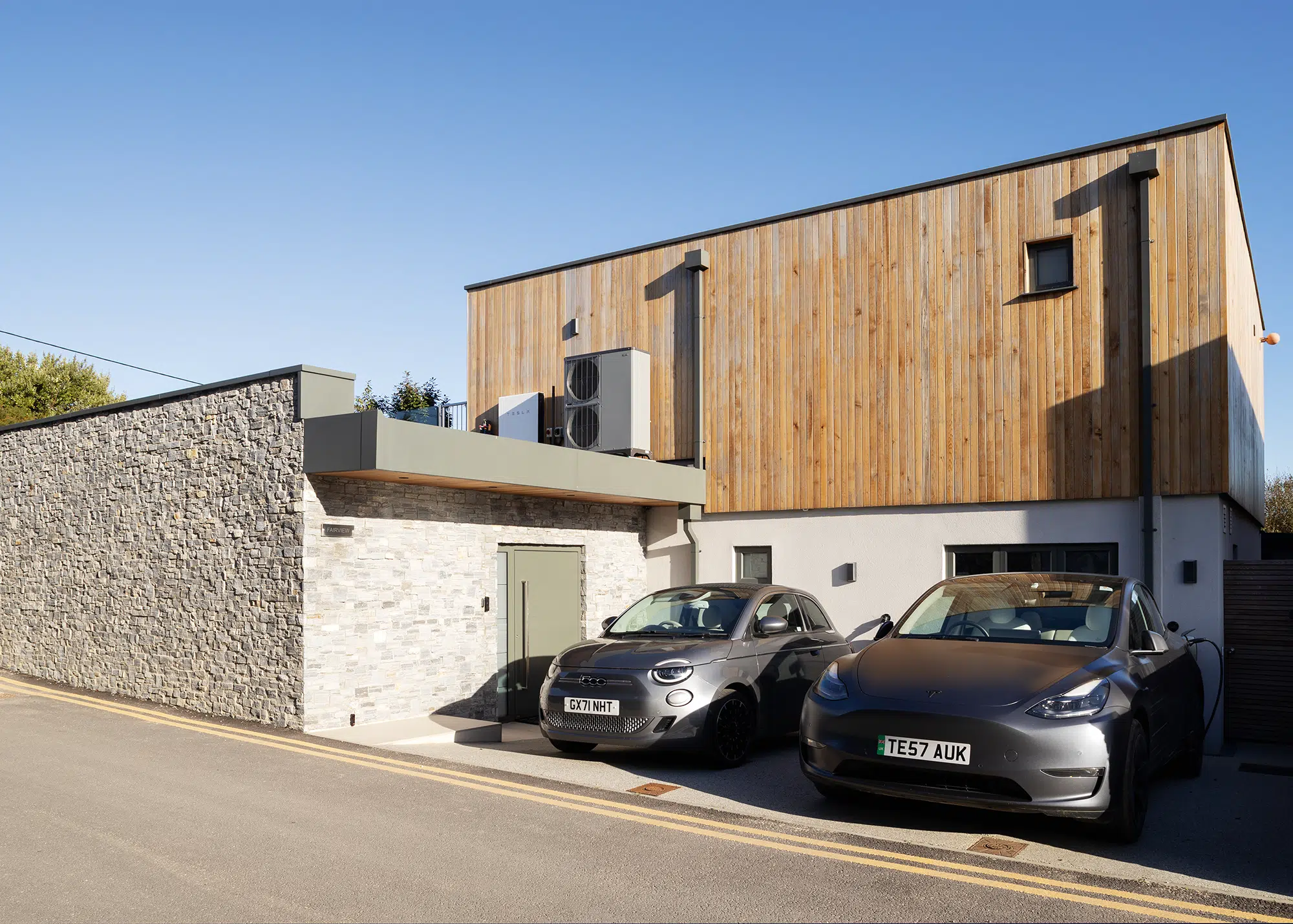
The ICF construction is a robust answer to the extreme location on the Cornish coast.
In the meantime, a neighbouring pub complex also gained planning permission for a redevelopment that included flats and shops in a contemporary design that pushed past height restrictions. With this as precedent, Adrian went back to the drawing board. Working with local practice CFD Architects, he successfully submitted another application, this time for a taller, flat-roofed home that was more in tune with his and Erika’s design preferences. “We wanted a contemporary, square, minimalist design,” he says.
Adrian was hoping for a large, modern living area and a low-maintenance home. Getting the outside space right was also important. Instead of a traditional lawn, he’s got a landscaped garden with terracing, a barbeque area and plenty of outdoor seating. He’s also squeezed in a patch of practical grass, a large shed and a workshop. “We also have a large balcony upstairs with a beach view, so don’t feel we’re missing anything,” says Adrian.
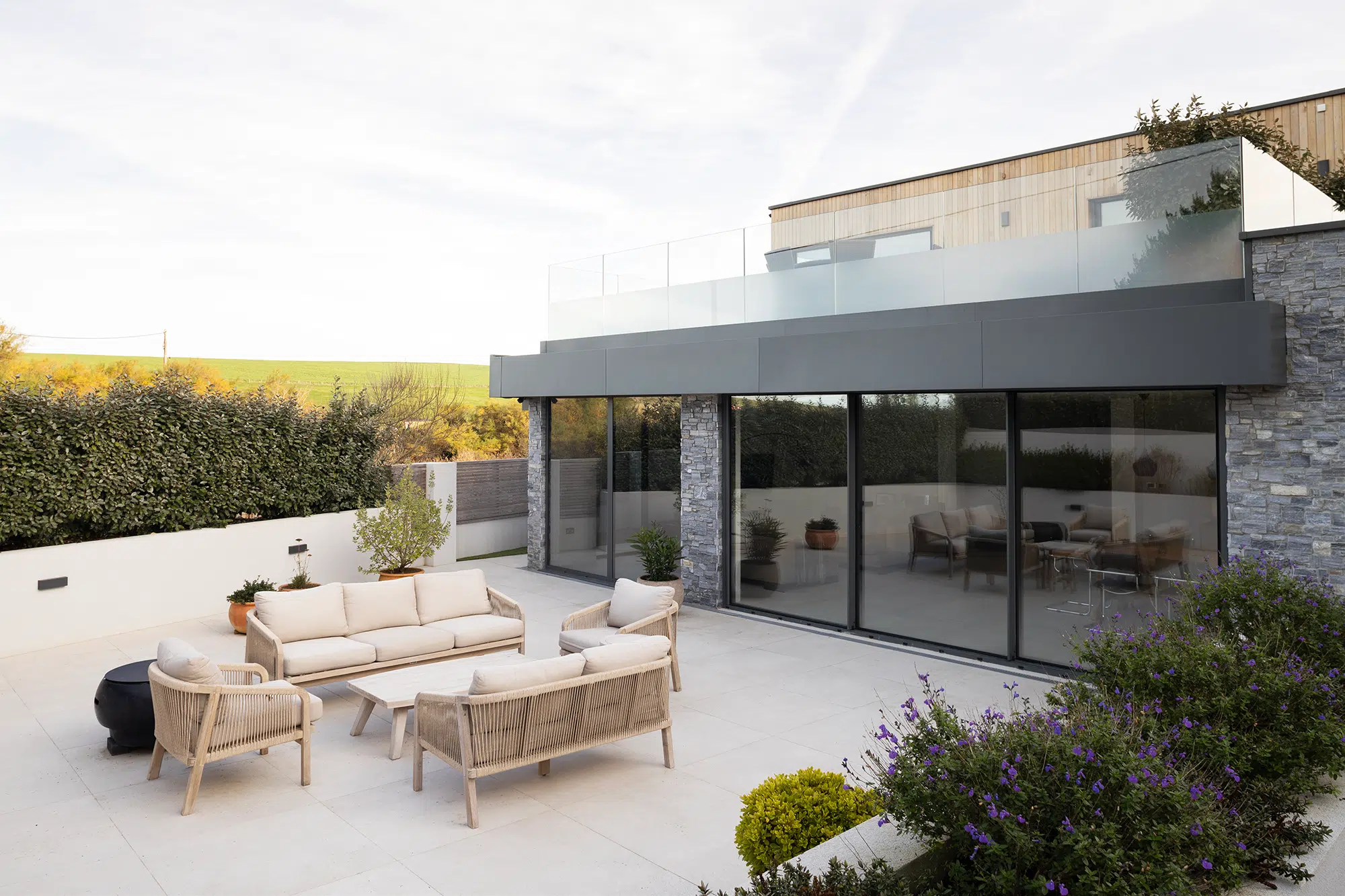
All the glazing is 25mm thin frame aluminium from Origin, capable of withstanding the high winds of a coastal location
The design is focused away from the development next door. As there are no windows on that side of the building, every view brings that extraordinary coastline right into their home. While some self builders would have been tempted to reverse the levels and put the living spaces on the first floor to maximise those views, Adrian resisted. “It’s due to privacy,” he explains. “The plot is next to a beach road and public footpath, so we if we were spending all our time upstairs, we’d always be on show.”
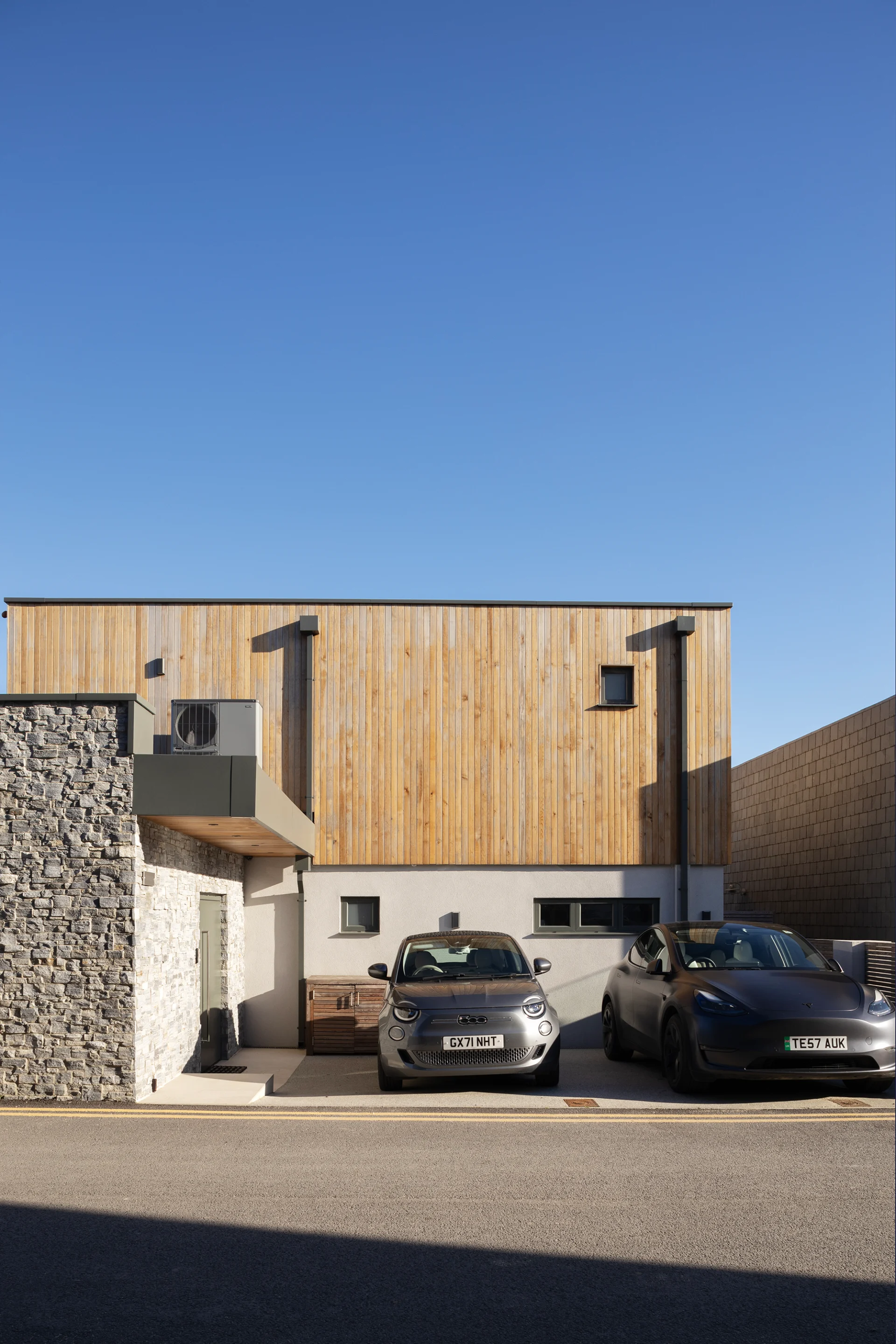
Once the final application gained permission, building work didn’t start for a year. Their neighbour had also decided to rebuild her home, so they agreed to demolish both bungalows together, saving money and reducing the inconvenience. The couple’s neighbour built her new home first. “Her builder, Bazeley Construction, did a good job,” says Adrian, who managed all the budgets himself. He wanted a quality local builder rather than a property developer and, after interviewing several firms, felt his neighbour’s builder was exactly what he was looking for. Adrian ensured there were no surprises in the costings either, agreeing on a detailed specification and RIBA-built contract at the start. This included non-standard approaches, such as shadow gaps rather than architraves, which are a popular choice in pared-back contemporary designs.
With their builder responsible for sub-contractors, Adrian and Erika remained in Brighton during the year-long build, visiting the site every month. They also benefited from a build management package with their designers, CFD Architects, which ensured professional oversight of the project. “Paying for a building manager was the best thing we did, and really helped to keep things on track,” says Adrian.
The groundworks presented a challenge. With granular material such as the sand on this plot, strip or pile solutions would mean having to go with extra deep foundations, pushing up the costs. Opting for a raft foundation instead mitigated the need for these and expensive piling. This solution effectively floats on the ground, just like a raft would on water.
CLOSER LOOK Building an Eco Home With ICFArchitect Andy Lolley designed Adrian and Erika’s home to be constructed using ICF (insulated concrete formwork). This is a solid system that requires two walls of insulating blocks (usually polystyrene or Woodcrete) stacked and interlocked without mortar. Concrete is then poured into the central cavity between the two layers, which creates a strong airtight and highly insulated home.
Whilst Adrian’s home isn’t a certified Passivhaus, it works to this eco standard’s principles. For instance, there is reduced thermal bridging in the structure and an airtight envelope. In this project, as is often the case with ICF, the as-built airtightness test exceeded what the design set out to achieve. Another advantage is the build speed of this construction method, which can continue even in winter weather. This construction method is also incredibly robust, with high waterproofing potential – a key design principle with a house close to the coast. |
His architect specified this ICF (insulated concrete formwork) system as a response to the coastal location and the excellent energy rating it can achieve. “We have a 98/100 rating for efficiency, which is A*,” says Adrian.
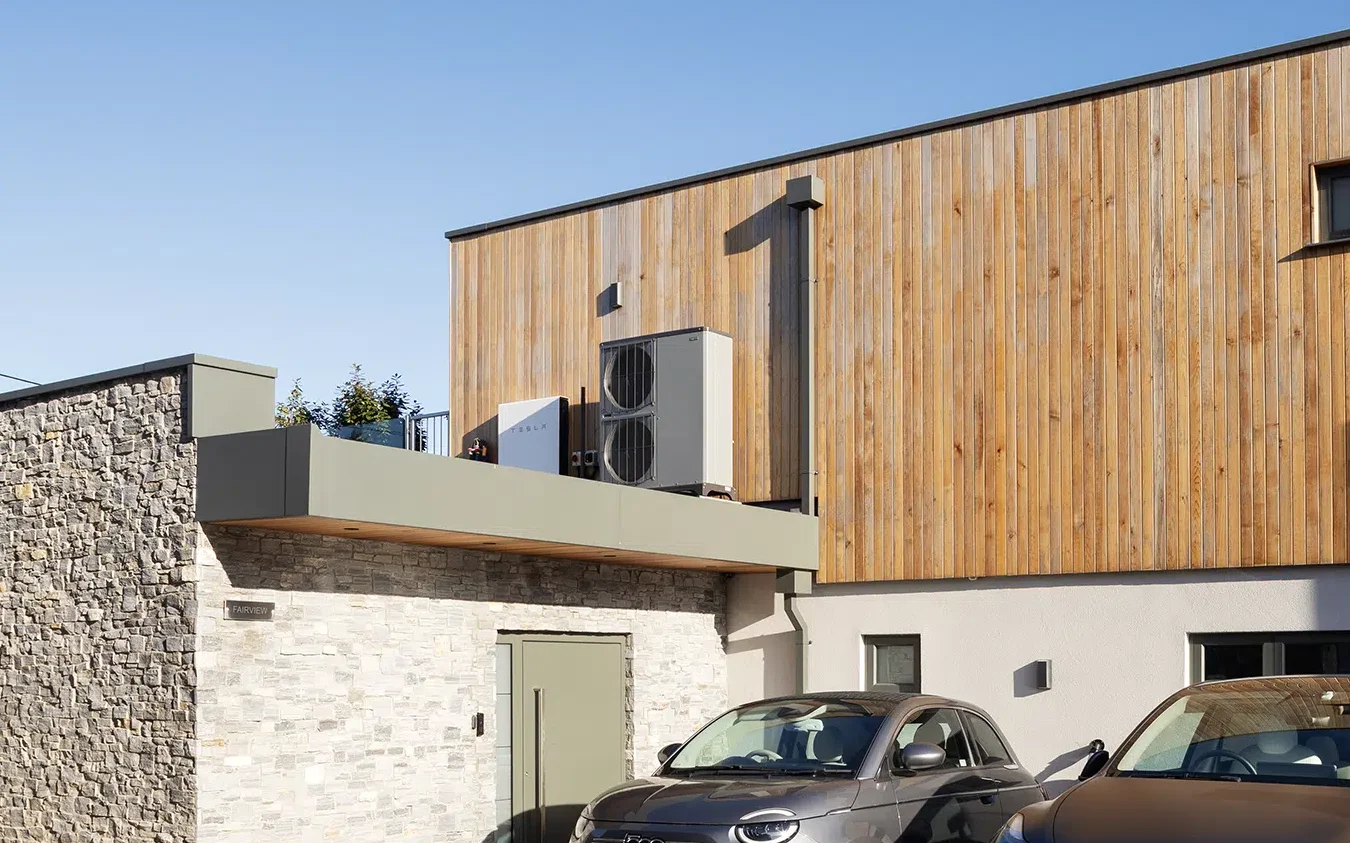
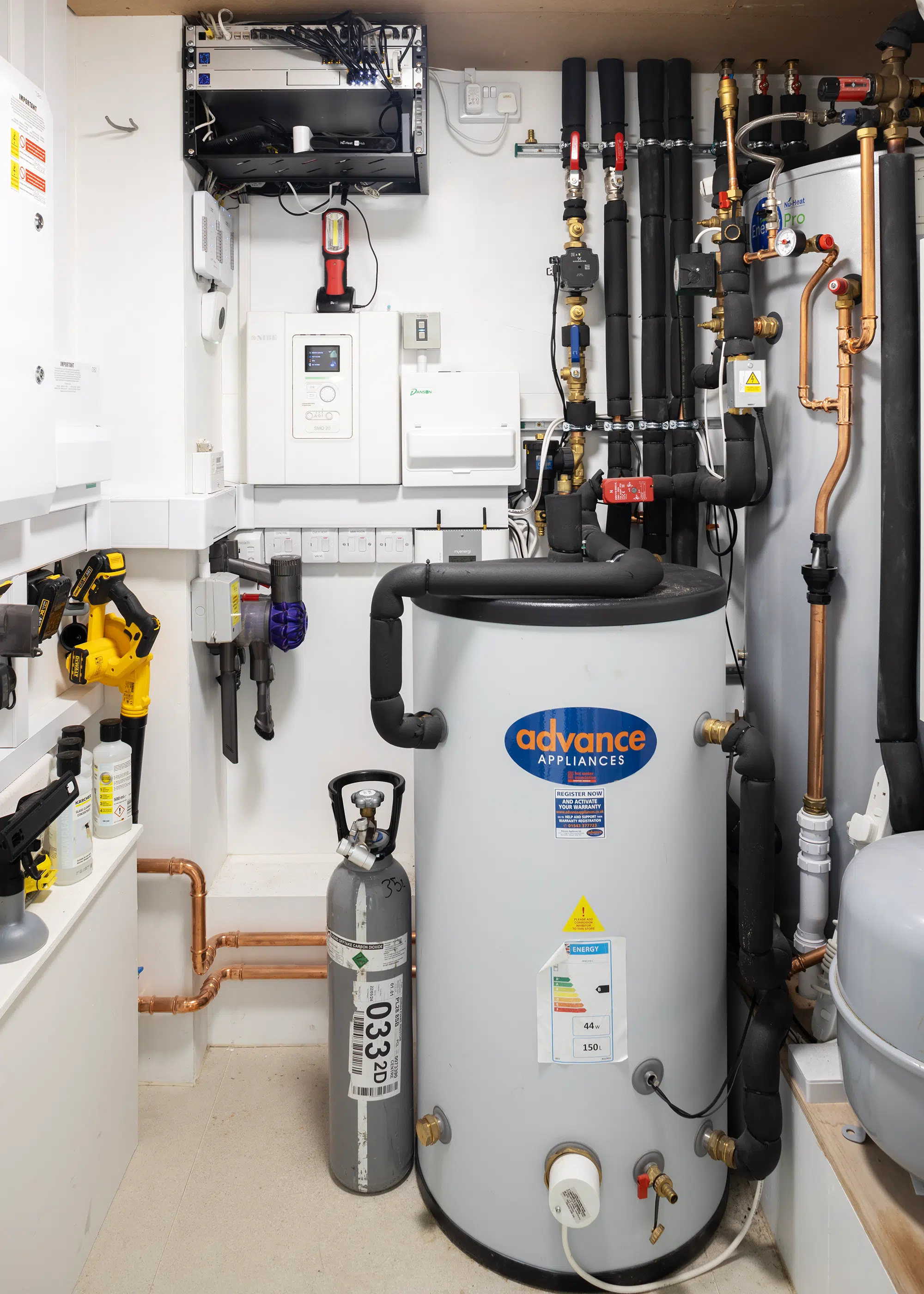
Energy efficiency was important to Adrian, who prioritised a sustainable heating setup powered by renewables. This requires a suite of the latest technology. The property’s flat roof boasts 20kW of solar PV panels, facing east and west. These feed into a Tesla PowerWall battery and the two EV chargers. “We would love to have more battery storage,” says Adrian, as energy bills are still around £150 a month on average, dropping to £60 per month in the summer.
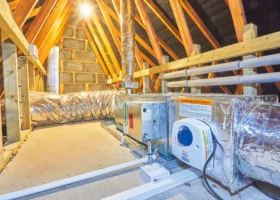
The highly-insulated home is warmed by underfloor heating that’s fed by an air source heat pump on the flat roof. To keep the interiors fresh, a mechanical ventilation with heat recovery (MVHR) system circulates fresh air and expels the stale air without losing heat.
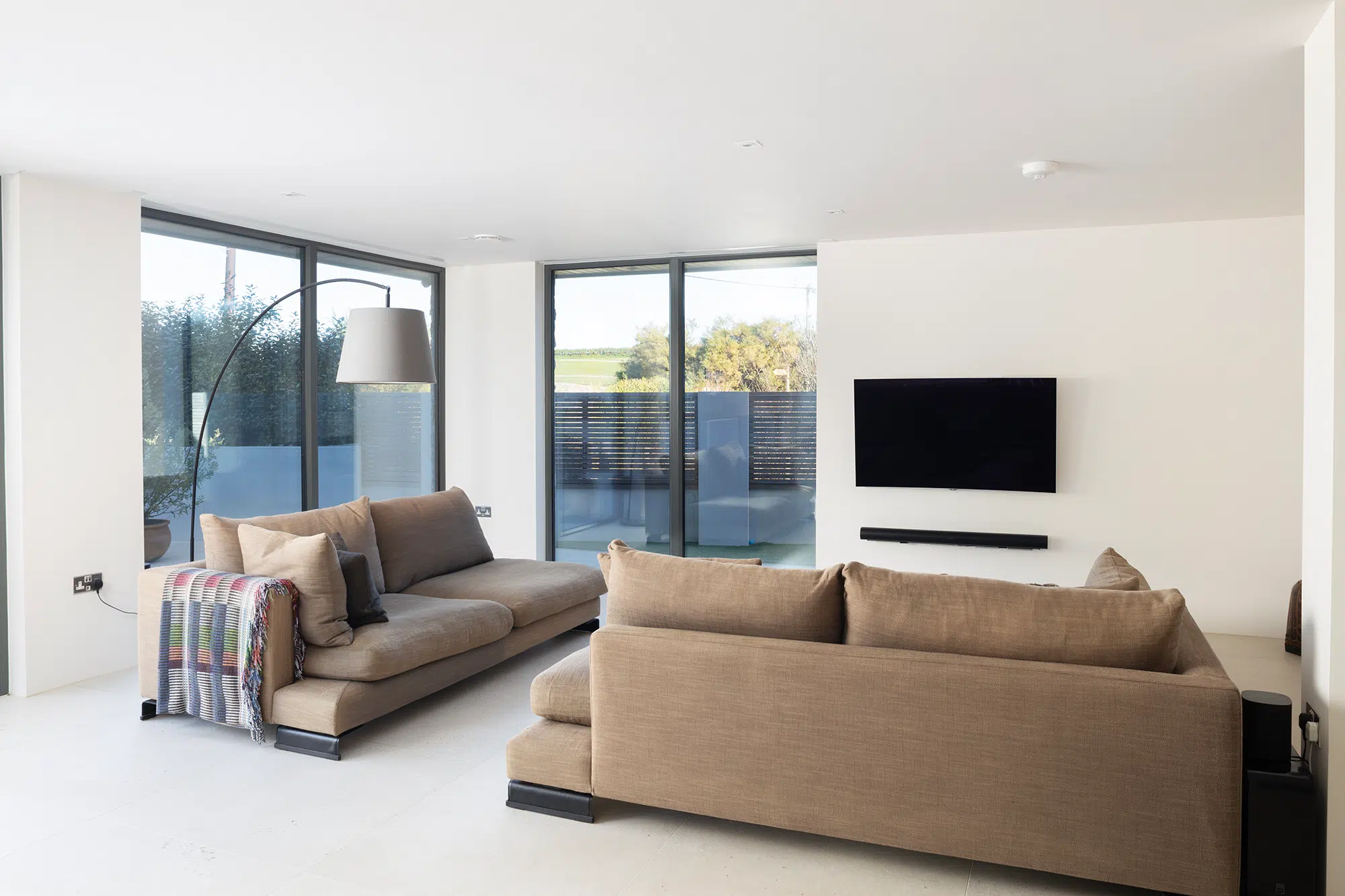
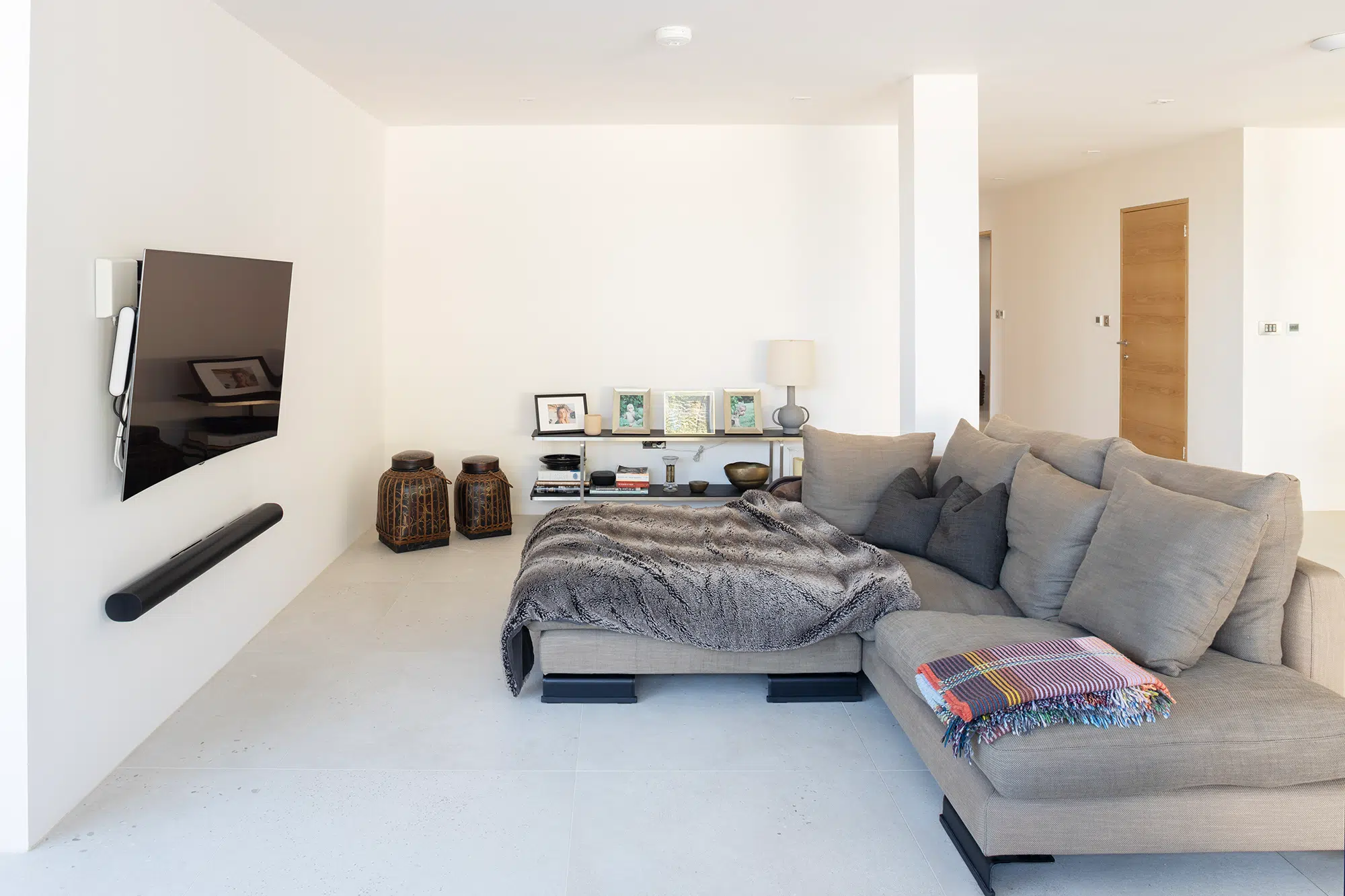
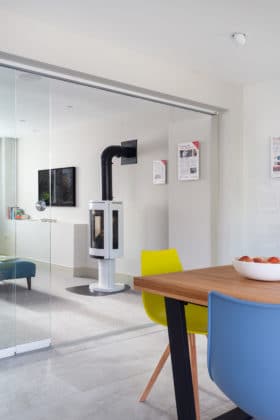
The high-tech smart home system makes the living room practical, cosy and inviting.
This high-tech approach is mirrored by the property’s smart home systems. All the exterior doors are electronic, including the pivot door at the front, operated by a key-card security system, which can be opened with a smart watch. There is CAT6 high-speed ethernet network cabling for security cameras, TV and bandwidth-intensive devices. “I thought we might as well,” says Adrian. “There are no second chances here, and wifi-only systems can be unreliable.”
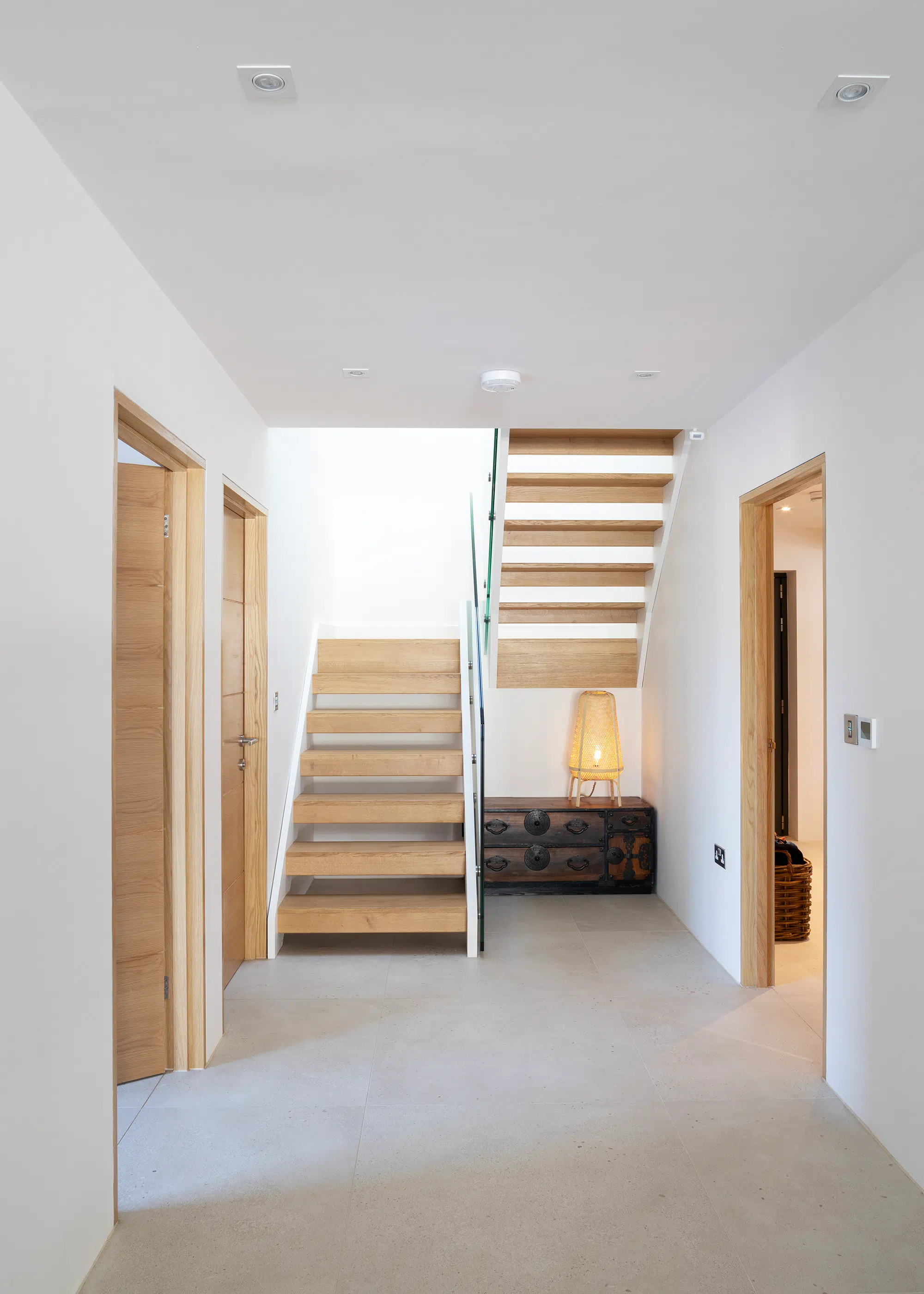
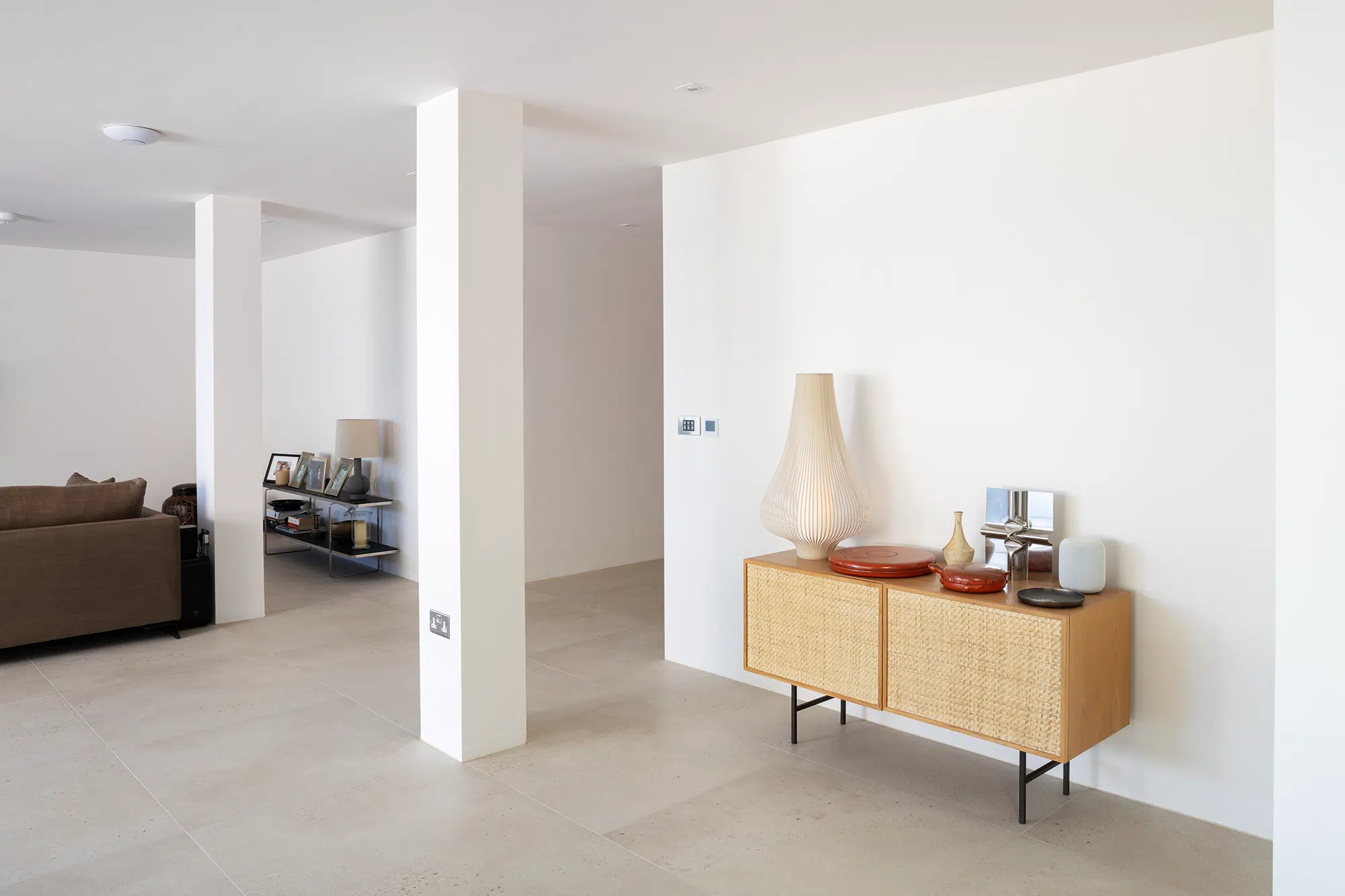
The interior style is reflective of the contemporary architectural design. The uncluttered, neutral palette turns every window into a seascape and the solidity of the house creates a warm, acoustically calm atmosphere. Adrian chose a beam and block for the first-floor construction to ensure better soundproofing.
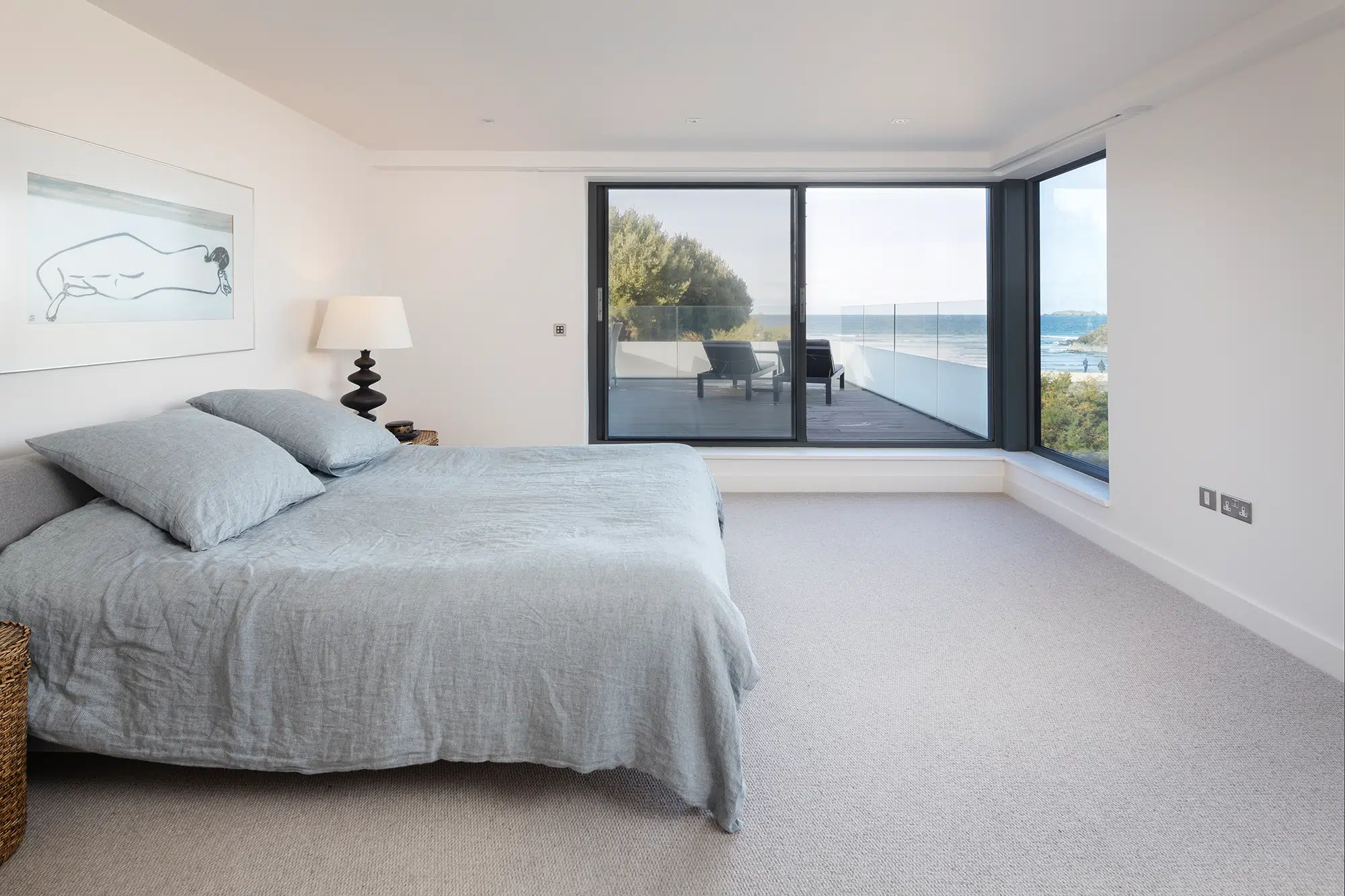
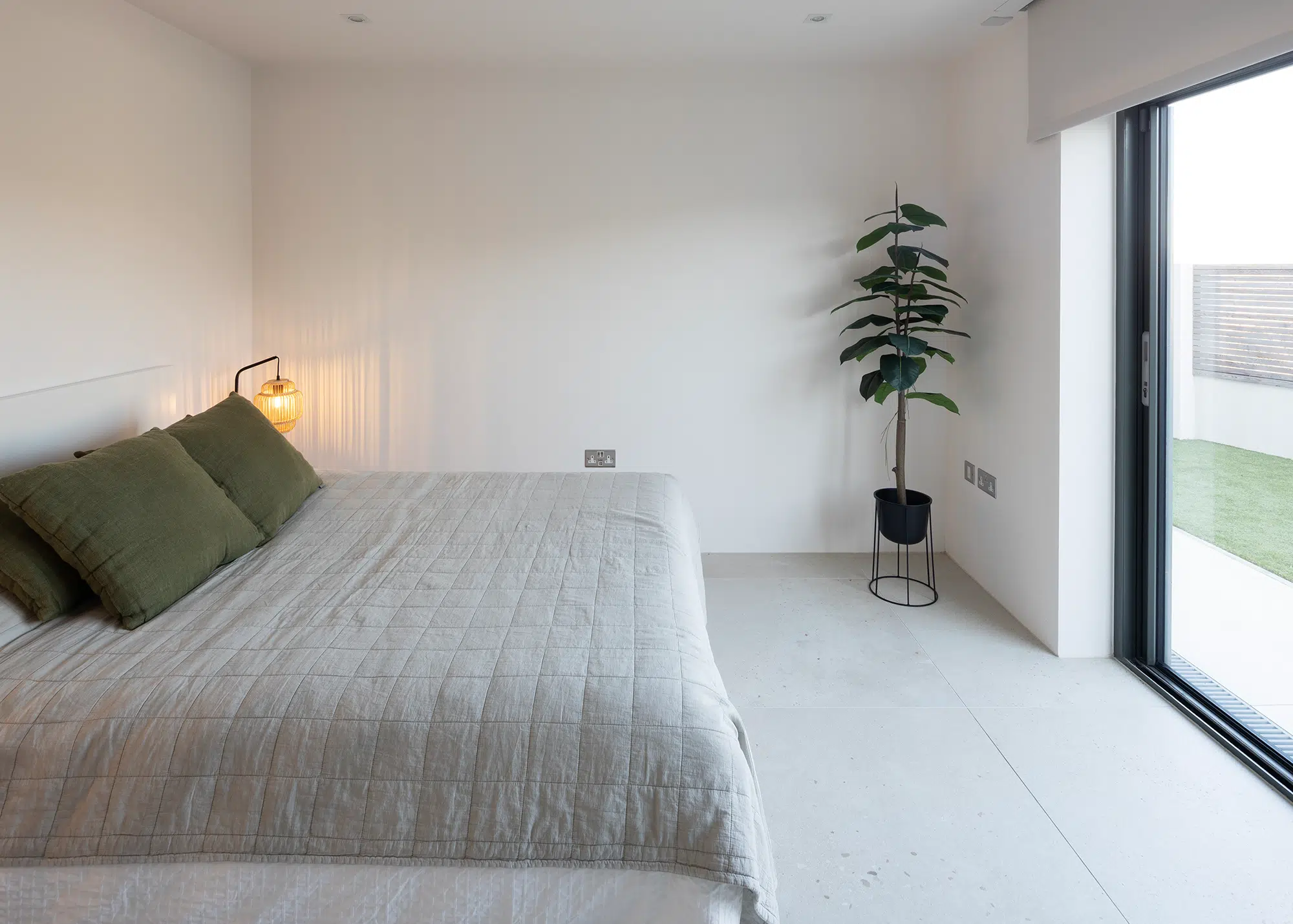
The sea view from the master suite is one of Adrian’s favourite things about his home.
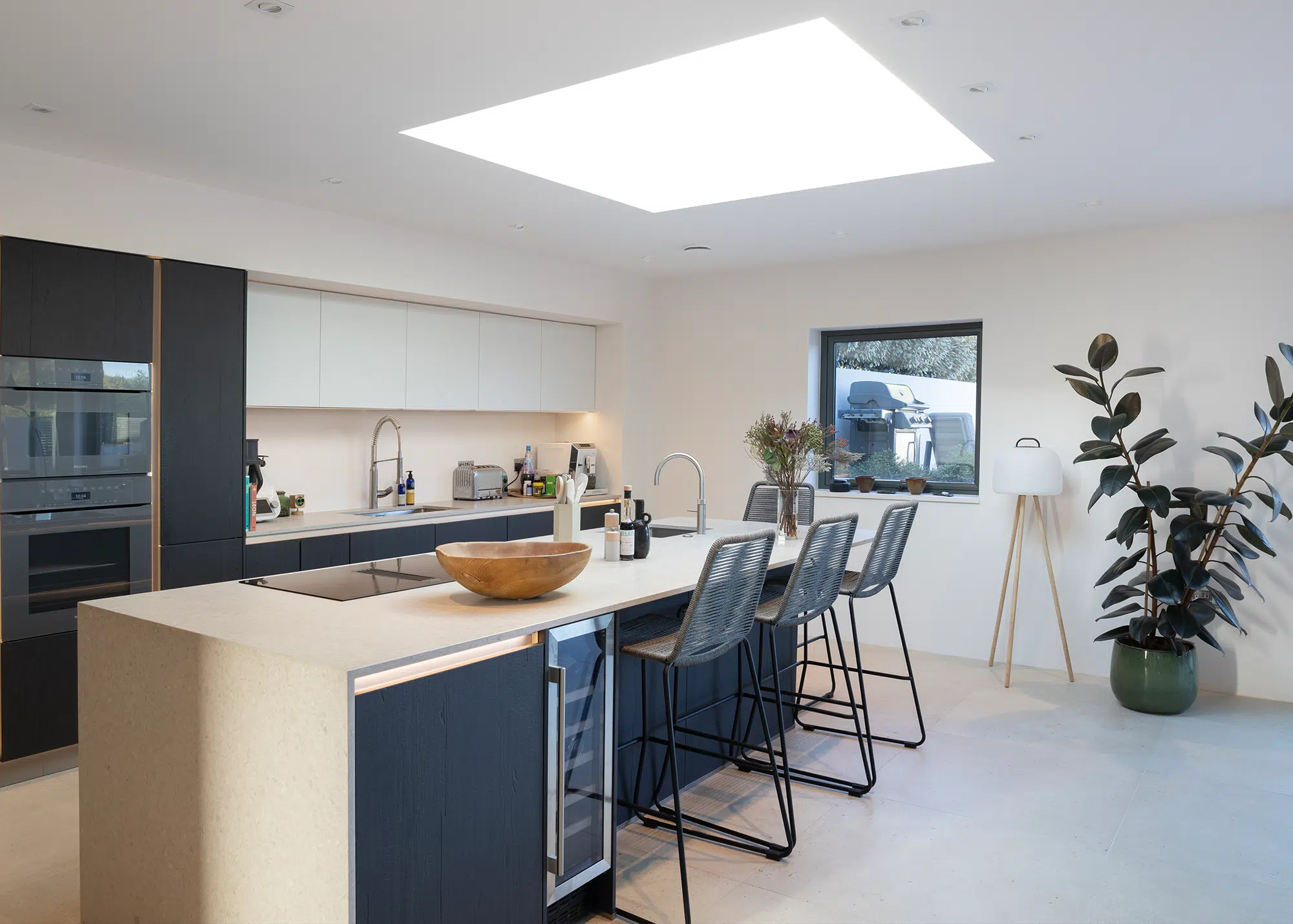
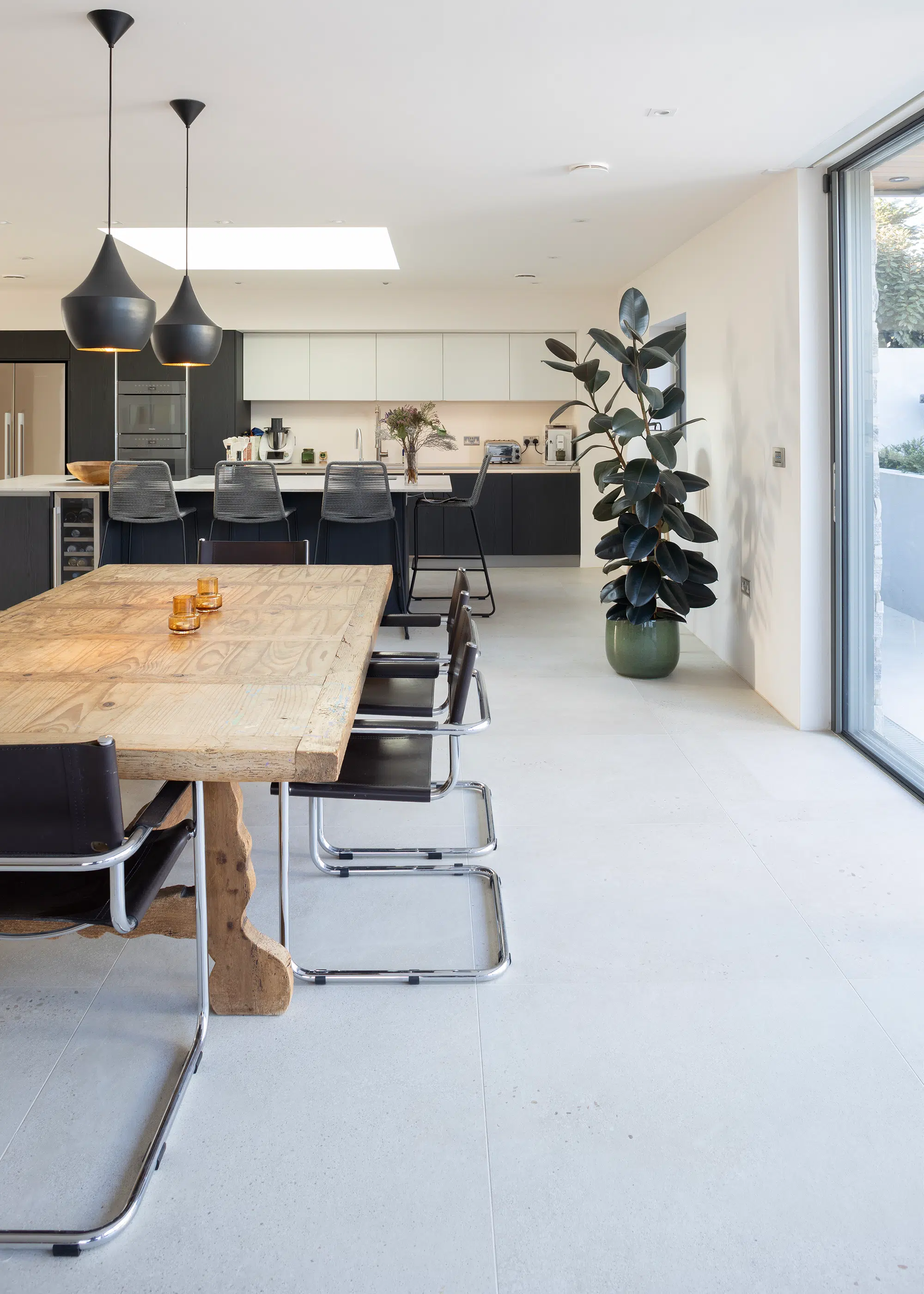
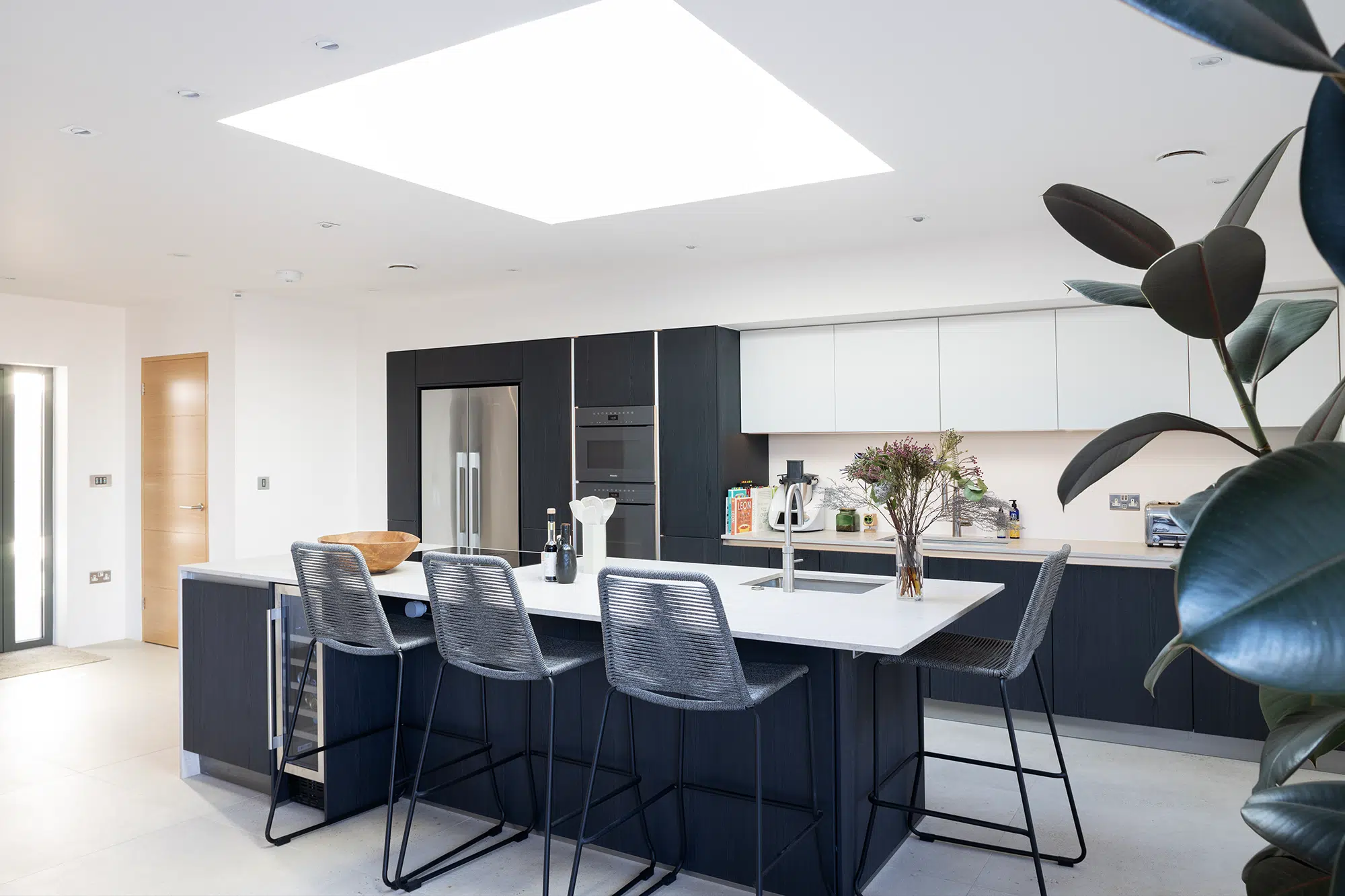
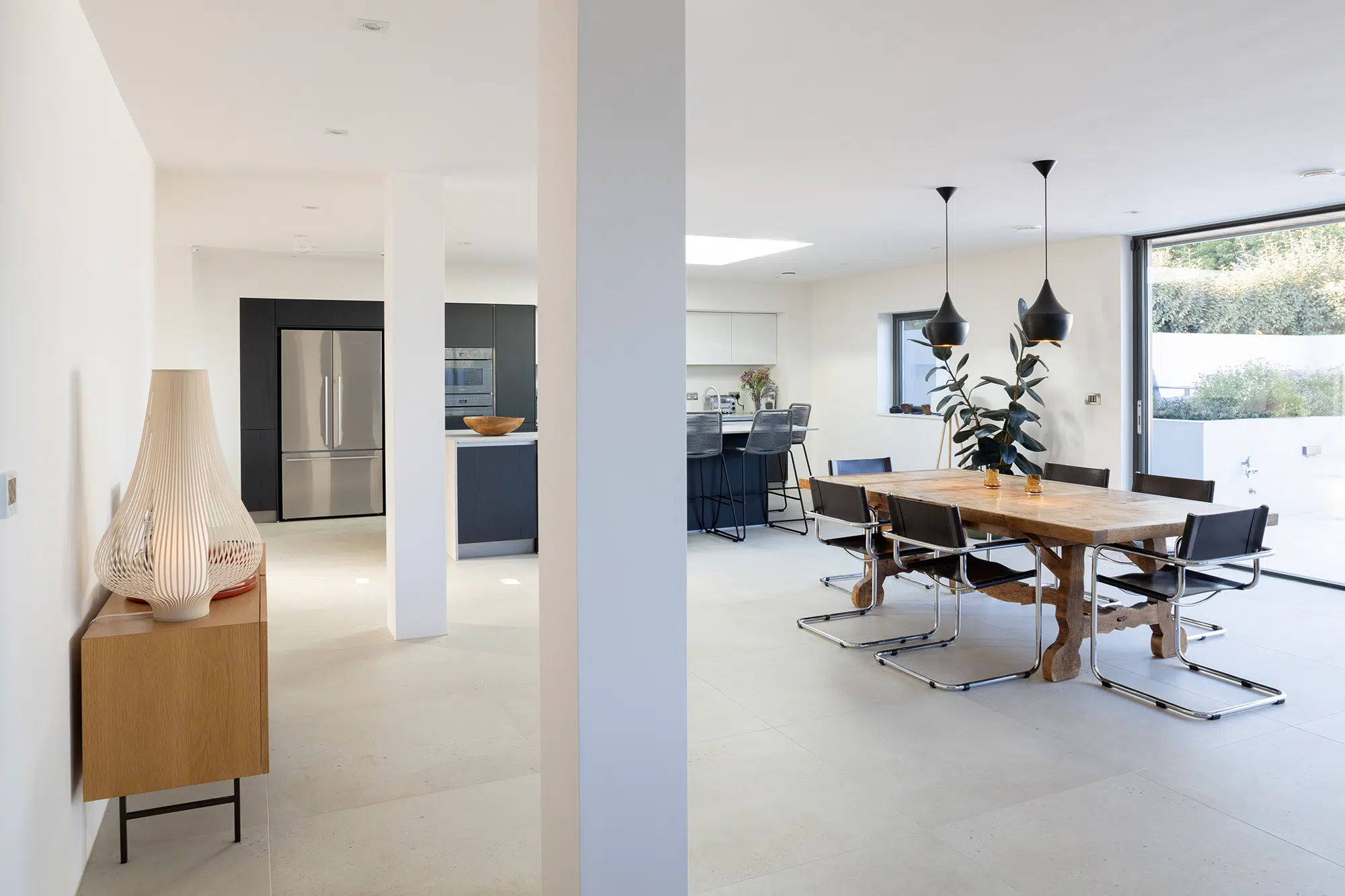
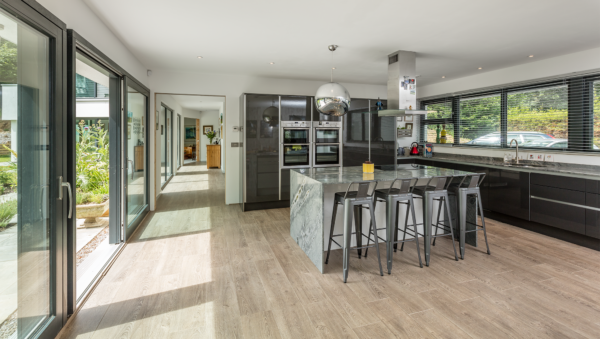
The open-plan kitchen/dining room has a large island, featuring Silestone waterfall sides. The kitchen is by German manufacturer Nolte, fitted with the highest quality appliances, such as the Fischer & Paykel double fridge, double sinks, integrated Miele induction hob and a double oven. Large-format Fioranese Italian porcelain floor tiles are a practical choice when there is so much sand around. “It’s a very family-friendly place,” says Adrian. “We suddenly have a lot of relatives and friends wanting to visit.”
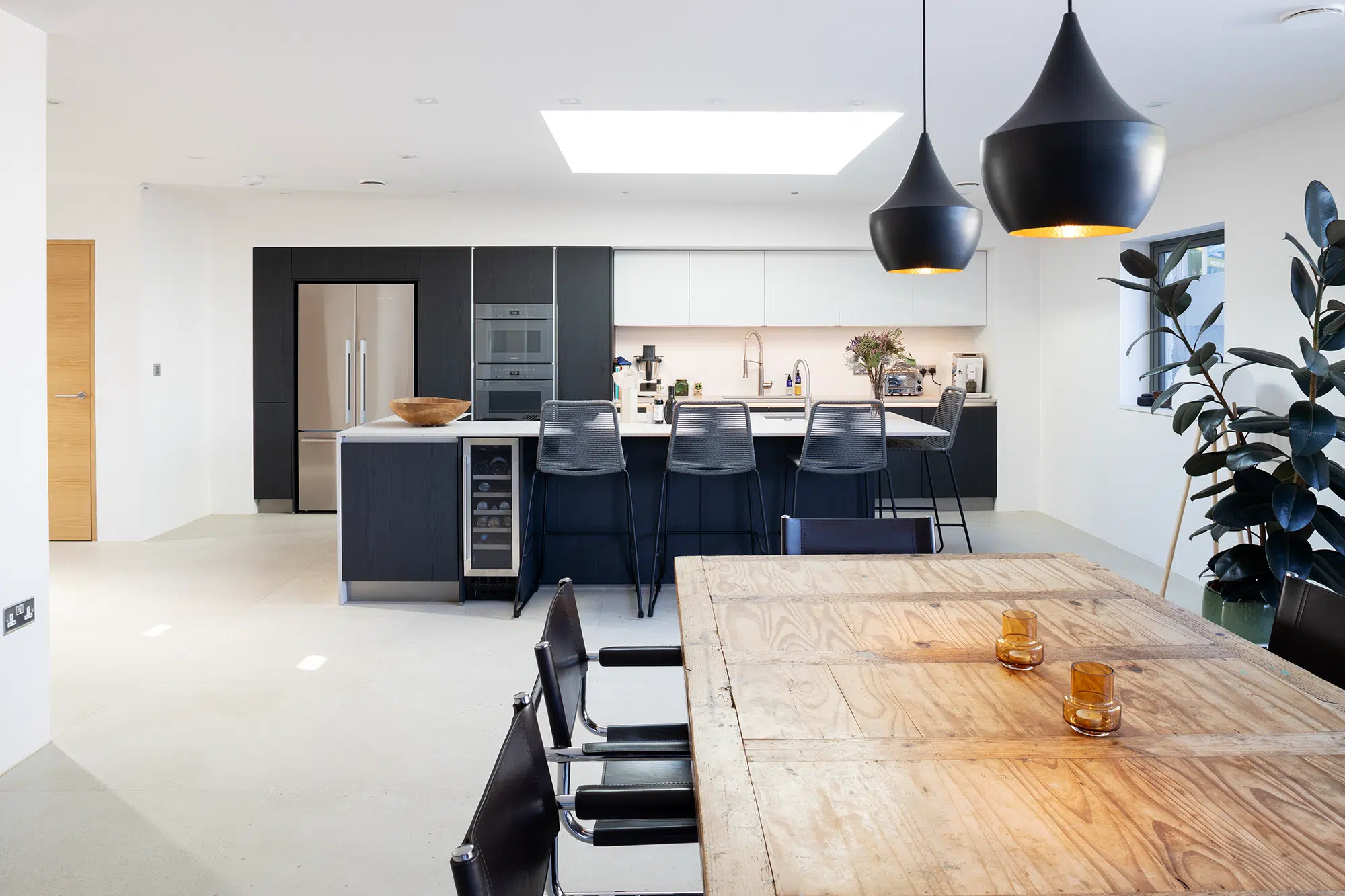
The kitchen has high-quality appliances and countertops made from Silestone, a quartz-based composite that is durable and scratch and stain-resistant.
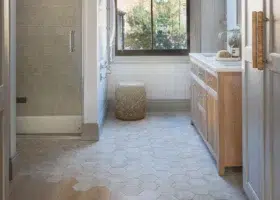
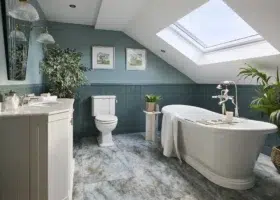
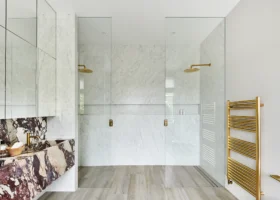
The bedrooms are carpeted, while the bathrooms, which Erika designed, hit all the right notes for low-key luxury living. Choosing sanitary-ware from Lusso and matching scalloped Fioranese tiles or splashbacks, they’ve installed a freestanding bath, shower trays flush to the floor and shower fittings that can be accessed without stepping into the shower (a great suggestion by the plumber to avoid that unpleasant first blast of cold water).
In a build organised this well, only the genuinely unexpected could cause a hiccup. In this instance, the global political landscape of the period caused some delays. “The ICF bricks were coming from Canada on a Russian ship, which was blockaded,” he says. This required a re-think for the supplier and a few adjustments, as the alternatives were slightly thinner but still as effective.
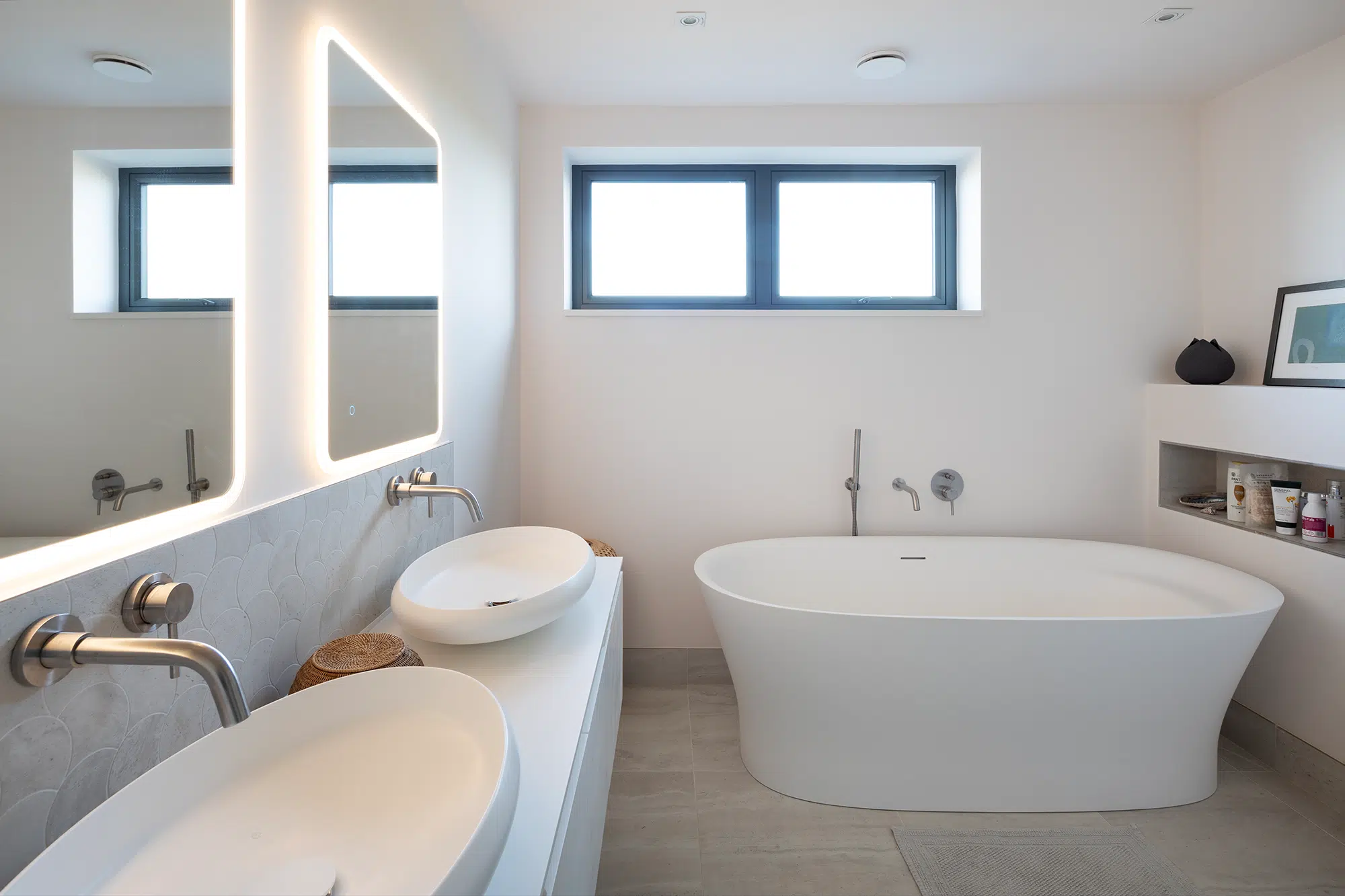
Erika designed the bathrooms, which have sanitaryware from Lusso Stone.
Another slight issue came when photos, sent to Adrian who was in Brighton, showed the new cedar cladding looked varied in colour. He made an unscheduled trip to Cornwall and after some planks were replaced, the situation was resolved. Overall, the couple are very happy with the result. “I’m really pleased the builder stuck to his quote and worked with us to produce excellent finishes,” he says. “The build took just over a year and there’s been no major snagging.”
Now that they are living in their new self built home, Adrian and Erika are really enjoying their house as well as being based in the south west. “I love the space we have here, and the cost of living is cheaper,” he says. “It’s great just being able to sit in bed and watch the waves through the window. I feel closer to nature and the sea.”
WE LEARNED
|





























 Login/register to save Article for later