THIS WEEKEND - Get ready for Build It Live!
21st-22nd February 2026 - time to get your dream home started!
GET TWO FREE TICKETS HERE21st-22nd February 2026 - time to get your dream home started!
GET TWO FREE TICKETS HEREEstimate your project costs instantly with Build It's interactive self-build cost calculator
Calculate NowGet an accurate, detailed cost breakdown of your project
Submit plans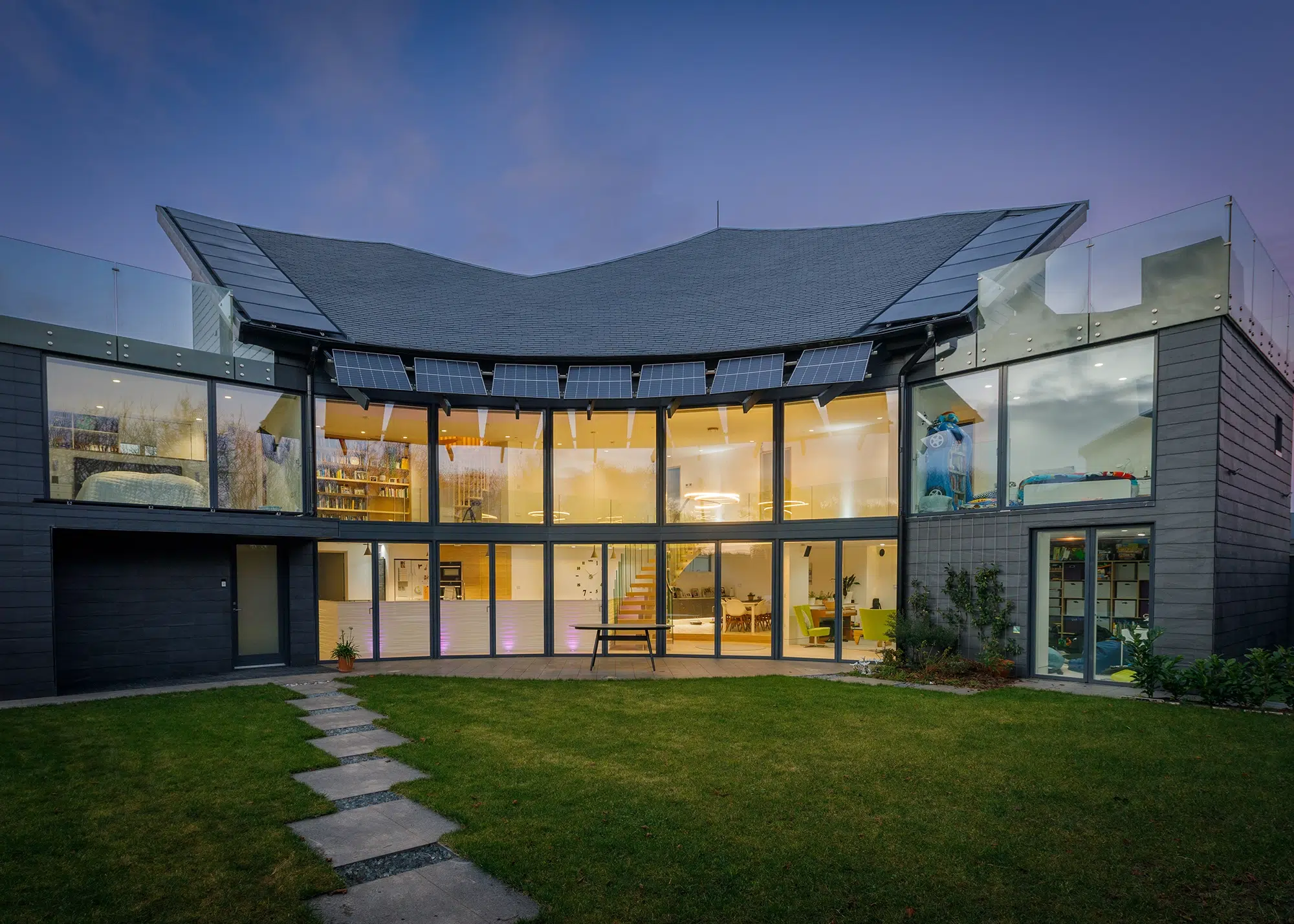

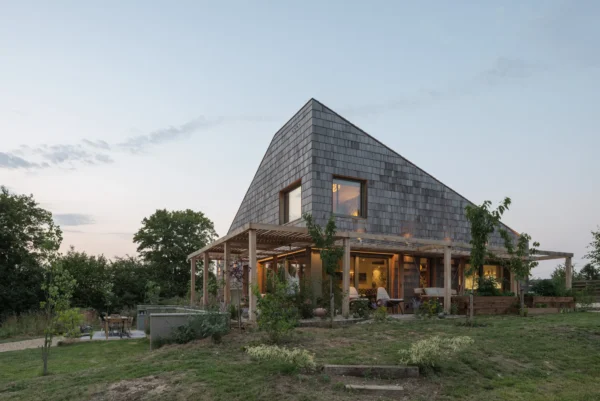
Winner of the 2025 Build It Award for Best Eco Home, Curve House is a shining example of how a self built home can respond not just to site constraints, but also to deeply personal needs. Designed during a major life transition – the arrival of a young family and a period of significant vision loss for one of the owners – the property incorporates light, openness and adaptability.
When Nathan Davis first stood on the overgrown Cornish plot of land that would become his family’s home, he imagined something extraordinary: a building that would not impose on its surroundings but instead embrace them. Fourteen years after buying the land, Nathan, wife Kelly and their children now live in a house that combines sculptural form with environmental responsibility – a home as distinctive as it is thoughtful.
“We didn’t set out to make a statement piece, but wanted something that was true to the landscape,” explains Nathan, co-founder of sustainable architecture practice ARCO2. “The site demanded a building that curved and flowed with it, not something boxy or abrupt.”
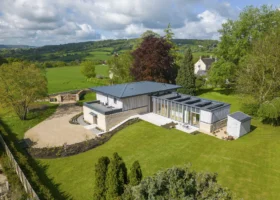
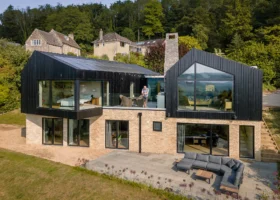
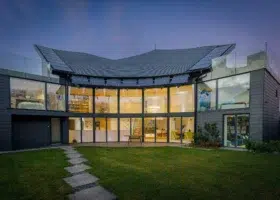
The curved design of the house addresses site constraints and captures sunlight throughout the day, which improves both comfort and energy generation
The 0.235-acre plot was fairly unremarkable at first glance: an awkwardly shaped site bounded by mature hedgerows. “It offered an ideal location with no strong design precedent to follow, giving creative freedom rarely found in such settings,” says Nathan. “The land already had planning permission in place, which made our new application relatively straightforward.”
Kelly’s eyesight challenges also played a defining role in shaping the layout and glazing strategy for the home. As a type 1 diabetic, the condition began to affect her ability to adjust to changing light levels. This informed the inclusion of extensive glazing, which has been designed to flood the house with consistent natural light and ease transitions between inside and out. Orientation played a central role. The sweeping plan fans east to west, optimising solar gain through expanses of triple-glazed windows, while the main living spaces track the arc of the sun, enjoying bright, open vistas.
From the outset, Nathan and Kelly knew they would have to build slowly, funding the project as they went. “We were both working, raising our children and managing other responsibilities, so we accepted that this would be a marathon, not a sprint,” says Kelly.
Construction began in 2014, with Nathan first prioritising groundworks and building the workshop that would serve as a base for on-site fabrication. He bought an excavator, which his father taught him to operate, and together they carried out the excavation and drainage. “I also called on a number of friends to help install the shuttering, reinforcement steel and to assist with the concrete pour,” says Nathan. “Although the footprint of the house was complex in shape, that stage of the build was surprisingly smooth and efficient.”
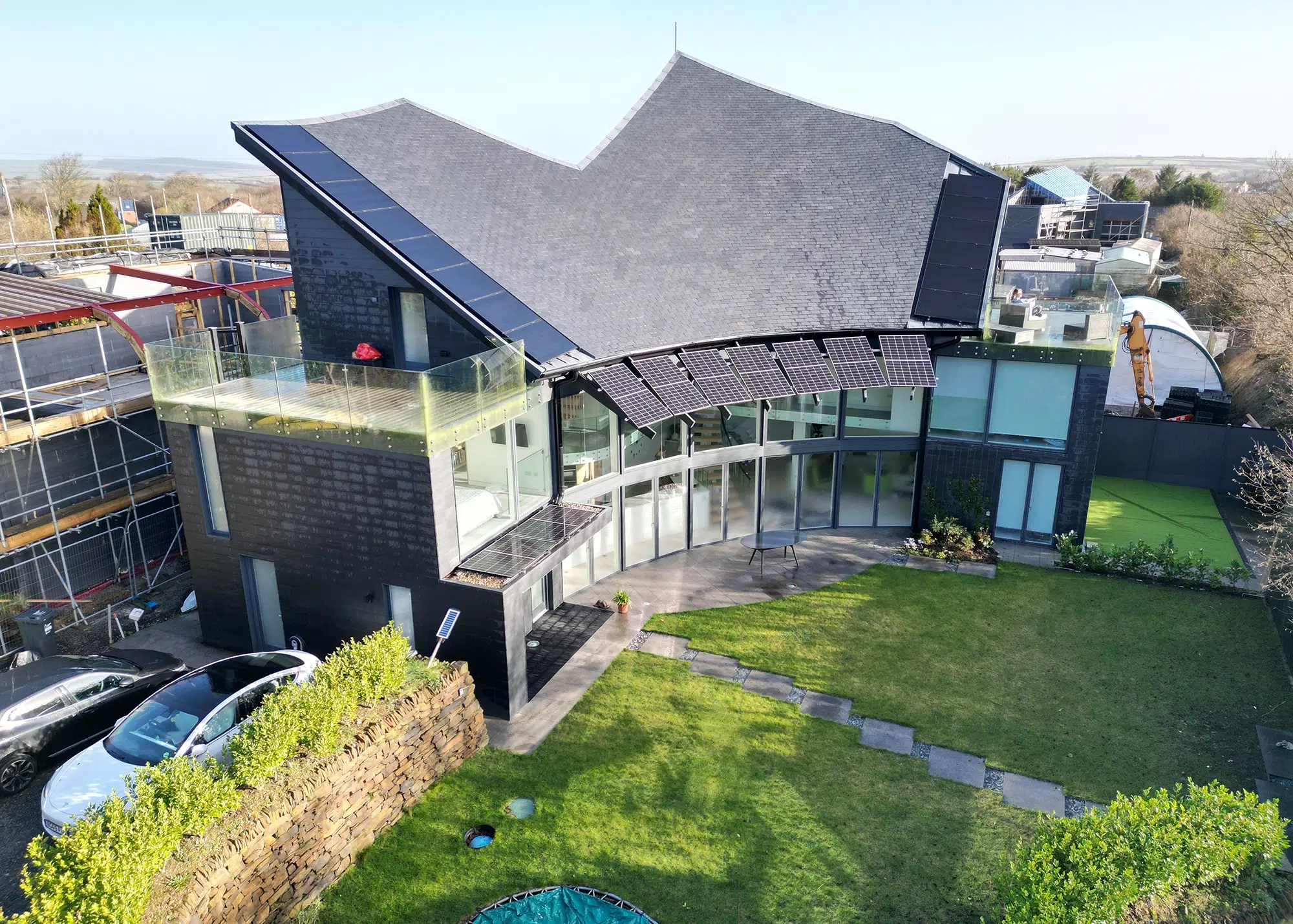
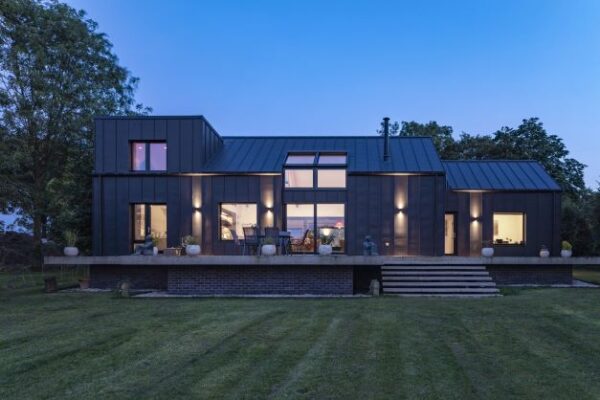
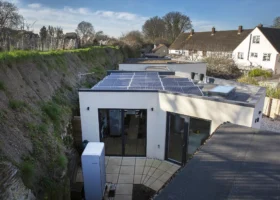
Solar panels have been carefully integrated across the property, on the standing seam zinc roof, the flat-roofed porch and the brise-soleil that shades the large area of south-facing glazing
Reinforced edge-thickened foundations and curved blockwork walls form the base of the house, providing thermal mass. Above this is a softwood timber frame, which follows the sinuous form, with glulam beams employed where greater strength was required to span wide openings or achieve tight radii.
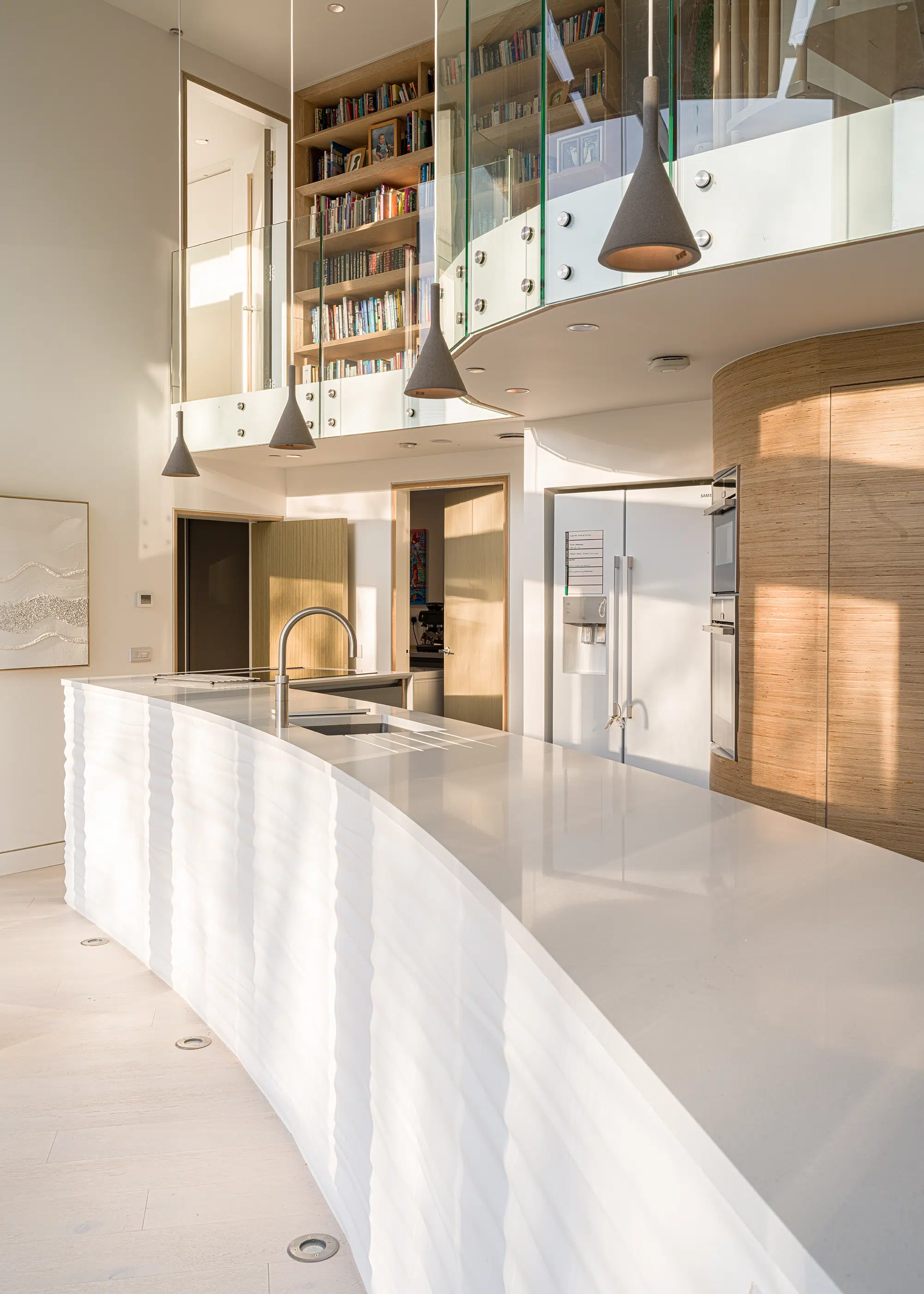
The open design throughout creates a sense of spaciousness and maintains visual connection across different parts of the home, promoting unity
Building a curved house is no small feat, especially when managing the construction yourself. A site-built timber frame, with its inherent flexibility, lent itself to the form, but still required precision. Nathan used 3D modelling software to work out the geometry and created full-scale templates for critical sections. “There’s nowhere to hide with curves. Everything needed to be precise to achieve the shapes, and getting the roof right was the most challenging part,” he says.
Hard-wearing, low-maintenance materials were chosen, and the natural slate curved roof was painstakingly designed using a mix of slate sizes and carefully calculated laps to efficiently manage water run-off. A zinc standing seam roof also houses the solar panels.
Premium Content
Where should you start when planning your home building project? Build It’s in-depth downloadable guide to self building a house contains everything you need to know to make your project a success.
find out more
“Building and creating have always been part of who I am,” says Nathan. “My parents did four self builds, so I grew up surrounded by this and I was immersed in the tools, timber and mindset that come with making things happen from the ground up. I love learning new techniques, experimenting with materials and pushing boundaries.”
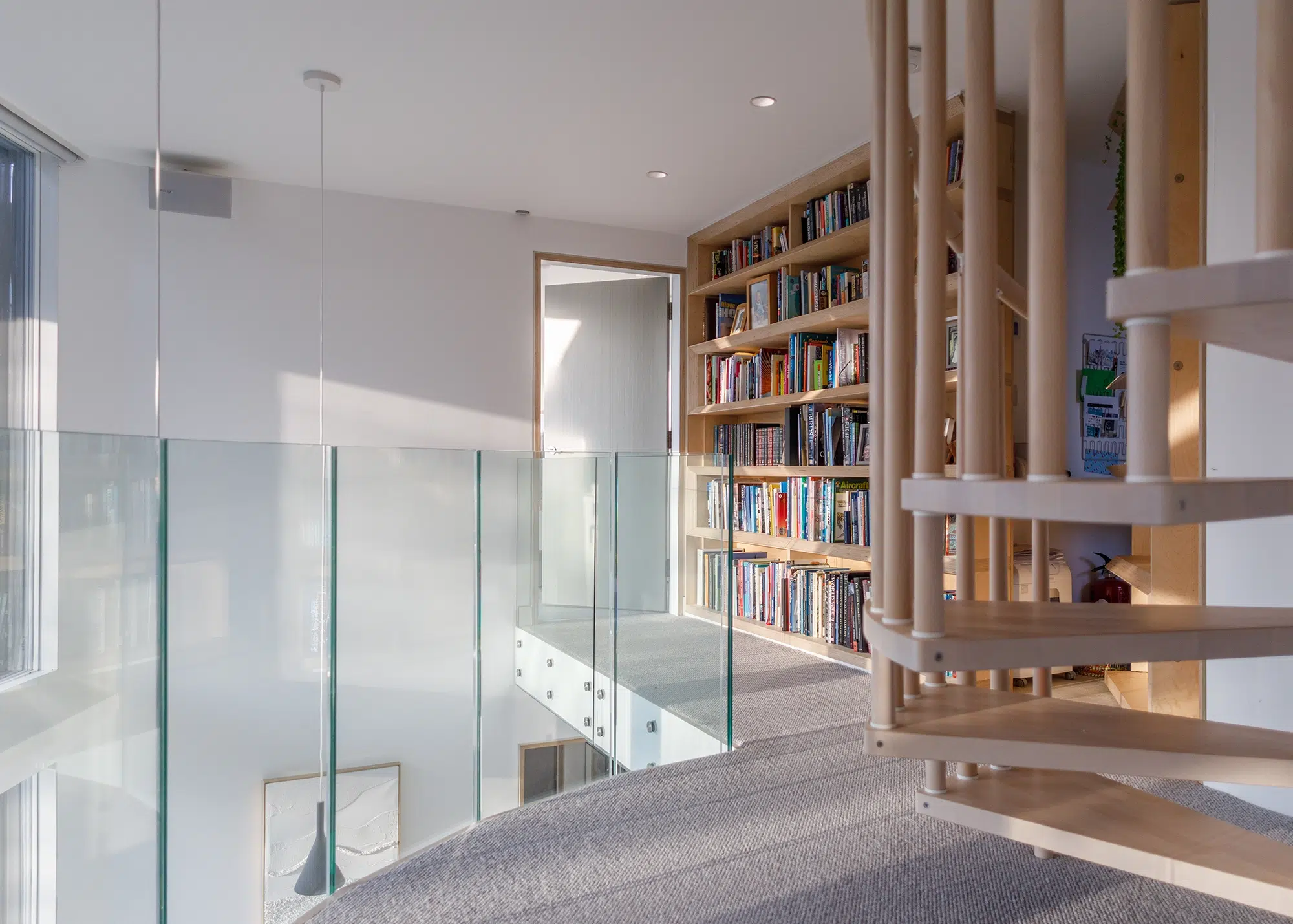
At first floor level, a striking gallery links the secondary zones – bringing natural light to the core of the house
Nathan’s father, Keith, was by his side throughout the build, generously giving up his weekends and offering support at every stage along with Nathan’s mum, Jackie. The eight-year construction period was marked by bursts of intense activity, interspersed with longer periods of planning, problem-solving and patiently saving for the next phase.
“We began the project with savings, a self build mortgage and a loan from my parents, aiming to stay within a £300,000 budget, but as the design evolved and challenges arose, costs increased and we ran out of money,” says Nathan. “Unable to extend our self build mortgage, or raise further funds ourselves, my parents stepped in and remortgaged their own home to help us.”
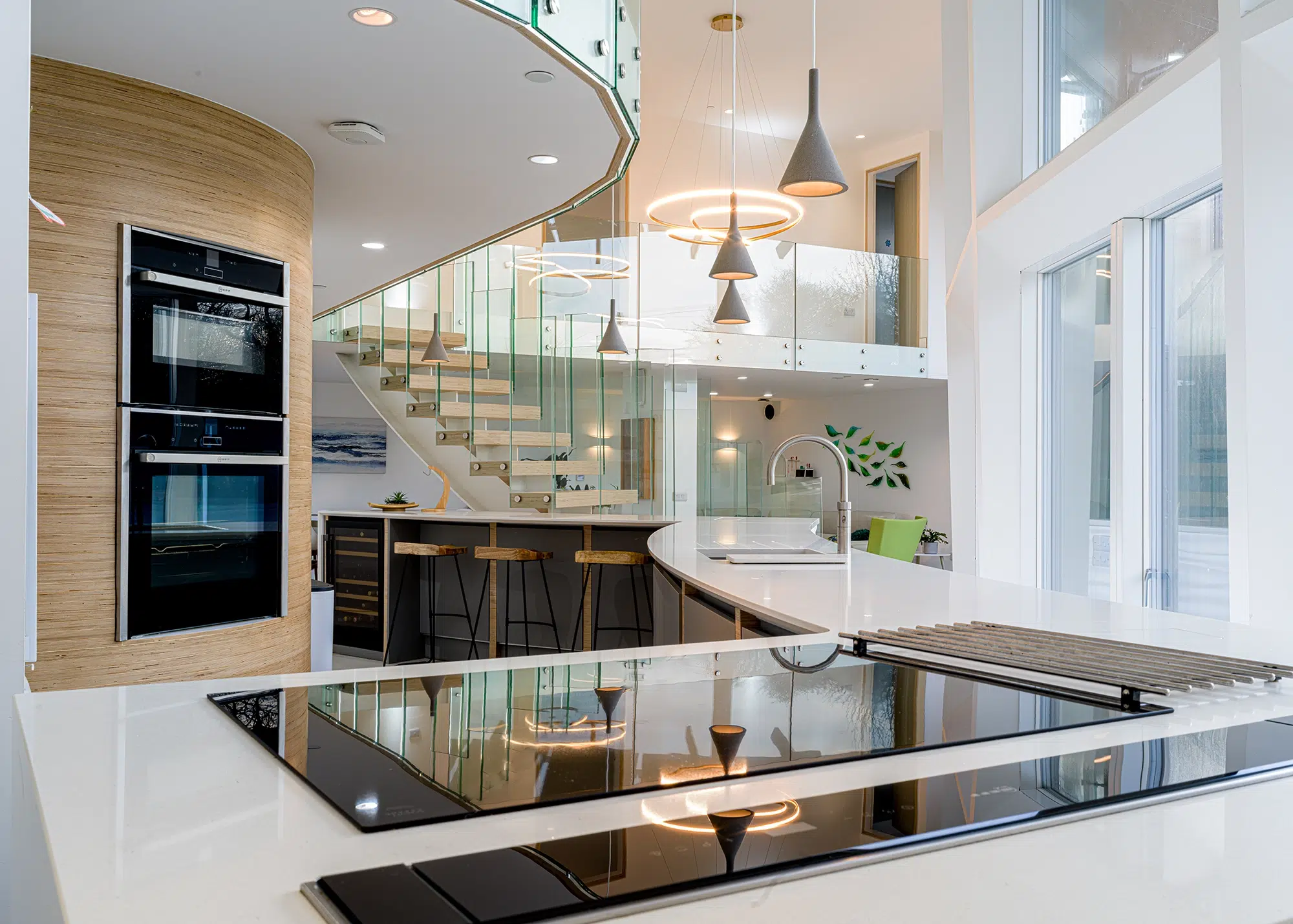
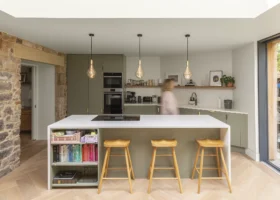
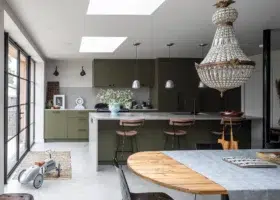
The curved form of the house dictated the shape of the kitchen, while clever use of stacked birch plywood enabled standard units to be faceted around the curve
As the build progressed and became more complex, the family made the decision to move into a caravan on site. Nathan reduced his hours to a four-day working week, which gave him three full days on site, plus early mornings and late evenings. “I managed the project using a detailed programme, and one golden rule: always stay at least a month ahead of the build process. For any items with longer lead times, I made sure they were programmed well in advance to avoid delays,” he says. “Kelly and I developed our own ritual, something we affectionately called Wednesday Night Club.
It wasn’t as glamorous as a date night, but it became a key part of our routine. Each week, we’d sit down to review progress, make decisions and agree on the next steps. What could have been stressful became something we truly enjoyed.”
CLOSER LOOK The spectacular curved roofOne of the home’s defining features is its sweeping curved roof, shaped by a restricted boundary line. Beyond its sculptural appeal, the curve enhances solar performance – its flanks are fitted with solar photovoltaic (PV) panels that generate power and act as a brise soleil to reduce glare and heat.
“The only time I brought in a specialist was at the roofing stage, to ensure it was done correctly,” says Nathan. “I worked with a master craftsman, whose skillset brought the roof to life.” |
Inside, the house is arranged to suit both sociable family life and moments of retreat. The ground floor is largely open plan but subtly zoned, with changes in floor finish and ceiling height distinguishing the kitchen, dining and sitting areas without losing the sense of flow.
“We didn’t want any barriers between spaces, but we did want a sense of progression through the house,” says Kelly. “The layout works brilliantly when we entertain. Everyone gravitates to the big curve of the dining area with the view beyond.”
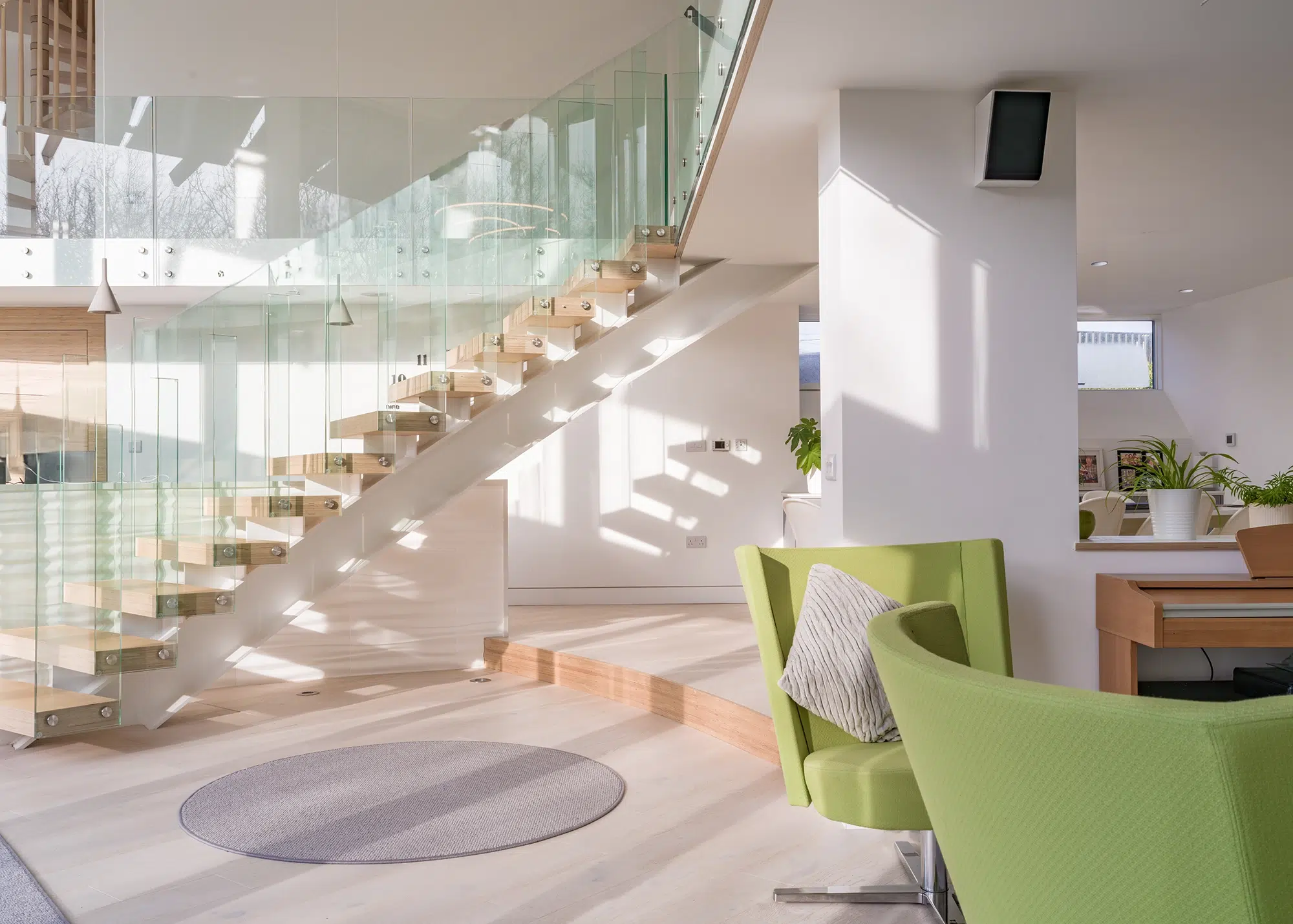
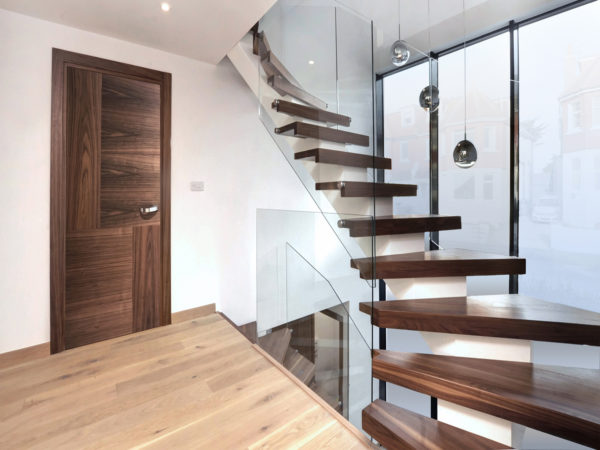
The feature staircase is built around a large curved central steel beam, with numerous adjustable level plates, CNC-cut birch ply treads and laminated glass balustrades
A glazed link area in front of the core living space connects to a utility room, shower room and guest suite, in the west wing. To the east, a flexible living area currently serves as playroom and gym but has been fully wired and plumbed to create an accessible bedroom in future. Nathan’s architect’s eye shows in every detail, from the generous roof overhangs that shade windows in summer, to the deep reveals that frame views. “It’s all about controlling light, heat and perspective,” he says.
Internally, the materials reflect the same ethos of sustainability and simplicity. Engineered oak flooring, laid over a thick screed and separated by insulation, provide thermal mass, while an air source heat pump (ASHP) connects to underfloor heating. Storage is cleverly integrated throughout, with built-in units that follow the curves of the plan.
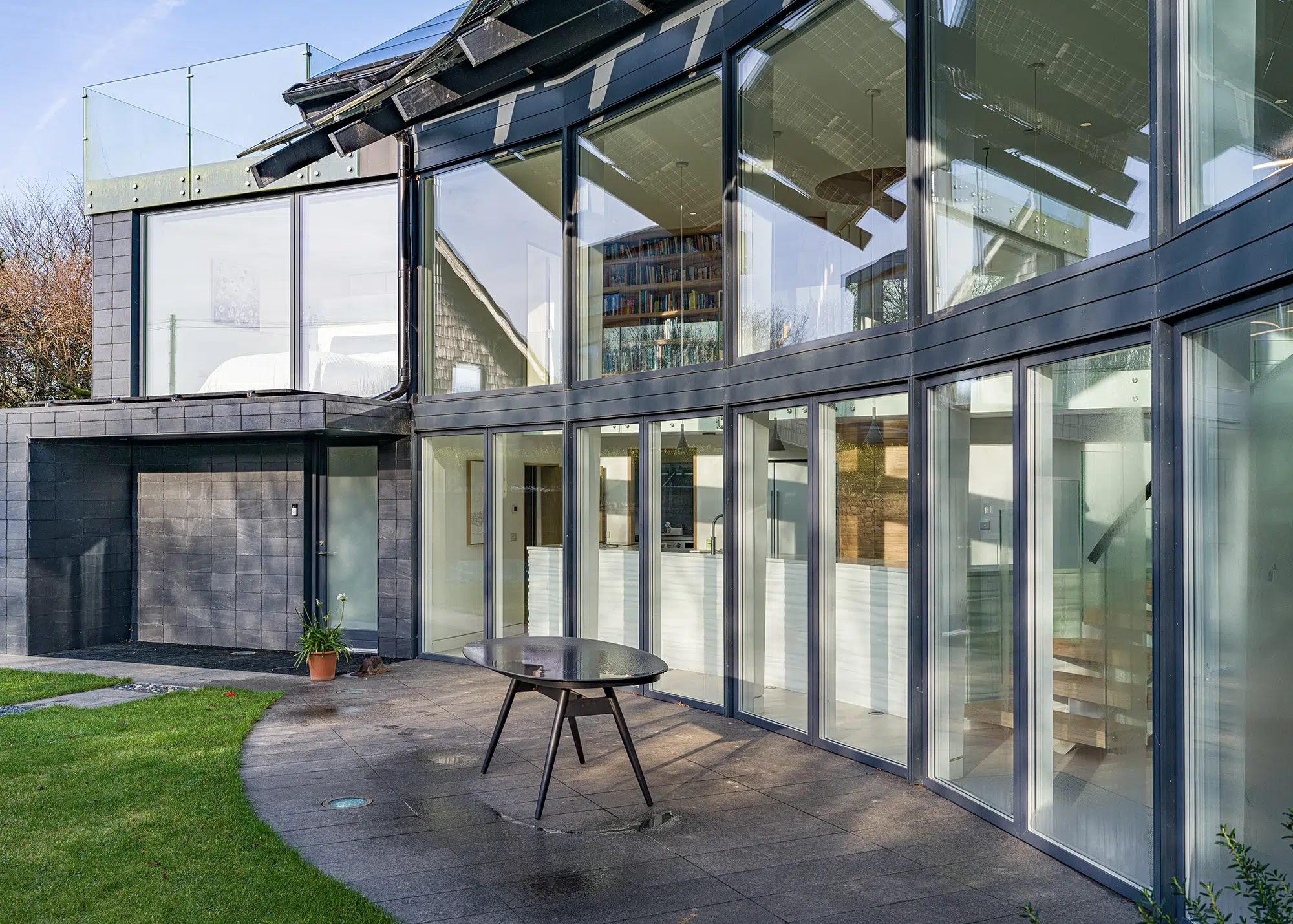
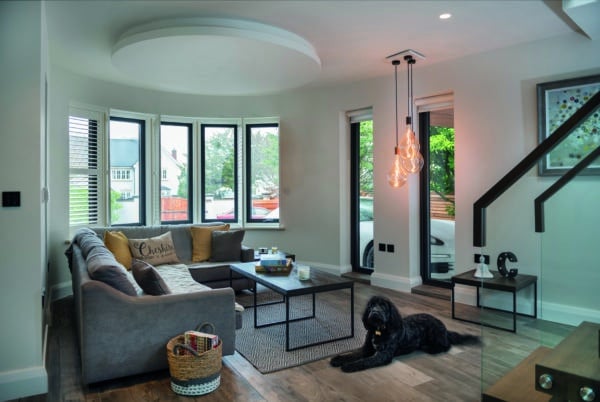
Full-height glazing makes an impressive design statement
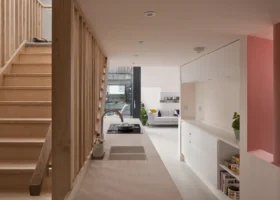
The staircase (made by Nathan from a concept by Kelly) forms a sculptural centrepiece in the hall, with treads cantilevered elegantly from a curved wall. “We didn’t want anything that felt fussy or contrived,” says Kelly. “Just simple, honest materials that let the form and the light do the work.”
One of the most challenging tasks was installing the external fibre cement sheeting. Typically used on agricultural buildings, this material was chosen for its cost-effectiveness, robust warranty, and rural aesthetic, especially once finished in black to blend with the surrounding landscape. However, each board weighs around 50kg and is large and cumbersome, making installation physically demanding and logistically complex.
To make this feasible, Nathan relied on carefully erected scaffolding throughout every stage of the build. The structure had to be frequently adapted and adjusted to ensure safe and accessible working platforms at all heights. “In hindsight, scaffolding was something I had under-budgeted for, both in cost and complexity, but it proved absolutely essential for the safe execution of a project of this scale,” he says.
From the beginning, environmental performance was as important as aesthetics. The house has been super-insulated using sheep wool and recycled newspaper insulation, with airtight detailing to minimise heat loss. Aluminium-clad triple-glazed timber windows, the air source heat pump, solar PV panels and rainwater harvesting system all contribute to low running costs.
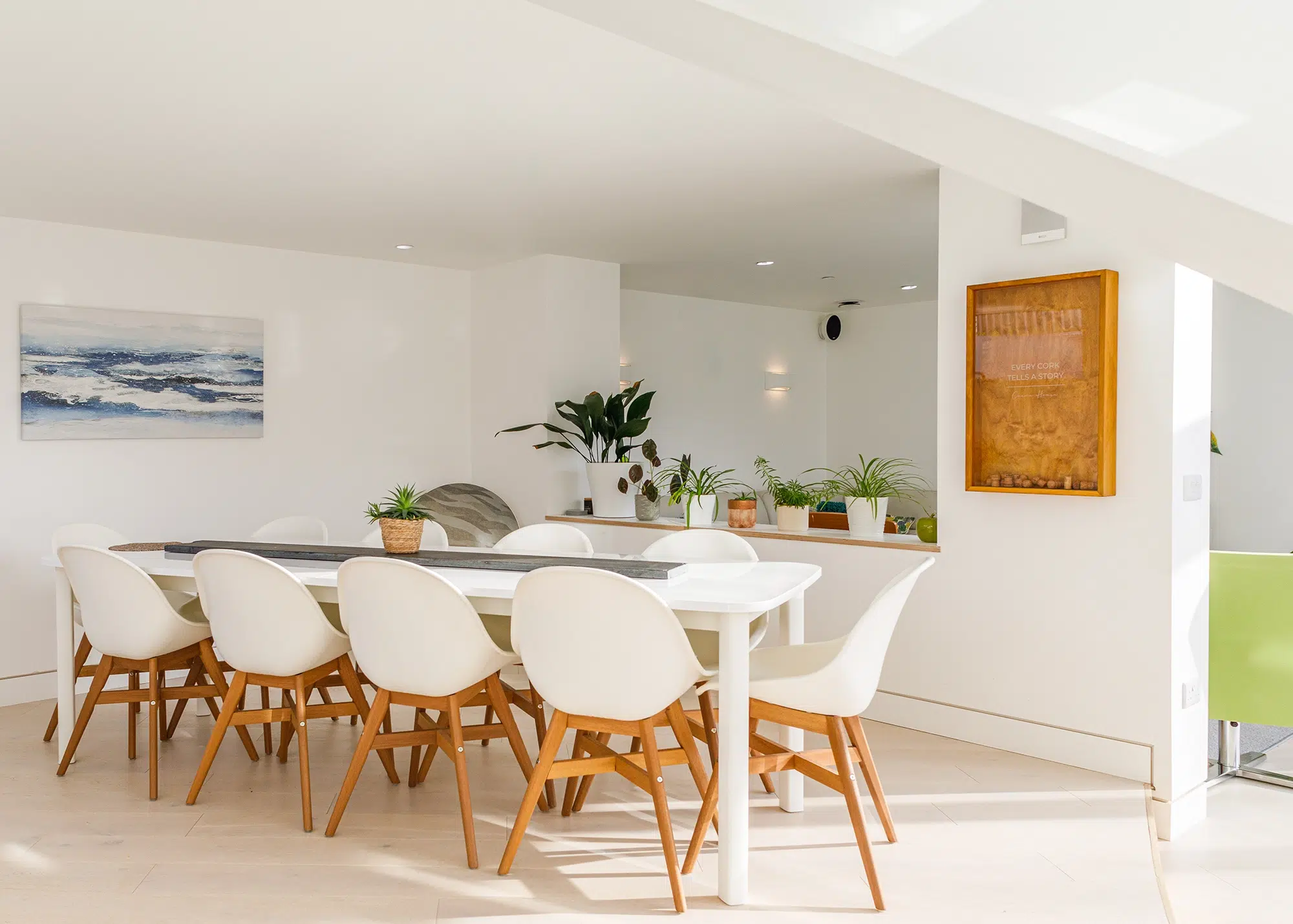
White finishes inside create a bright, airy feeling throughout
“We wanted a house that didn’t just look green but truly performed and would be future-proof: not only in terms of energy efficiency and adaptability, but also with the potential to generate income when the time comes to retire,” says Nathan. “Our heating bills are minimal as the passive solar design does so much of the work.”
The sedum roof established on the storage container/workshop not only enhances biodiversity but also reduces rainwater run-off and helps to moderate internal temperatures for the equipment and gym space. Groundworks, foul drainage, and the foundation slab took nearly two years to complete, and during that time Nathan also restored a neighbouring piece of land he had acquired, using retained spoil to build a wildlife bund. This prevented around three thousand tonnes of materials from going to landfill, and the bund now acts as a wildflower corridor, providing biodiversity and a natural buffer to a neighbouring storage yard.

The open-plan kitchen overlooks the garden via the wow-factor full-height glazing
Building over eight years was not without its strains. “It became part of life,” Nathan reflects. “Our children grew up alongside the house. They learnt practical skills and saw problems solved. It was stressful at times, especially when we were building during the pandemic, but it was also hugely rewarding. There were tough moments, of course, but the sense of achievement at the end is incredible. Every part of the house has a memory attached.”















 Login/register to save Article for later