

- Plan ItBack
- Design ItBack
- Build ItBack
- Homes
- ProductsBack
- CostsBack
- Self Build Cost Calculator
Estimate your project costs instantly with Build It's interactive self-build cost calculator
Calculate Now - Costs & Finance
- Contracts & Warranties
- Build It Estimating Service
Get an accurate, detailed cost breakdown of your project
Submit plans
- EventsBack



















 Login/register to save Article for later
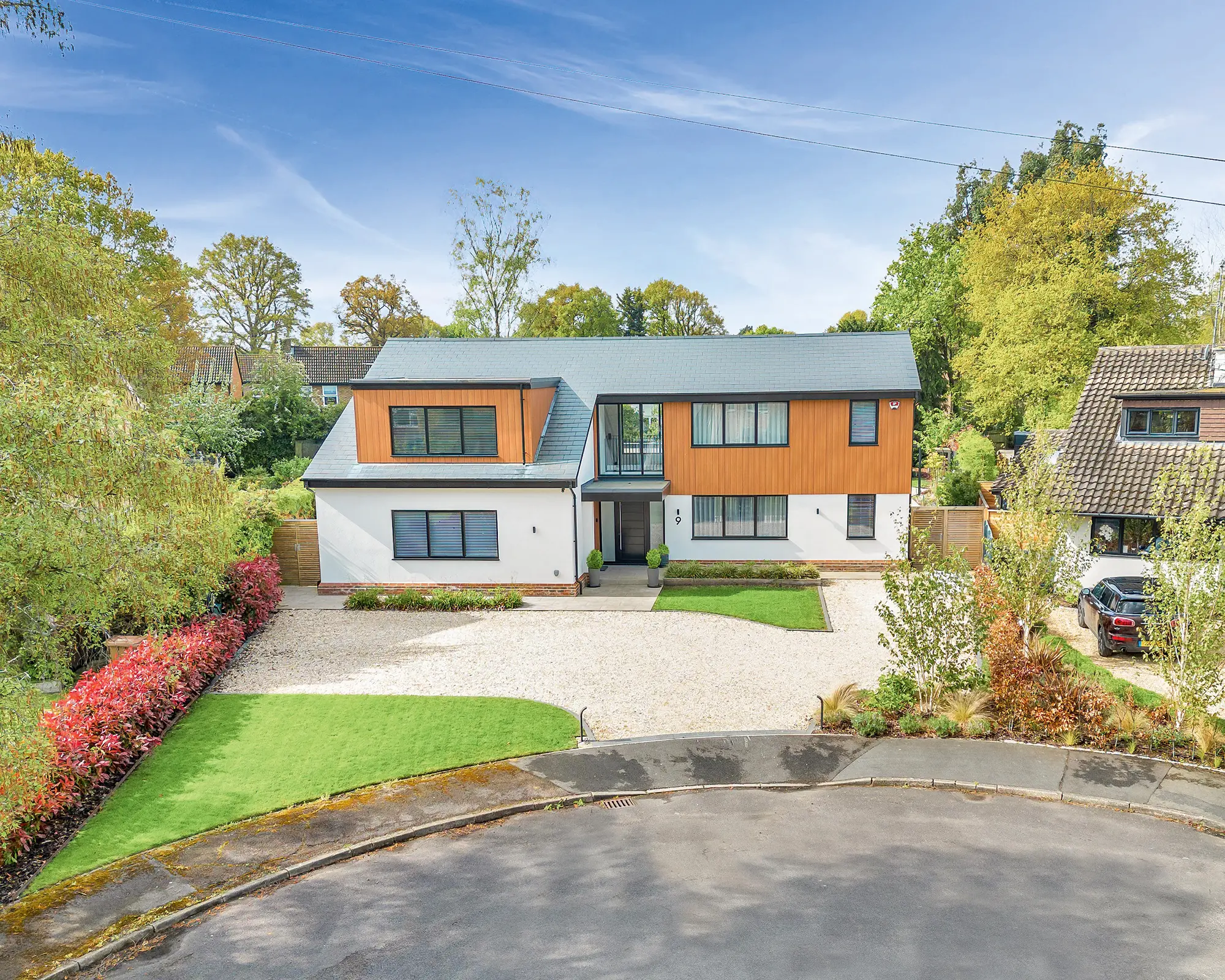
This Couple Replaced a 1960s Bungalow in Surrey with an Energy-Efficient Double-Storey Home

When Peter and Sophie Hill began house hunting, their initial plan was to downsize in preparation for Peter’s retirement, but instead they took a complete U-turn and signed up to a much larger project than they first envisaged. “We’d been unimpressed with new builds and ended up buying a dated bungalow to extend and add a second storey,” says Peter. “But quotes were much higher than we expected and with advice from our architect, we decided it would be more cost effective to demolish and start again.”
Peter and Sophie weren’t living far from East Horsley when they began their search for an easy-to-live, maintenance-free home. New builds proved disappointing with high price tags and small gardens so they decided to sell up, move into a friend’s flat, and look for a project house.
A three-bedroom 1960s bungalow with a large garden caught their eye. “We were drawn to the plot rather than the old property, which had been owned by a World War II veteran who’d lived into his 90s,” says Peter. “Straightaway, we saw the benefit of converting the bungalow into a house and we weren’t daunted by the prospect as we’d renovated our previous Victorian home.”
Developing the bungalow renovation plans
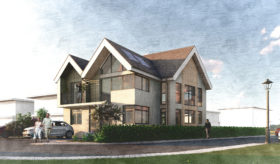
Fortunately, the property was just about habitable so the couple moved in June 2018. They gave the rooms a lick of paint and lived in it for two years. They had clear ideas of what they wanted: a rear extension to square off the back and a second floor above the existing bungalow. “The close is made up of two architectural styles – houses and bungalows – and we knew from talking to neighbours, who’d tried to get planning, that the exterior would need to reflect the houses,” says Sophie. “This meant having a cat slide roof on the front and a dormer to make the room usable.”
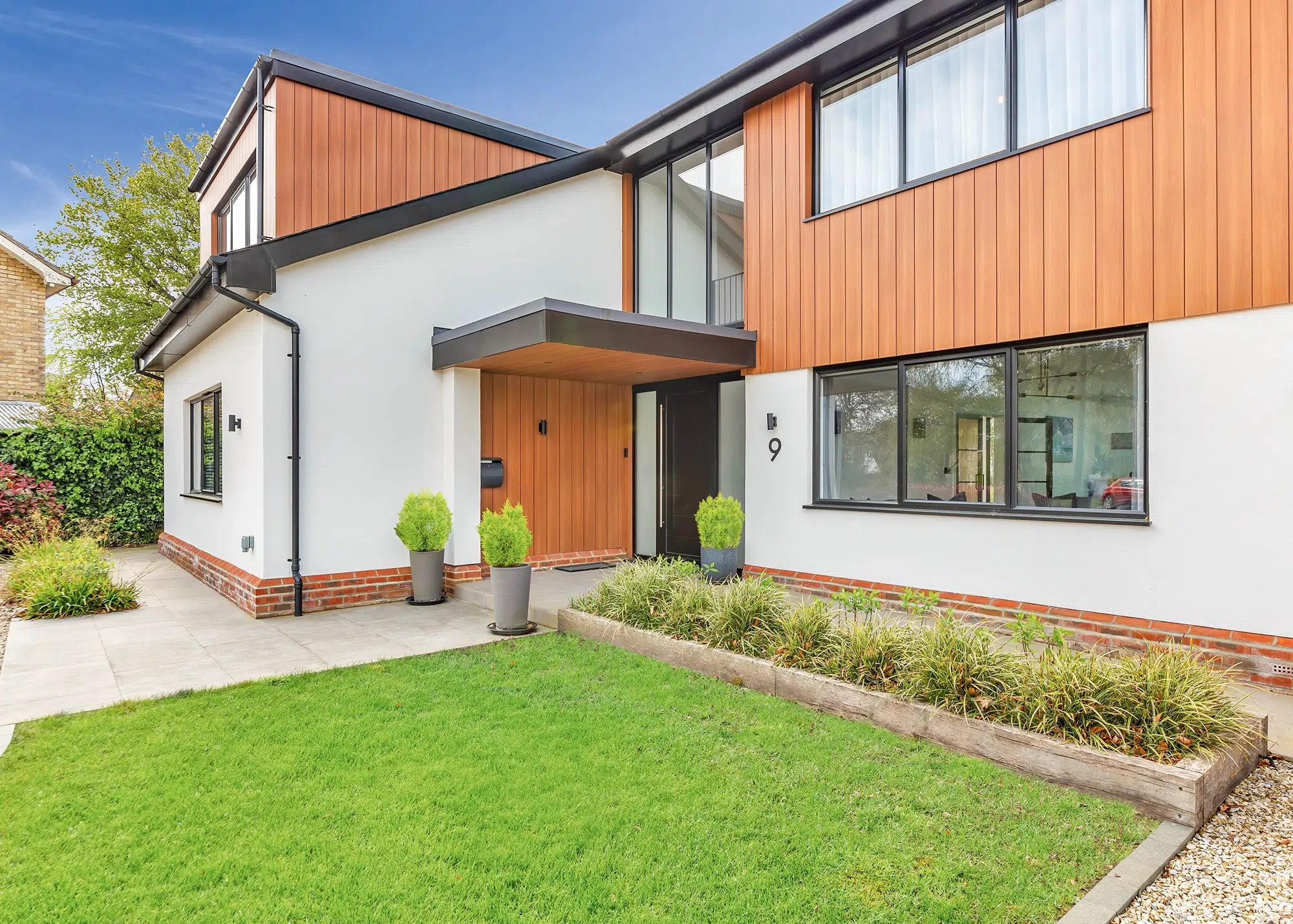
The front door was moved slightly in the redesign and the tweak has had a big impact on how the entryway feels
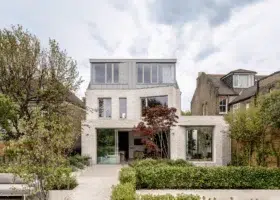
Sophie gathered photos of house styles featuring modern white render and cedar cladding, open-plan kitchen-diners and double-height hallways with galleried landings. “Having lived in a period property with high ceilings, we wanted volume and light,” she says. “We liked the idea of walking into a big hallway with a view to the back garden.”
The couple drew up a shortlist of four local architects and architectural designers they found online. One produced a high end design that an architect friend said would be very expensive to build. “We wanted to work with someone we got on with and who understood our objectives,” says Sophie. “We liked that Rik Hall from Arc8 Projects was approachable. As we went through the design process with him, he’d sit with us, we’d discuss ideas, and he’d rough out sketches – it was an easy relationship.”
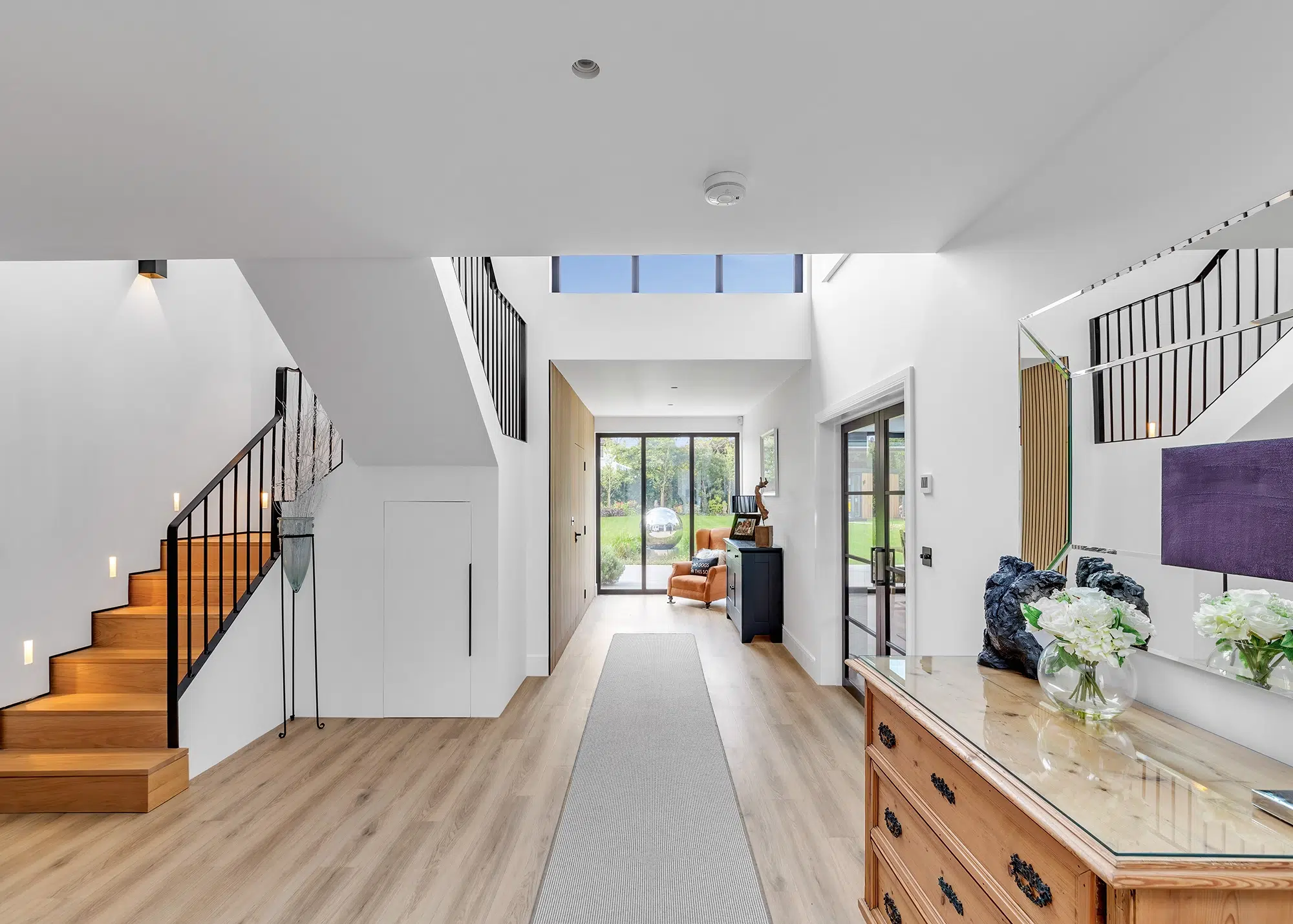
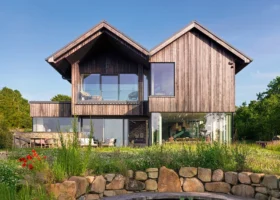
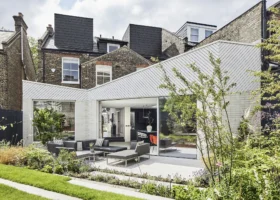
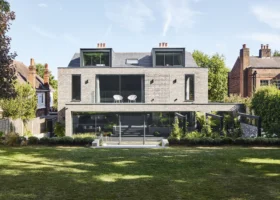
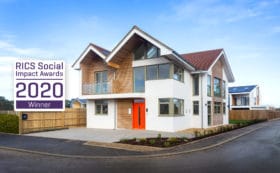
The design is clean and modern inside and out, with an atrium hallway making an impressive entrance
Rik took on the couple’s brief and also simplified the internal layout. Walls were moved and a central hallway created to divide the main living spaces from quieter rooms. “We could have had a formal sitting room at the front, or a bedroom, but we use the space as a gym,” says Sophie. “We’ve also got a downstairs bedroom suite for my mum who struggles with stairs – it’s very private.”
By April 2019, Rik had submitted plans for alterations and additions to the existing bungalow. The planning officer came to site and was in favour of the design, which was approved six weeks later. “Sometimes people go into planning asking for too much volume or height or propose uncharacteristic materials,” says Rik. “We’re always prepared to push the boundaries but will advise clients if we feel they’re being unrealistic. It helped that Peter and Sophie kept their design simple and in keeping.”
- NAMESPeter & Sophie Hill
- OCCUPATIONSRetired project & programme manager & marketing director
- LOCATIONSurrey
- TYPE OF PROJECTSelf build
- CONSTRUCTION METHODTimber frame
- PROJECT ROUTEArchitect design with independent project manager
- PLOT SIZE0.25 acres
- LAND COST£780,000
- BOUGHT2019
- HOUSE SIZE300m2
- PROJECT COST£743,720
- PROJECT COST PER M2£2,479
- TOTAL COST£1,524,000
- BUILDING WORK COMMENCED October 2020
- BUILDING WORK TOOK32 weeks
- CURRENT VALUE£1,900,000
Deciding to self build instead of renovate
Rik took on the tender process to find a builder. Three contractors responded, but quotes averaging £617,000 prompted a whole new approach to the project. “Rik advised we could probably build from scratch for a little more money, mostly because a self build is VAT-free,” says Sophie. “Also, if we broadly stuck to the approved design, he could re-apply for the new build knowing it was acceptable in principle and we wouldn’t need to start again with planning. We asked a local estate agent for their opinion. They said a brand-new house would have a higher value because of its new spec and energy efficiency – we decided to go for it.”
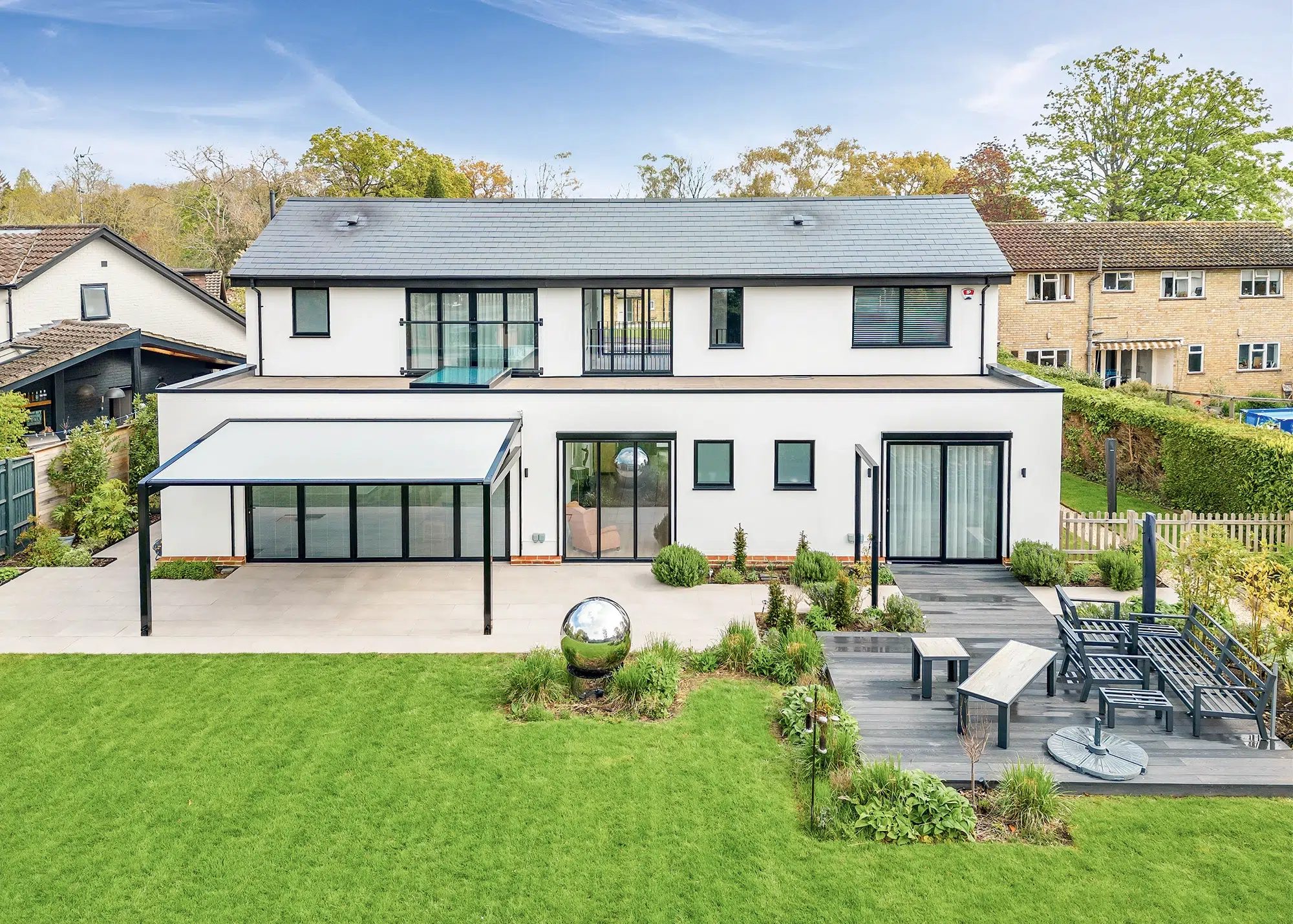
A pergola helps shield the kitchen-diner from strong sunlight and also allows a sheltered place to sit outside whatever the weather
Peter and Sophie took another look at their approved design before going back to planning. They also thought about how they’d build the house. At one of the Build It Live exhibitions, they looked at structural insulated panels and timber frame builds and spoke to a few companies.
They plumped for Kingspan Timber Solutions, which delivered fantastic results. The company has a 60-year heritage, but has sadly announced its closure by the end of 2025. “We’d heard good things about timber frame houses because my sister and her husband had built one in Scotland,” says Sophie. “We liked the KTS system because of the fast on-site build time and energy efficiency, with the latter being a planning requirement.”
The project features Kingspan Ultima, an insulated prefabricated closed-panel wall system. Made in thicknesses from 187mm-237mm, the factory-manufactured panels provided U-values from 0.16 W/m²K down to 0.11. Panels are delivered to site with external breathable membranes and timber battens already in place.
CLOSER LOOK From extension to self buildAfter deciding to demolish and replace the bungalow, Peter and Sophie tweaked the design with their architect, making changes that would have been invasive and costly if they’d been renovating. An odd shower room add-on to a bedroom on the side of the house didn’t need to be in the design anymore, while the plumbing and drainage could be easily relocated.
“We also decided we didn’t need a study and were able to relocate the plant and laundry to this side of the house and then use the space where the internal garage had been for a boot room-dog room off the kitchen,” says Sophie. Rik made the front dormer bigger and raised the roof ridge slightly, creating more headroom in bedrooms. “We were able to push the height because we were building a house rather than extending the bungalow, and the design was in keeping with other homes on the close,” he explains. Another key change was moving the front door to the right, creating more space for the stairs and guest bedrooms above. This would have been an expensive upheaval had they done this in the bungalow renovation. “Although it was tempting to start the design from scratch, we didn’t want to add to our architect’s costs or pay for a new planning application before we’d got anything agreed,” says Sophie. “Sticking to the approved plans was the best way to move forward.” |

Navigating struggles caused by the pandemic
Before going back to planning, the couple asked the same building contractors to re-tender – this time quotes came back averaging £651,000. They also approached an independent project manager (PM). “At the time it made sense to go with an independent PM as we didn’t need a house builder as such, but trades to take the project on after KTS had built the timber frame structure,” says Peter. “The PM’s fee was also cheaper than a building contractor’s mark-up.”
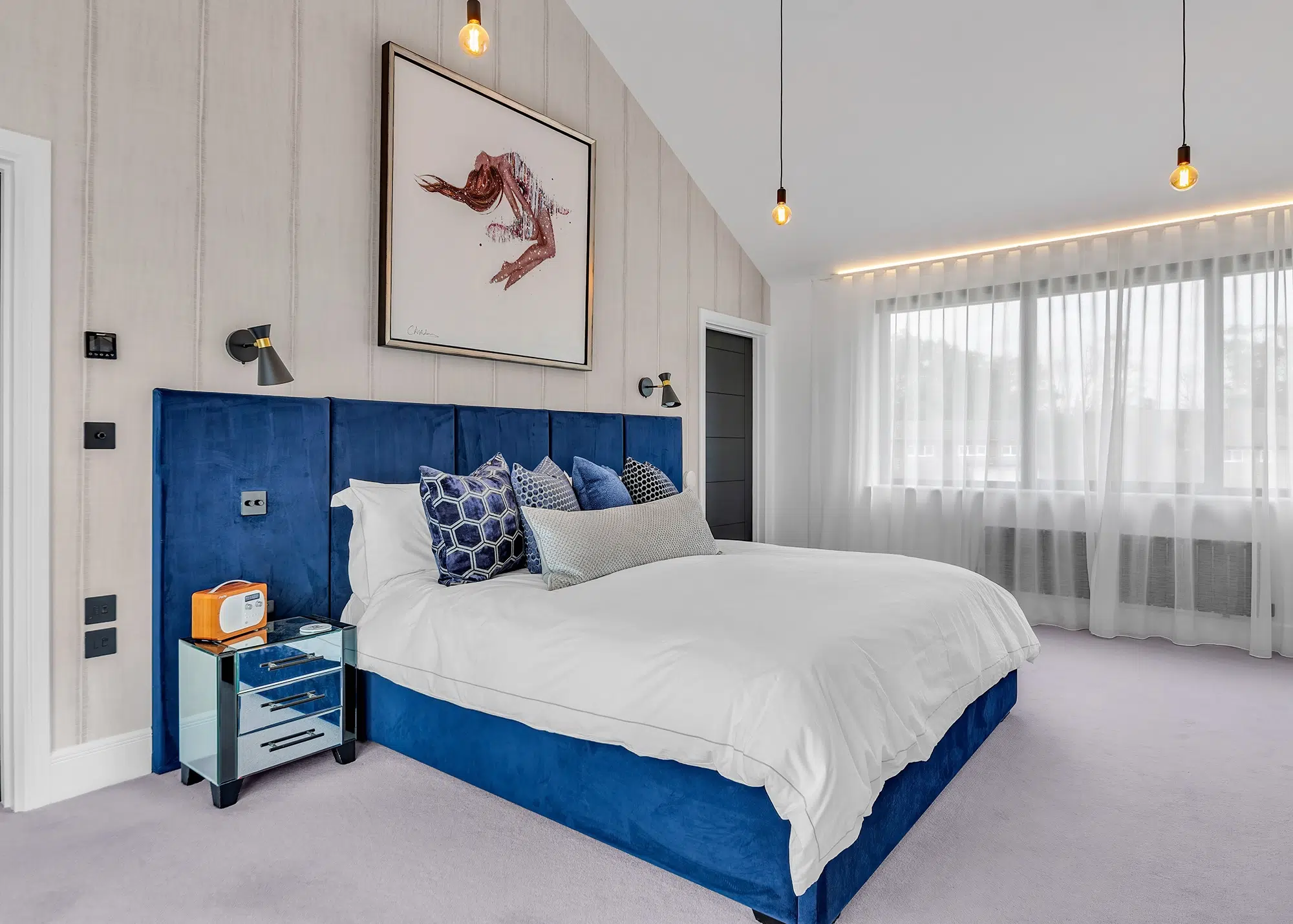
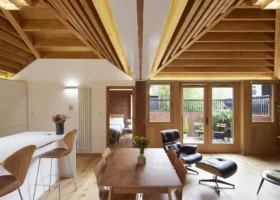
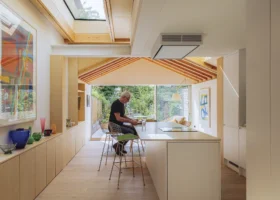
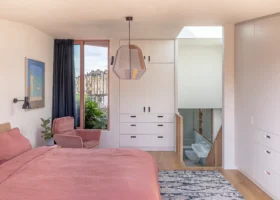
The interiors are bright and simple, with the second storey benefiting from large vaulted ceilings
Now confident about moving forward, Rik submitted the couple’s revised design in February 2020 and got approval in March – on the first day of the first lockdown. “We already had approval for the second storey so that helped speed up the response,” Rik explains. “Often an overbearing house or loss of privacy raise problems but the footprint of the property was set reasonably central on the plot, which meant it wasn’t an issue. Plus we’d kept neighbours updated and they were supportive of the project.”
Of course, the Covid pandemic immediately impacted progress. Demolition was delayed until October and the couple moved into a rental property nearby. The works soon revealed the bungalow’s shallow foundations, damp problems and crumbling pipework, which thankfully they no longer had to be concerned about. However, moving the drainage and dealing with tree roots resulted in the foundations needing to be deeper than expected. “Almost straightaway our groundworks cost jumped from £50,000 to £80,000,” says Peter.
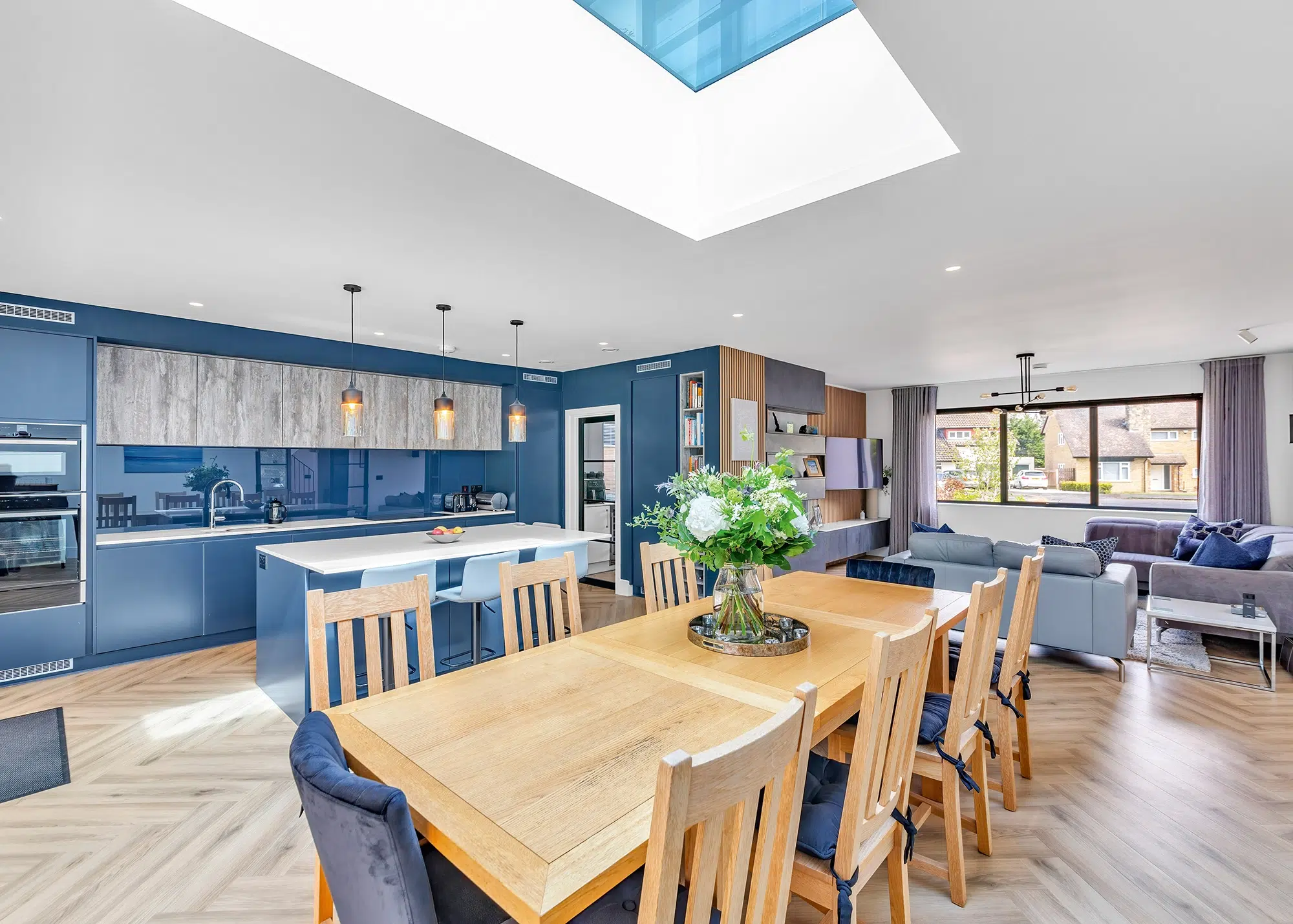
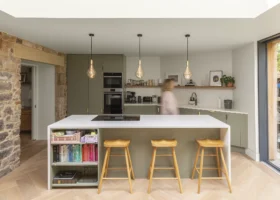
The kitchen was designed, supplied and fitted by County Kitchens. The Hills chose a handleless style to suit the contemporary look of their new home
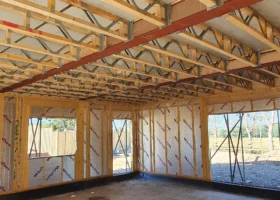
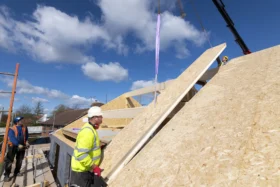
“The foundations also had to be completely level for the timber frame.” KTS delivered the panels in December with a coded assembly system that their erection team followed. There was a minor delay when someone got Covid, which meant the whole team had to isolate, but KTS brought in a new team to carry on. “We had awful weather, it was very wet and snowy, and I was worried about the panels getting wet,” says Sophie. “But of course they were fine, the panels had been treated and there was time for them to dry out. KTS got the whole shell built in just six weeks.”
Getting involved with the self build
The PM supplied all the trades and came to site a couple of days a week to keep an eye on progress. However, the set-up became fragmented compared to the couple’s previous experience working with a main contractor. “When we had a problem, sometimes the line of responsibility was blurred, whereas with a main contractor it’s very clear who needs to deal with it,” says Peter. “There were times we were given short notice to make a decision and despite providing an information document, it wasn’t always referred to.”
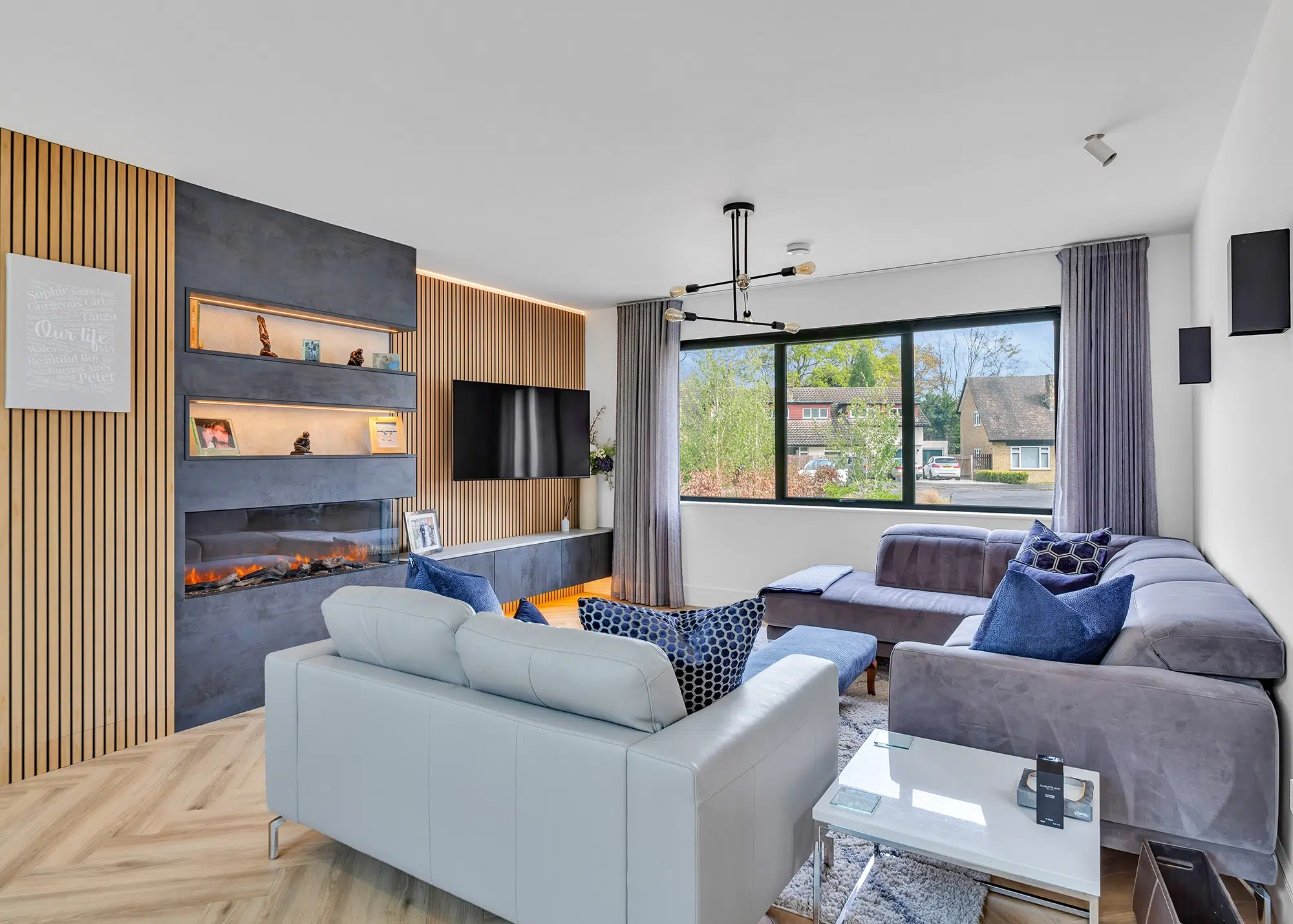
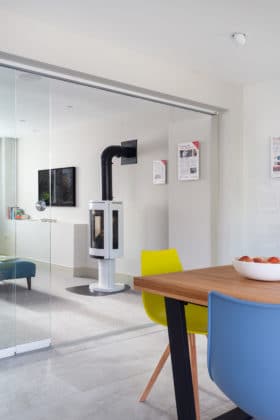
After previously living in a draughty Victorian house, Peter and Sophie are enjoying their highly insulated home. The whole of downstairs is fitted with underfloor heating while the contemporary look of the Aga Rayburn Try View 125 electric fire provides additional warmth and makes a focal point in the room
Since the pandemic had fast-tracked Peter’s retirement, he was able to be more involved than he’d expected. Building during the second lockdown meant Sophie was around more, too. Peter kept an eye on costs with his own spreadsheets. “After we’d moved in, we discovered the snagging was at our cost, too,” Peter adds. “That said, all the subcontractors the PM recommended were very good and I can’t think of one I wouldn’t use again.”
Despite the challenges, the project progressed steadily and the couple mostly managed to avoid materials shortages and price hikes caused by the pandemic. Although, hold-ups on the Suez Canal meant making new choices. “We couldn’t source black factory-painted doors anywhere in the UK so we painted white ones on site instead,” says Sophie. “I also wanted grey bricks around the external base plinth but compromised with red, which I don’t notice now.”
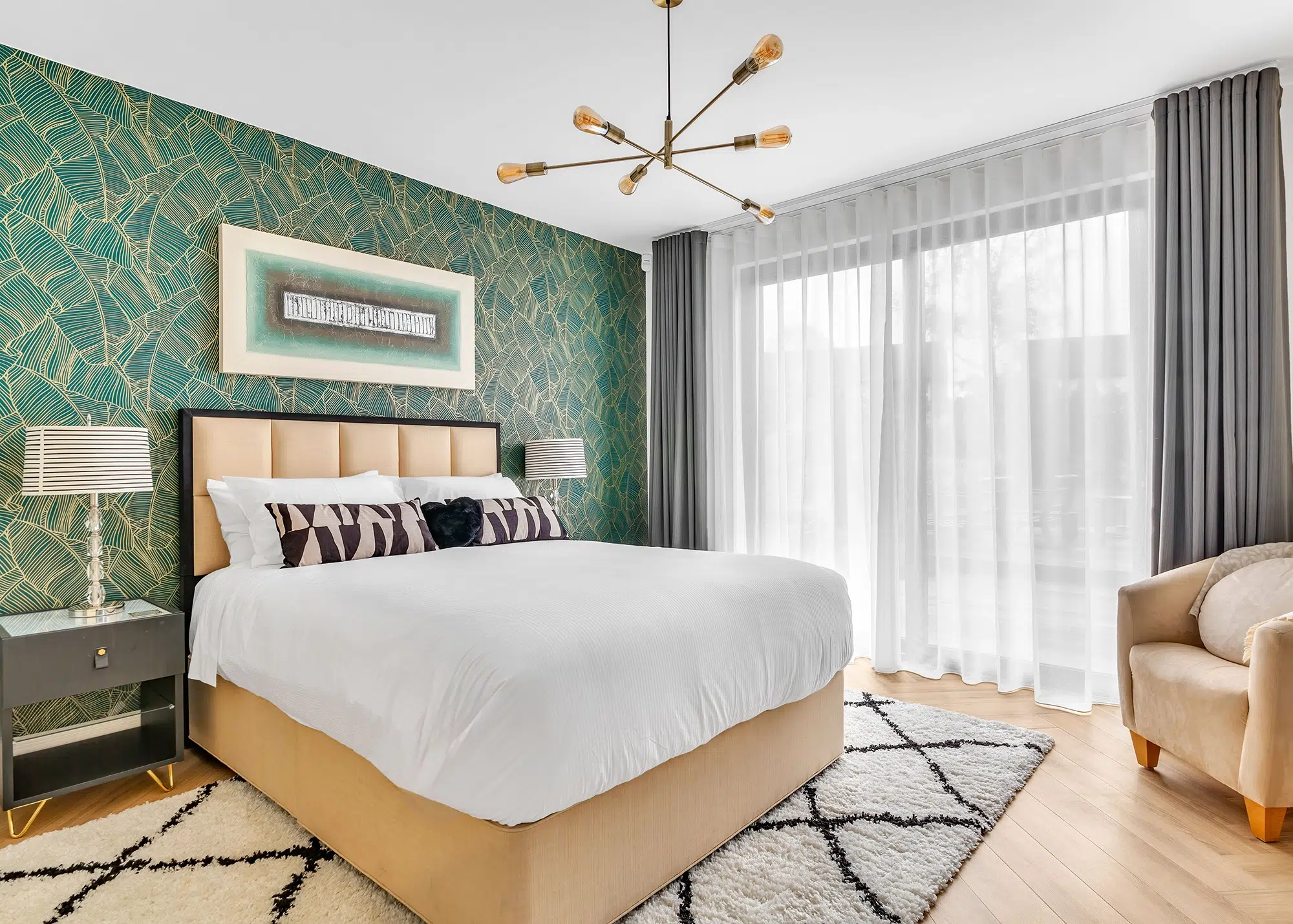
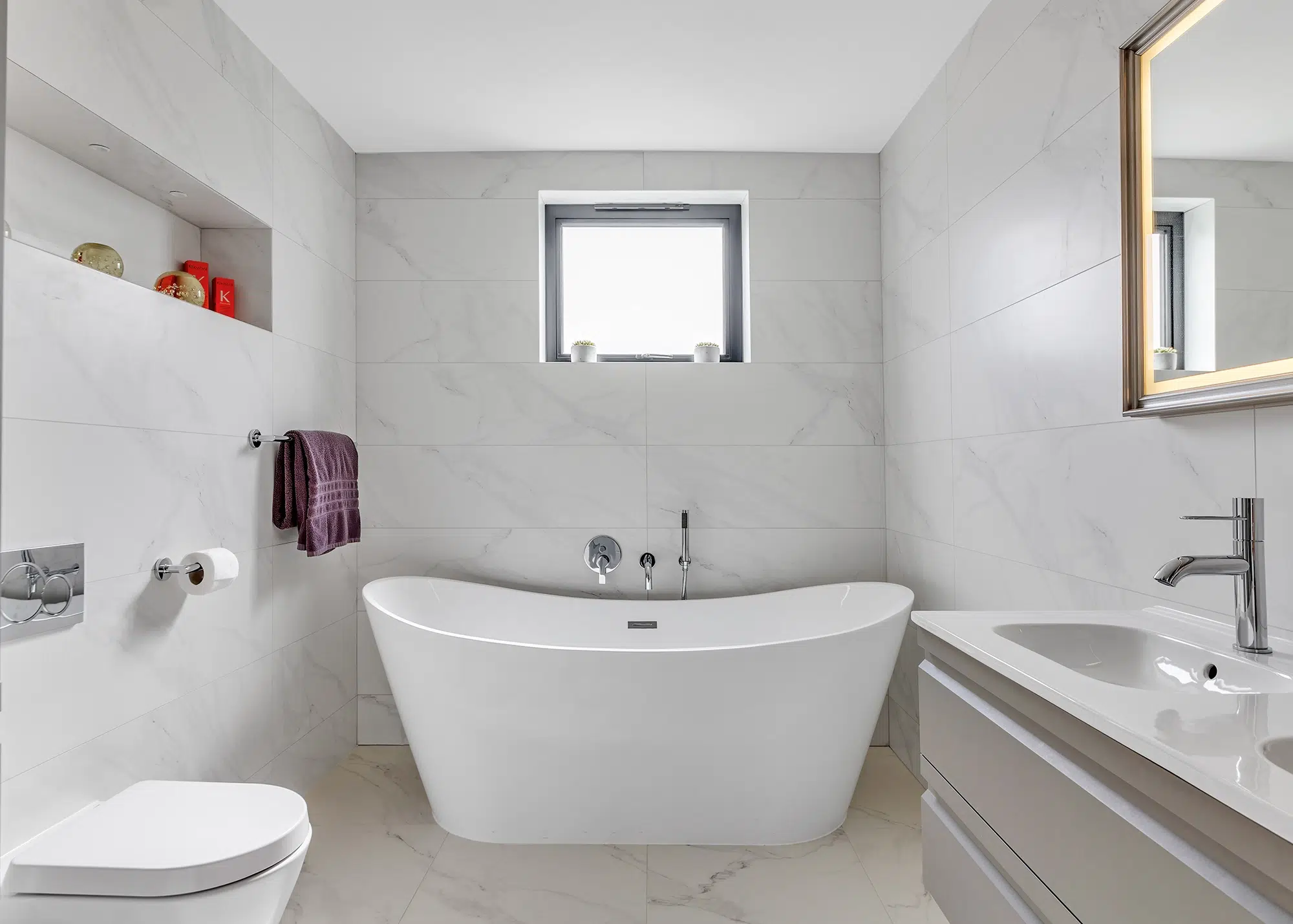
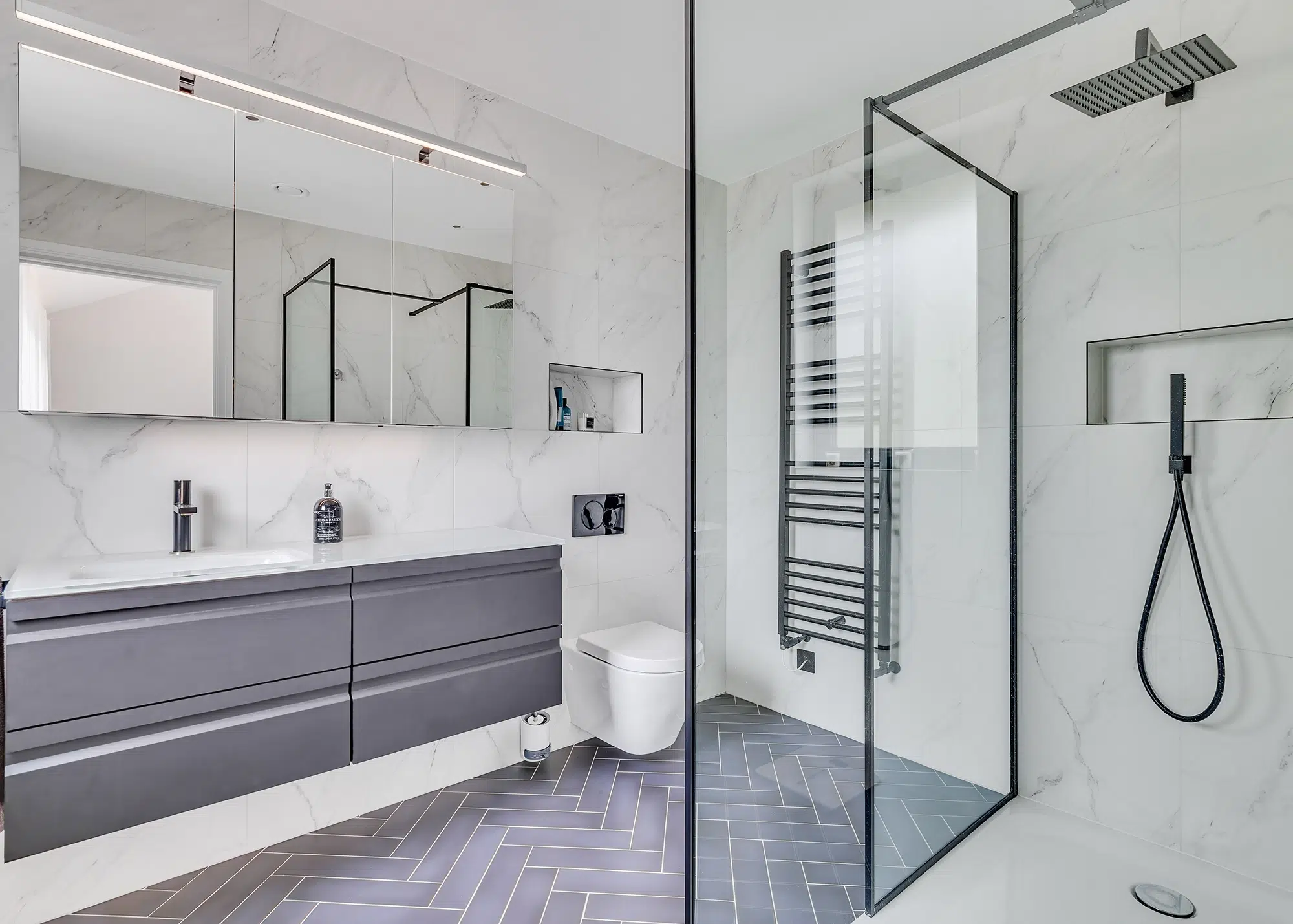
The couple moved into their new home within eight months. They began gutting the remains of the garden and started the hard landscaping. The following summer, they hired a garden designer to help advise on plants and their landscape gardener neighbour did all the planting. Along with a higher spec kitchen and bathrooms, the external work pushed up their costs, although Peter and Sophie say the final finishes were important to do the house justice.
“We’re first on the street to knock down and start again, and we have no regrets,” says Sophie. “The problems we uncovered in the old bungalow would have been expensive to fix, whereas the new build was a quick and straightforward project. I often pull into our drive and think this is a lovely place to live, we’re very fortunate.”
We learned…
- Stay in control by finding out when key decisions need to be made. Sophie had to ask her interior designer friend for a fast turnaround on bathroom layouts when at short notice the plumber wanted instruction on where to do the first fix plumbing.
- It’s useful to put together briefing documents for the trades so they have a reference point if they have questions and you’re uncontactable at work. Include information like plumbing and electrical plans for each room, skirting and architrave styles etc.
- Sticking to the approved design saved us from spending more on architect fees and a new planning application – and we got approval in just six weeks.
Jane Crittenden
You may be interested in