

- Plan ItBack
- Design ItBack
- Build ItBack
- Homes
- ProductsBack
- CostsBack
- Self Build Cost Calculator
Estimate your project costs instantly with Build It's interactive self-build cost calculator
Calculate Now - Costs & Finance
- Contracts & Warranties
- Build It Estimating Service
Get an accurate, detailed cost breakdown of your project
Submit plans
- EventsBack








































 Login/register to save Article for later
How to Tell When Your House Needs Re-Rendering – The Key Signs to Look for

Whether you’ve started to notice unsightly cracking or discolouration in your home’s rendered facade or are simply after a change in aesthetic, re-rendering is a great way to spruce up the look and finish of your property. Here, I’m looking at the telltale signs your render might need to be replaced, the most popular options on the market, how to specify and apply the product, and the associated costs.
When should you replace the render rather than repair it?
There are several clear signs that a house may need to be re-rendered, with visible damage to the existing finish often being the first clue. “Common indicators include visible cracking, hollow sounding areas where the render has debonded from the substrate and sections of render breaking away or crumbling,” says Gerry Gould, technical sales consultant at SAS Render Systems. Frost damage can further accelerate this deterioration, allowing water to penetrate and worsen the problem over time. Persistent staining or noticeable algae growth that cannot be removed through surface cleaning may also highlight that moisture has become trapped beneath the render.
Problems are not always limited to the exterior. “Cold internal wall surfaces, condensation or rooms that are tricky to heat are common signs that the external fabric is no longer performing effectively, which can point to failing render or insulation,” says James Erskine, specification and partnerships manager at CorkSol. Beyond reducing efficiency and comfort, worn or damaged render can also significantly hinder the kerb appeal of your home and, in some cases, signal deeper structural issues that are imperative to address as soon as possible.
Do you need planning permission to re-render a house?
The first thing to do is to check whether you live in an area where you will need to apply for planning permission. Normally, re-rendering an existing property will be covered under permitted development, but if you live in a listed building, conservation area or similarly protected home, you will need to consult your local planning authority to check if the exterior works need a formal application.
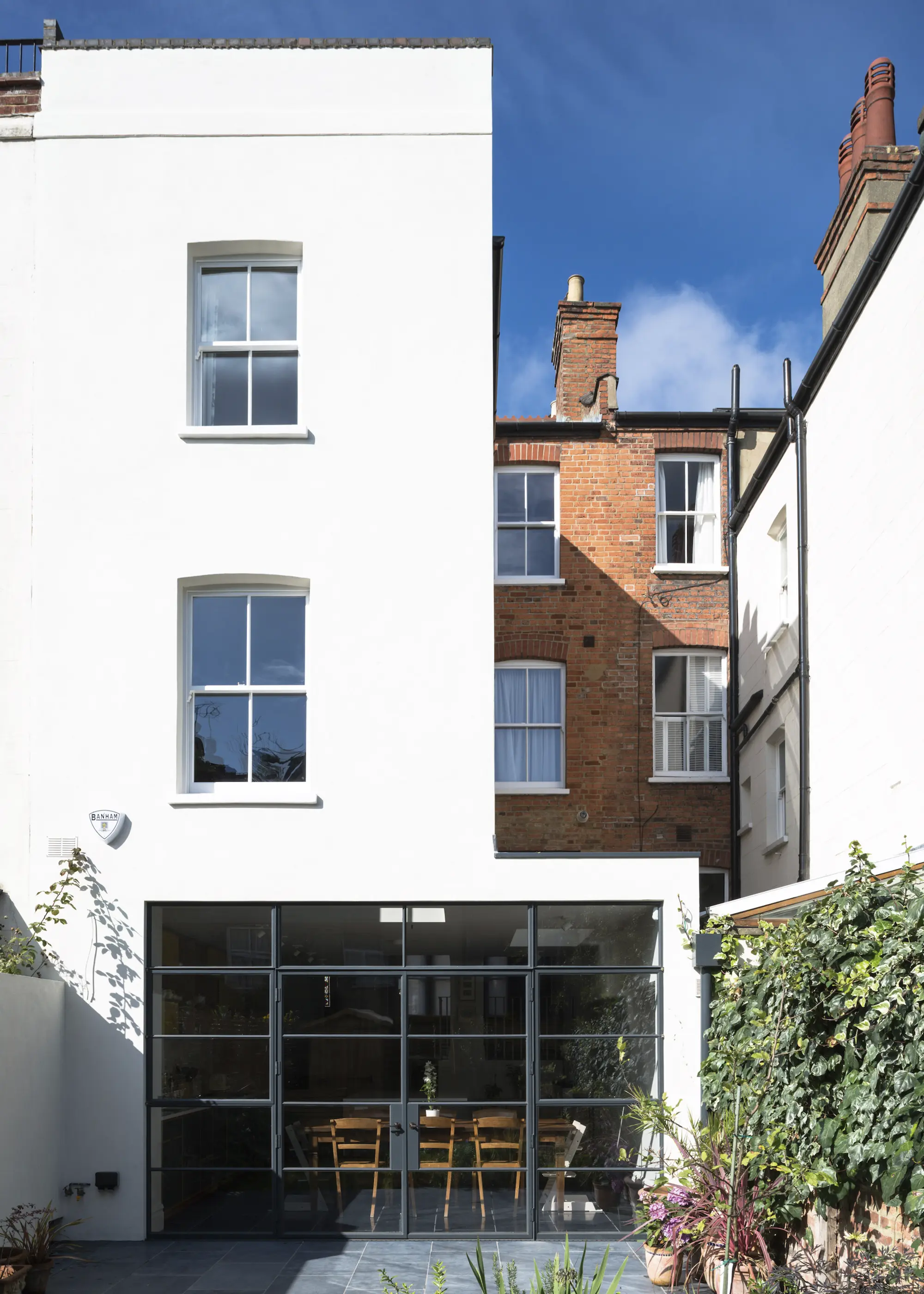
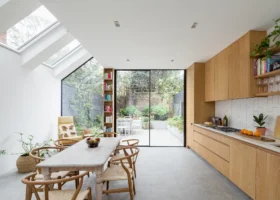
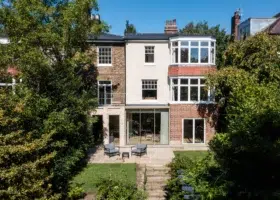
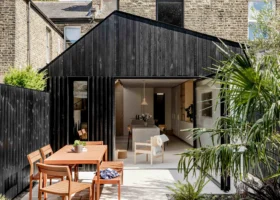
MW Architects completed a side return extension to this Victorian terraced home, creating a spacious kitchen-dining area that opens to the patio area through steel heritage-style glazed doors. The rear elevation has been rendered for a cohesive, clean finish. Photo: French + Tye
Who should carry out the works?
It is strongly advised to hire a professional to carry out the renovation works. They will be best-placed to specify the best system for your dwelling, and ensure a seamless and long-lasting finish. A specialist will also be able to determine if the walls under the render are sound or have any underlying issues that will need to be addressed prior to any re-rendering works being carried out.
How can you prepare the home’s facade for re-rendering?
You will struggle to achieve a quality, fresh new finish if your installer fails to prep your external walls correctly. “All loose, cracked or debonded render should be removed back to a sound substrate and the walls should be assessed for any further damage,” says Gerry. The wall must then be cleaned and keyed, creating a rough surface for the new render system to be applied.
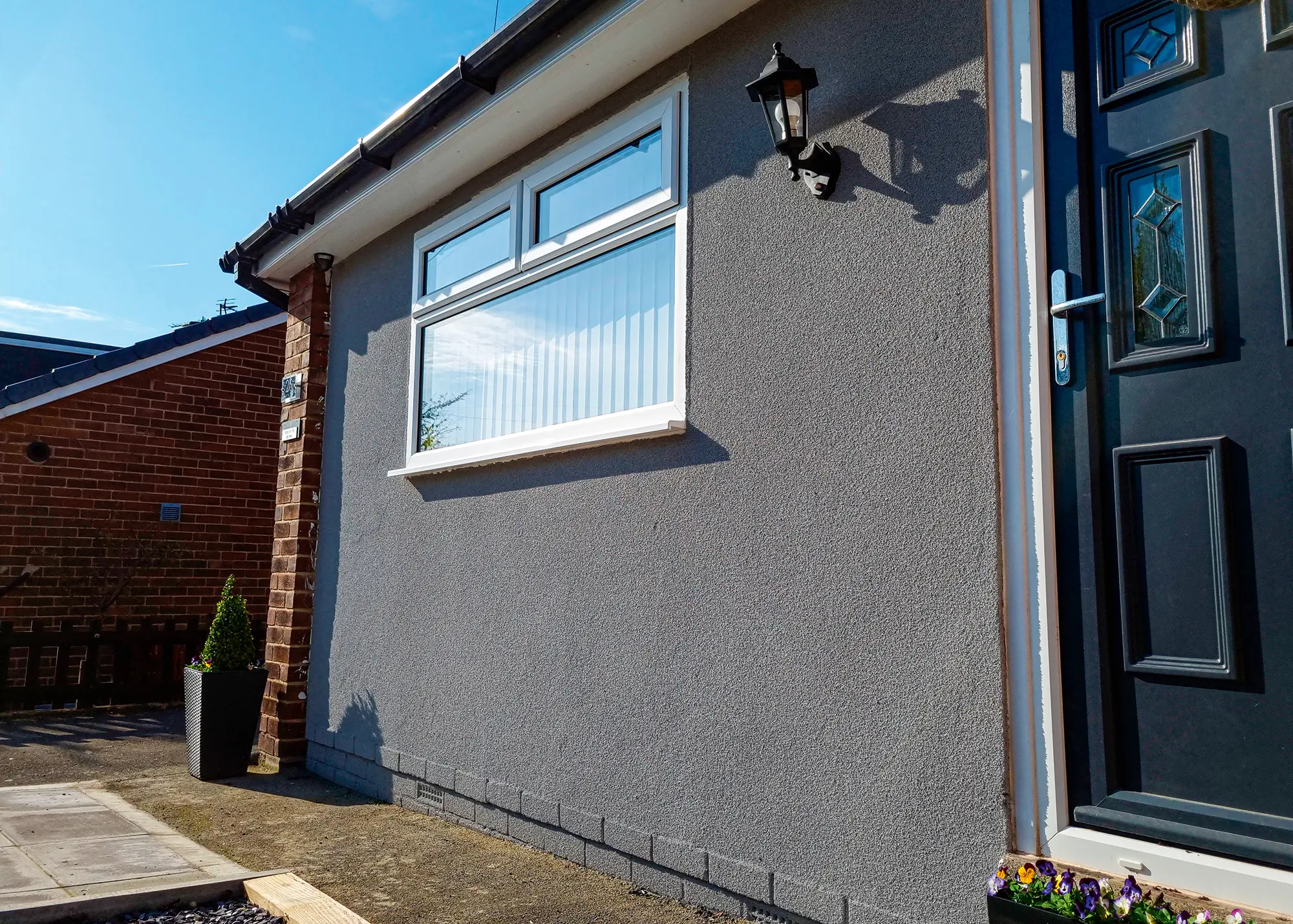
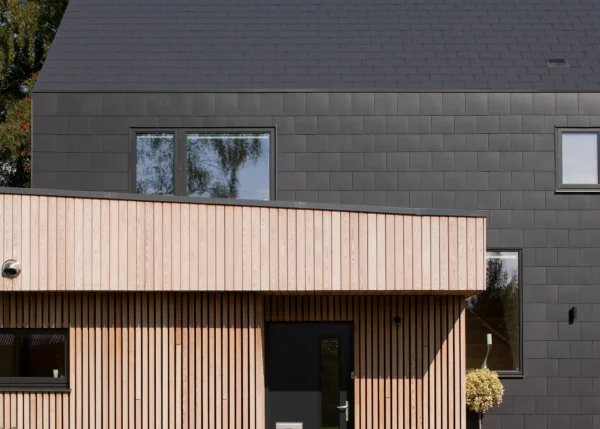
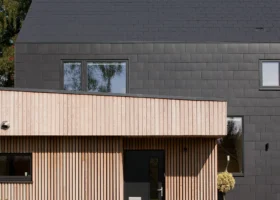
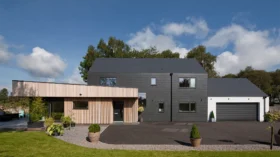
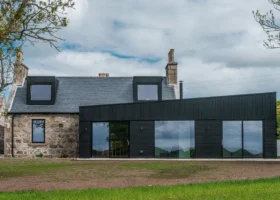
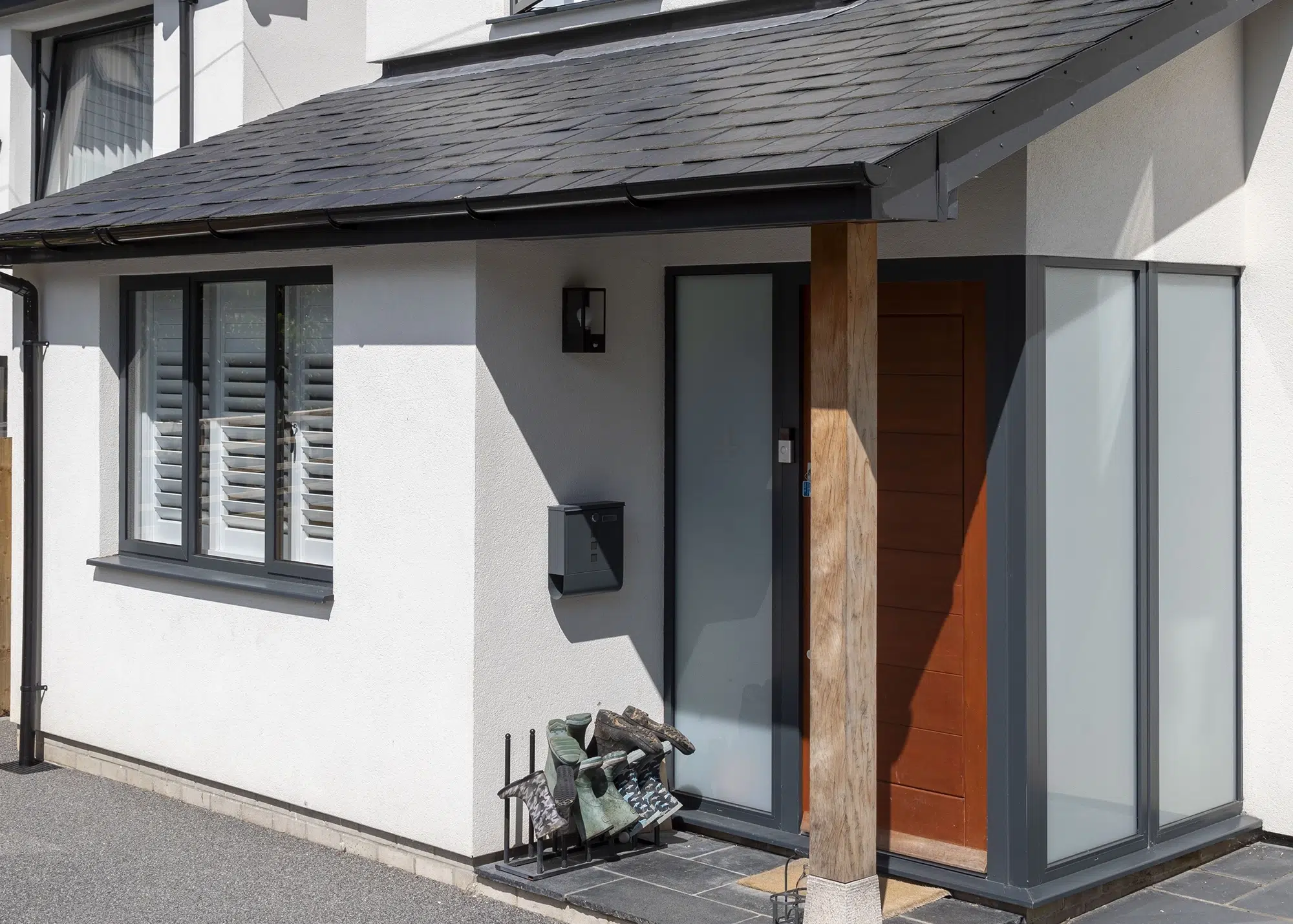
This property features a dark grey render finish from CorkSol
“This may involve mechanical cleaning, localised masonry repairs or the use of bonding agents and reinforcing mesh where required,” says Gerry. Ideal weather conditions are vital for preparation works. Hot temperatures can lead to shrinkage and cracking, while rain and high humidity can prevent proper drying and leave you with an uneven finish.
Case study Traditional cottage transformation
Build It’s historic buildings expert and conservation specialist Alan Tierney took on the challenge of renovating this grade II listed property in the beautiful Devon countryside. The upper half of the house was covered in a very hard cement render that was not only unsightly but was also extensively cracked not to mention impermeable. Due to the home’s traditional cob walling, this meant that rainwater could get trapped – potentially causing the structure to slump if it was to get too wet.


A team from local specialists Heritage Cob and Lime carefully removed the cement render and luckily the underlying cob was in good condition. A new lime render was applied in three coats to leave an open-textured, sponged finish that maximises surface area and helps to promote the evaporation of any moisture. This render was then painted using Graphenstone lime paint, which is highly breathable and much more durable than a traditional limewash option.
Which type of render should you specify?
When re-rendering a facade, the right system depends heavily on the building’s age, construction type and the finish you want to achieve. For modern homes, performance and clean aesthetics often go hand-in-hand. “Contemporary buildings, particularly those of cavity wall construction, are generally well-suited to cement-based render systems, which provide increased strength, impact resistance and durability,” says Gerry. Silicone and acrylic renders are also popular choices for newer properties, creating a smooth, contemporary look while being water-repellent and low maintenance.
Older period homes, especially those with solid walls, require a different approach. Breathability is crucial, as moisture needs to move naturally through the structure. “Selecting a vapour permeable render allows moisture to move through the wall rather than trapping it in and potentially leading to water damage,” says James. Flexible lime-based renders are often ideal for heritage buildings, helping to manage damp and reduce cracking, whereas cement systems can restrict airflow and damage the walls behind.
Re-rendering offers the chance to improve energy efficiency by adding an external wall insulation (EWI) system. Teamed with the right render, this will deliver enhanced thermal efficiency alongside a choice of render colours and textures – transforming aesthetics and performance.
Case study 1970s house in Kent upgraded with an energy-efficient retrofit
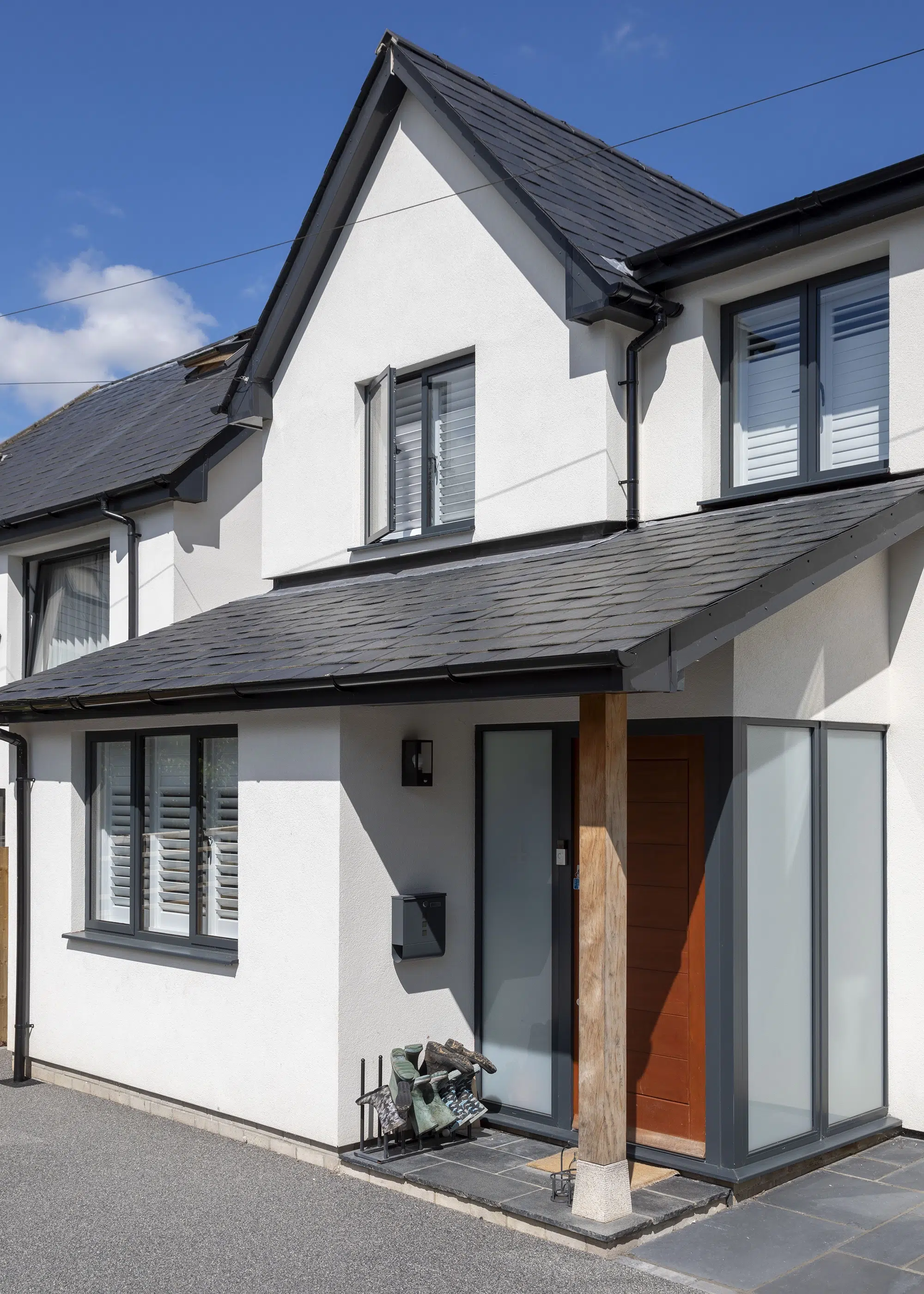
Matt and Emily Lightbody’s contemporary-looking home in Kent couldn’t be more different from the boxy 1970s brick house next door, which is amazing when you learn that it used to be more or less exactly the same. The property’s transformation, with a side extension built over the original garage and rendered finish, is more than just skin deep, though: driven by their desire to live more sustainably, it’s also a brilliant case study for retrofitting in a pragmatic way.
The couple bought the house in late 2016 and did some modernisation work before even moving in, mainly knocking through to create a big open-plan kitchen-diner across the back of the house. In 2022, however, they felt ready to tackle the extension and wider renovation.
Initially, the idea was to go all-electric with an air source heat pump. Andy counteracted that because the boiler was fairly new, this was not cost effective. “What we should be doing is trying to reduce the need for energy in the first place.” In terms of the new energy setup, there is an 18kW solar PV array that feeds into battery storage. The roof pitches both east and west, so the panels are on both sides. As the house got more tightly sealed, so a new challenge emerged, with a poor indoor air quality and build-up of moisture inside. Andy proposed a mechanical ventilation and heat recovery (MVHR) system to solve the problem.

Wrapping the exterior of Matt and Emily’s home in insulation was key to improving its thermal performance. The house uses Baumit’s EPS (expanded polystyrene) insulation, a rigid board that is waterproof, withstands temperature extremes and can reduce noise. In order to be effective, there needed to be a continuous skin of insulation, with 120mm used on the original cavity brickwork (giving a U-value of 0.18 W/m²k).
Knauf Aquapanel cement board is used as sheathing to the outside of the timber frame, with the insulation fitted directly on top. The whole house was finished with Baumit silicone render, resulting in a home that’s not only thermally efficient and airtight, but seamlessly unifies the old and new structures from a visual perspective, too.
| Location | Kent |
| Original house cost | £455,500 |
| House size | 144m² |
| Project cost | £265,321 (plus £62,000 in 2016) |
| Project cost per m² | £1,843 |
| Current value | £900,000 |
How much does it cost to re-render a house?
The price of re-rendering your home will mainly come down to the size of the area, the type of finish you select, if you choose to further insulate your walls and the condition of your exterior facade. “As a broad guide, homeowners might expect to pay around £60-£90 per m² for a basic re-render using traditional cement, rising to £90-£150+ per m² for premium systems such as silicone renders or fully reinforced systems,” says Gerry. You will need to factor into your budget the price of renting the most suitable scaffolding, and for the removal and correct disposal of the old finish.
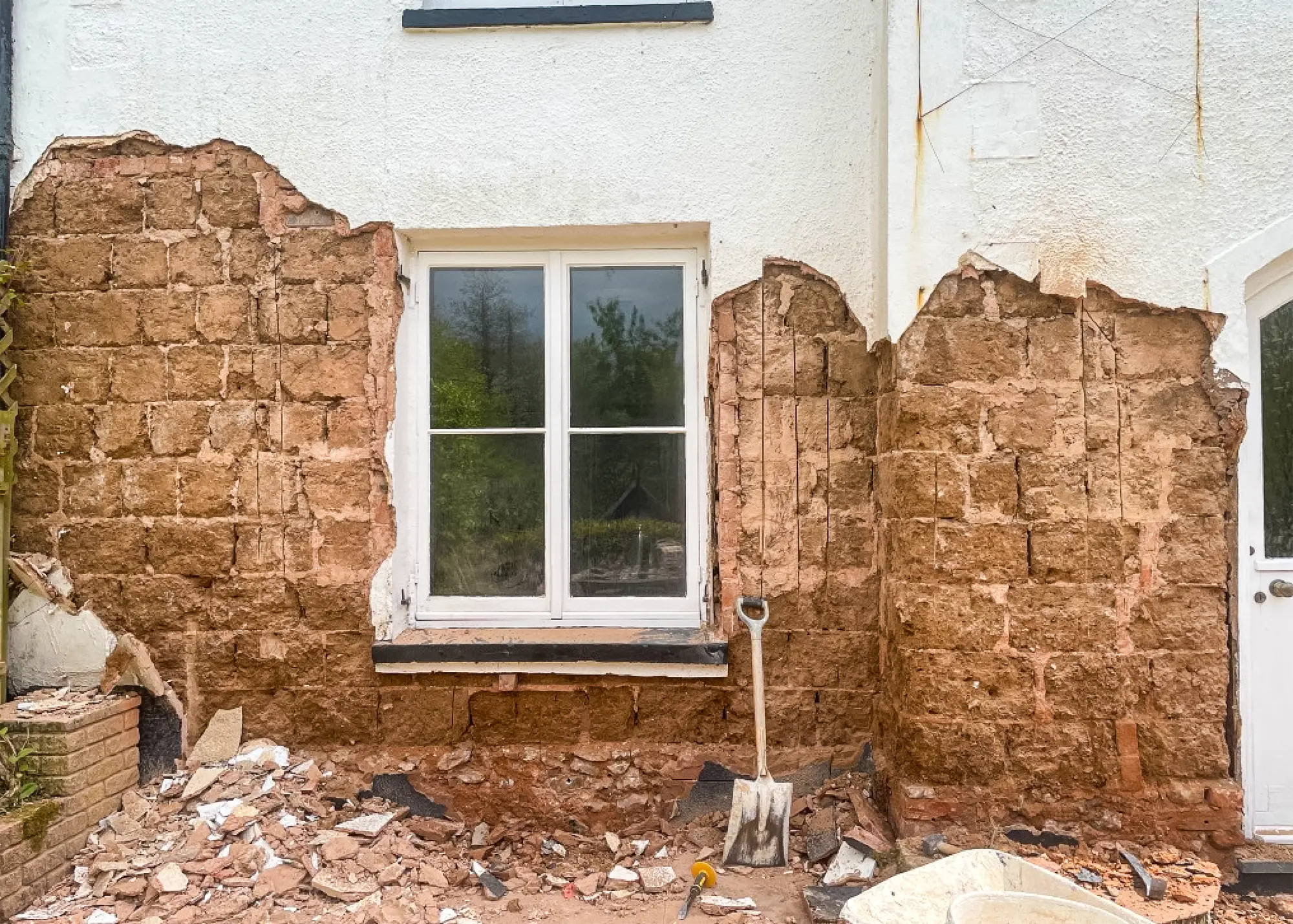
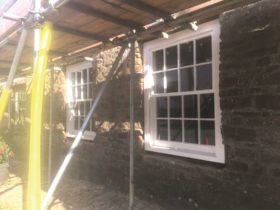
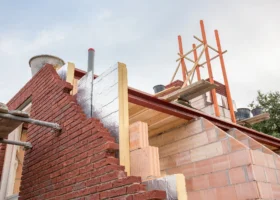
The cement render on this cob wall home in Sidmouth, Devon, is in the process of being removed to allow for a more breathable solution that enables the original walls to dry out naturally, rather than locking in moisture
Before you go all-out, consider whether a full re-render is necessary. Patch repairing areas of damage may be perfectly viable, and much cheaper, depending on your long-term plans for the project – provided they’re not hiding more significant issues beneath the surface.
If the substrate and existing render are sound, but you simply want a change, spray-on renders are a cost-effective alternative. “As it can be applied over existing render or pebbledash, many homeowners find this a more budget-friendly way of refreshing an exterior,” says James. Although a higher upfront cost, completely re-rendering you home will provide you with improved durability and reduced maintenance – all adding to the overall value of your home.
Scarlett Deamer

You may be interested in