How to Choose Sustainable Materials for Your Retrofit Project – We Explore the Top Solutions
Undertaking a retrofit project will mean improving your home’s efficiency inside and out. Upgrade your home the healthy way with Rebecca Foster’s guide to materials and finishes that enhance style, air quality and eco credentials
Rebecca Foster
If you’re planning a retrofit, it’s important to not only improve thermal comfort and lower bills, but also to consider how the materials you choose affect the health and wellbeing of the building and its occupants.
Many mainstream construction and finishing materials off-gas volatile organic compounds (VOCs), negatively affecting air quality and potentially exacerbating allergies and respiratory conditions. One way to avoid this is to specify high-quality, sustainable materials that facilitate a breathable building fabric and a healthy interior finish. Here, I’m looking at the different characteristics that make a material eco-friendly, and how you can incorporate them into your own retrofit scheme.
Why is breathability so important when specifying materials for a retrofit?
In older houses, maintaining a breathable building fabric, where moisture vapour can escape effectively – thereby preventing condensation and mould growth – should be a priority. Period homes were designed and built to manage moisture naturally, allowing it to pass in and out of the structure without being sealed inside. That’s why period properties are typically unsuitable candidates for impermeable, modern solutions that disrupt this delicate equilibrium.
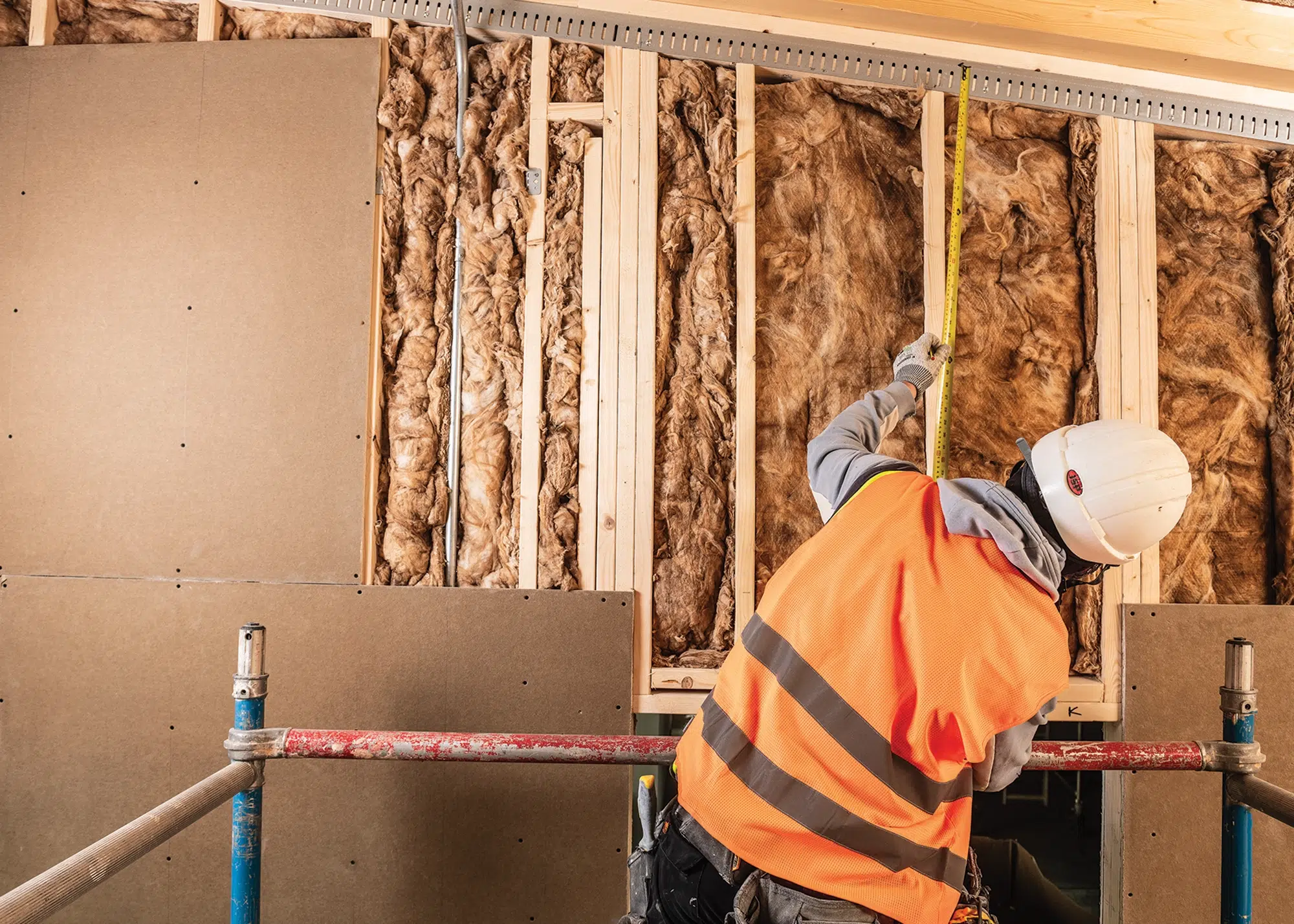
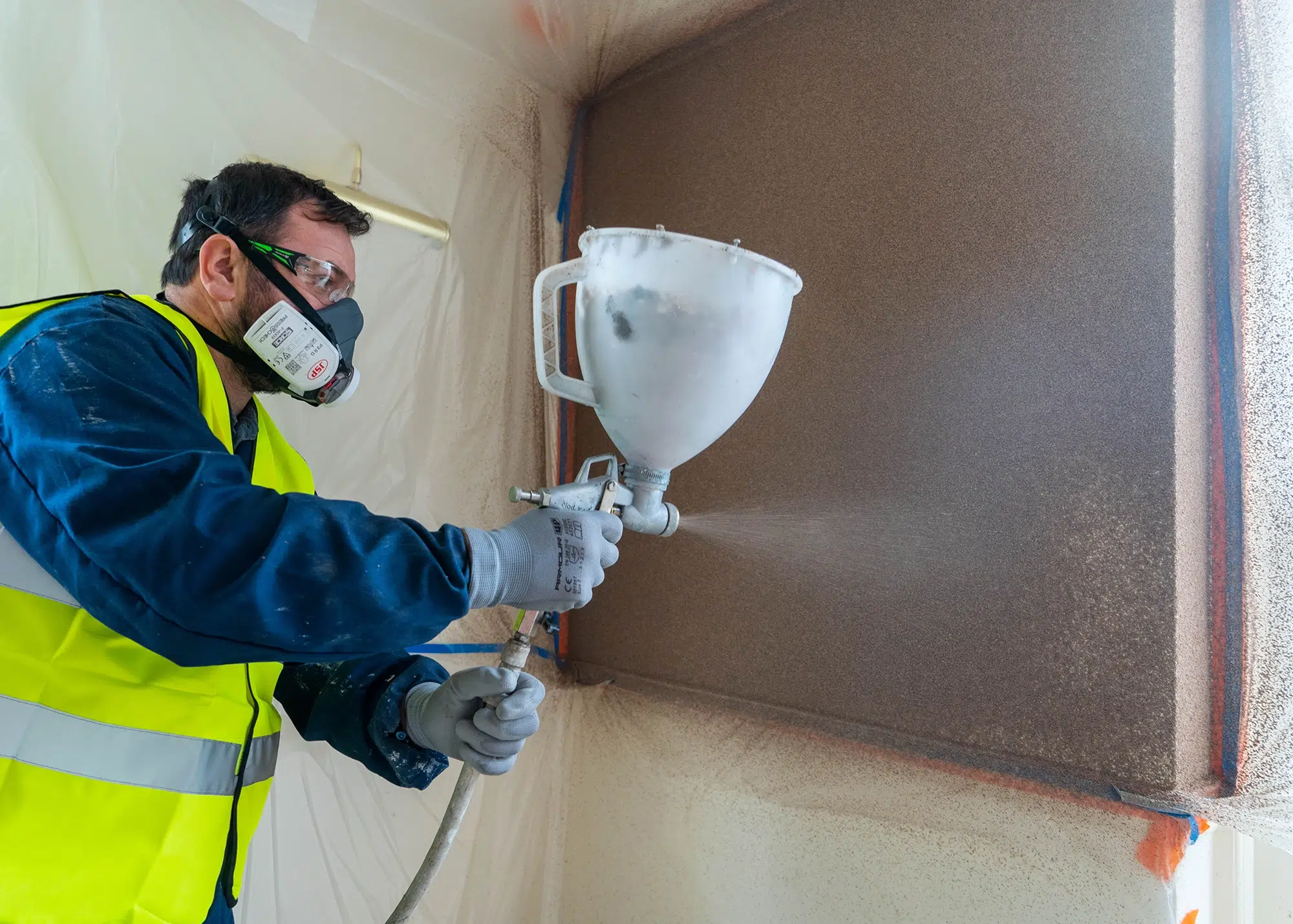
Suitable for internal and external walls, Corksol’s Spray Cork is a natural cork sprayed insulation coating that is quick and easy to apply. The raw material is harvested from the tree bark, which then grows back every nine years. It provides a superb thermal and acoustic barrier and is mould and condensation resistant – making it an ideal choice for period properties, as it helps preserve the inherent breathability of traditional walling
According to Daniel Masterman, director at Helyer Davies Architects, the damp problems many people inherit when buying an older property can encourage owners to take on misguided measures. “Lime mortars, plasters and natural insulation materials are the go-to for retaining breathability,” he says. “But it’s also imperative to avoid mistakes like installing damp proof membranes over breathable substrates.”
Solutions such as wood fibre insulation and lime plaster are hygroscopic, which means they help manage moisture by naturally absorbing and releasing it. “Gypsum and cement finishes are not breathable, which means they can trap moisture within the fabric of the building, often leading to condensation, damp and mould growth,” says Owen Pearson, product manager at Adaptavate. “In contrast, breathable lime plasters, like our Breathaplasta range, allow moisture to move through the building envelope.”
A growing number of healthy alternatives to plasterboard are becoming available to homeowners, including solutions like Adaptavate’s Breathaboard, which is currently being piloted to prove its readiness for use in residential schemes. This solution passively regulates moisture within internal space, reducing the likelihood of condensation and mould. Photo: Rafael Bastos
Adaptavate’s Breathaboard – a bio-based, low-carbon alternative to mainstream plasterboard products – is currently being tested to roll out in residential projects. “It passively regulates moisture within internal spaces through its breathability and moisture buffering capabilities,” says Owen. “This minimises condensation and reduces the amount of pollutants in the air.”
How will your house’s type & time of construction impact the materials you choose?
The period during which your home was originally constructed, and the materials that were used, play a huge role in determining the best options for your retrofit. While historic homes were generally built with breathable materials, modern houses operate very differently. “Features like cavity wall construction, vapour barriers and vapour checks are designed into newer homes to control how moisture moves through the building fabric,” says Owen. “In many cases, these methods reduce the need for traditional breathable systems.”
Offering a low-carbon alternative to traditional masonry, hempcrete block can be easily stacked without the need for complex equipment – making it an intuitive option for trades and DIYers alike. Created from hemp shiv and a lime binder, the result has excellent thermal properties and breathability, making it ideal for external and internal walls, but also for insulation in floors and ceilings
That said, issues can still arise in modern houses. Any home that’s over-insulated or made too airtight, without incorporating sufficient ventilation, will suffer. Breathable materials such as woodfibre insulation and lime or clay plasters can therefore still play a role in helping regulate humidity, temperature and air quality. “These solutions may not be essential to modern construction in the same way they are for heritage properties, but they remain highly beneficial for occupant comfort and health,” says Owen. For best results, consult an expert to help you determine a holistic strategy that’ll complement your property’s age and the type of construction.
Closer look at retrofit costs
Do eco-friendly materials cost more?
In most cases, you can expect to pay more for natural, non-toxic materials when undertaking a retrofit. “Unfortunately, as natural, healthy materials are still not as commonly used, there’s usually a cost uplift against a more mainstream option,” says Will Dewar from Sketch Architects. “However, this varies greatly and is not usually as much as some contractors will make out.” Plus, as these kinds of alternative products move out of the niche category and gain more market traction, it’ll drive prices down and make them more accessible for everyone.
It’s also worth remembering the finishing materials are what you’ll interact with throughout your home on a day-to-day basis. “Prioritising the largest surfaces that are going to have the biggest impact on the end user’s health is a cost-effective strategy,” says Daniel from Helyer Davies. What’s more, the right finishes can also support the longevity of the building structure by minimising the risk of condensation and mould – adding real value to your investment.
How can you avoid non-toxic materials in your retrofit?
As well as potentially interfering with breathability, many mainstream construction materials are known to off-gas VOCs, which are carbon containing compounds that evaporate easily and can be inhaled, which may trigger health issues. They’re found in a number of conventional plasterboard and insulation products, as well as standard paints, carpets, upholstery, lacquers and varnishes.
Thankfully, there are many zero or low-VOC solutions. Recycled newspaper (cellulose), wood fibre, mineral wool, cork and sheep’s wool are all good insulation alternatives, for instance, while lime and clay-based paints are among the healthiest finishes on the market.
Your healthy materials strategy could extend to the way you kit out your interiors, too. For instance, you may have done your due diligence to ensure all wood-based products in your home are from sustainably managed FSC or PEFC sources. But did you know many joinery solutions and sheet materials (such as plywood and MDF) are made using glues containing formaldehyde?
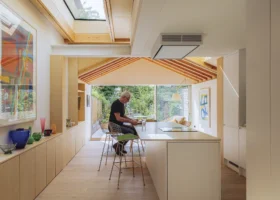
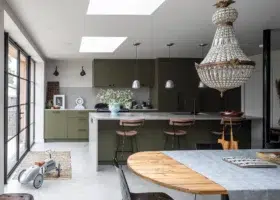
Sustique Kitchens achieves this with a Scandinavian-inspired design built around the Puustelli Miinus bioframe. This innovative skeleton, made from injection-moulded biocomposite, is lightweight, durable and non-toxic. The cabinetry in this design features a wild brown veneer, while the sleek worktop is crafted from Dekton – a carbon-neutral, porcelain-based surface
“When retrofitting, you’re effectively tightening up the building envelope, so the quality of the materials you bring inside matters more than ever,” says Mark Byers, director at Sustique. “The safest route is to specify products that carry an independent air-quality certification, such as M1. The widely used Greenguard Gold standard also offers assurance of ultra-low emissions; ideal where occupant health is a priority.”
Sustique’s Puustelli Miinus system, for instance, goes beyond M1 certification with emissions so low that they come in at half the strictest standard. Its bio-composite frame is also high in recycled material. “Healthy options often turn out to be the most sustainable long-term choice,” says Mark. “A modular kitchen that can be repaired or reconfigured extends its life far beyond the norm, saving money and avoiding landfill.”
CASE STUDY East London Victorian home upgraded with sustainable materials
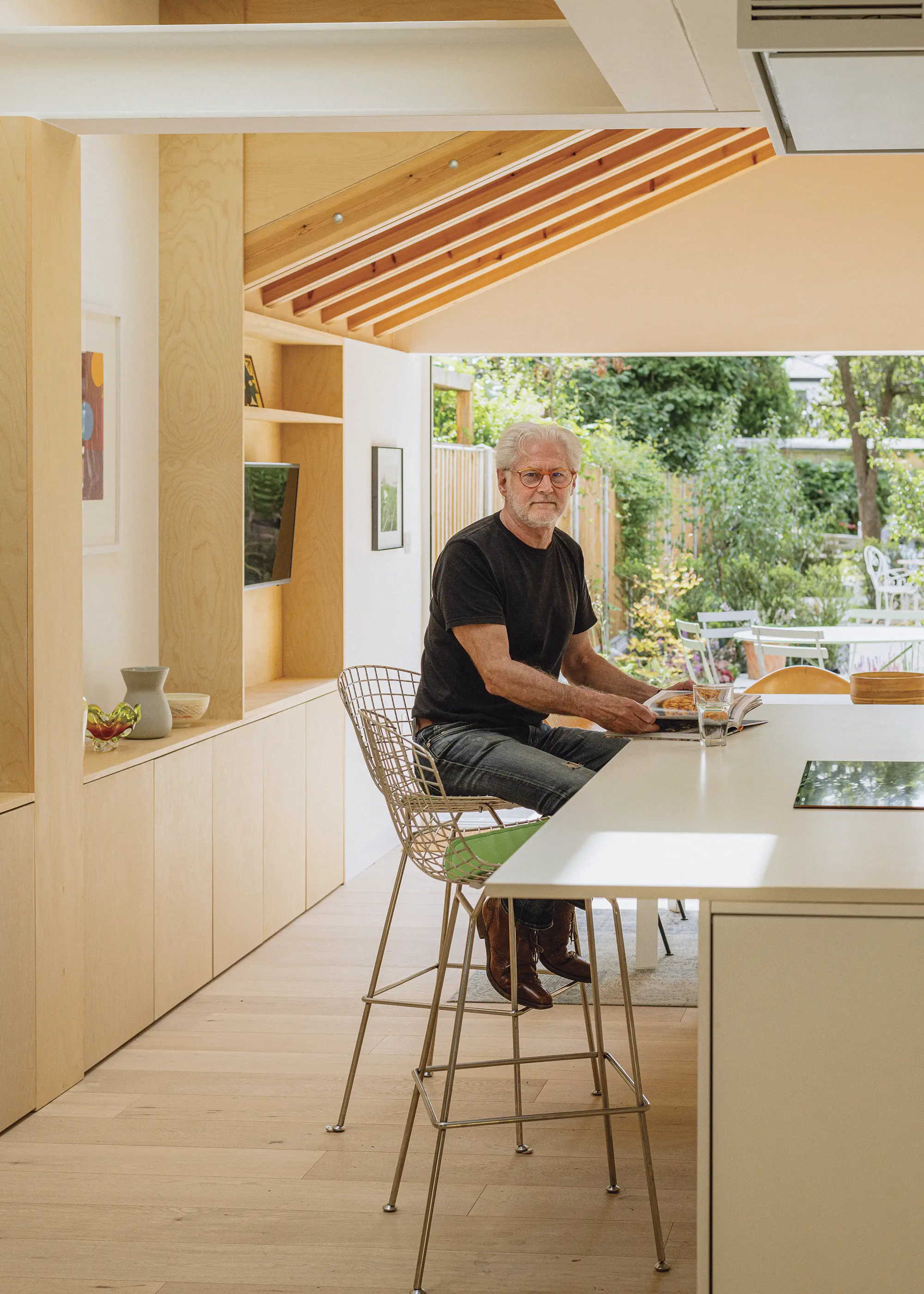
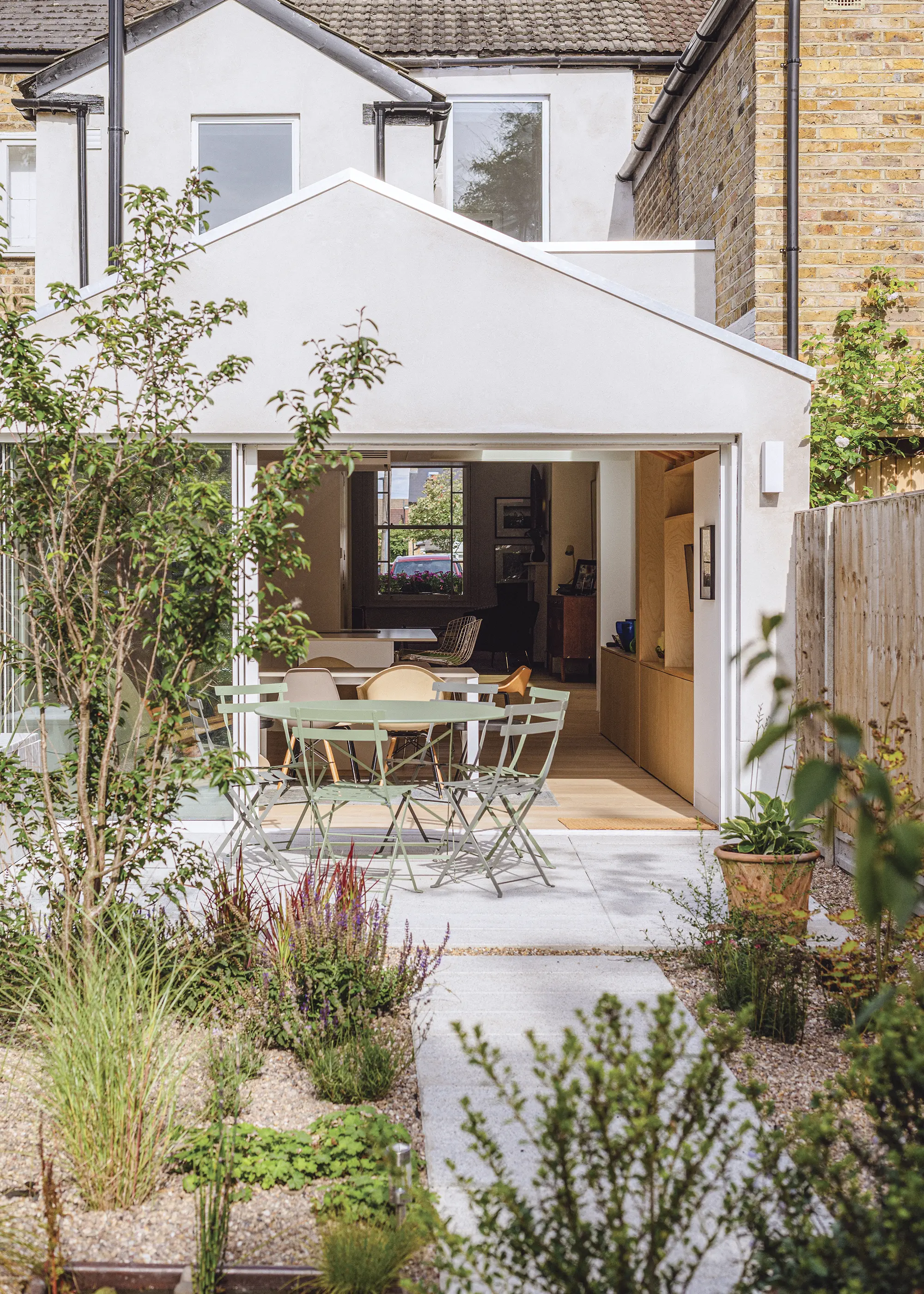
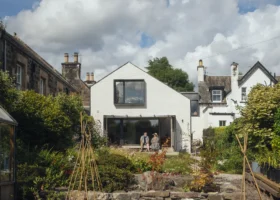
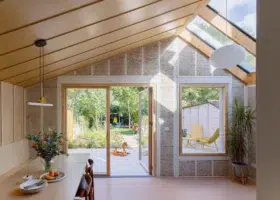
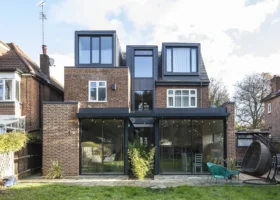
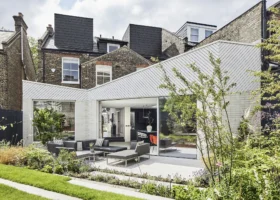
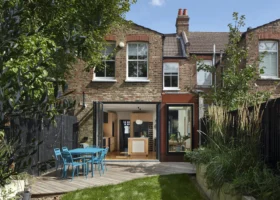
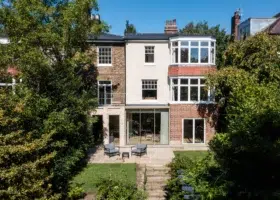
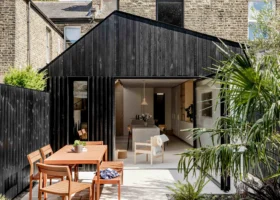
Ian Turkington has transformed this Victorian cottage in East London into a light-filled, eco-friendly home with a fabric-first retrofit. Ian’s brief was for a more efficient, ergonomic and sociable home. He also wanted to restore the cottage’s front, which had been poorly altered. The modern windows were out of proportion with the original Victorian facade. Ian engaged architect Matt Whittaker from Whittaker Parsons, who produced three or four options for Ian to consider. “Our main goal was to extend and improve the health of the existing building and connect it to the newly planted garden,” says Matt.
Photo: Whittaker Parsons
Ian wanted a sustainable and healthy home, which made material choices critical. The new extension was built using Environblock, a masonry block made from recycled materials, while the windows have all been replaced with double-glazed units. Those at the front are now aligned with the size and shape of the neighbouring properties. The entire rear elevation is lime-rendered, which allows the building to breathe. Plus, the home is now warm and dry, thanks to jute insulation made from old coffee-bean sacks.
Photo: Whittaker Parsons
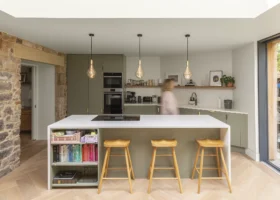
Inside, oak flooring gives new warmth to the interior and is sympathetic to the original cottage. Elsewhere, birch plywood provides a consistent finish across all interior joinery. “I liked the idea of an exposed unpainted plywood,” says Ian.
Which natural finishes will be suitable for your project?
Natural products typically tend to be good choices for a healthy home – but it’s important to double check their suitability for the task at hand. “They should meet both your specification and Building Regulations requirements – if in doubt, check with building control,” says Will Dewar, director at Sketch Architects. “There may be legitimate reasons why a certain product cannot be used in a given situation, such as a need for better fire, thermal, acoustic or weather/water resistance.”
Clayworks supplied the natural clay plaster for this refurbishment and extension of a grade II listed building in North London. Proctor & Shaw designed the project
If there’s one available, it’s worth checking relevant Environmental Product Declarations (EPDs). These are independently verified, standardised documents that quantify a product’s environmental impact – although they’re not yet compulsory in the UK. “Even natural materials can release VOCs if they’re finished with the wrong sealants, oils or adhesives,” says Mark. “Look for the EU Ecolabel, Emicode EC1, or Greenguard certification on the finishing products.”
Finally, beware of greenwashing – where products are marketed as sustainable without reliable data to back this up. Always double check credentials to verify they’re as eco-friendly and healthy as claimed.
Joe Pritchard is a sustainable insulation specialist at Mike Wye. Mike Wye supplies a comprehensive range of traditional, natural and sustainable building and decorating products to builders and homeowners throughout the UK.
Can I make my home more sustainable without a complete deep energy retrofit?
Sustainability can mean different things to different people. Broadly speaking, the goal is to make your home more energy-efficient while also using green materials. If you aren’t renovating or extending your home, which is the most common and convenient time for people to opt for eco-friendly materials, then focusing on energy saving is best. Draught-busting to avoid heat and energy going out the window (literally) is a good start, along with improving the insulation in your home where it is fairly easy to do so.
What are the pros and cons of using sustainable materials in a retrofit?
As well as the environmental advantages that come with using sustainable, eco-friendly materials, such as their lower carbon-footprint and the fact they are more likely to be made from recycled materials, these products are far less likely to contain harmful chemicals. They can also offer additional performance benefits that their synthetic counterparts do not, such as moisture buffering capabilities and protection against summertime overheating.
The disadvantages are the fact that sustainable materials can sometimes be a little more costly, their availability may be limited, and some contractors might be less familiar and less confident using them. The good news is that prices are coming down, availability is increasing, most materials are fairly simple to install and suppliers are happy to support contractors and DIYers when it comes to installation.
Where can I source eco-friendly materials?
Specialist suppliers are the best place to find sustainable materials. However, awareness and demand for these products is growing, meaning that even mainstream suppliers will also now stock some eco-friendly solutions. The greatest benefit of coming to a specialist supplier is the in-depth knowledge and advice you will be able to get.
Where do you see innovation in materials going as this sector develops?
The UK is somewhat behind the curve in its adoption of sustainable building supplies. Some products that have been catching on here in recent years have been widely used for decades in other countries. The nature of the UK’s older housing stock is somewhat to blame for this but thankfully awareness is increasing and appetite to use sustainable materials is really taking off. Wood fibre and other natural insulation products are booming currently, a lime renaissance is in full swing, and new products are being brought to the market all the time. It’s an exciting sector to be involved in and a very important one, too. Especially as the construction industry is beginning to recognise the role it can play in building a better future.
Rebecca Foster
Rebecca is a former Features Editor of Build It magazine. She loves architecture and design and scours the UK for the latest projects to inspire both self-builders and renovators.


















 Login/register to save Article for later