External Wall Insulation Guide – What is EWI & How Can it Improve Your Home’s Efficiency?
Installing an exterior insulation system to a solid wall property can improve both its energy efficiency and the facade all in one go. Lindsay Blair looks at the key considerations, costs and material choices available when specifying external wall insulation (EWI)
If you’re undertaking a retrofit or looking to improve your house’s thermal efficiency, topping up insulation is a great place to start – and the walls are one of the most obvious places to upgrade. While cavity walling has become commonplace, and can be retrofitted with blown-in or injected insulation, older or solid-wall houses require either internal or external insulation.
Here, I’m taking a closer look at the pros and cons of external wall insulation (EWI), including the main material options, costs and how to get the installation right.
What are the benefits of retrofitting external wall insulation (EWI)?
There’s a wide choice of EWI systems, from rigid insulation boards through to mineral wool-based options and natural alternatives, such as cork and wood fibre. Once fitted, the exterior can be finished with render (lime and silicone are popular choices), cladding or brick slips, enabling you to boost both kerb appeal and energy performance.
“EWI dramatically reduces heat loss, creating warmer, more efficient living spaces,” says Paul Christmas, head of technical and training at EWI Store. Another advantage is minimal disruption indoors during installation, plus a saving on floor space – but it’s worth remembering EWI does add to total wall thickness, potentially up to 100mm.
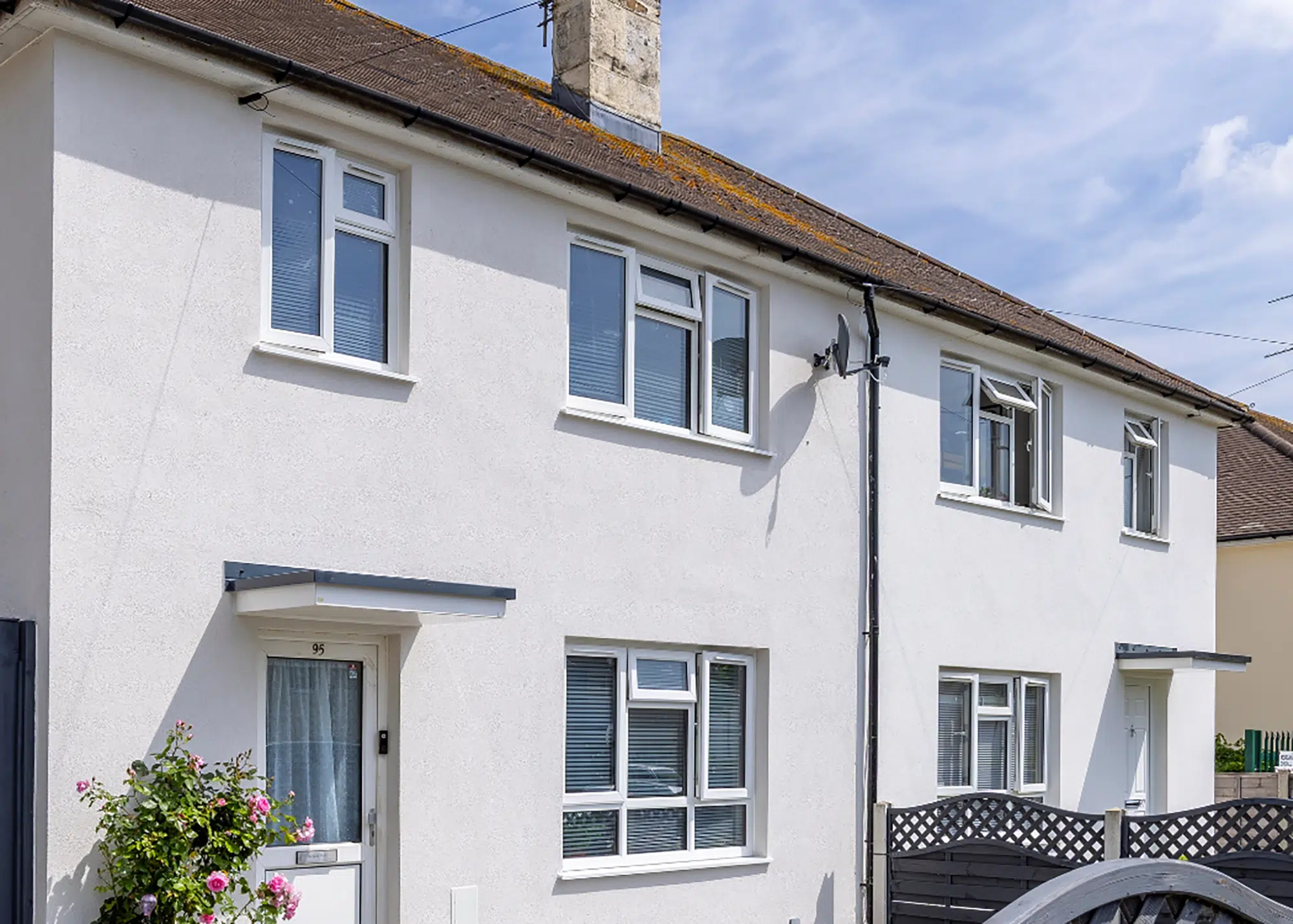
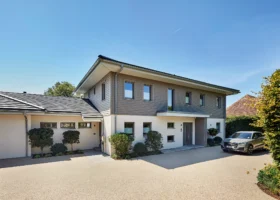
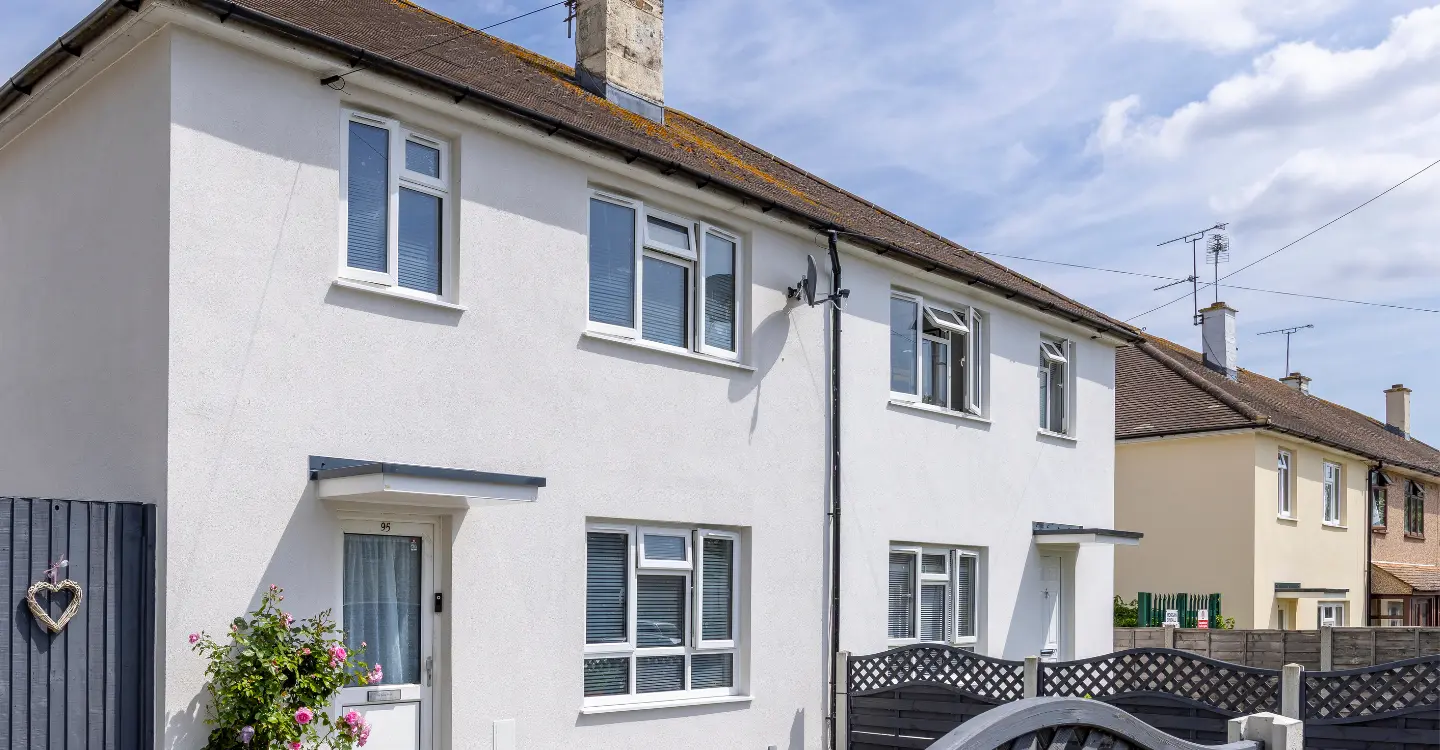
K Systems’ E EPS external wall insulation was chosen to enhance the efficiency and aesthetic of this pair of semi-detached homes in Essex. The finish is TC silicone thin coat render
This can have knock-on impacts. “Retrofitting a period property can bring restraints in terms of existing rooflines and architectural details,” says Paul. “You may need to extend the eaves or adapt features to accommodate EWI.” Damp-proof courses, pipework and the like should also be reviewed to avoid the risk of moisture bridging.
Why is ventilation so important when upgrading insulation?
Ventilation must be carefully managed and systems properly installed to prevent damp and mould problems further down the line – particularly in solid wall properties built pre-1920. These were typically constructed using breathable materials, such as brick, earth, stone, timber and lime, that allowed moisture to wick out of the building fabric. Your project must preserve these vapour-open characteristics.
How long does external wall insulation take to install?
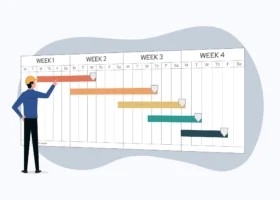
Installation timeframes can vary depending on the size and complexity of the retrofit project, as well as site conditions, weather and the level of prep required. The wall substrate may need repair and/or priming, while windows, doors, drains and expensive landscaping features should all be protected. For a typical residential property, the full EWI installation process from preparation to final finish usually takes around three weeks.
CASE STUDY Listed home upgraded with an energy-efficient retrofit
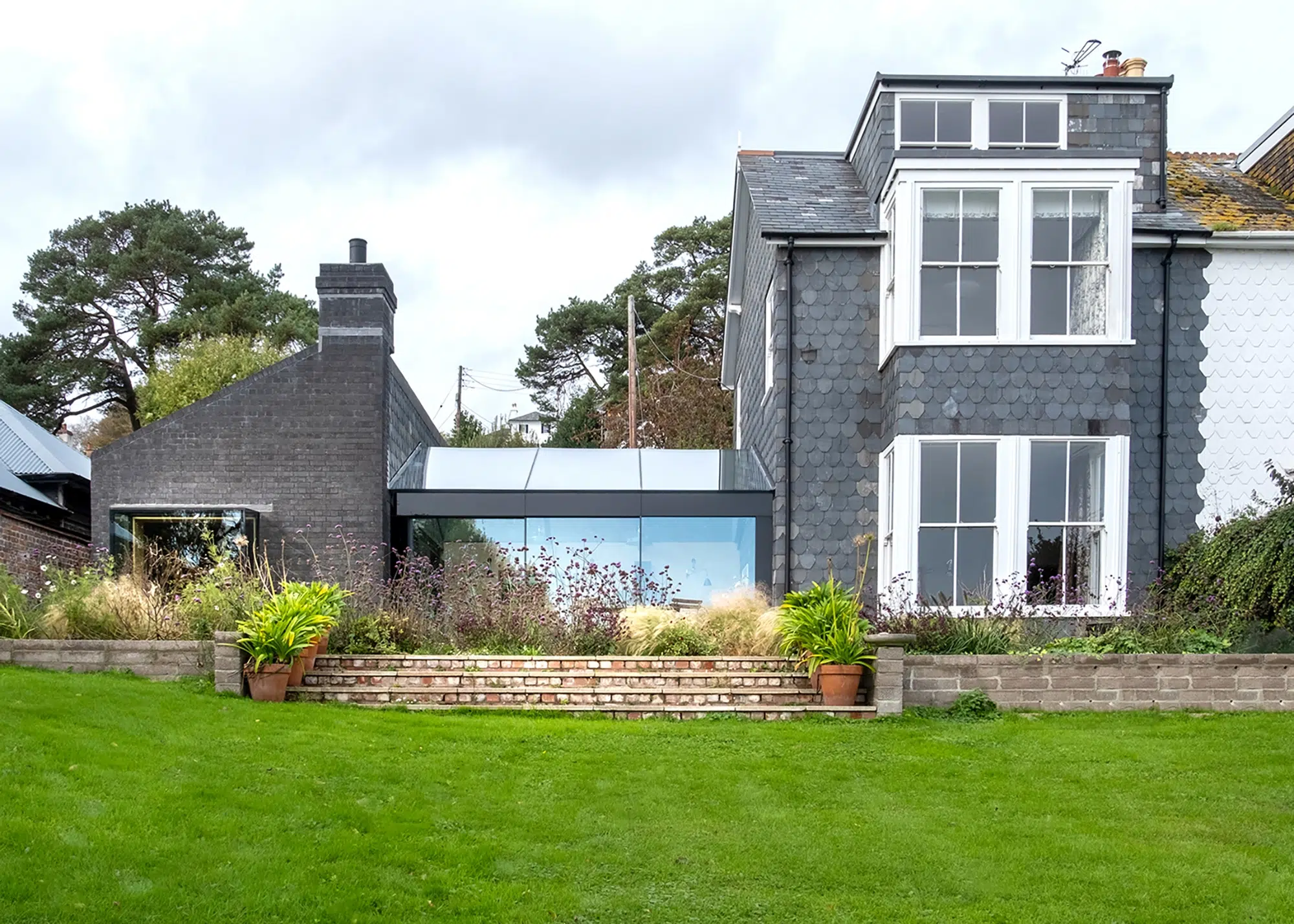
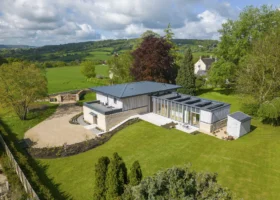
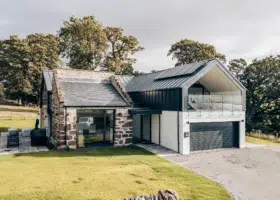
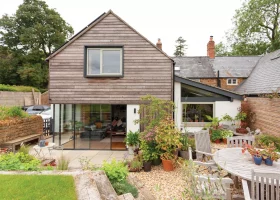
Rak Architecture have breathed new life into this grade II listed home perched high up on the Lyme Regis hillside. The house featured a series of tired extensions – which the couple wanted to remove and replace with a singular, more coherent addition, while also undertaking measures to improve the energy efficiency of the protected building. The project won the 2024 Build It Award for Best Architect for a Renovation Project.
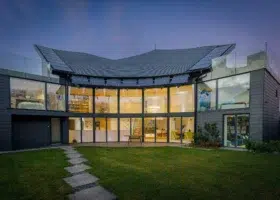
The finished extension. Photo: Rak Architecture
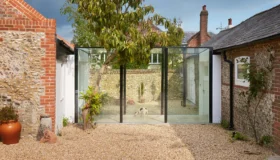
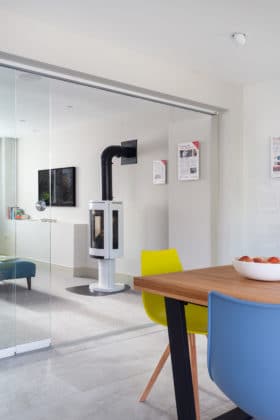
The new 90m² extension is connected to the house via a clever glass link structure, which doubles as a light-filled entertaining space. The new structure’s stylish dark grey brickwork blends beautifully with the reinstated Welsh slate cladding on the original building.
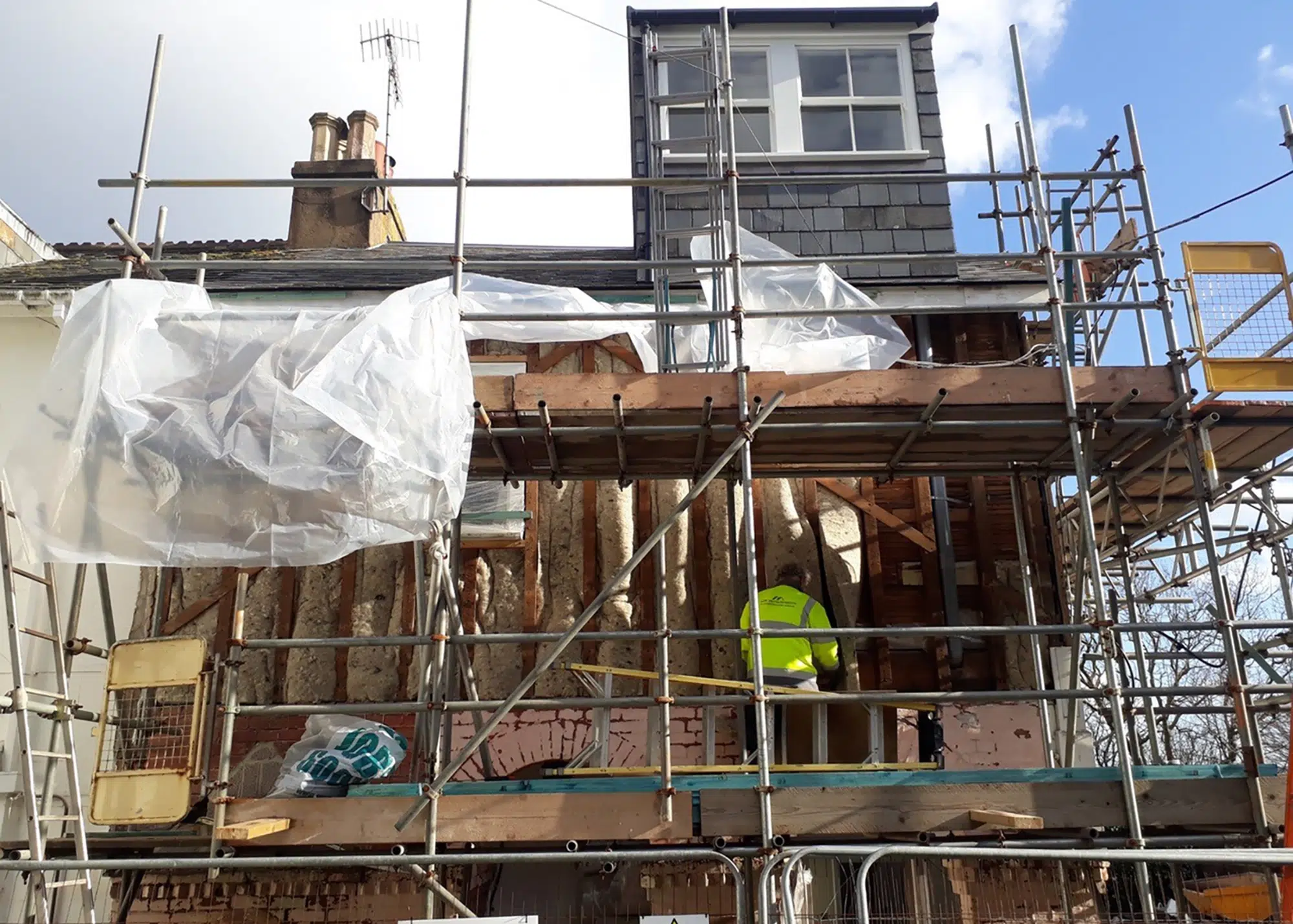
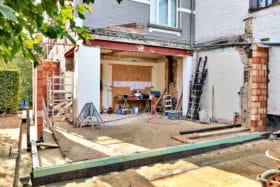
The external wall insulation being installed. Photo: Rak Architecture
The home’s thermal performance was upgraded during the project, with sheep’s wool external insulation retrofitted to ensure a cosy family home.
What are the different EWI options & which is best-suited to your project?
Understanding the pros and cons of each EWI type is crucial in making informed, effective decisions. Note many products are sold as complete systems including the insulation, membranes and exterior finishes – and some companies offer complete design, supply and install services. Here’s an overview of the main choices:
Rigid insulations
Rigid plastic products are frequently specified as they offer a strong balance of affordability and efficiency. “EPS (expanded polystyrene) is the most cost-effective, while phenolic has the highest thermal performance, meaning thinner insulation layers are required,” says Gavin Creech, product manager at K Systems. “However, this type of insulation should only be used in lower risk buildings.”
PIR (polyisocyanurate) is a similar alternative. “I find it’s the most commonly used,” says Rob Pollard, architect and director at RX Architects. “It is available in a wide range of sizes, thicknesses and form well-known brands such as Celotex, Ecotherm and Kingspan.”
Rigid systems’ impressive insulating qualities mean that they can be specified in slimmer profiles than the alternatives. “PIR is manufactured using a combination of chemicals, including liquid polyol and a blowing agent, which react to form a strong, lightweight and thermally efficient board,” explains Rob.
But there’s a snag: these products aren’t vapour open, so may not suit older properties. Their manufacture also involves a higher carbon footprint than more natural products, so they’re best reserved for projects where heritage and breathability aren’t concerns, and where their thin-profile performance outweighs other factors.
Mineral wool
Fire-resistant, breathable and offering very good sound absorption, mineral wool is made from molten rock, glass or industrial slag that is spun into fine fibres. It sits somewhere in the middle in terms of performance – not as insulating as the rigid plastics, but slightly better than the natural products outlined below. This makes it a strong choice for many homes, including those where vapour movement is important.
This illustration shows a typical build-up of EWI Store’s mineral wool external insulation and render system – featuring a basecoat, Rockwool slab insulation and fixings, fibreglass mesh, topcoat primer and silicone render
“Combining mineral wool with a lime-based render offers breathability and flexibility, maintaining a building’s moisture balance while improving thermal performance – so it’s often a good solution for retrofit projects,” says Paul. Lime finishes are also ideal for preserving the character and detailing of heritage facades.
For those seeking a truly sustainable EWI system, look to natural options like wood fibre and cork. Suppliers include the likes of Lime Green, Mike Wye and Ty Mawr Lime. Made from timber industry byproducts, wood fibre insulation is breathable, recyclable and can help even out internal temperatures thanks to their heat-buffering thermal mass – so it’s a premier choice for older homes.
Cork board insulation is a natural, renewable product made from the bark of cork oak trees (which regrows every nine years). It offers good thermal and acoustic properties, plus it’s vapour permeable and recyclable.
With the right detailing, options like sheep’s wool insulation can also be used. Bear in mind, however, that there are currently no certified all-in-one systems using this product, so you’ll need specialist design.
“Natural materials generally have a higher thermal conductivity than synthetic options, meaning thicker layers are required to achieve comparable insulation values,” says Rob. In turn, this means deeper walls and potential additional remedial works around roof eaves, window reveals etc. Price-wise, these materials (and the required labour) currently sit at the higher end of the scale.
How much does it cost to retrofit external wall insulation?
According to the Energy Saving Trust, installing EWI costs around £18,000 for a typical three-bedroom, semi-detached house – with average savings of around £330 per year. In terms of the insulation itself:
EPS sits at around £10 per m²
PIR costs approx £15-£25 per m²
Mineral wool costs in the region of £20-25 per m²
Premium, natural or specialist materials can reach up to £40-50 plus per m².
Of course, every project is different. “Variations in building size, structure and condition mean that each installation requires a tailored approach,” says Paul. Further essentials to factor in include scaffolding (around £2,500 for a typical three-bed house project) and skip hire for waste disposal (around £400 per week). If you need planning for the works, a householder planning application will cost£528 plus the Planning Portal admin fee.
FAQs
What hidden costs should I be aware of when specifying external wall insulation?
Other hidden costs might include alterations to the roofline, guttering extensions or changes to fenestration to accommodate the insulation type and depth – although, if you’re taking on a fuller renovation, these might be part of a wider package of works. “Much of this can be identified and planned for through a thorough site assessment and detailed specification,” says Paul Christmas, head of technical and training at EWI Store.
Then there’s the choice of render or cladding. Many EWI suppliers offer packages including the insulation, installation and finishes, but always request a full breakdown of costs to be clear on what to expect.
Why is good installation so important?
Good design and installation is vital for any retrofit insulation measure, but particularly EWI. Adding the wrong insulation (or the right one incorrectly) can trap moisture and reduce airflow, which could lead to a build-up of condensation and mould.
This very issue has made the headlines in recent months, linked to poor-quality installs under the government’s ECO incentive and the Greater British Insulation Scheme. A lot of these problems stem from bad workmanship by inexperienced trades – potentially enabled by a lack of oversight within the schemes.
Who should install your EWI?
You should ensure a quality install by vetted trades who understand the technical requirements and implications of different insulation systems. Many EWI suppliers have teams of in-house installers or can recommend registered local contractors. Or, if you’re sourcing the labour yourself, look for specialists signed up to industry trade bodies such as INCA.
Lindsay Blair is a freelance editor, writer and content consultant with a focus on home design, interiors and lifestyle. Previously editor of Kitchens Bedrooms & Bathrooms magazine, she now enjoys writing for a variety of different homes and lifestyle magazines.






















 Login/register to save Article for later