

- Plan ItBack
- Design ItBack
- Build ItBack
- Homes
- ProductsBack
- CostsBack
- Self Build Cost Calculator
Estimate your project costs instantly with Build It's interactive self-build cost calculator
Calculate Now - Costs & Finance
- Contracts & Warranties
- Build It Estimating Service
Get an accurate, detailed cost breakdown of your project
Submit plans
- EventsBack














 Login/register to save Article for later
A Charming Cob Cottage on the Devon Coast Upgraded with a Timber Frame Extension

“My wife Francesca and I have visited the wild and beautiful coast of North Devon and Cornwall together for many years, and as soon as we saw a dilapidated little cob cottage for sale on the Cornwall-Devon border, we fell in love with the setting and potential of the project,” says John Cowx. “The cottage came onto the market in September 2020 during the Covid rush and every property we’d viewed was snapped up immediately, so we were determined not to lose out on our dream home.”
John and Francesca are based in Lincolnshire, where they run a family business specialising in high-end bespoke doors and joinery. They had been hunting for a Westcountry home, close to the sea, and the run-down cottage was being sold with 2.8 acres of land. “We’d been looking for a home in Devon or Cornwall for several years but accelerated our search when Covid hit – realising that it was probably now or never,” says John.
“The decision was made that we’d just get into the car and go if we found somewhere suitable. We’ve had quite a few holidays around Bude and remembered driving up the coast to a beach called Welcombe Mouth, which was just stunning. The cottage is close by, so we instantly remembered the area.”
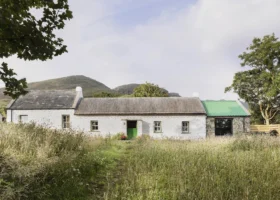
The rugged 300-year-old property was originally built as a farm labourer’s cottage, just 42m², and appears on the tithe maps of the 1830s. A lean-to blockwork kitchen with a corrugated roof had been added in the 1980s. “The extension was virtually falling down and had no insulation,” John recalls. “In fact, the whole place was freezing cold without any heating.”
Named Skylark, the property was on the market for just two weeks, receiving 15 sealed bids, and to John and Francesca’s surprise their offer of £420,000 was accepted. “With savings made from the stamp duty holiday at the time, the house was valued at approximately what we paid for it,” says John.
Designing the addition & submitting the planning application
The couple already had some experience of building projects, after converting and extending their Lincolnshire farmhouse and building a new house in the garden for Francesca’s parents. Once the property was theirs, John and Francesca set about searching for an architect and found Chris Evans – now of Kost Architects in Barnstable.
Chris is passionate about designing and delivering homes around the Southwest coast and the surrounding countryside, with a particular interest in responding to the complex constraints of the local environment. He really understood their brief and began the extremely frustrating process of dealing with the planners at Torridge Council. The proposal of a contemporary timber extension was not appreciated by the planners, who were reluctant to approve. Fortunately, architect Chris was able to present multiple examples where similar sensitively conceived additions had benefitted existing homes.
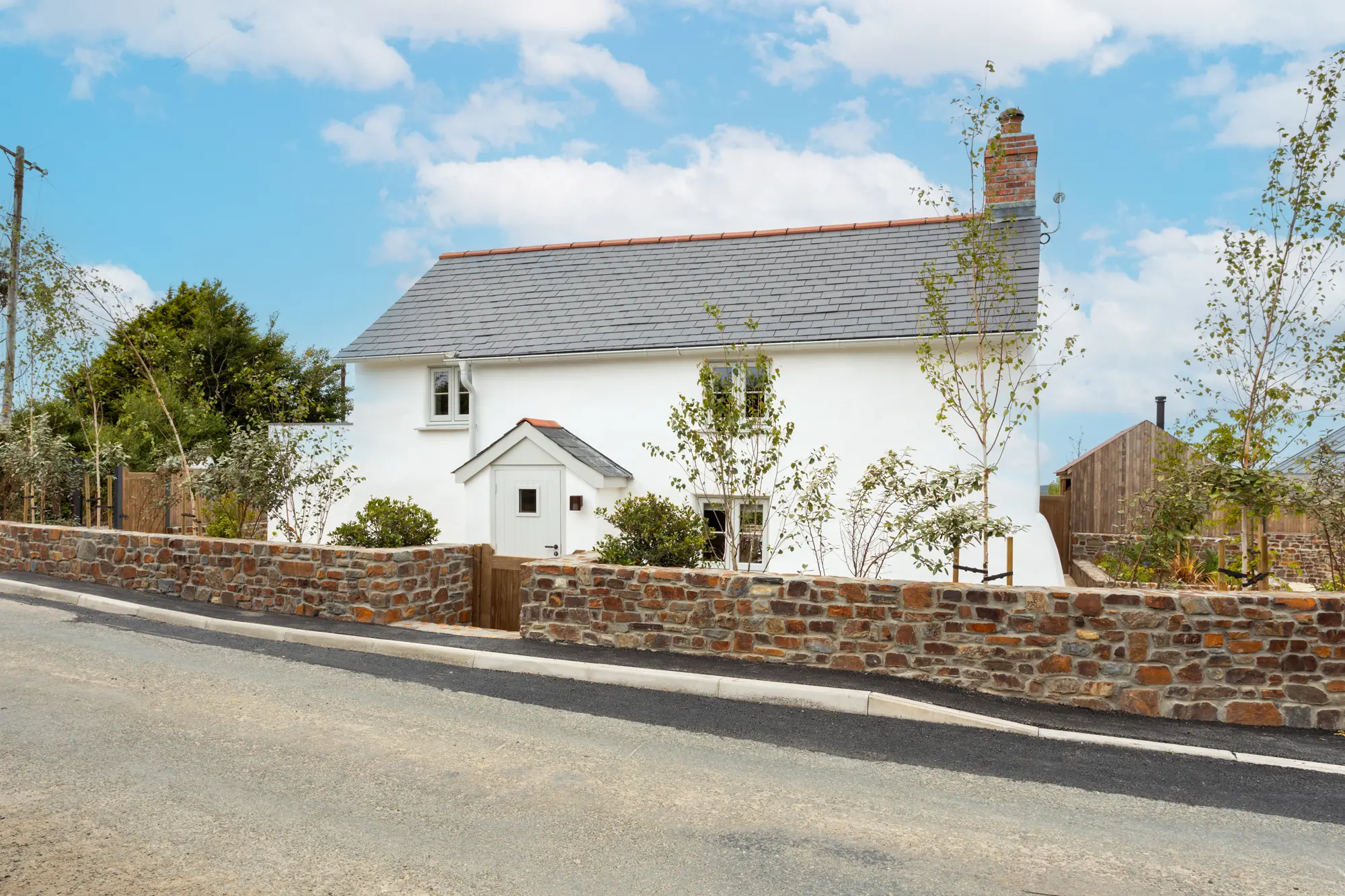
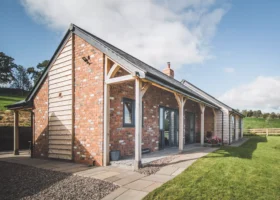
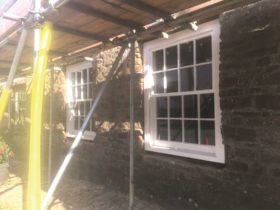
The original cob cottage has been carefully restored, with replacement timber casement windows, a natural slate roof and repairs to the cob walls
Conserving the existing historic cob cottage, while improving energy efficiency and comfort levels, was key. “There were two bedrooms upstairs in the cottage, but the configuration of the staircase meant that one of these was tiny and we were always hitting our heads going upstairs. Installing a replacement wrap-around staircase solved this problem and has created enough space to have two double bedrooms,” says John.
- NAMESJohn & Francesca Cowx
- OCCUPATIONSDirectors of bespoke joinery & door-set company
- LOCATIONDevon
- TYPE OF PROJECTRenovation & extension
- CONSTRUCTION METHODTimber frame extension with zinc roof
- PLOT SIZE2.8 acres
- HOUSE SIZE320m²
- HOUSE COST£420,000
- BOUGHTSeptember 2020
- PROJECT COST£279,000
- TOTAL COST£699,000
- BUILDING WORK COMMENCEDApril 2022
- BUILDING WORK TOOK74 weeks
- CURRENT VALUE £800,000+ (£1m+ with recently developed buildings)
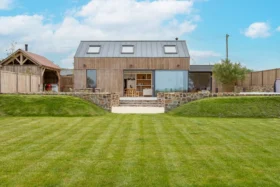
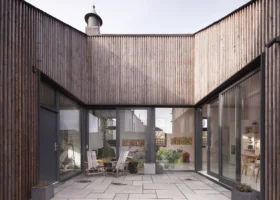
The couple would have liked a two-storey extension but, despite being invisible from the road, the planners felt this wasn’t a suitable option. The residential curtilage of the property is small, as most of the land is designated agricultural. This resulted in a lack of space to extend on either side, so the new structure needed to be built to the rear, taking in wonderful views across the valley. “The planners didn’t like our idea for a barn-style extension clad in charred black timber, so we chose treated Kebony cladding instead, with a standing seam zinc roof,” John explains.
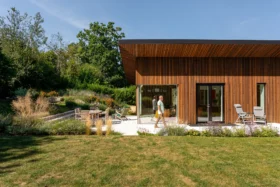
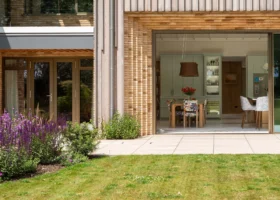
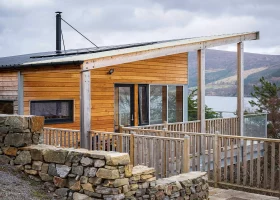
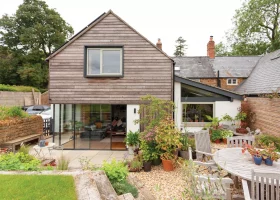
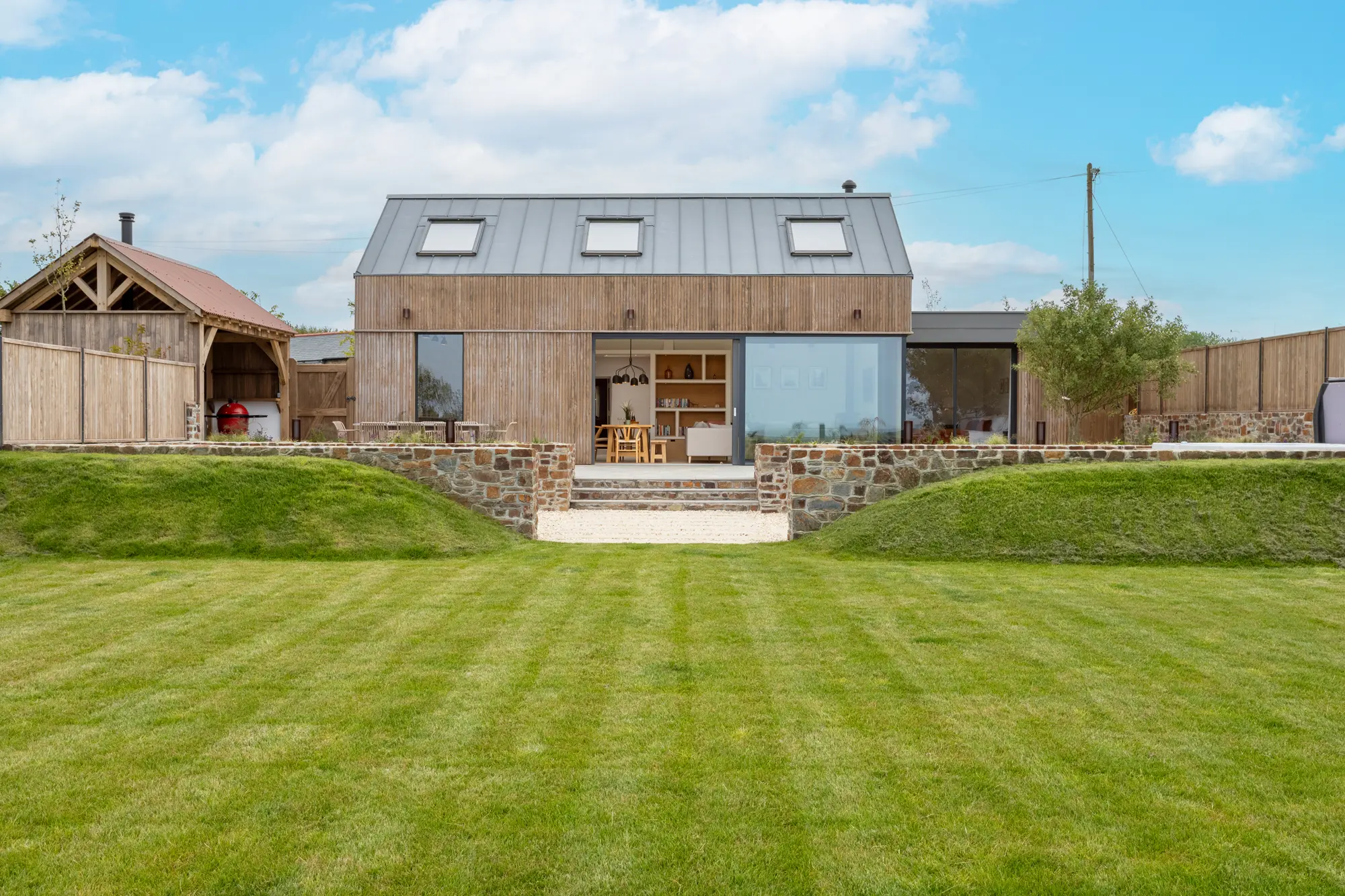
Building a new timber framed extension, connected to the cottage via a link, has improved space, light and energy efficiency without harming the character of the original home
John and Francesca – who is the finance director for their family business – worked with Chris to devise a single-storey kitchen/dining/living extension, connected to the cottage by a contrasting entrance hall link. A central spine contains the plant room, a cloakroom and the master bedroom suite, including a walk-in wardrobe. “Originally we wanted to add a fourth bedroom, but the planners didn’t feel this would suit the size and scale of the design,” says John. “It took almost nine months for planning approval.”
Building the new extension
Fortunately, the couple already knew who would be undertaking the bulk of the building work, with Francesca’s retired builder father, Toni, stepping in to manage the project. “Our architect continued to help and advise us throughout, which made all the difference as we were based so far away,” says John. “It was a real family affair. After being let down by a contractor, we decided to hire a digger to demolish the old lean-to extension ourselves, and a couple of days later we were digging the strip foundations in clay soil, pouring concrete and laying blocks. Myself, Francesca, Toni, and my brother-in-law, Mark, spent two weeks grafting hard to complete everything, which really helped to keep costs down.”
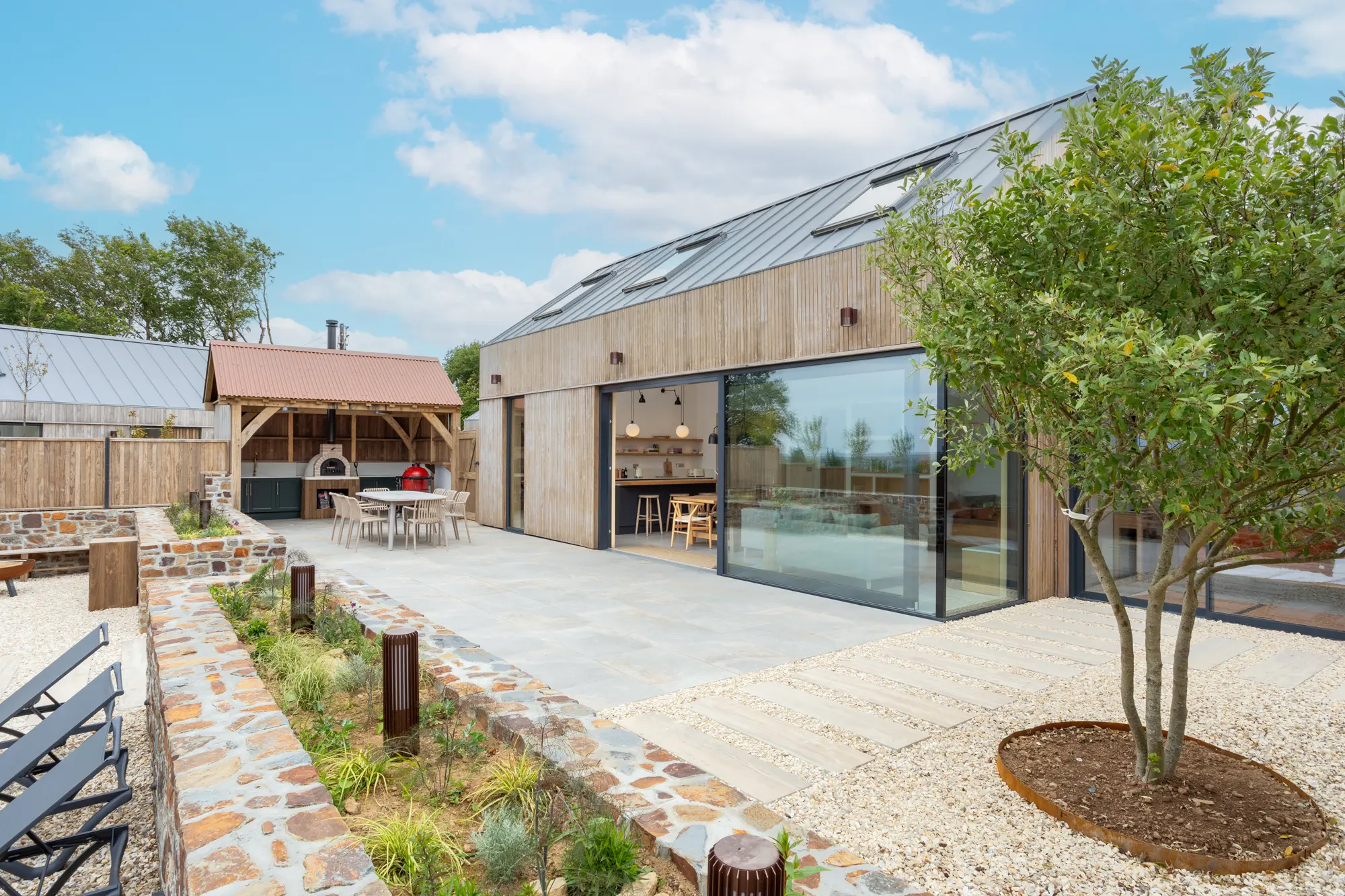
A green oak structure in the garden is from a local Devon specialist and features a full outdoor kitchen including a pizza oven
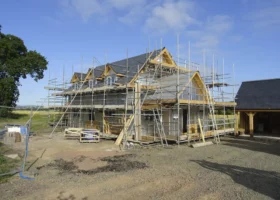
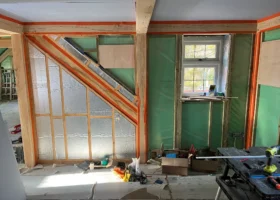
With Chris’s detailed plans, the timber frame element was designed to be constructed in cassettes and was pre-assembled in a Lincolnshire joinery workshop in its entirety, before being dismantled and transported to the Devon site as a flat-pack. Made from softwood CLS beams, cut to size and numbered according to weight, these cassettes were pre-insulated with external grade chipboard attached to one face, ready to be screwed and bolted into the blockwork and steel on site.
“It worked like a dream and the whole structure was up and watertight in just a matter of days,” says John. “Living five hours away did create a few problems, and we questioned what we were doing at times. Once the old extension was demolished, we came to stay in local B and Bs and hotels, while Toni worked virtually full time on site.”
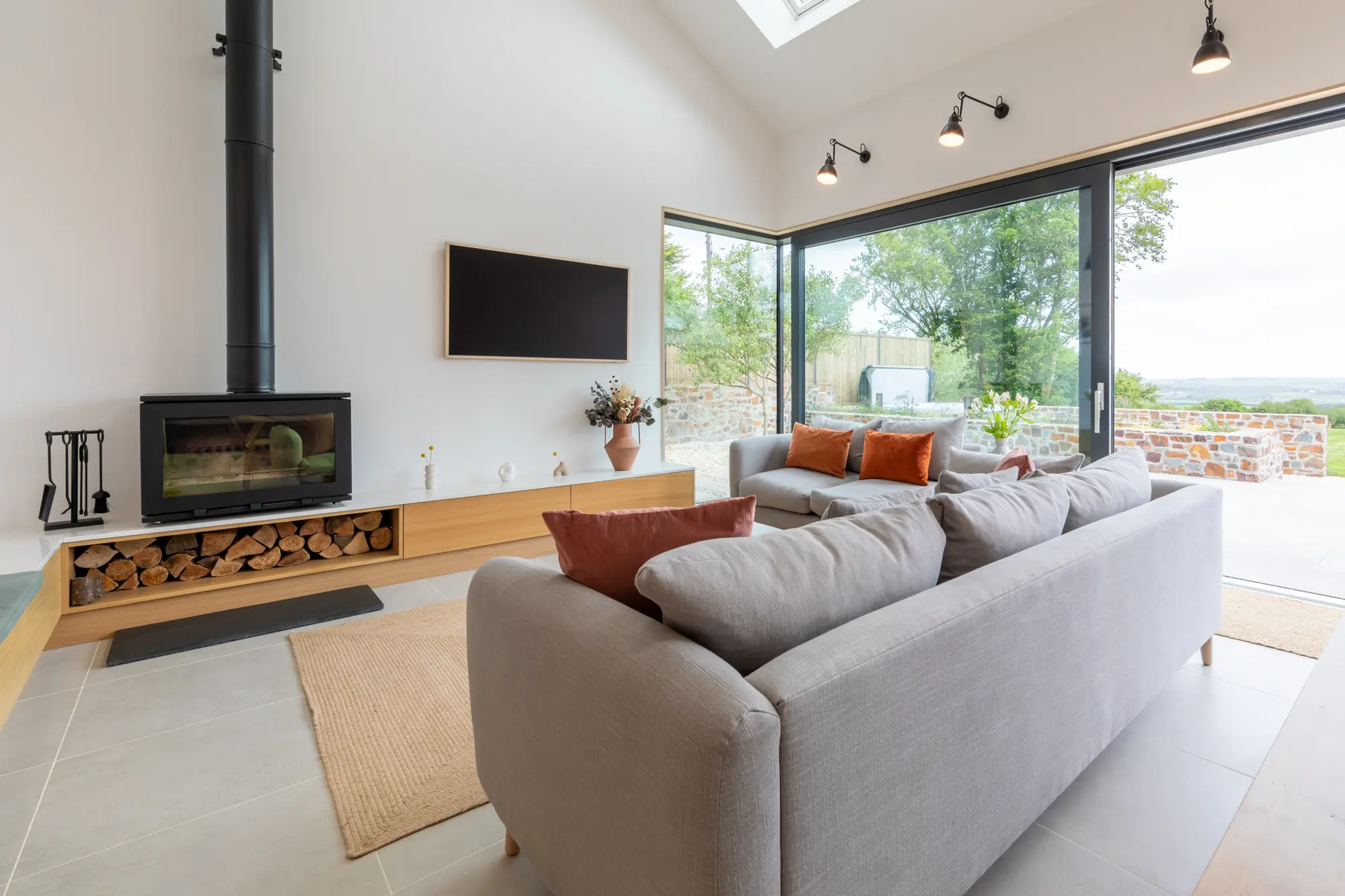
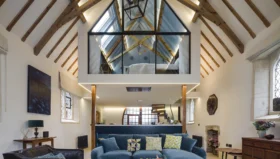
Built-in seating and log storage beneath the woodburner were just some of the bespoke joinery features designed for the new open-plan sitting area
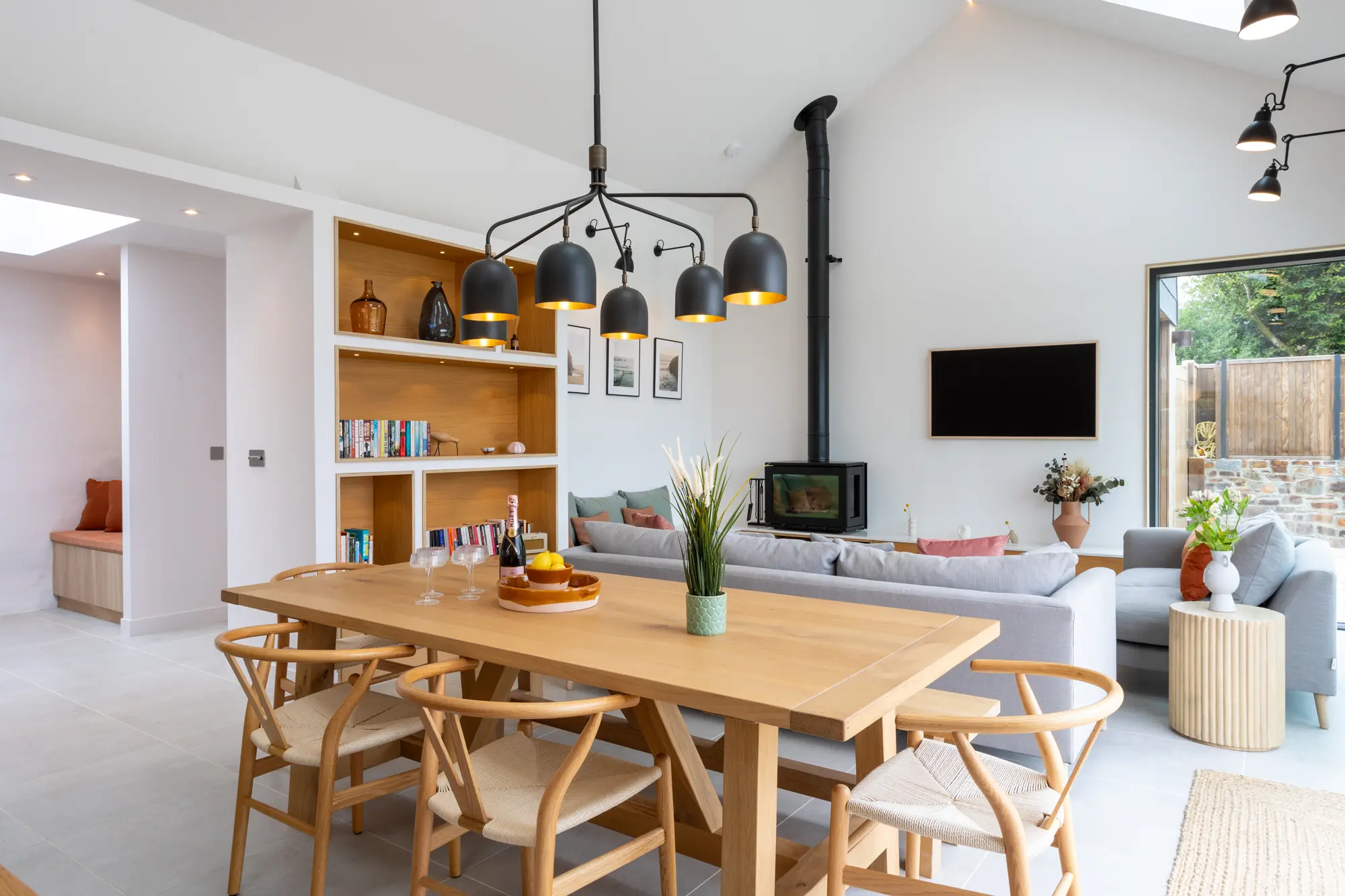
The modern extension incorporates innovative design features throughout, including a full-length light strip running parallel to the ridge beam, a glass-to-glass cantilevered corner structure and large rooflights which drop in light from above. “The extension features a big, six-metre aluminium-framed sliding patio door, with a glass corner under the cantilevered section,” says John.
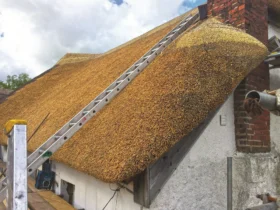
CLOSER LOOK Working with cob…Constructed in cob on a stone plinth, the original 300-year-old cottage would probably have been thatched and has walls that are 1.5m thick in places. The ancient method of building with cob uses a simple mix of clay sub-soil, aggregate, straw and water to form solid structural walls, built without shuttering on a protective stone plinth to raise it above the damp earth.
“Working with cob was a new and interesting experience,” says John Cowx. “When we re-roofed the original cottage, it was in a bad way, with the cob walls bowing and splaying out because the old beams weren’t supporting the weight of the roof. We sought advice from a local cob expert and an experienced structural engineer, as we had to insert some cob blocks around the roof trusses and where we connected the cottage to the link structure. Internally, we lime plastered the cottage walls and patched in some lime plaster externally as well. Building with cob is labour-intensive and slow, but the result was worth all the effort.” |

Restoring the original building
The renovation of the cob cottage turned into a labour of love for Toni, a joiner and builder by trade, who carefully stripped back the building while retaining as many features as possible. “The top of the existing chimney needed to be rebuilt, as it was close to collapse and not connected in any way,” says John.
“I’m not quite sure how it was still standing.” Original windows in the old cottage were rotten, so these were replaced with matching timber casements. Existing floors needed to be dug down to accommodate new insulation and underfloor heating, with the damaged old slate flooring reused outdoors for landscaping.
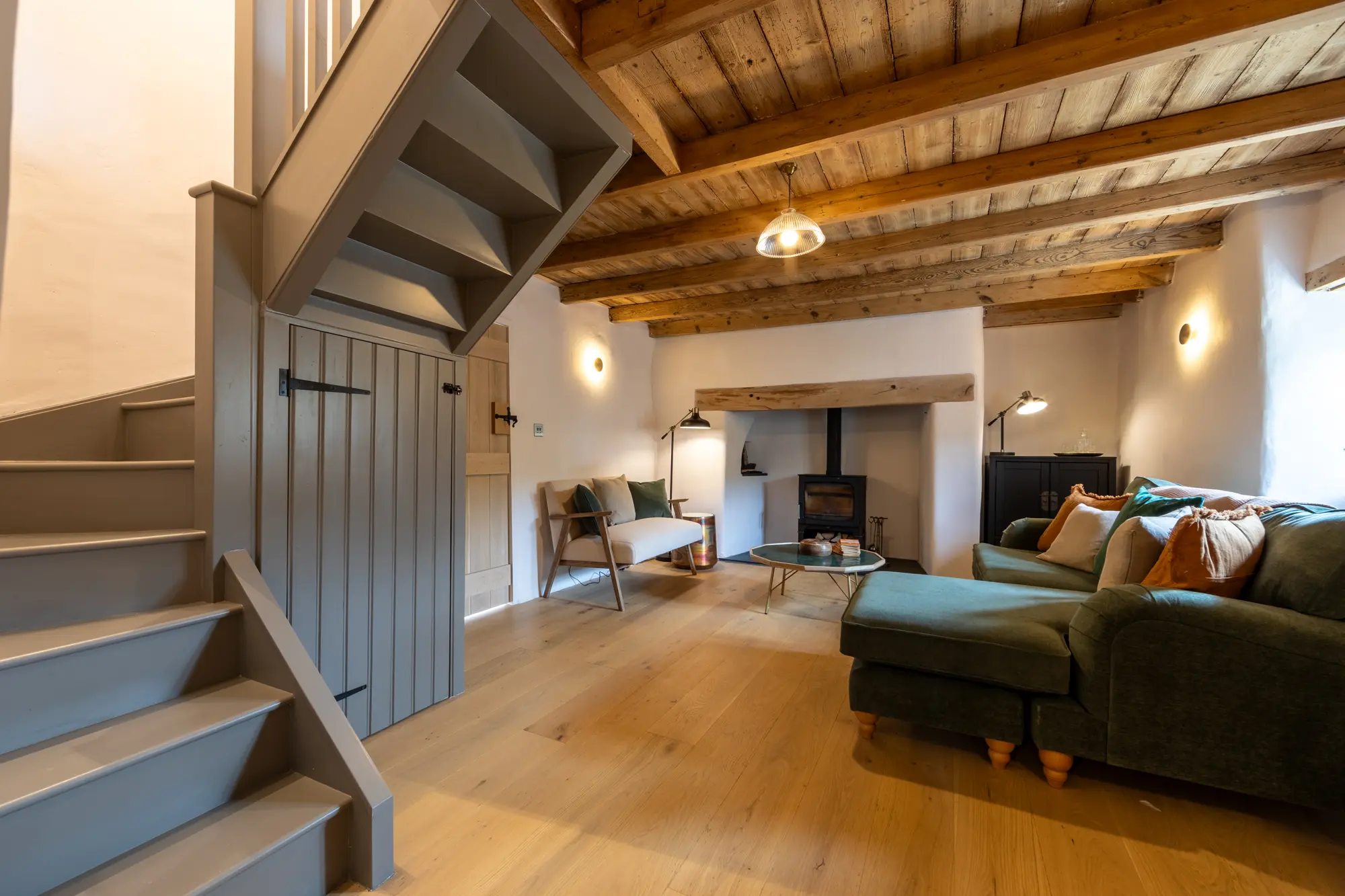
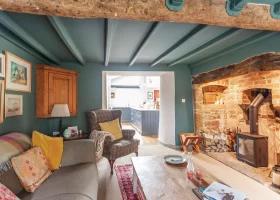
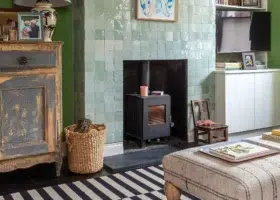
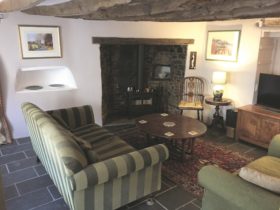
The original cottage sitting room has been conserved and the fireplace restored, complete with a bread oven. Leading up from the old sitting room, the bespoke staircase has improved the cottage’s layout
A new slate roof was required, the fireplace and timber beams were in a sorry state and the cob needed restoring in places to ensure the cottage remained structurally sound. “We sandblasted and treated beams, cutting away rotten sections from the elm fireplace mantel, which we were determined to keep,” says John.
The entire building has also been rewired, with water-based underfloor heating installed on both levels, as well as in the extension. “We paid to have the mains power rerouted underground, because it would have spoiled what was otherwise a wonderful plot,” says John, who employed an electrician and plumber. “Toni was 73 at the time, and worked incredibly hard, mainly on his own. He plasterboarded the entire house, including the vaulted ceiling in the extension. I don’t know what we’d have done without him.”
Stunning result
The build of the extension and restoration of the old cottage came in at just over £220,000. The landscaping proved expensive, with local stone used in terraces and raised beds. “Our original budget for the project, before landscaping, was £150,000,” recalls John. “Unfortunately, we were hit hard by high inflation around the time of construction. We must confess, though, that we did also get a bit carried away when specifying the high-end finishes.”
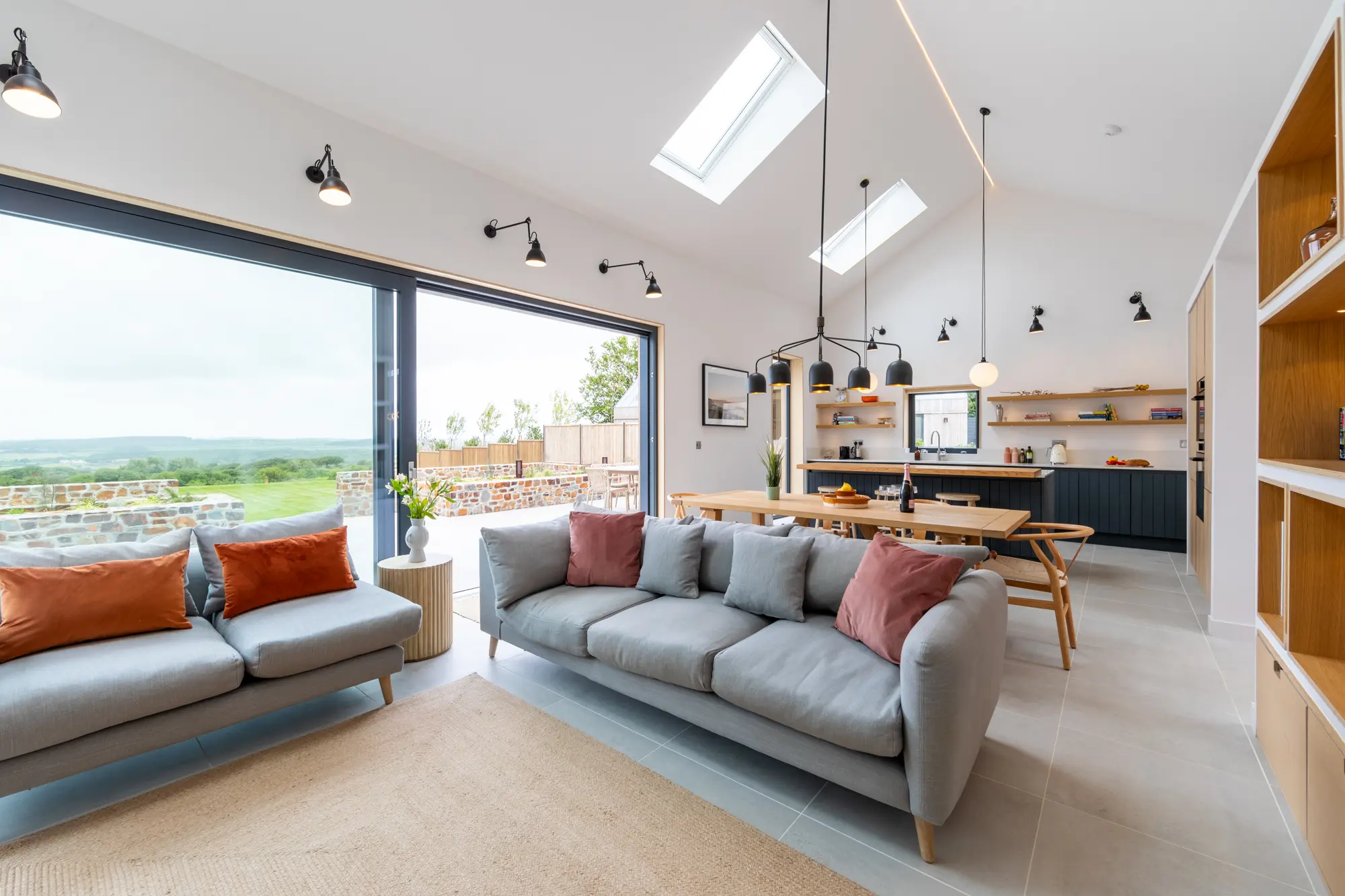
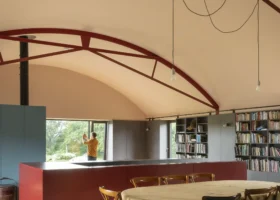
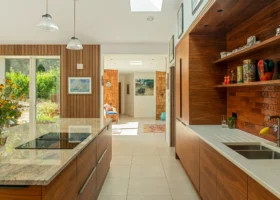
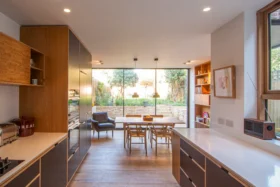
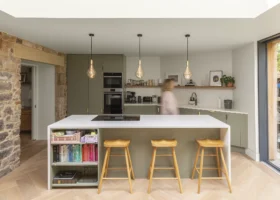
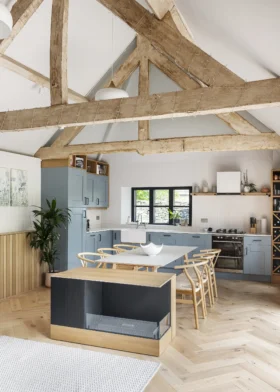
The open-plan kitchen in the new vaulted extension was designed using premium units and adding bespoke doors which were made and veneered by the family company
When it came to the internal detailing and joinery, the couple were in their element. Their company – which has been passed down from Toni – has worked for numerous high-end clients, including royalty, and was able to supply the internal doors and create recessed shelving and a solid oak media unit, detailed in veneered oak, for the extension. “Designing bespoke storage when you’re living miles away is tricky,” admits John.
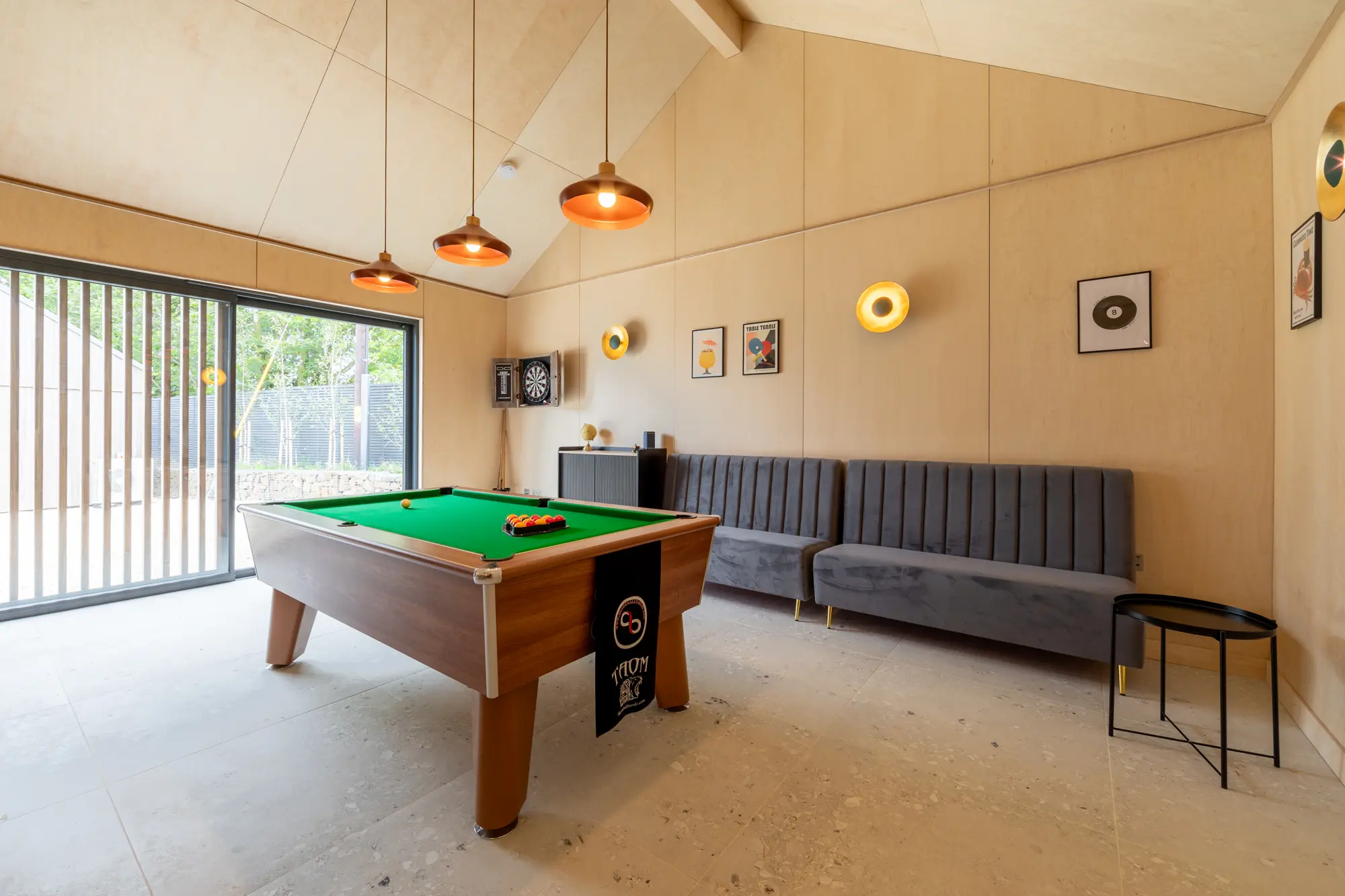
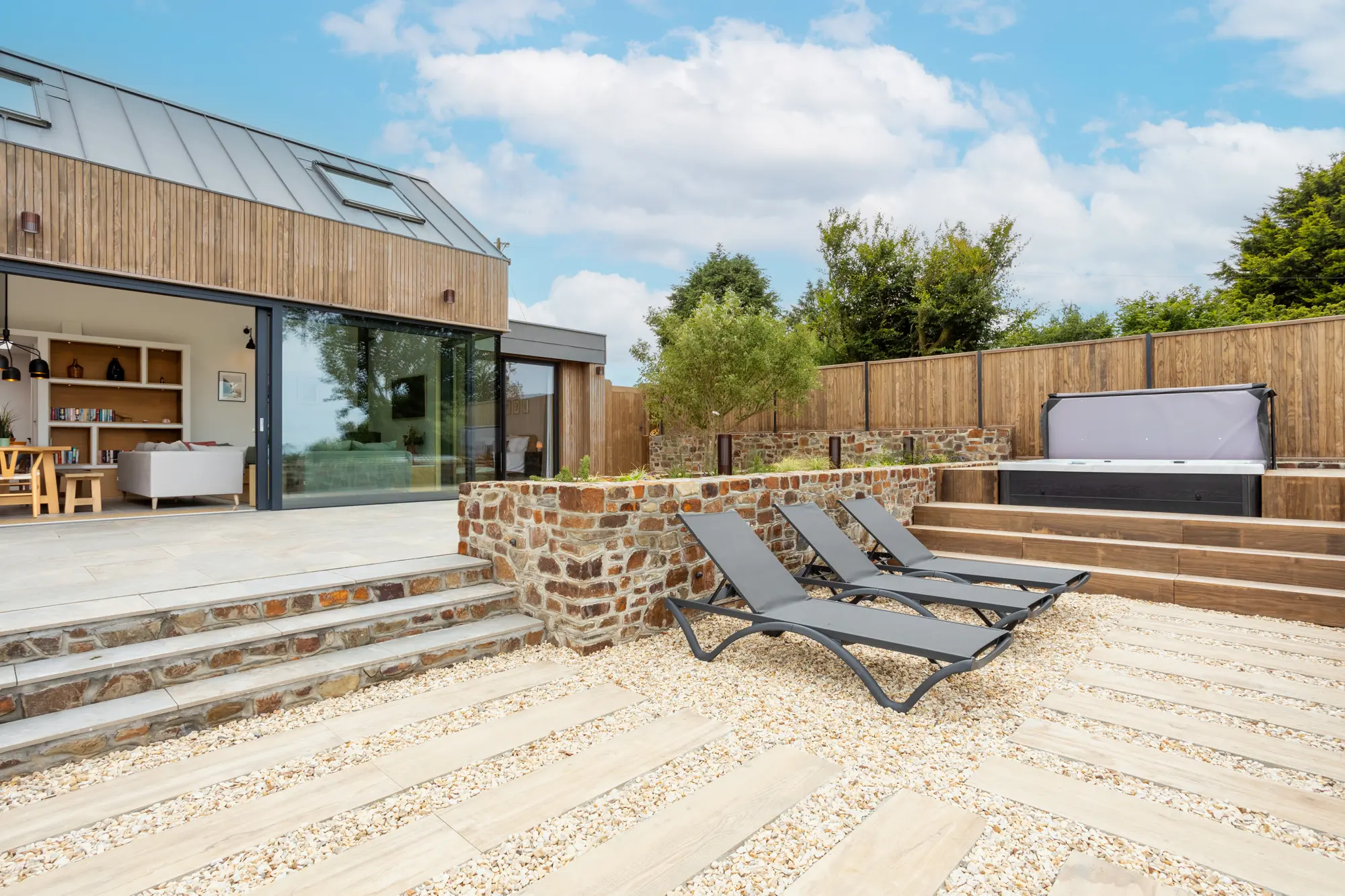
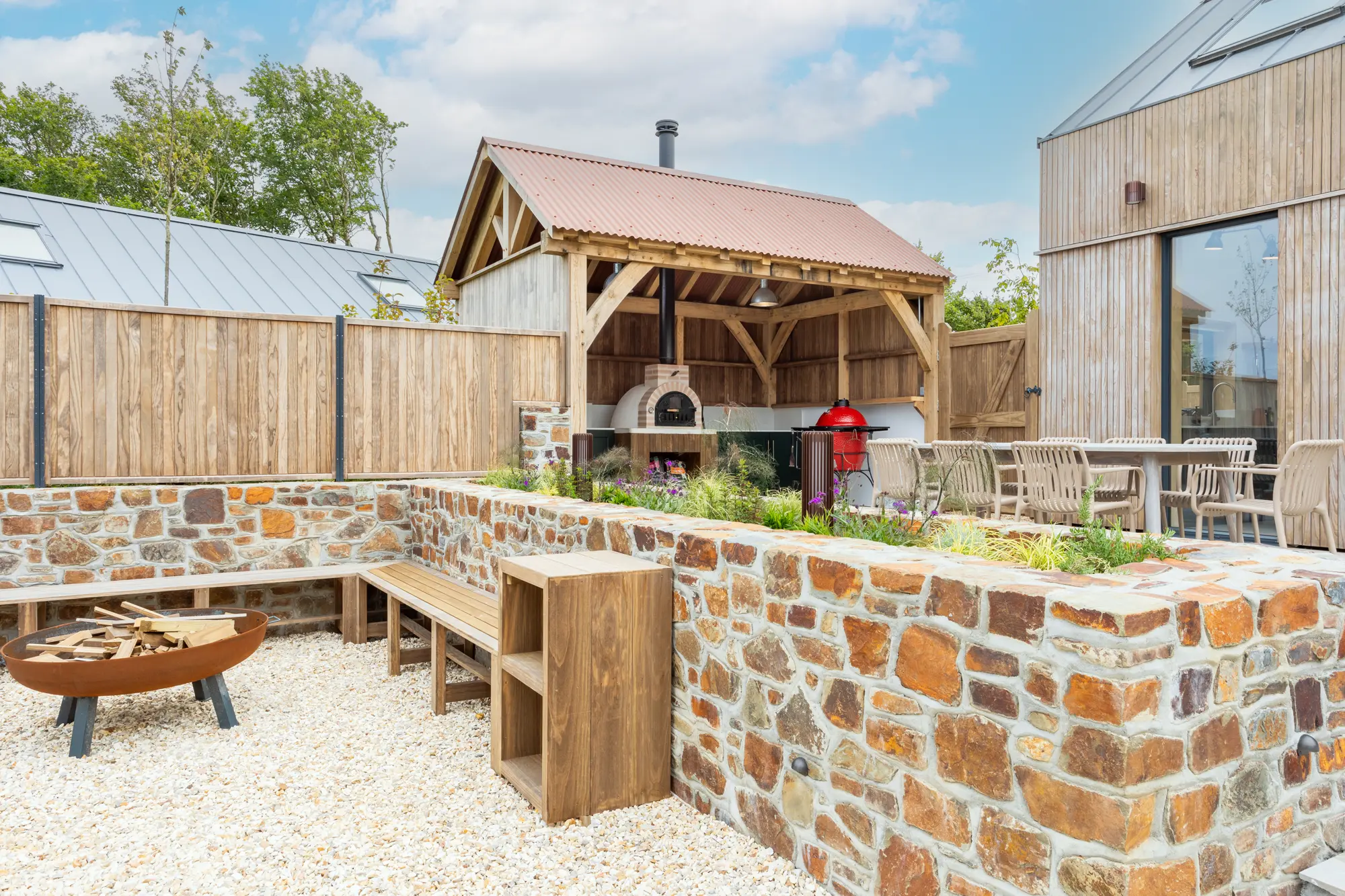

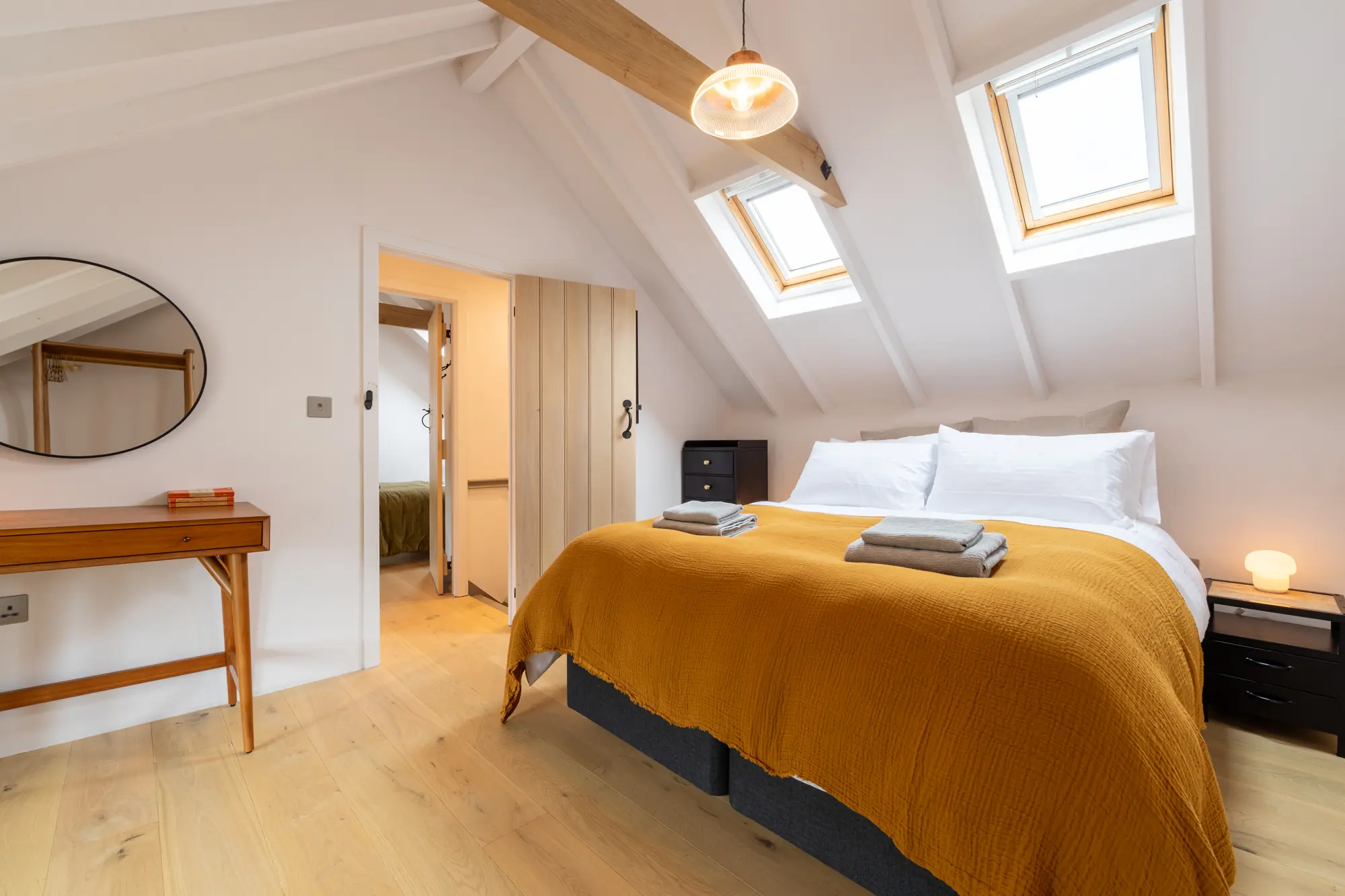
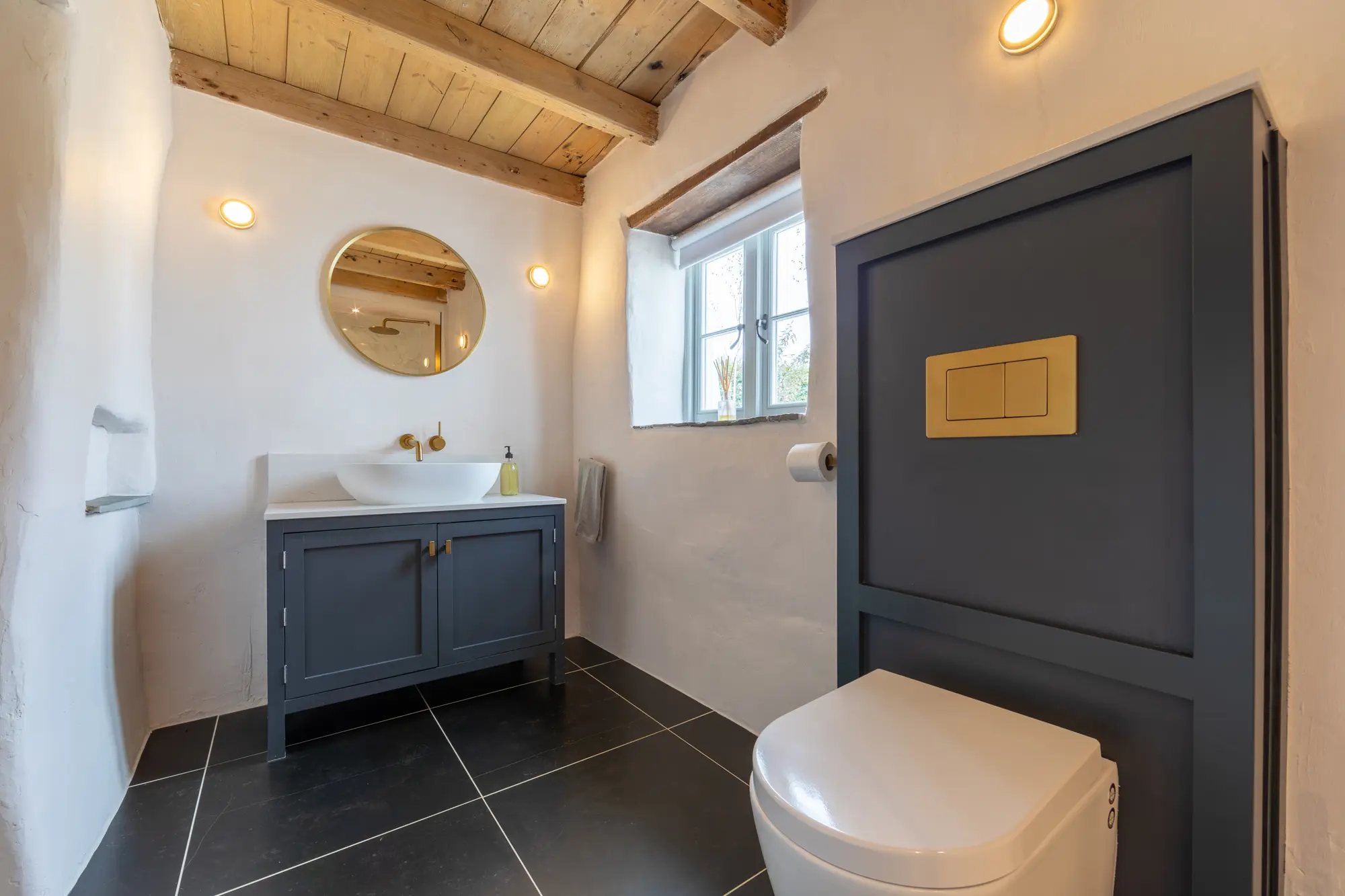
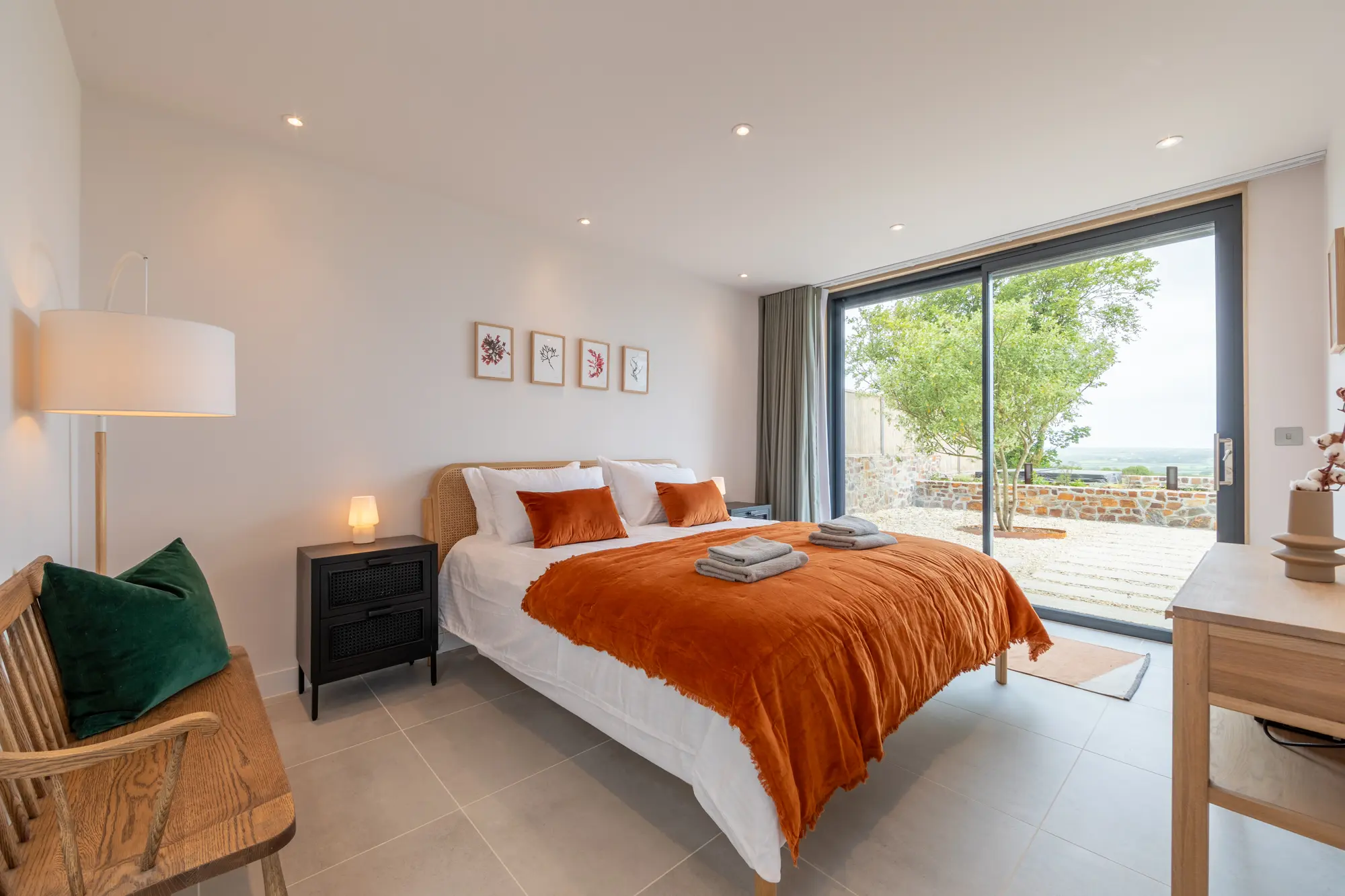
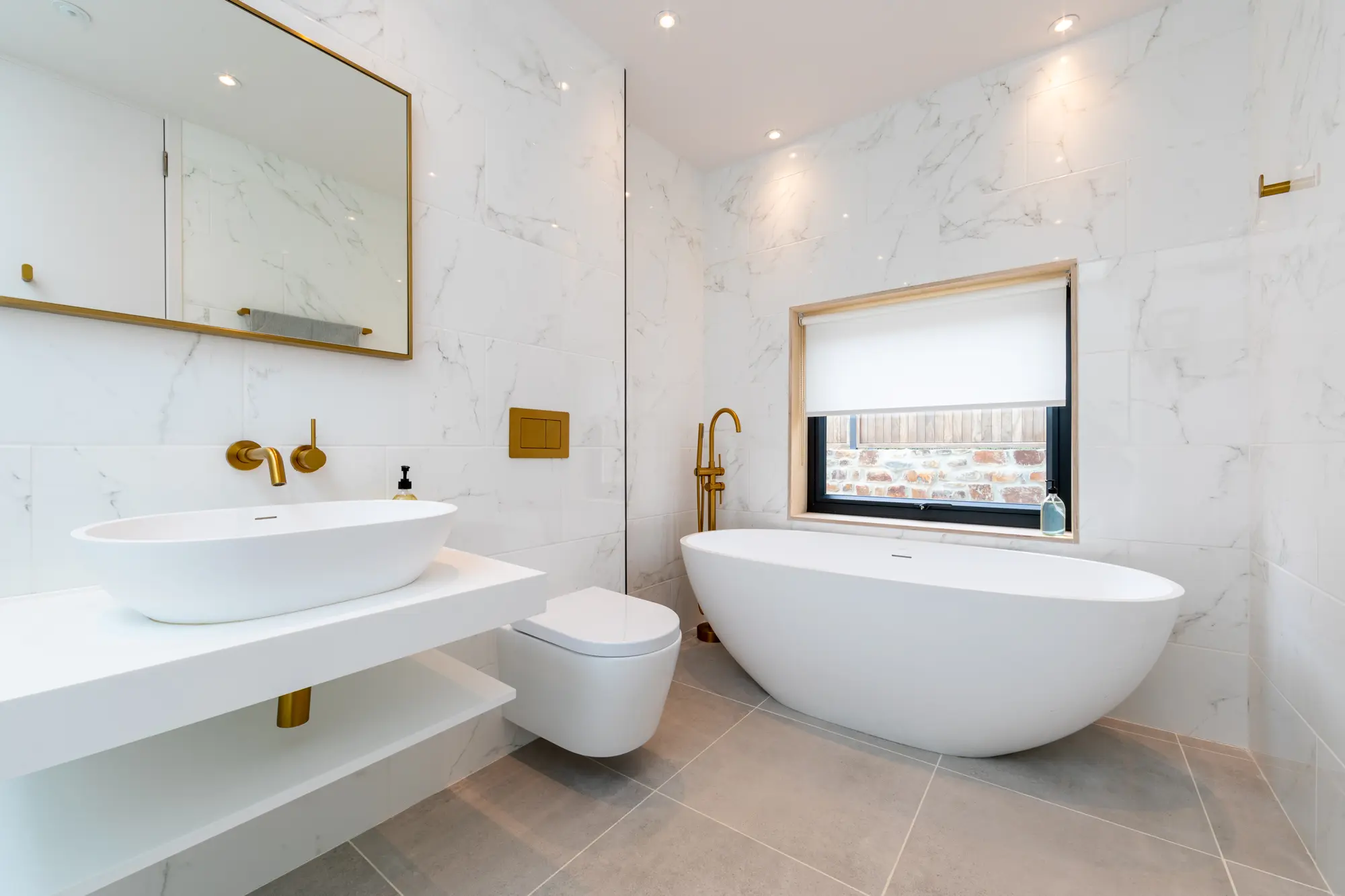

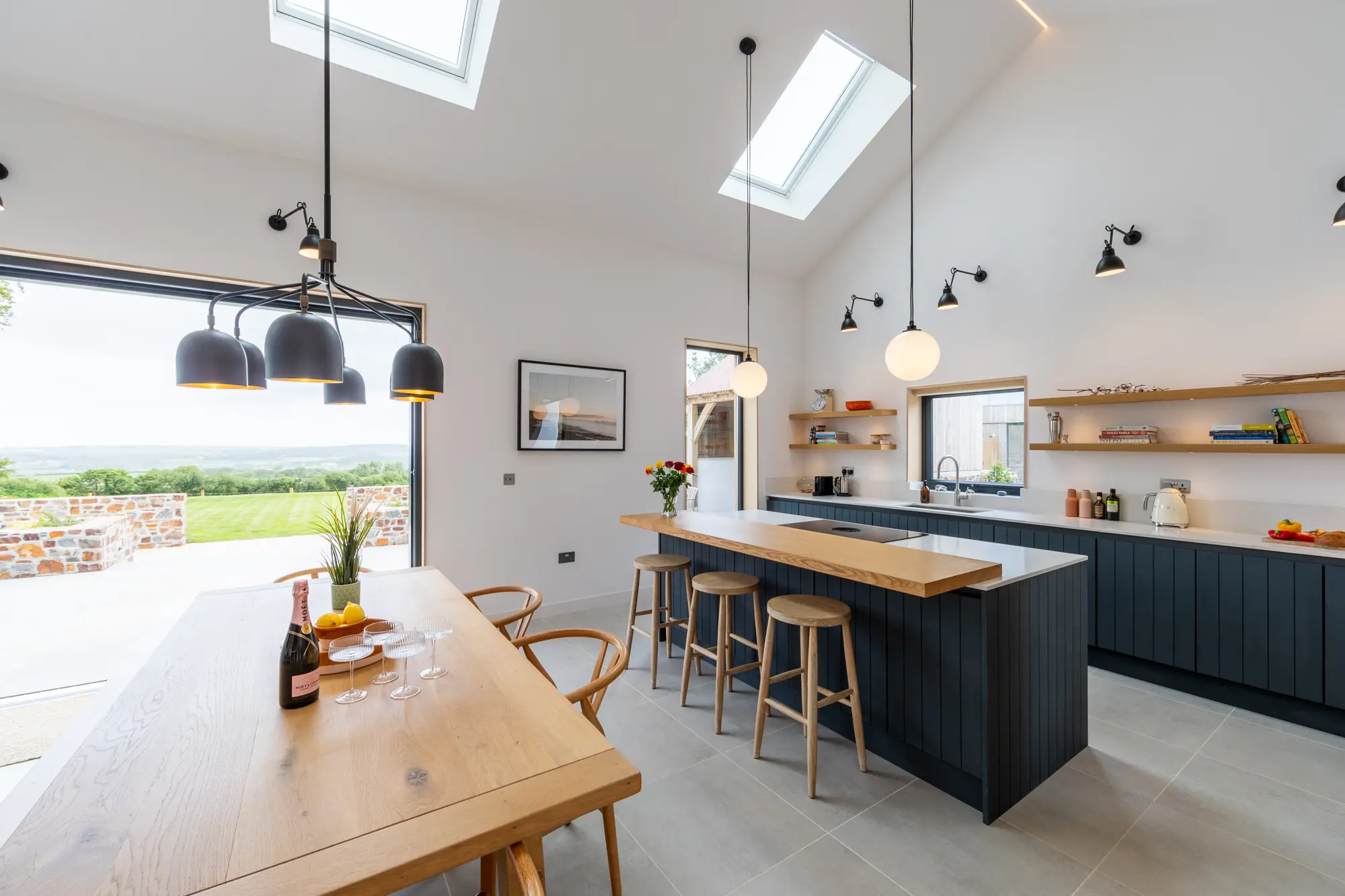
The couple have now added a games room/utility within the timber frame garage and a separate modern outbuilding, which has potential for future use as a holiday let. “We use Skylark as our own home and also rent it out for holidays to help recoup some of the costs involved,” says John. “It’s not been an easy project, but now we absolutely love the contrast between old and new.”
WE LEARNED…
- Drainage is important! There’s more drainage here than the Suez Canal, as the cottage was built on the crest of a hill and there are natural springs, so dealing with the run-off was important.
- The timber frame went up very quickly and was very cost effective, which surprised us. Our garage and outbuilding have been built in the same way.
- Don’t give up on planning. Find a good planning consultant and be prepared to go to appeal if necessary. The planning stage proved extremely stressful, but we’re so glad we persevered.
Debbie Jeffery

You may be interested in