

- Plan ItBack
- Design ItBack
- Build ItBack
- Homes
- ProductsBack
- CostsBack
- Self Build Cost Calculator
Estimate your project costs instantly with Build It's interactive self-build cost calculator
Calculate Now - Costs & Finance
- Contracts & Warranties
- Build It Estimating Service
Get an accurate, detailed cost breakdown of your project
Submit plans
- EventsBack
















 Login/register to save Article for later
Biomass Boilers Explained – Is this Heating System Right for Your Project?

Biomass boilers do the same job as a conventional gas or oil boiler, providing space heating and domestic hot water. Like other boilers, they use a distribution system – such as radiators or underfloor heating (UFH) – to deliver heat to all areas of a building. If you already have a boiler, the existing distribution system can normally be reused, which isn’t always the case with heat pumps.
What is biomass & how can it be used in a boiler?
Biomass is any form of plant matter (normally wood) than can be burned to deliver heat. This could be simply logs or it could be a wood waste product specifically designed for burning in boilers, such as wood chip or pellets. There are also energy crops such as miscanthus, grown specifically for use as a fuel, but these are normally only used in larger scale plants. Wood chip is typically used in larger commercial sized boilers, so this article will focus on the two technologies normally used at the domestic scale – ie pellet boilers and log boilers (keep reading to find out the key differences).
Which kind of project does a biomass boiler suit?
Biomass is genuinely low-impact and low-carbon fuel unlike electricity, which is still produced using fossil fuels. That’s one reason why people who live really low-impact lives often use it for their heating.
In exceptionally efficient eco homes, it may be possible to attain desired comfort levels in a small dwelling with just a log burning stove, especially if this is supplemented by a ventilation system that can distribute the warmth effectively. In such cases, it would be difficult to justify the expense of putting in a complete biomass boiler system. An alternative set-up is to use a woodburner with a back boiler, which could output to radiators.
Where biomass boilers make a lot more sense – both financially and in terms of reducing carbon emissions – is for larger new properties and existing buildings, especially homes that are off the mains gas grid. You’ll need to ensure there’s sufficient storage space for your fuel and you need to be fit enough to handle it if you’re using anything other than a completely automated system.
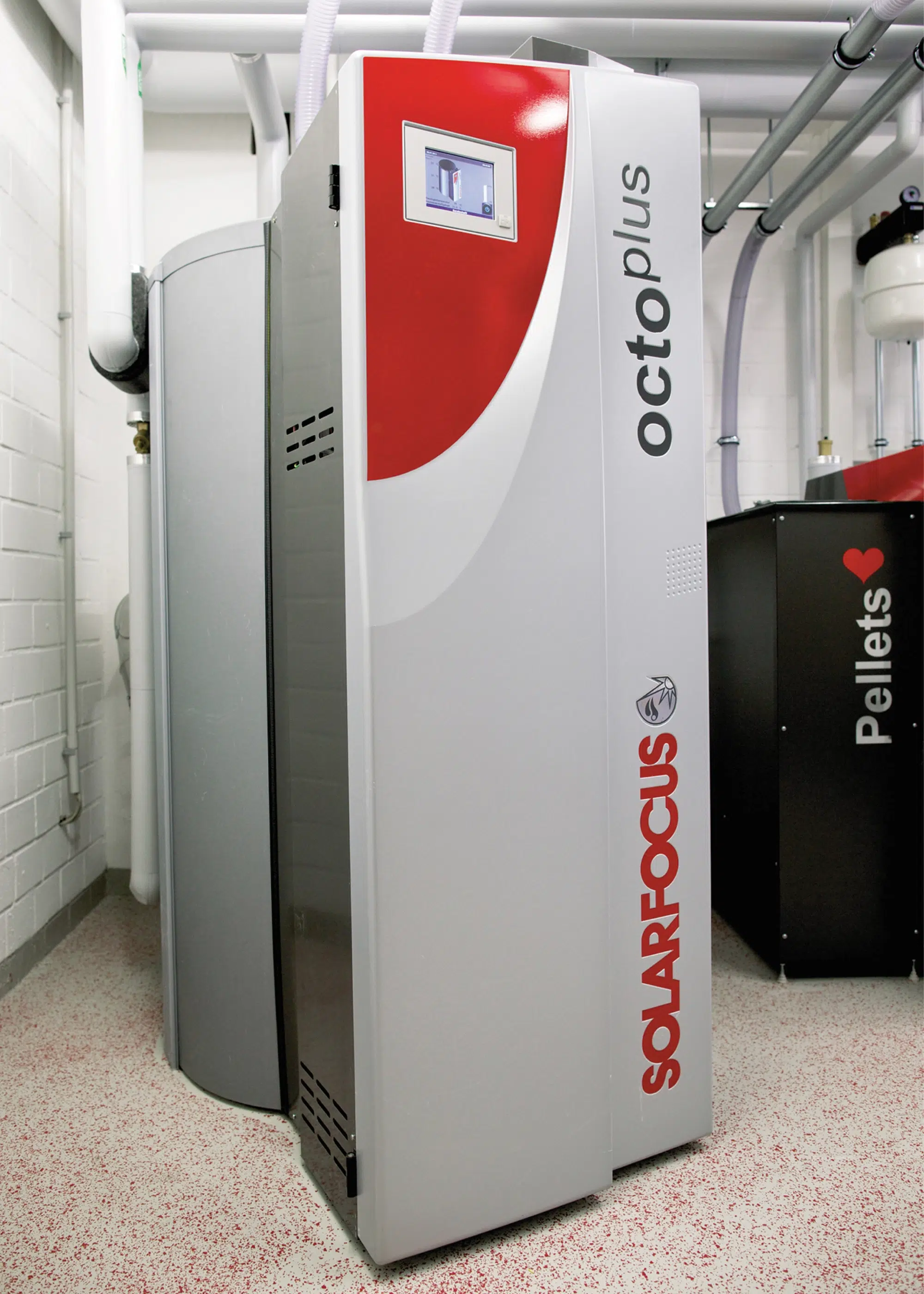
The OctoPlus 22kW wood pellet boiler from Solar Focus includes an integral thermal store and a buffer with a dedicated coil, allowing it to be used with solar panels
What’s the difference between a pellet boiler and log boiler?
Pellet boilers
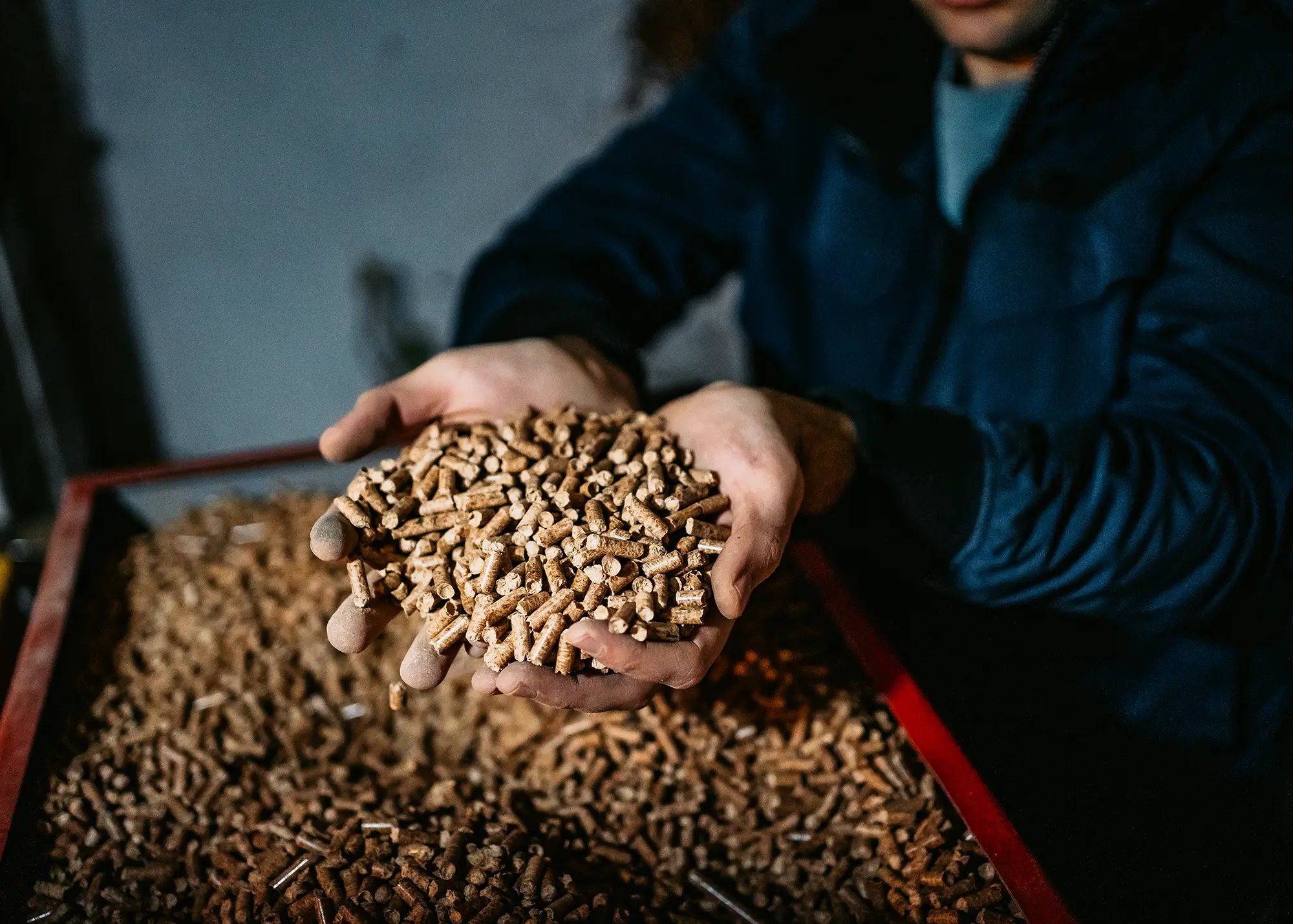
Wood pellets are manufactured from waste wood products, such as ground wood chips, sawdust and bark, all of which are created by the wood processing industry. No chemical additives are needed as the natural lignin in the wood serves as a binder when the pellets are compressed.
Pellets are slightly higher in embodied energy than logs, because they are more processed, and often then have to be transported some distance from the processing plant. However, even taking the embodied carbon into account, they still have a much lower environmental impact than electricity as a source of heating.
In terms of how they run and how they are controlled, pellet boilers are pretty much a straight swap for oil and gas boilers. They can be switched on or off at the touch of a button, or programmed via timers.
Pellet feed can be completely automated. Deliveries can be made directly to a feed storage hopper, or you may choose to fill it from sacks yourself. Larger systems tend to have hoppers (as this defrays the cost of blown deliveries direct from trucks) but smaller setups are usually manually fed. As with all biomass fuels, moisture content is important and this should be stated on the invoice – or covered by EN Plus (keep reading for more on this).
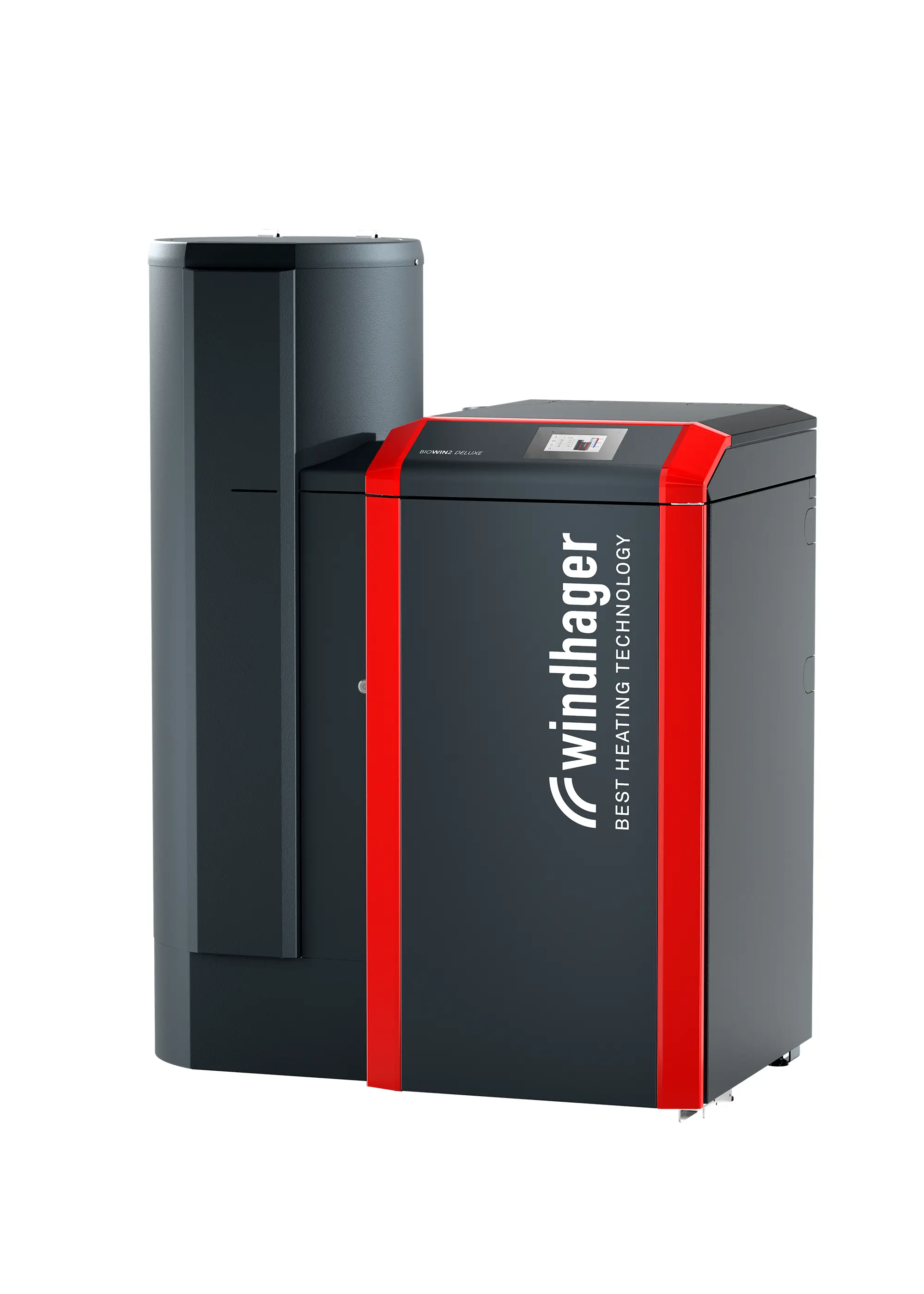
The Biowin2 Deluxe from Windhager is a modern, easy-install and low-maintenance pellet heating system, requiring ash removal just once or twice per year and servicing every two years
Log boilers
Log boilers have to be manually fed – so they are not for everyone. They are normally batch fed. So, you fire the boiler at a high temperature for a relatively short period of time and use this to heat a buffer tank, which stores the heat for later use. This tank is known as an accumulator. Space heating and domestic hot water needs are supplied by this accumulator via heat exchangers, which pick up heat as the circulation liquid passes through.
Batch-firing avoids having to operate the boiler 24/7 but it is still a commitment every time you need to fire it up. But if you spend most of your time at home and enjoy working with wood, then it can be a great pleasure to run a log boiler. Accumulators can also make use of other inputs, such as solar water heaters – a good complement to biomass boilers as they produce hot water in summer (when you don’t need space heating).
The main downside to log boilers is that you need space to store the firewood so that it reaches the right moisture content, and the fuel about to be used must be protected from the rain. For most hardwoods, drying will take at least 2-3 years, though some softwoods can be burned sooner than this. Buy a good quality moisture meter. You will also need space for the accumulator – though if you’re off gas grid and using an oil boiler, you will already have an oil tank; getting rid of this not only frees up some space but also removes a pollution risk.
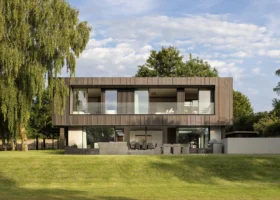
Case study Eye-catching eco house with a curved roof
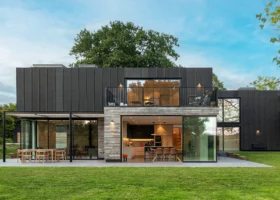
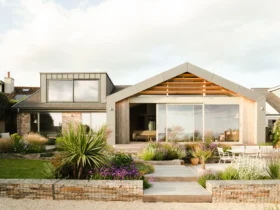
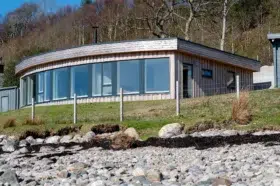
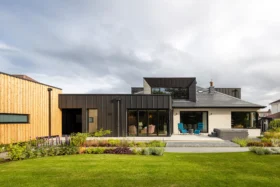
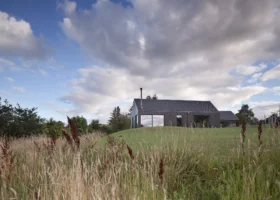
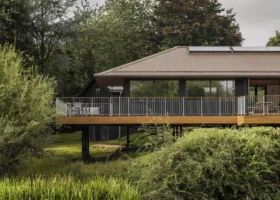
A collaboration between MAP Architecture and Jon Broome Architects, Creek Cabin sits within a National Landscape on the Suffolk coast. The unique home features two undulating living green roofs – complete with an integrated irrigation system – and timber-clad exterior, helping it to blend harmoniously with its surroundings.

Photo: David Valinsky
The home has been constructed to Passivhaus standards with low energy and sustainability leading its design and functionality.
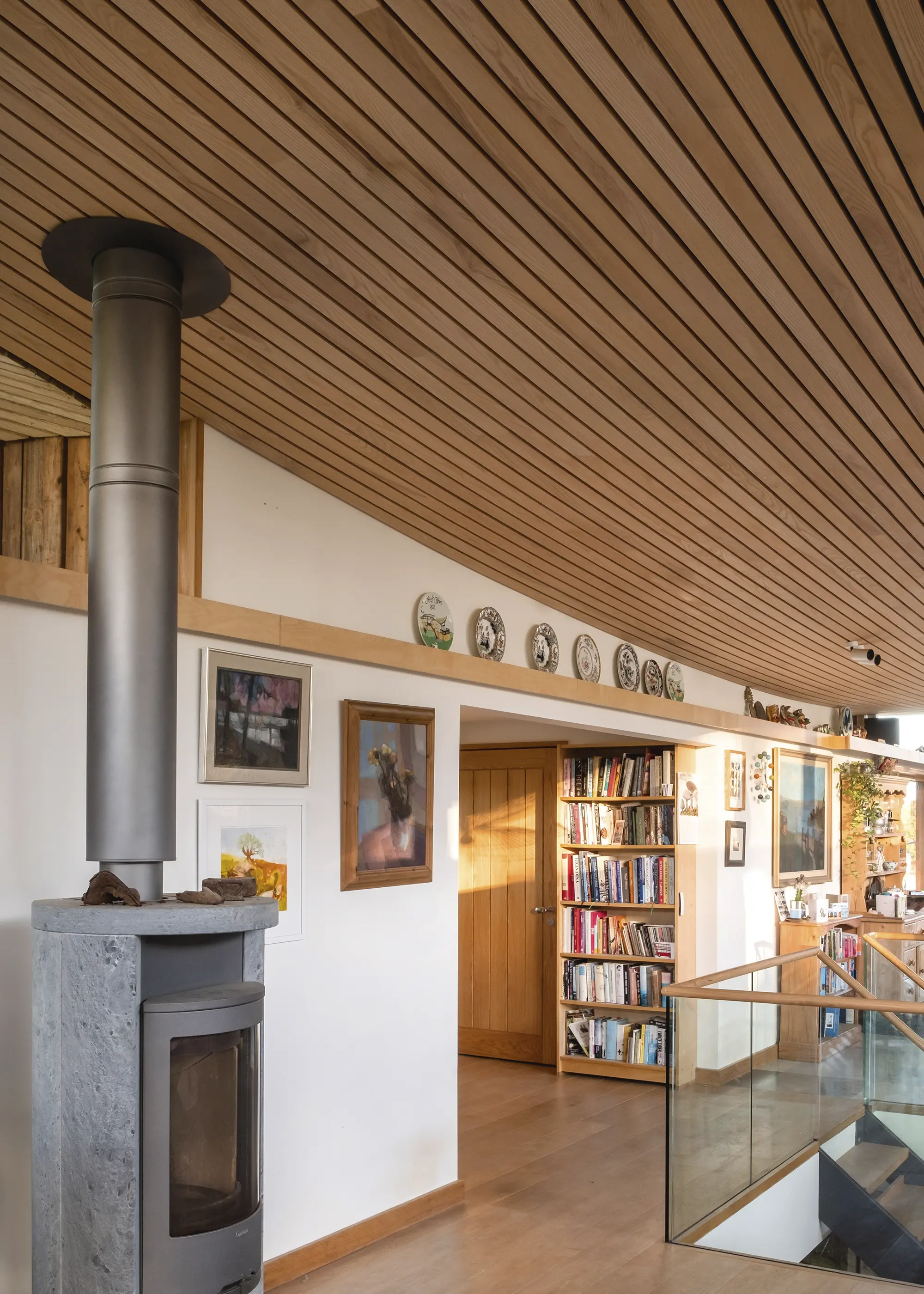
Photo: David Valinsky
A highly-airtight and extremely well-insulated building envelope with mechanical ventilation allows for a comfortable internal environment all year round, while a wood chip biomass boiler and selectively-placed, triple-glazed windows ensure a cosy interior in the colder months.
How big should your biomass boiler be?
Calculating the right biomass boiler output and buffer tank capacity is a professional job and your installer will advise you on this. In retrofit scenarios, the biomass appliance is often sized below the maximum system load, with the peaks being handled by the original fossil fuel boiler. This prevents biomass boilers running at less than full capacity (which would make them burn less efficiently).
What kind of maintenance does this system require?
When it comes to the maintenance side of things, all biomass boilers will need more attention than gas or oil boilers. They will produce a small quantity of ash – but the efficiency of modern units helps to ensure this is less than 1% of the volume of what’s being burnt. If you have a garden, wood ash can be used as a fertilizer (as it contains potash). It’s also good for remedying acidic soils or simply adding to the compost heap.
You’ll need to clean the biomass boiler periodically, as well as regularly check the feed system for blockages and build-ups. Some units are largely self-cleaning, simply requiring you to empty the ash bin as and when it becomes full. You’ll also need to have the chimney professionally swept, commission an annual service and ensure that the area where the fuel is stored is dry and well-kept.
Are biomass boilers truly sustainable?Wood is considered to be a carbon-neutral fuel as the CO2 that is emitted from burning it is slightly less than the CO2 which is absorbed as the tree grows. Timber that is harvested for fuel needs to be replaced by brand new planting, so that the equivalent CO2 emitted during combustion will be reabsorbed by the new samplings as they grow. For logs in particular, in order to remain carbon-neutral as a fuel, it is important that the wood is grown close to where it is used and that the local distribution system is efficient. The most sustainable type of fuel is waste – ie that which comes from hedgerow thinnings, fallen trees, offcuts from sawmills, etc. The optimal solution is to have your own woodland, but few people are so lucky to have such a backdrop. If you’re buying in fuel (and not from a neighbour where you know the source) then the key is accreditation. Sustainably sourced fuel will be accompanied by a number from the Biomass Suppliers List (BSL), and this should be stated on the invoice. For wood pellets, the BSL number is sometimes printed on the bags. They start with BSL and then have 7 plus 4 further digits. To check whether a BSL number is current, visit the Biomass Suppliers List. EN Plus is also an acceptable certification of sustainability that you may find on bags. Unlike fossil fuels, wood produces negligible amounts of sulphur dioxide or nitrous oxides, so burning it does not contribute significantly towards the problem of acid rain – about which we hear little these days. |
How much does a biomass boiler cost to install?
Specifying the right boiler output, of course, depends on the size of home and how well insulated it is. The estimated (installed) costs in the table below assume that the existing distribution system can be reused.
For newer properties, you would need to add on the price for the distribution system, noting that heat demand should be very low in modern dwellings, so the boiler size should be at the smaller end of the scale.
Pellet vs log boiler installation costs
| House type | Pellet boiler cost* (ignores subsidy) | Log boiler cost** (ignores subsidy) |
|---|---|---|
| Smaller 2-3 bed homes 15-25kW | £10k-£15k | £7k-£12k |
| Larger detached homes 25-40kW | £15k-£20k | £12k-£15k |
| Very high demand 40-60kW | £25k-£30k | £15k-£20k |
- *The pellet boiler cost includes the cost of an automatic feed.
- **The log boiler includes the accumulator needed to store the heat prior to distribution to space heating and domestic hot water systems.
Can you access any funding for a biomass boiler installation?
Biomass boilers are supported under the government’s Boiler Upgrade Scheme (BUS). This only applies to rural properties in England and Wales and does not operate in Scotland or Northern Ireland. £5,000 is available to help with the cost of a biomass boiler. Both logs and pellets are supported though, of course, there are certain conditions – you must be off the gas grid, have a valid EPC, and maximum boiler size 45kW.
£5,000 makes a big difference to the numbers in the table above. Be warned that much literature about the BUS only mentions heat pumps, but we know that biomass is an equally valid and government-supported solution in many situations.
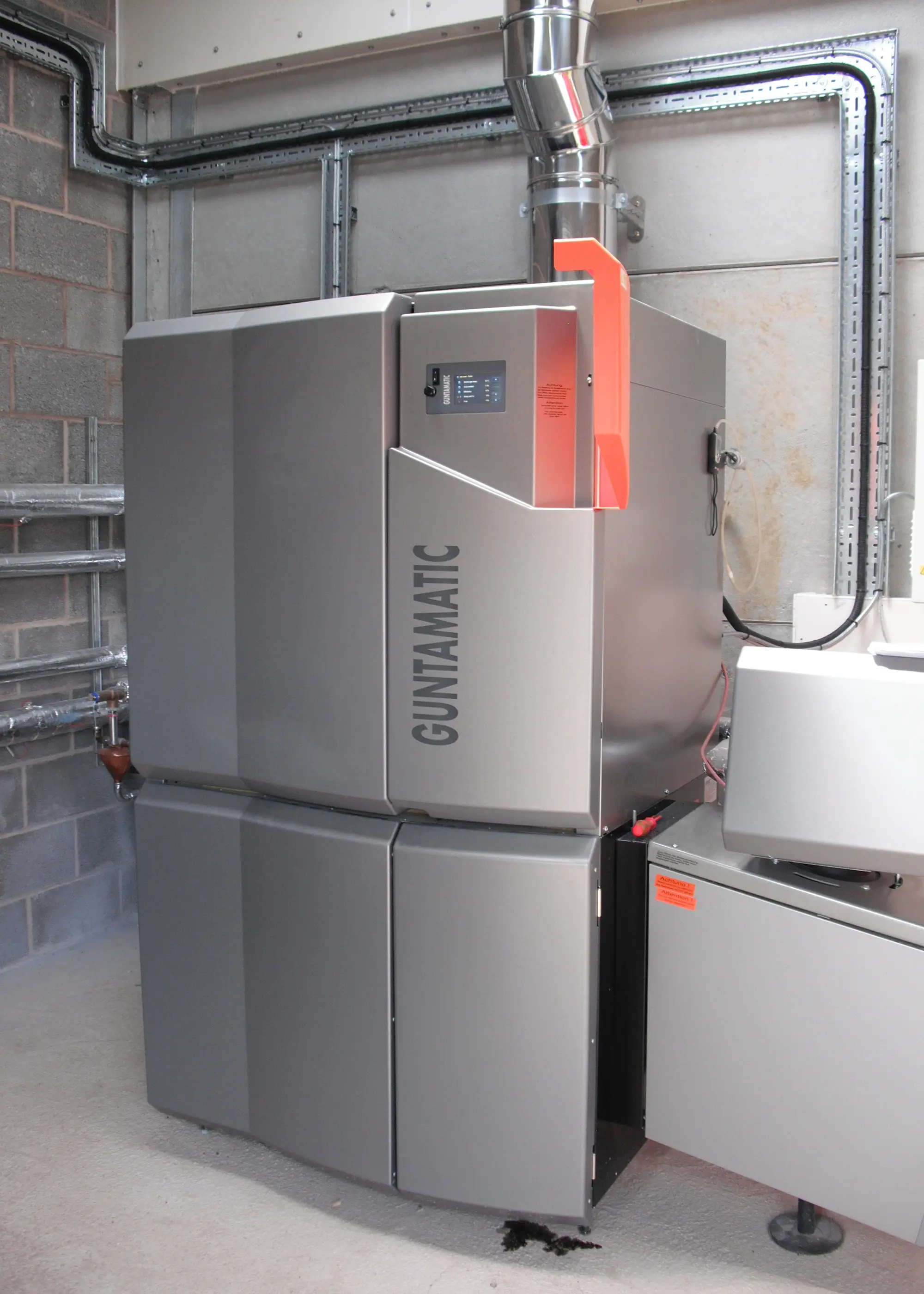
This project, undertaken by Treco, involved the installation of a Guntamatic Powerchip wood chip boiler and a buffer tank to provide heating for the whole site
How much does a biomass boiler cost to run?
I’ve always said, if you’re not spending money you’re probably being pretty low impact. Scavenging firewood (logs) is the best way to get free heat, and often this wood might otherwise simply rot down, producing more potent greenhouse gases such as methane. There’s a saying that wood warms you three times – collecting it, cutting it and burning it. However, if you’re buying logs, it may not save you much over a gas boiler, and it’s a lot of work.
If you’re running a pellet boiler you’ll certainly be buying your fuel. Based on the current cost of pellets, and assuming 90% boiler efficiency for both gas or pellet systems, running a pellet boiler will cost you the same or slightly less than a gas boiler.
Can you install this system if you live in a smokeless zone?
Many parts of the UK are designated as smoke control areas (SCA), which means that emissions of smoke from domestic homes is banned. If you do live in a SCA, this need not prevent you from using a biomass boiler. Some stoves burn wood so efficiently that they are designated as exempt appliances.
Click here for a full list of exempt appliances. Note that these vary depending on whether you are in England, Scotland, Wales or Northern Ireland. Be sure to check the model, as exemptions only apply to specific products. There are a fair few log boilers and rather more pellet boilers on the list.
To find out whether you live in a smoke-controlled area, Defra advise you to contact your local council. From experience, this may not be easy – good luck!
Nigel Griffiths
You may be interested in



Comments are closed.