An Architect’s Guide to Designing a Side Return Extension that Works with Your Home
As well as boosting your home’s living space, a side return extension can have a dramatic effect on the flow of your interior layout. Architect Opinder Liddar shares the secrets to designing a successful side extension scheme
Opinder Liddar
Wondering whether a side return extension is the right home improvement project for you? With land so scarce and building costs so high, many homeowners are keen to transform an existing house into their dream dwelling. As an architect, it’s my role to help people maximise the potential of their current property.
A side return extension offers one of the most promising opportunities in terms of home improvement and can contribute to the creation of a fantastic living space that form a stronger connection between indoor living zones, such as the kitchen and dining area, and the garden. As a result, it’s well worth exploring your house’s extension potential. So, where should you start if you’re looking to add a side return extension to your property? In this guide I’m looking at everything you need to know, from planning rules to costs.
Assessing your home’s extension potential – does a side return addition work for you?
Firstly, your designer will need to understand the neighbouring context. One of the main issues when it comes to getting planning consent for an extension is the impact of your proposed addition on your neighbours’ amenity. The principal concerns are whether there are any overlooking issues. In addition, will the new structure impact on nearby properties’ daylight and will it appear overbearing in terms of scale? Does it work from a design perspective?
Taking these issues in turn, your architect should set out the steps you need to take to ensure you stand a good chance of gaining support for a side-return extension both you and your neighbours will be pleased with.
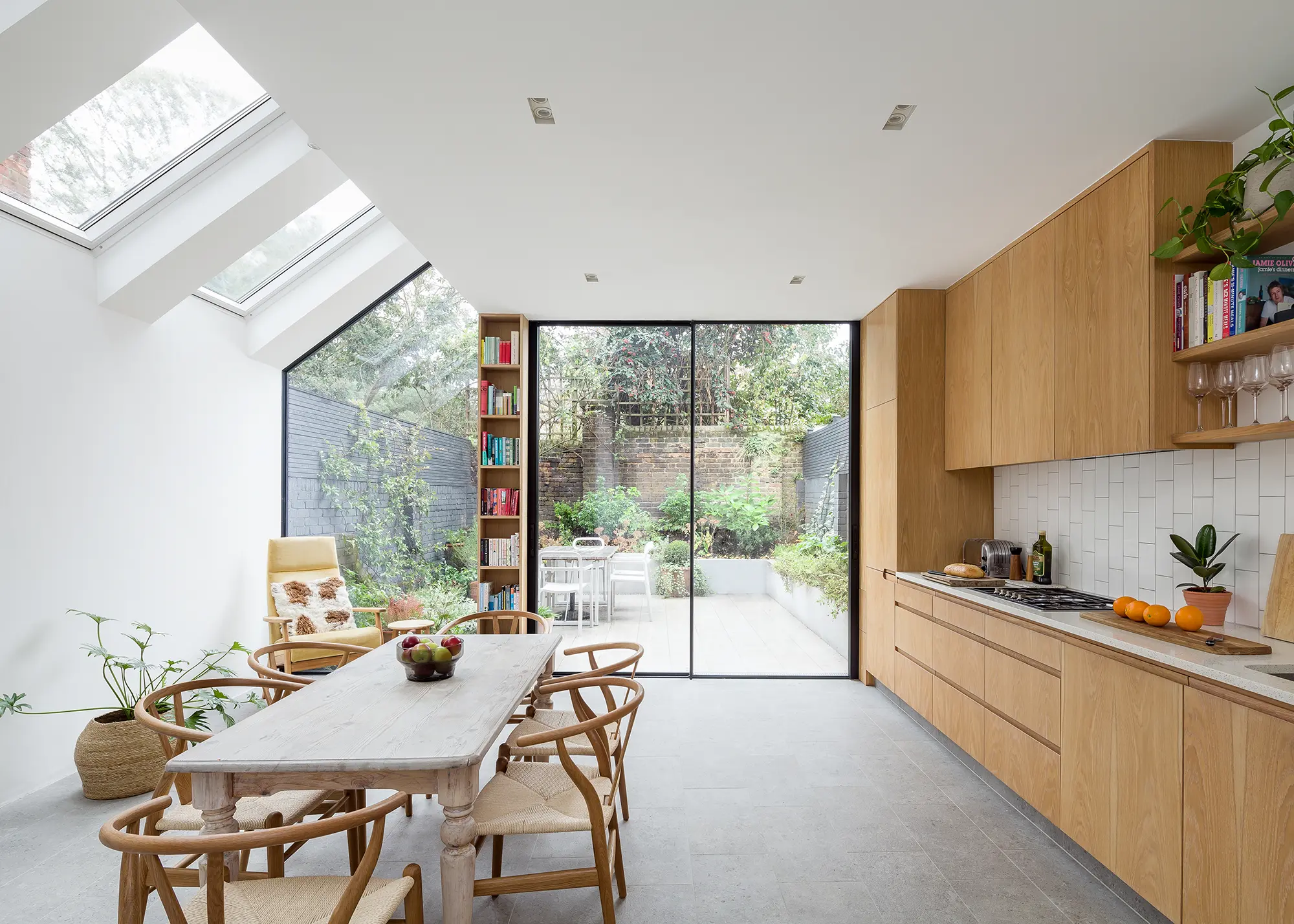
This urban Victorian terraced house in North London has undergone a complete internal and external transformation, designed by Neil Dusheiko Architects. The east-facing kitchen-diner had previously suffered from poor daylight due to its position one level down from the street and disconnected layout. Photo: Tim Crocker & Agnese Sanvito
End of terrace and semi-detached houses will usually have space to the side of the property. A simple solution would be to fill this gap – however, it’s important to consider what internal space you’d be left with. Sometimes this area isn’t quite wide enough, so you can end up with long, narrow rooms that feel quite restricted. Bear in mind that many local planning departments will probably have design guidance that openings of up to 1m should be maintained between different properties at first floor level.
This is to prevent a terracing effect along the street, wherein if everyone was to extend sideways right up to their plot’s boundaries, then a road that formerly had a character of semi-detached properties would adopt the nature of a terrace.
So, it’s important not to assume that incorporating a side extension is the only way to expand. It may be possible to come up with an alternative solution to avoid ending up with an expensive and awkwardly-shaped room.
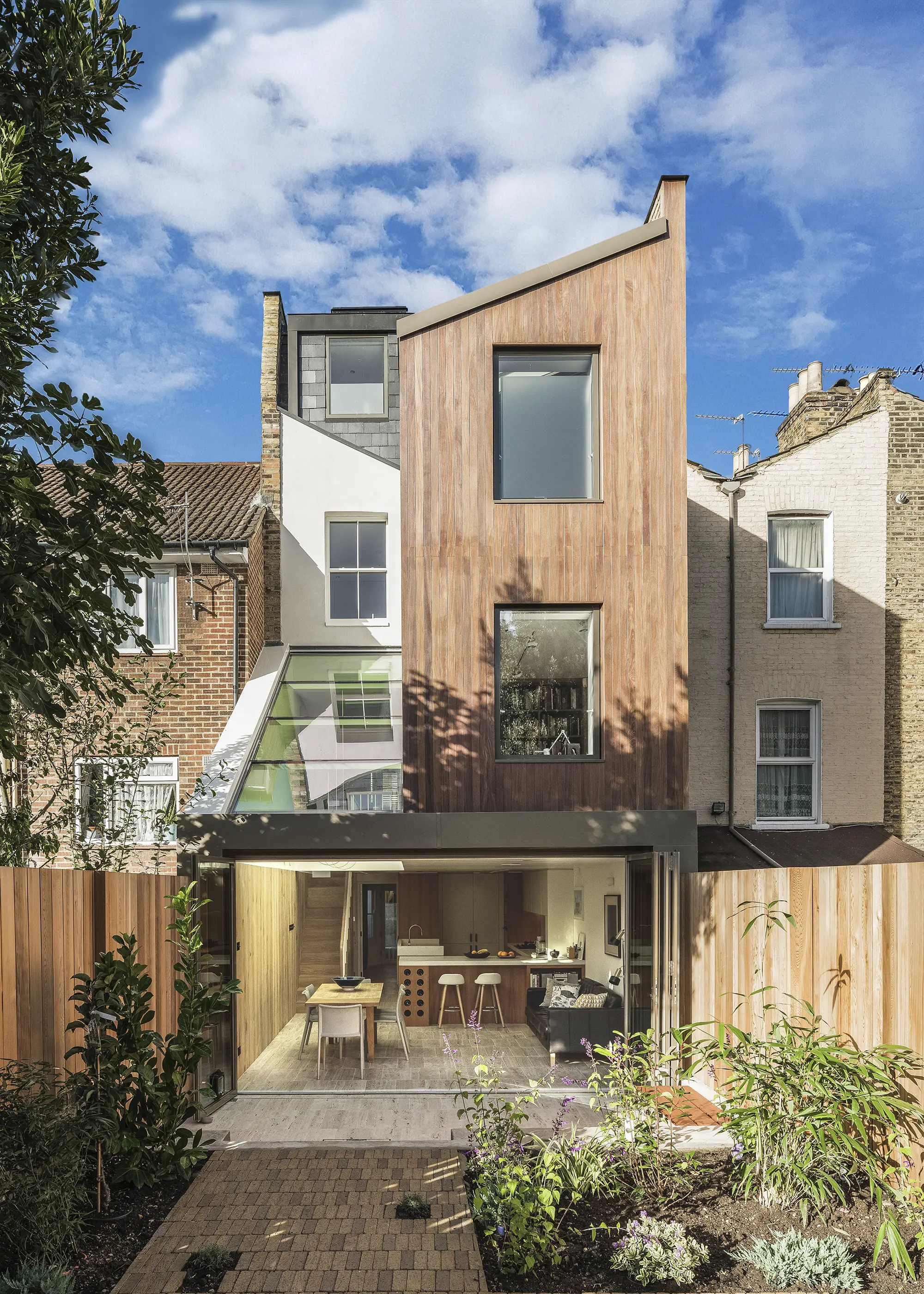
When the boundary is relatively tight, I’d suggest that you explore using both the side and the rear of the property, partly wrapping the extension around the corner of the house. In this scenario, it’s possible to keep the planners happy and create a space that’s wider, better-proportioned and more usable.
Build It’s house extension downloadable e-guide will help you plan, design and construct an addition that enhances your existing property while meeting your needs and budget.
Getting planning permission for a side return extension
A number of planning rules are likely to come into play when considering how to deal with rear extensions, especially if they involve upper-storey elevations. Usually, your council will be keen to steer clear of overbearing designs and those that overshadow neighbouring properties. Different planning departments will interpret the guidelines in their own way, but most work to the following criteria:
Footprint & overshadowing
Take your nearest neighbour’s first floor window (bathroom windows are not included) and strike a 40° or 45° line from the edge or centre of it across your site diagram (see Lapd Architects’ plans, below, as an example). When you design your extension, the upper storey additions (ie anything above ground floor) must not extend beyond this line.
Diagram indicating sightlines and overshadowing using the 45-degree rule. Photo: Lapd Architects
Extension height
Taking the same neighbouring window, draw a 25° line from the sill on the side elevation. Your proposed extension should not cut into this line. Where you can demonstrate that you have adhered to these guidelines, your scheme should be considered as not significantly harming your neighbour’s amenity, and should gain the support of the planning authority. If you can wrap the extension around the side and rear, you can usually create a decent-sized bedroom that can provide even more space if a vaulted ceiling is incorporated.
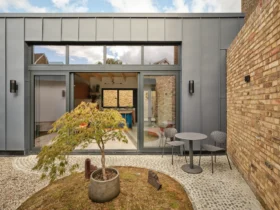
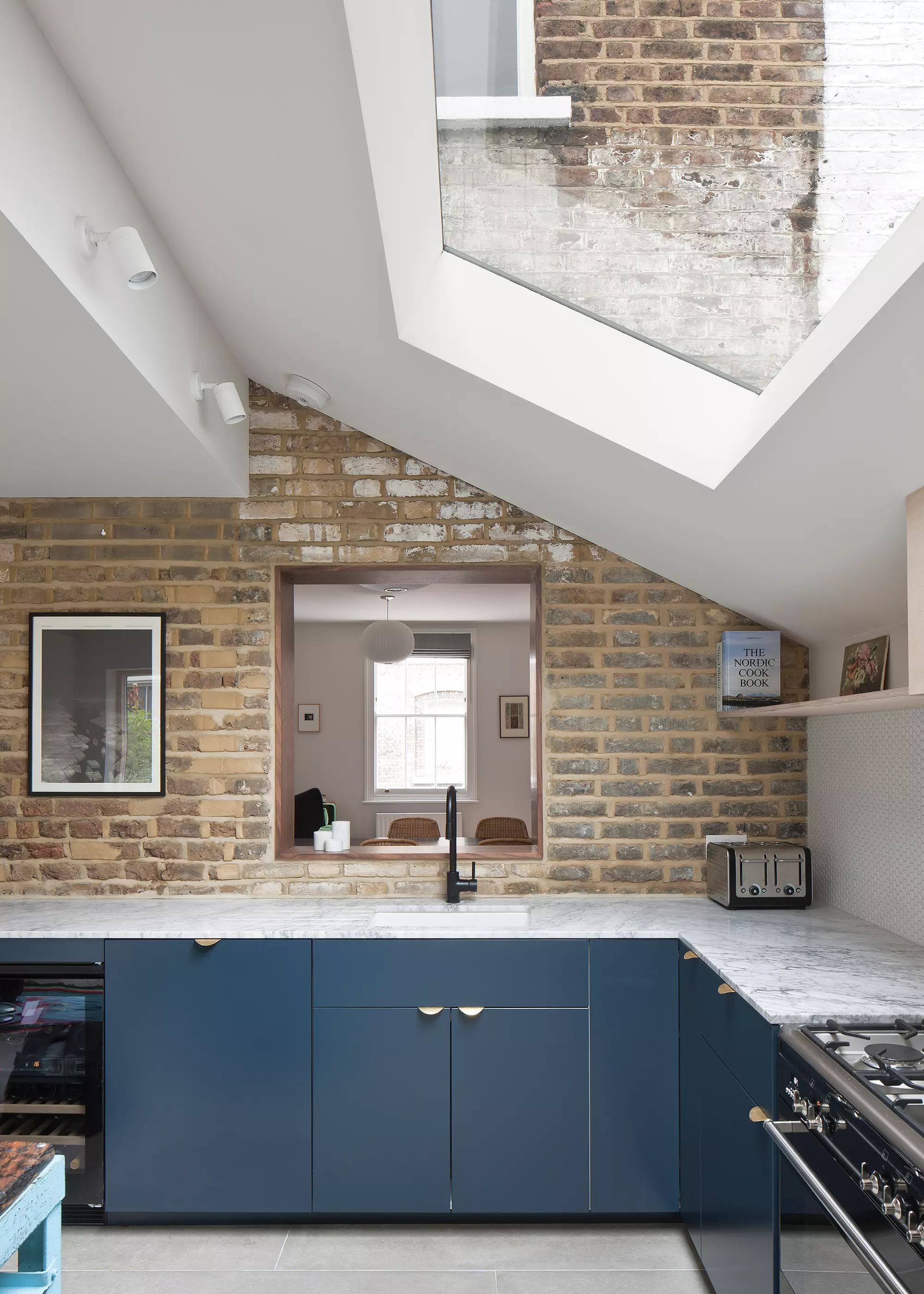
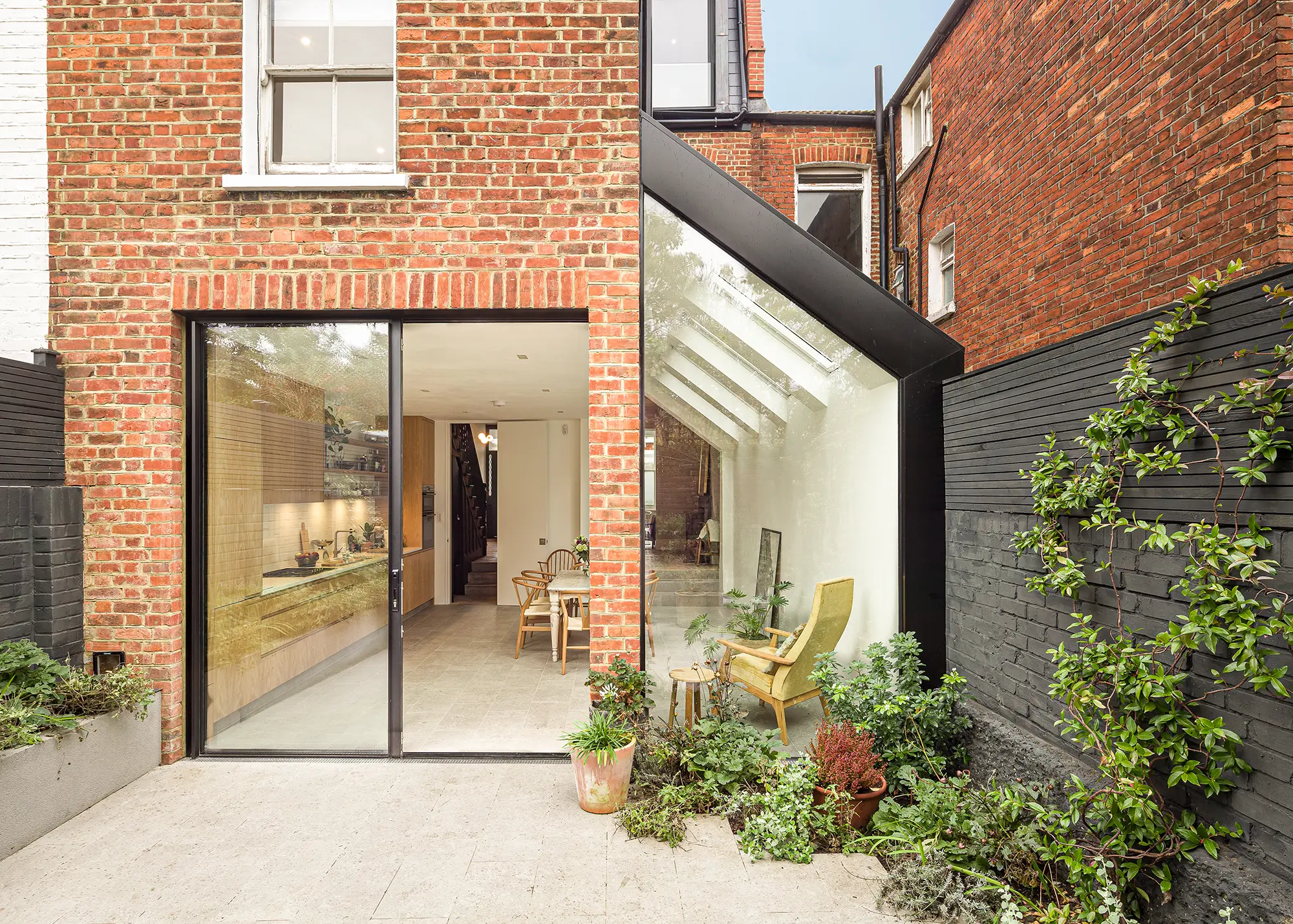
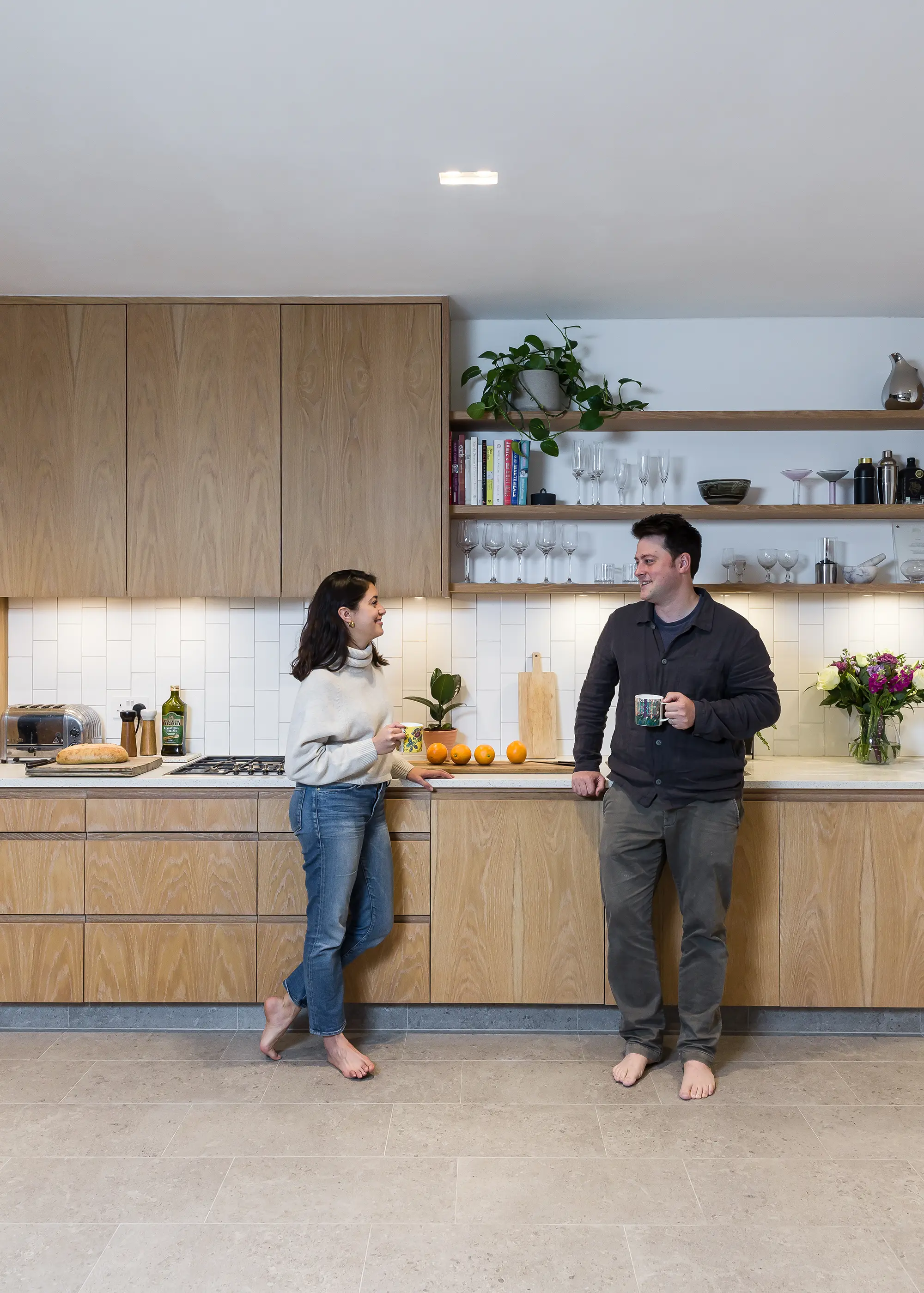
This side return extension by Archer & Braun features an open internal window, looking straight through from the living spaces into the new kitchen. Exposed brick walls have been paired with sleek kitchen cabinets and marble countertops for a characterful scheme. Photo: David Barbour
Access to outdoor spaces
While filling vacant space at the side of your house may be tempting, it could affect access to the back garden. If you have built all the way across a plot’s boundary, consider how you’ll get things like bins out to the front of the house. Another, perhaps temporary, factor to think about is how you’ll enable large plant to gain access to the site to build the extension. In most cases, you will find that the amount of room you can create at ground floor level far exceeds what is permissible for the upper storeys.
Permitted development (PD) rules
The rules that relate to making changes to the ground floor by adding an extension are slightly different, as there may be potential to extend across the back and side of your property at ground floor level without obtaining formal planning permission.
Most projects benefit from permitted development (PD) rights, which enable semi-detached and terraced houses to be extended by 3m from the back of the original building. These rules have been further relaxed for single-storey extensions in England so that currently – in theory – you can double this distance to 6m if your immediate neighbours agree. PD entitlements also allow you to extend to the side by up to 50% of the width of the ground floor of the original dwelling.
Clad in rusted Corten steel, this extension by McLaren Excell Architects wraps around the side and rear of the original terraced property. Broad expanses of glass allow occupants to enjoy garden vistas while they are in the kitchen-diner area. Photo: Nick Guttridge
Side return extension layouts & design considerations
Working within the above parameters (set out by permitted development rights) will give you the chance to complete a great project that significantly boosts your home’s internal space. A lot of our schemes have involved reconfiguring the house’s existing layout as well as building a side return extension. This can help to enable a much better connection between the interior space and the garden.
This means that the owners are then able to expand their dining area outdoors in summer. This is usually achieved by having larger swathes of glass as part of the rear elevation and folding doors that enable partitions to disappear, allowing rooms to open up to the sky.
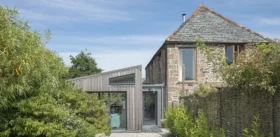
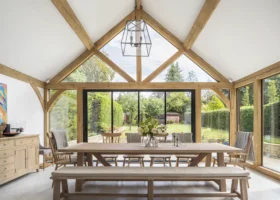
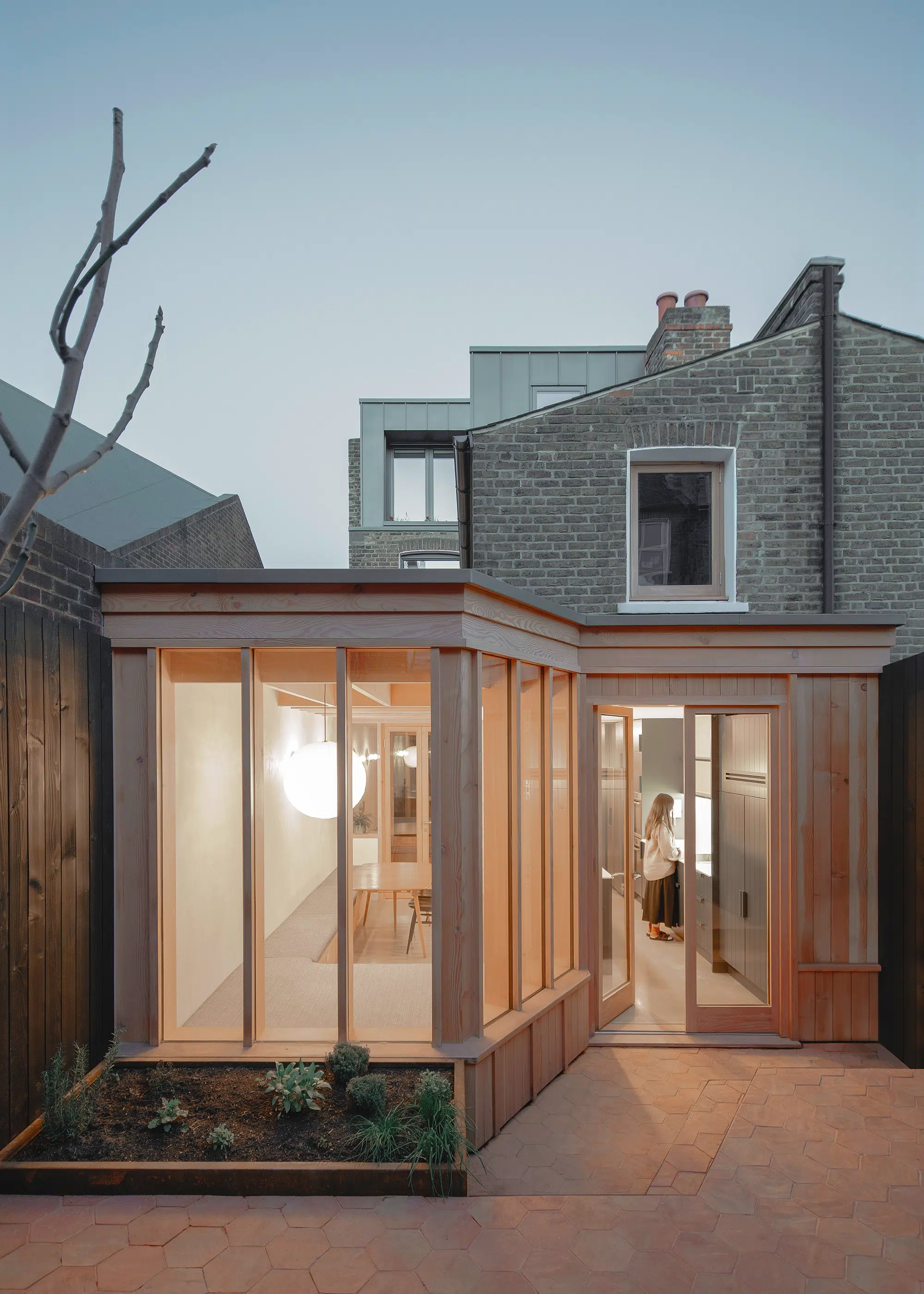
This traditional end-of-terrace house in Peckham has been transformed by Emil Eve Architects through a carefully crafted Douglas fir timber frame side and rear extension that brings warmth to the home. Photo: Nick Dearden
When I’m planning these layouts, I aim to ensure that those parts of your home which are next to the garden are used as living space, so that you can see the landscaped area from indoors. It’s amazing how many houses I’ve encountered where – prior to our design work – toilets, utility rooms or storage rooms were included as part of this key elevation. Sometimes, occupants wouldn’t even know they had a garden, let alone be able to enjoy it from inside.
As a result, when I’m planning a new interior configuration, I always endeavour to insert zones that don’t necessarily need a view or natural light at the centre of the property, off the main circulation space.
This could include built-in storage closets, ground floor cloakrooms, shower rooms and utility areas. My goal is to enable clients to connect their kitchens, dining rooms or living zones with the garden so they can enjoy the views throughout the year.
Case study Victorian terrace house in London upgraded with a side return extension & renovation
When Frank and Paloma Gilks found a crumbling Victorian terrace house in West London, they jumped at the chance to rescue it. Due to structural issues, caused by the attic water tank exploding, it was considered unmortgageable, but Frank took one look at the photos and immediately recognised its potential.
Photo: Simon Maxwell
Before they’d even exchanged, Frank visited a property a few doors down, which already had a modern extension. “I looked at what work had been done and examined the planning drawings,” says Frank. “I used these designs as the basis for my own. I knew if I stayed within those parameters the council shouldn’t refuse our proposal.” Frank’s plan worked and the pair received the green light from the local planning department.
Frank and Paloma took on project management responsibilities themselves. Work had just started on site when the first lockdown hit. “Luckily, builders were able to continue working, which meant the scheme could carry on with limited setbacks,” says Frank.
Photo: Simon Maxwell
However, the pandemic did cause other issues. To buy the £930,000 property, Frank and Paloma pulled together their savings and borrowed £620,000 from Halifax, but as soon as lockdown hit, they both took pay cuts. The couple were forced to revaluate their approach. They borrowed money where they could and made design adjustments. For instance, they opted to complete the loft work as a shell that could be kitted out later. Plus, they decided to only replace the timber sash windows at the front of the house, leaving the originals in place at the rear.
Photo: Simon Maxwell
Despite lockdown, the builders made good progress. Almost all of the internal woodwork and plaster was removed and a new roof installed. The property was completely rewired and replumbed, too. After seven months, the house was move-in ready.
Light-filled, free-flowing and decked out with gorgeous period features, the interior allows the history of the building to do all the talking. Every room beautifully blends traditional Victorian elements with modern touches. “The final fix was extremely laborious, especially painting the new cornicing,” says Frank. “But when you start to unpack boxes, you start to see the house as your home. It was hard, but nice to tackle such an amazing project with Paloma.”
Structural considerations for a side return extension
We’ve already mentioned some key design considerations, but there’s several other areas worth keeping in mind with side return extensions:
Steelwork
Don’t be afraid to knock out walls if it leads to a better overall arrangement of partitions and interior space. Many people think steelwork is expensive, but it may be better to remove a wall and combine old and new spaces rather than building a larger structure than you need.
In most cases, new extension work is pricier than inserting steels. I also find that combining two or more spaces works better for the seamless flow of the home, as opposed to having separate rooms.
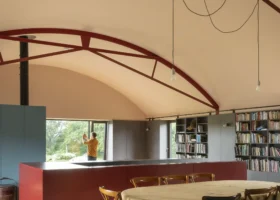
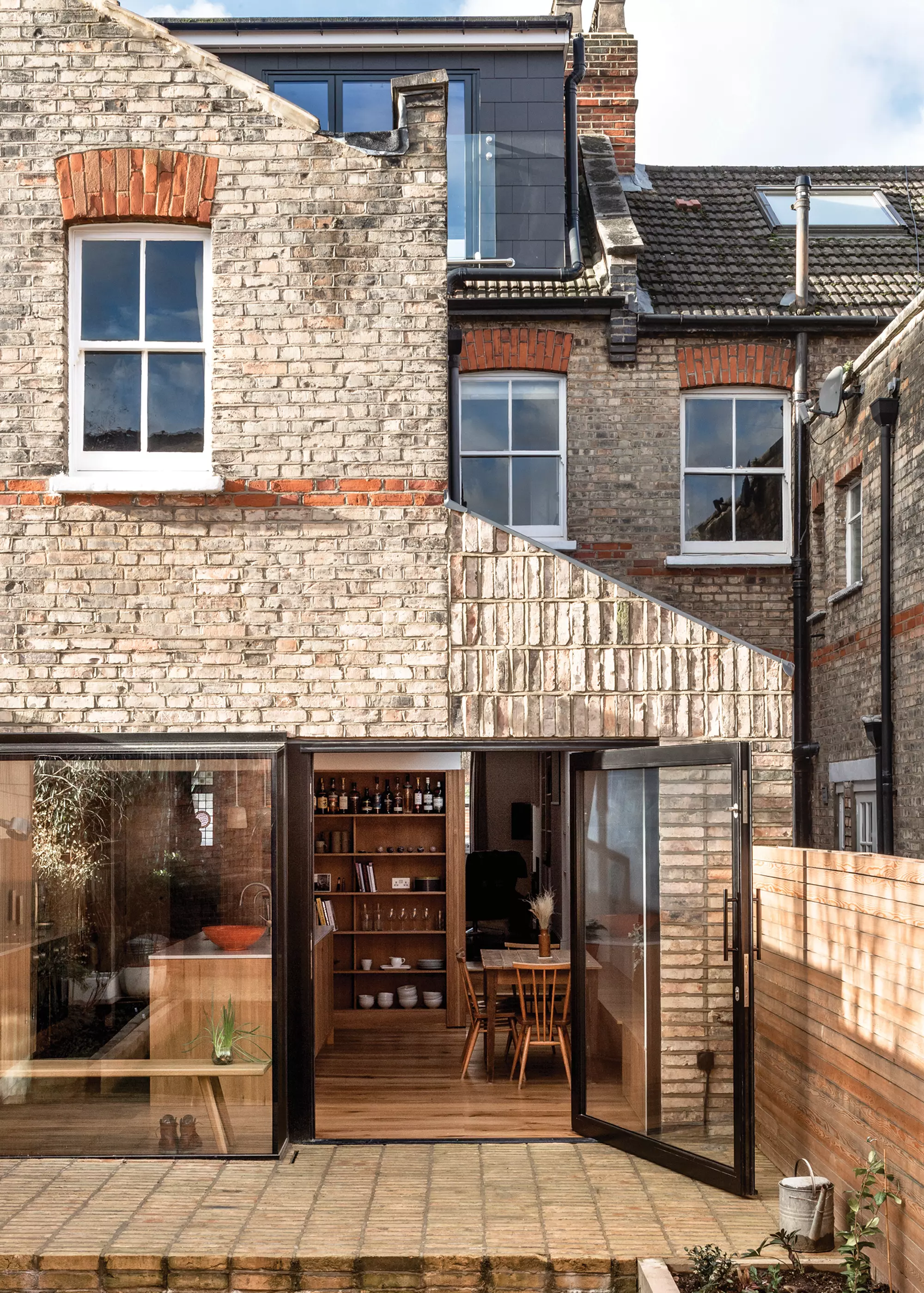
The large glazed pivot door in this side return extension by Bradley Van Der Straeten Architects is just one of the focal points bringing design flair to this home. Inside, a curved edge reaches up from the original ceiling to meet a large rooflight over the side addition, while playfully laid recycled bricks bring pattern and interest to the external elevation. Photo: French + Tye
Drainage
Rules about who owns your drains changed a few years ago. Generally, if a neighbour’s drain connects to yours and comes onto your land, it will be classed as a public system and is the responsibility of the water utility company. These firms have their own regulations that you must abide by. If your proposed extension is going to cross or will be within 3m of a public drain, then you will need to enter into a formal build-over agreement with the relevant company to gain permission to carry out your works.
They will stipulate certain requirements regarding alteration and future access. Ensure you allow sufficient time to deal with this application and, as ever, bear in mind that there will be a charge for this compulsory requirement.
Party Wall Act
Another important piece of legislation that may be relevant to your side return development is the Party Wall etc. Act 1996. This is intended to protect you and your neighbours’ interests if you’re building into or creating a new shared boundary wall (party wall) or excavating within three metres of your neighbour’s dwelling. This extends to six metres if you are making deep foundations such as piling, or building a basement.
As the work you’re proposing may undermine or weaken existing structures, the Act is there to ensure that if this happens as a result of the work, you must put it right. It’s also there to protect you so you’re not required to rectify any damage that’s unrelated to your project.
What does a party wall agreement look like?
You should serve a Party Wall Notice to your neighbours between two months and a year before building work commences. You can serve the notice yourself following specific requirements, or appoint a surveyor to do this. You’ll need to include drawings and details of the works. I’d also advise undertaking a photographic condition survey of your neighbour’s home. This will help to avoid any uncertainty, for example, about whether a crack was there before or whether it’s a result of your renovation works.
Answered by Emma Perkin
Emma Perkin is director at Emil Eve Architects, an award-winning studio based in East London. Established in 2009, Emil Eve creates imaginative and inspiring buildings and spaces.
The do’s and don’ts of a side return extension
Do:
Carefully consider the proportions of the rooms that are going to be created. Ask your designer to show you where the furniture will go and check the new space is practical.
Follow your local authority’s design guidance by making sure the extension is subservient to the main dwelling from the front elevation.
Consider incorporating vaulted ceilings to provide more space and voluminous new rooms at first floor level. Use rooflights to bring in sunshine and remove any overlooking issues.
Specify materials that will complement the main house and surrounding area. Breaking up long elevations will create more visual interest than long horizontal elevations comprising the same finish.
Don’t:
Create long, narrow rooms, as these will be relatively expensive to build and aren’t likely to make for great living spaces.
Block out the natural light to the centre of the existing property.
Use the wrong brick or a mishmash of roof pitches where the extension is tied into the existing building. This will always look wrong and in the worst cases could even devalue the property.
How much does a side return extension cost?
In the UK, costs for a single-storey rear extension will typically sit between £1,800 and £3,000 per m². This could rise to around £2,500-£4,000 per m² in areas like London. These figures are based on creating a usable living space, but exclude the final decoration, fees, surveys and VAT. Here’s a typical cost breakdown for a mid-range, 30m² extension outside of London, assuming a total build cost of around £60,000. Usually built as single-storey structures, side-returns fall within similar price bands – but the compact footprint may add a small uplift. From £2,300 to £2,900 per m² for a standard spec.
Simon Banfield is co-founder of BanfieldWood, and architectural practice based in London.
How can I integrate the newly-extended space with the rest of the house to create a natural flow?
Homeowners often try to create one larger space when extending, however this can lead to an impersonal space that never really feels like it works properly – it could end up being noisy, hard to keep tidy, and often, these spaces have large areas in the middle that have no use. Instead, consider splitting a larger space up, to create defined zones that still flow visually from one to the other, and are open but might be separated by a different floor finish, built-in furniture, or step up or down. This can make a small space feel multi-functional while still appearing expansive.
How can I position glazing to maximise the potential of my side return extension?
Try and find a focus for the glazing or add one. The norm is large glazed panels that face towards a garden, but it can be a lot more impactful to have this facing towards something, or creating a separate space, with a side return extension, for example, you could create an internal courtyard which creates a completely different feeling both visually and spatially, while also bringing light in – bigger isn’t always better.
How can I design for volume with a small side return extension?
While side return extensions can be fairly small, they often work to unlock the width of site, but often also allow higher ceiling levels than the space you’re extending. By taking advantage of this, either through glazing at the roof level, or even connecting this space visually to the existing house (for example, from an existing playroom into a dining room with a window, or opening), this can feel like a whole new part of the home, offering an alternative to the standard ceiling heights of the other rooms and drawing light further into the centre of the plan of the house.
How can I make use of every available inch of space without creating a cluttered feel?
There is often the feeling that every inch needs to be used, but this tends to complicate the project for no real gain, sometimes it’s about making the main spaces work harder, or just being able to hide things – storage within bench seats, or below built-in units, for example.
We would usually suggest waiting until the project is on-site and letting these moments happen rather than planning for them. Using the web of exposed steelwork as a shelf for ornaments, for example, or taking advantage of a recess above a door to display a piece of art. Possessions are often what adds personality to a home, so rather than having the pristine white box, show those family moments, souvenirs and collections – but in moderation.
What are some hidden costs that can steer a project off budget?
It’s often at the beginning and the end of the project that we see budgets get broken. At the start, being led by costs shown on renovation social media accounts often lead to ambitions that don’t meet the budget, and in our view it’s much better to have a well-designed small change rather than an ambitious project that’s badly finished.
Costs can often build from elements such as Party Wall Agreements, planning permissions or professional fees. VAT often catch clients out, too, and we usually suggest you take 30-35% off your total budget from the start to even get close to what your true budget is and be realistic.
Finally, it’s often the small things that add up – adding an extra power socket here, changing a door handle there, all become extras and add up quickly, but feel small in cost.
Opinder Liddar
Opinder Liddar is one of Build It's architectural experts. He is an award-winning architect and a director at Lapd Architects. He specialises in self build homes and renovation projects. Opinder is a regular expert at the National Self Build & Renovation Centre as well as the Build It Live exhibitions. He is also the design brains behind the Build It House.

















 Login/register to save Article for later










Comments are closed.