

- Plan ItBack
- Design ItBack
- Build ItBack
- Homes
- ProductsBack
- CostsBack
- Self Build Cost Calculator
Estimate your project costs instantly with Build It's interactive self-build cost calculator
Calculate Now - Costs & Finance
- Contracts & Warranties
- Build It Estimating Service
Get an accurate, detailed cost breakdown of your project
Submit plans
- EventsBack













 Login/register to save Article for later
Light & Spacious Class Q Barn Conversion in the Hampshire Countryside

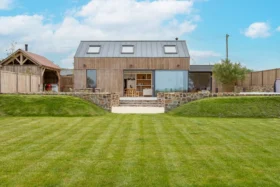
After self building a holiday home on the Isle of Wight, Murray and Lucy Humphries were looking for a new project – this time to relocate to the countryside. Three opportunities came up. Two were redevelopments that might not have allowed the modern property they had in mind; the other was the conversion of a steel frame barn under Class Q permitted development rules. This offered the couple a blank canvas to create what they were after, plus having planning permission already approved was a huge positive.
The couple reworked the floor plans that came with the purchase into something better suited to them. “There were no changes from the outside, but we altered the internal living space,” says Murray. Adjustments included creating an independent lounge, separate from the open-plan area, and adding a boot room that suited their outdoorsy lifestyle with dogs.
Deciding on a timber frame structure
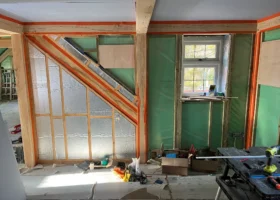
The Humphries knew they wanted to be hands on with their project and put lots of research into every stage. “When looking into barn conversions, I read about issues with thermal bridging and existing steel portal frames,” says Murray. “It became evident early on that placing a timber frame inside the agricultural structure solved those problems. So, although there is an existing structure, it has no supporting role in the finished building.”
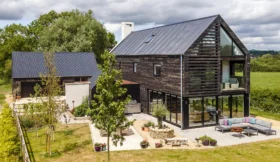
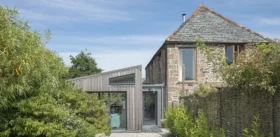
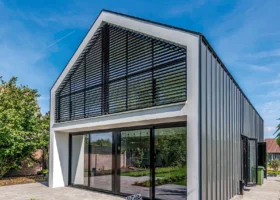
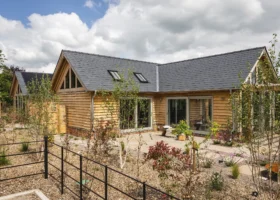
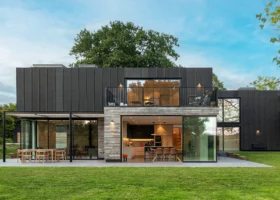
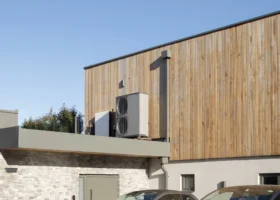
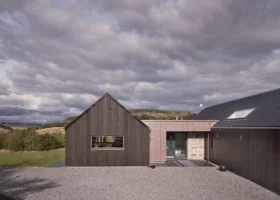
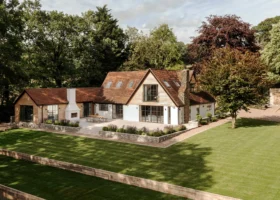
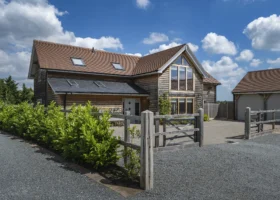
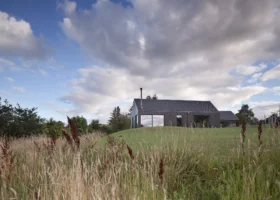
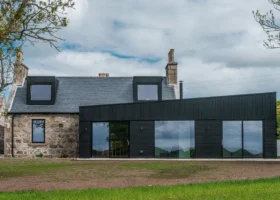
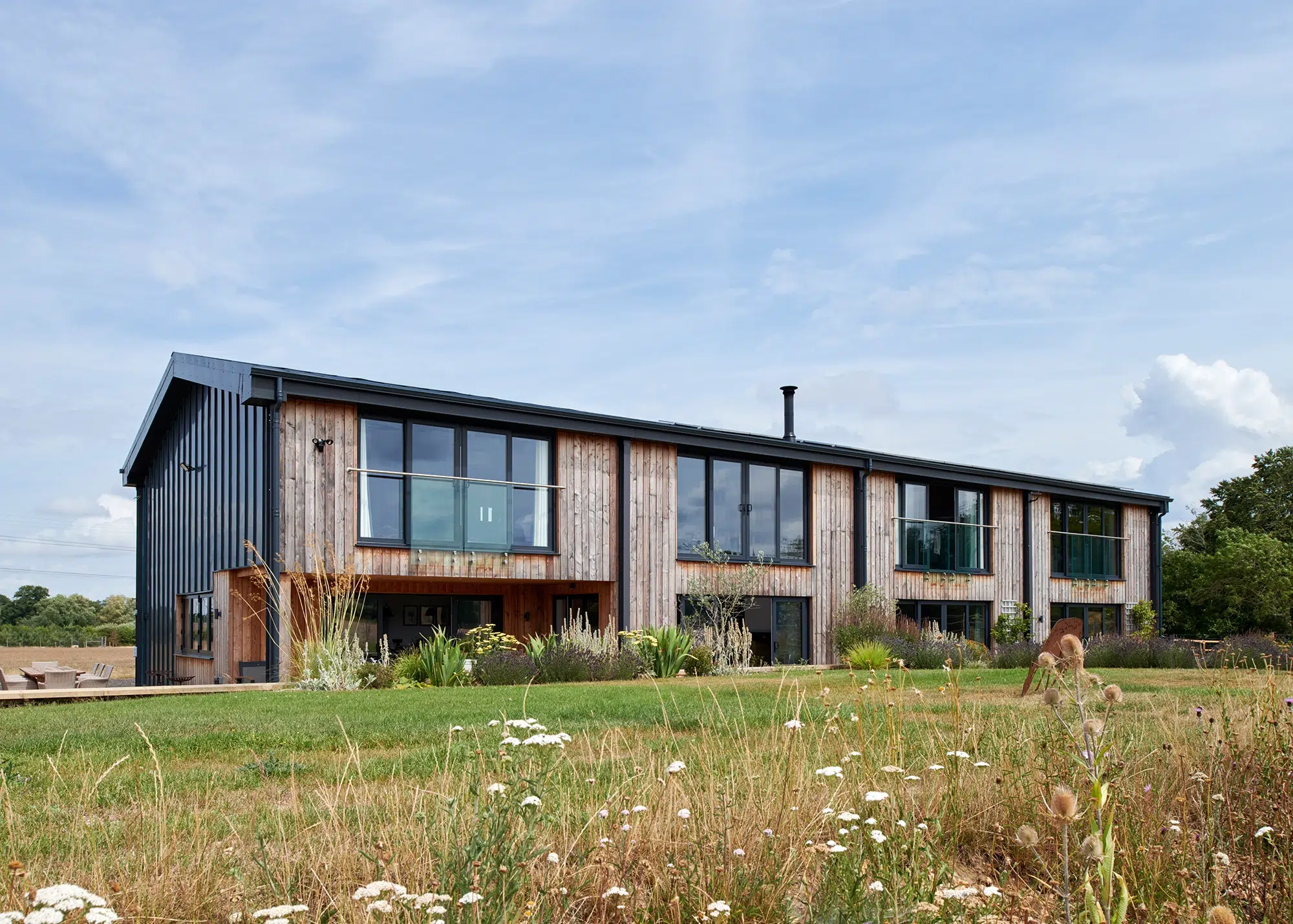
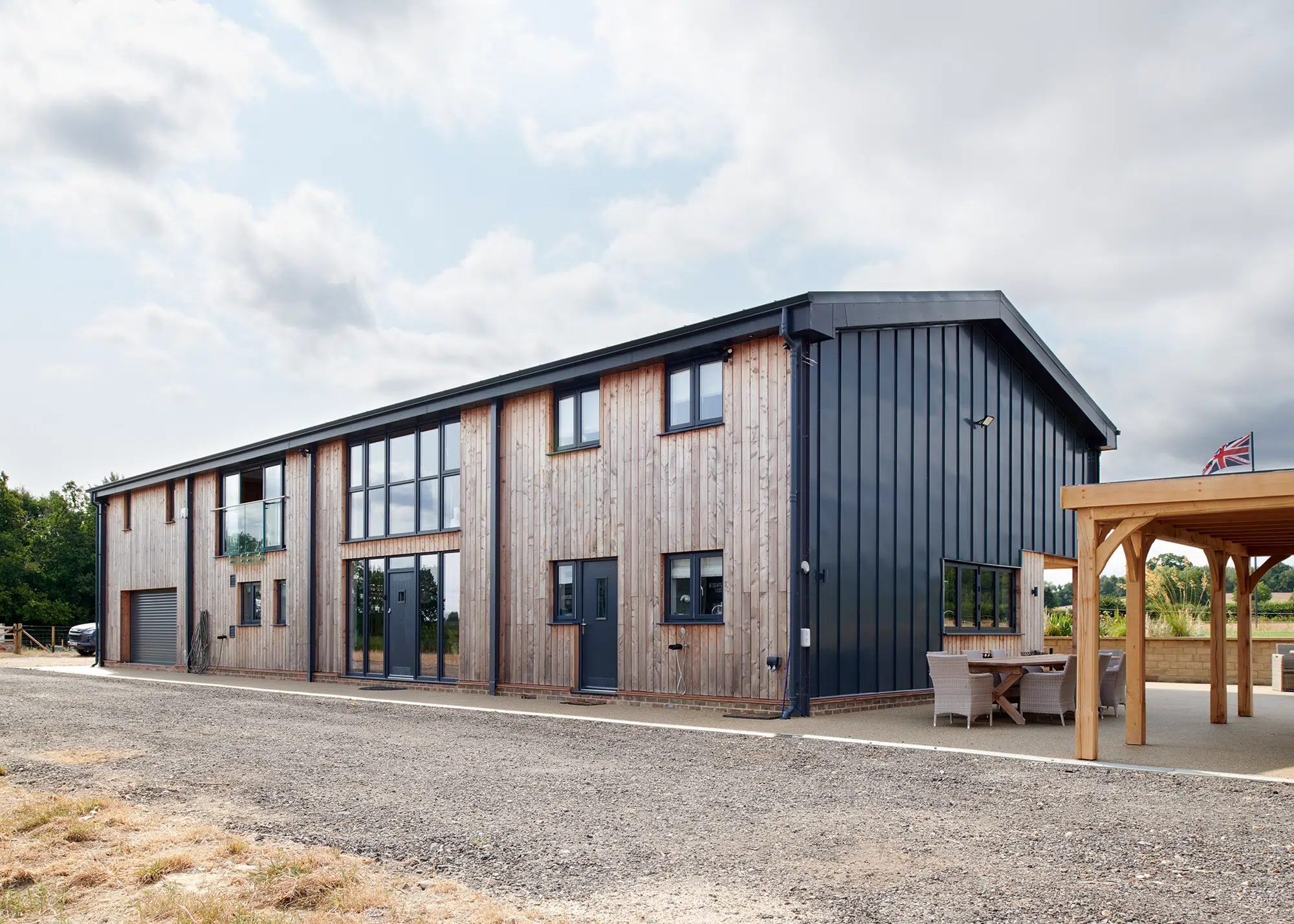
The property maintainss barn-style feel, with its timber cladding and standing seam details
They also loved the speedy construction time that comes with the timber frame route, as well as how involved they would be able to get with the build. “You’ve got freedom to choose to do things yourself, such as the cladding outside the insulation and the plasterboard inside, plus the roof is up a lot quicker in comparison to a brick and block build. You can also achieve great energy efficiency with timber frame,” says Murray.
Their research led them to Frame Technologies and they instantly struck up a good rapport with the company’s MD, Simon Orrells. “How you select your project partners is important in the self build process – this is your life savings, so you need to be confident,” says Murray. “It was clear how much experience Simon has, but I still did financial checks and asked for three references that I could go and see for myself and talk to the homeowners. Everyone was singing his praises and that’s what you want.” The Humphries’ bought a structural package with Frame Technologies that took the house to insulated weathertight shell stage.
- NAMESMurray & Lucy Humphries
- OCCUPATIONSThey run a plastic moulding business
- LOCATIONHampshire
- TYPE OF PROJECTBarn conversion
- STYLEContemporary
- CONSTRUCTION METHODTimber frame
- PROJECT ROUTE Timber frame supplied & erected; homeowners project managed
- PLOT SIZE13 acres
- LAND COST£700,000
- BOUGHT2022
- HOUSE SIZE377m²
- PROJECT COST£845,791
- PROJECT COST PER M²£2,243
- VAT RECLAIM£38,000
- TOTAL COST£1,545,791
- BUILDING WORK COMMENCEDJanuary 2023
- BUILDING WORK TOOK20 months
- CURRENT VALUE£1,800,000
Getting hands-on with the self build
Murray took on the role of project manager and was keen to get involved with as much of the build as he could. With foundations ready at the end of February 2023, the timber frame erection team started on site at the beginning of March. It only took seven weeks for the building and roof structure to be up, ready for Murray to take over from there.
“As soon as the timber frame is signed off and handed over to you it’s quite a daunting process – even if you’ve done it before,” he says. Murray appointed trades, always doing thorough research. “You’ve got to be cautious as there are some bad eggs out there to be avoided,” he says. “I had a longstanding contact for the electrical side and he was great. A friend runs a plumber’s merchant, so we asked for his advice, and my sister recommended a kitchen company who were really good.”
But he also took on lots of the jobs himself, including attending a course with the standing seam roof and cladding supplier to learn to install himself. “The company’s team was always on the end of the phone if I had any questions,” he says. “We had the roof sheets on in two days.”
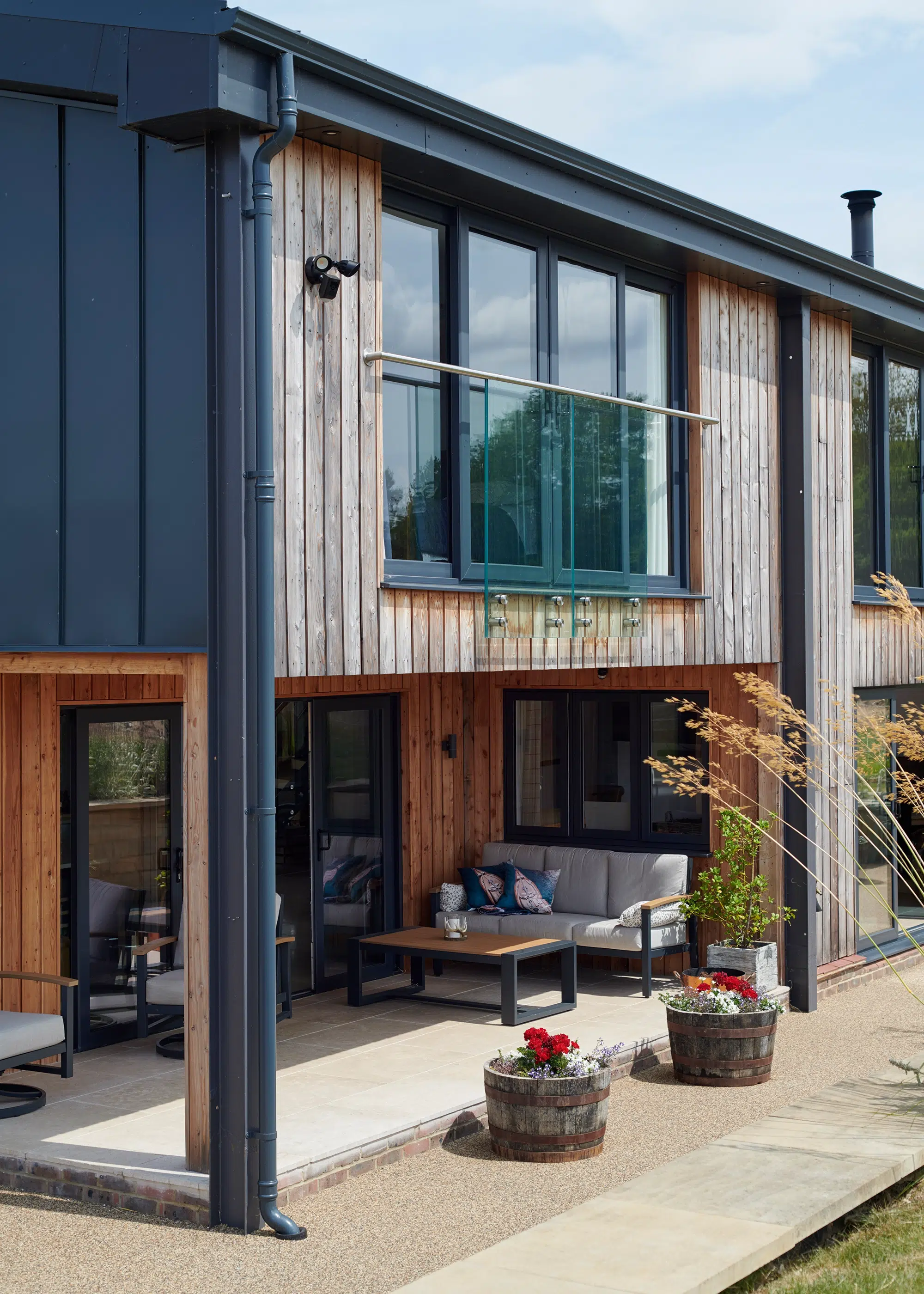
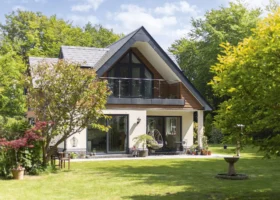
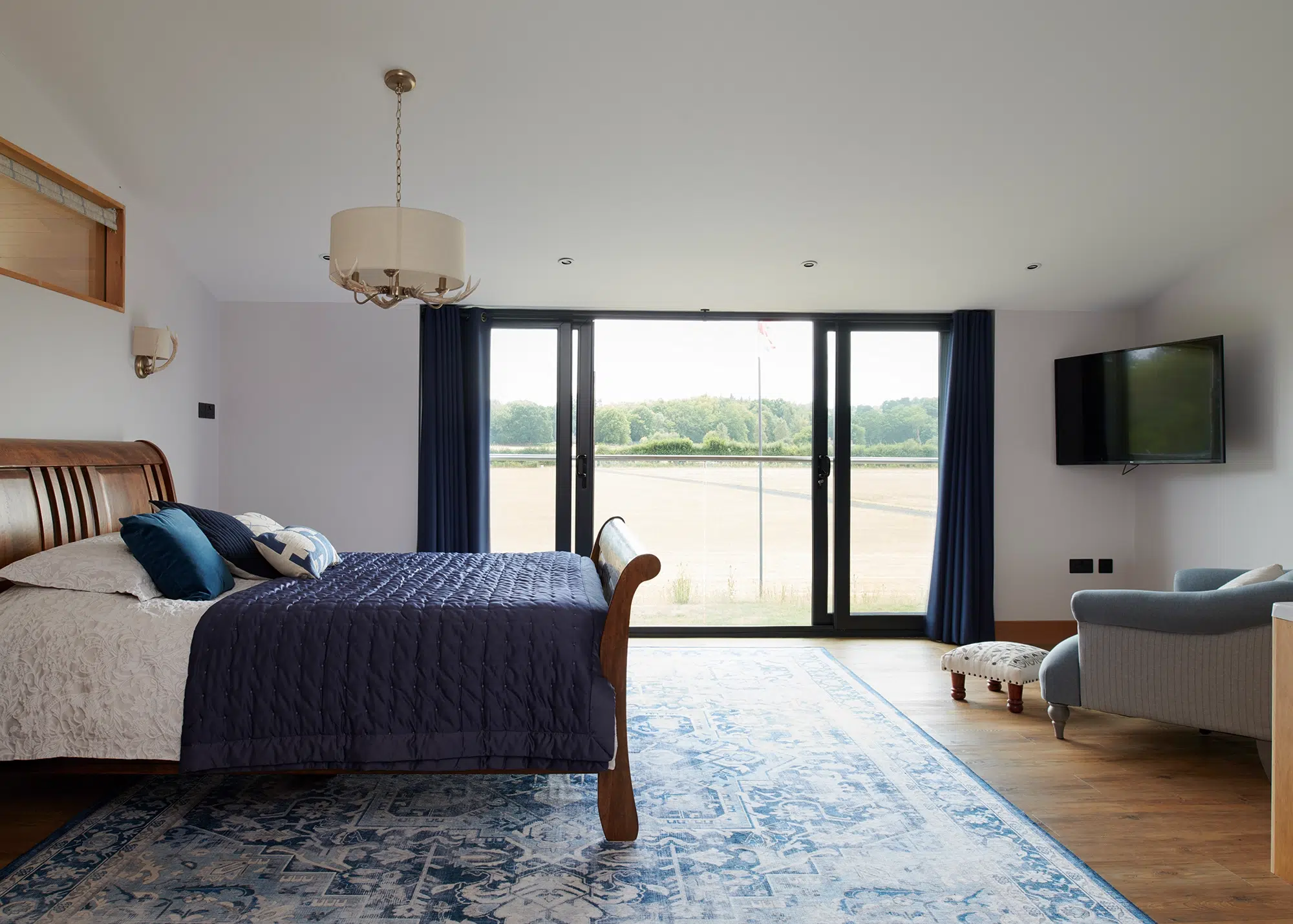
Glazed doors on the upper storey can be opened fully thanks to Juliette balconies in front
Murray put all the floor insulation down and laid the pipework for the underfloor heating, which is powered by an air source heat pump, before bringing in an expert to lay the liquid screed. “I was still running a business at the same time,” says Murray, who took his work back to three days a week, spending the other four days on the barn. “You’re driven by excitement! When I look back on it now, I don’t know how I achieved it, but you just get in the zone.”
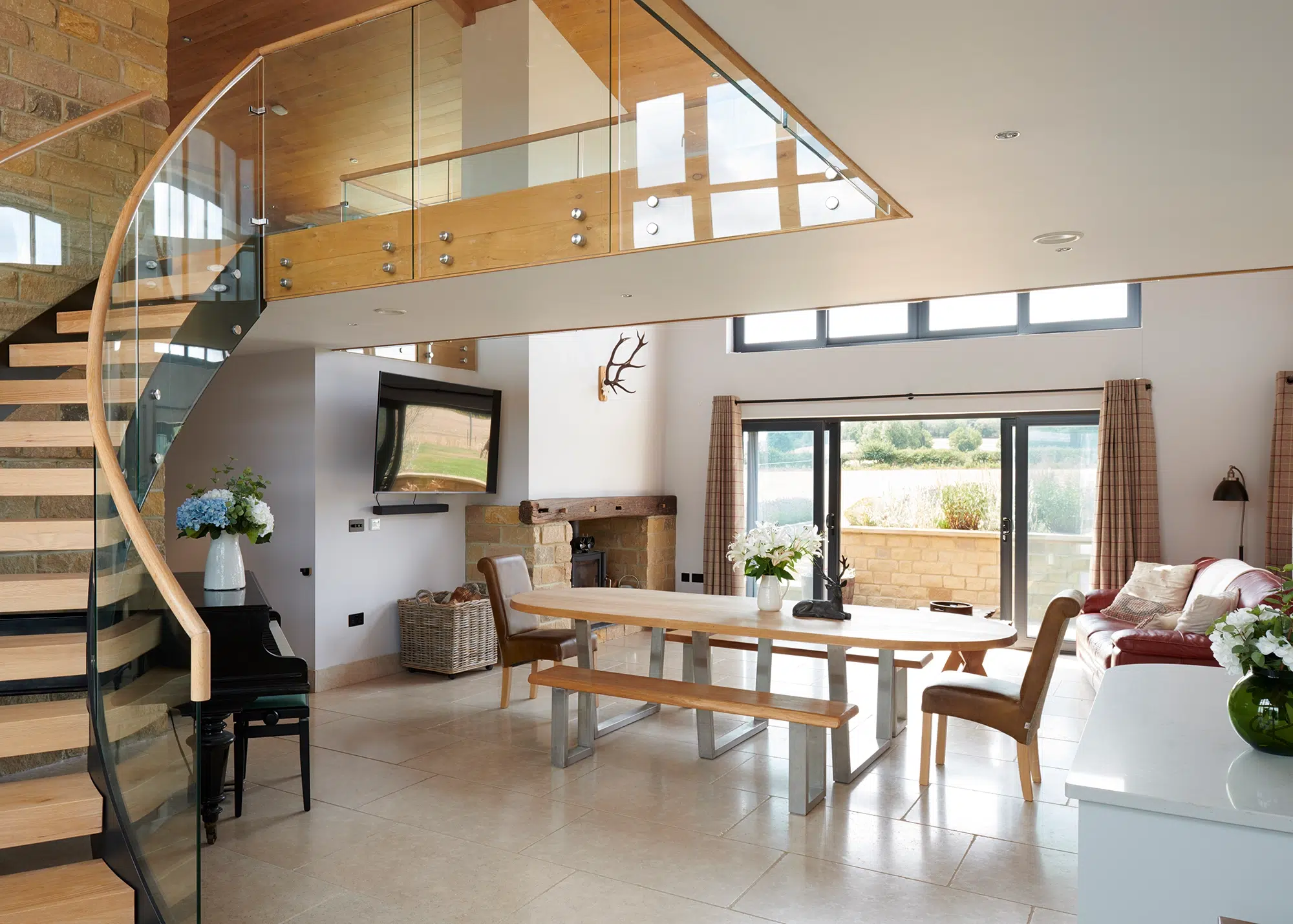
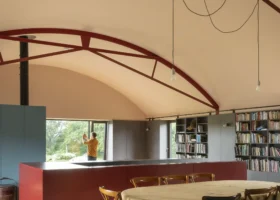
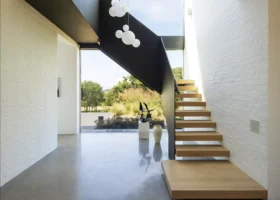
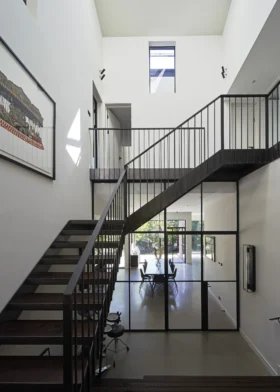
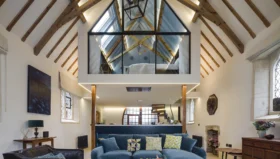
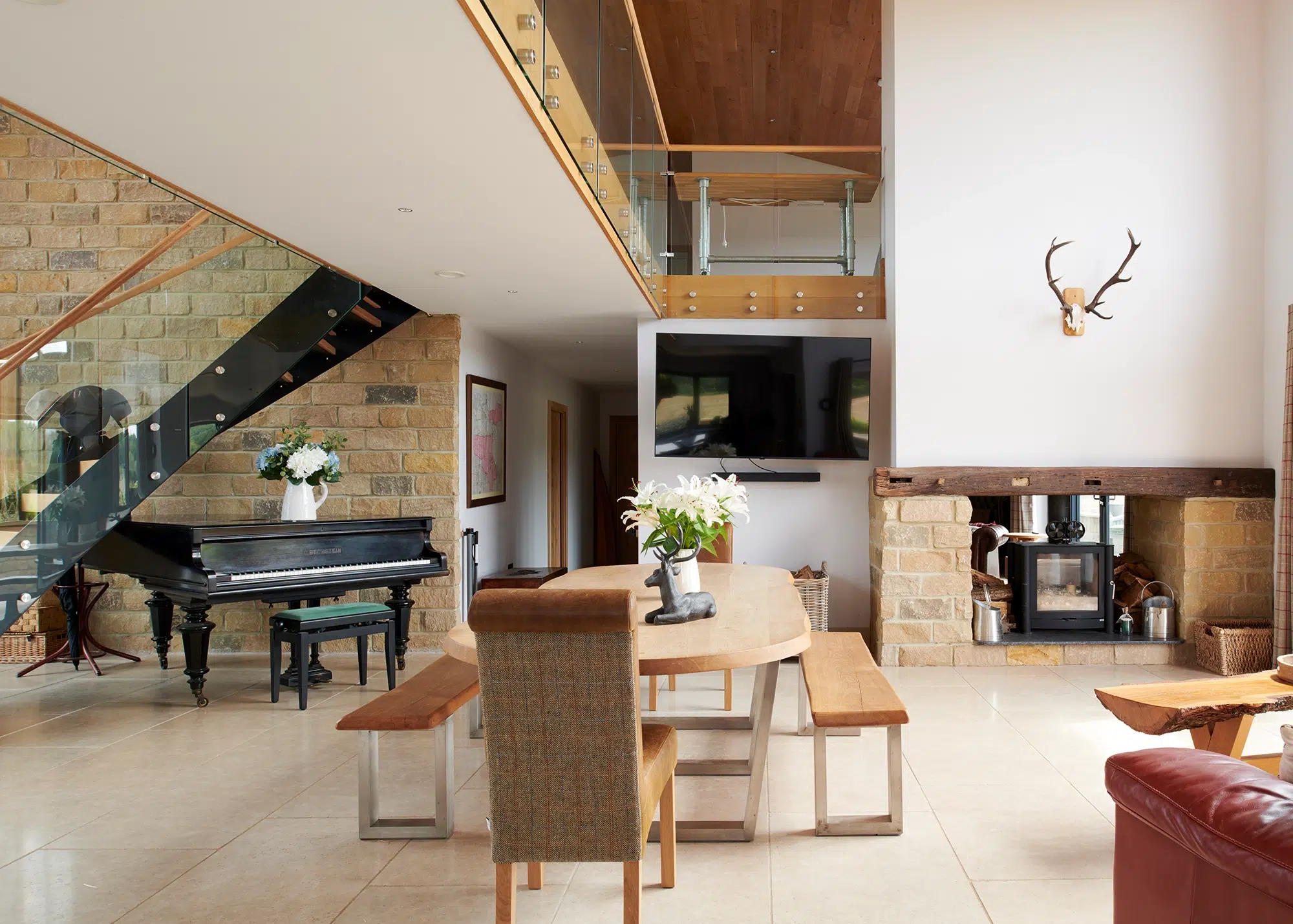
The open-plan area features impressive double-height ceilings, filled with natural light thanks to ample glazing, with a striking staircase leading to a galleried landing
The couple lived in two static caravans on site between March and November. “It was pretty difficult, but it just makes you push on,” says Murray. “Being in a caravan means you’ve always got security on site and you don’t have to drive over – plus it saved us money.” But the weather wasn’t too favourable, as Lucy adds: “It didn’t stop raining from the moment we moved into the caravan – it was so cold at first and then boiling in summer! But I remember seeing an episode of Grand Designs where the wife stayed in a beautiful flat while the husband lived on site in a caravan – that’s not a partnership! You’ve got to be in it together.”
However, they have fond memories of witnessing the amazing nature on their plot when living on site. “Lucy woke me up in the middle of the night as there was a deer right outside the caravan – we were so close to nature, it was wonderful,” says Murray.
Closer look Dual-aspect stove
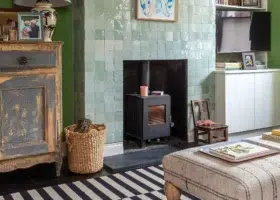
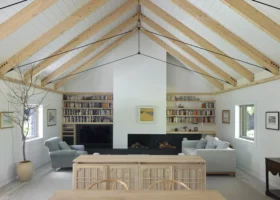
Murray and Lucy love their lounge, which feels especially cosy in winter thank to the dual-aspect woodburner. This clever feature means that both this room and the open-plan dining-living space benefit from the warm glow of a fire, but they’ve only had to invest in one stove.
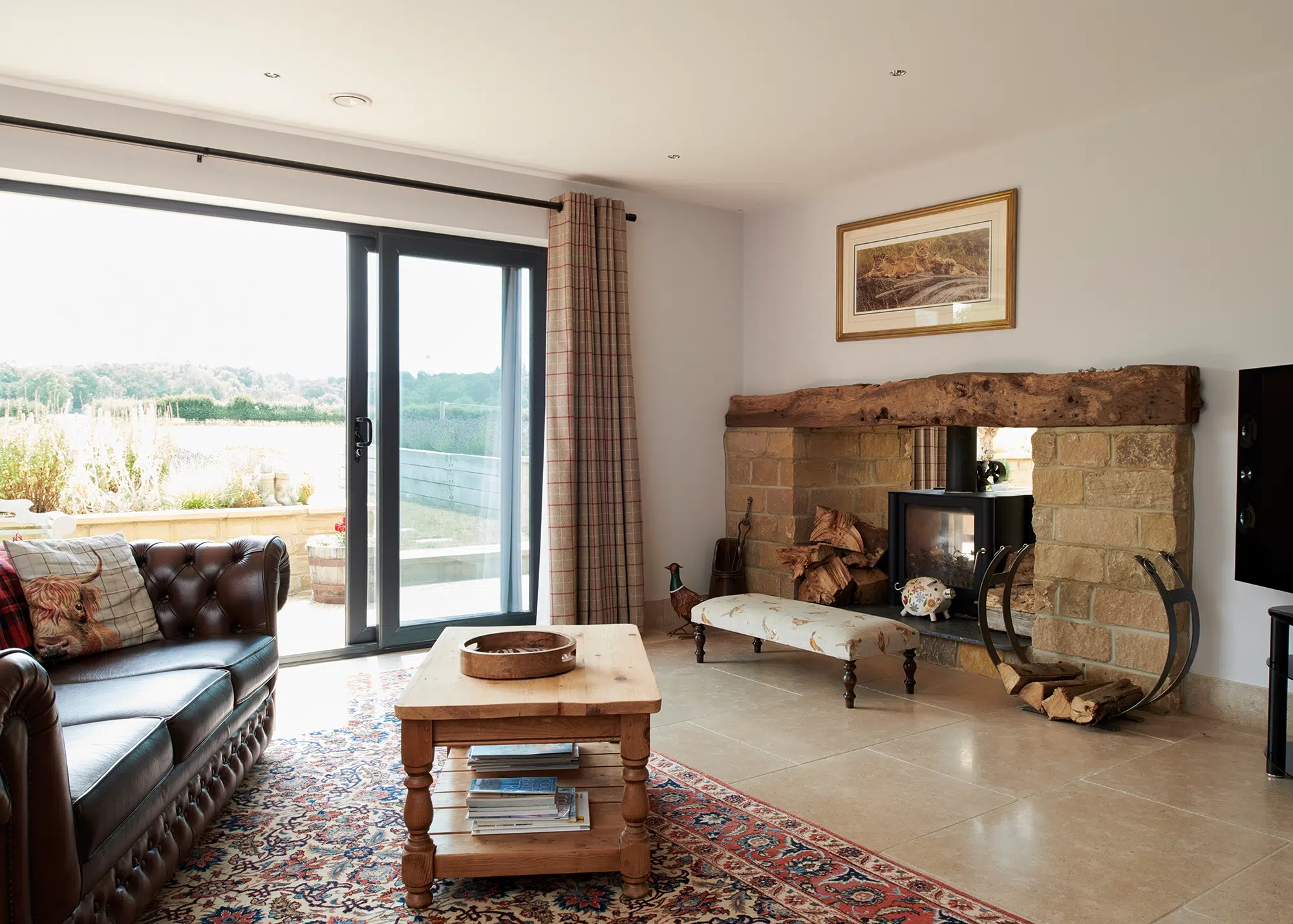
Yorkshire sandstone blocks sit alongside the fireplace, adding texture and character – a finish they’ve also used up the wall beside the staircase. “Our lounge is so snug and lovely,” says Murray. “I tend to throttle down the temperature on the heating thermostat as an excuse to put the log burner on.”
Keeping track of self build costs
Murray used a spreadsheet to stay on top of spending. Having self built their holiday home, the couple had a reasonable idea of what to budget for this project, even though this is a much bigger house. “With build costs having gone up, I was out by about 20% – but I’d been warned and had factored in a contingency fund,” says Murray.
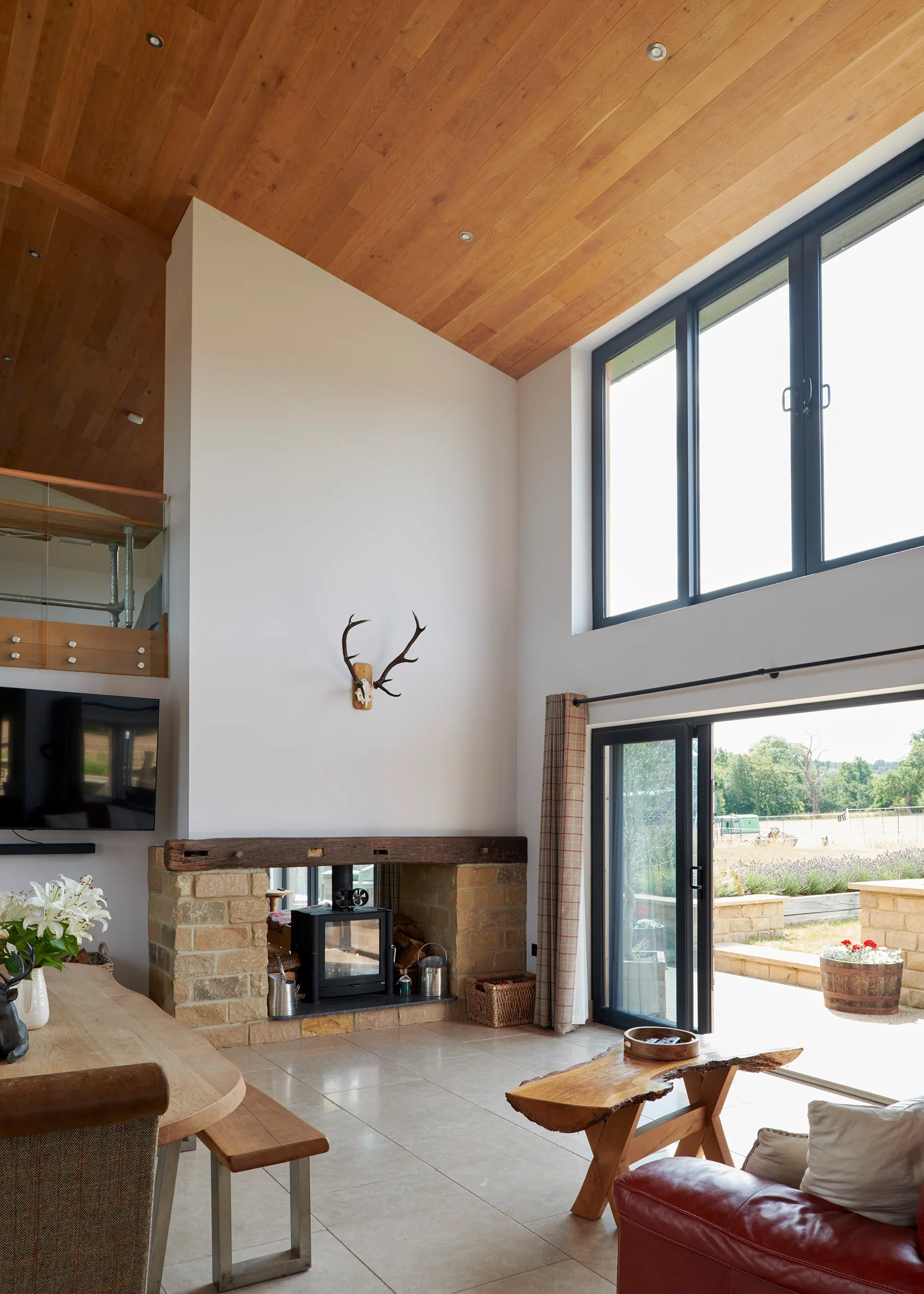
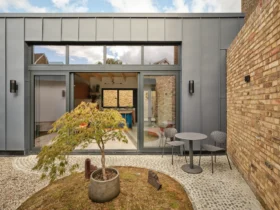
The couple chose low-maintenance PVCu sliding doors that offer the look of aluminium
The biggest challenge turned out to be the staircase. The couple were after a modern flight that brought wow factor as soon as you entered the house. They wanted a bell-mouth sweeping staircase in steel with glass sides and oak handrails. Having allocated £25,000 to this feature, they were disheartened when quotes around the £40,000 mark came in from UK suppliers.
“I was up late one night and thought to look on Ebay, where I located a Chinese company that could offer what we wanted,” says Murray. “We deal with China every week through work, so I don’t look at it as a risk, because it’s about how you handle it. I built up a relationship, did my due diligence in asking for references, so felt happy to proceed.”
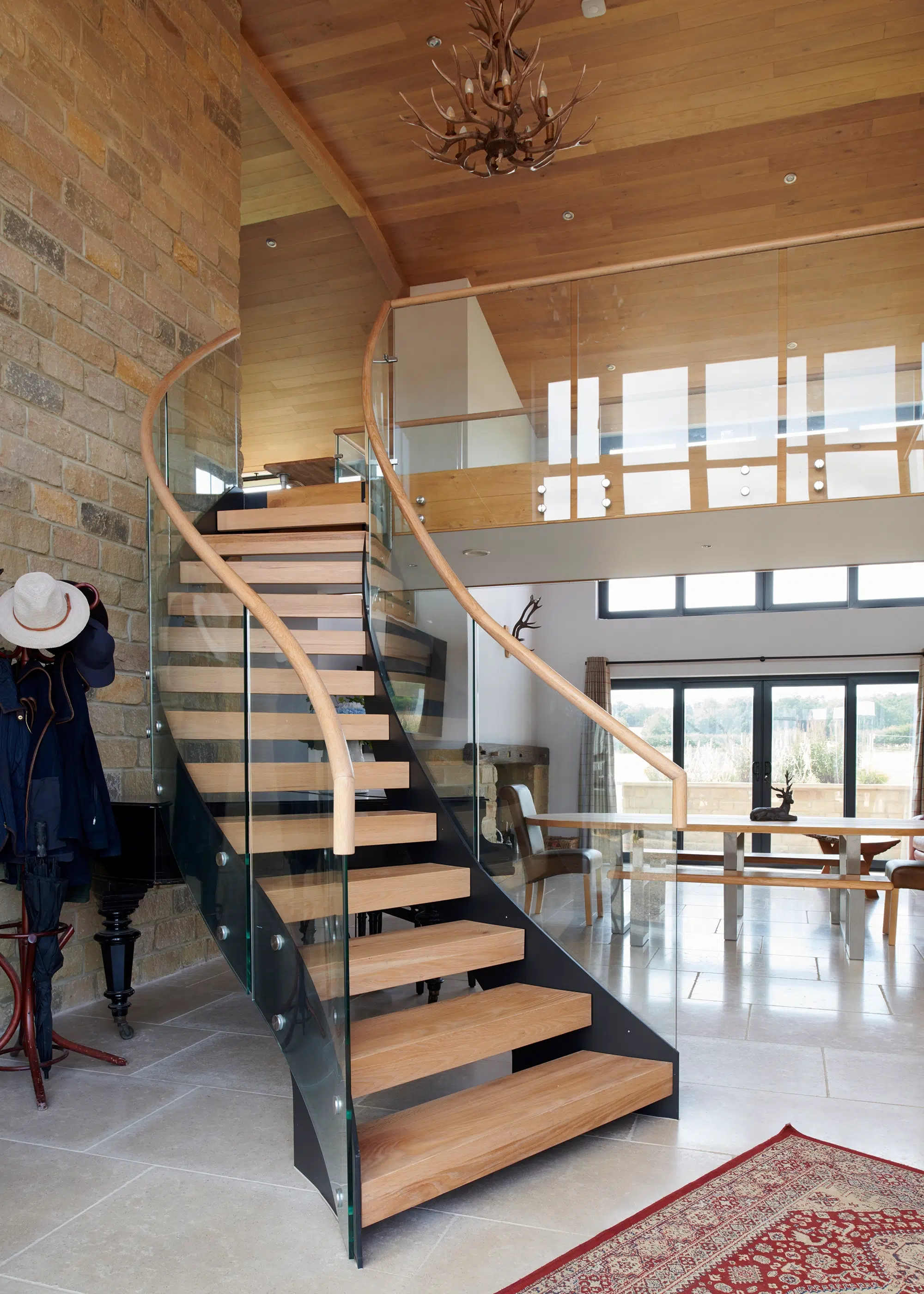
The striking, central staircase makes a fantastic first impression
All in, they bought the staircase, including the glass balustrades and Juliet balconies, for under £20,000. “It was stressful when the staircase arrived in a 20ft container that we had to unload in two hours, including fragile crates of glass,” says Murray. “But with the support of my son, we put it up together and it looks as good as if it were professionally installed.”
The kitchen was another element that required some smart thinking when it came to costs, as Lucy fell in love with one that came in £6,000 over budget. “I felt like the world had fallen in, but Murray said that if I wanted it, go back to the company and fight for it – and that’s what I did,” she says. “The supplier wanted me to have the kitchen I wanted so helped me to make it happen, adapting the design to save on mechanisms etc. I learnt a lot. It’s all about having good partners that will meet in the middle.”
Creating the perfect family home
Reflecting on their build, the couple can’t recall hitting any major problems along the way, which they put down to being prepared and working together as a strong team. “We’ve been married for 30 years and know what the other likes, so we were able to allow each of us to have the things we wanted within the build,” says Lucy. “I wanted light and there is nothing but light in this house.”
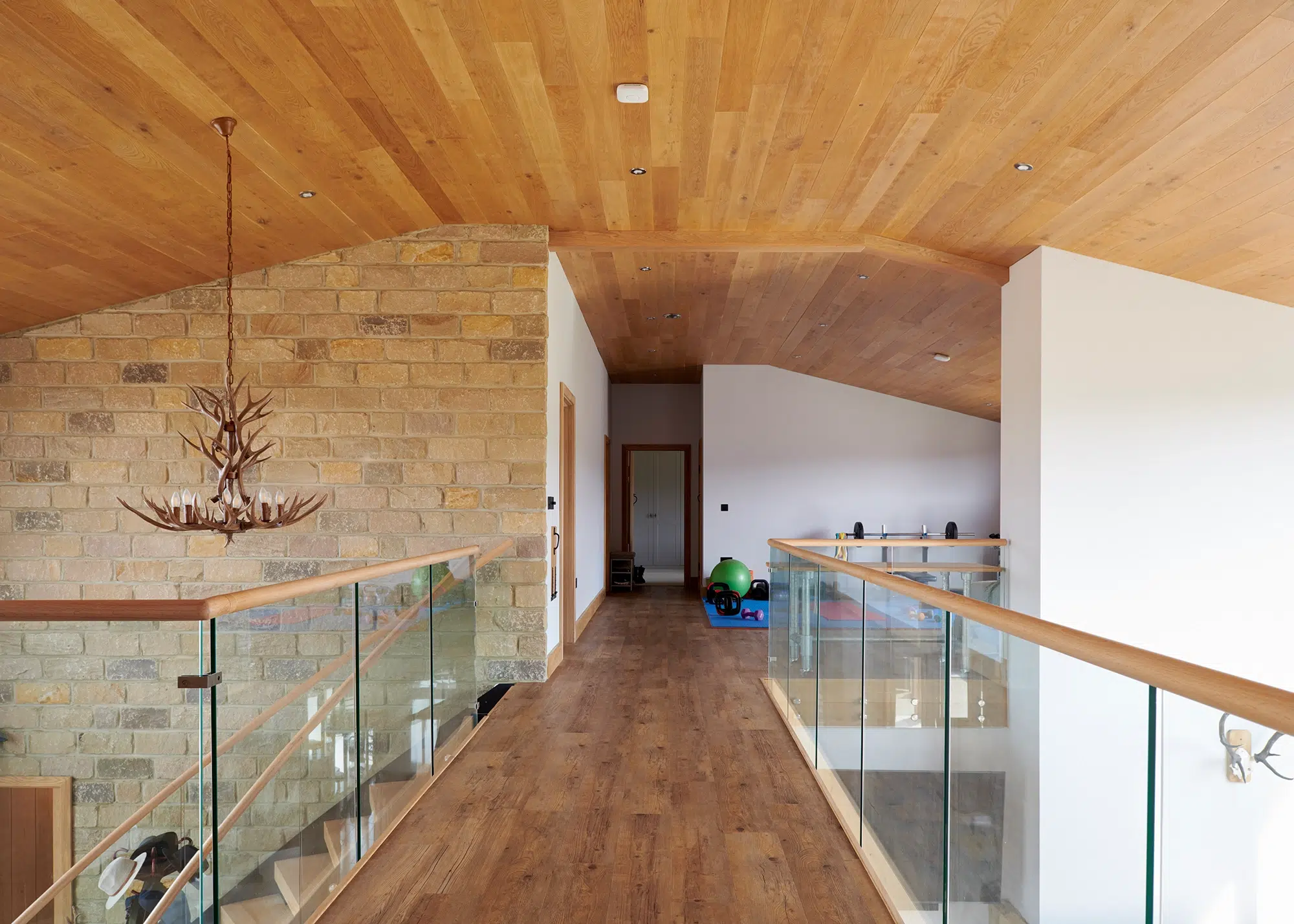
The galleries landing overlooks both sides of the house, ensuring the family can maximise the surrounding views
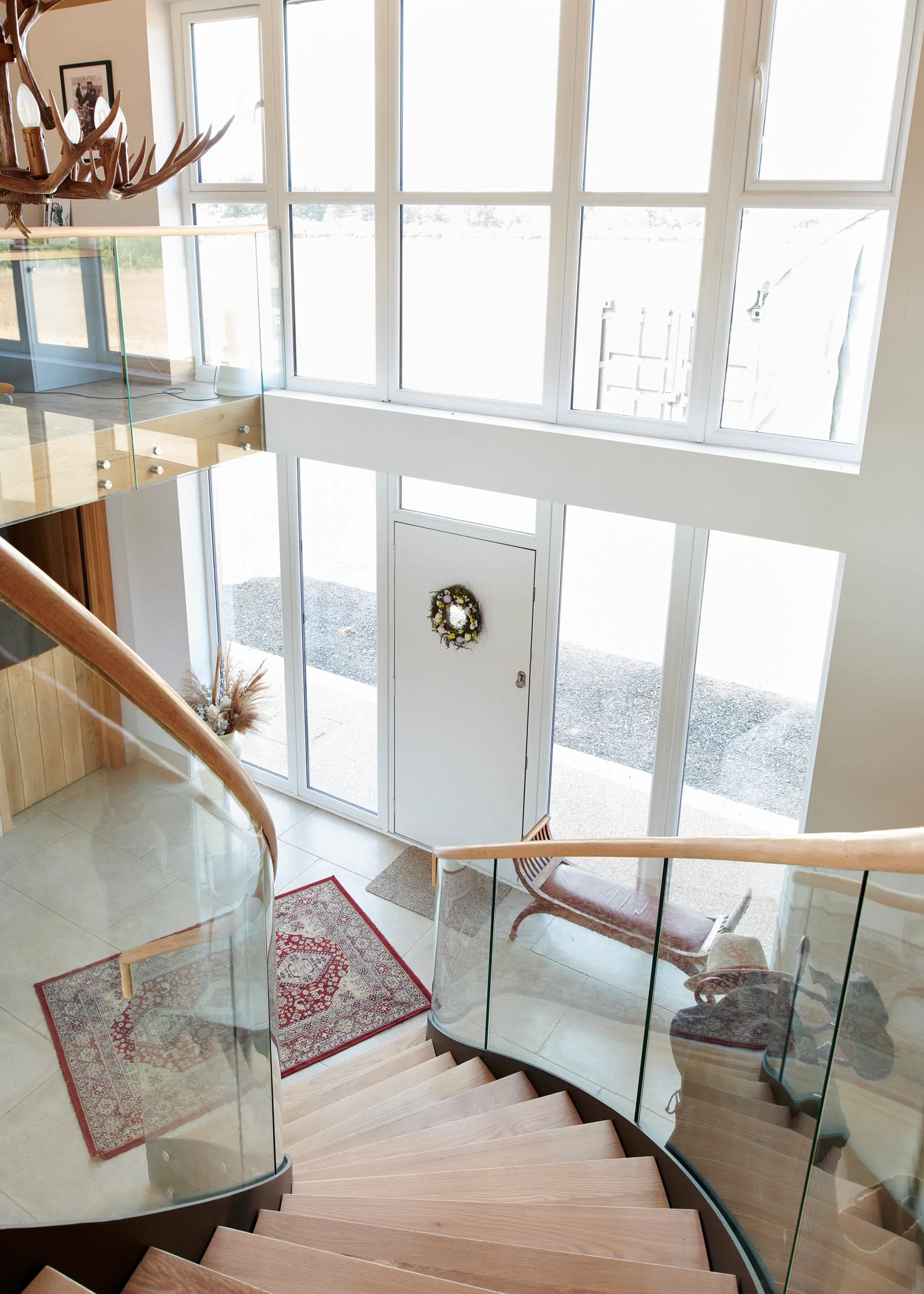
The house features floor-to-ceiling glazing across both storeys and bright rooms, including the airy open-plan centre of the home, which hosts the entrance with its wow factor staircase reaching up to a galleried landing overhead. This space also has the dining zone, a living area and kitchen. There’s a separate lounge, which cleverly shares a stove with the living space on the other side, a boot room and walk-in larder.
The landing stretches above the centre of the building and has a gym area and study. It leads to a master suite on one side and two other bedrooms on the opposite end of the property. There’s another ensuite bedroom downstairs on the ground floor.
Murray would like to take on another project with this son, who was heavily involved in this build, but they see this house as their forever home. “People ask if there’s anything we would have done differently and it’s a no,” says Lucy. Murray adds: “The peacefulness here is lovely – there’s no one overlooking us. We’re starting to develop the garden now and it’s very rewarding.”
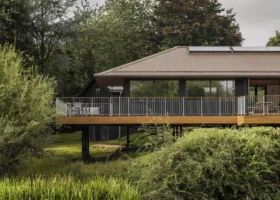
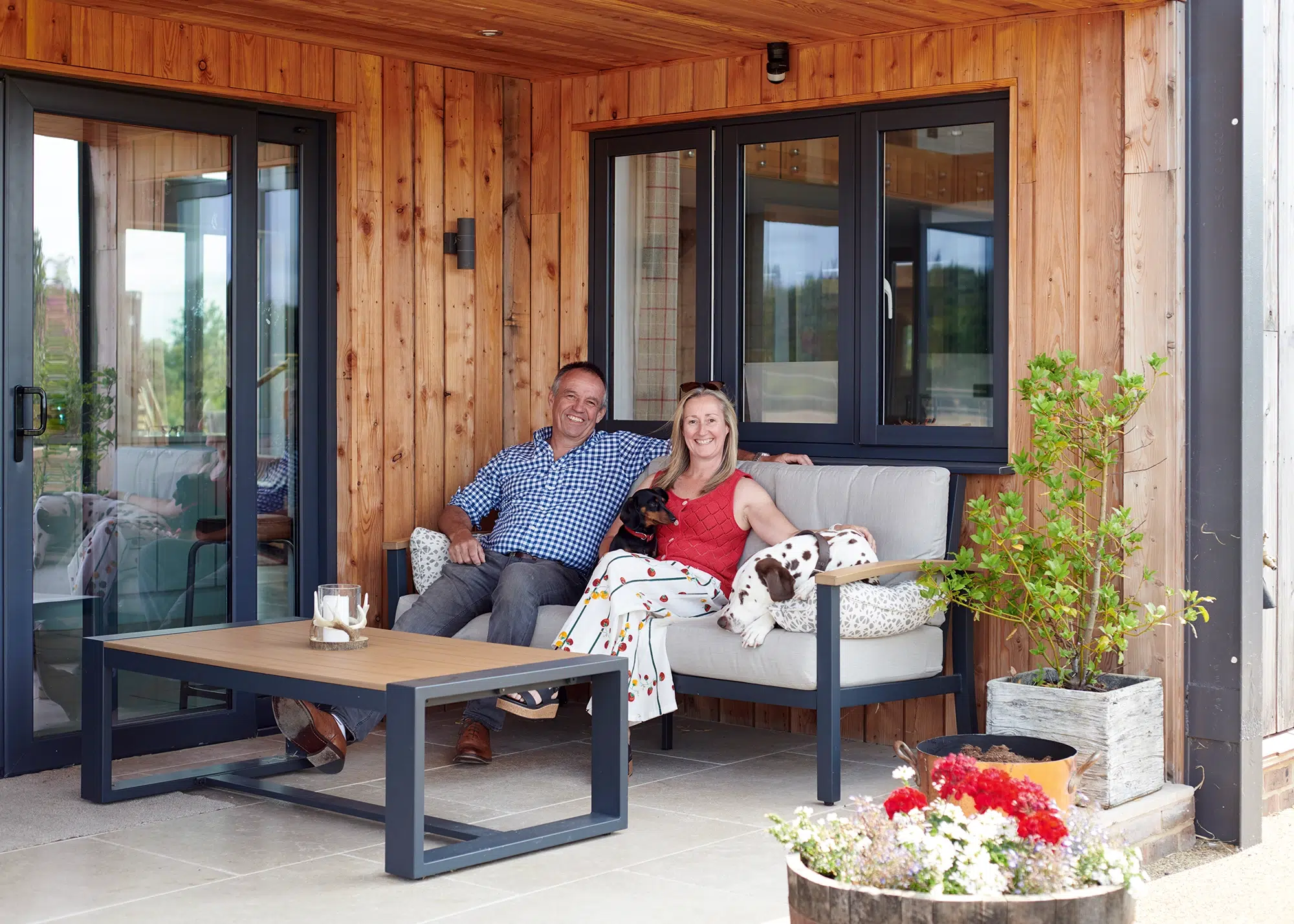
For Murray, it’s the outdoor spaces that offer something extra special in this house. A sheltered patio below the cantilevered first floor is a pleasant place to sit outside, plus a pergola hosts an outside kitchen – great for entertaining. “We’re rearing pheasants, not to shoot, but to just have on the land,” he says. “We’re putting wildflower meadows down and beehives – we’ll add an orchard and vegetable garden one day. The space here gives freedom.”
We learned
- With forever homes some people say that your project budget doesn’t matter as it’s all about getting what you want. But we always wanted to be in positive equity safe in the knowledge that, if we ever needed to sell, we’d get back what we put into it.
- Having a strong team and project partners around you is very important. We knew that our timber frame supplier, Frame Technologies, was just at the end of the phone if we ever needed any guidance. Sometimes it was only a five-minute chat, but as a non-professional self builder, you need that point of reference.
- Set aside a contingency fund of 20% of your project budget, but try not to surrender it at the first problem. Just like with anything in cost management – you’ve got to fight for it.
Emily Batesmith
You may be interested in



Great information!