








































 Login/register to save Article for later
James Lock is partner at Roderick James Architects, a Devonshire-based architecture practice specialising in designing and building bespoke oak frame homes.
- Plan ItBack
- Design ItBack
- Build ItBack
- Homes
- ProductsBack
- CostsBack
- Self Build Cost Calculator
Estimate your project costs instantly with Build It's interactive self-build cost calculator
Calculate Now - Costs & Finance
- Contracts & Warranties
- Build It Estimating Service
Get an accurate, detailed cost breakdown of your project
Submit plans
- EventsBack
How to Design a Home for an Exposed Location – An Architect’s Top Tips
Is your plot in an exposed, windy or coastal location? Julian Owen takes a look at how to create a home that’s designed for harsh weather conditions and the key considerations to note early on in the planning phase

By world standards, British weather is fairly benign; we certainly don’t need to build houses to withstand strong arctic blizzards, Caribbean hurricanes or dry desert heat waves. But as any geologist will tell you, even mild conditions can erode the hardest of rocks down to dust – all that’s needed is time. This means that the outside surfaces, joints and other weak spots of any building are continually degraded, and this happens more quickly to houses in exposed locations. By this I mean sites that are located on coastlines, plains and hills that suffer from forceful driving wind and rain.
Regardless of the materials that make up a house, successful defence against exposure is often down to how it’s constructed. With this in mind, there are plenty of lessons to be learned from heritage buildings – none of the much-admired features of rural areas and seaside towns are there by chance.
Many of the effective practical measures that were traditionally used in home building are still relevant today. This includes roofs with steep pitches to prevent snow build up and reduce the risk of the wind catching the tiles; large overhangs to protect the tops of the walls; and small windows with deep reveals to shelter the gap between the wall and frame from water ingress.
In this article I’m looking at the different design considerations to note when self building a house in an exposed location, such as on the coast, and how you can incorporate these measures into your scheme effectively to reduce weather-related damage over time.
How can you make a house weatherproof?
Wind strength depends on how far it can travel from the sea to you without obstruction. Approved Document A of the Building Regulations includes a map showing the average wind speed for an area drops the further inland you get from the coast. This can help you identify the maximum height of the proposed building.
But this resource is no substitute for having an assessment of the local conditions around a site. The wind on the coast has another agent of destruction in the form of corrosive, staining sea salt, carried as airborne particles or dissolved in the rain.
Roofs
In areas where roofs are routinely subjected to a battering from the wind and rain (such as in the majority of Scotland) sarking boards are essential. These are rigid layers made from plywood or softwood that are placed directly over the rafters, providing extra rigidity to the roof to help resist wind uplift.
Walls
Another unseen but effective protection are cavity trays, which are fitted above all openings and junctions between roof and walls. These direct any moisture that gets into the house’s superstructure away from the inside.
Once a surface is damp, the wind has a cooling effect known as wind chill. You should insulate well, over the minimum requirements, and specify high-performance triple glazed windows and doors to keep rooms snug, even as a storm does its worst outside.
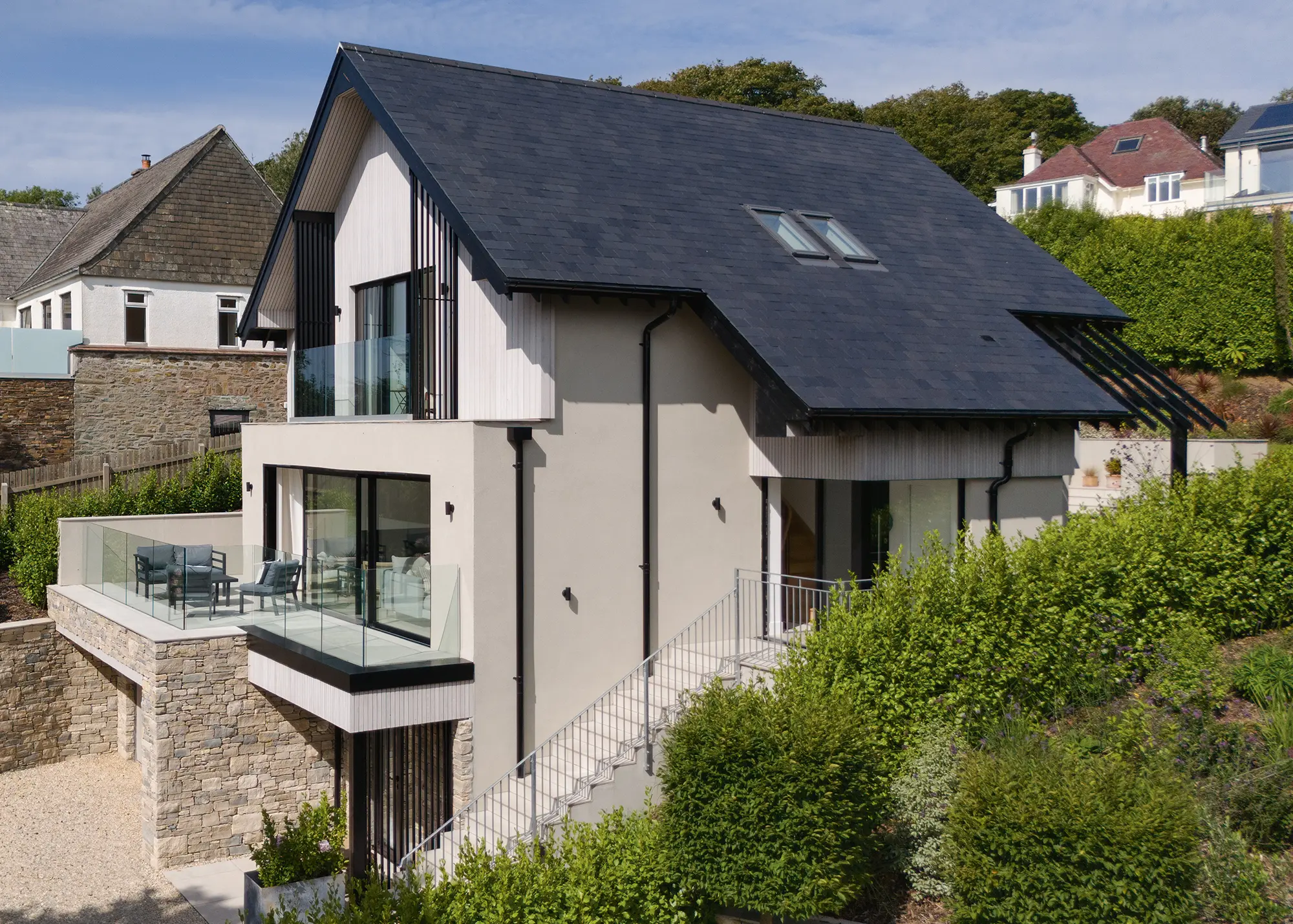
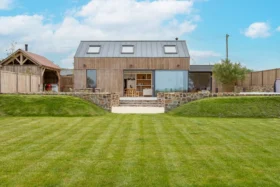
Built by Lilburn & Elliott construction and created using a Nudura ICF superstructure, this four-bedroom home is situated in the coastal town of Salcombe, Devon. The ground floor is made up of a solid concrete raft foundation, while the first and second floors are a block and beam construction. The shell of the building went up in just eight weeks
Gutters
Large gutters can cater for extra rainfall, but these need to be strengthened to carry the build-up of snow – and in some cases the roof will need to be reinforced, too. Aside from potential damage from the weather there are also irritation factors for daily life, such as tiles that constantly chatter or heavy rain pattering on a rooflight. These can be deafeningly loud particularly during the night.
Layout & shape
Consider an upside-down layout to avoid being disturbed by rain on the roof and ensure a restful night’s sleep. This popular solution is where the living spaces are on an upper level to make the most of the view, with bedrooms below for reduced disturbance from bad weather.
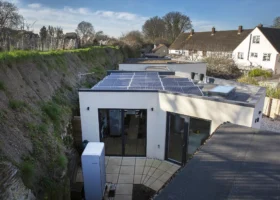
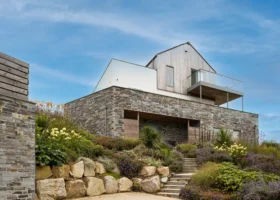
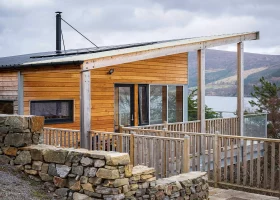
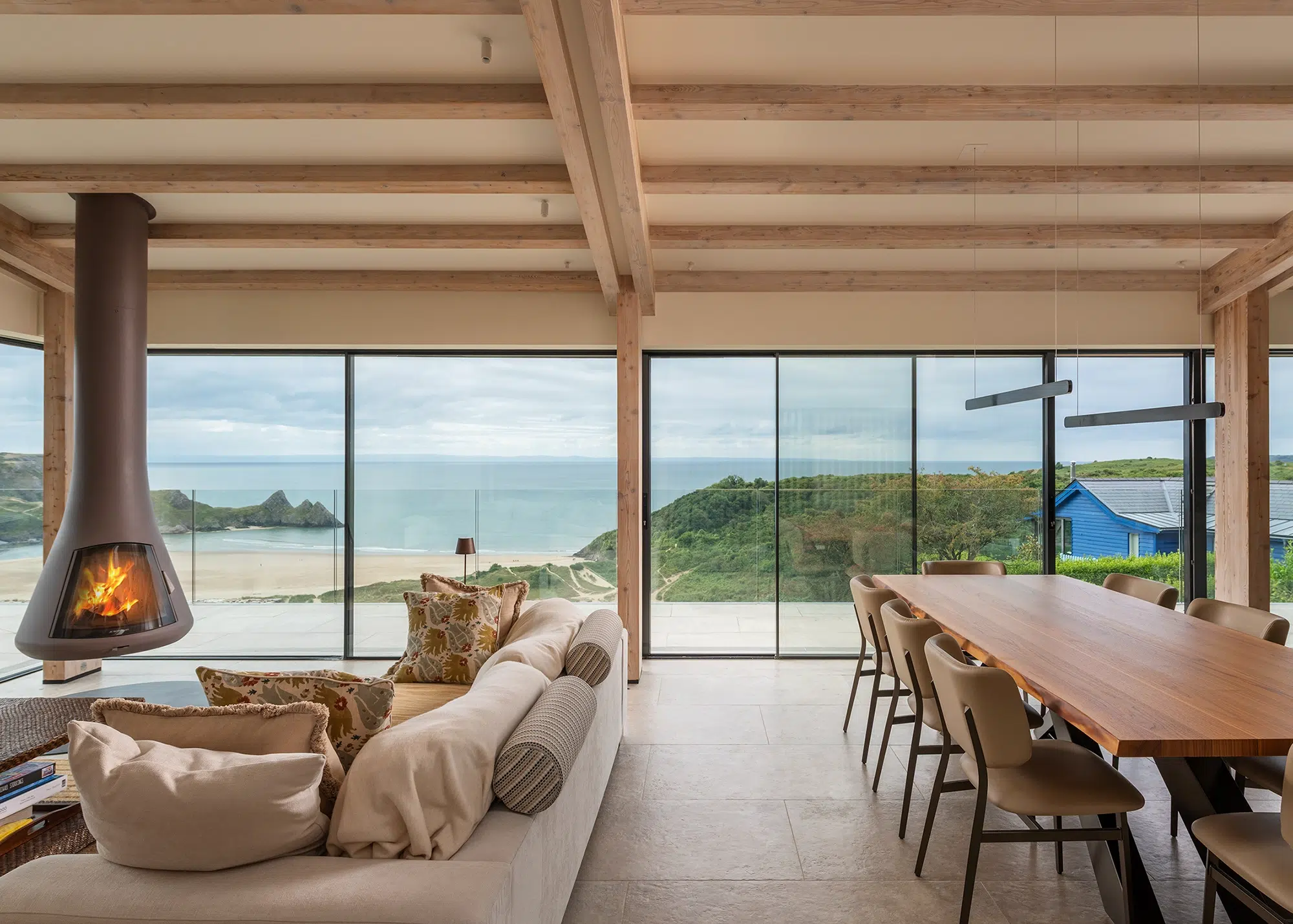
Designed by Roderick James Architects, this home’s site-responsive, sustainable design embeds much of the structure into the hillside to reduce visual impact. Wide spans of glazing help to maximise views of the sea. Photo: Richard Downer
Once the direction of the prevailing wind has been identified, the overall shape of the house can be designed to counter the effects. For a big property, an L- or U-shape house plan will provide the approach and front door with shelter from prevailing wind.
A porch or lobby will create an airlock between inside and out, minimising heat loss and draughts. If there’s enough space on the site, an internal courtyard offers a private, sheltered area for rooms to open onto.
How to design for the elements

What kind of building materials suit exposed or coastal projects?
The key thing is to consider the exposure of the site and the corrosive effect of sea air. Slate hanging or a through-coloured render would provide a more durable finish than timber cladding. There are few limitations structurally: these products could just as easily be applied to timber frame or SIPs constructions, providing they are correctly detailed.
What type of windows and doors would you recommend for an exposed property?
It’s best to take advice from specialist suppliers as to which of their products are suitable for use in coastal locations. In principle, pre-finished aluminium windows and doors, or composite designs with aluminium exterior finishes will be better suited than pure timber. A marine grade powder-coated paint finish would need to be used.
What material is best for guttering in a coastal property?
If money is no object, then copper is the best solution. But for most budgets, I would suggest a marine-grade aluminium rainwater system. Zinc also performs well but can show white staining if exposed to salt air and not regularly cleaned.
Do you need to undertake any flood risk measures when working on a coastal building project?
Much of the UK coastline has some flood risk (ranging from low to high), so you will likely need to commission flood risk modelling from a specialist consultant. You’ll also want to check in with mortgage lenders and building insurers when assessing the viability of a project. It’s a good idea to liaise with the Environment Agency, too, which usually sets a floor level for any new builds in flood risk areas. The foundations and substructure must be robust and capable of withstanding any possible exposure to flood water.
How can you balance exposure to the elements with maximising views?
Unfortunately, if you want a house with a wonderful outlook, you usually have to accept the occasional gale-force storm that comes with it. A spectacular view across open countryside or sea makes a building far more vulnerable to erosion and deterioration than a semi-detached home in a suburb, safely huddled amongst hundreds of other houses.
Balconies and large picture windows are important design features for maximising an eye-catching view, but they need to be carefully detailed and constructed, ideally protected by the surrounding structure, to avoid becoming a maintenance liability.
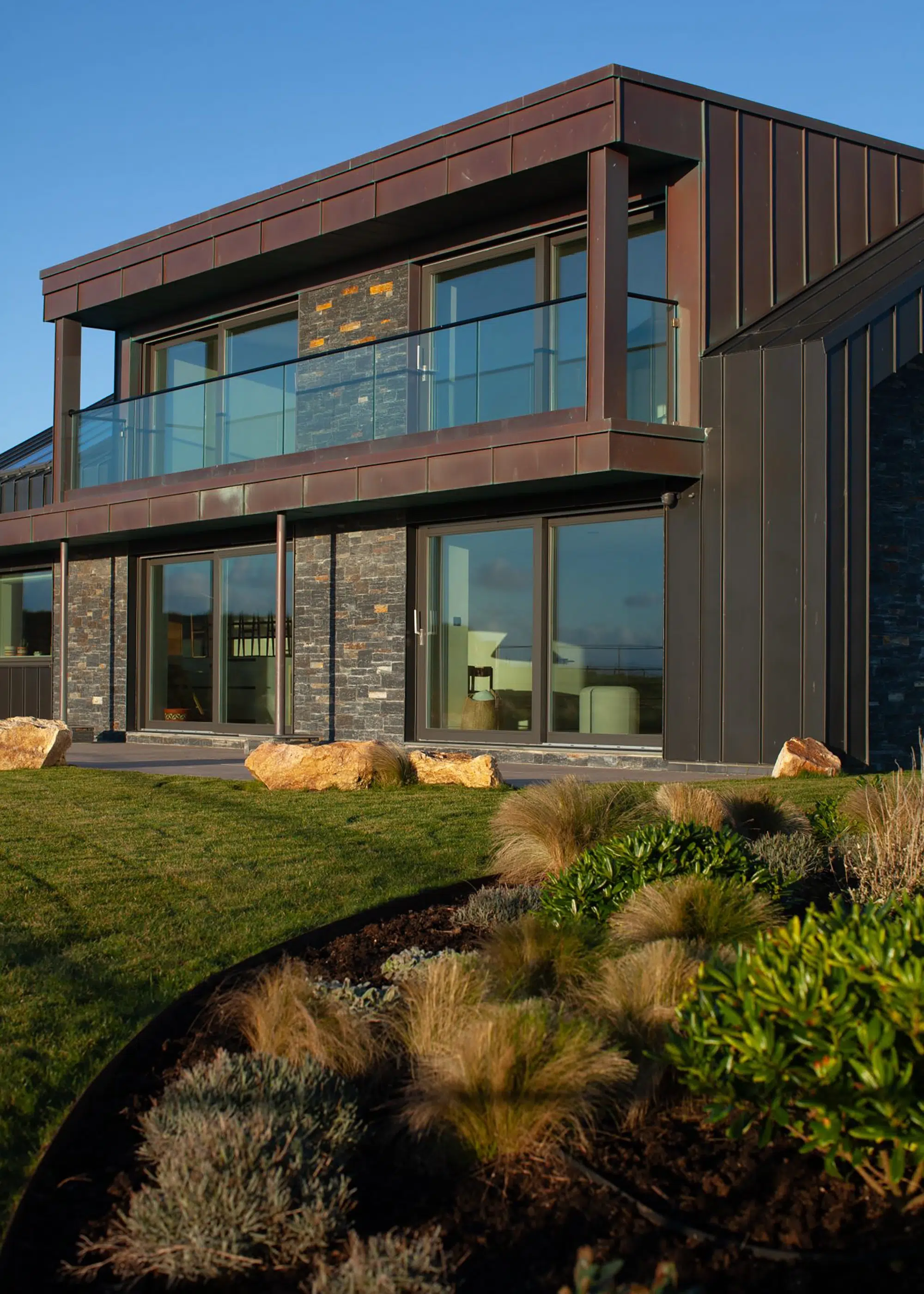
Designed by ARCO2 and delivered by Westhaven Developments, this 233m² home on the Cornish coast uses the R-Wall system to create a highly insulated, airtight and robust superstructure
Having external shutters will require you to have windows that open inwards, which means they are less common in the UK – but they can offer some defence for your glazing and allow for easy cleaning. Automated shutters are potentially better for modern living and have the added benefit of extra security.
Don’t forget the need for easy maintenance. However well your house is built, windows and surfaces should be cleaned more often than in sheltered zones. This means the seemingly mundane issue of propping a ladder against the house safely is very important here – scaffolding is a costly alternative.
Make sure the architectural design avoids elements making high level access difficult, such as conservatories. Windows made from low-maintenance, durable materials (such as aluminium), fascia boards, unfinished timber cladding and self-cleaning glass are all good solutions.
How can you incorporate sheltered spaces into your design?
Temperature fluctuation is a powerful force that can damage a building over time, particularly if it frequently drops below zero. Any moisture that freezes expands with a great force that can eventually make the surfaces of soft bricks and stones crumble.
Ironically, the better insulated a building is against the cold, the more the outer construction is at risk of this sort of damage because heat escaping from the interior would otherwise keep it warm.
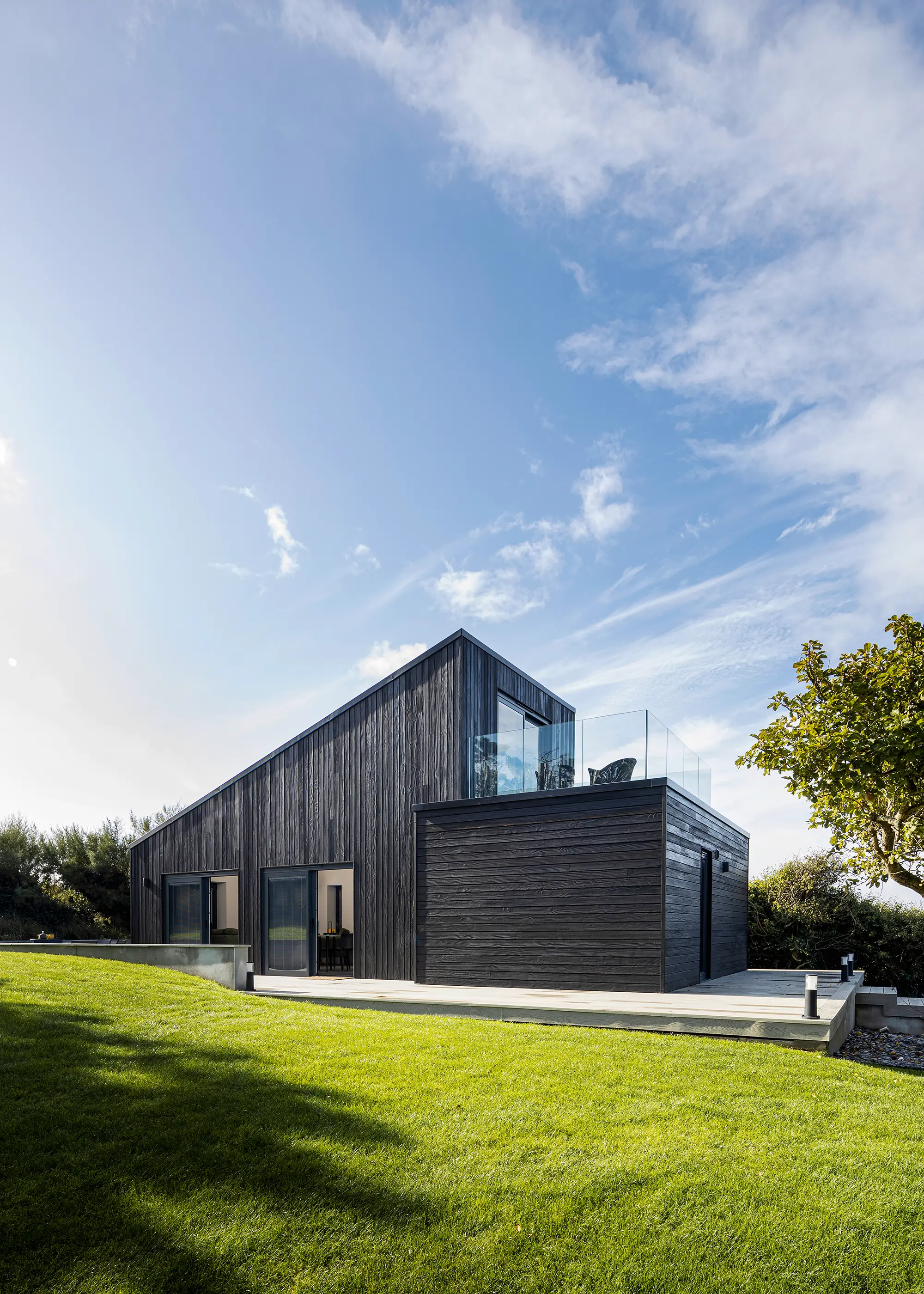
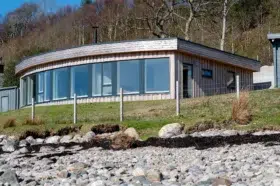
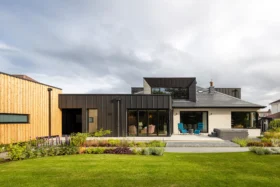
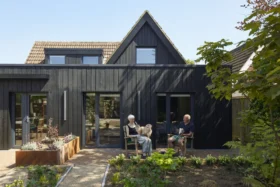
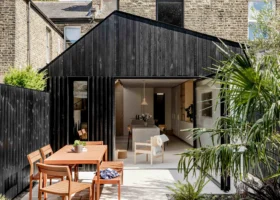
Suzanne Mackey leapt at the opportunity to make the most of her beachside plot with a sophisticated timber-clad annexe that enjoys fabulous views over Cornish coast. The house has a unique angular roof and has been finished with charred timber cladding. Photo: Simon Burt
If you are lucky enough to have acquired a site with some land around it, you have the opportunity to modify the microclimate. For a basic solution, plant some sturdy trees and protect them as they grow until they can provide a windbreak – but make sure they aren’t too close to the house; few designs are improved by a tree falling onto them.
If you are more impatient (and your budget will stand it) you can shift earth around to nestle the building into the ground and raise some bund walls against the prevailing wind direction. A step further is to bury it partly into the ground, using the land to protect and insulate some rooms.
Julian Owen
You may be interested in
Our sponsors