What struggles are you likely to face when finding a site, and how can you overcome these?
Plots are relatively scarce in the UK, due partly to an abundance of protected areas compared to other European countries. Currently 90 percent of land in England can’t be built on, though the National Custom & Self Build Association’s efforts to secure the Right to Build is helping to ensure the release of more sites for self-builders.
Planning policies restrict most schemes to development boundaries around existing settlements. The government is trying to relax this under its Localism Bill, but building new houses (as opposed to replacement or conversion) in greenfield areas is still difficult. New plots, then, tend to be within these development boundaries. But in high-demand areas the obvious sites have been picked clean by developers.
The plots that remain are often brownfield sites – meaning it’s land that has been previously developed – and it’s here that the most opportunities will lie.
What different kinds of plot will you come across when searching for a site?
Bespoke homes can be constructed on a range of sites, and knowing about the opportunities can help you spot land with potential for your project. Here are some of the key options:
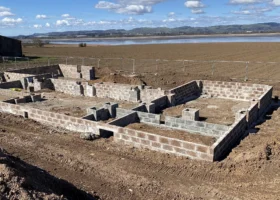
Brownfield sites
This is previously-developed land that is or once was occupied by a permanent structure. Government policy supports the provision of new housing in such locations, so councils tend to look favourably on plans that have the potential to improve these plots. Plus on a practical level, services are likely to be in place already.
find out more about brownfield sites
Demolish & replace
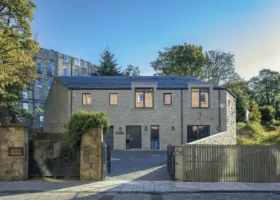
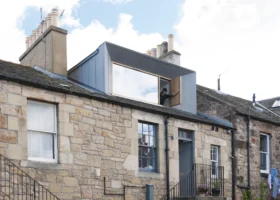
A type of brownfield opportunity where you could knock down an existing building, such as an old bungalow or former non-residential structure, and construct a new (usually bigger and more attractive) home in its place. It’s often more cost-effective than tackling a renovation, as VAT can be reclaimed on a new build project. This is also known as a replacement dwelling.
find out more about demolish & replace
Infill plots
There’s no formal definition of this type of site, but many councils take it to mean a small gap between an otherwise built-up frontage or group of houses. Infilling is usually allowed within settlements’ development boundaries – and sometimes outside of these. Gaining consent will be more difficult in zones such as conservation areas.
find out more about infill plots
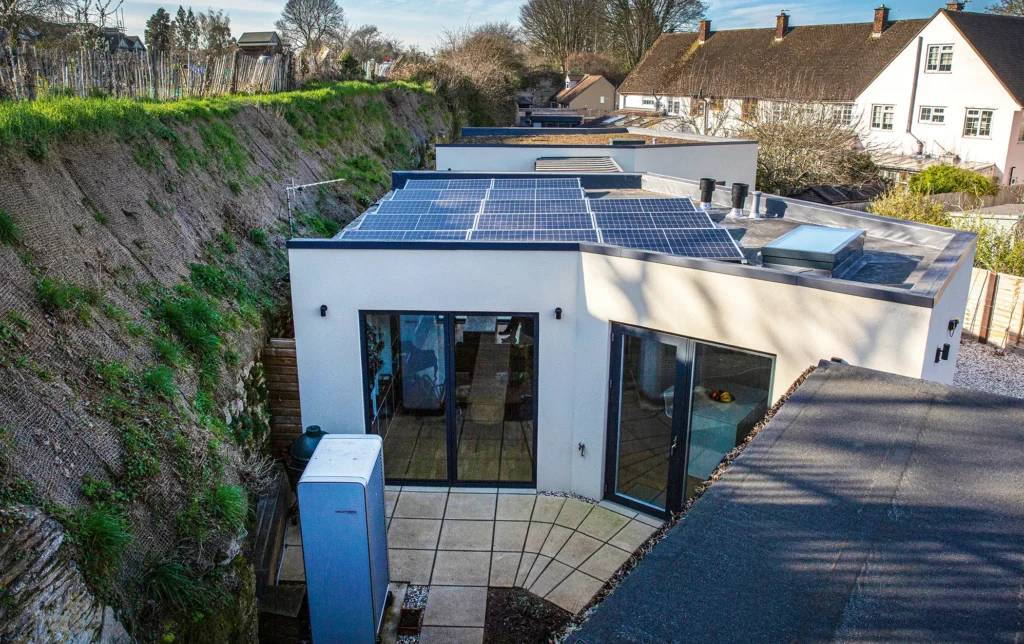
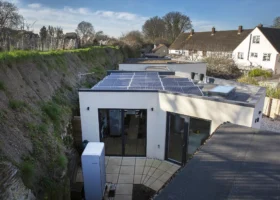
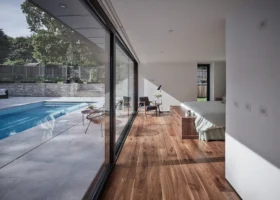
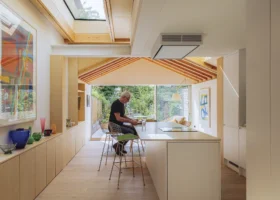
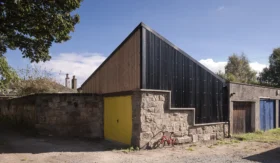
Nestled behind a row of 1960s terraced houses, David and Jenny Bird’s new single-storey home is built on the site of a disused quarry, just inches from the quarry wall. The flat roofs are planted with sedum on one side and topped by single-ply membrane with solar PV panels on the other
Garden plots
Contrary to ‘backland development’ and ‘garden-grabbing’ headlines, planners still pass garden schemes – especially in places considered to be built-up. You may even be lucky enough to have a large space that could work as a viable site already; or know a friend willing to provide one.
find out more about garden plots
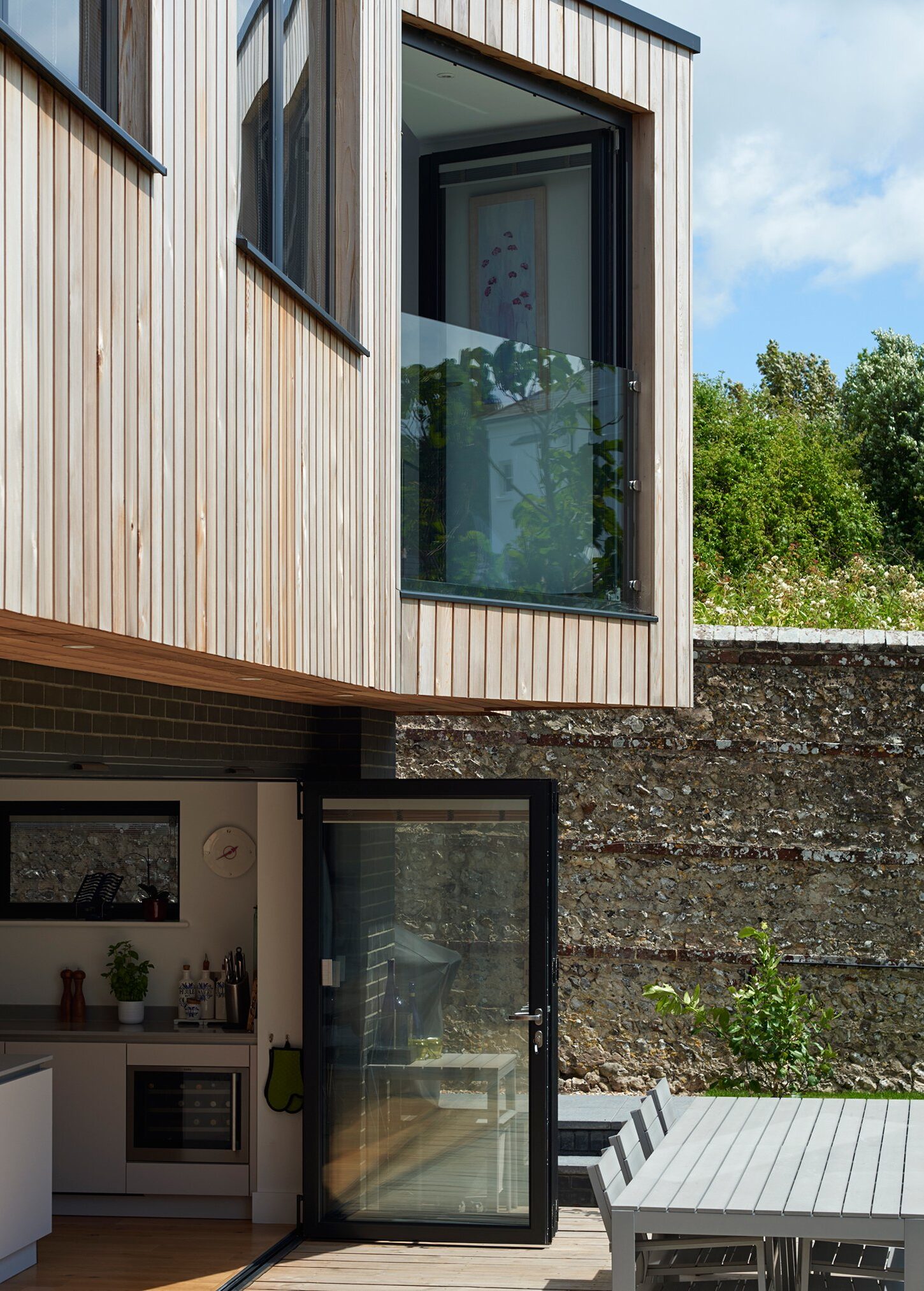
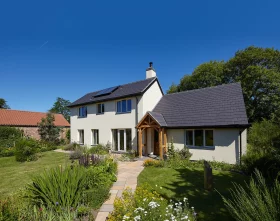
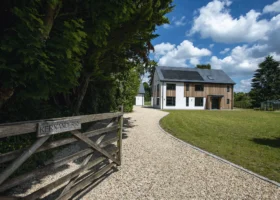
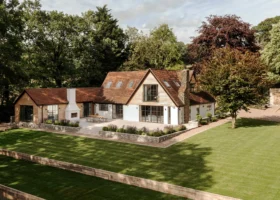
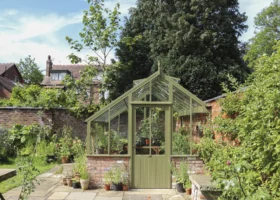
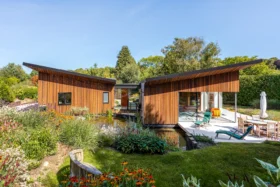
In search of the ideal home to enjoy in their retirement, John and Judith Turner built a modern, energy efficient home on a friend’s walled garden West Sussex. Photo: Alistair Nicholls
Edge-of-settlement
Depending on the maps marked out in Local Plans, this kind of site might fall within built-up area boundaries or it might not. Generally, policies will allow development within this zone – but control it very strictly outside. This undeveloped land is known as greenfield, and will typically only offer housing to serve the needs of agriculture, replacement dwellings and some infill.
Serviced plots
A fairly new option, a serviced plot is land that’s ready to build on – with utilities, highway access etc already in place, as well as at least outline planning consent. This route offers the benefit of more certainty over early-stage costs.
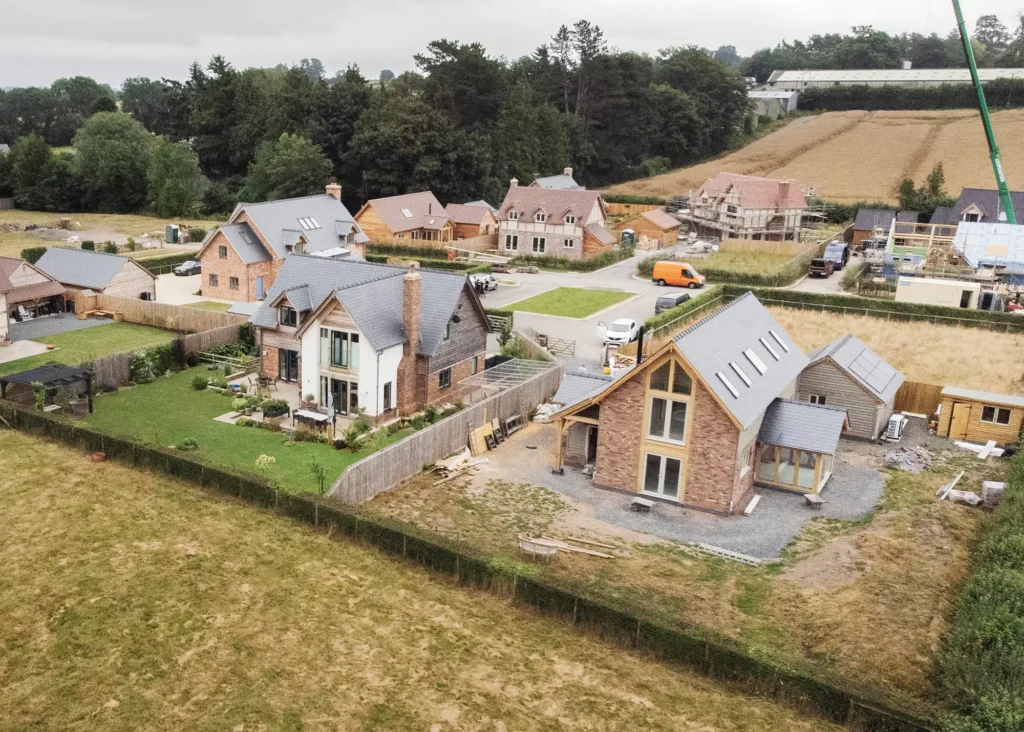
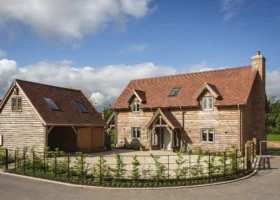
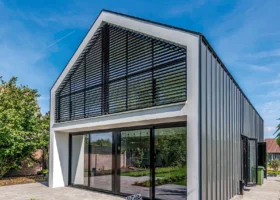
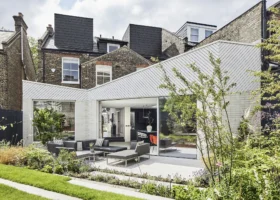
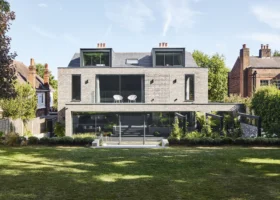
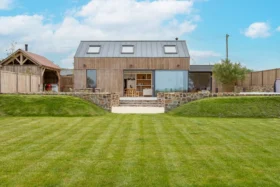
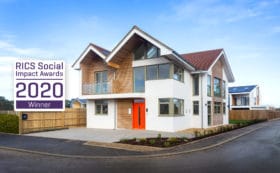
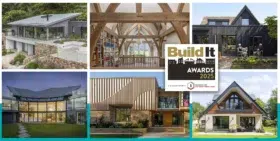
Winner of Best Custom Build Project or Model in the 2022 Build It Awards, Webbs Meadow is a serviced plot development offering 13 individual sites (all sold and either complete or in construction). A partnership between the landowner Kinsey Hern and Oakwrights, all the houses were individually designed for the homeowners, who had a choice of building routes
In recent years, thousands of sites suitable for one-off homes have become available across the UK via what’s known as custom build. Serviced plots are emerging as the leading custom build route. This takes a lot of the time and risk out of the process for self builders, as you know you’re dealing with a viable site.
find out more about serviced plots















 Login/register to save Article for later









The advice is to never buy a plot without planning permission, but also to knock on doors/write to people as “you just might find someone who hadn’t realised they were sitting on a potential source of revenue.”
Surely in that case it would be a plot without permission? How do you find out if a plot is likely to be granted permission?
Hi Lauren,
I’ve made a couple of tweaks to the article to hopefully clarify this for you… but basically the principle is that a plot that’s being marketed without planning permission should immediately ring some alarm bells.
Given that the value of a plot rockets up when it has planning consent, it’s extremely unlikely that someone would try to sell that plot without the benefit of some kind of planning in place.
So, if you see a cheap-looking plot for sale without planning, chances are all you’d be buying is a place to store your deck chair. It’s extremely rare that a suspiciously cheap plot actually has true development potential (in some cases the vendor may have already tried to gain planning and failed).
On the other hand, some people might have big gardens or other types of empty/disused land, and may not realise that they’re sitting on a potential plot. So they’re not actively trying to sell it, and it’s you who is identifying the potential.
There are similar risks in that you don’t know for sure that you can get planning until you apply… and that’s why you might consider making an offer that’s conditional on you achieving consent for a design you want.
Hope this helps!
Chris (Editor, Build It)