

- Plan ItBack
- Design ItBack
- Build ItBack
- Homes
- ProductsBack
- CostsBack
- Self Build Cost Calculator
Estimate your project costs instantly with Build It's interactive self-build cost calculator
Calculate Now - Costs & Finance
- Contracts & Warranties
- Build It Estimating Service
Get an accurate, detailed cost breakdown of your project
Submit plans
- EventsBack


















 Login/register to save Article for later
Sleek Modern House Built in the Garden of a Cotswolds Home

If you imagine a quintessential Cotswold home, you’re probably thinking honey-coloured stone cottages with thatched roofs and English country gardens. Yet for Trina Collins and partner Felipe Jauregui, enjoying the superb quality of life in this most famous of national landscapes, has been about rolling up their sleeves and self building a contemporary home with a genuine inside/outside lifestyle.
They bought a small house they loved in a pretty Gloucestershire town. After Trina’s father moved in, they spent 18 months renovating, only to realise that the property was simply too small. There was another issue, too. “The garden didn’t fit with the house,” says Trina, “long and thin on sloping land, with a disused quarry at the far end.”
To Trina and Felipe, the solution was obvious: build a new property in the garden. And now, after a project that took over five years of hard work and several unexpected challenges, the couple have the home they had always imagined – a stunning two-bedroom house, clad in black fibre cement with cantilevered sections, plenty of glazing, plus a separate living space and bedroom for Trina’s father to enjoy.
Designing the self build home
The first hurdle to overcome was planning permission. With such a long garden, Trina and Felipe originally thought a pair of houses would be possible, but when an independent planning consultant advised against this, the couple turned towards a much larger modern home with four levels. This time, the structural engineer highlighted issues with the ground and drainage. Their third idea (and the one that gained planning permission) was a 6m x 12m rectangle placed further from the wall separating their property from a light industrial estate and a car park with poor underpinning.
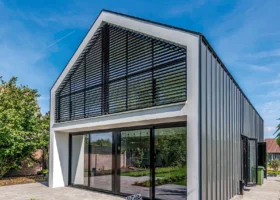
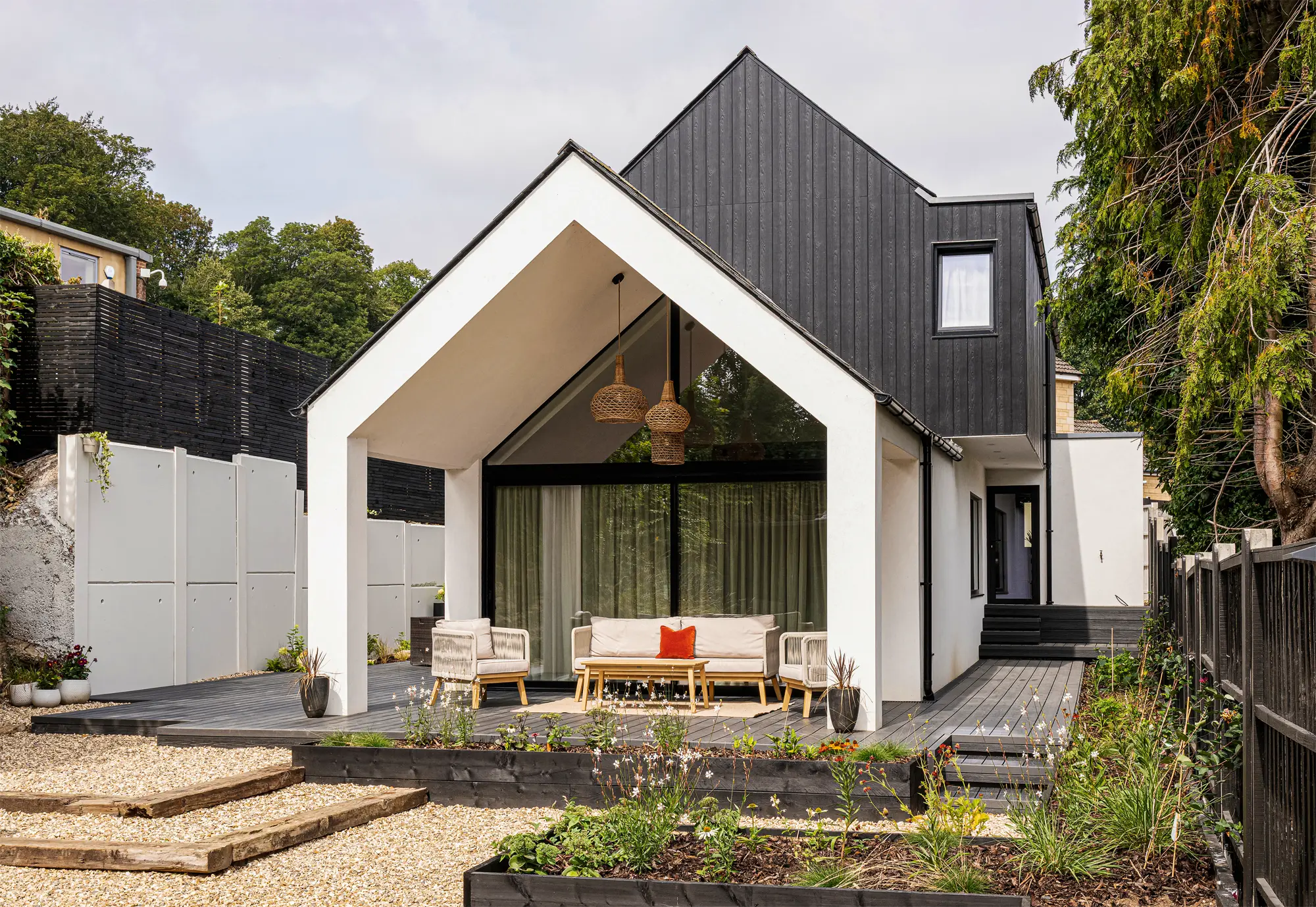
The exterior is a mixture of Cedral’s cement fibre cladding boards and PRB render, laid onto render board. The property is in part of Trina and Felipe’s previous garden
The couple hired local architectural practice James Slater & Co, where their project designer was Guillem Bartolet. “I always had a clear idea for a modern, black house. It seemed appropriate, too, given our proximity to the industrial estate,” says Trina. The couple were delighted with the design; their application passed smoothly and they found the local council to be really helpful.
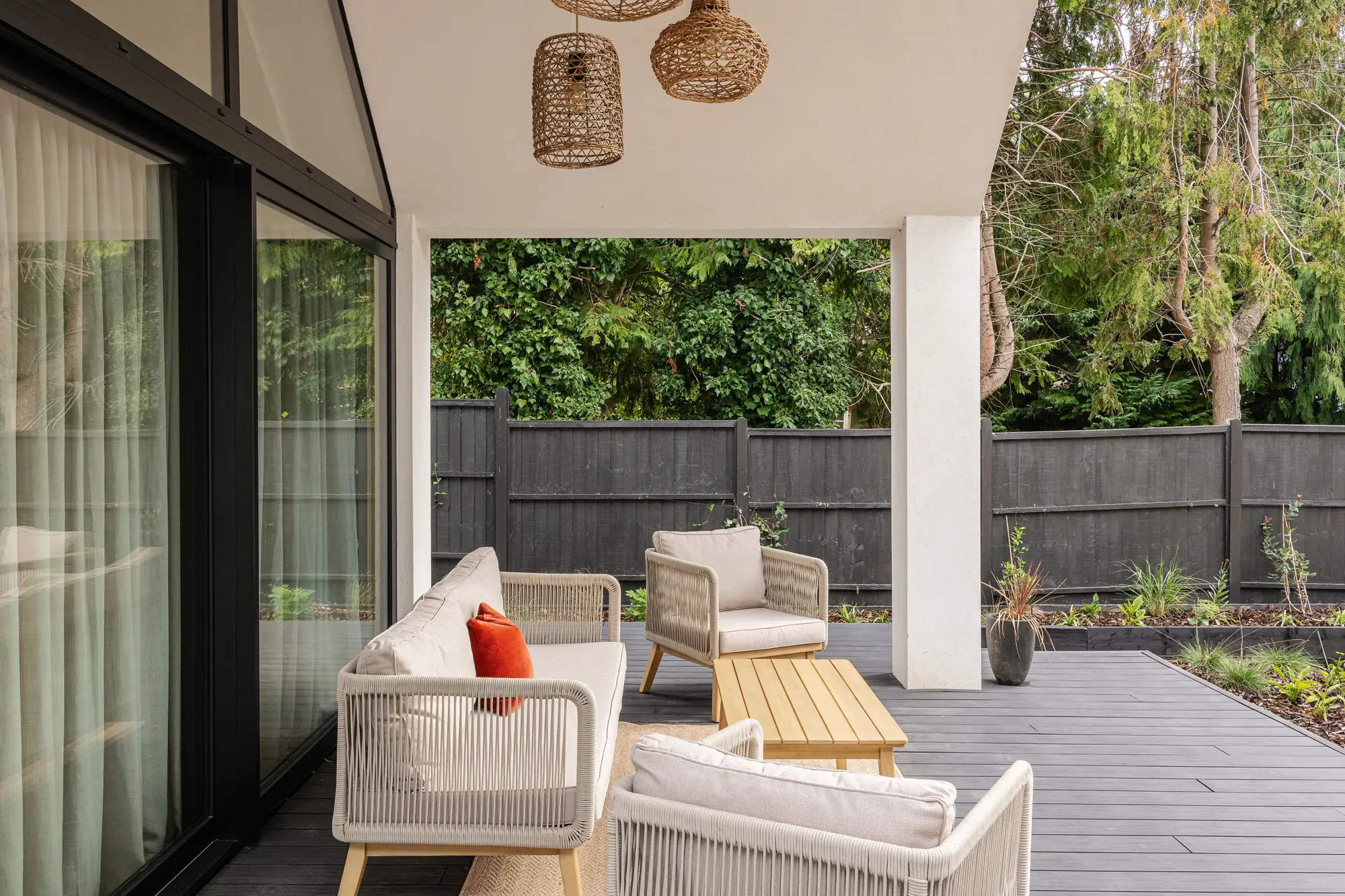
An overhanging roof jets out beyond the living room, creating a sheltered space to relax outside
The couple’s brief was for an open-plan home, with a strong outside connection, bright rooms and separate spaces for Trina’s father. Although she gave up on her ambition for vaulted ceilings in favour of a loft and storage space, Trina loves the veranda that extends the living space. “Even when it’s been raining, we can sit outside,” she says.
- NAMESTrina Collins & Felipe Jaurequi
- OCCUPATIONSIT consultants
- LOCATIONGloucestershire
- TYPE OF PROJECTSelf build
- CONSTRUCTION METHODTimber frame
- PROJECT ROUTEArchitect design & homeowners project managed
- PLOT SIZE655m²
- LAND COSTAlready owned
- HOUSE SIZE158m²
- PROJECT COST£540,500
- PROJECT COST PER m²£3,421
- BUILDING WORK COMMENCEDMarch 2021
- BUILDING WORK TOOK2 years 5 months
Taking a DIY-approach
Trina, whose father is a carpenter, and Felipe have a fair amount of renovation experience, having completed several other projects. So, feeling confident and willing to get stuck in, they opted to take on the project management, hiring subcontractors as necessary. This can be a cost-effective way to build a house, but it isn’t always the easiest. The couple consciously chose local firms and feel that this made a massive difference to their experience. “We had such good working relationships with the trades, it made the journey easier than it could have been,” says Trina. “We’re good friends with them now.”
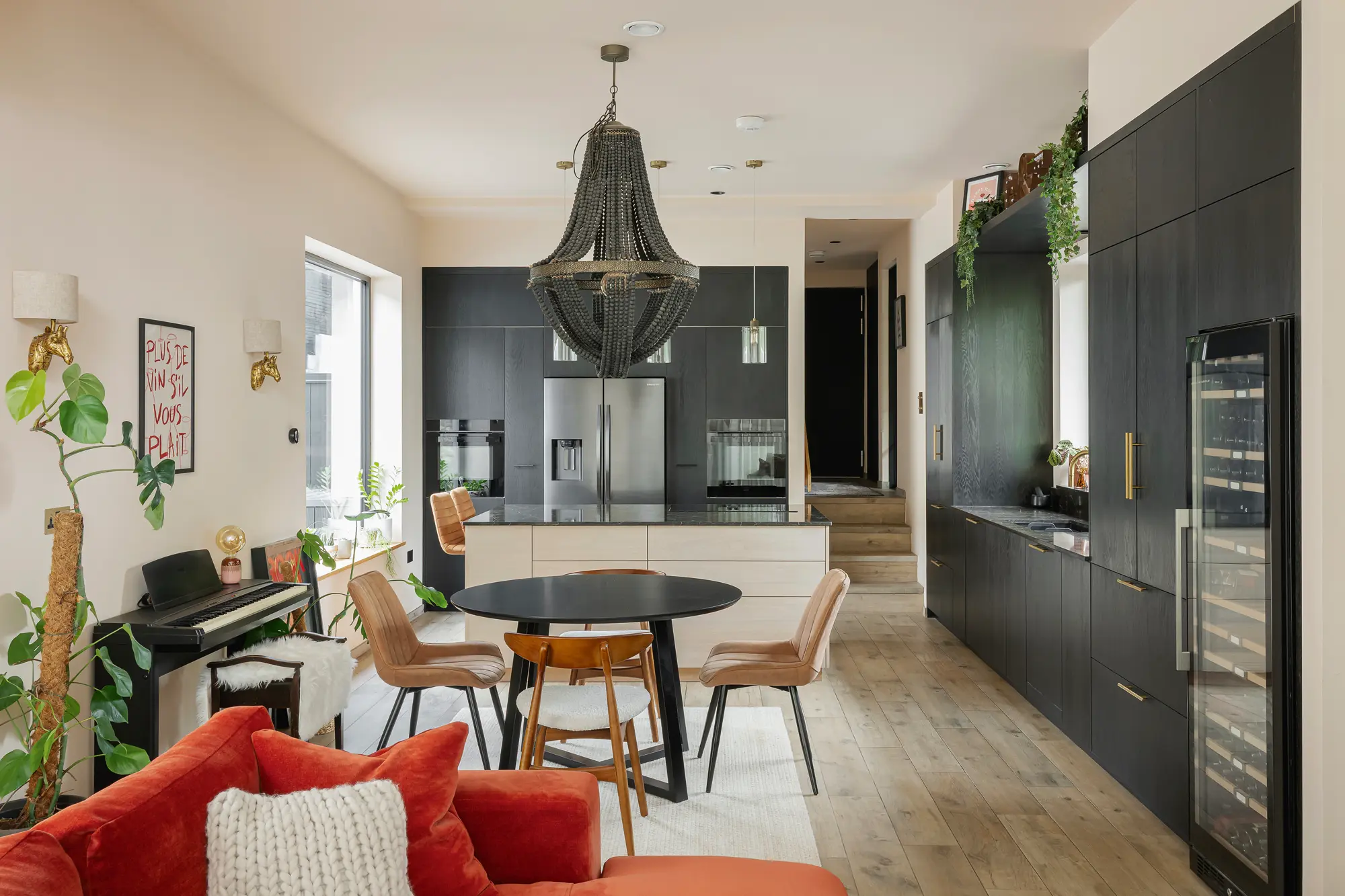
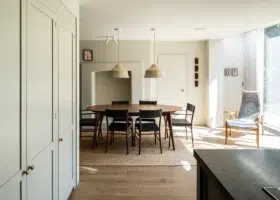
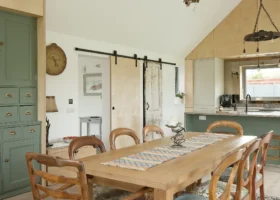
The centre of the home is an open-plan space featuring a stand-out kitchen from the Lugn range by Hush. The cabinetry is wood veneer, which is waxed and sanded
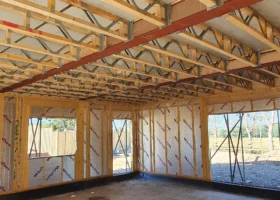
The couple’s first thought had been to use a SIPs (structural insulated panel) system, but they found that Trina’s contractor status at work complicated their finance options, making it difficult for them to secure a loan on a SIPs build. Instead, they chose timber frame with cement fibre board cladding – a pragmatic choice for their thin, angled, sloped plot. “It’s also quick to get weathertight and achieve high levels of insulation,” says Felipe. “The result is almost Passivhaus-standard. But it took us 18 months just to get finance.”
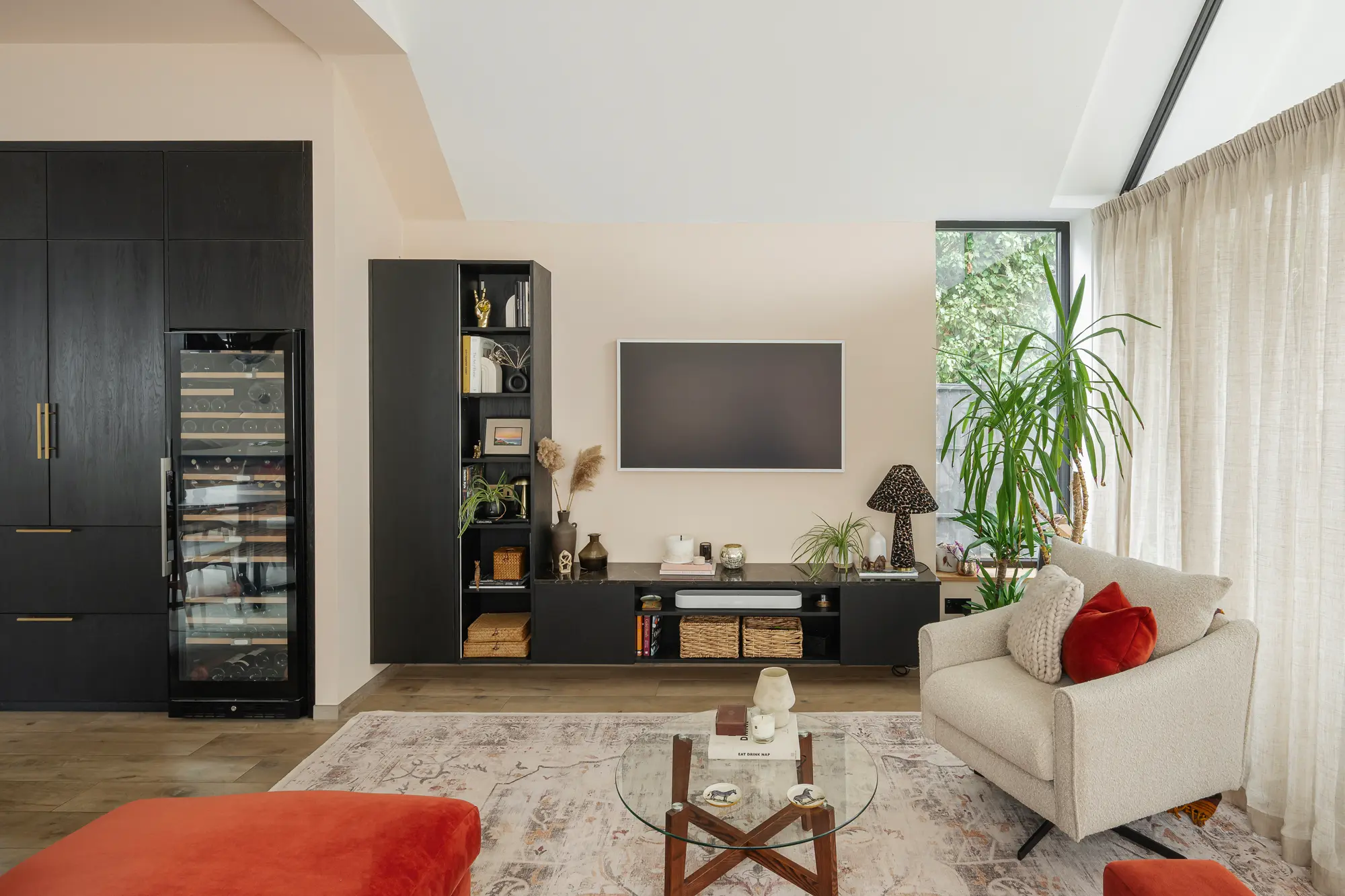
he living area is part of the open-plan zone and includes a glazed gable with glass doors below, leading onto a covered patio thanks to the overhanging roof. Light-weight curtains soften the run of glazing
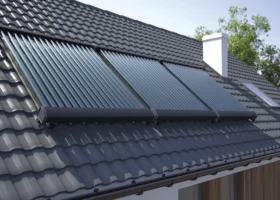
The roof is finished in cost-effective fibre cement tiles, but it is the glazing that really adds the wow factor to this property. “We wanted a high-end look, but not the maintenance of timber,” says Trina. As a result, they opted for aluminium frame windows from Schueco. The sliding doors, which have panels 4.5m wide, also benefit from a lower tread than was possible in a timber system, and getting that easy in/out feel was a key feature for the couple. “They look really nice, and it is so important to get them right,” says Trina.
Specifying sustainable tech
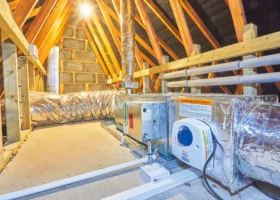
Building a sustainable home was important to the couple, so they explored a range of options to keep a lid on energy usage. Their highly insulated home has an MVHR (mechanical ventilation and heat recovery) system that recycles warmth, extracting heat from stale air before it’s expelled, then using it to pre-warm the fresh air coming in. “We focused on a super-efficient house,” says Felipe. “It loses 1°C on average overnight in winter.”
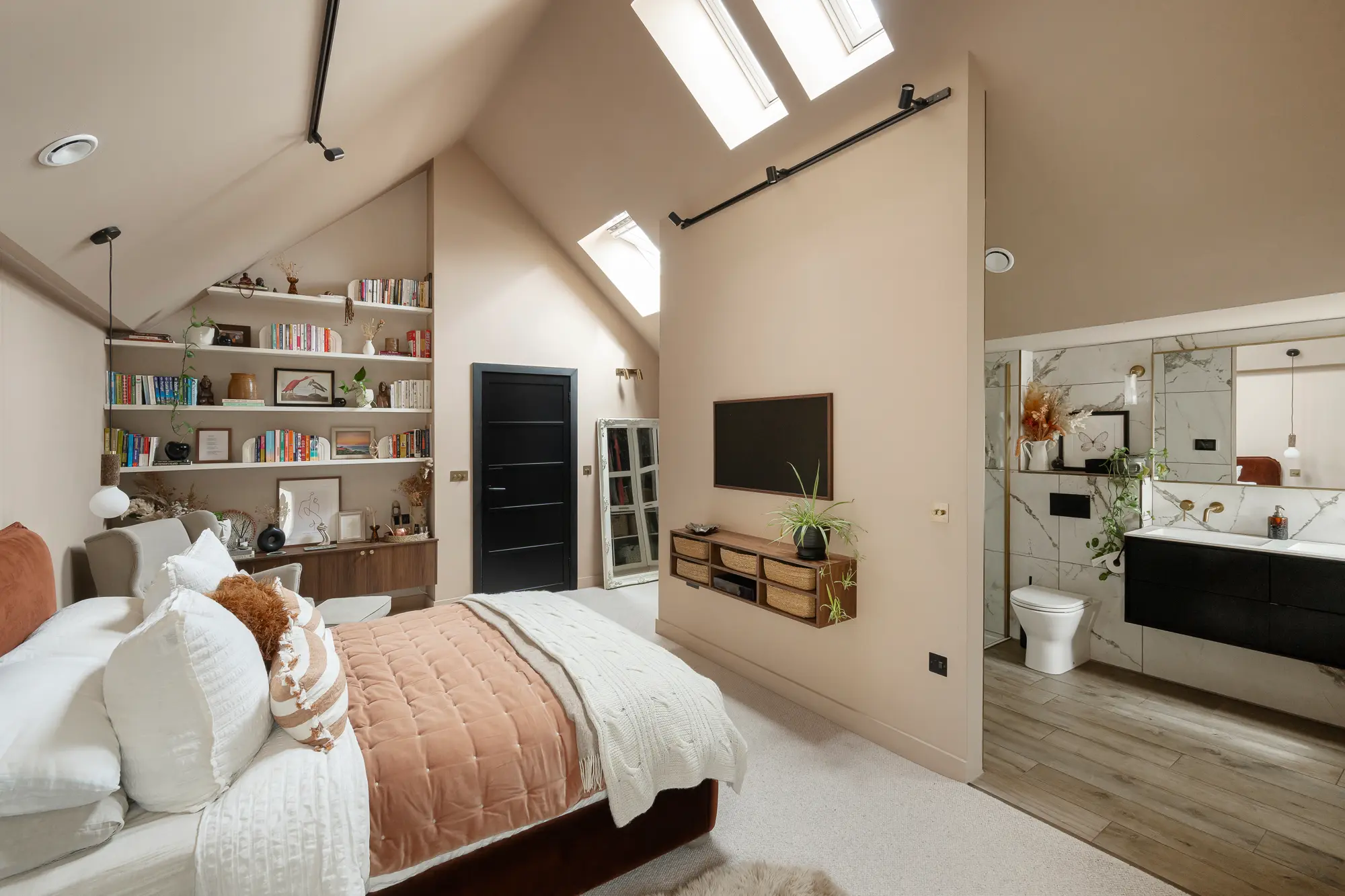
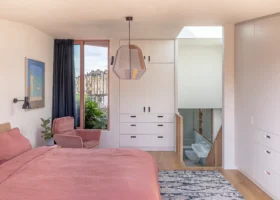
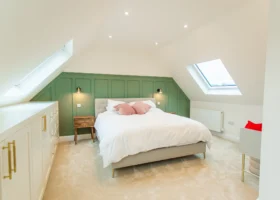
The main bedroom is a restful space, softened by pink accents and quality touchpoints for a high-end finish
Trina and Felipe considered solar panels, but the location was an issue. “We did a mini-study of our positioning,” says Felipe. “We have tall trees and buildings around us, so we would have needed to cover the entire roof with panels, and the cost was not worth it.”
The couple weren’t convinced an air source heat pump would be the right solution for their home. So, after taking advice at the National Self Build and Renovation Centre in Swindon, they opted for a gas boiler powering plumbed-in underfloor heating (UFH) downstairs, with electric UFH for the bathrooms on the upper storeys – and are very happy with running costs. Their choice of energy provider has boosted the project’s environmental credentials, too. “We buy our electricity from a green energy supplier that guarantees no wildlife is harmed,” says Felipe.
CLOSER LOOK Fibre cement claddingIn the eight weeks between selecting timber for the building’s exterior and placing the order, the price doubled. “This forced us to look at other systems,” says Felipe. The solution was Cedral’s fibre cement cladding in black. The couple were impressed by the competitive pricing and contemporary edge possible with this product.
Fibre cement cladding is a combination of sand, wood cellulose, water and cement – and its long lifespan can make it an eco-friendly choice. The multi-layered structure also makes each panel very strong, as well as rot and UV-resistant, so there’s no maintenance to do in order to retain the colour. Other parts of the house’s exterior are finished in render, applied onto a render board, creating attractive areas of contrast. |

Project hurdles
Trina and Felipe faced several challenges during their build, including with the budget. They were unlucky to be starting their project during the Covid pandemic, as material prices doubled across two months. The couple had planned to stay in their house while the new home was being built, but they needed to release finances to pay for the works, so ended up selling the property.
They came up with an innovative solution to where to stay during the build. They had been planning to construct an outbuilding, which would ultimately house a gym. So, before they sold their home, Trina and Felipe obtained planning permission to turn this into a cabin that they could live in temporarily.
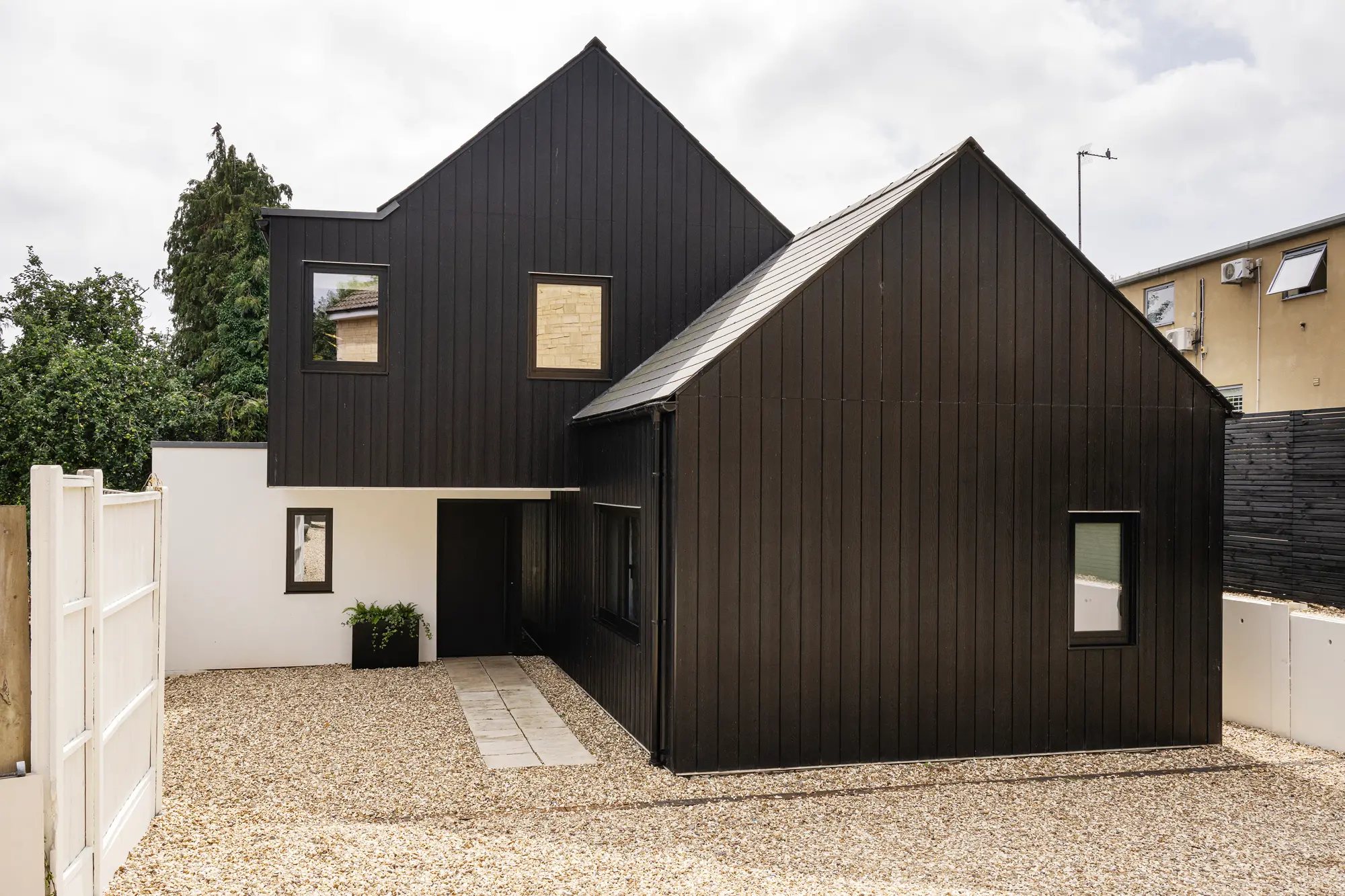
The fibre cement cladding combined with sleek white render creates a striking exterior finish
The groundworks for the project also threw up some unexpected issues. Thanks to the instability of the car park that runs along the side of their garden, Trina and Felipe found themselves doing some additional groundworks to insulate themselves from any future problems. This involved creating a king post wall, which consists of a line of steels, driven 6m into the ground and backfilled with porous concrete. This took their entire contingency fund.
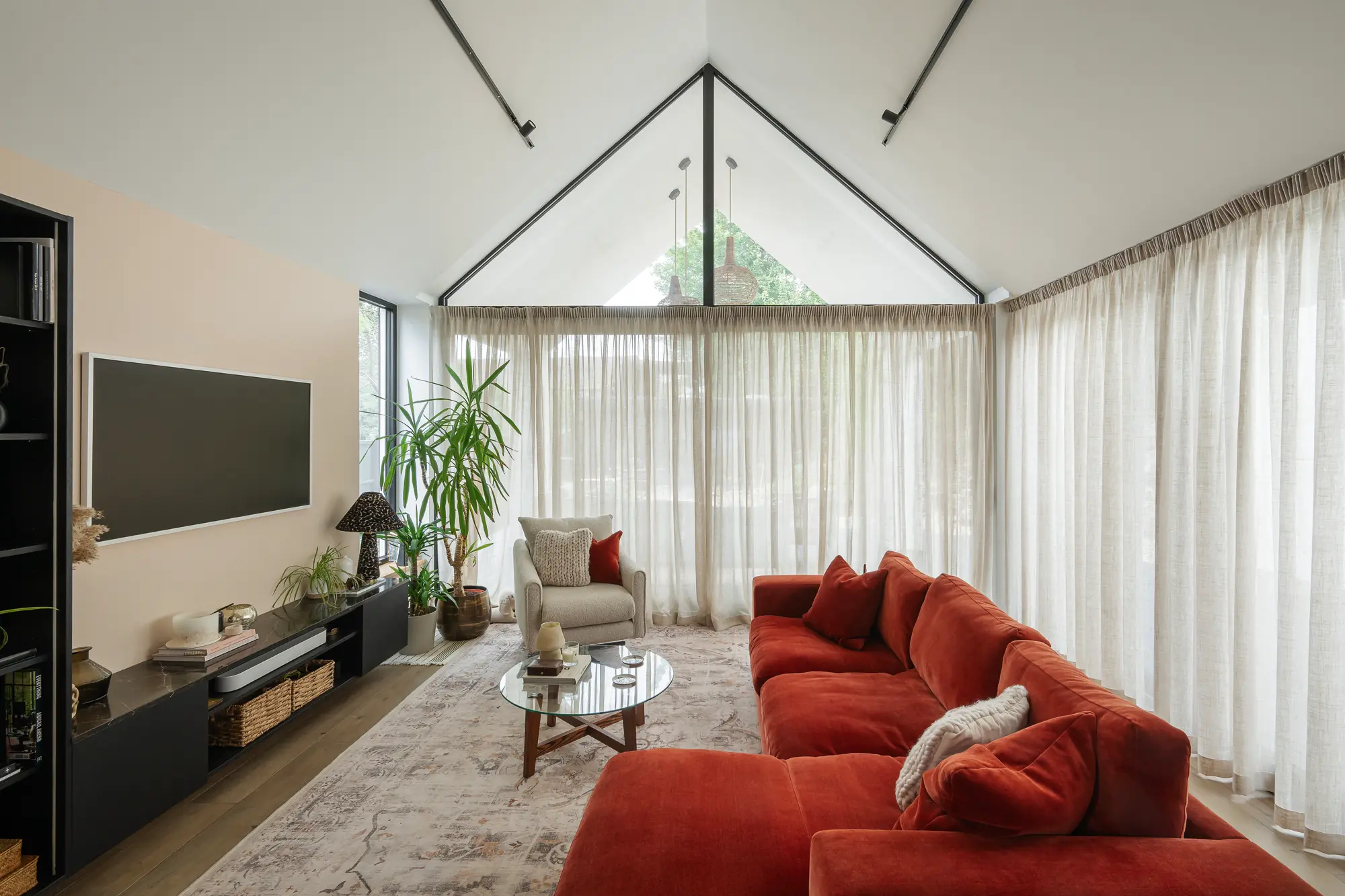
The living space has sheer curtains around the glazed areas for privacy and to create a cosy, intimate feel
Worse was to come. During these works, a pile-driving plant’s hydraulics sprayed over the neighbouring building and car park, damaging vehicles. Everything had to be professionally rectified. “We questioned whether we could continue at that point,” recalls Trina. “We were only two weeks into the build.”
These unexpected extras meant adjustments elsewhere, but the couple were familiar with what they call the project triangle, where you have to prioritise across the build budget, timeline and quality – but can’t max out all three. “We didn’t want to compromise on quality, so we traded-off on time,” says Felipe. Trina adds: “One of our biggest challenges was both of us having full time jobs while also working on the house evenings and weekends.”
Dream result
The project reached practical completion for building control purposes in late 2023; but the interiors and landscaping remained unfinished. The couple wanted a high-end space and the result feels luxurious, with bespoke fittings in walnut, antique brass and details such as hiding all the pipes in the bathrooms. “I didn’t think we would get that on our budget,” says Trina.
Their biggest investment was the kitchen, which is from high-end manufacturer, Hush. Located in the open-plan space, Trina knew the design had to do the zone justice. She wanted black cabinets and had fallen in love with the company’s new range. She spent a year looking for something cheaper, but was unsuccessful in her hunt finding something that matched the kitchen she saw.
So in the end she went back to Hush and has no regrets as she had a first-class experience. “They did the design and were so good. We were so impressed we asked them to do our bespoke media centre, study furniture and wardrobe, too,” says Trina. “It didn’t cost much more than a high street supplier, but the quality you get for that little bit extra is worth so much more.”
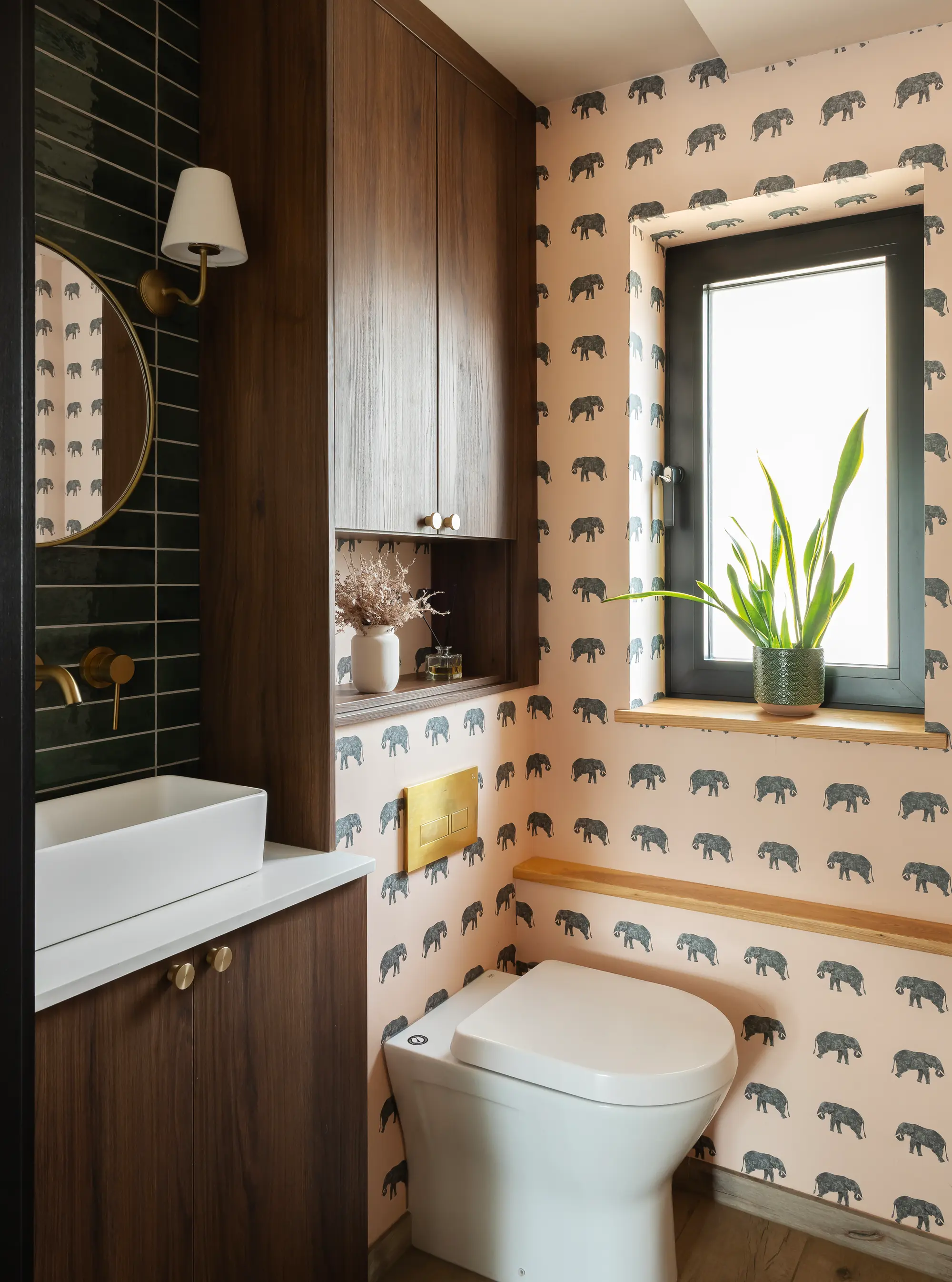
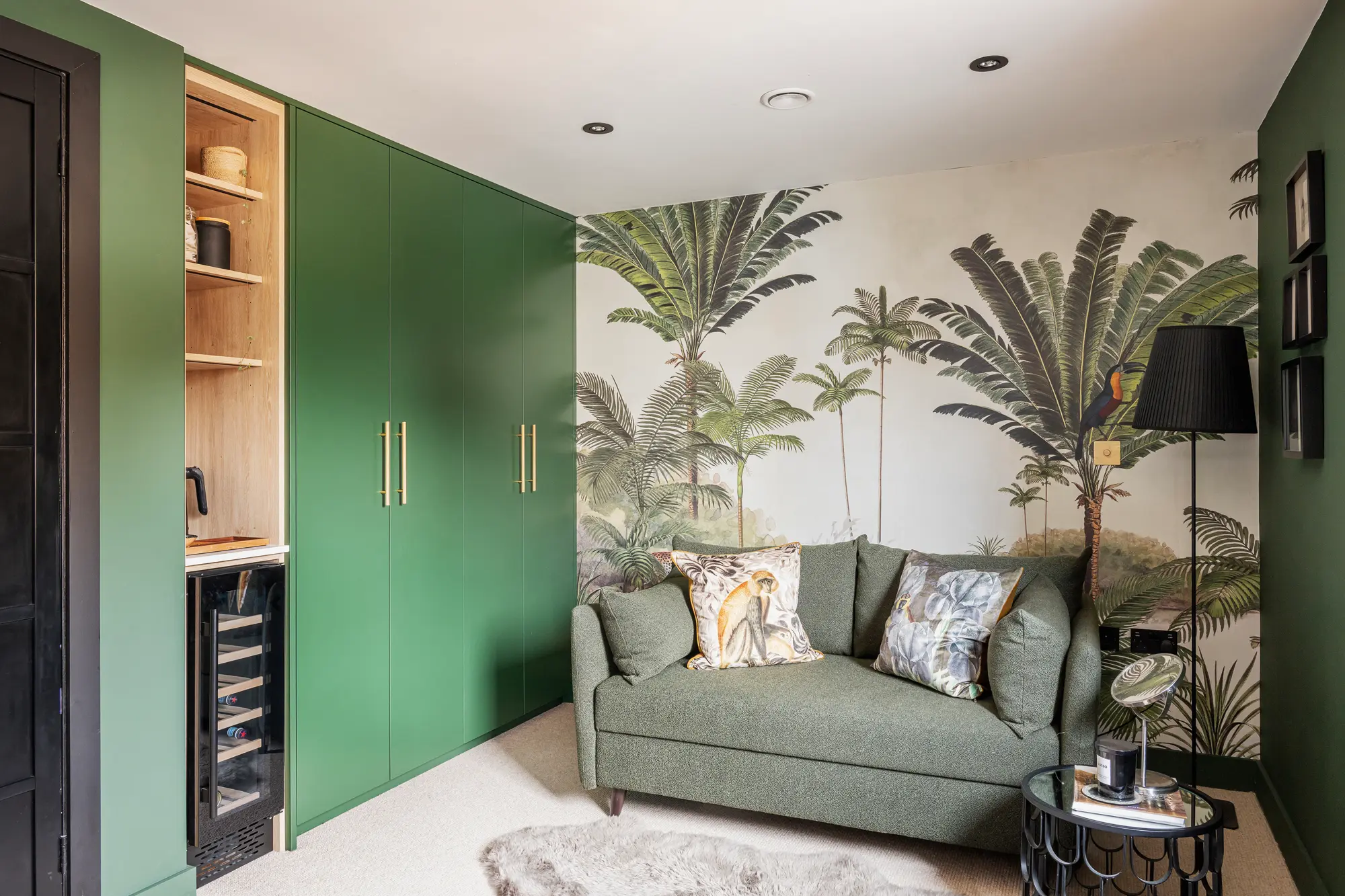
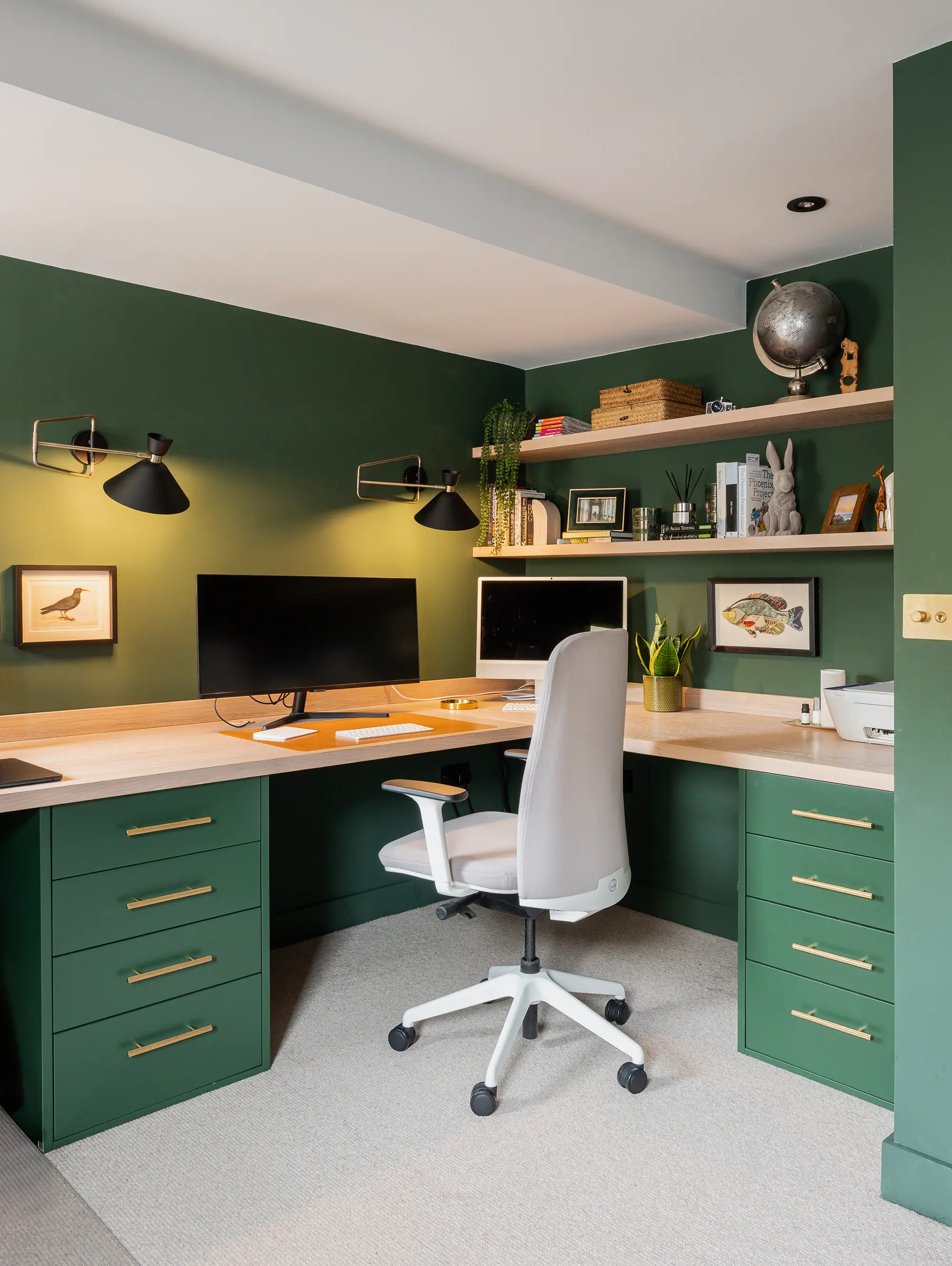
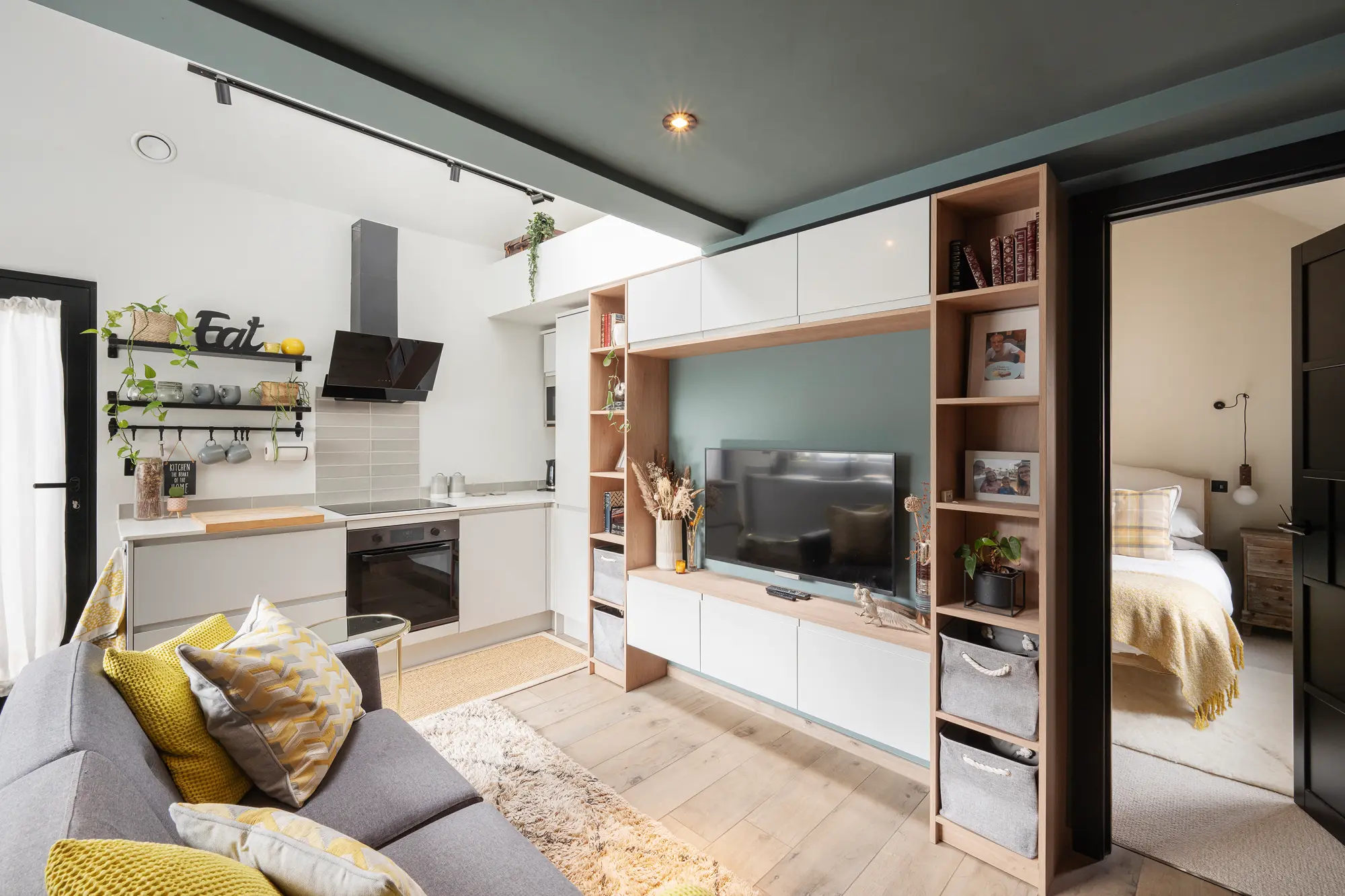
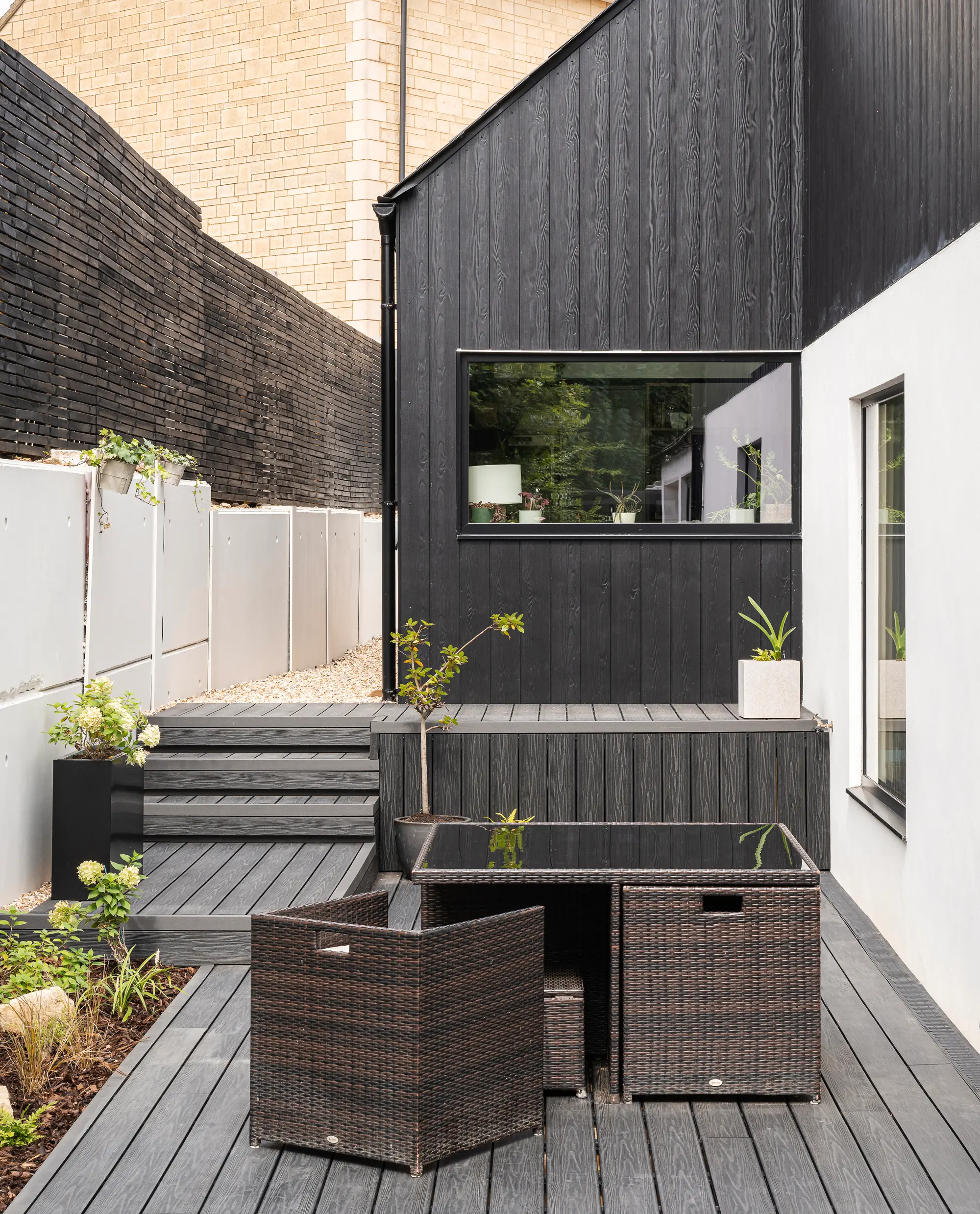
Now their home is completed, that open-plan look is what Trina loves the most, especially as this space connects with the veranda and 100m² of decking. “It feels like the ground floor is extended,” she says. Able to have the lifestyle they dreamed of while working from home, Trina and Felipe’s long-haul to their dream property has all been worth it. “It’s life-changing,” says Felipe.
We learned
- Building good working relationships with your trades will make the whole process so much easier.
- Plan your electrics, including the lighting and sockets, early on and include furniture placement within it. Plus, have three levels of lighting – ambient, task and general, rather than a grid of spotlights, as we did in our first house.
- Even though we were exempt from making a CIL (community infrastructure levy) payment to the council, we were fined £2,500 because we hadn’t let them know we had started our build.
Alexandra Pratt
You may be interested in