
- Plan ItBack
- Design ItBack
- Build ItBack
- Homes
- ProductsBack
- CostsBack
- Self Build Cost Calculator
Estimate your project costs instantly with Build It's interactive self-build cost calculator
Calculate Now - Costs & Finance
- Contracts & Warranties
- Build It Estimating Service
Get an accurate, detailed cost breakdown of your project
Submit plans
- EventsBack















 Login/register to save Article for later
How To Plan a Bespoke Staircase Project – When Should You Engage a Staircase Specialist?

A high-quality, well-designed staircase will impact all aspects of your home – tying together its interiors and overall architecture, while enhancing both light flow and movement. However, some homeowners forget the importance of the staircase and leave its design and specification until too late.
Ultimately, if it’s forgotten during the planning stages, this can bring additional expense, or for some projects, could also mean that the perfect, dream solution cannot be achieved. Architectural plans are often difficult to modify once they’ve been approved, so when looking to commission a unique, bespoke staircase design, it is vital to get the right advice at the right time.
When should I bring a staircase specialist on board?
When planning to modernise or build your own house, it’s beneficial to engage a staircase specialist, like Bisca, as early as possible. They will add value from the outset of a project, often working with architects and interior designers to offer a greater depth of experience to the scheme.
Bisca provides homeowners and interior designers with project-specific staircase inspiration, and architects/builders with the right technical information to ensure the chosen design can be achieved seamlessly.
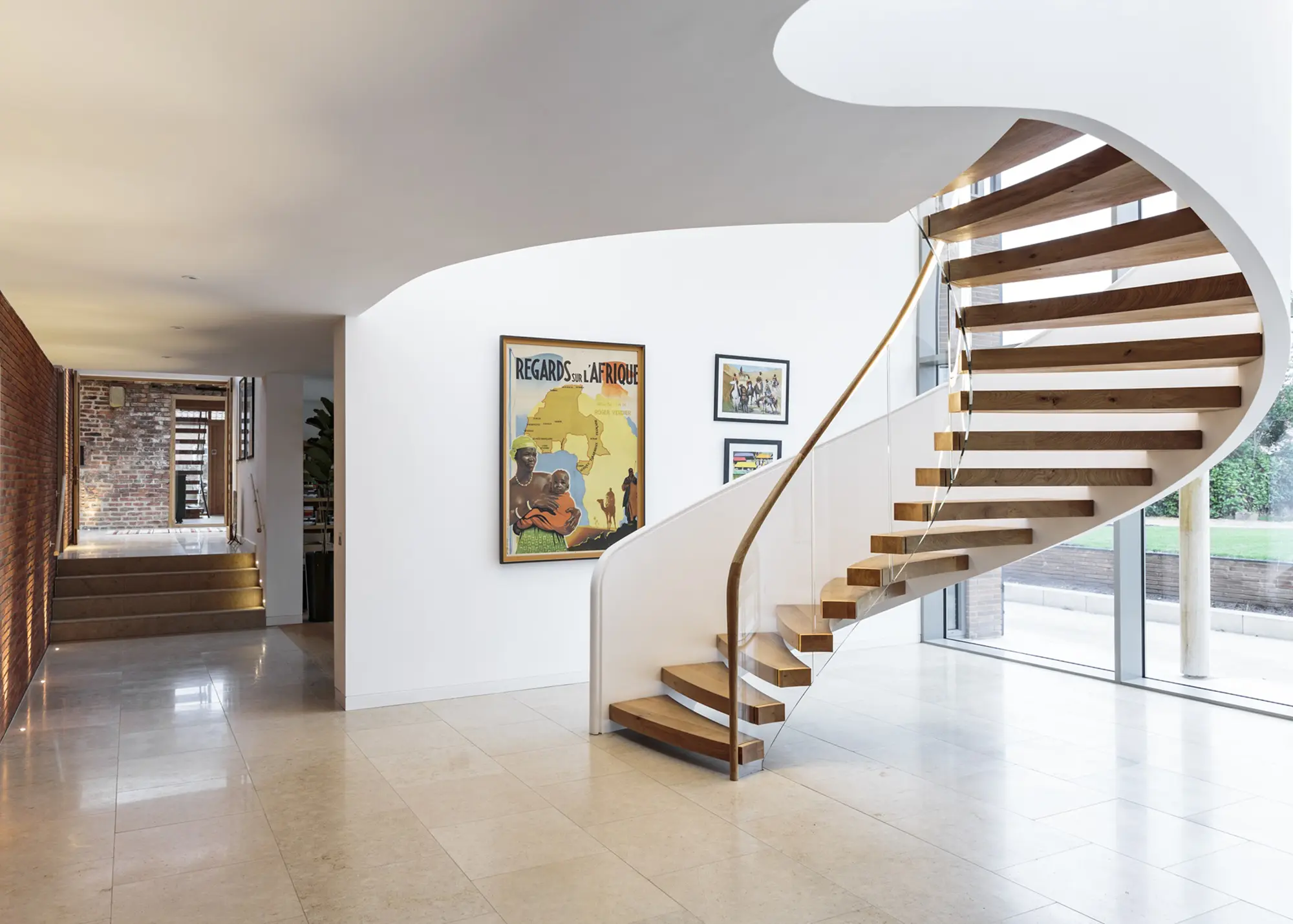
This striking helical staircase features oak treads and a white-painted plastered parapet, which acts as a seamless continuation of the ceiling above
For a self build project, ideally you will consult a staircase designer before anything physical or structural has been signed off. That said, it’s common to engage a specialist once your architectural designs have been agreed. In this case, they can still work with existing configurations and advise on how best to achieve your desired outcome.
How to create a bespoke staircase design
The size, placement and style of your staircase are three primary factors to consider when establishing preferences and deciding what you want to achieve.
Staircase design & proportions
The size of your staircase will be dictated by the scale of the property, including features such as ceiling height, and window size and placement. Your staircase must fit proportionately within the overall space and should not be either too overpowering or too underwhelming. A staircase specialist will help you achieve a good balance between the flight’s prominence and other attractive features within the building.
Choosing the best location
A good staircase specialist will explain that form always follows function. When considering a staircase’s location, its functional purpose is therefore the first and most important factor. During this stage, the specialist will examine how people move around the property, and ask questions such as: How does light travel from one space to another? Will the staircase create a statement or focal point in the centre of the home? Are there any existing architectural or design features which should be factored into the scheme?
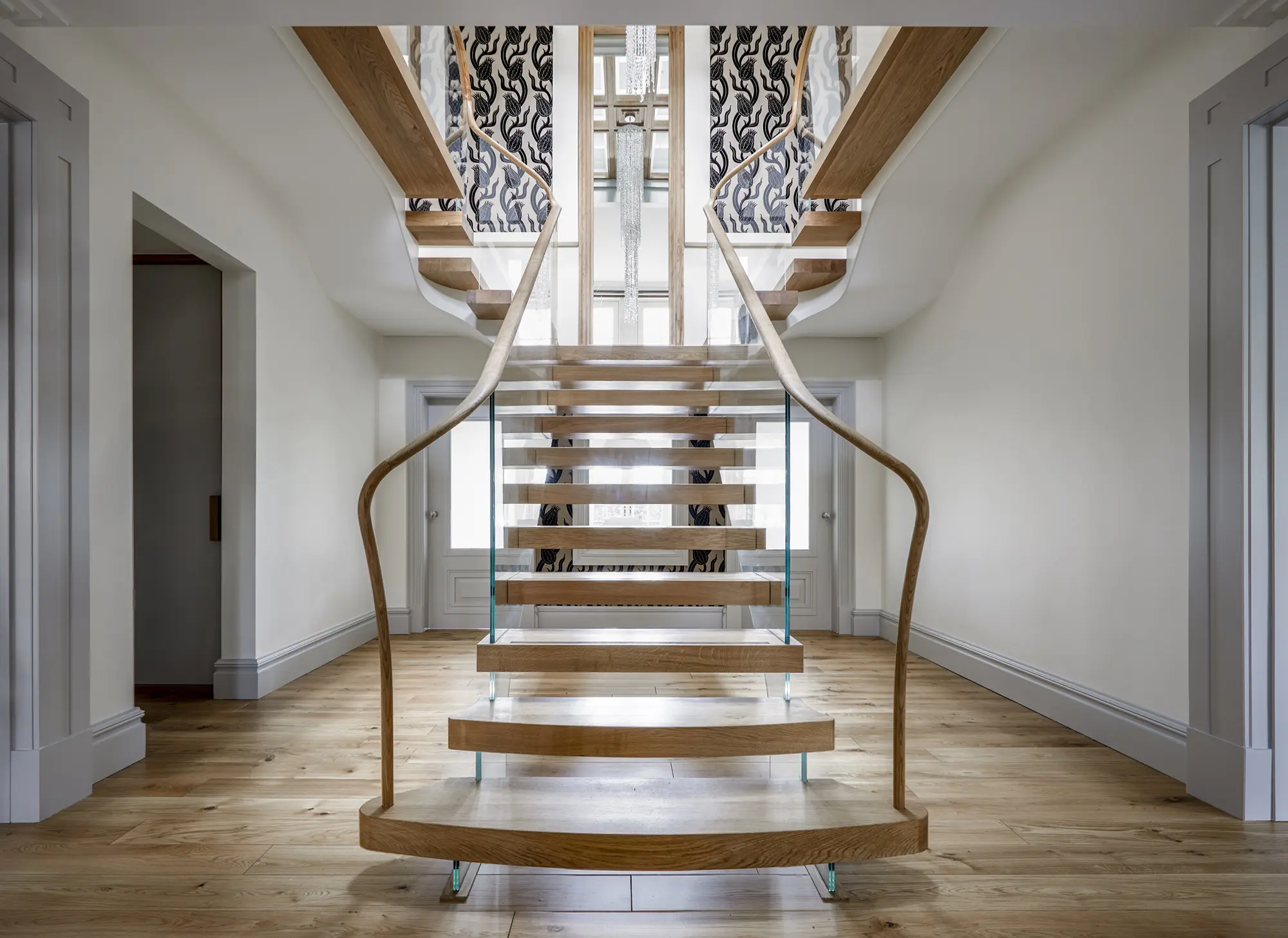
A contemporary oak staircase supported on structural glass balustrading takes pride of place in this new build property in Yorkshire
Getting the technical details right
Ultimately, your staircase’s placement should optimise comfort in every respect. This places a focus on its style and layout, raising considerations such as the size of the rise and going of each tread. These and other details will help determine its direction and how it is attached to the building. Some spaces are more compact and so impose limitations on which styles and layouts will fit the building and where the staircase will be placed. In these circumstances, a creative mindset is needed to look at different layouts and styles.
As staircase experts, Bisca has the capacity to apply their experience at any stage of a staircase’s creation, whether that be by working independently with the homeowner, or collaborating with other project stakeholders. The earlier a staircase specialist gets involved, the more freedom you have to realise your dream staircase design on time and on budget.

You may be interested in