

- Plan ItBack
- Design ItBack
- Build ItBack
- Homes
- ProductsBack
- CostsBack
- Self Build Cost Calculator
Estimate your project costs instantly with Build It's interactive self-build cost calculator
Calculate Now - Costs & Finance
- Contracts & Warranties
- Build It Estimating Service
Get an accurate, detailed cost breakdown of your project
Submit plans
- EventsBack


















 Login/register to save Article for later
How Much Did These UK Renovation Projects Cost? 10 Homeowners Break Down Their Renovation Budgets


Home renovations can make exciting projects, offering both character and flexibility where new builds sometimes don’t. Budget right, and renovating a house can be an amazingly cost-effective route to achieving the home and lifestyle you want, enabling you to tailor the property to accommodate your household’s exact requirements.
However, for a project like this to make sense financially, you’ll need to know exactly what work is needed before getting started. This means carefully assessing the property’s condition with a structural survey, to ensure that it’s a reasonable investment and not a money pit. This will help you establish the extent of the works required to bring it up to modern standards, whether it’s structural changes, repairs, pipework, electrics, fixtures and fittings or less tangible considerations such as heritage requirements.
After gaining a good understanding of how much the works are likely to cost, you can weigh this up with the property’s asking price and establish whether the project is financially viable. Lastly, if you’re considering undertaking the project works yourself, think carefully about your level of experience, as your potential mistakes could contribute a costly amount.
To help you get a better idea of what’s possible, here we’ve rounded up a selection of 10 real-life renovations, highlighting how much each project cost overall.
1930s semi-detached house in East London upgraded for £321,724
For their next move, Bhavesh and Bijal Ravalia had their hearts set on Wanstead, with its leafy suburban streets, village feel and family-friendly vibe. However, their budget didn’t stretch to a ready-to-move-into property, so they played the waiting game, eventually purchasing a 1930s semi-detached doer-upper in the sought-after area.
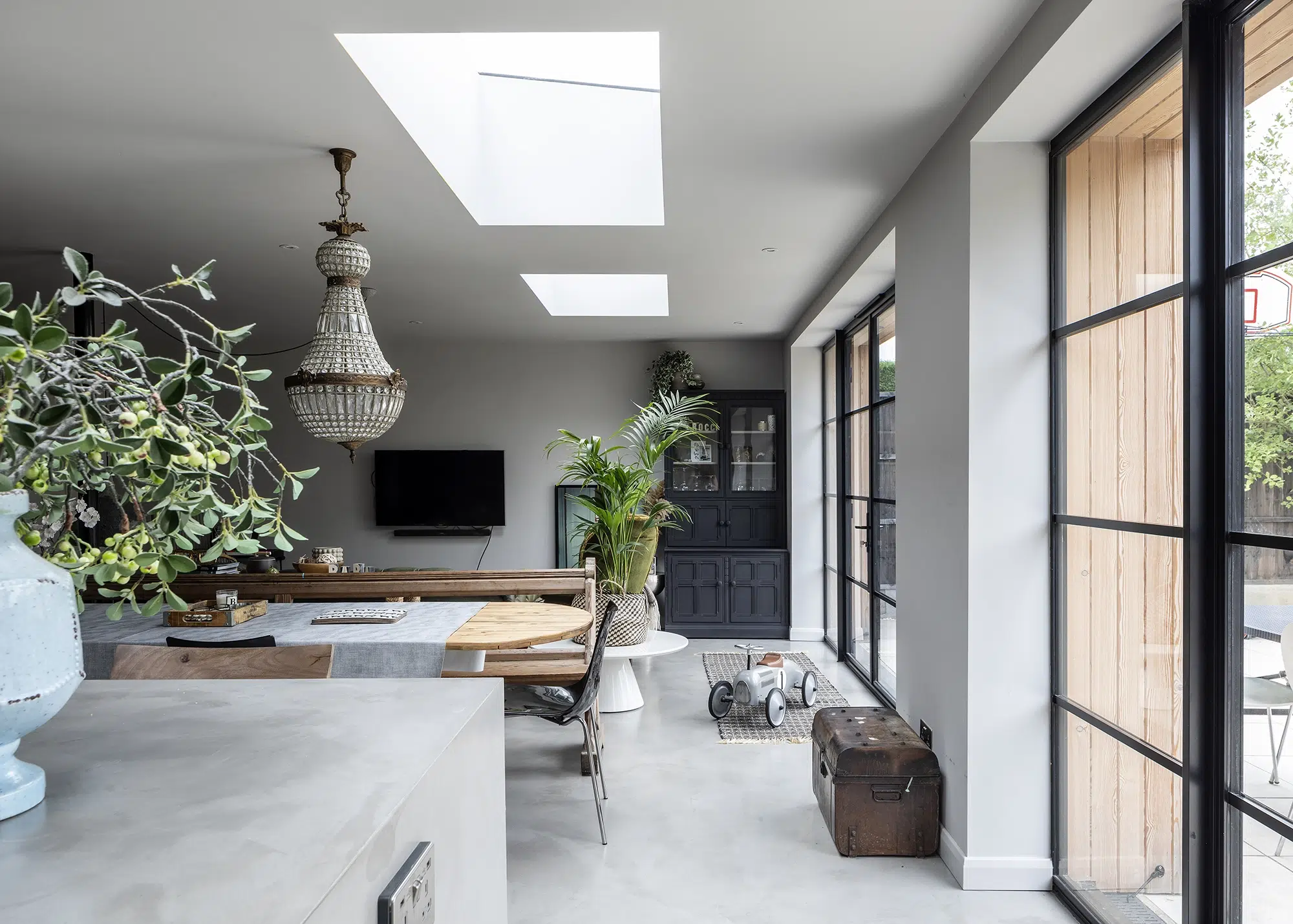
Photo: Adelina Iliev
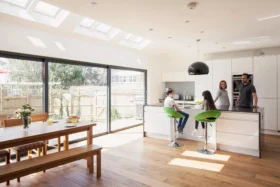
“It was an absolute tip and needed gutting – rewiring, new plumbing, reconfiguring, you name it,” says Bhavesh. “The house was a higgledy-piggledy mix of rooms with different ceiling heights and the layout was completely disjointed.” In order to get the space and balance they required, the couple decided on a wraparound extension to maximise the corner plot, plus a first-floor side addition and loft conversion. The plan was to create a large 9m x 6m rear extension, zoned into a lounge, dining area and kitchen for their busy growing family, as well as a first-floor addition.
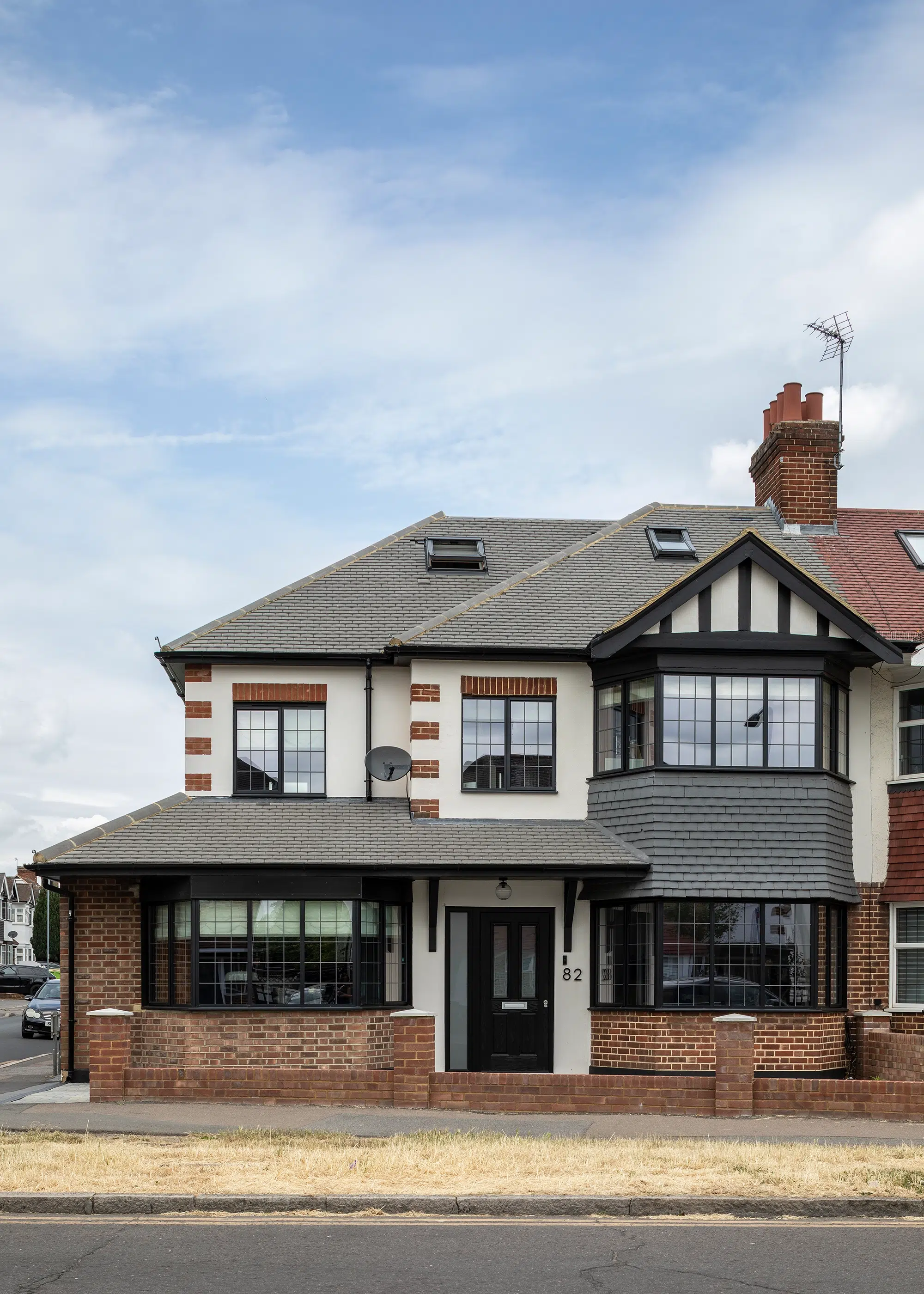
Photo: Adelina Iliev
It took seven months to get planning permission, after being rejected for the scale of the first-floor extension, which the council thought would appear intrusive given its corner position. As a result, they scaled back their plans, reducing the size of the first-floor extension, along with the size of the loft conversion, which hosts a double bedroom/office, ensuite and plant room.
Contractor Alan Berry was selected to do the works, kicking off with the brick and block wraparound extension. The kitchen runs along the right-hand side, with a 3m kitchen island to match the size of the dining area, while the family’s chill-out zone sits opposite. Discreet storage houses Bhavesh’s collection of vinyl. A trio of rooflights sit over the three zones of the extension, while the Crittall-inspired patio doors were designed to line up with the kitchen and living spaces, flooding the room with natural light. Click the link in our bio to find out more about this incredible transformation.
| Type of house | 1930s semi-detached house |
| House size | 210m² |
| Location | South London |
| Original property cost | £743,000 |
| Renovation project cost | £321,724 |
| Project cost per m² | £1,532 |
| Current value | £1,300,000 |
Grade II listed semi-detached home renovated for £671,847
After a flood left Nicole and David Price’s London home in a bad state, they had the chance to adapt their much-loved house into their perfect property. A complete overhaul felt like a job to tackle, but a chance meeting with architect Stuart Archer (from Archer + Braun Architects) provided a watershed moment for the project. Nicole set up a meeting with him and architectural practice partner Sarah Braun with an initial brief for a full internal refurbishment. Bringing light into the back of the house and creating a better connection to the garden were also key.
Photo: French + Tye
The Georgian house had been chopped and changed over the years and features three separate elements that are visually distinct. Initially, Nicole was keen on a wide modern glass extension, but this was rejected by planners, who felt that the history of the three styles should be able to be read at the property’s rear. The final design was for a new extension at lower ground with floor to ceiling sliding doors to the dining area.
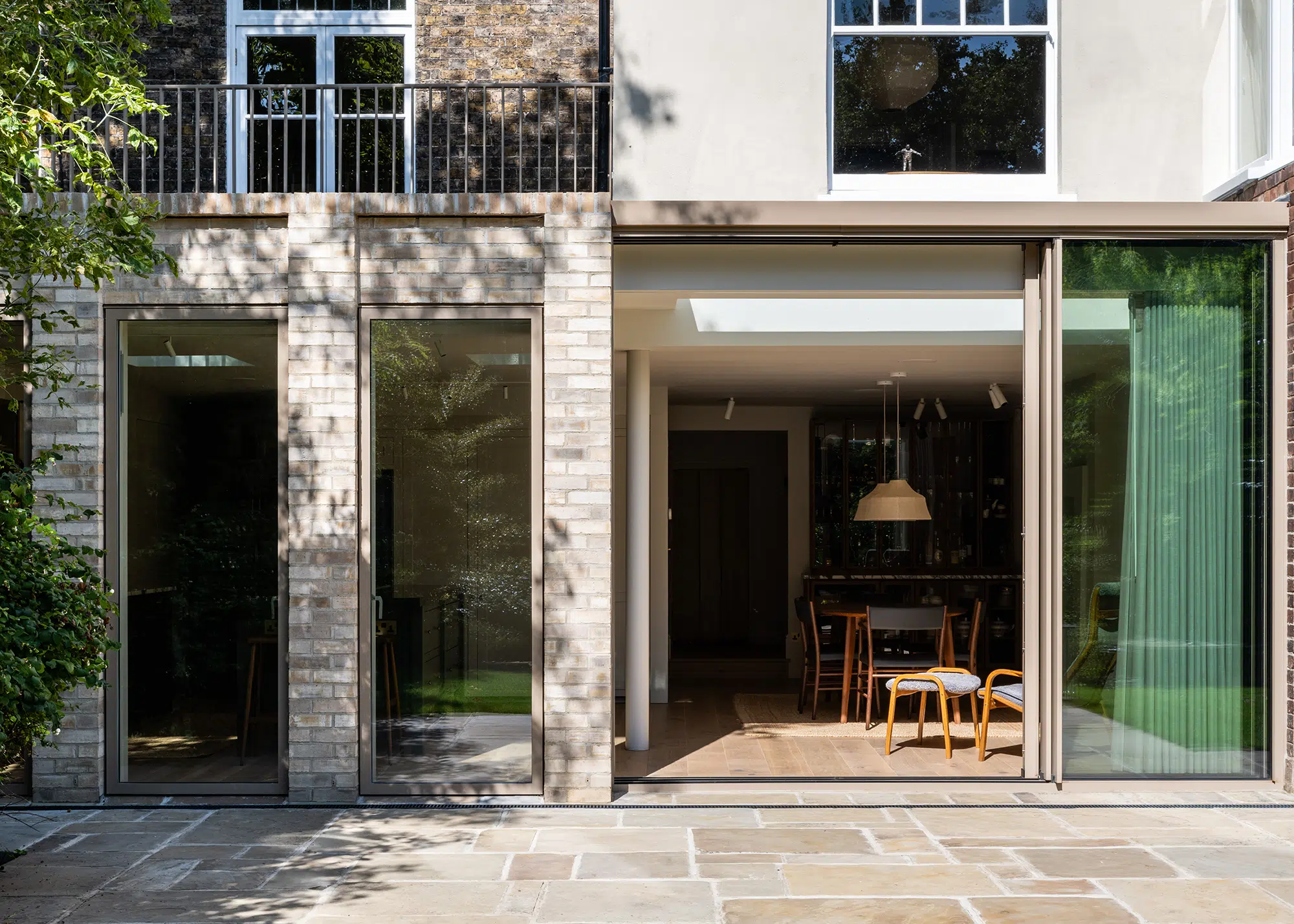
Photo: French + Tye
The existing layout of the house was small and boxy with lots of walls and beams. Even though the property is south facing, the rooms inside were dark, so the area at the back of the house was remodelled to open things up. “This involved a lot of structural work, including new foundations and floor slab,” says architect Sarah Braun. The whole house has been upgraded with new plumbing and electrics, insulation to the roof, new triple-glazed windows and underfloor heating. Conservation specialists were also brought in to reinstate period details.
| Type of house | Grade II listed semi-detached house |
| House size | 250m² |
| Location | North London |
| Original property cost | Already owned |
| Renovation project cost | £671,847 |
| Project cost per m² | £2,687 |
| Renovation took | 12 months |
1930s detached house with a brand-new exterior for £1,293,203
Having recently returned to London, James and Corinne Stevens were renting whilst on the hunt for somewhere to buy. The chosen detached 1930s building was in a state of disrepair. It was clear a full renovation would be needed, but James’s ambitions went beyond a standard refurbishment.
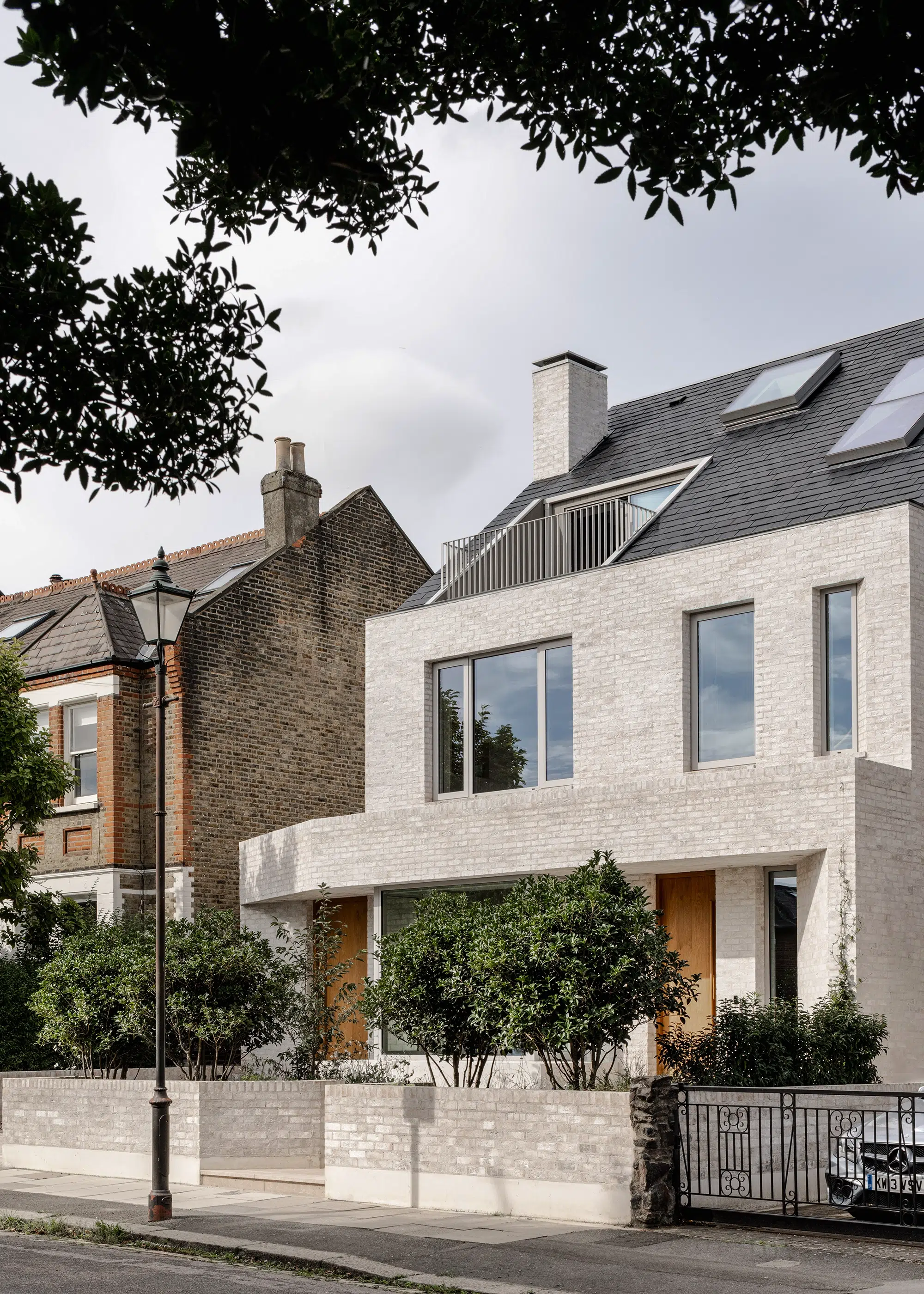
Photo: French + Tye
With their planning application granted without any issues, the project has transformed the property into a stylish but family-friendly, five-bedroom home. Not only were the internal spaces entirely reinvented during the renovation, but the exterior was also transformed, providing insulation and a modern brick finish.
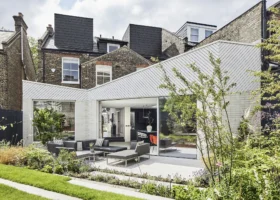
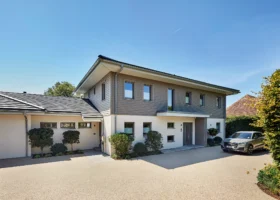
Working with Tom Munday from Matthew Giles Architects, James and Corinne removed the original garage and half turret, replacing them with a new series of front, side and rear extensions, a sheltered front porch and a bay window. To the rear, a full-width dormer extends the bedroom spaces while an inset balcony overlooking the park has replaced the turret to the front. The L-shaped ground floor extension at the back is punctured with an internal, planted lightwell. The extension features brick, finished with a textured limewash process, with brick slip cladding on the original house thanks to Eurobrick’s X-clad system.
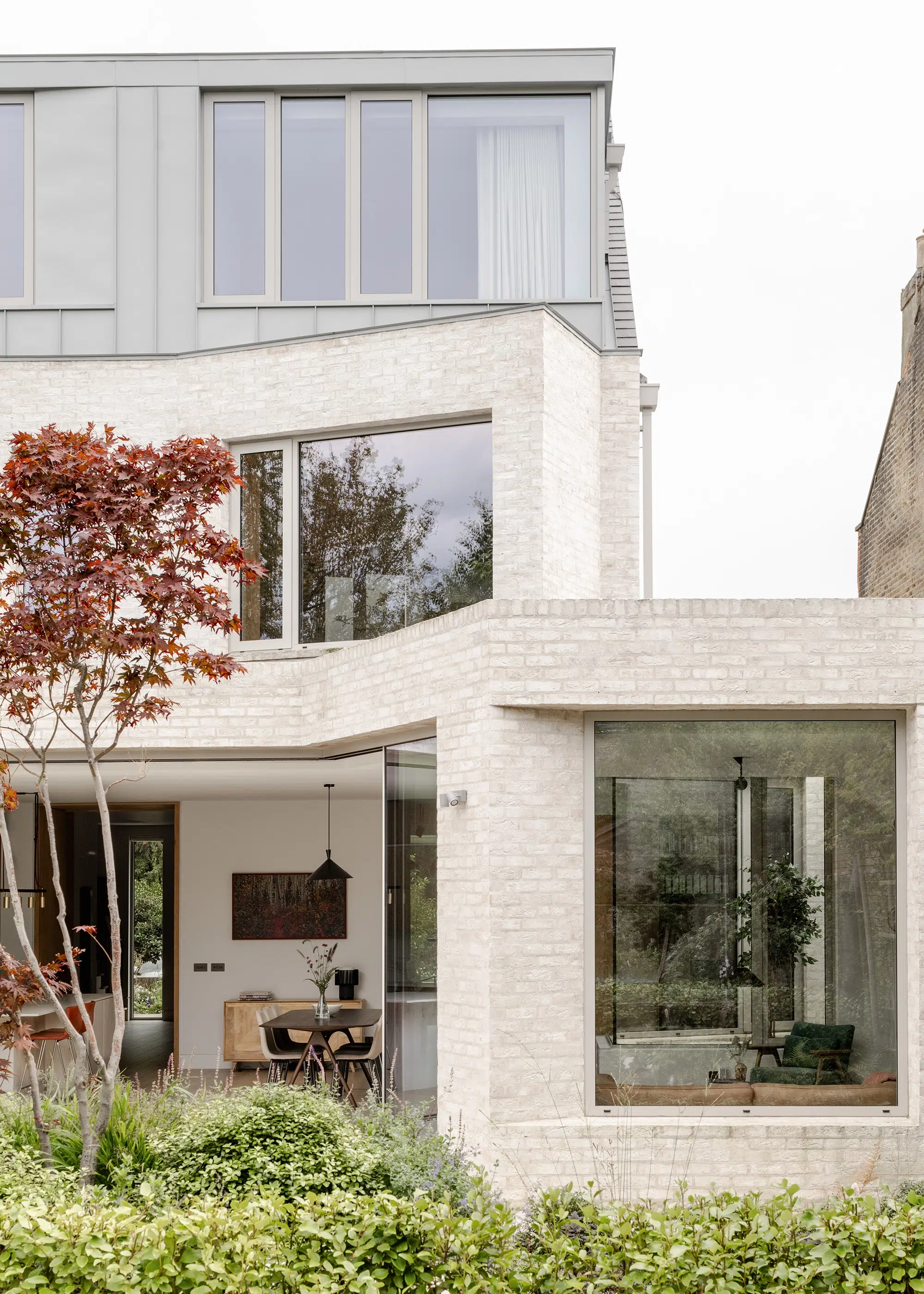
Photo: French + Tye
James and Corinne decided to add an acoustic ceiling in their rear extension. They chose Armourcoat acoustic plaster – a marble-based finish under which is natural mineral wool. This absorbent layer attenuates sound, creating a calmer, more relaxing environment, perfect for the large open-plan entertaining space. The entire area is warm and bright, ideal for the sociable lives James, Corinne and their two children lead.
| Type of house | 1930s detached house |
| House size | 299m2 |
| Location | London |
| Renovation project cost | £1,293,203 |
| Project cost per m² | £4,325 |
| Renovation took | 15 months |
1960s bungalow in South London transformed with a dramatic renovation for £783,000
Darren Young undertook a dramatic and lengthy renovation project to transform a 1960s bungalow in South London into a contemporary family home. Darren had a simple brief; he wanted to add a second storey and create a spacious internal layout, with ample natural light and sliding doors that would bring the outside in.
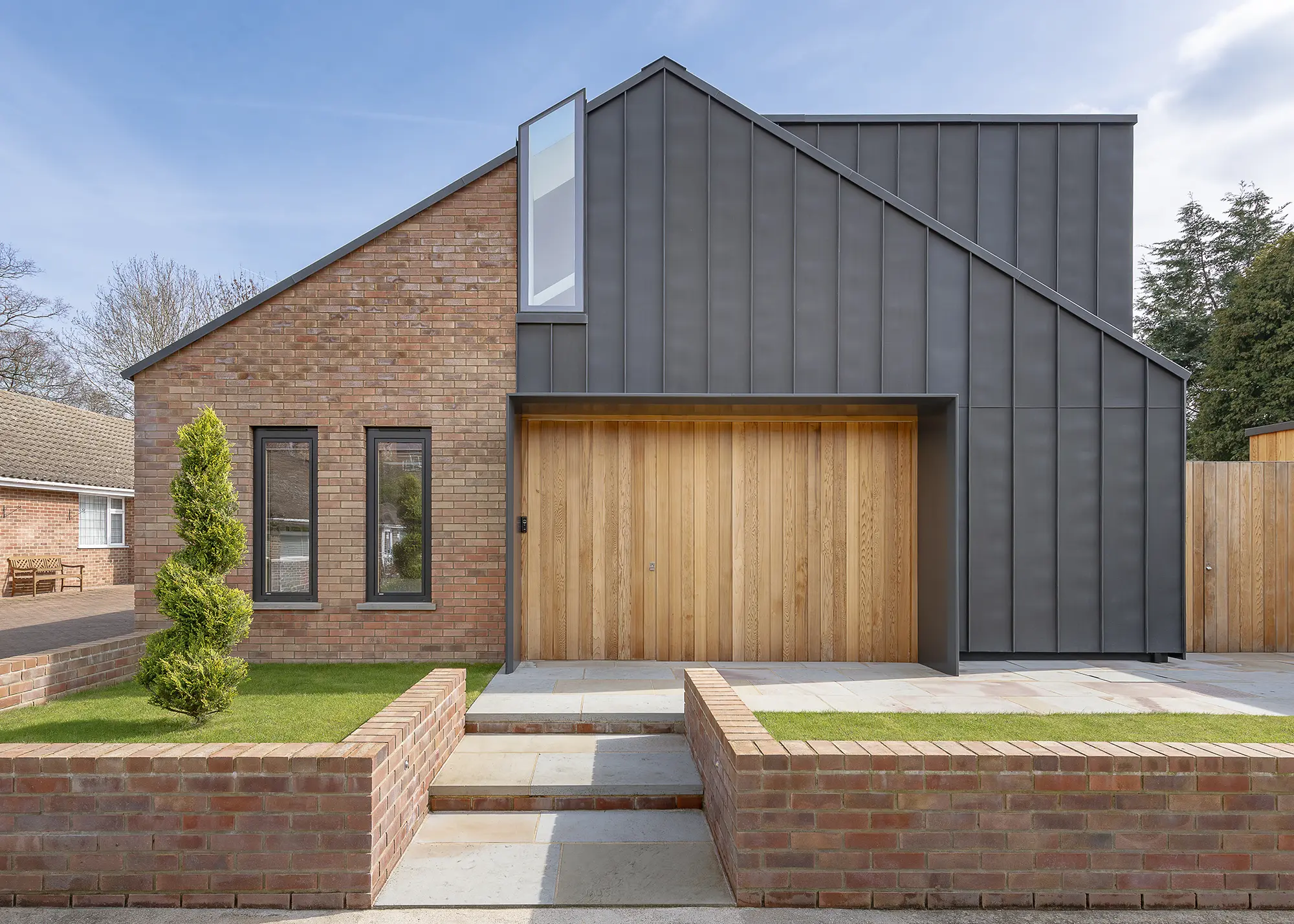
Photo: Immer Architectural Photography
Upon approaching the local authority, Chris was told the existing ridge height and pitch of the property must be retained, so he proposed increasing the scale of the dormer lengthways and wrapping it in modern zinc cladding. The ground floor would be opened up, to create generous, free-flowing living areas.

Photo: Immer Architectural Photography
The work began with the demolition of the original dormer loft and roof. The existing external solid brick walls were retained and insulated internally, to bring them up to current building standards. The new dormer loft was then constructed from timber frame, with a steel support system, and the new flat roof was finished with a single GRP ply membrane. The sloping roof was crafted from the same zinc that wraps the facade.
Nestled among very traditional bungalows, Darren’s new home is a contemporary beacon, with just a few walls of the original brickwork left exposed – a subtle nod to the dwelling’s origins.
| Type of house | Semi-detached bungalow |
| House size | 239m² |
| Location | South London |
| Original property cost | £700,000 |
| Renovation project cost | £783,000 |
| Project cost per m² | £3,276 |
| Renovation took | 5 Years |
| Want to chat to the right people about budgeting for your project?
Build It Live is the place to do it! Why not visit the Build Cost Clinic and learn more about how much your project will cost? Build It Live takes place three times a year in Kent, Malvern and Exeter. The next show will be on 26th and 27th February 2027 in Maidstone, Kent. Claim a pair of free tickets today and start planning your visit. |
A listed lodge in Oxfordshire brought up to modern standards for £245,000
Julian and Abigail Bernard had no plans to live in Williamscot, Oxfordshire, until they stumbled upon a 19th-century gate keeper’s lodge for sale, and couldn’t resist what the charming property had to offer. The historic structure had originally been linked to the nearby, grade II listed, Williamscot House. With its pitched roof, delicate stonework, old-fashioned windows and decorative front door, the lodge had bags of heritage charm that immediately appealed to the couple.
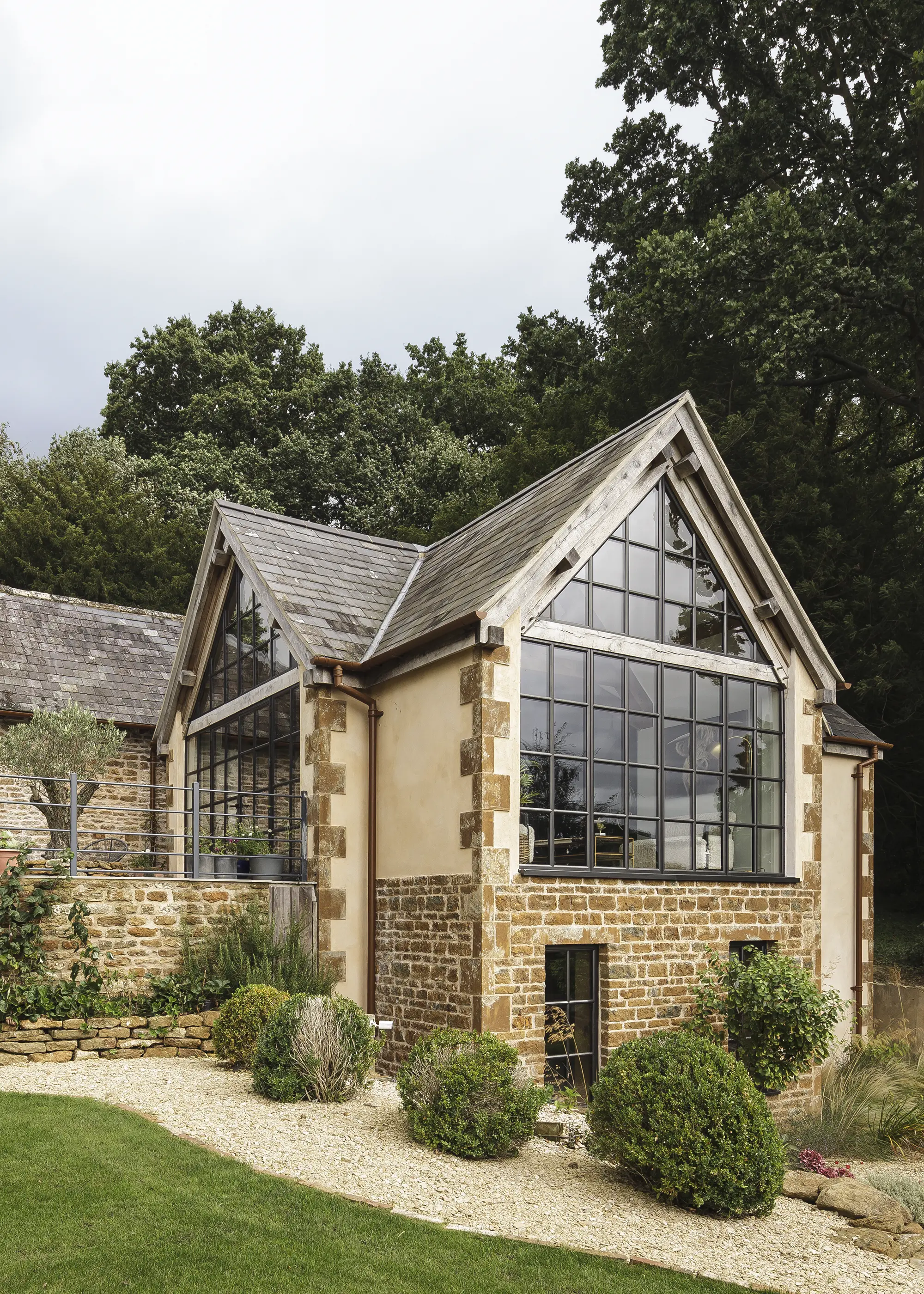
Photo: Simon Maxwell
Over the years, the original structure had been extended several times, with boxy and unflattering additions. “We thought, there must be something we can do to this house to make it work for us and our lifestyle,” says Julian. The previous owner had spent 10 years attempting to obtain permission to modify the home, but was rejected each time. “We were advised to work with a conservation architect, so we contacted several and met with a few. We got such a good feeling from James Mackintosh Architects. He understood exactly what we were after,” says Julian.
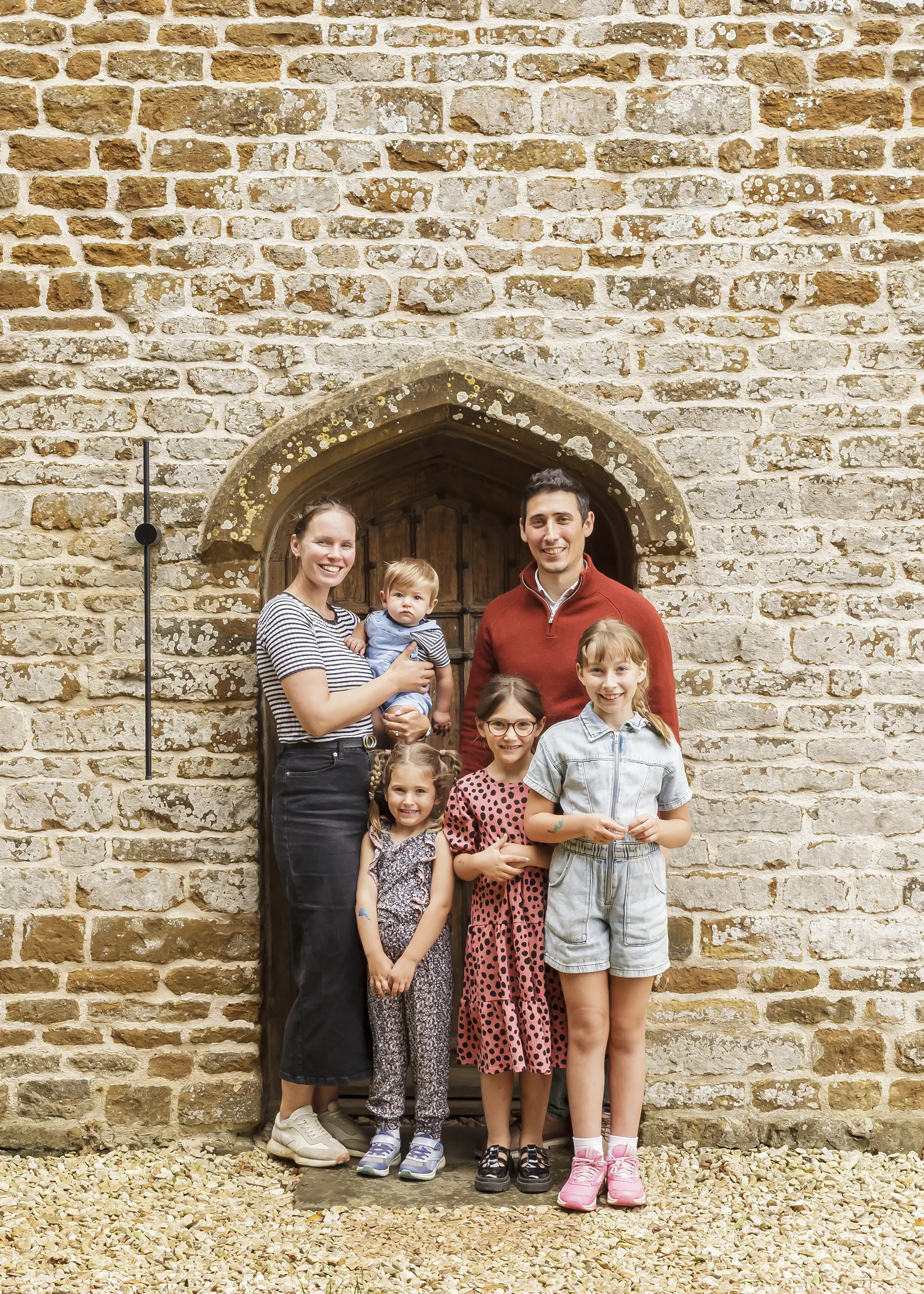
Photo: Simon Maxwell
Preserving the lodge’s historic integrity was crucial. James suggested removing the modern extensions to expose more of the original structure at the rear, while ensuring the new addition remained hidden from view at the front. Using the site’s topography to provide an extra lower ground floor, the built extension was inspired by the Arts & Crafts movement.
| Type of house | Grade II listed historic lodge |
| House size | 135m² |
| Location | Oxfordshire |
| Original property cost | £325,000 |
| Renovation project cost | £245,000 |
| Project cost per m² | £1,815 |
| Current value | £850,000 |
A 130m² terraced house in Scotland transformed into a sleek home for £280,000
Having lived in China for the better part of 30 years, Jim Walker and his wife Connie decided to return to Scotland and settle down in the Borders town of North Berwick.
Preferring older properties, the couple found a bijou-sized, two-storey Victorian terrace for sale with a large front garden for sale that suited their needs. The house was originally part of a bigger property, which was subdivided at some point historically. It was most likely an annexe to the large adjoining house, comprising multiple small, disconnected spaces, among which were five tiny bedrooms.

Photo: David Barbour
Jim and Connie worked Edinburgh-based Somner Macdonald Architects to develop a brief, which included an open-plan layout, a generous master bedroom and a study space on the upper level to allow Jim to work from home. “It was all about simplifying what was there. We don’t need multiple rooms – the house is just for the two of us,” says Jim.
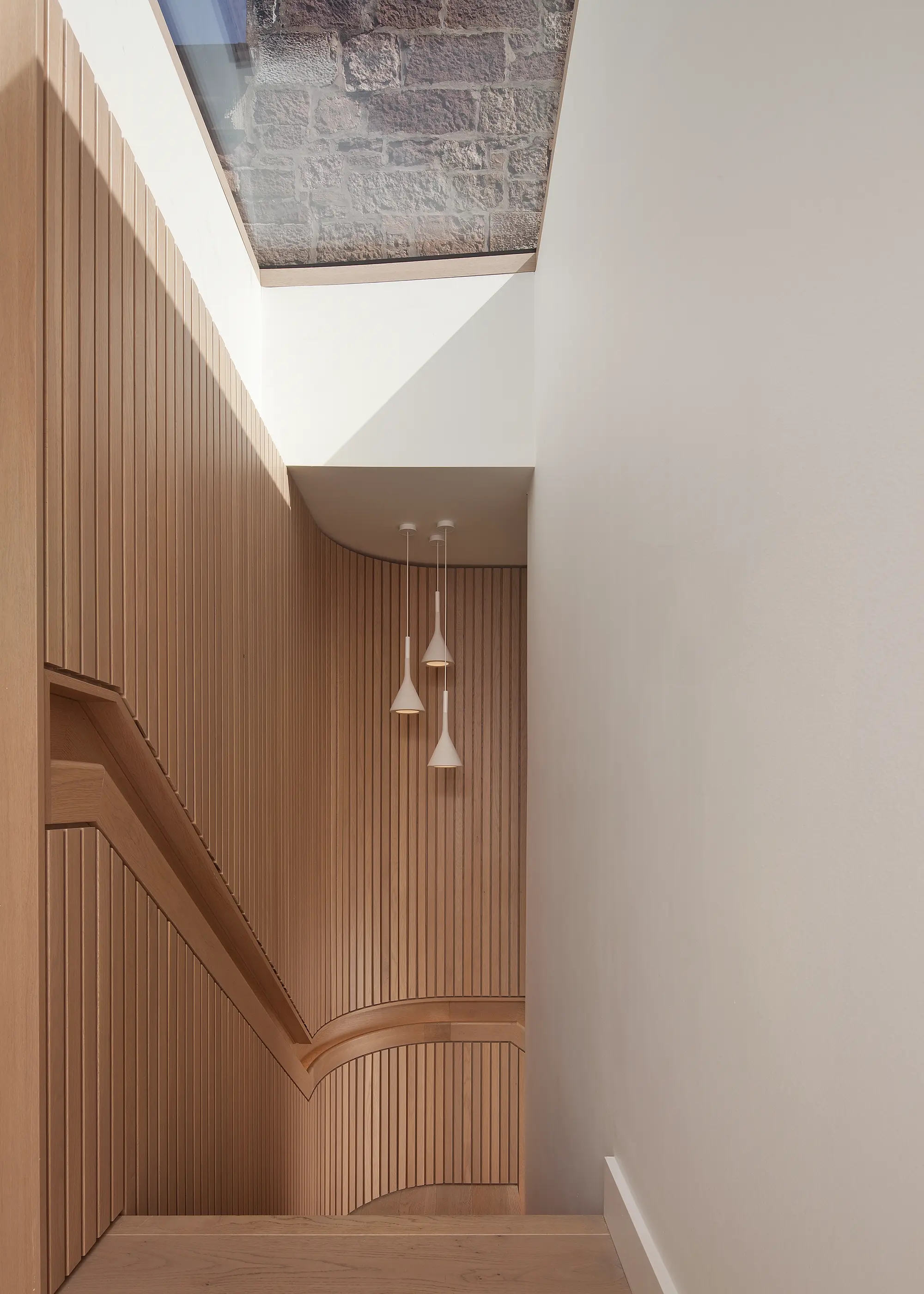
Photo: David Barbour
“We were designing a house and garden with everything we like – soft tones and lovely furniture and finishes. We wanted it to be a long-term home for us that was a tranquil, calming space for us to be. A total contrast to our more fast-paced lifestyle in Hong Kong.”
| Type of house | Victorian terrace house |
| House size | 130m² |
| Location | East Lothian |
| Original property cost | £550,000 |
| Renovation project cost | £280,000 |
| Project cost per m² | £2,154 |
| Renovation took | 7 months |
Listed house in Hampshire retrofitted with sustainable heating solutions for £500,000
When architects Mark Camillin and his partner Liam Denny saw this four-bedroom grade II listed house in Hampshire, they knew the property was in the right location, but they didn’t immediately feel a connection to it. After seeing the fantastic garden and recognising the build’s potential, though, they knew it was the right fit.
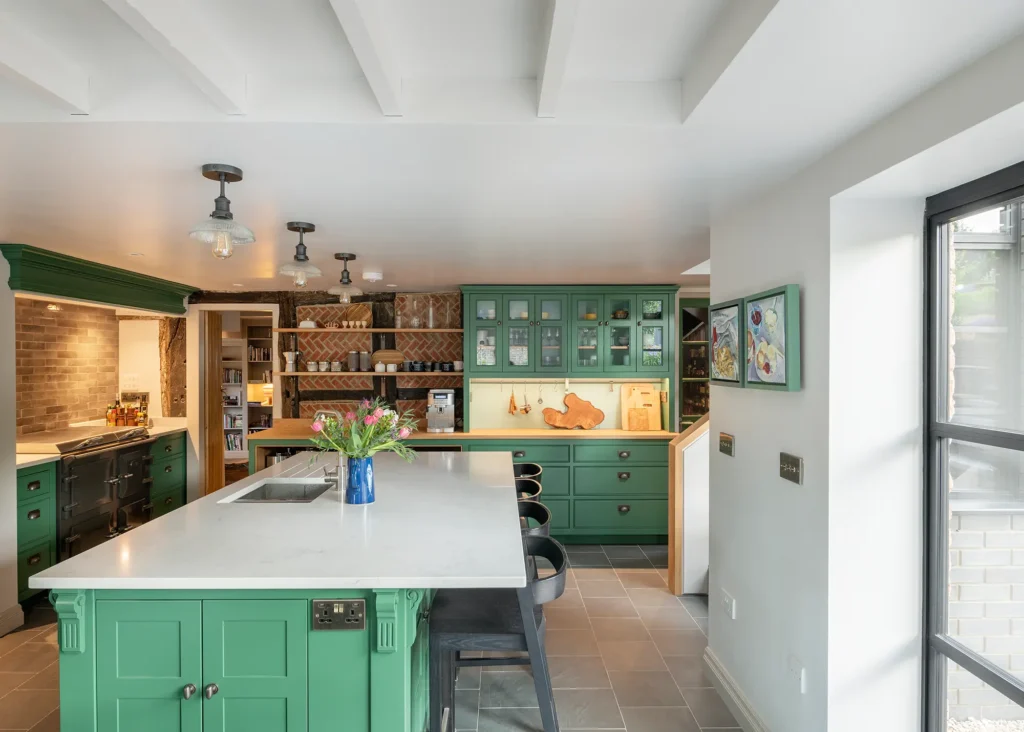
Photo: Richard Downer
The home had been altered and adapted over the years, so the couple worked together to figure out a functional layout that would maximise the unique plot and create a floorplan that was truly right for them. The solution was to knock through the utility, boot room and WC to create a new open-plan kitchen and dining area. The staircase was relocated to a new double-height extension. The first flight connects the living room and the second the bedrooms and bathrooms.
Mark and Liam carried on tweaking the drawings over a two-year period until they’d resolved all the problems. Most of their proposed changes were to the 1980s extension and not to the heritage fabric, and they wouldn’t be visible from the front. This worked in their favour when securing planning permission in just four months.
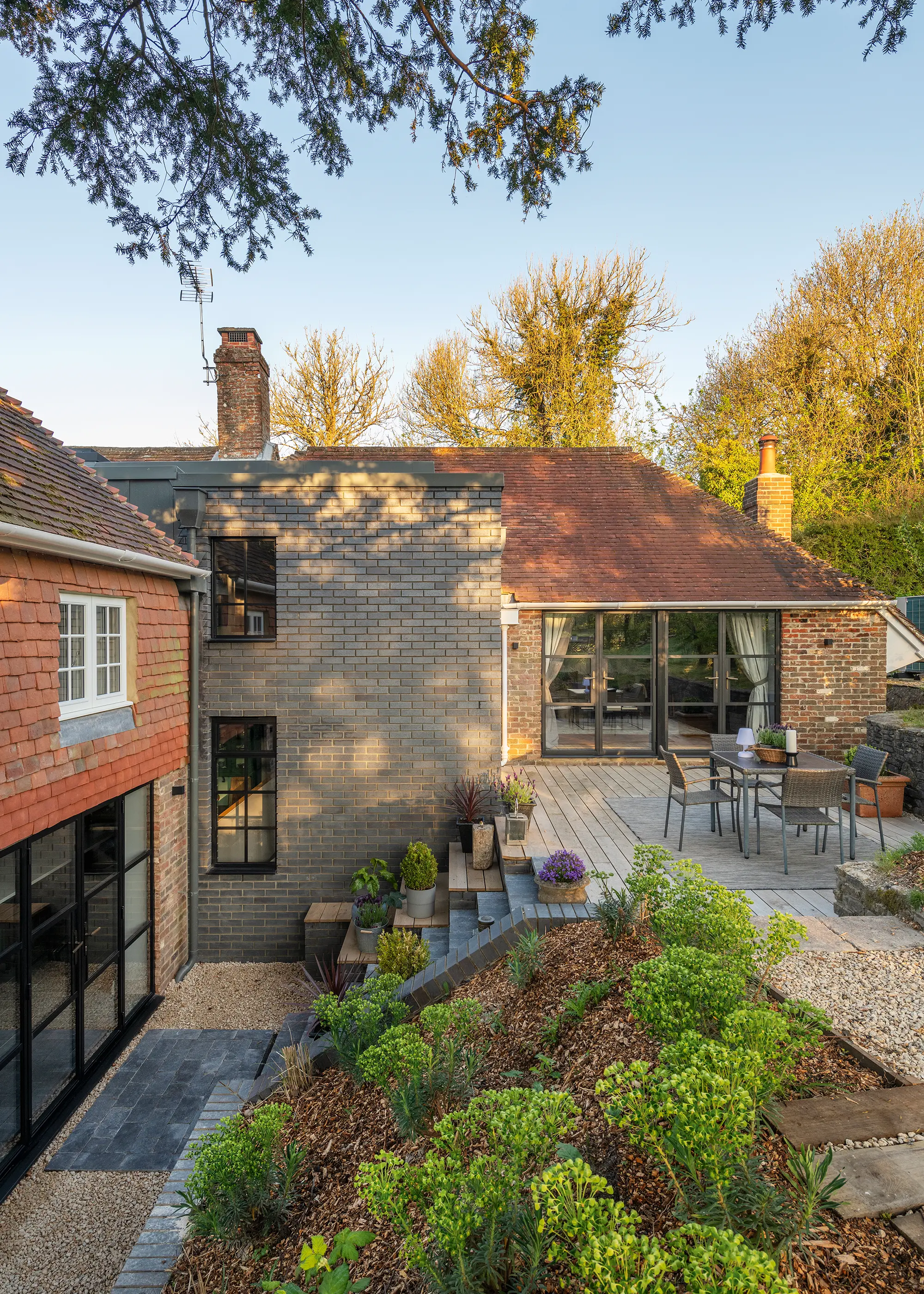
Photo: Richard Downer
The single glazing and insulation were replaced and enhanced in line with heritage restrictions, and an air source heat pump, underfloor heating and solar panels were installed. The overall fuel bill came down from £4,000 per year in 2019 to just over £150 in 2022. “It’s unbelievable to think we live in a listed house built in the 1780s, yet in 2023 we’re totally fossil fuel-free in a property with a B energy rating,” says Mark. “This is the first time we’ve bought a house that we didn’t initially love and it’s turned out to be our best project.”
| Type of house | 1780s grade II listed house |
| House size | 381m² |
| Location | Hampshire |
| Original property cost | £1,350,000 |
| Renovation project cost | £500,000 |
| Project cost per m² | £1,312 |
| Current value | £2,500,000 |
Victorian terraced house in Edinburgh sympathetically renovated & extended for £320,000
John and Melanie Stott searched for some time for the perfect long-term home in Edinburgh for their young family. They eventually found it in the form of a three-storey, six-bed late Victorian terraced house – it had a garden and was just a short walk from the city centre. The property had been well loved, but not updated in several decades, so they knew they would need to undertake a renovation to make it fit for family life.
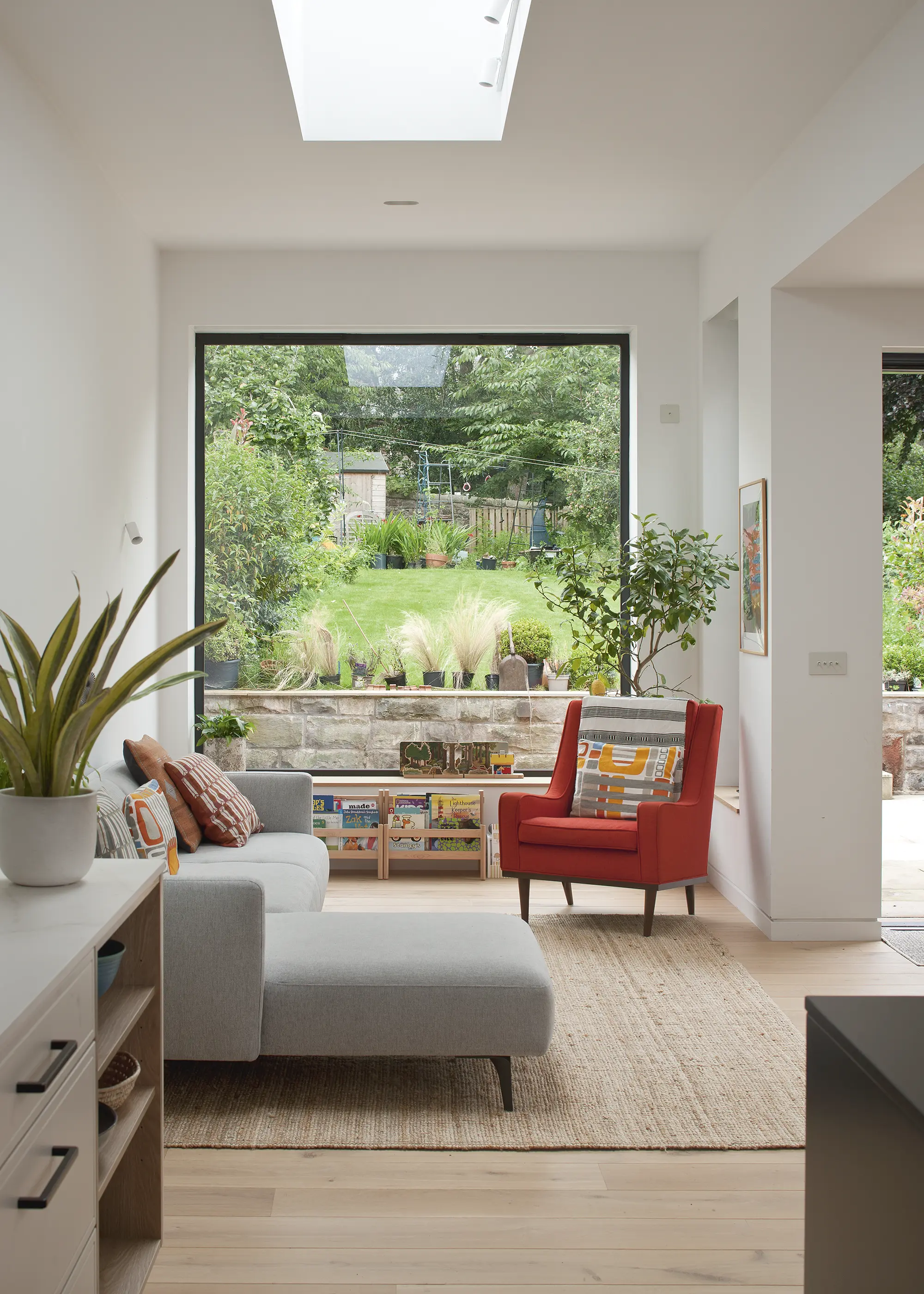
Photo: David Barbour
Before buying, the couple spoke to architect Sean Gaule, who reassured them that there was plenty of scope to create the open-plan, energy-efficient home they sought. The Stotts lived in the property for around a year before work began, giving them a good idea of what worked for them and what didn’t.
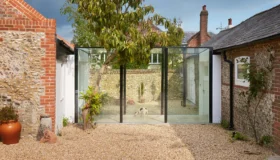
The final scheme added 20m² of space to the back of the house by replacing an existing stone annexe and connecting it to the house. The stone from the existing structure was carefully removed and reused so that it resembles the original annexe, except better insulated and waterproofed.

Photo: David Barbour
The new adjoining extension is constructed from timber frame with wood cladding, softening the contrast between old and modern. Its roofline is lower than the stone volume to minimise overshadowing of the neighbours’ property. The extension also had to be built on raft footings, since those of the original house were unusually deep, reaching 1.5m. Going to the same depth would have had major cost implications, though accommodating these changes only lost John and Melanie a week in the schedule in the overall schedule.
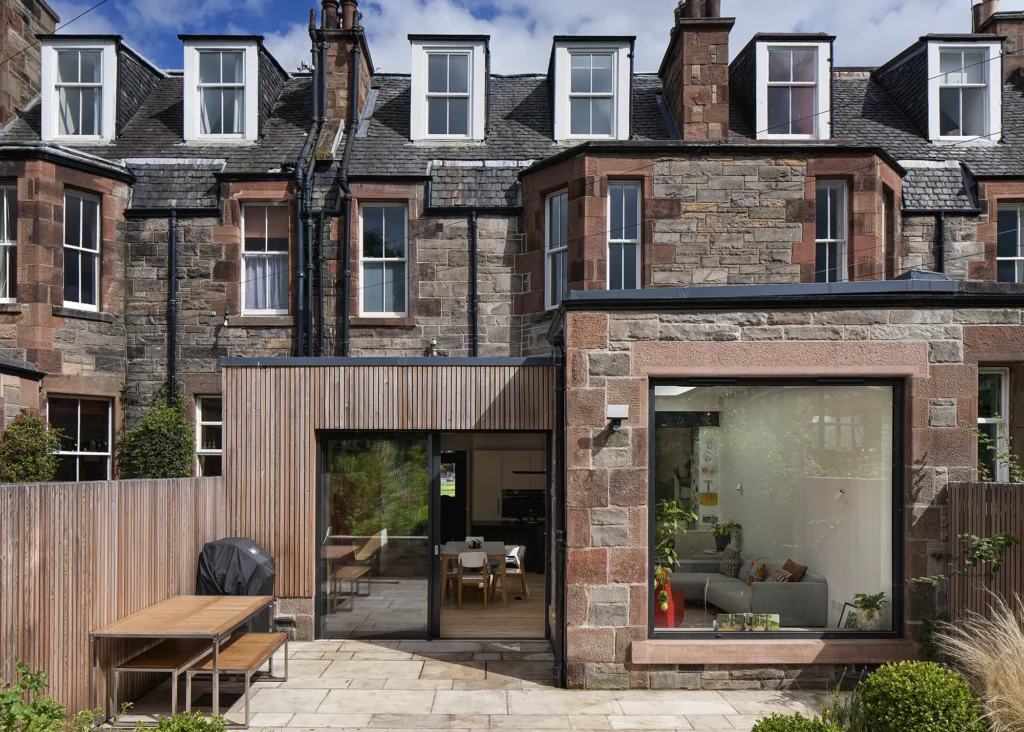
Photo: David Barbour
The single-glazed windows were all replaced with double-glazed sash and casement units, which are fully draughtproofed. The couple decided against insulating the walls to avoid the risk of losing any original features, such as the cornicing. “The biggest change, and the thing that we most enjoy, is the light at the back in the open-plan room,” says Jonathan. “I didn’t expect such a big window at the rear but it works beautifully. It’s a lovely space; the amount and quality of light is fantastic.”
| Type of house | Victorian terraced house |
| House size | 257m² |
| Location | Edinburgh |
| Renovation project cost | £320,000 |
| Project cost per m² | £1,245 |
| Renovation took | 36 weeks |
1980s bungalow completely overhauled with a light-filled renovation for £731,000
When Linda and Vic bought a dated 1980s bungalow on the outskirts of Glasgow, they could see its potential. Working with Farahbod Nakhaei of NVDC Architects, they looked to almost double the footprint of the house – taking the property from 150m² to a spacious 280m².
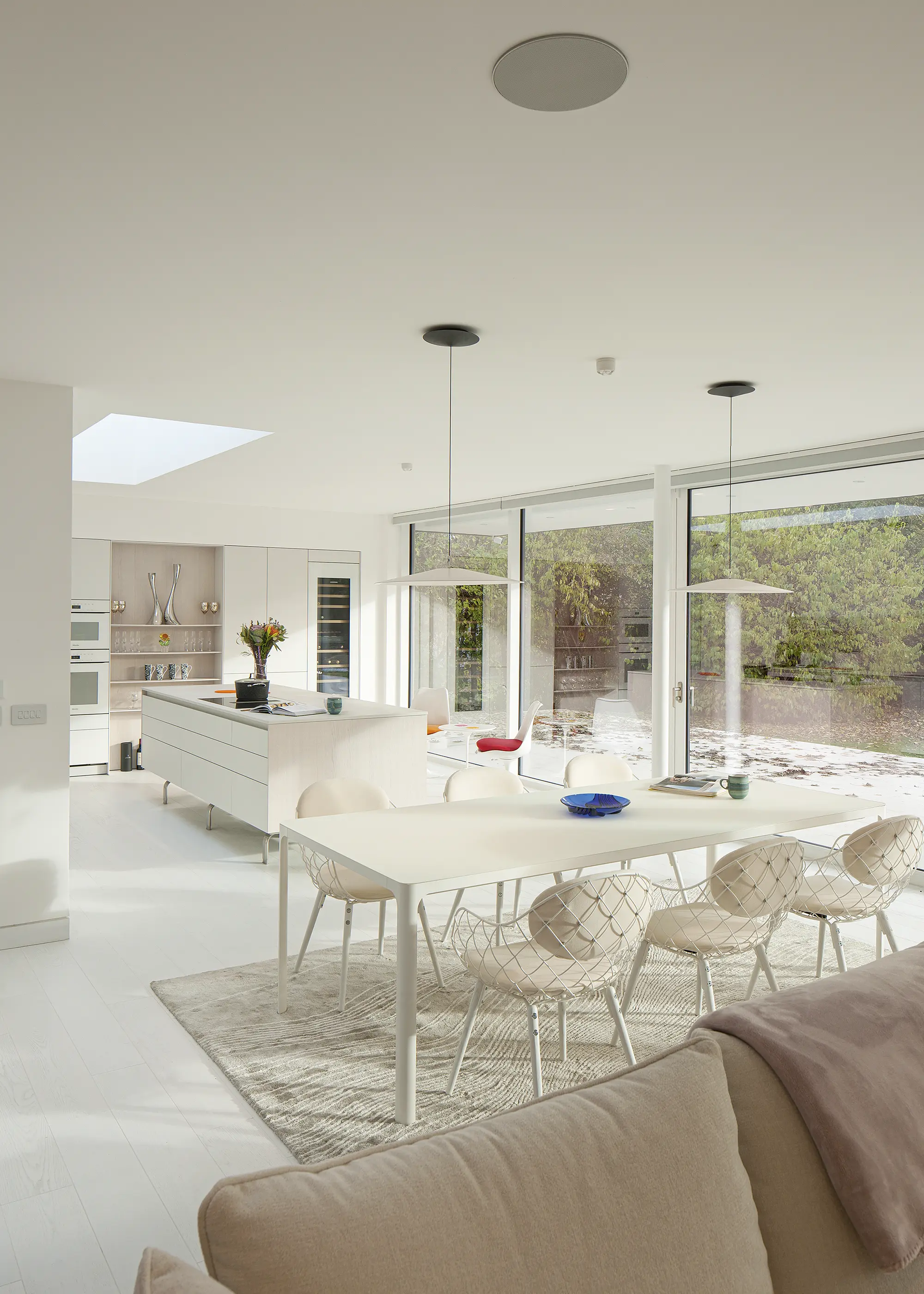
Photo: David Barbour
A striking L-shaped extension wraps around the house, with the two main bedrooms on the east elevation to catch the morning sun. More than 50% of the external walls were removed and a steel frame was put in to support the roof structure. This allowed for wow-factor architectural details like the glass corner in the master bedroom.
All of the bungalow’s windows were replaced with new triple-glazed units from Rationel and the original slate roof upgraded. Having previously had no insulation, all the existing walls have now been insulated from the inside to help create an energy-efficient building. An air source heat pump powers underfloor heating and the large swathes of glazing on the rear elevation have been designed with a roof overhang to limit excessive solar gain.
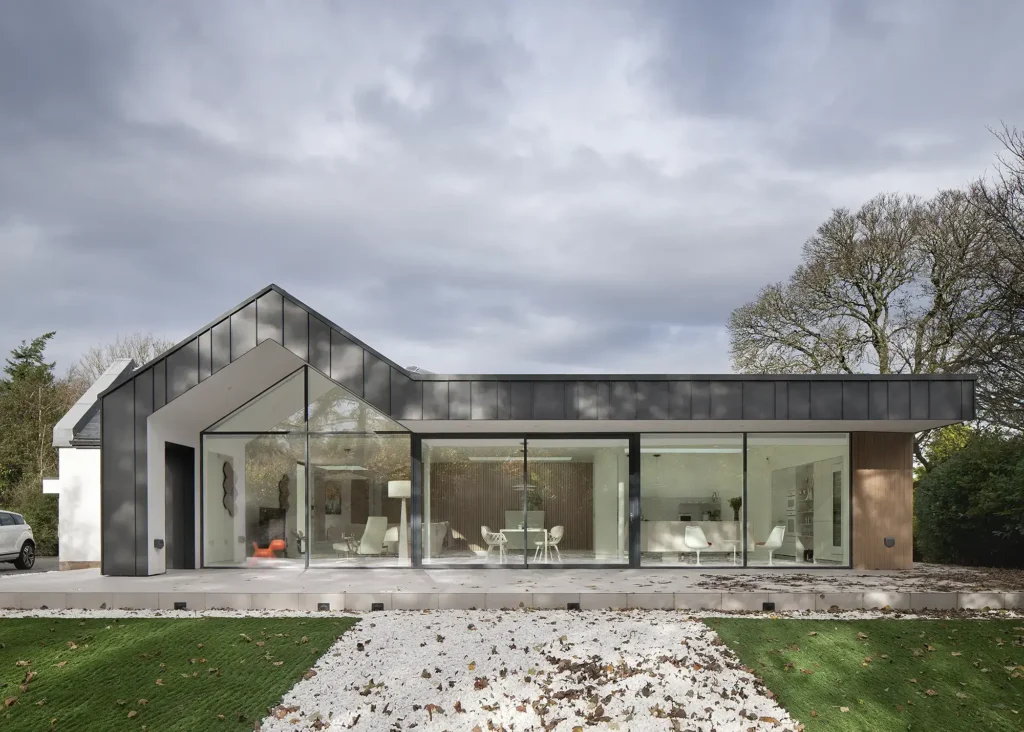
Photo: David Barbour
Having previously lived in a Victorian home with amazing 4.5m tall ceilings, the couple wanted a feeling of height in the rooms. Rooflights have therefore been strategically placed to illuminate deeper areas of the building. Bright white interiors and modern details help to enhance that feeling of spaciousness. “It’s full of sunshine, even on a grey day,” says Linda. “It’s given us the lifestyle we wanted and there is a real sense of calm through the house.”
| Type of house | 1980s bungalow |
| House size | 280m² |
| Location | Renfrewshire |
| Renovation project cost | £731,000 |
| Project cost per m² | £2,611 |
| Renovation took | 43 weeks |
Victorian flats converted into one house for £310,000
George and Rosie Woods knew that breathing new life into this rundown Victorian building – which had previously been flats – was going to be a big challenge. However, they were eager to create an abode that would be warm, sustainable and offer their two children a comfortable, spacious home.
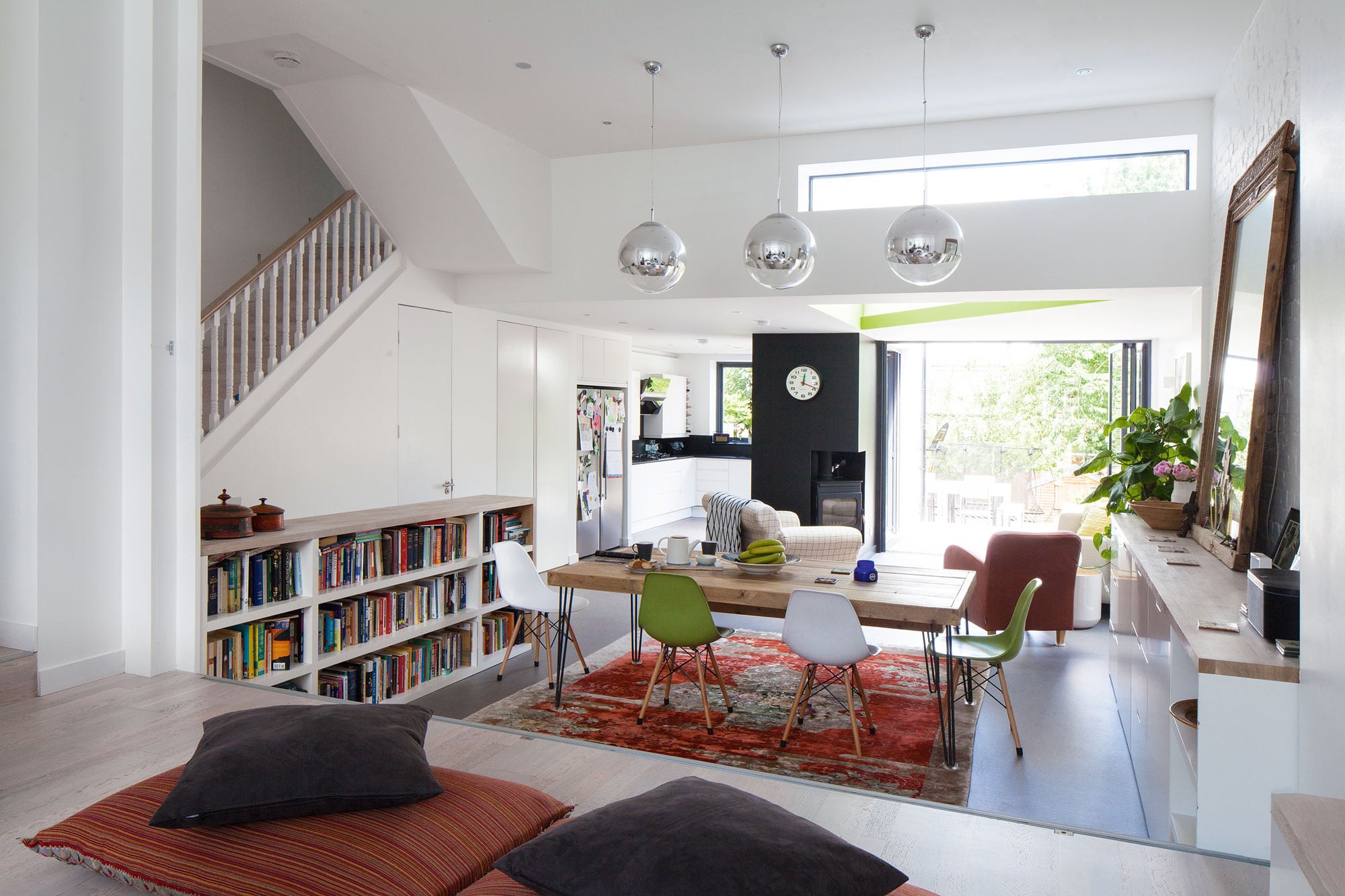
Photo: James French
Bought in 2013 for £1,200,000, the couple received no objections to the plans their architect had put together. “We got permission fairly quickly, partly because the only aspect of the house that required a drastic change and would affect the street scene was the front elevation, which we wanted to insulate and render,” says George. “We followed the suggestions of an architect and a local estate agent, particularly paying close attention to creating a nice kitchen, bathrooms and a large master bedroom.”
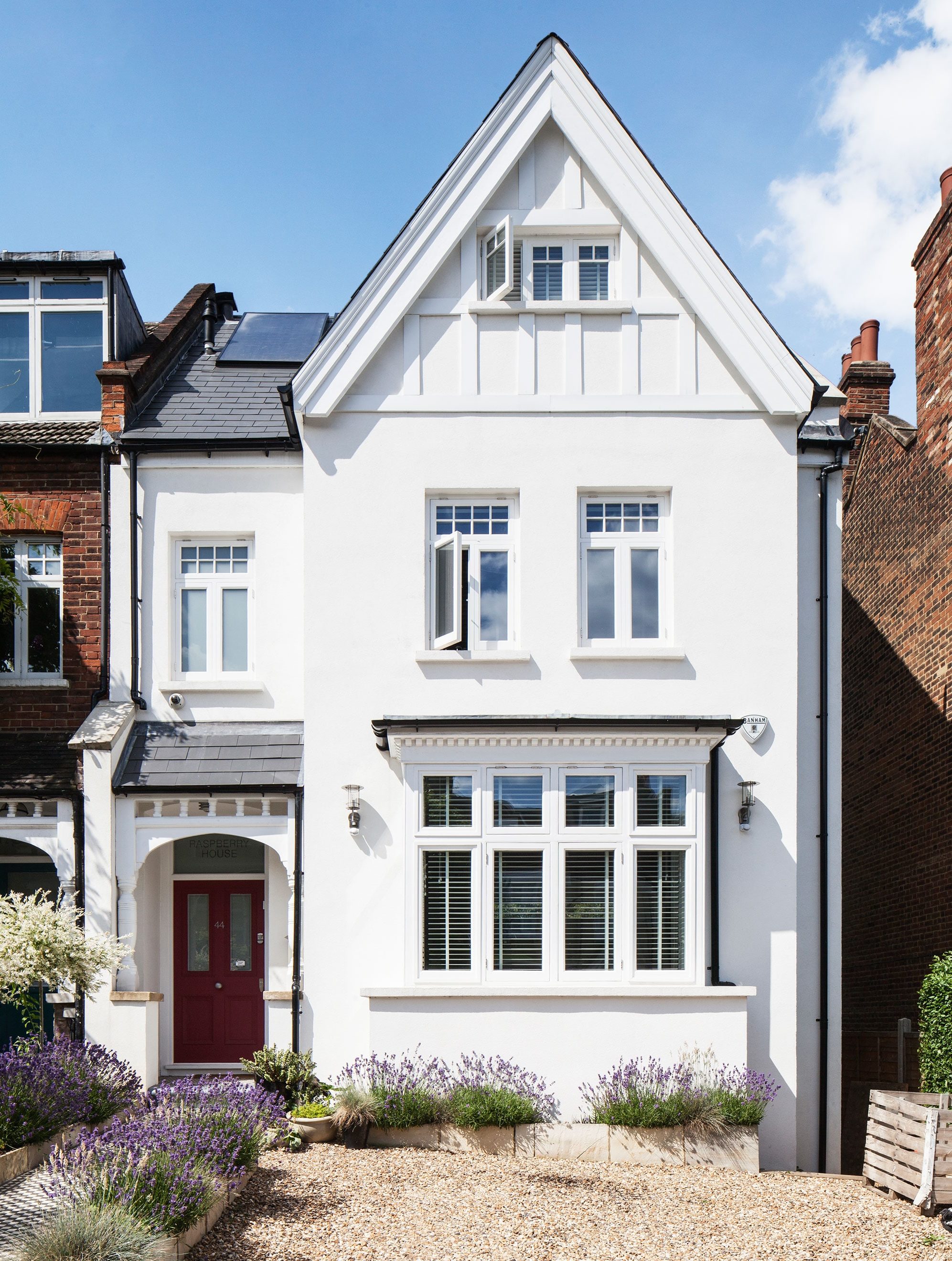
Photo: James French
This standout renovation has undergone substantial works to modernise both its structure and efficiency. It now features a sleek modern interior complete with low running cost LEDs throughout, a mechanical ventilation with heat recovery (MVHR) system and solar thermal panels. Opening up the downstairs has transformed the ground floor into a split-level kitchen-diner and living room, with folding doors opening from two sides onto the patio. “This space was initially quite dark and dingy,” says George. “It was a large room with high ceilings, but the windows were too small so we knew we needed to bring in more sunshine.”
| Type of house | Victorian house |
| House size | 232m² |
| Location | North London |
| Original house cost | £1,200,000 |
| Renovation project cost | £310,000 |
| Project cost per m² | £1,336 |
| Renovation took | 48 weeks |
Sander Tel
Emily Batesmith
You may be interested in